Your shadow follows you
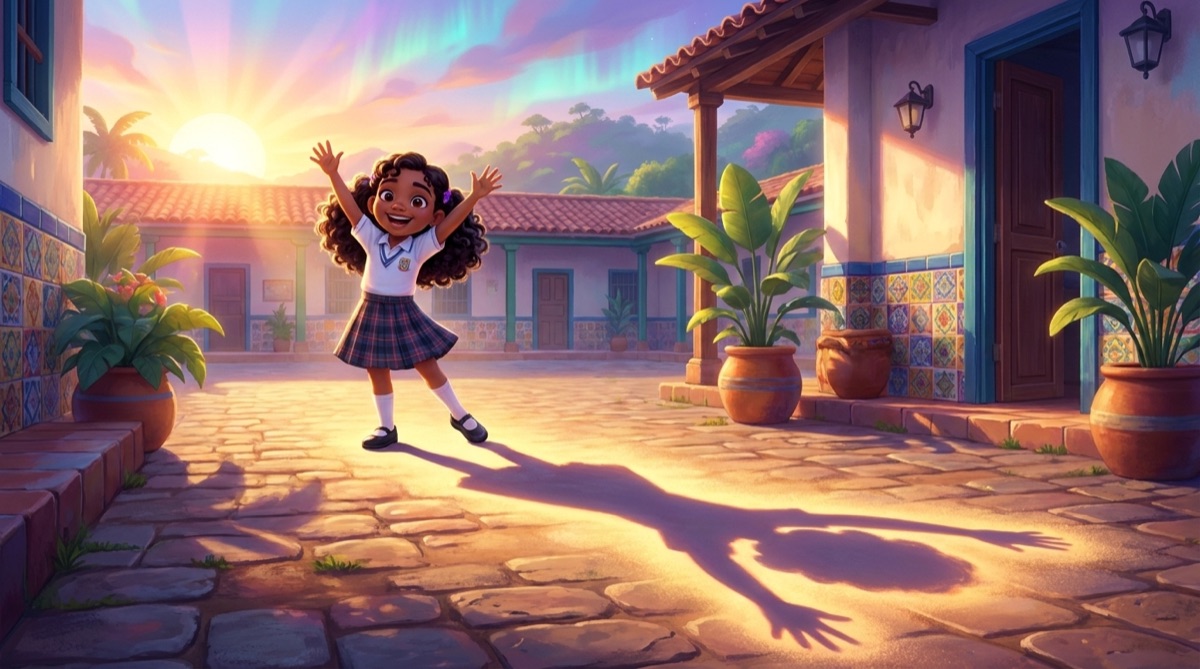
Go out to the schoolyard on a sunny day. Look at the ground. There is someone dark there doing the same thing as you! It is your shadow.
Look at it again in the afternoon. Is it just as long? Is it on the same side? Today we are going to catch shadows with a stick.
Why do we have a shadow?
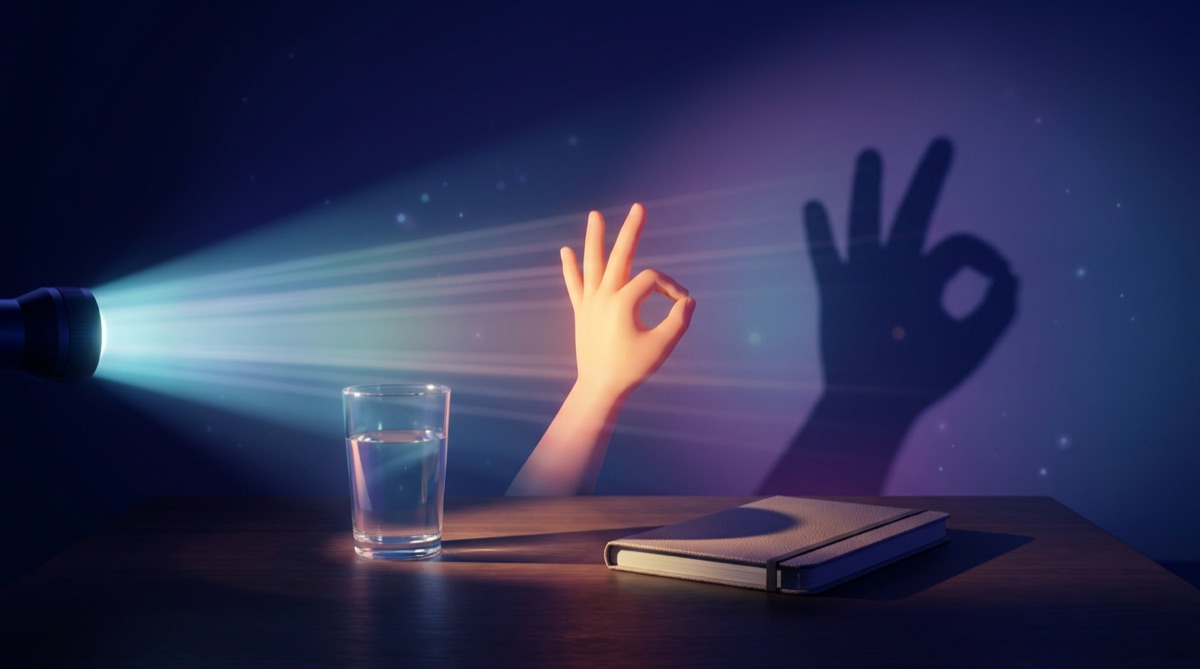
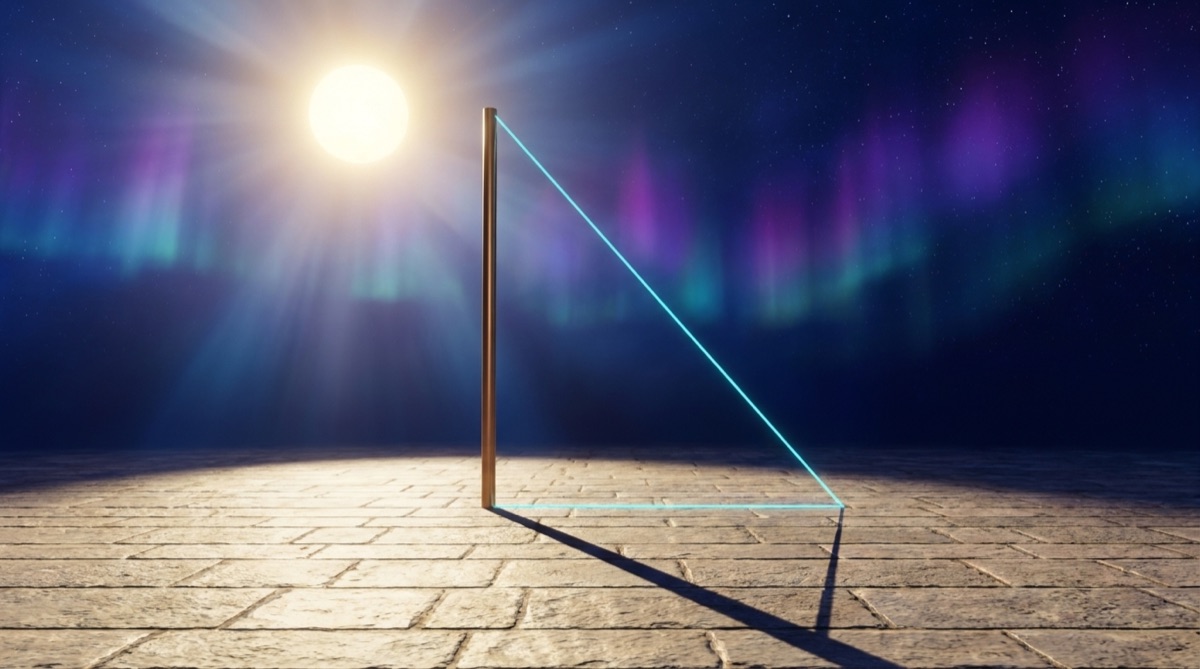
Light travels in a straight line. If an object gets in the way, the light cannot get through. Behind the object there is a place with no light: the shadow.
The shadow is always on the side opposite the Sun. If the Sun is on your right, your shadow is on your left.
Try it in the classroom: turn off the light, turn on a flashlight and put your hand in front of it. Make a rabbit or a dog on the wall. Which side is the flashlight on? Which side is the shadow on? Now put a glass cup in front: does it have a shadow? And a sheet of paper? And a notebook?
The Sun moves across the sky… or does it?
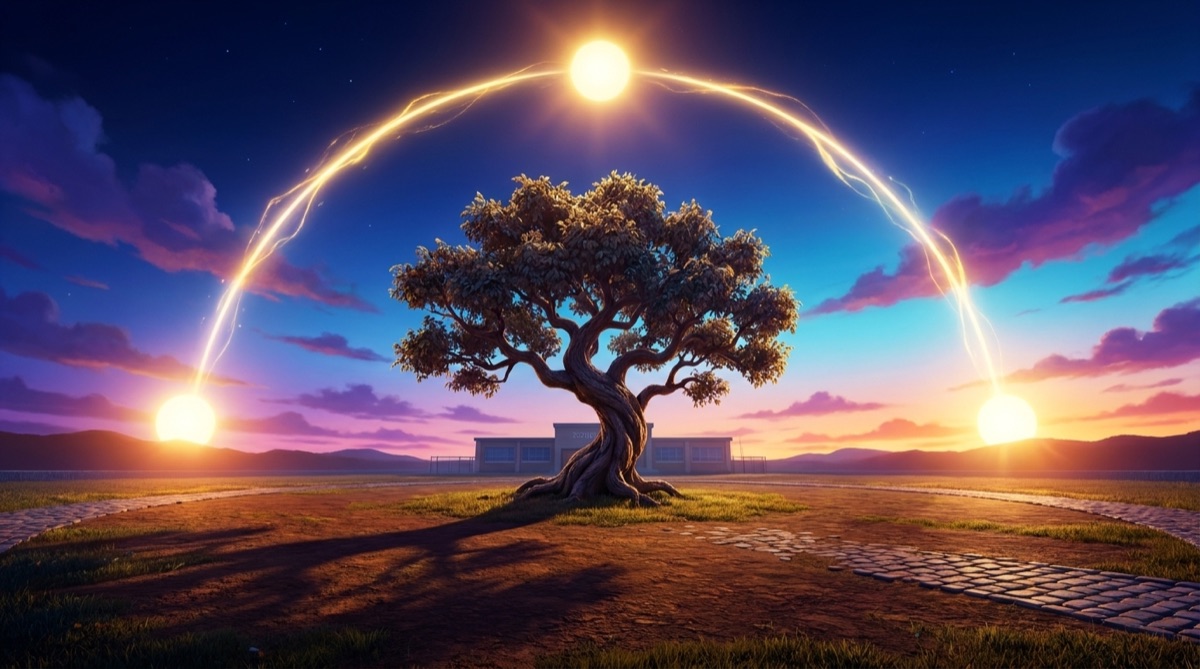
In the morning the Sun is low, on the side where it rises. At noon it is very high. In the afternoon it goes down again, on the other side.
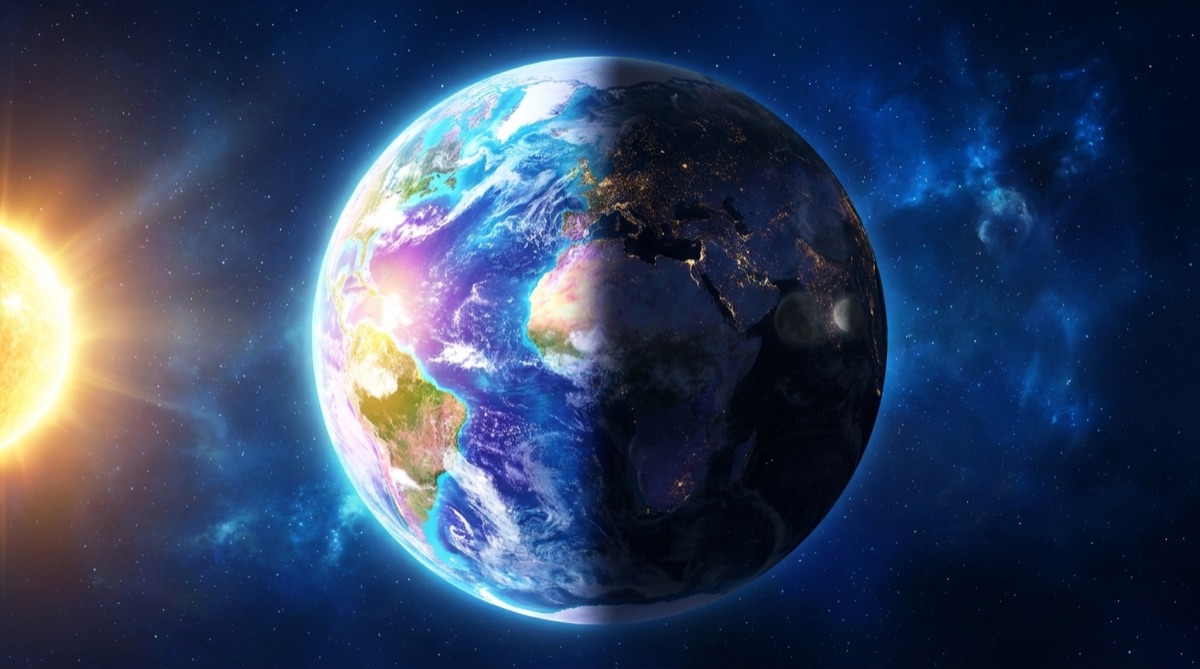
Actually the Sun does not walk: it is Earth that spins. But from here it looks as if the Sun crosses the sky.
Long and short shadows
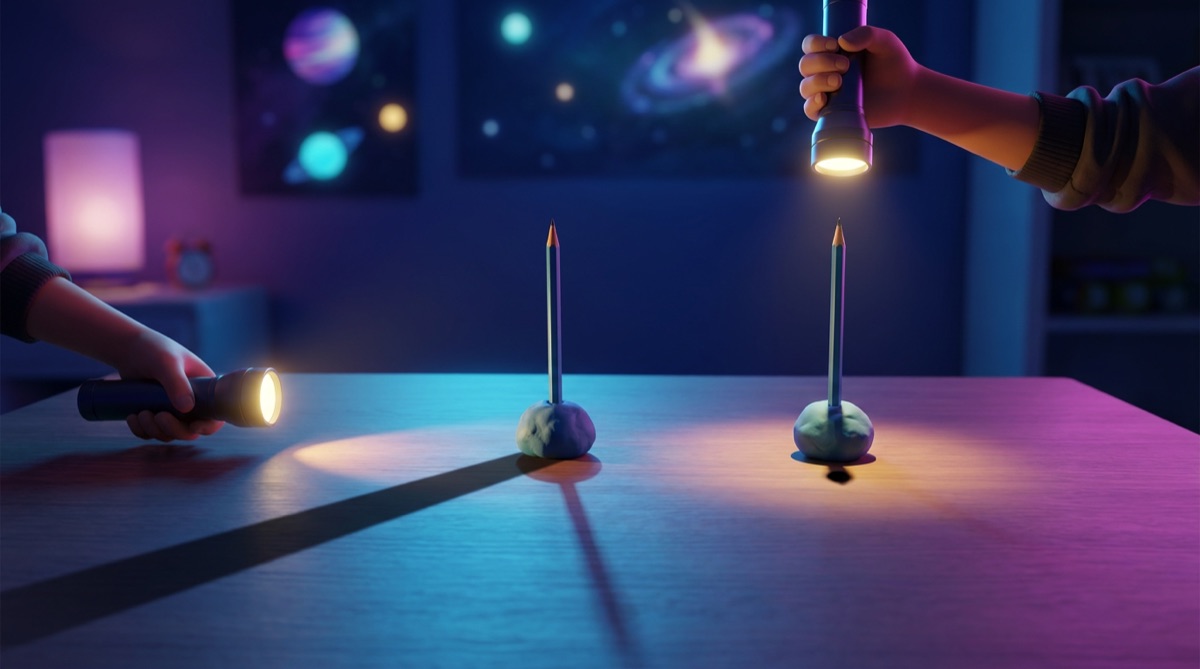
With the flashlight and a pencil standing in modeling clay:
- Hold the flashlight low, almost touching the table. Look at the pencil’s shadow: it is long.
- Raise the flashlight little by little. The shadow gets shorter.
- Hold the flashlight right above the pencil. There is almost no shadow!
The same thing happens with the Sun:
| Moment | Where is the Sun? | What is the shadow like? |
|---|---|---|
| Early morning | Low | Long |
| Noon | High | Short |
| Afternoon | Low | Long again |
Play with the simulator
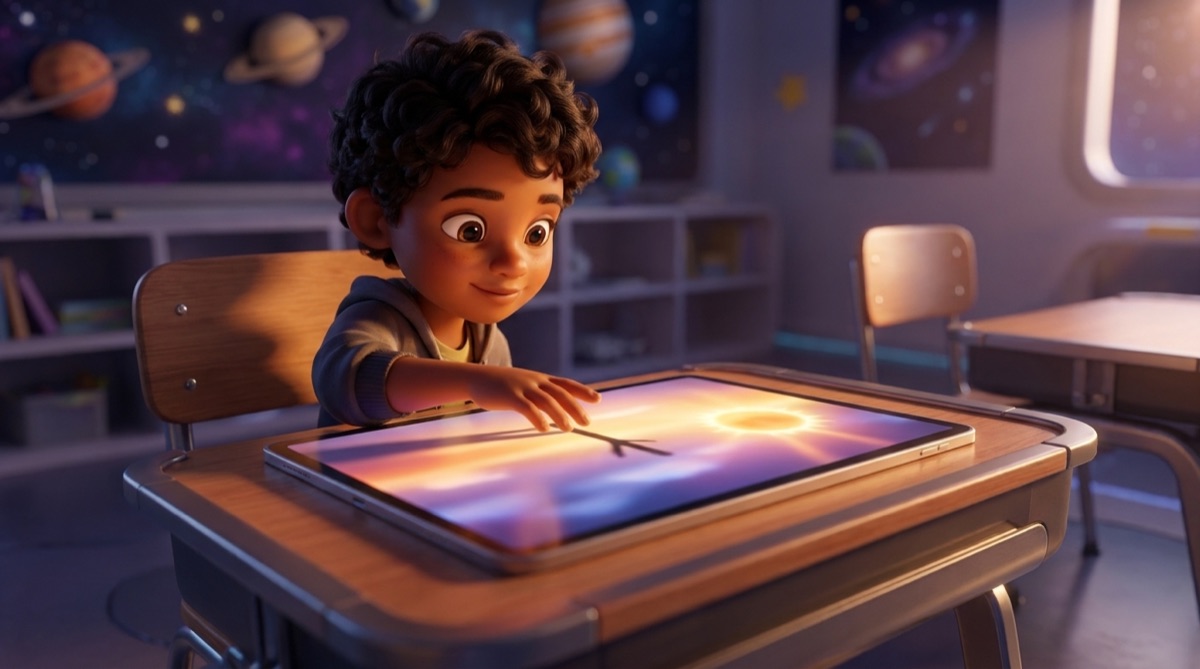
Use Explorer mode and look at the stick.
- Press Morning. Is the shadow long or short? Which way does it point?
- Press Noon. What happened to the shadow?
- Press Afternoon. Which way does it point now?
- Move the time slider slowly. At what time is the shadow shortest?
It’s daytime!
Building a gnomon
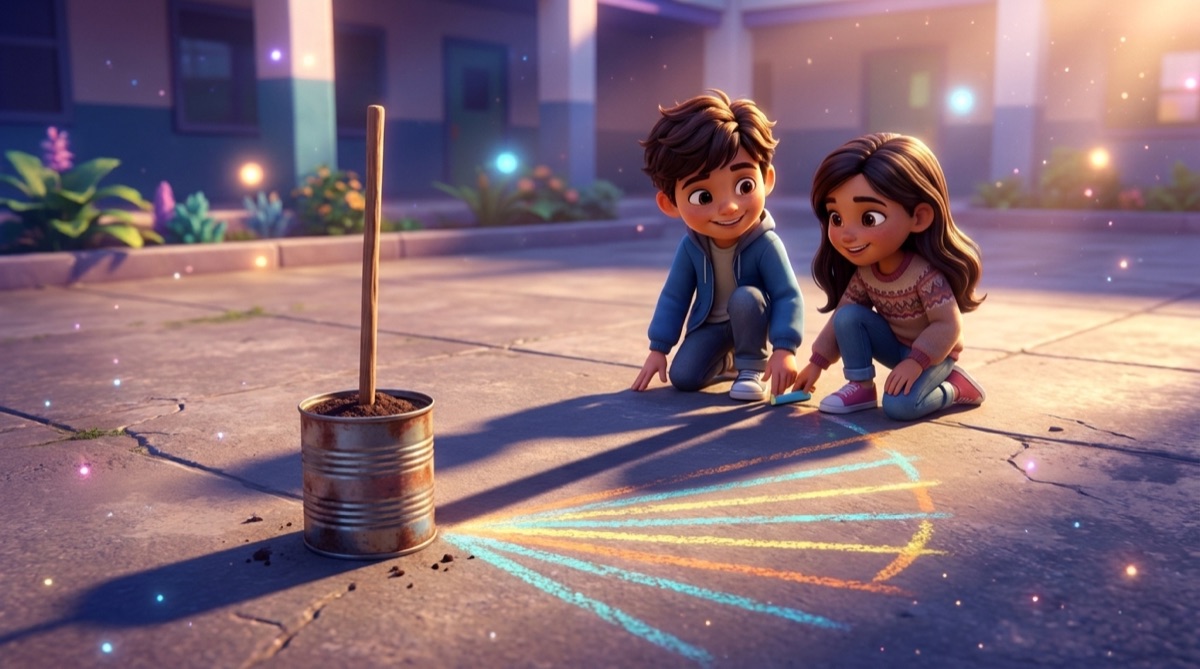
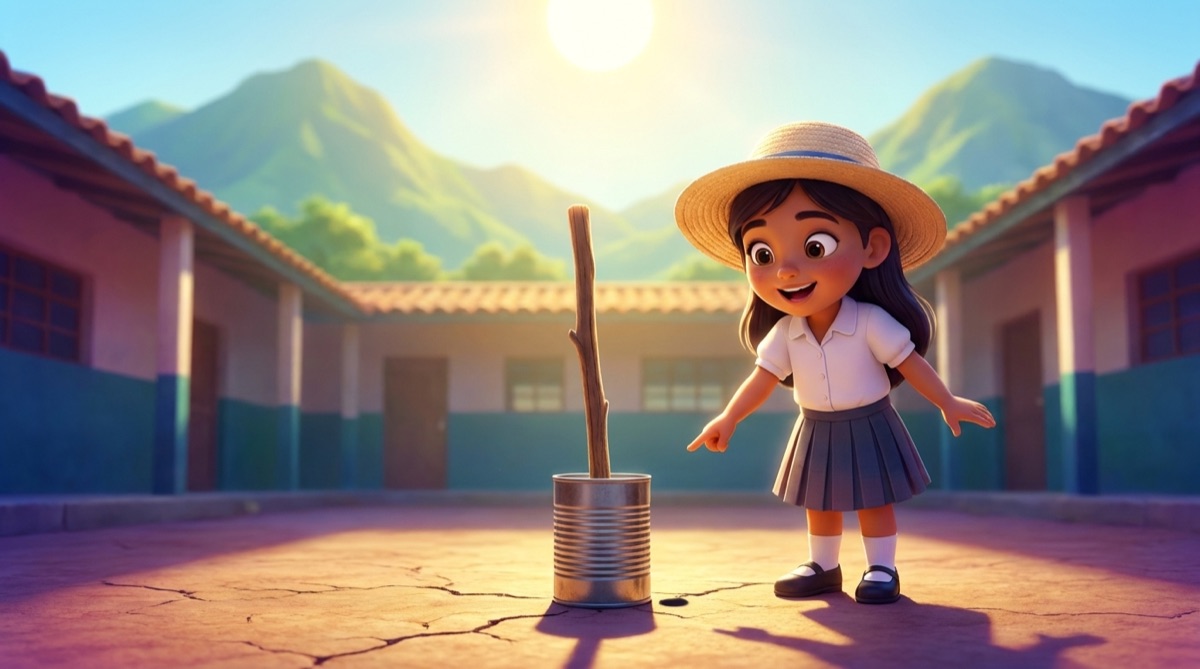
A stick planted in the ground to look at its shadow has an ancient name: gnomon. Thousands of years ago it was already used to tell the time. It is the oldest clock in the world!
Activity: our sundial
You need: a straight stick (about 60 cm long), a bit of modeling clay or a can with soil, chalk, a string and a notebook.
- Find a spot in the schoolyard where the Sun shines all day.
- Plant the stick nice and straight. If the ground is hard, put it in a can with soil. Nobody can move it!
- Measure the stick with your feet: put one foot in front of the other, heel to toe. How many feet long is it? Write it down.
- Every hour, go out to the schoolyard:
- Mark the tip of the shadow with chalk and write the time.
- Measure the shadow with your feet, from the stick to the mark.
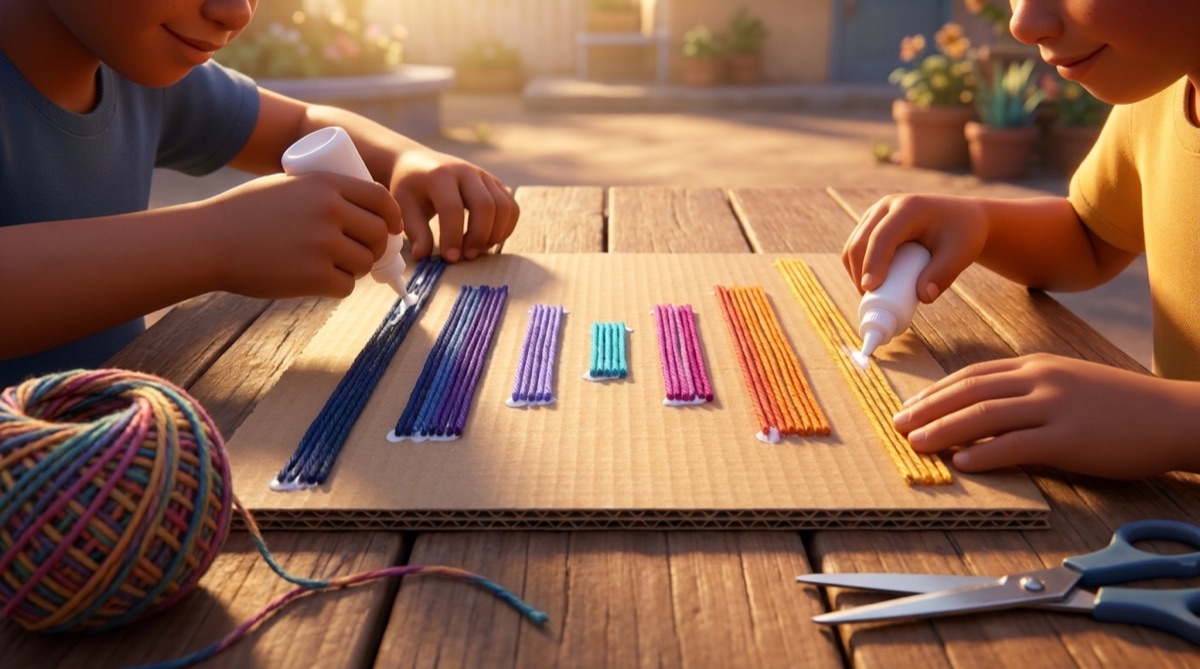
- Cut a piece of string the same length and glue it onto a poster board.
- At the end of the day, join the marks with the chalk. You made a sundial!
If a measurement does not come out exact, use half a foot: “it is 4 and a half feet long”.
Final question: the next day, at the same time, does the shadow fall on the same chalk mark? Does your clock work for telling the time?
The shadow table
Copy this table into your notebook and fill it in with your measurements.
| Time | Length of the shadow (feet) | Which way does it point? |
|---|---|---|
| 8 in the morning | ||
| 9 | ||
| 10 | ||
| 11 | ||
| 12 (noon) | ||
| 1 in the afternoon | ||
| 2 | ||
| 3 | ||
| 4 |
This is how it could look in Bogotá at the end of October, with a stick that is 4 feet long. (These are measurements calculated with the simulator model and rounded to half a foot; yours may be a little different.)
| Time | 8 | 9 | 10 | 11 | 12 | 1 | 2 | 3 | 4 |
|---|---|---|---|---|---|---|---|---|---|
| Shadow (feet) | 7½ | 4½ | 3 | 2 | 1½ | 2 | 3 | 4½ | 7½ |
Bar graphs with shadows
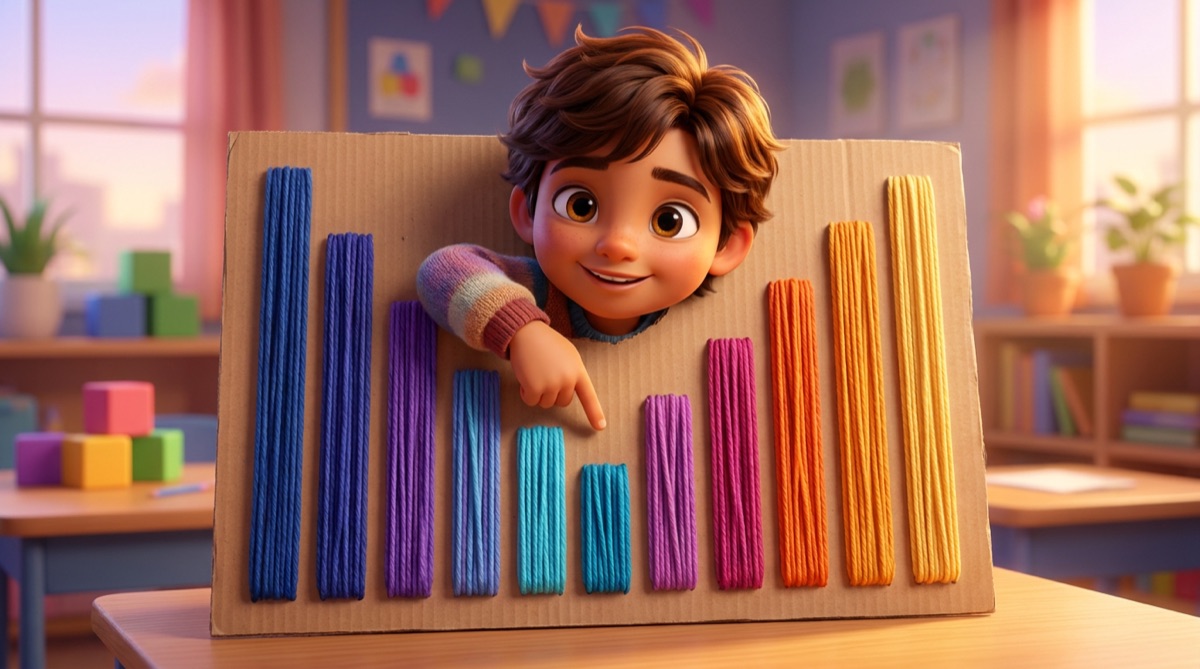
Now draw a bar for each hour. Each little square on the sheet is worth 1 foot. For half a foot, color in half a square. You can also glue the foot-long strings side by side: they are real bars!
Something to think about:
- Which bar is the shortest? What time was it?
- Which one is the longest?
- Are there two bars that are the same? At what times? (Look at 10 and 2.)
- How many feet longer is the shadow at 8 than the one at 12?
- Do the bars make a picture? Does it look like a valley?
The secret of noon
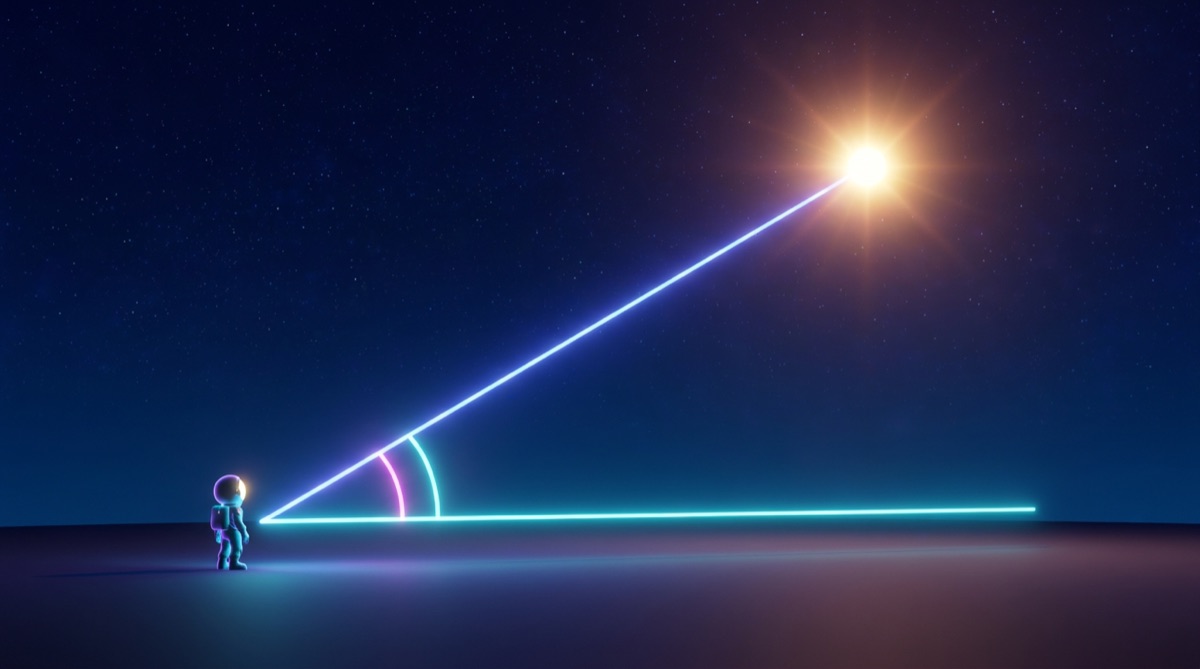
The shortest shadow of the day happens when the Sun is highest. That moment is called the Sun’s noon.
In Colombia the noon Sun climbs very, very high. Some days it is right above our heads, and the stick has almost no shadow!
In the United Kingdom the noon Sun climbs to about 38° above the horizon at the equinoxes. Near the equator it climbs very, very high: some days it is right above your head (90°), and the stick has almost no shadow!
Exercises
- Why does the glass cup have almost no shadow and the notebook does?
Show solution
Because light passes through the glass and does not pass through the notebook. The shadow appears where the object blocks the light.
- At 9 in the morning Mariana’s shadow is 6 feet long. At 12 will it be longer or shorter? Why?
Show solution
Shorter. At noon the Sun is higher and shadows get shorter. In the morning and in the afternoon the Sun is low and shadows are long.
- Using the Bogotá table: how many feet longer is the shadow at 8 than the one at 12?
Show solution
7½ − 1½ = 6 feet longer.
- In the table, which time has the same shadow as 9 in the morning?
Show solution
3 in the afternoon (4½ feet). The morning and afternoon shadows look alike, as in a mirror.
- Sofía measured the stick and got 5 feet; Juan measured the same stick and got 4 feet. Who made a mistake?
Show solution
Neither. Sofía’s feet are smaller than Juan’s, so they fit more times. That is why, to compare measurements by different people, it is best to use the same unit (the same string, for example).
✦ Mini-quiz
Remember
- Light travels straight; the shadow falls on the side opposite the Sun.
- Low Sun, long shadow. High Sun, short shadow.
- A stick planted to look at its shadow is a gnomon: the first clock.
- We can measure with our feet, write it down in a table and compare with a bar graph.
- The shadow changes direction because Earth spins.
🍎 Teacher guide
- Time
- 1 day of measurements in 10 min slots + 2 sessions of 55 min
- Colombian national standard (MEN)
- Natural Sciences, Grades 1 to 3 (MEN, 2006): 'I propose experiences to check the propagation of light and sound'; 'I take measurements with conventional instruments (ruler, meter stick, thermometer, clock, balance...) and non-conventional ones (cups, mugs, hand spans, feet, paces...)'; 'I record the movement of the Sun, the Moon and the stars in the sky over a period of time'. Mathematics, Grades 1 to 3: 'I carry out and describe measurement processes with arbitrary and some standardized patterns, according to the context'; 'I compare and order objects with respect to measurable attributes'; 'I represent data about my environment using concrete objects, pictograms and bar diagrams'.
- Evidence of learning
- In Grade 1: explains with the flashlight why there is a shadow and predicts whether it will be long or short depending on the height of the Sun. In Grade 2: plants the gnomon, measures the shadow in feet at least 5 times during the day, builds the bar graph and reads from it at what time the shadow was shortest and longest.
Materials
- Straight sticks about 60 cm long, modeling clay or cans with soil
- Chalk, string, scissors and poster board
- Flashlights, pencils and modeling clay for the classroom model
- Glass cup, sheet of paper and notebook (transparent and opaque objects)
- Graph paper for the bar graph
- Computer or tablet with the simulator (optional)
Suggested sequence
Session 1. Why is there a shadow? (55 min, Grades 1 and 2). Shadow puppets with the flashlight; transparent and opaque objects; the pencil with the flashlight low and high (long and short shadows). Prediction with the simulator: at what time will the stick’s shadow be shortest?
Measurement day (10 min slots, Grade 2). The gnomon is planted at 8 and measured every hour with feet and strings; each group fills in its table. In Grade 1, three measurements are enough (morning, noon, afternoon) and comparing them: long, short, long.
Session 2. The graph (55 min, Grade 2). Bars on graph paper or with the glued strings; comparison questions (exercises 3 to 5); reading “the valley” of the graph. Individual mini-quiz.
Technical note for the teacher. The example table was calculated with , where is the height of the stick, the altitude of the Sun above the horizon and the length of the shadow (not presented to the children).
Common mistakes
- Believing that the shadow “comes out” of the object or that it is something the object has. The flashlight test shows that without light there is no shadow.
- Thinking that the Sun moves and Earth stays still. Recall the orange from the previous lesson: the stick does not move, Earth spins.
- The Sun’s noon is not exactly 12 on the clock. It depends on the date (equation of time, up to ±16 min) and on the longitude of the city: in Bogotá it falls between about 11:40 and 12:10, and in Leticia, farther east, about 16 minutes earlier. That is why the shortest shadow can appear at 11:45 or at 12:05.
- Shadows in Colombia are special. Near the equator, the noon Sun passes very high. In Bogotá (4.71° N) it passes right through the zenith twice a year, in early April and around September 10: on those days the noon shadow almost disappears. Between those dates the noon shadow points south; the rest of the year, north. If the activity is repeated in another month, the direction may change.
- Non-conventional units: each child’s feet are different (exercise 5). It is the occasion to arrive at the idea of a common unit.