Glossary
The words of the sky explained at two levels: a simple definition to get started and another with the formulas for anyone who wants to go all the way. Each term links to the lesson where it is worked on.
120 terms
A
-
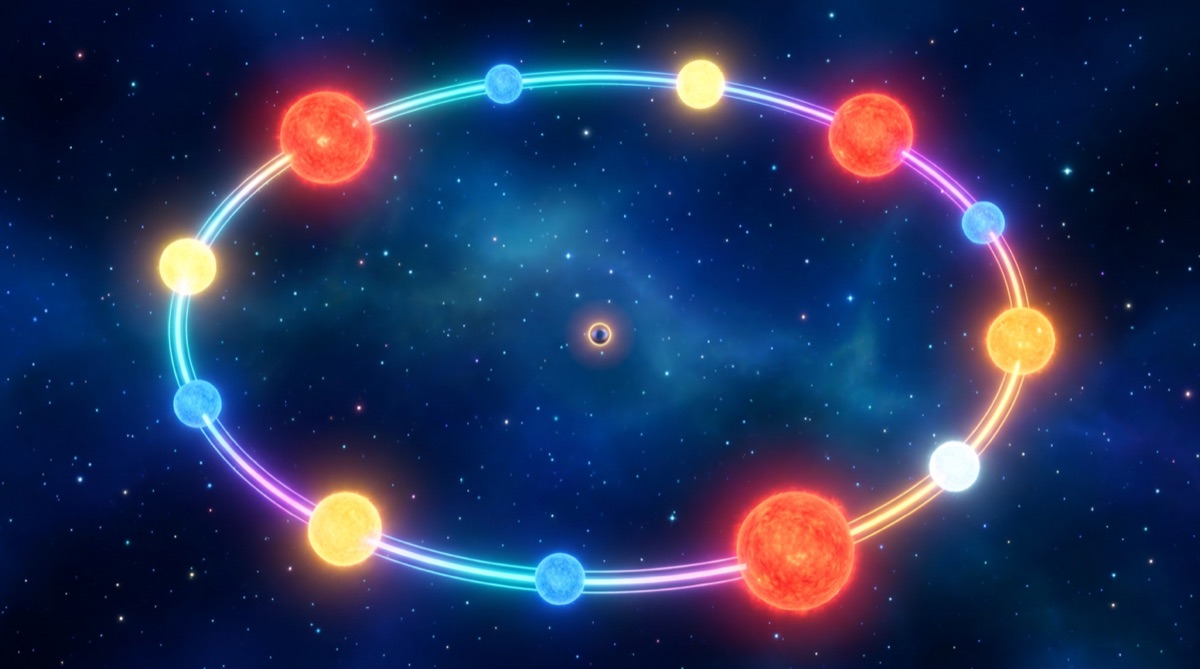
Absolute magnitude
The brightness a star would have if all stars were at the same distance (10 parsecs). That is how they are truly compared: the Sun, dazzling up close, would have absolute magnitude 4.8.
Light and spectra · formula
-
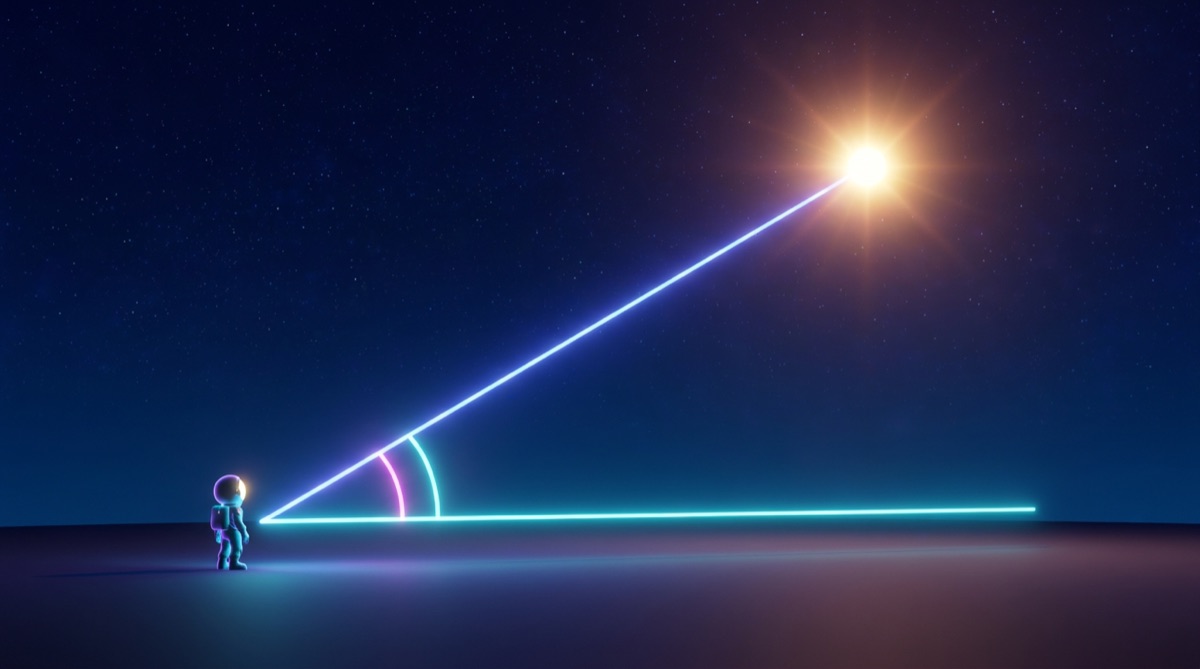
Altitude above the horizon
Also: altitude of the Sun, angular altitude, altitude of a star
The angle between the horizon and a celestial object: 0° when it is rising and 90° when it is straight overhead. Your outstretched fist spans about 10°.
The sky and coordinates · formula
-
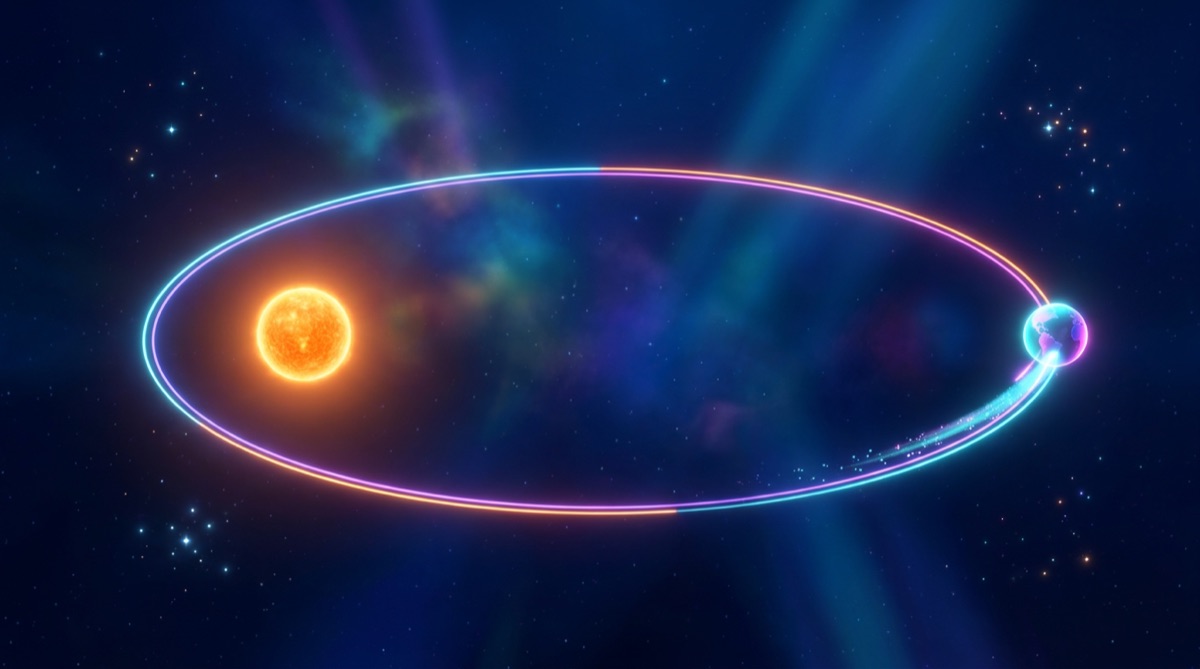
Aphelion
Also: apoapsis, apastron, apogee
The point of the orbit farthest from the Sun; there the planet moves slowest. For the Moon around Earth it is called apogee.
Orbits and gravitation
-

Apparent magnitude
Also: magnitude, visual magnitude
A number that says how bright a star looks from Earth. The smaller it is, the brighter the star: Sirius has −1.5, and the faintest stars you can see with the naked eye, 6.
Light and spectra · formula
-
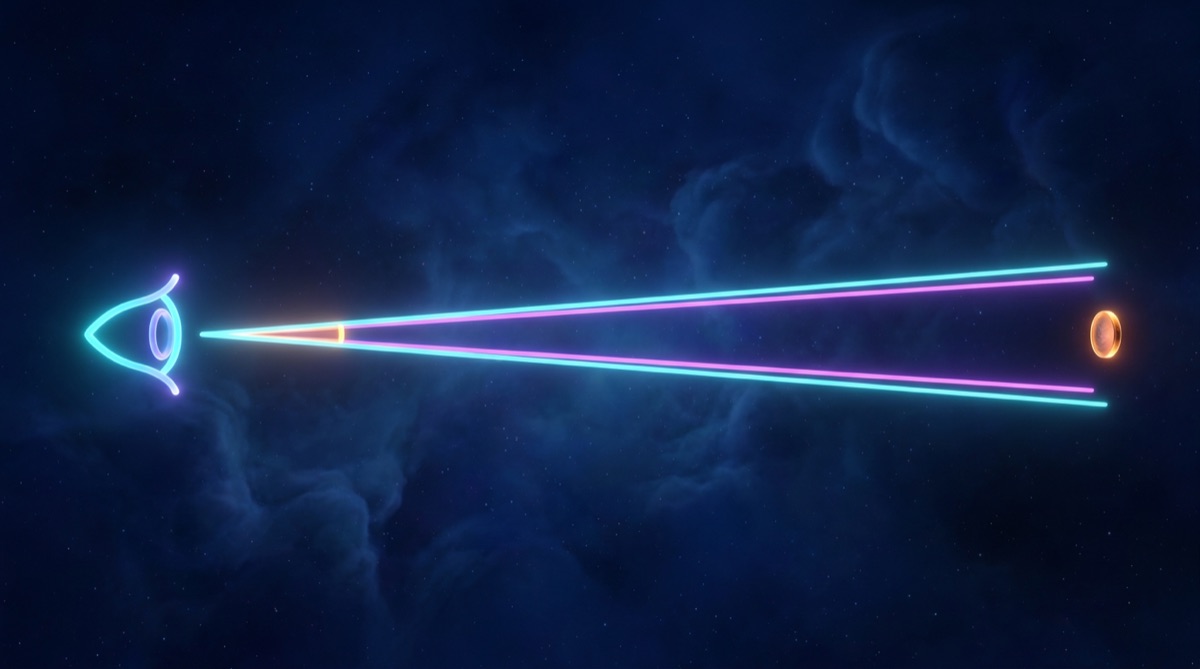
Arcsecond
Also: second of arc, seconds of arc, arcsec
A very small angle: one 3600th of a degree. A coin seen from 4 km away spans about one arcsecond.
Measuring the universe · reference value
-
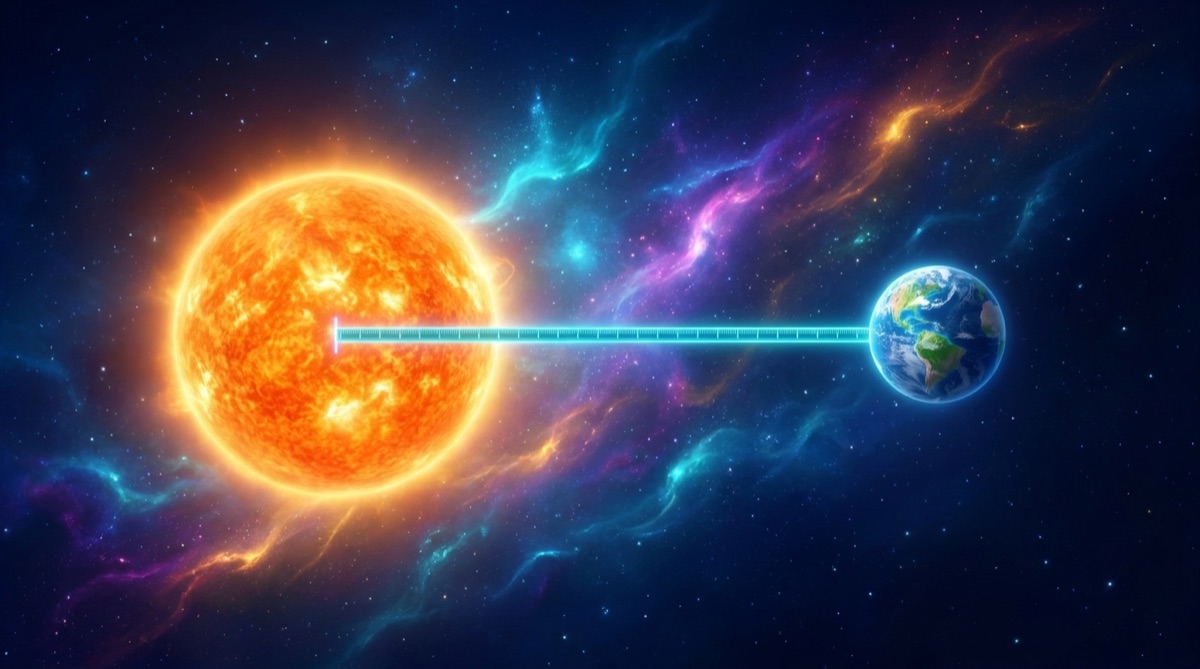
Astronomical unit
Also: au
The average distance between Earth and the Sun. It works as a "ruler" for measuring the Solar System: Jupiter is about 5 au from the Sun.
Measuring the universe · reference value
-

Azimuth
Also: azimuthal
The compass direction in which a celestial object lies: 0° is north, 90° east, 180° south and 270° west.
The sky and coordinates
B
-
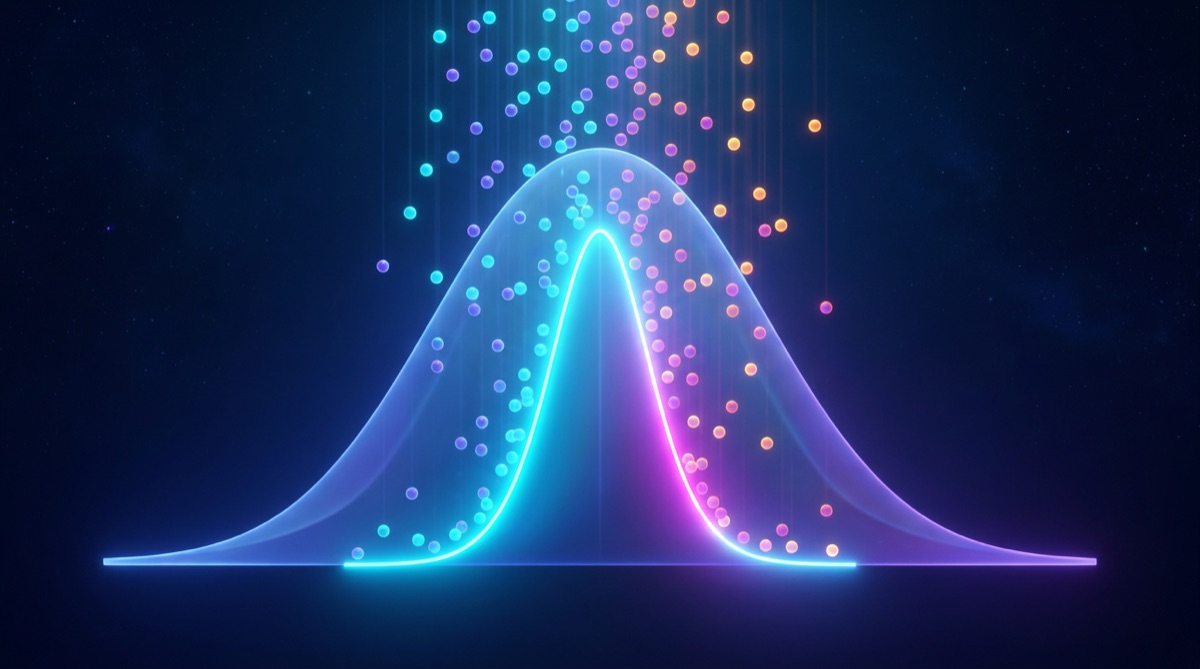
Bayesian inference
Also: Bayesian, Bayes' theorem, Bayes theorem
A way of reasoning with probabilities: you start from what you believe (the prior), look at the data and update your belief (the posterior). It is how astronomers estimate the mass of a planet together with its uncertainty.
Mathematics and numerical methods · formula
-
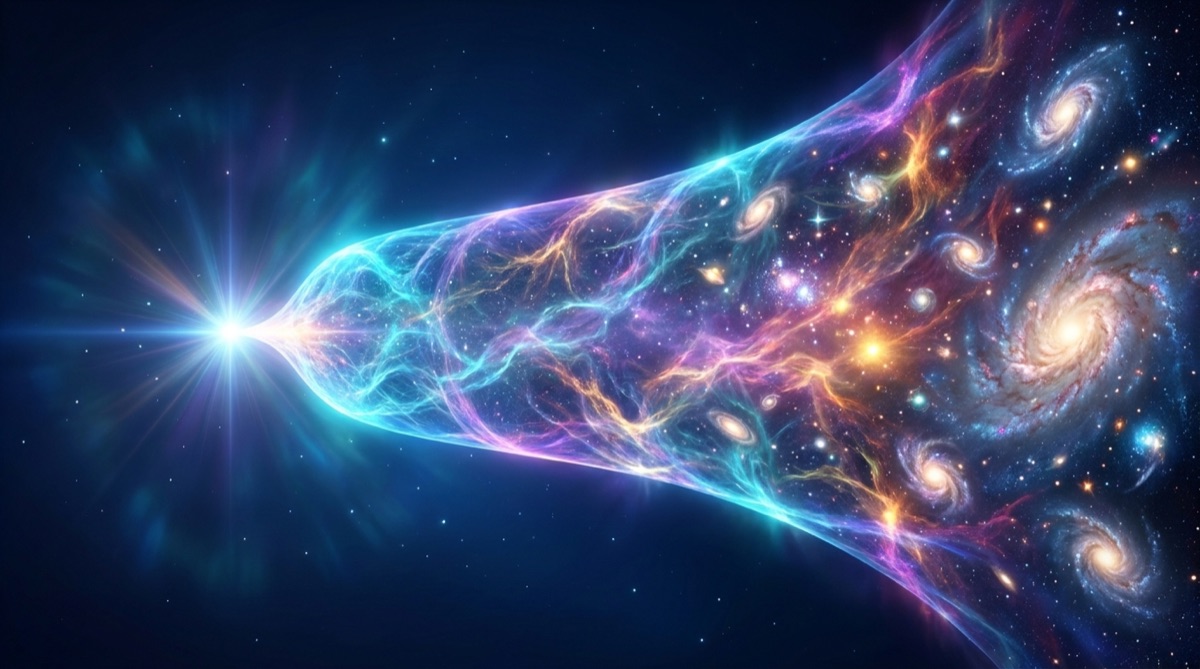
Big Bang
Also: hot Big Bang
The beginning of the expansion of the universe, 13.8 billion years ago, when everything was unimaginably hot and dense. It was not an explosion "in" space: it was space itself starting to stretch.
Galaxies and cosmology · reference value
-
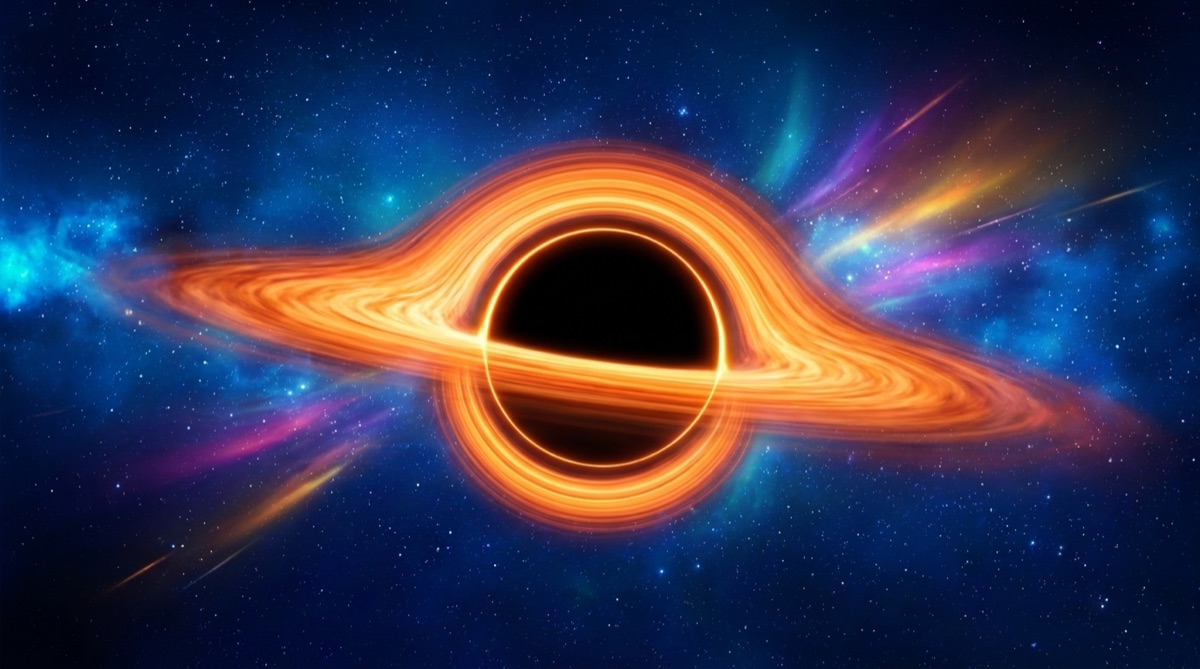
Black hole
An object with so much mass in so little space that not even light can escape from it. They form when the largest stars die; at the center of almost every galaxy there is a giant one.
Relativity and compact objects
-
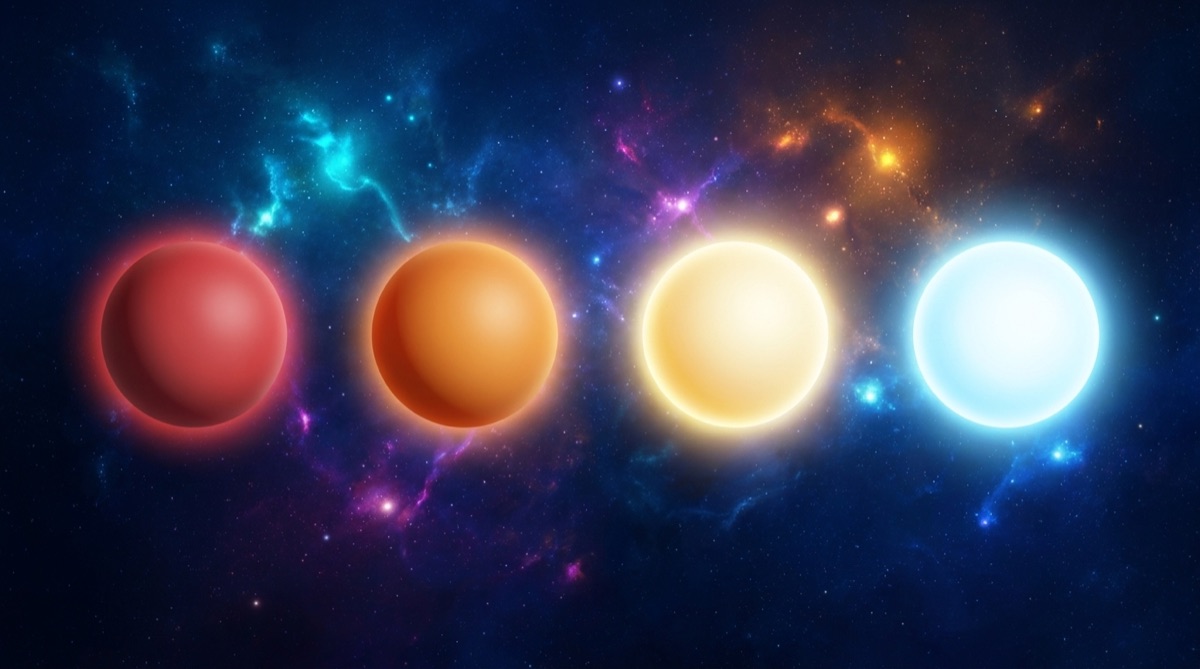
Blackbody
Also: black body, black-body
An ideal object that absorbs all the light it receives and glows only because of its temperature. A red-hot iron or a star behaves almost like one: its color tells how hot it is.
Light and spectra
C
-

Cardinal points
Also: cardinal point, cardinal directions, cardinal direction
The four main directions: north, south, east and west. The Sun rises in the east and sets in the west; the shadow of a stick at noon points north or south.
The sky and coordinates
-
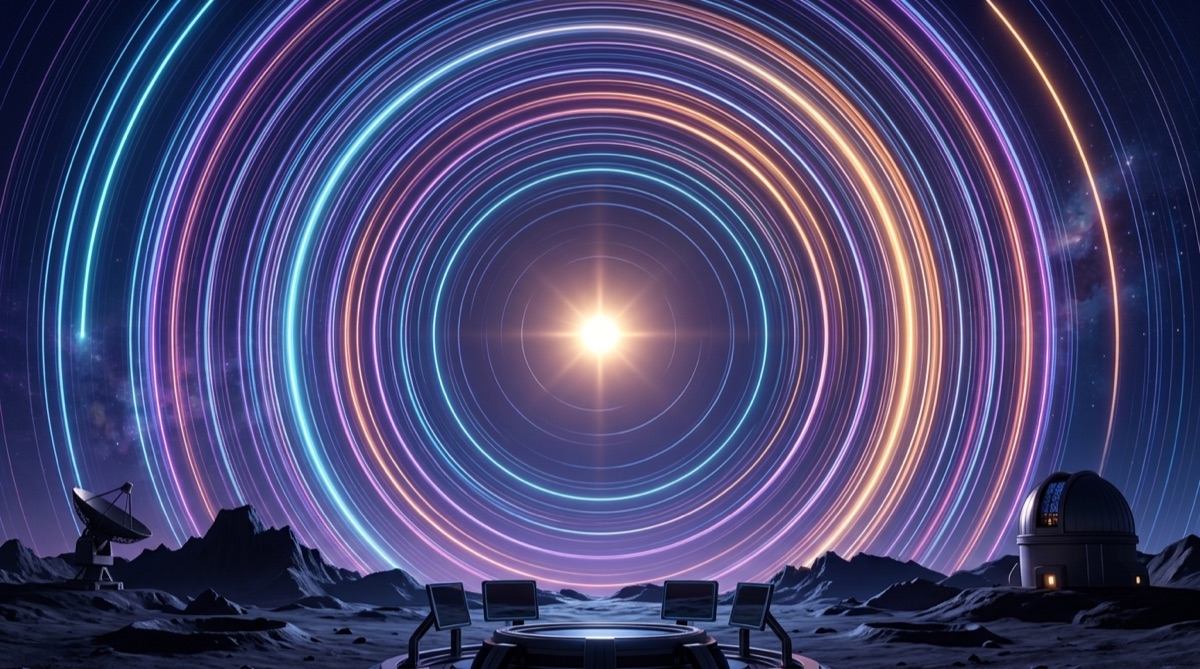
Celestial pole
Also: north celestial pole, south celestial pole
The point in the sky around which all the stars seem to turn. It is where Earth's axis points; in the northern hemisphere it is marked by Polaris, the North Star.
The sky and coordinates
-
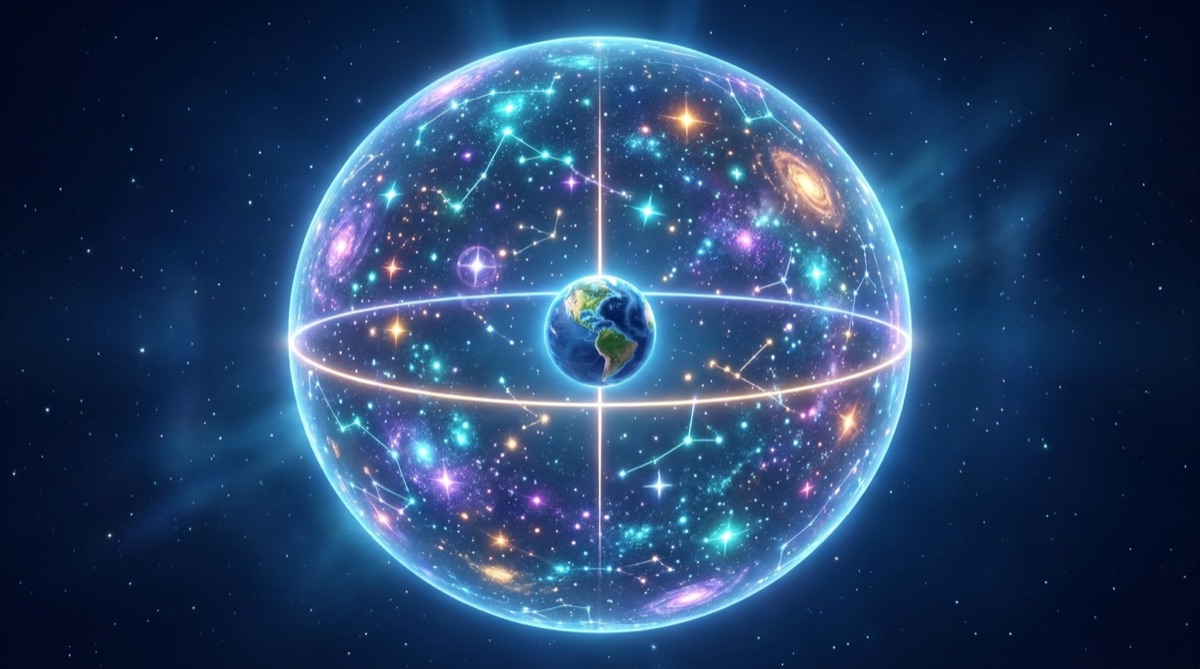
Celestial sphere
A giant imaginary sphere, with Earth at the center, onto which we "pin" the stars. It does not really exist, but it helps locate any celestial object with two angles, like latitude and longitude on a map.
The sky and coordinates
-
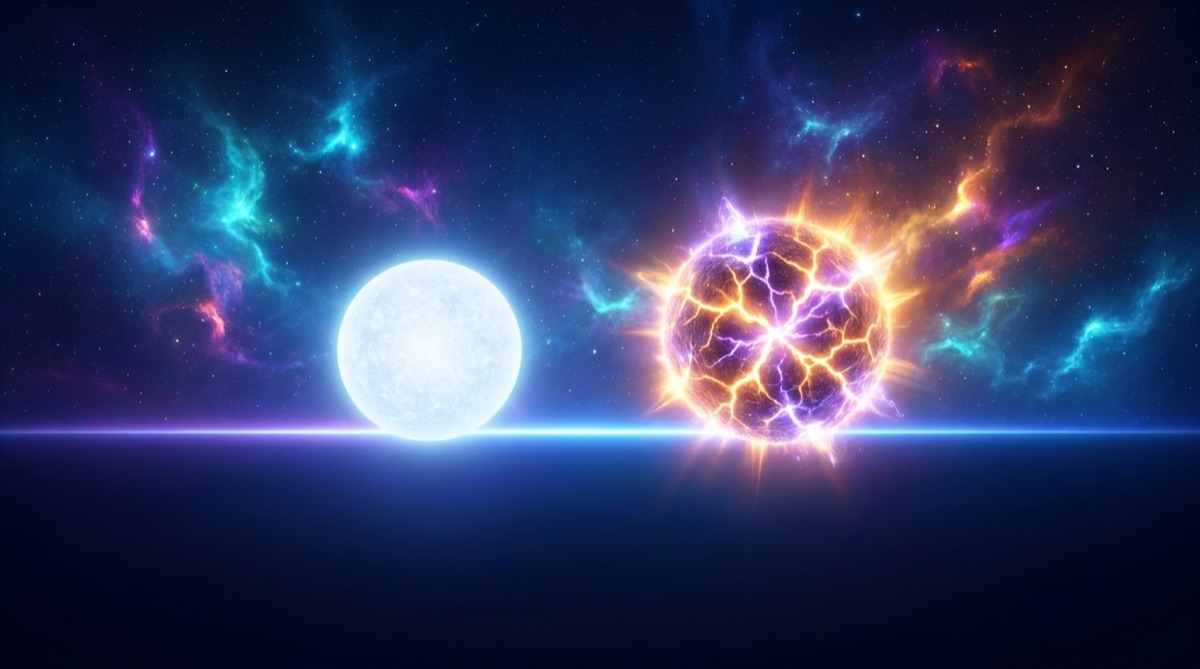
Chandrasekhar limit
Also: Chandrasekhar mass, Chandrasekhar
The maximum mass a white dwarf can have: 1.4 times that of the Sun. If it exceeds it, it collapses and explodes as a supernova or becomes a neutron star.
Stars · reference value
-
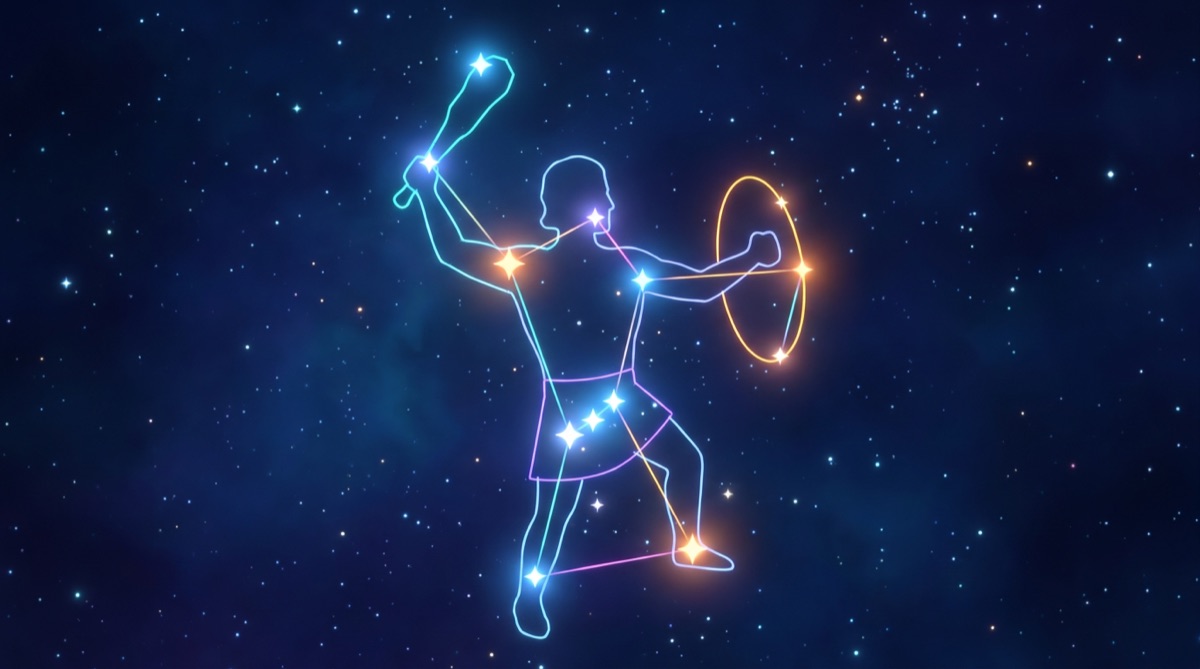
Constellation
A group of stars that, joined by imaginary lines, form a picture: Orion, Ursa Major, Scorpius. Its stars are usually very far from one another; they only look close together from Earth.
The sky and coordinates · reference value
-
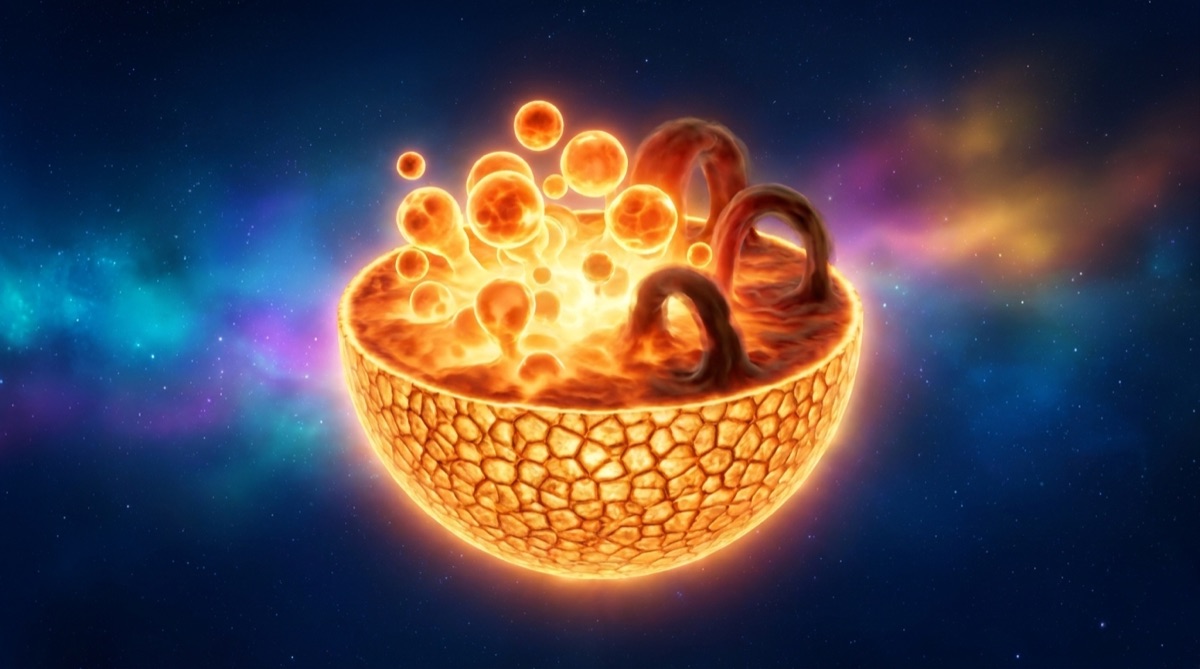
Convection
Also: convective, convection zone, convective zone
Heat transport by the motion of the gas, like water boiling in a pot: hot bubbles rise and cool ones sink. In the Sun it happens in the outer layer and produces the granulation of its surface.
Stars
-
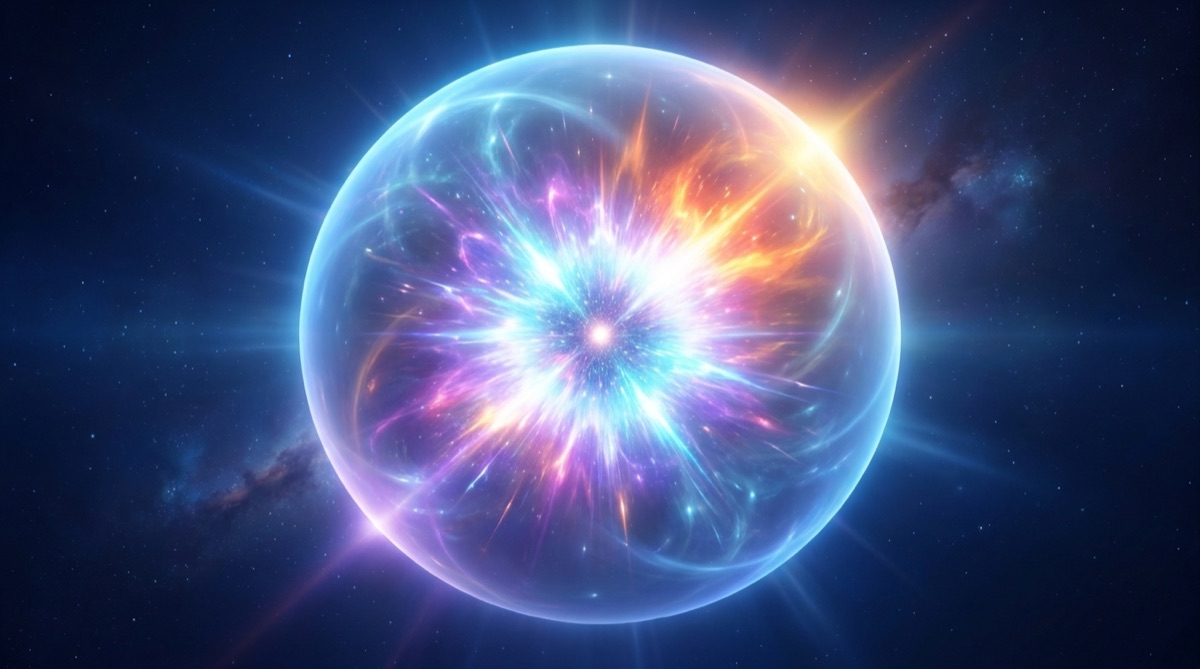
Cosmic inflation
Also: inflation, cosmological inflation, inflationary epoch
An ultra-fast expansion in the first fraction of a second of the universe, which stretched it more than all the growth that came afterward. It explains why the universe looks so similar in every direction.
Galaxies and cosmology · reference value
-
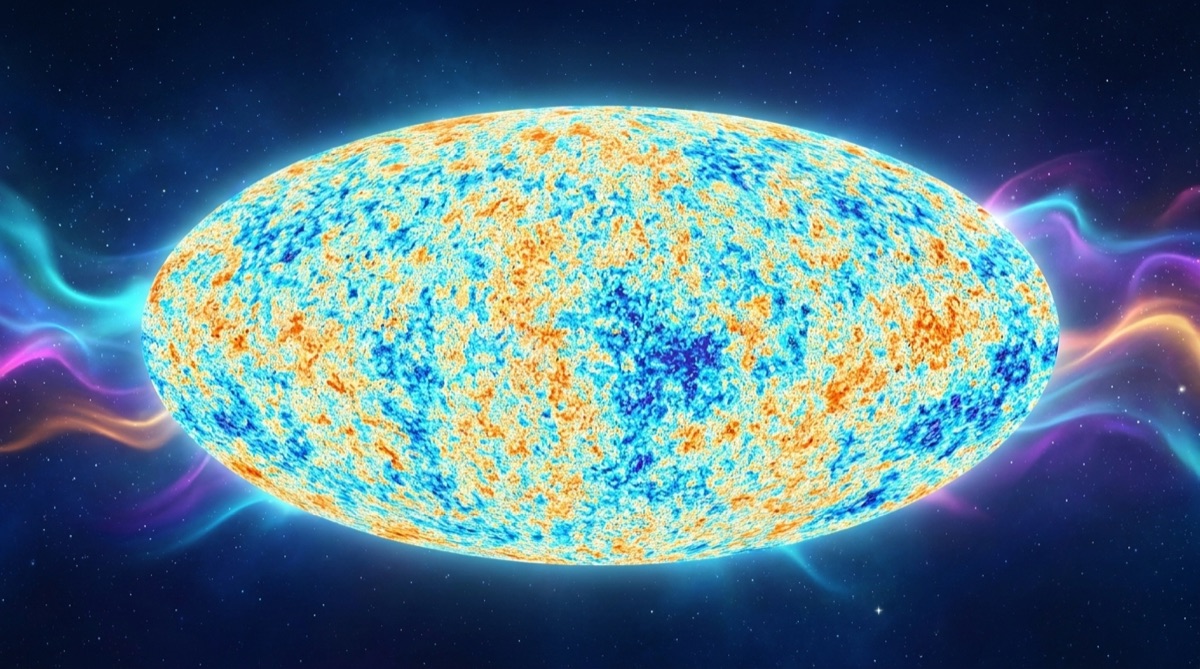
Cosmic microwave background
Also: CMB, background radiation, cosmic background radiation
The oldest light in the universe: it set out when the universe was 380 000 years old and today arrives from every direction, cooled to 2.7 degrees above absolute zero. It is the "baby picture" of the cosmos.
Galaxies and cosmology · reference value
D
-
Dark energy
Also: cosmological constant, Lambda
Something that fills all of space and makes the universe expand faster and faster, instead of slowing down. It is 68 % of everything there is, and it is the biggest mystery in physics today.
Galaxies and cosmology · reference value
-
Dark matter
An invisible kind of matter that neither emits nor reflects light, but whose gravity can be felt: it makes galaxies spin faster than expected. There is about five times more dark matter than normal matter, and we still do not know what it is.
Galaxies and cosmology · reference value
-

Declination
The "latitude" of a star in the sky: how many degrees it is north (+) or south (−) of the celestial equator. Polaris has almost +90°.
The sky and coordinates
-
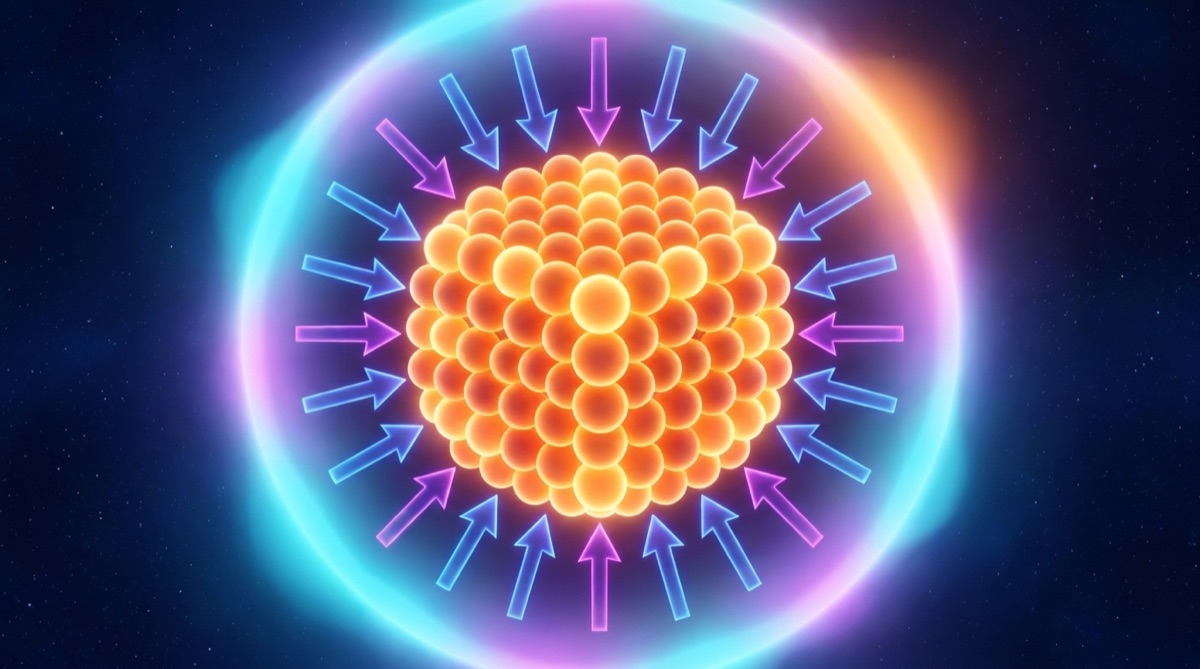
Degeneracy pressure
Also: degeneracy, degenerate gas, degenerate electrons
A pressure that appears when matter is so tightly packed that the electrons cannot get any closer together, because of a rule of quantum physics. It holds up white dwarfs even when they are cold.
Stars
-
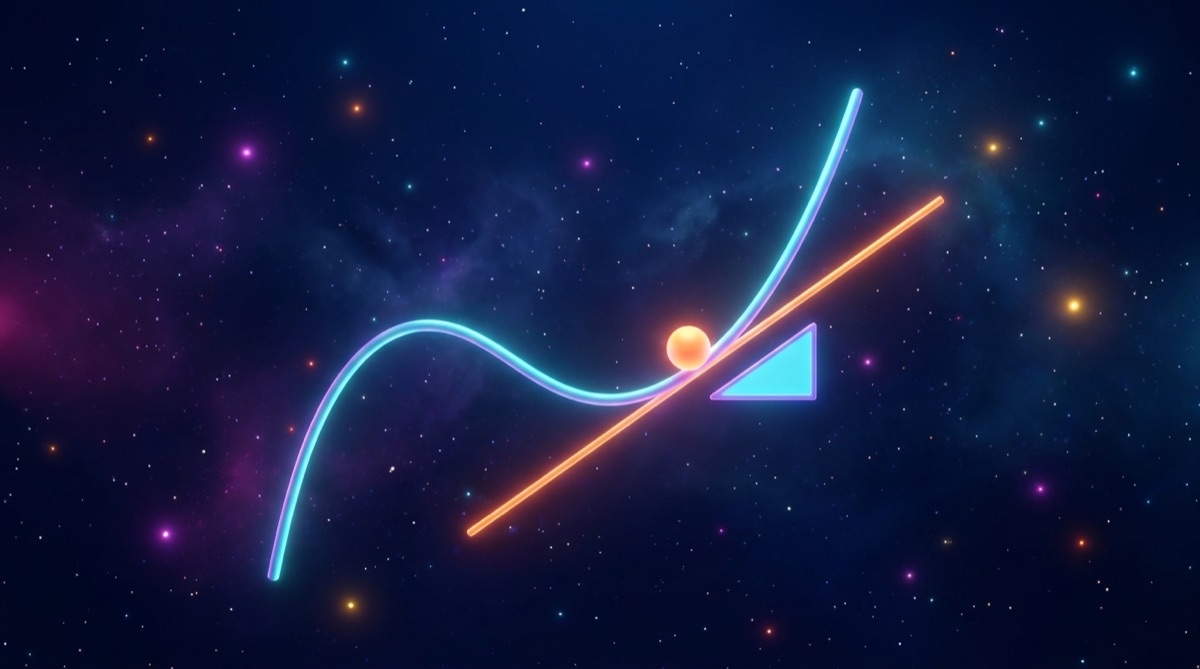
Derivative
Also: rate of change, instantaneous rate of change, instantaneous velocity
How fast something changes at an instant: the derivative of position is velocity, and the derivative of velocity is acceleration. It is the slope of the graph at each point.
Mathematics and numerical methods · formula
-
Deterministic chaos
Also: chaos, chaotic, chaotic motion
Motion that follows exact rules but is impossible to predict in the long run, because a tiny change at the start produces completely different results. The orbits of the planets are chaotic on scales of millions of years.
Orbits and gravitation
-

Differential equation
Also: differential equations, ODE, equation of motion
An equation that does not say where something is, but how it changes: "the acceleration of Earth points toward the Sun and has this value". Solving it step by step is what an orbit simulator does.
Mathematics and numerical methods
-
Doppler effect
Also: Doppler, Doppler shift
The change in pitch of a siren as it approaches or moves away. The same happens with light: a star moving away looks a little redder, and one approaching, bluer.
Light and spectra · formula
E
-
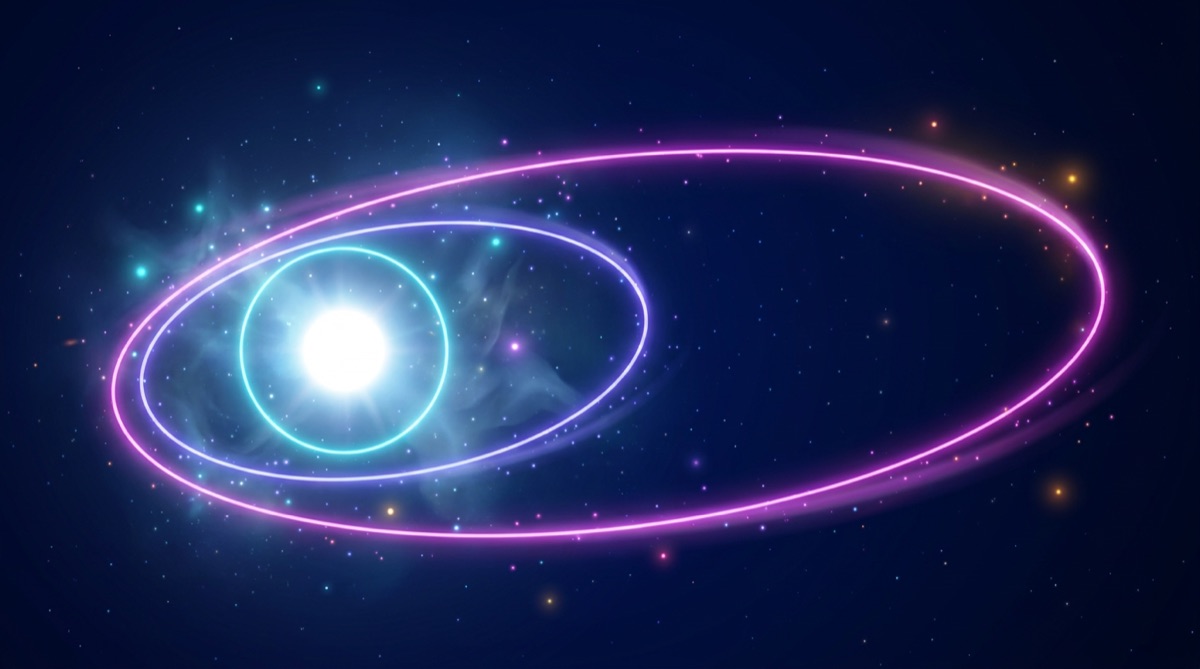
Eccentricity
A number between 0 and 1 that says how flattened an orbit is: 0 is a perfect circle, and the closer to 1, the more elongated. Earth's is 0.017, almost a circle; Halley's comet's, 0.97.
Orbits and gravitation
-
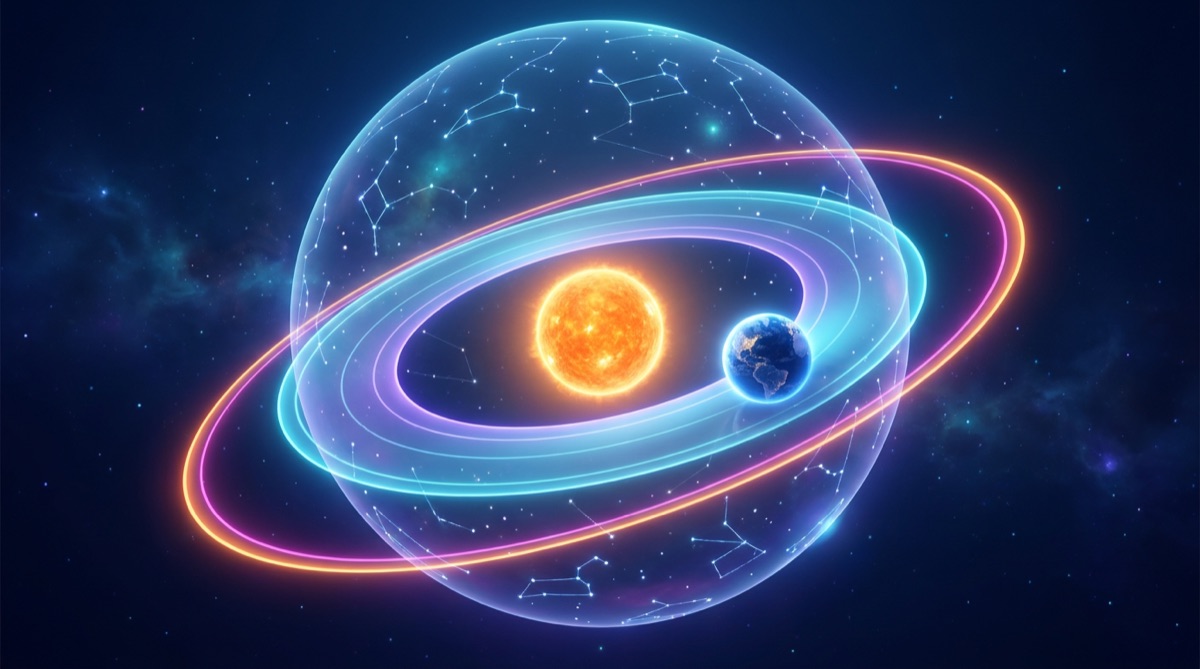
Ecliptic
The path the Sun seems to follow among the stars over the course of the year. The planets and the Moon always travel near that line; eclipses happen along it, which is where its name comes from.
The sky and coordinates
-
Ellipse
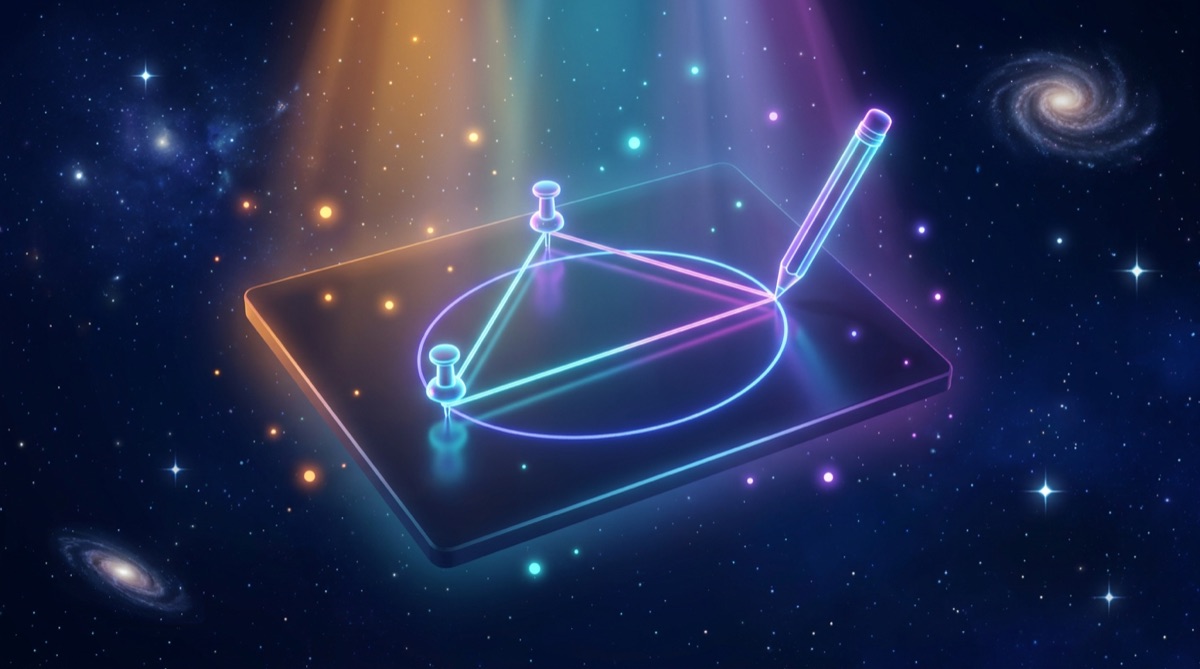
A "stretched" circle. You can draw one with a string tied to two nails (the foci): the sum of the distances to the two nails is always the same. The planets travel along ellipses with the Sun at one focus.
Orbits and gravitation
-
Equinox
Also: vernal point, vernal equinox, first point of Aries
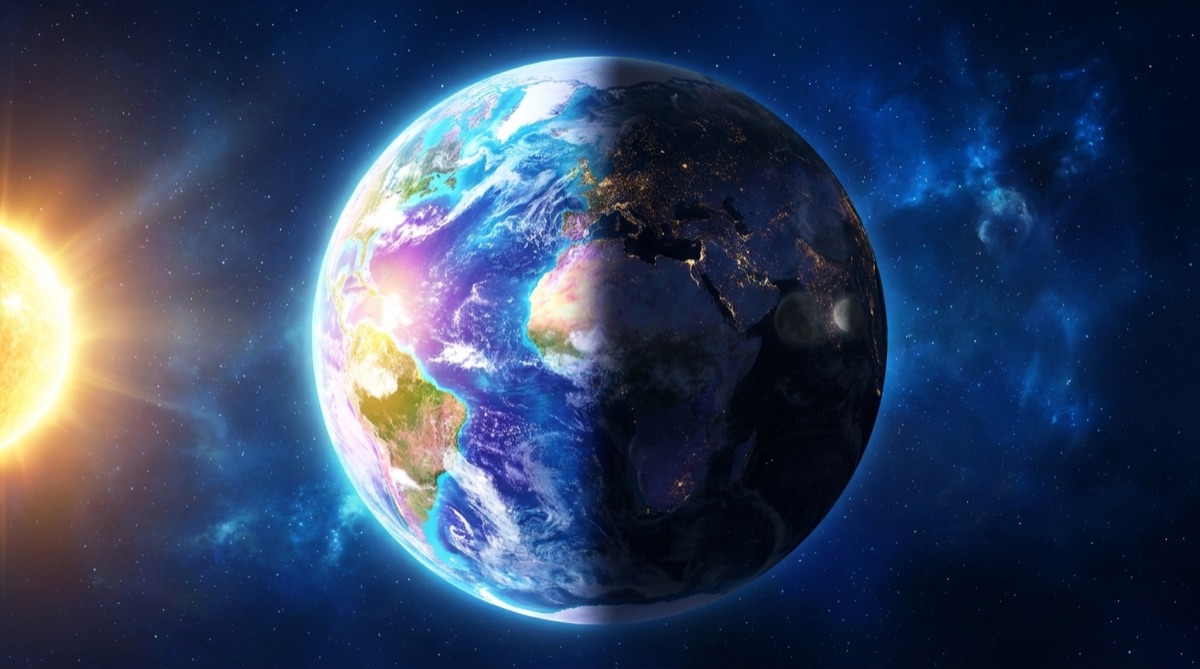
The two days of the year (around March 20 and September 22) when day and night last the same everywhere in the world. On those days the Sun rises exactly in the east.
The sky and coordinates
-

Escape velocity
Also: escape speed
The minimum speed needed to launch something so that it never falls back: from Earth, 11.2 km/s (about 40 000 km/h). On the Moon, 2.4 km/s is enough.
Orbits and gravitation · reference value · formula
-

Euler's method
Also: Euler, Euler method, semi-implicit Euler
The simplest way to simulate a motion: advance in small time steps assuming the velocity does not change during each step. With small steps it works, but the error builds up.
Mathematics and numerical methods · formula
-
Exoplanet
Also: extrasolar planet, extrasolar planets
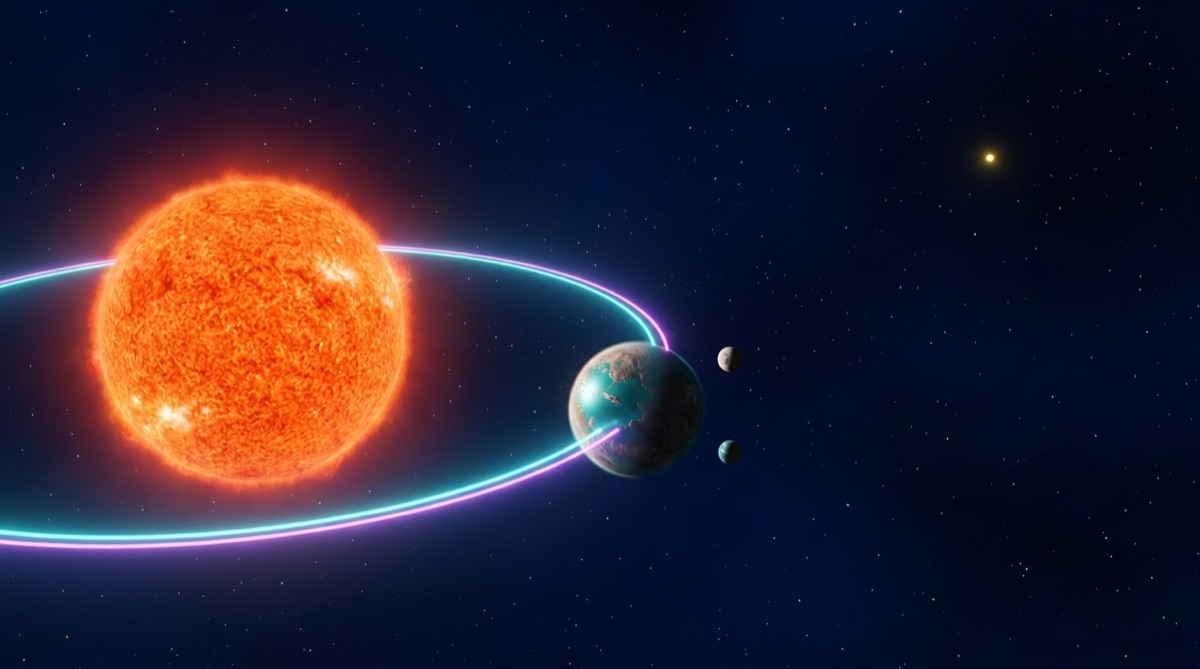
A planet that orbits a star other than the Sun. More than 5000 have been known since 1995; most were discovered by watching them block a tiny bit of their star's light as they pass in front of it.
Exoplanets
F
-
Flux
Also: radiant flux, brightness, irradiance
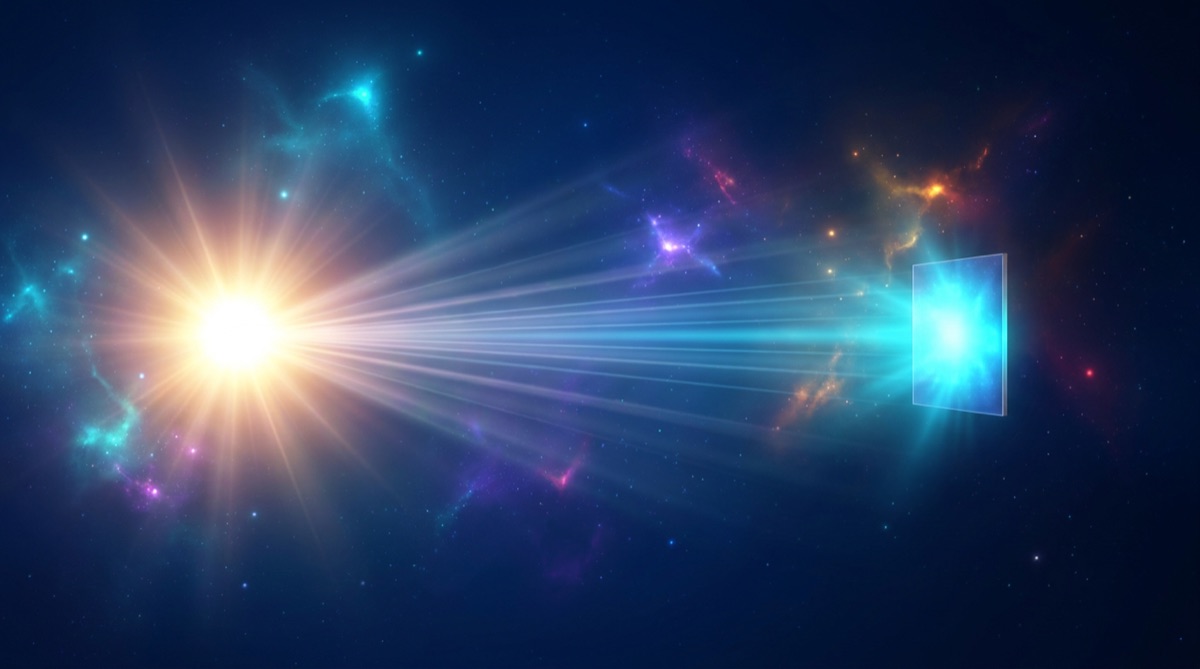
The amount of light that reaches each square meter. The same flashlight lights your hand less the farther away you hold it: brightness drops with distance.
Light and spectra
-
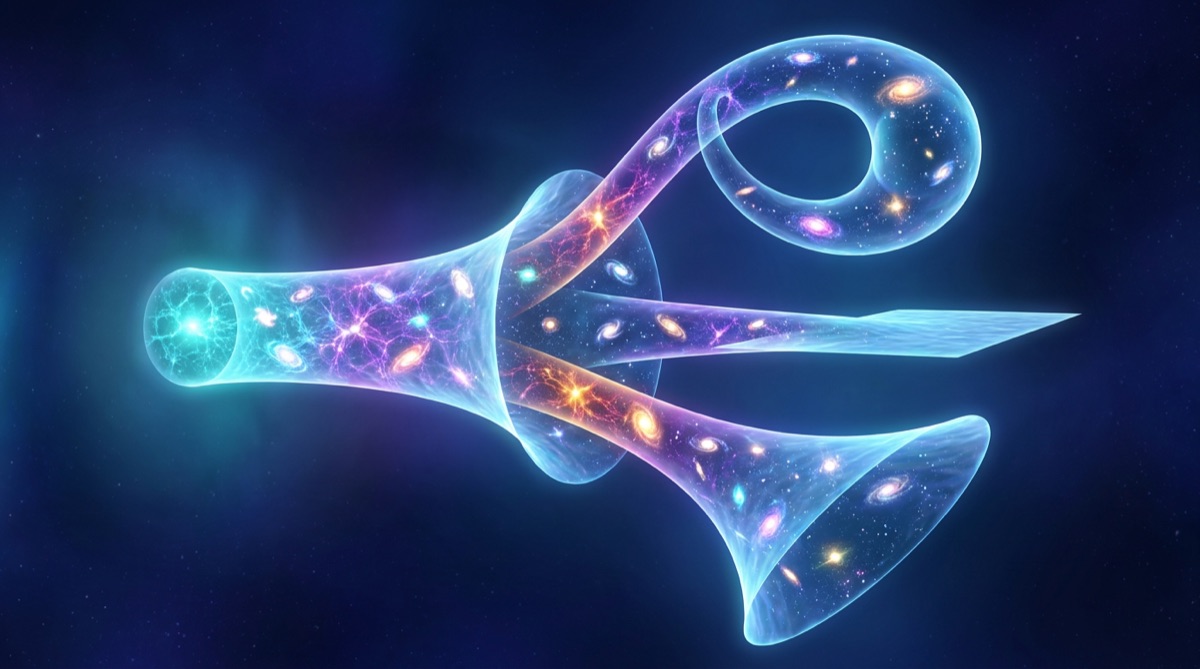
Friedmann equations
Also: Friedmann equation, Friedmann model, FLRW metric
The equations that say how the size of the universe changes with time according to what it contains: matter, radiation and dark energy. They are general relativity applied to the whole universe.
Galaxies and cosmology · formula
G
-
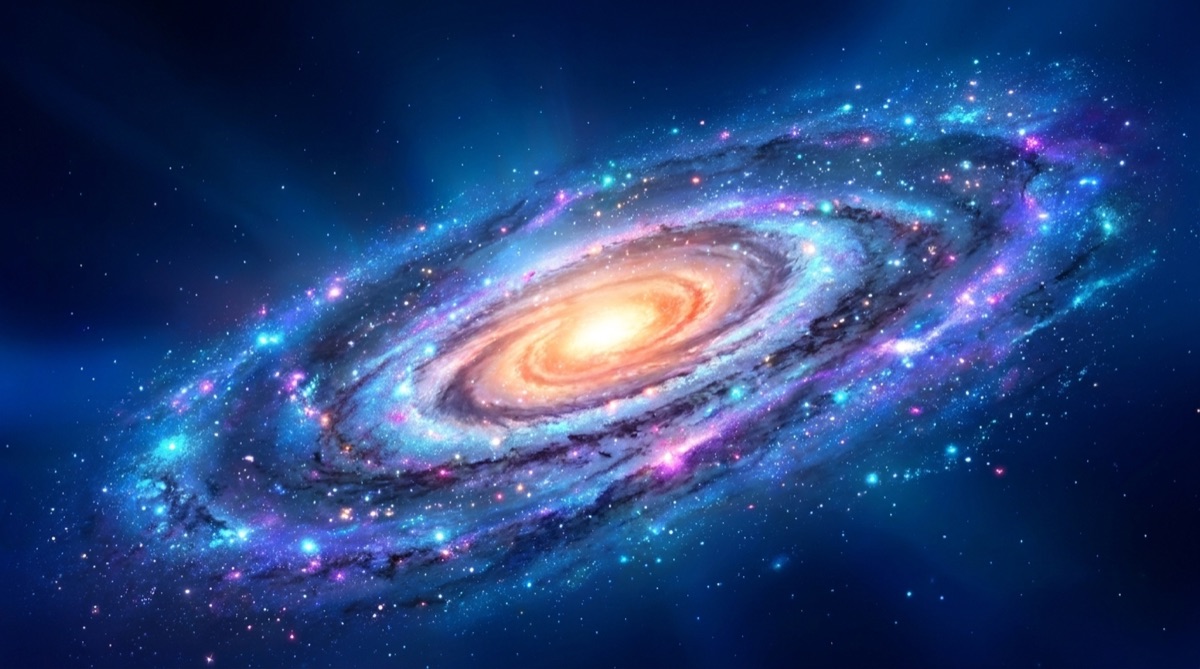
Galaxy
Also: galaxies
A city of stars: hundreds of billions of them, with gas, dust and dark matter, bound together by gravity. Ours is the Milky Way; the largest neighbor, Andromeda.
Galaxies and cosmology
-
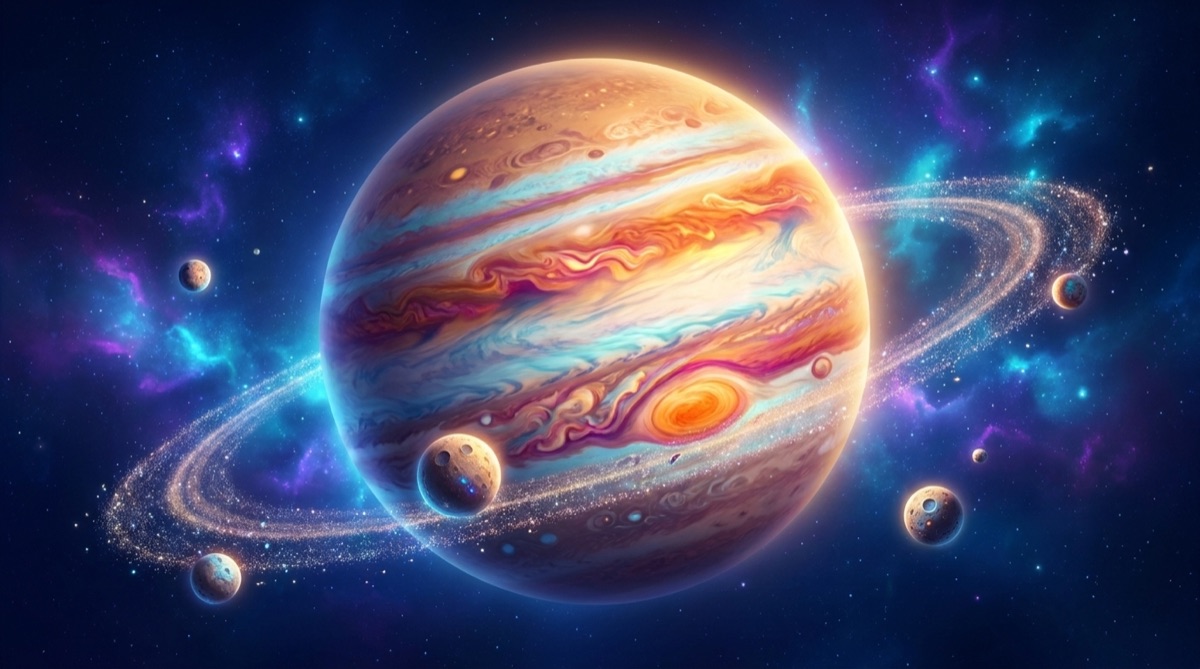
Gas giant
Also: giant planet, giant planets, ice giant
A huge planet made mostly of gas (hydrogen and helium), with no solid ground: Jupiter and Saturn. Uranus and Neptune, with more ice, are called ice giants. All of them have rings and many moons.
Solar System
-
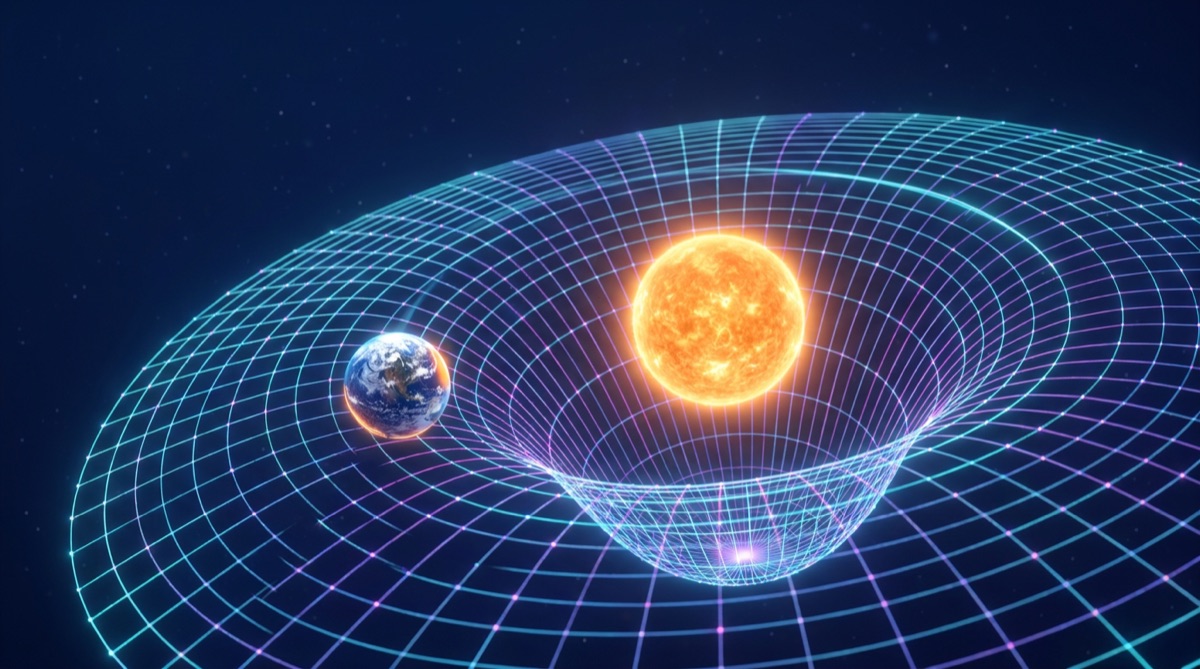
General relativity
Also: theory of relativity, Einstein equations, Einstein's equations
Einstein's theory (1915), according to which gravity is not a force but the curvature of space and time caused by mass. The planets follow the "straightest" possible path in a space curved by the Sun.
Relativity and compact objects · formula
-
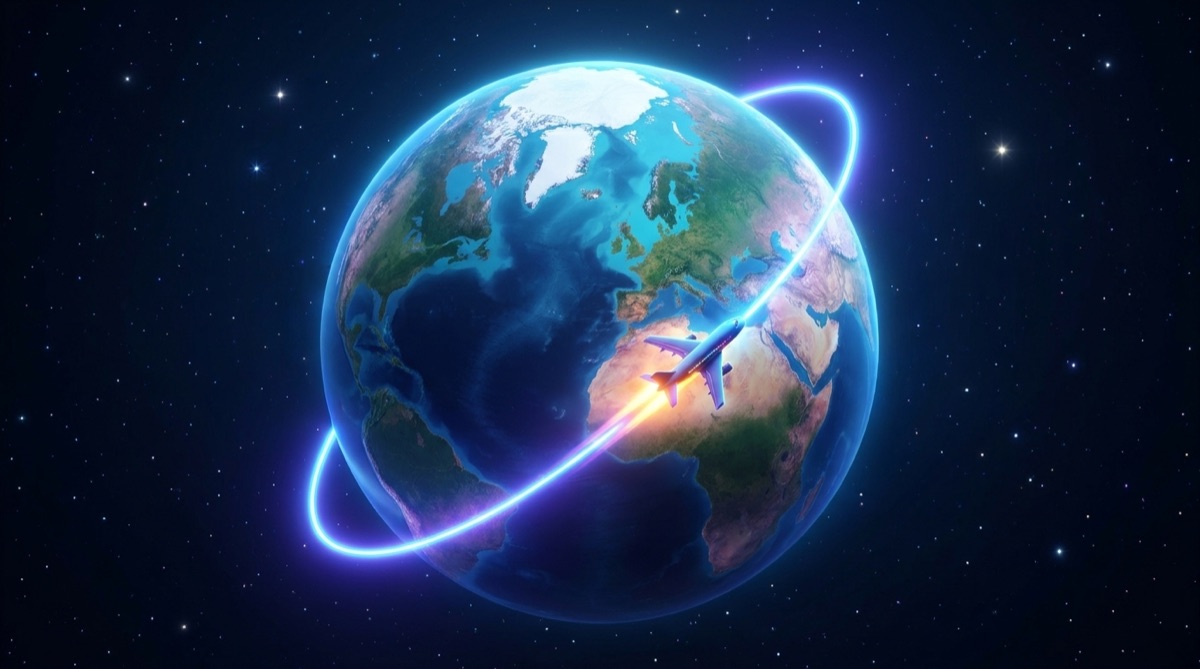
Geodesic
The "straightest" possible path in a curved space, like the route of an airplane over the globe. In relativity, planets and light follow geodesics: no force pushes them.
Relativity and compact objects
-
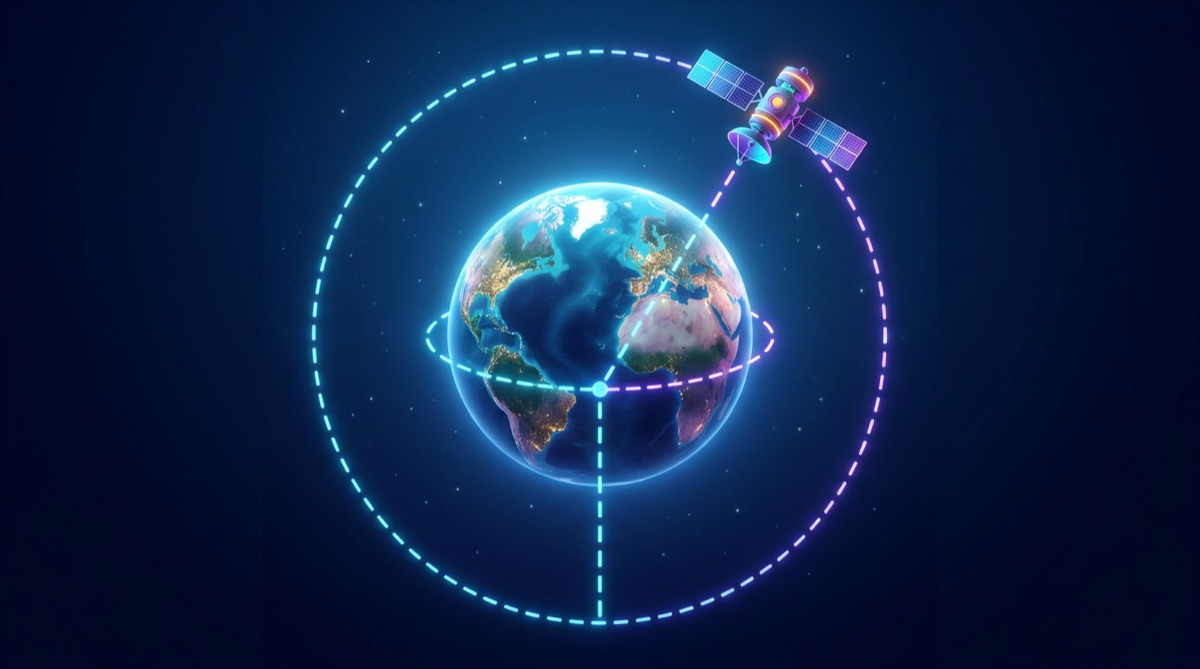
Geostationary orbit
Also: geostationary, geostationary satellite, geosynchronous
An orbit 35 786 km above the equator in which a satellite takes exactly one day to go around, so it always stays above the same point on Earth. Television satellites are there.
Orbits and gravitation · reference value
-
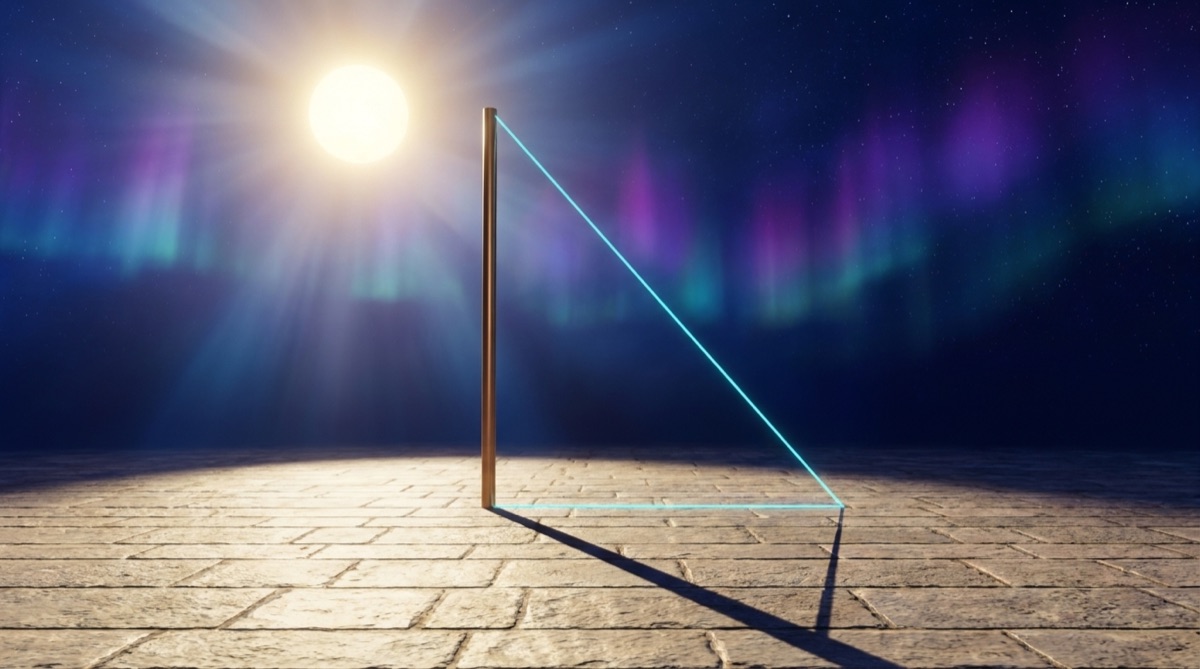
Gnomon
A vertical stick planted in the ground whose shadow is used to measure the altitude of the Sun. It is the oldest astronomical instrument: with it, Eratosthenes measured the Earth.
Measuring the universe
-
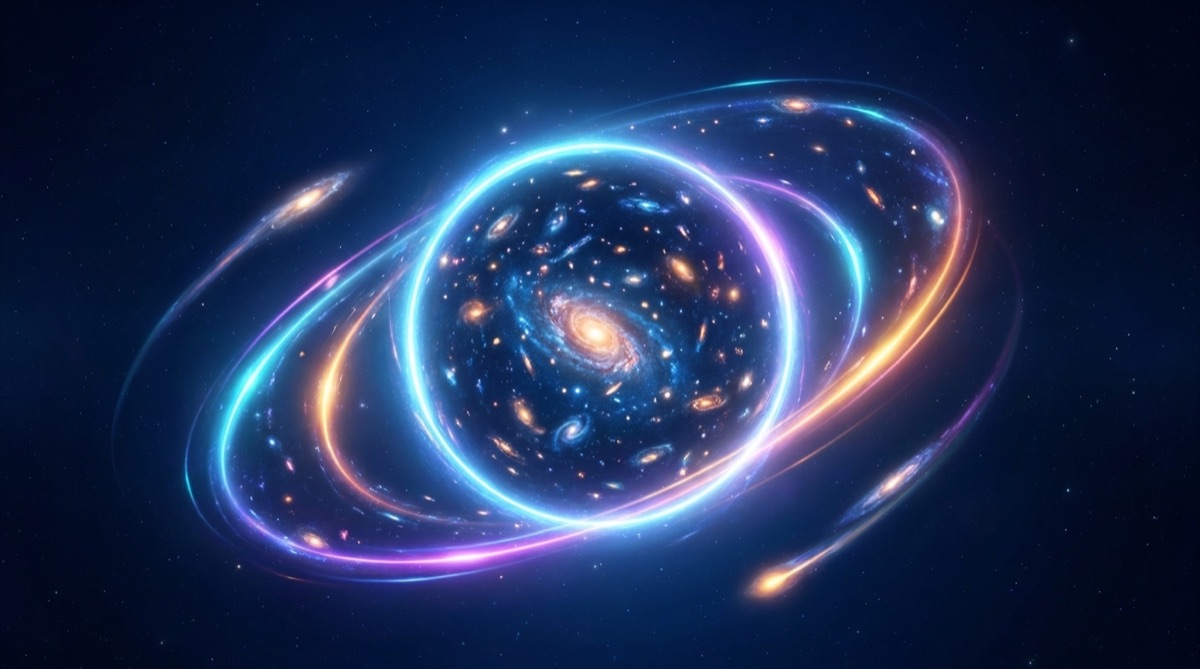
Gravitational lens
Also: gravitational lensing, gravitational lenses, microlensing
A very massive galaxy or cluster acts like a magnifying glass: it bends the light of whatever lies behind it and shows it distorted, amplified or repeated in arcs and rings. It is used to weigh dark matter and to see extremely distant galaxies.
Relativity and compact objects · formula
-
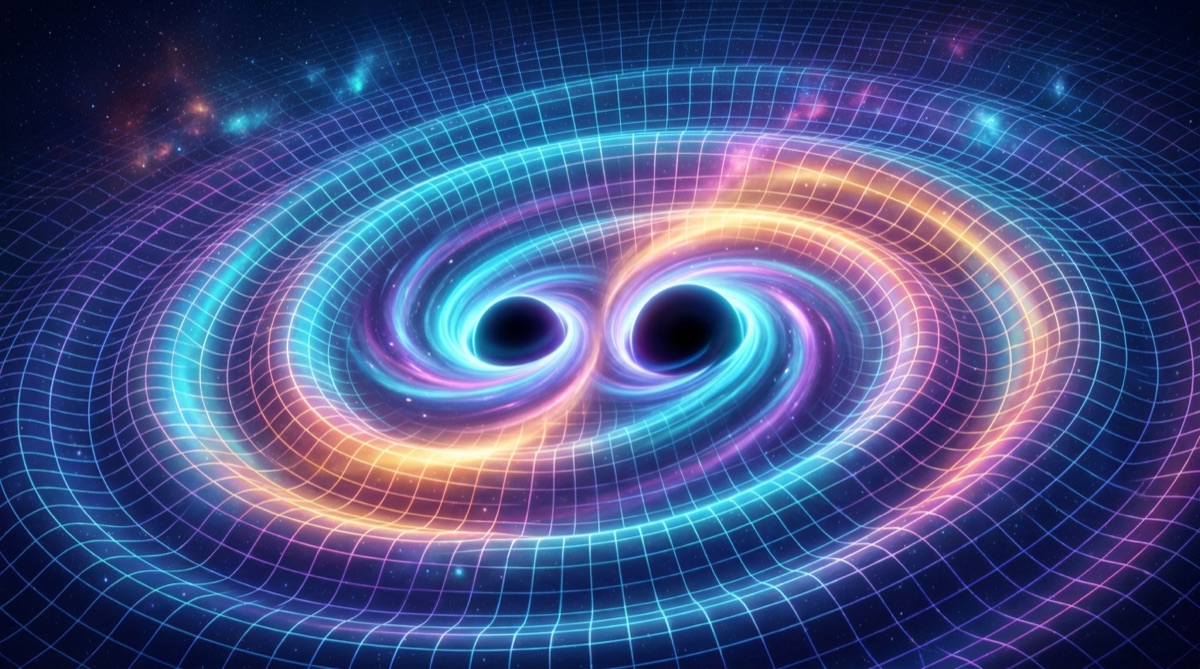
Gravitational wave
Also: gravitational waves, gravitational radiation, LIGO
Ripples in spacetime itself that travel at the speed of light, produced by enormous masses accelerating, such as two black holes colliding. They were first detected in 2015.
Relativity and compact objects
-
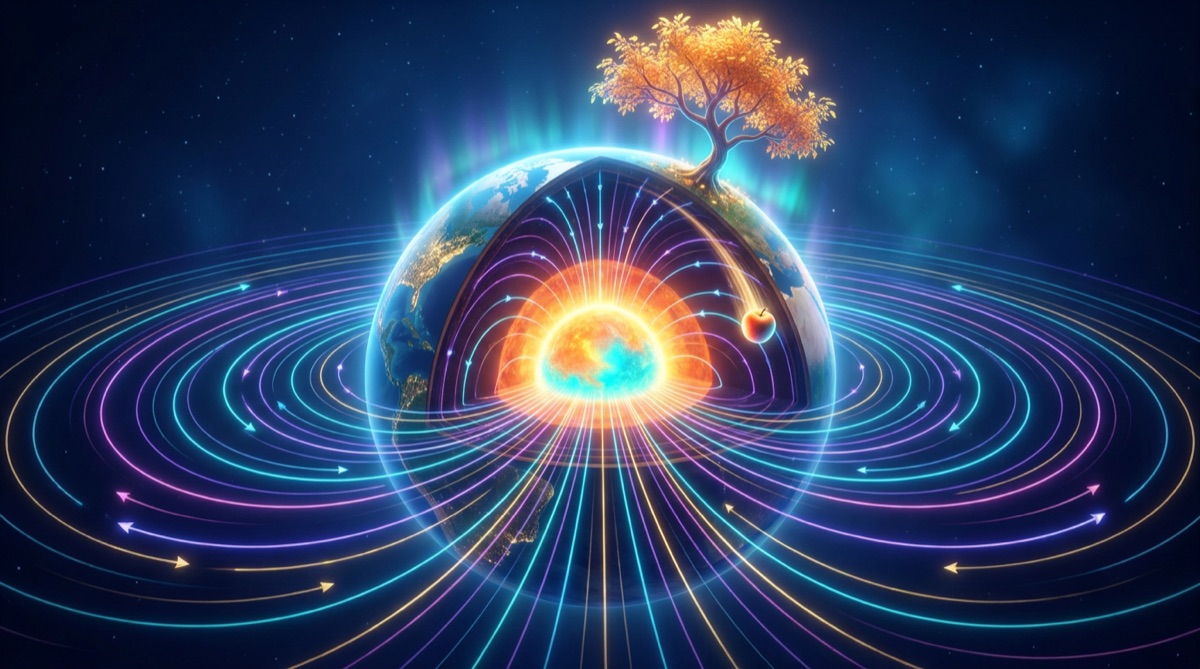
Gravity
Also: gravitational acceleration, acceleration due to gravity, acceleration of gravity
The force with which a planet pulls everything toward its center. On Earth it makes things fall 9.8 m/s faster every second; on Mars, with less mass and a smaller size, it is only 38 % of Earth's.
Orbits and gravitation · reference value · formula
H
-

Hertzsprung–Russell diagram
Also: HR diagram, H-R diagram, Hertzsprung-Russell
A chart where each star is a dot placed according to its temperature (color) and its true brightness. Most fall on a diagonal band, the main sequence; giants and white dwarfs lie outside it.
Stars
-
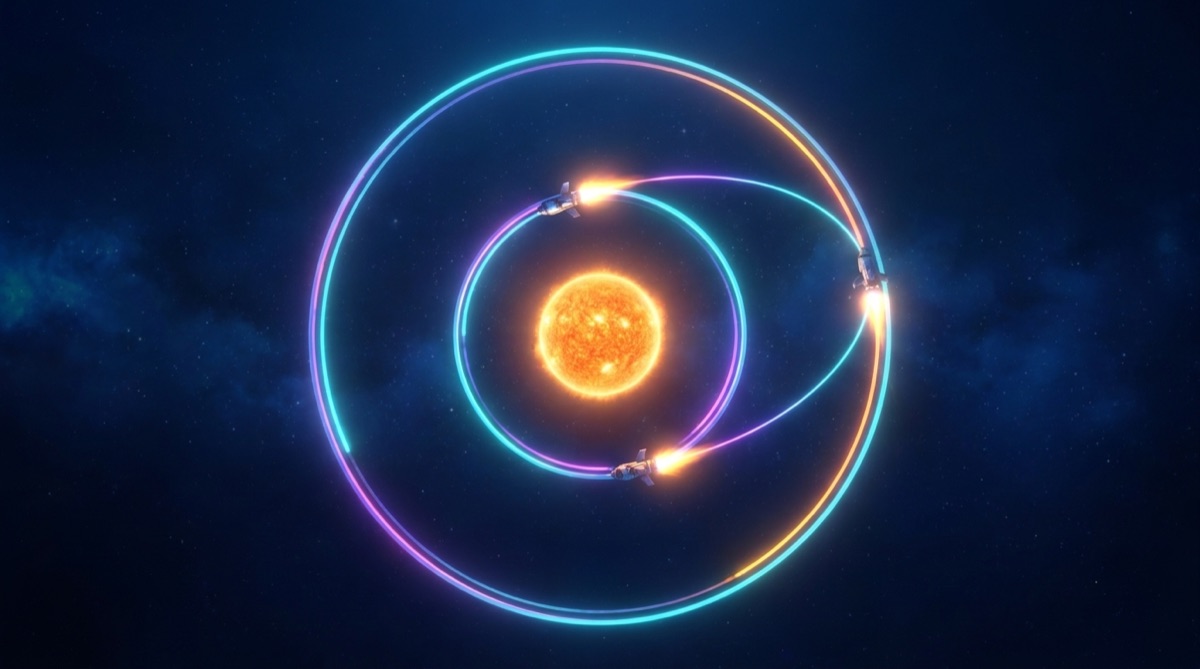
Hohmann transfer
Also: Hohmann, transfer orbit, Hohmann orbit
The cheapest way to go from one orbit to another: two "boosts", one to enter an ellipse that touches both orbits and another on arrival. That is how we travel to Mars, and why it is only possible every 26 months.
Orbits and gravitation
-
Horizon
The line where the sky seems to touch the land or the sea. A celestial object "rises" when it crosses the horizon going up and "sets" when it crosses it going down.
The sky and coordinates
-
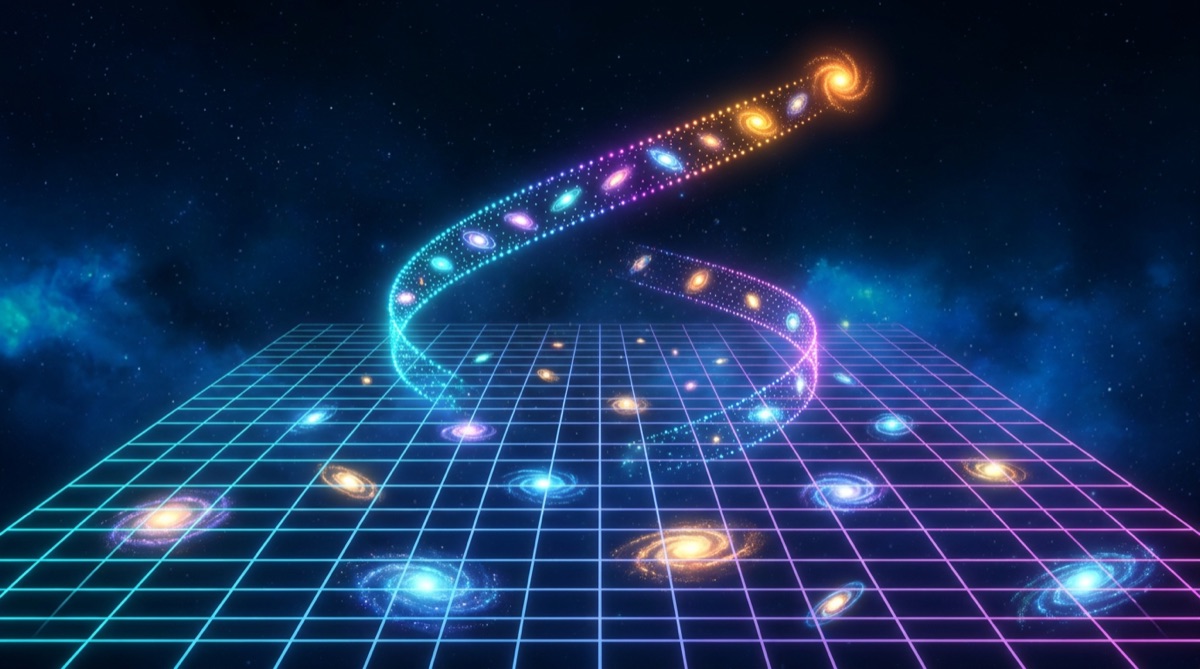
Hubble constant
Also: Hubble parameter, Hubble tension, Hubble's constant
The number that says how fast the universe is expanding today: about 70 km/s for every megaparsec of distance. Measuring it precisely is one of the great open problems, because two methods give different values.
Galaxies and cosmology · reference value
-
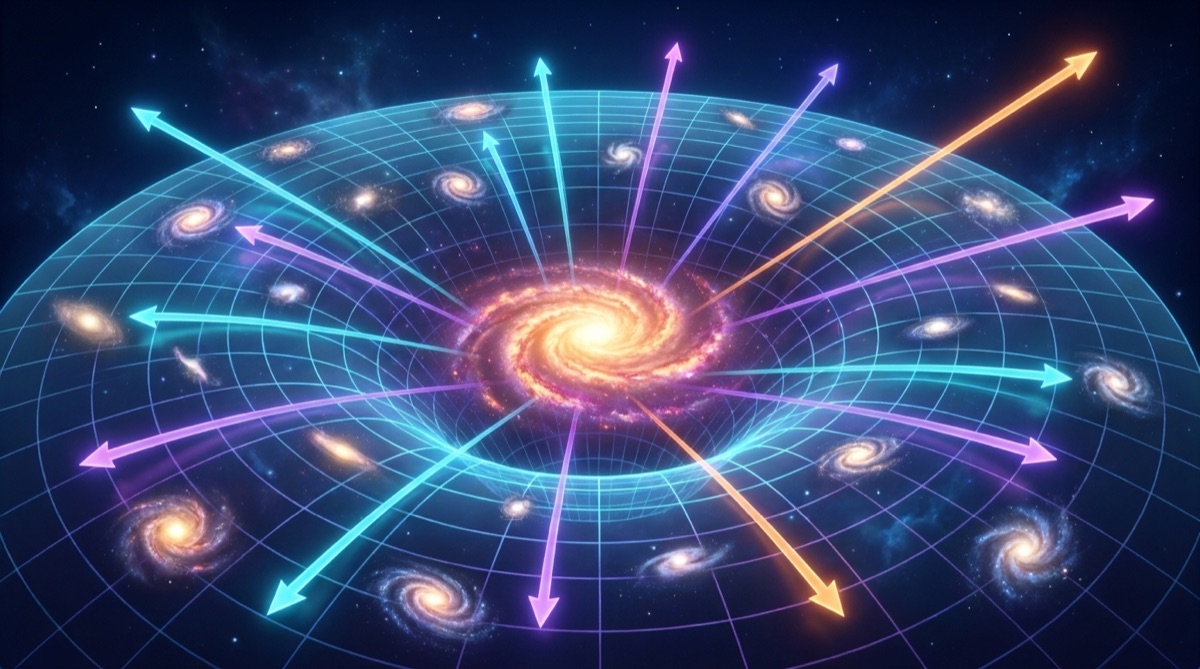
Hubble–Lemaître law
Also: Hubble's law, Hubble law, Hubble-Lemaître
The farther away a galaxy is, the faster it moves away from us. It is not that we are at the center: all of space is stretching, like dots painted on a balloon being inflated.
Galaxies and cosmology · formula
-
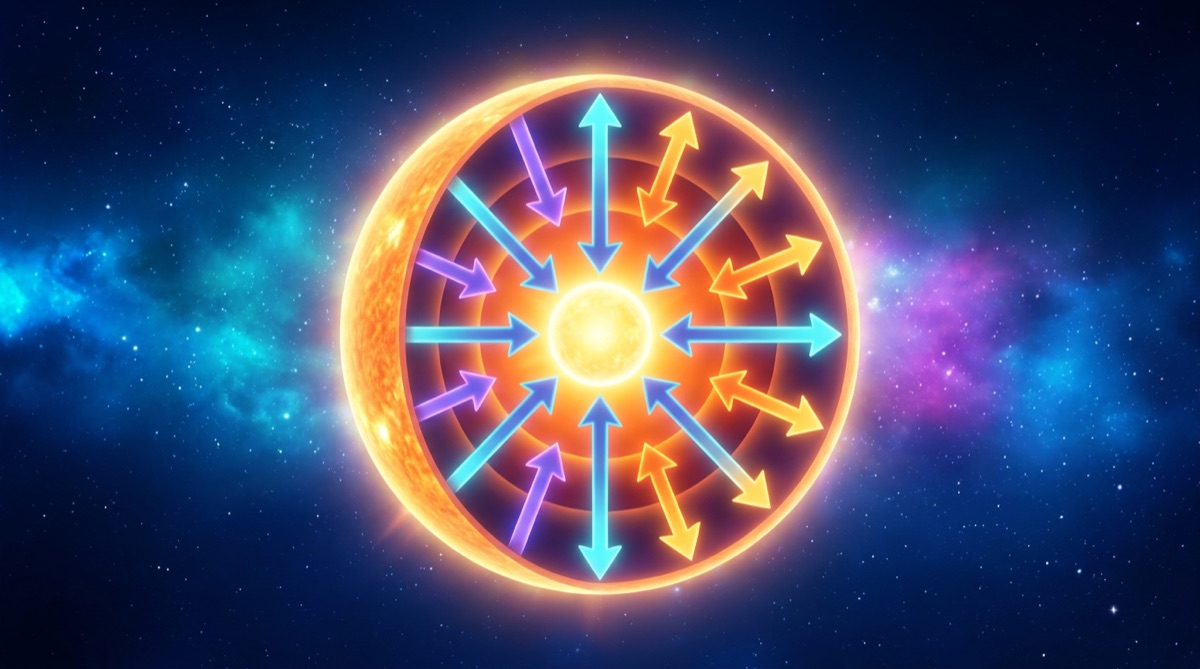
Hydrostatic equilibrium
Also: hydrostatic balance
The balance that holds a star together: gravity squeezes it inward and the pressure of the hot gas pushes it outward. As long as the two are equal, the star neither collapses nor explodes.
Stars · formula
I
-
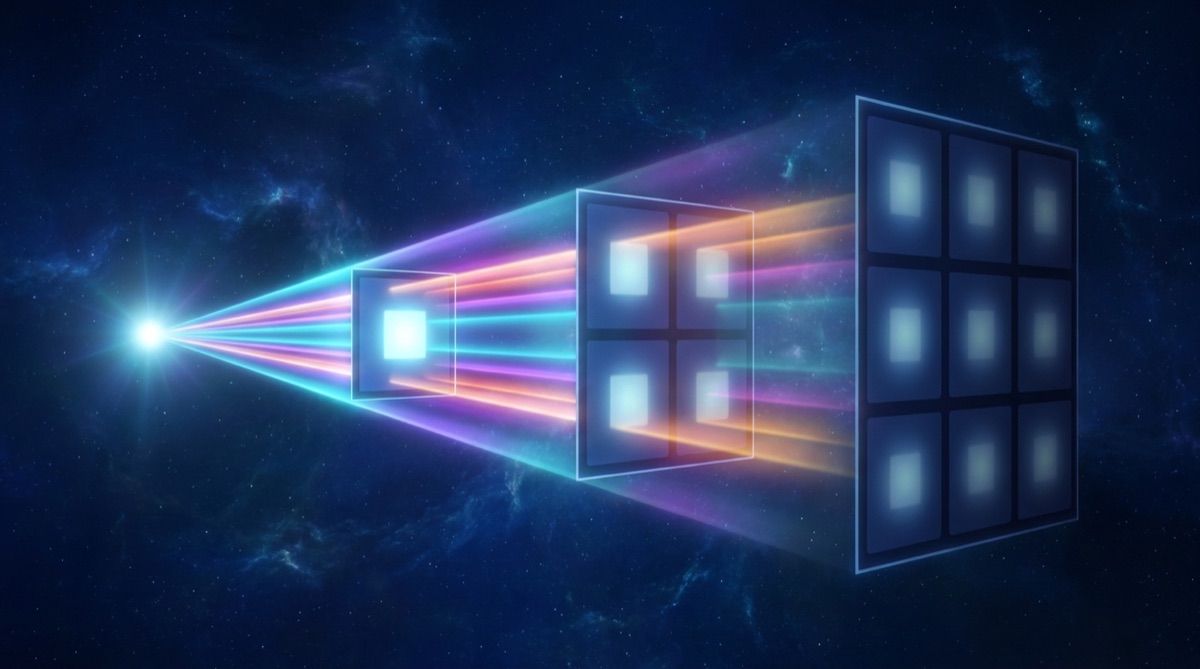
Inverse-square law
Also: inverse square law, inverse square
If you put a light twice as far away, four times less light arrives; three times as far, nine times less. The same happens with gravity.
Light and spectra
K
-
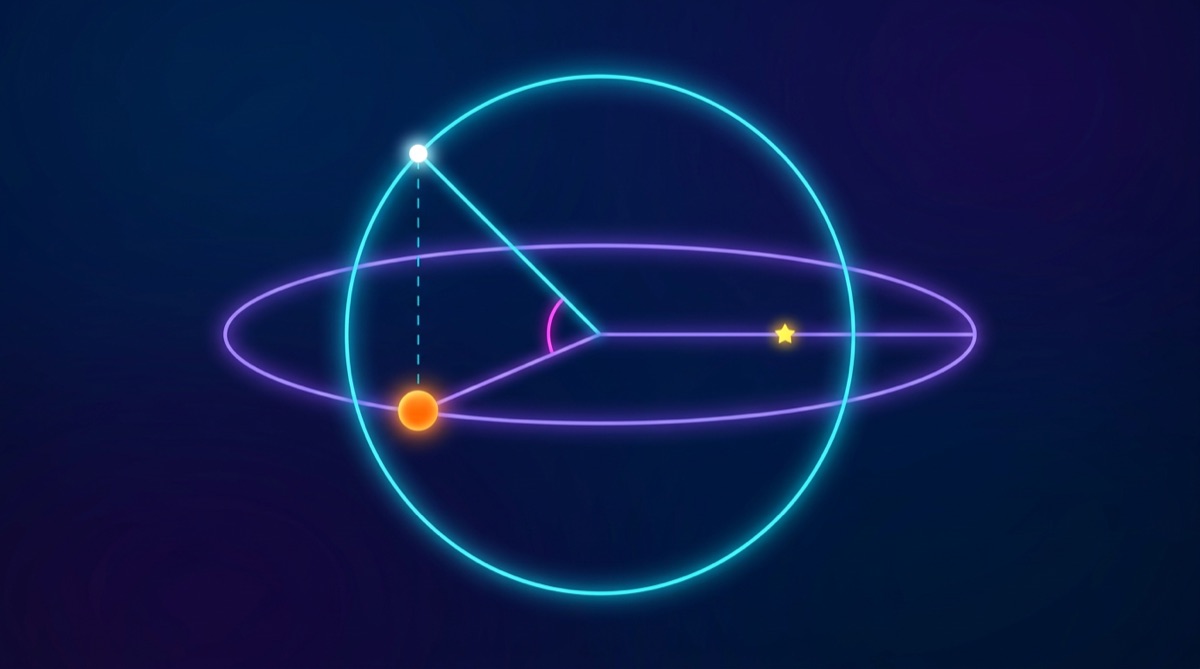
Kepler's equation
Also: Kepler equation, mean anomaly, eccentric anomaly
The equation that says where on its ellipse a planet is on a given date. It cannot be solved with algebra: it has to be solved by successive approximations, as astronomy programs do.
Orbits and gravitation · formula
-
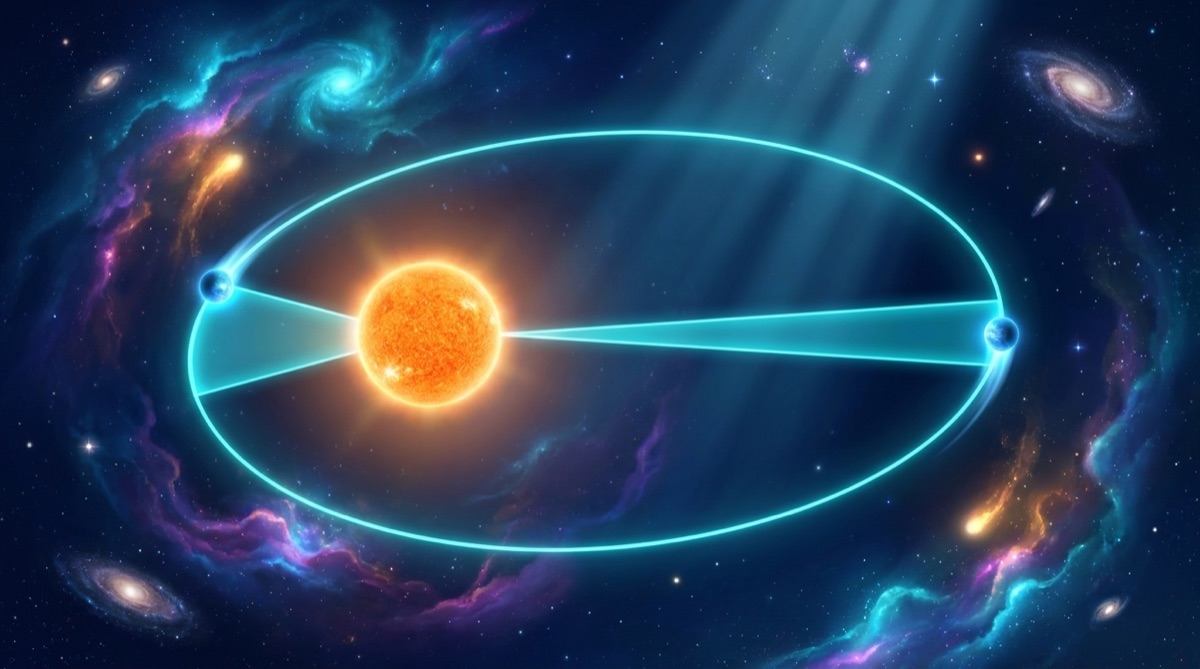
Kepler's laws
Also: Kepler's law, Kepler's first law, Kepler's second law
Three rules about how the planets move: (1) they follow ellipses with the Sun at one focus, (2) they move faster when they are closer to the Sun and (3) distant planets take much longer to go around.
Orbits and gravitation · formula
L
-
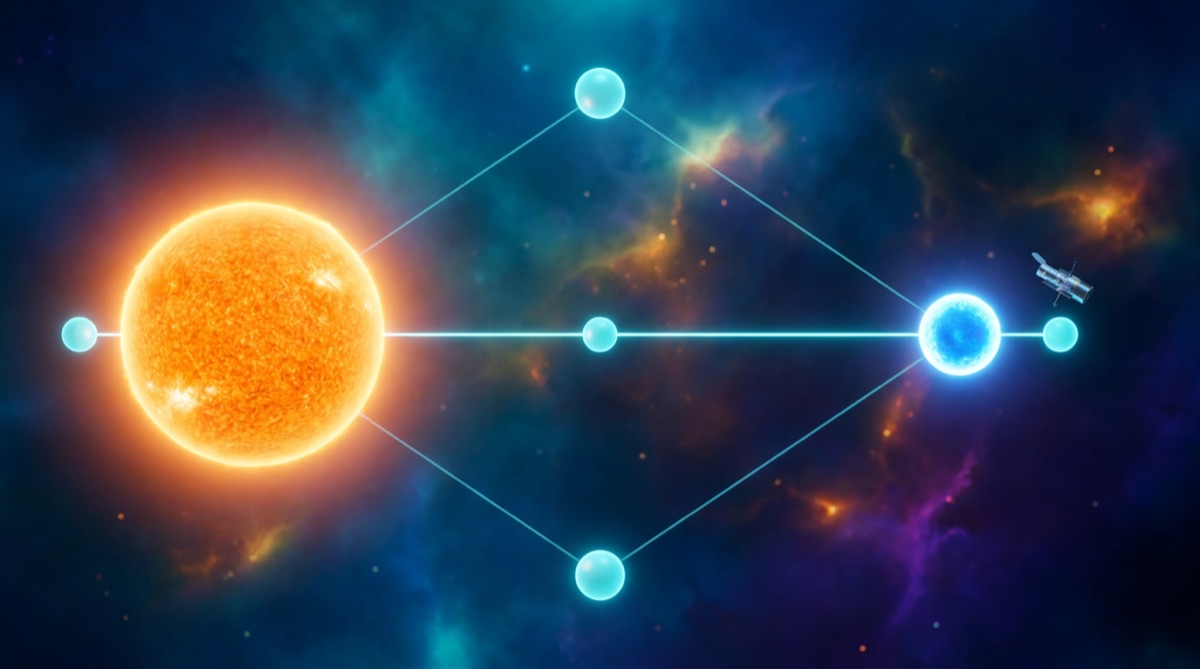
Lagrange point
Also: Lagrange points, Lagrangian point, Lagrangian points
Five special places near two bodies (such as the Sun and Earth) where a spacecraft can stay "still" with respect to them. The James Webb telescope is at one of them, L2, 1.5 million km away.
Orbits and gravitation · reference value
-
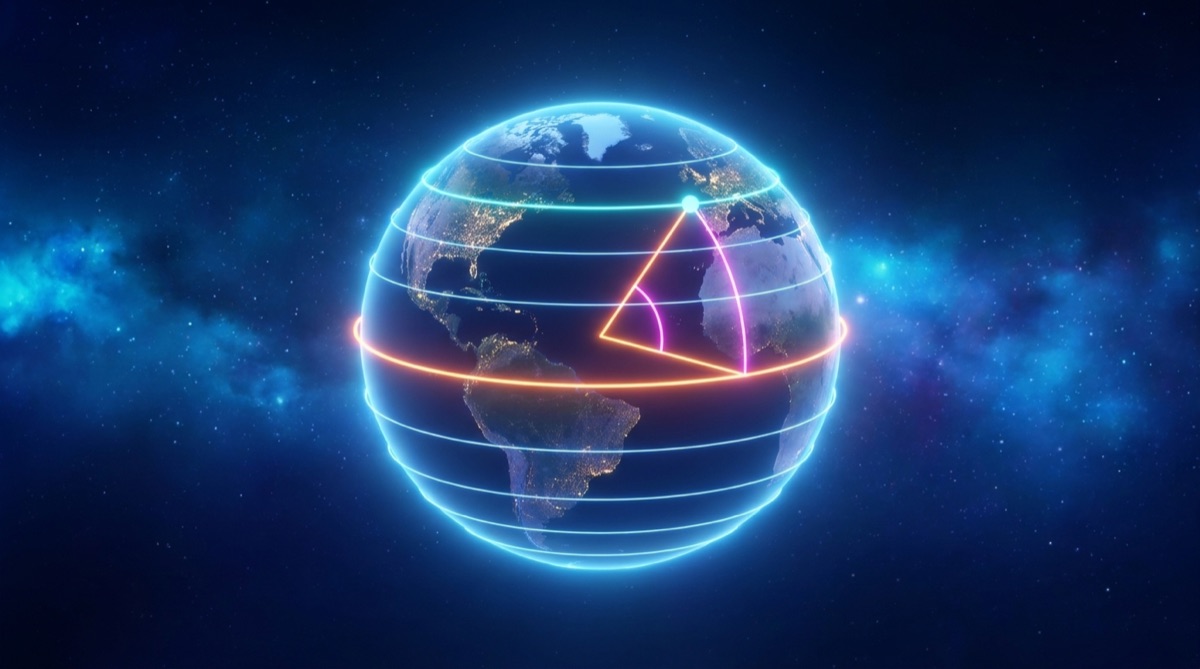
Latitude
Also: geographic latitude
How far north or south of the equator a place is, measured in degrees. Bogotá is at about 4.6° north; the North Pole, at 90°.
Measuring the universe
-
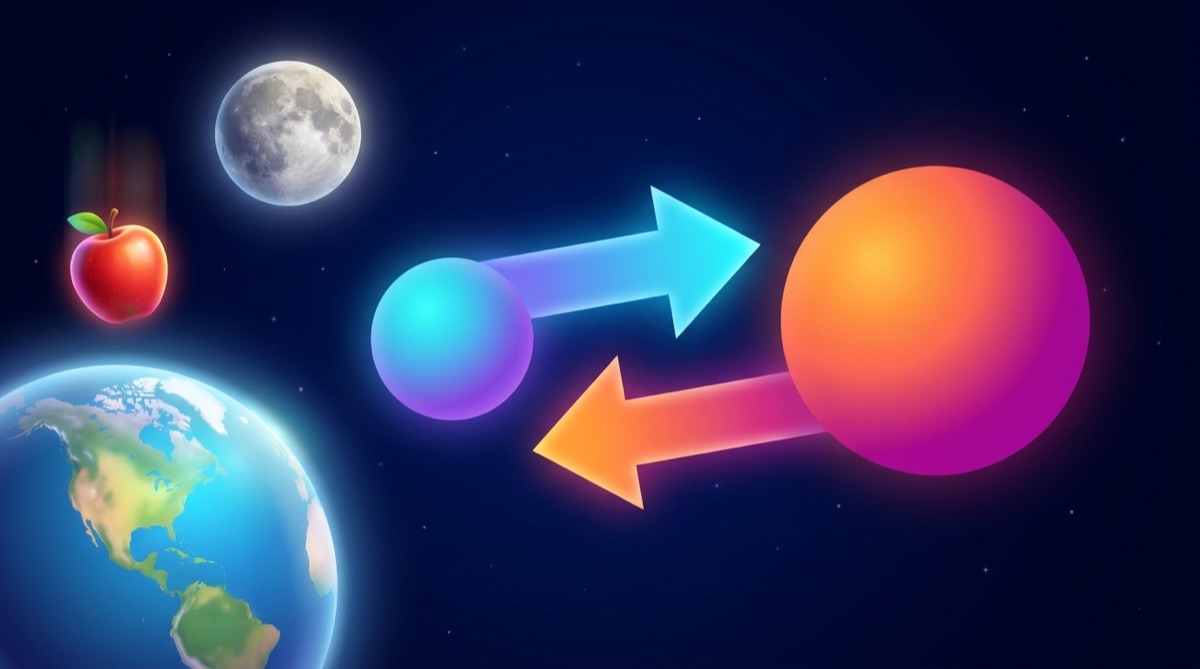
Law of universal gravitation
Also: universal gravitation, Newton's law of gravitation, law of gravitation
Newton's rule: all bodies attract one another with a force that grows with their masses and decreases with the square of the distance. The same force that makes an apple fall holds the Moon in place.
Orbits and gravitation · reference value · formula
-

Leapfrog
Also: leapfrog method, leapfrog integrator, Verlet
A simulation method that alternates a "kick" (changing the velocity) and a "drift" (moving the position), like a frog jumping. It is simple, time-reversible and conserves energy very well.
Mathematics and numerical methods
-
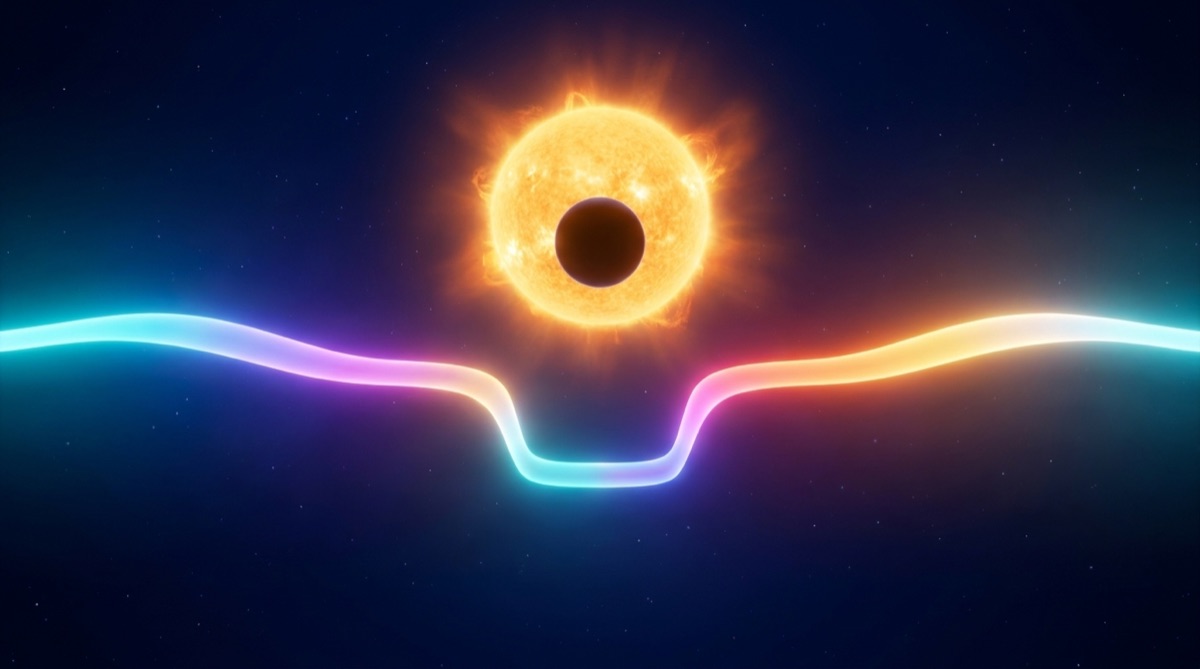
Light curve
Also: lightcurve, light-curve
A chart of the brightness of a star over time. A transit shows up as a small "dip"; a variable star, as waves that rise and fall.
Exoplanets
-
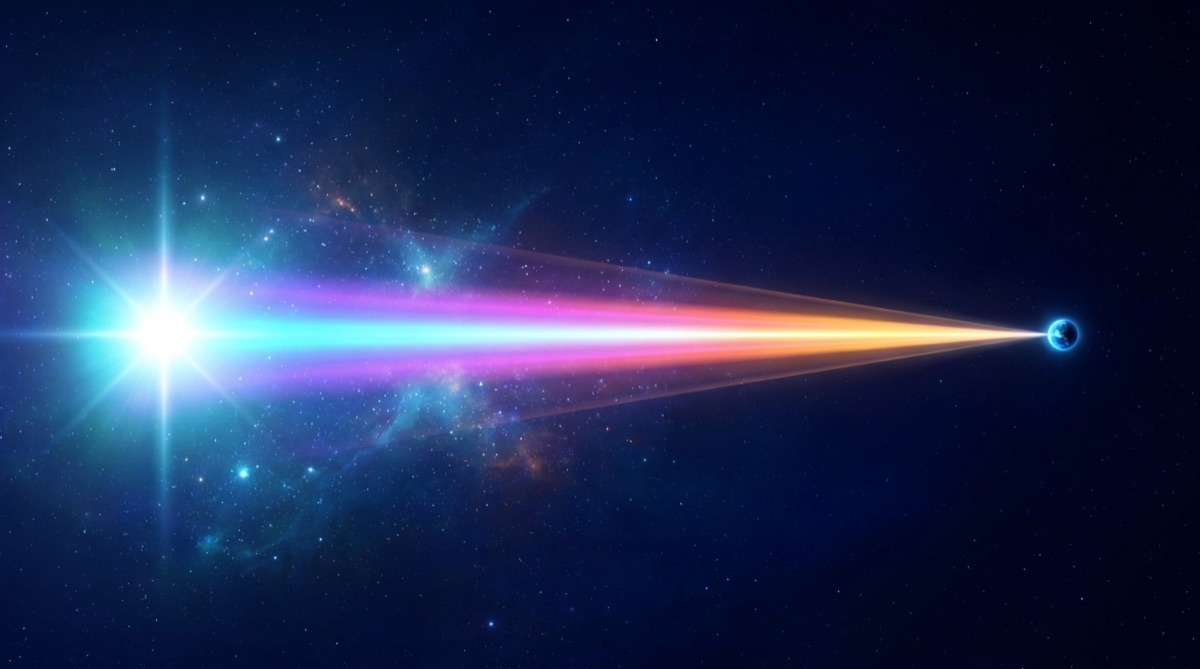
Light-year
Also: light year, ly
The distance light travels in one year. It does not measure time, it measures distance: about 9.5 trillion kilometers.
Measuring the universe · reference value
-

Linear regression
Also: regression, least squares, least-squares
Drawing the line that best passes "through the middle" of a cloud of points. That is how Hubble found that the velocity of galaxies grows with their distance, and the slope of that line is his famous constant.
Mathematics and numerical methods
-
Logarithm
Also: common logarithm, natural logarithm, log
The question "to what power must 10 be raised to get this number?". log(1000) = 3. It turns multiplications into additions and compresses huge numbers: that is why stellar magnitudes use logarithms.
Mathematics and numerical methods
-
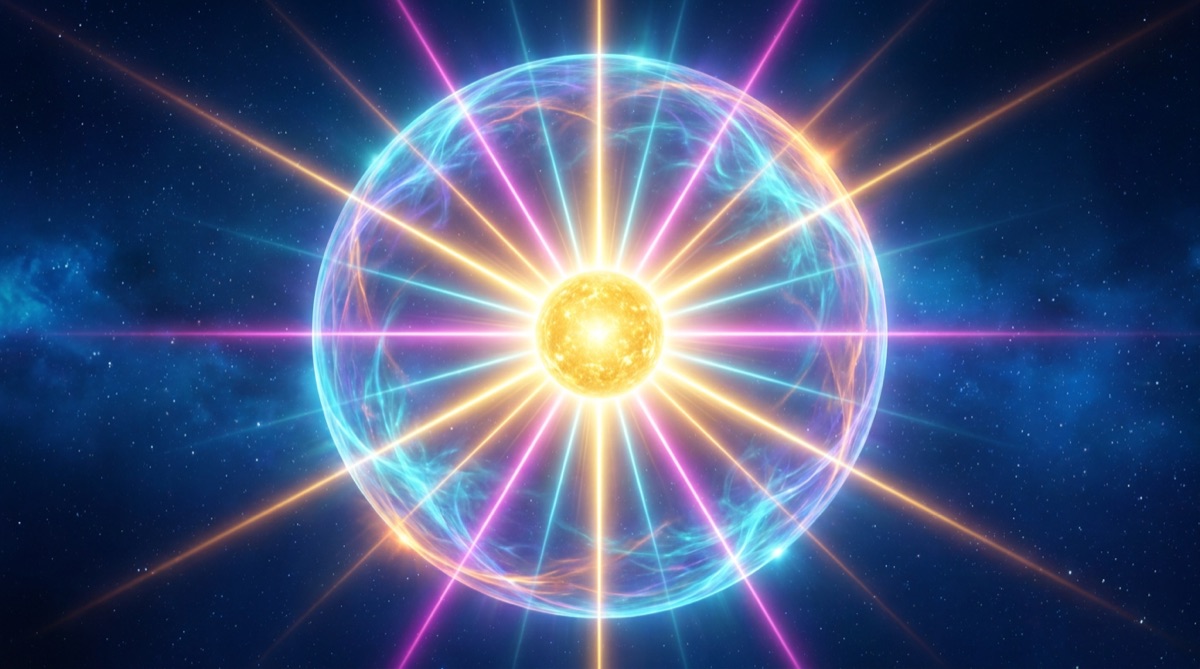
Luminosity
The total energy a star emits every second, like the "power" of a light bulb. It does not depend on the distance you look at it from.
Light and spectra · reference value · formula
-
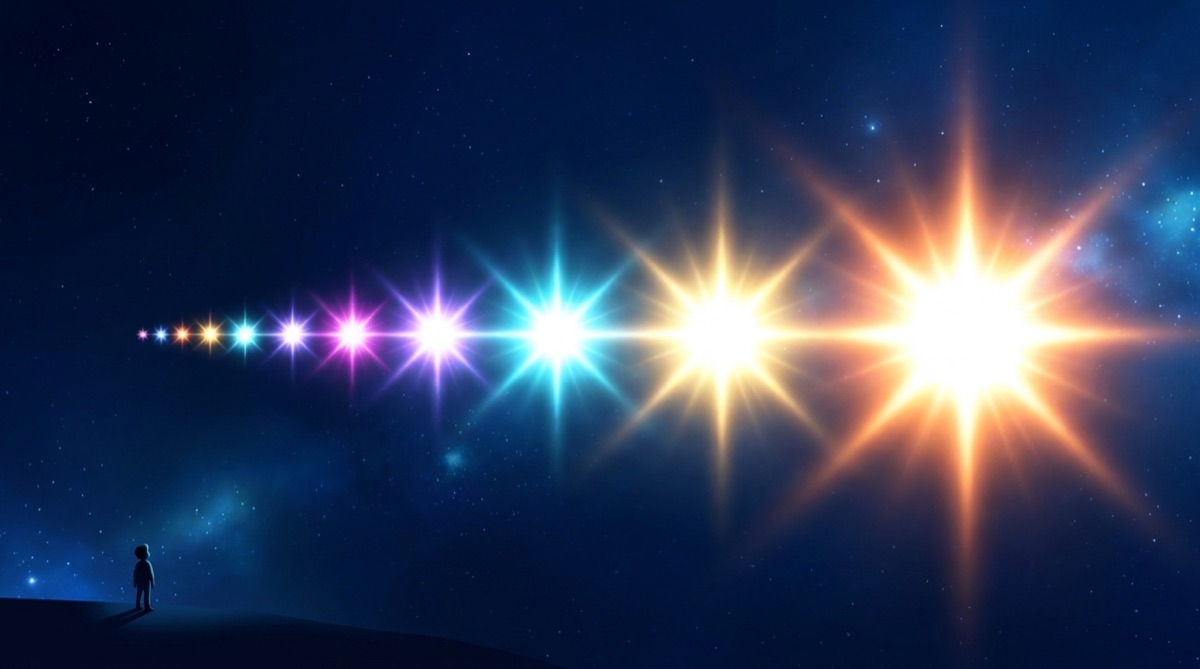
Luminosity distance
Also: standard candle, standard candles
The distance deduced from how faint an object looks when we know its true brightness (a "standard candle", such as a Type Ia supernova). In an expanding universe it gives values larger than the actual distance.
Galaxies and cosmology · formula
-
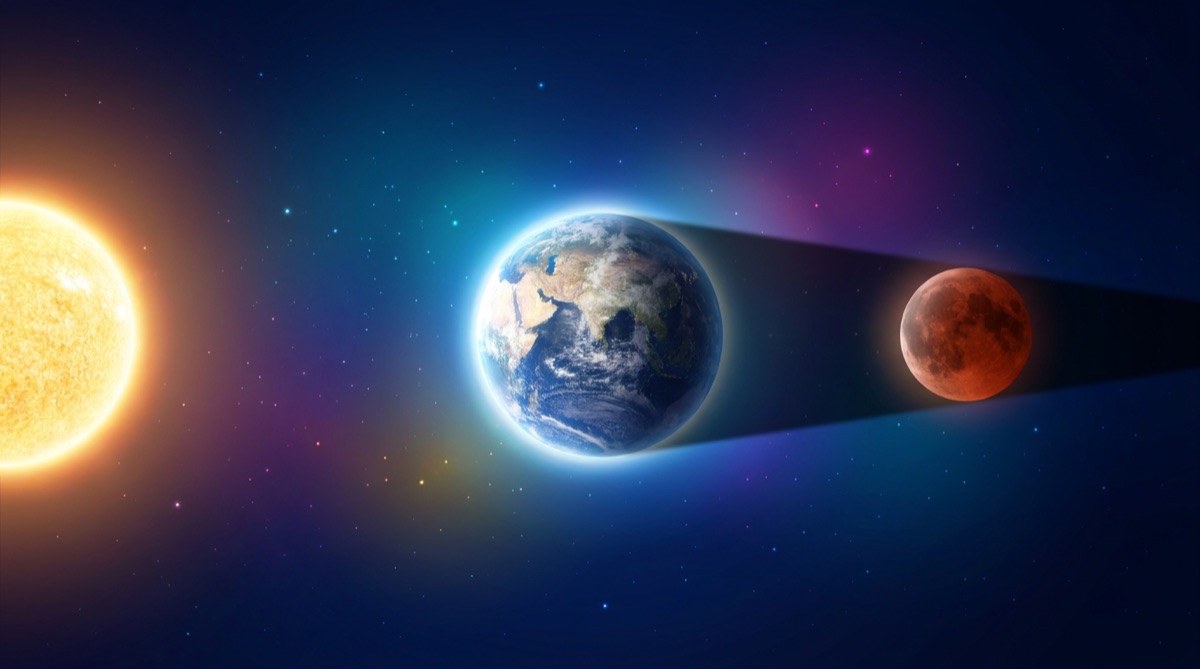
Lunar eclipse
Also: eclipse of the Moon, total lunar eclipse
When the full Moon passes through Earth's shadow and darkens or turns reddish. Half the Earth sees it at once, and it is safe to watch.
Earth, Moon and Sun
M
-

Main sequence
Also: main-sequence
The "adult" stage of a star, in which it fuses hydrogen in its core. The Sun has spent 4.6 billion years on it and has about as many left. Nine out of ten stars are in this phase.
Stars
-

Mass and weight
Also: weight, weigh
Mass is how much "stuff" you are made of, and it is the same anywhere. Weight is the force with which a planet pulls on you: on the Moon you would weigh six times less, but your mass would be the same.
Solar System
-

MCMC (Markov chain Monte Carlo)
Also: MCMC, Markov chain, Markov chains
A method for randomly exploring all the possible combinations of the parameters of a model, spending more time on the most probable ones. It is how the "error bars" of exoplanets are obtained.
Mathematics and numerical methods
N
-

N-body problem
Also: N bodies, N-body, N-body simulation
Simulating many bodies that all attract one another: a star cluster, a galaxy, the universe. Since each body feels all the others, the computation grows very quickly with N; the Barnes–Hut trick groups the distant ones together.
Mathematics and numerical methods
-
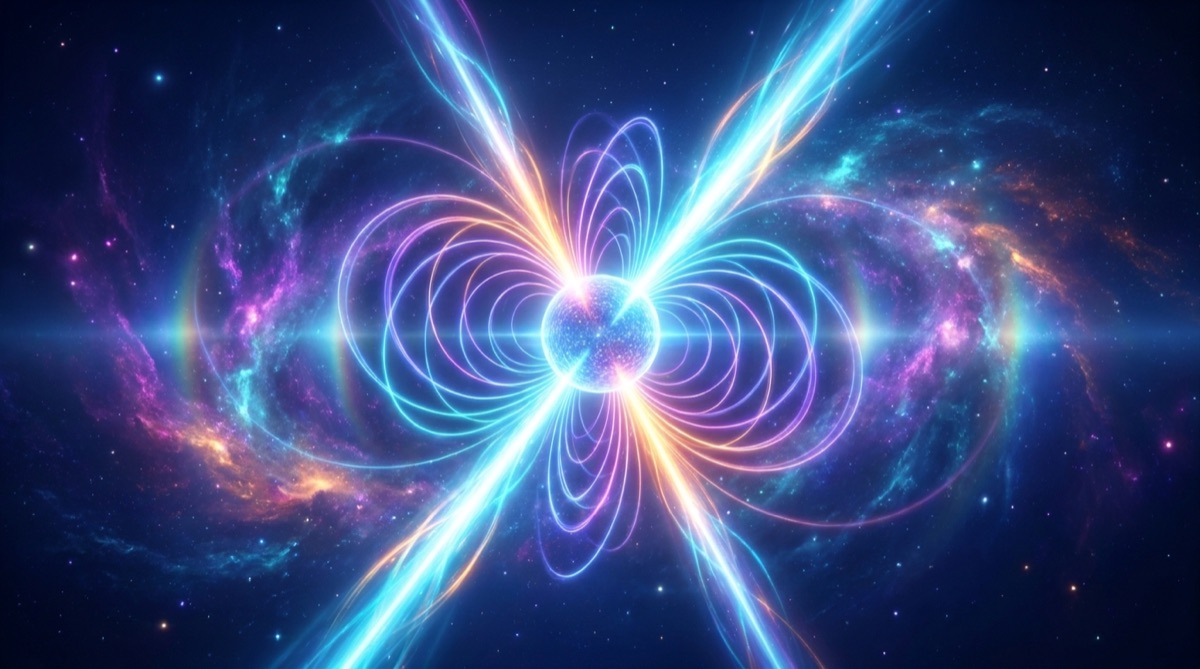
Neutron star
The remains of a very large star after it explodes: more mass than the Sun squeezed into a ball 20 km across. A teaspoon of it would weigh as much as a mountain. Some spin hundreds of times per second.
Relativity and compact objects
-
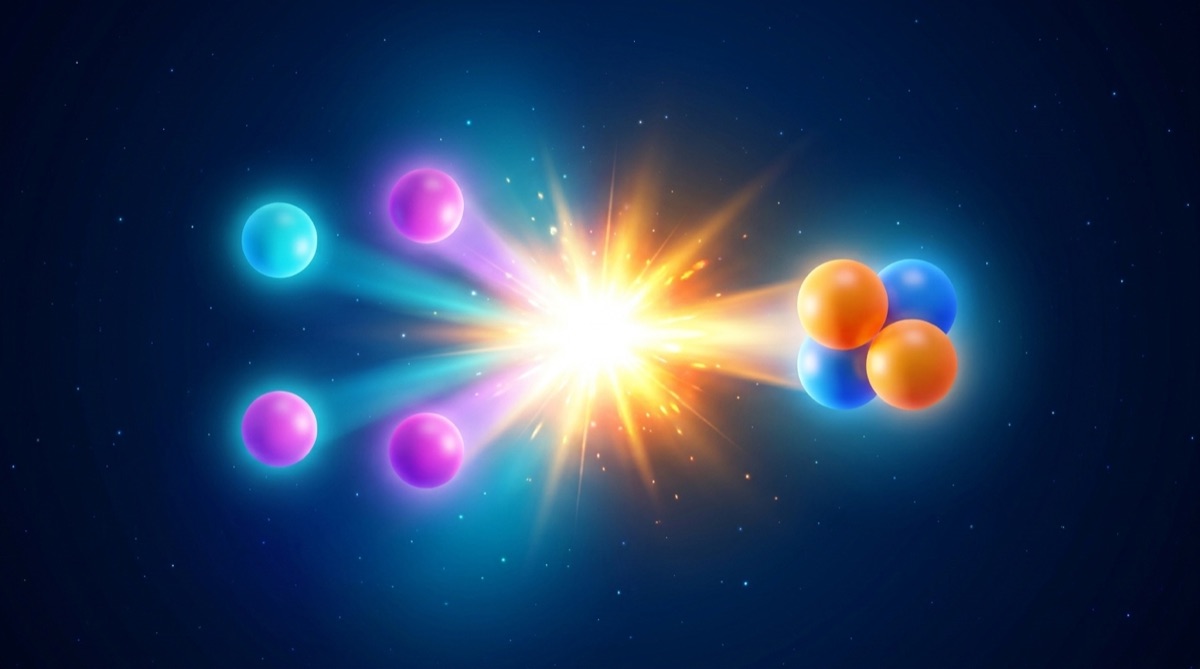
Nuclear fusion
Also: fusion, hydrogen fusion, hydrogen burning
What makes stars shine: at their center, at millions of degrees, hydrogen nuclei join to form helium and release an enormous amount of energy. The Sun converts 600 million tons of hydrogen every second.
Stars
O
-
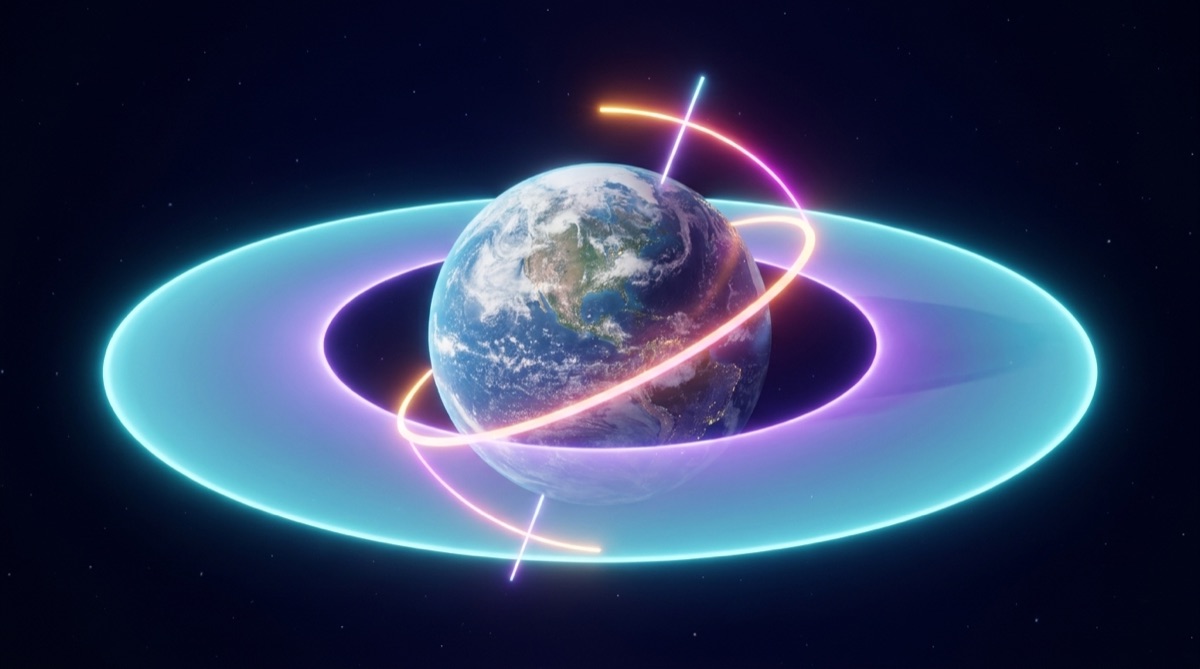
Obliquity of the ecliptic
Also: obliquity, axial tilt, tilt of the axis
Earth's axis is tilted about 23.5° with respect to its orbit. That tilt causes the seasons: for some months the northern hemisphere leans toward the Sun, and for others, the southern one.
The sky and coordinates · reference value
-
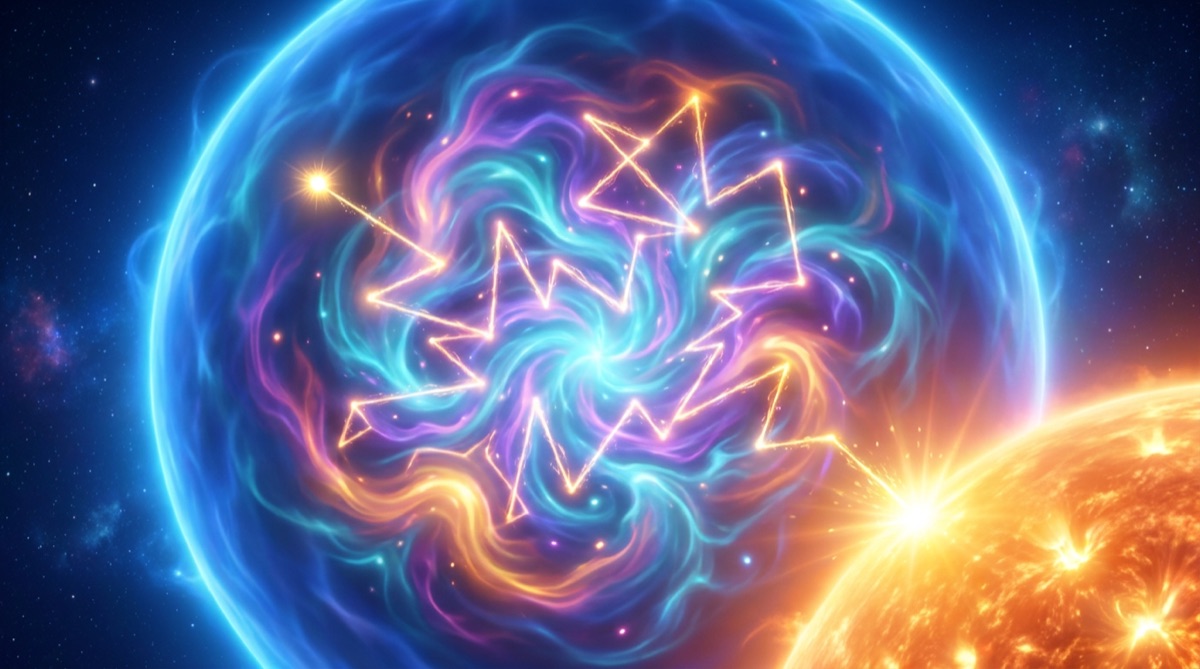
Opacity
Also: mean free path, Kramers opacity, Kramers' opacity
How hard it is for light to get through the gas of a star. A photon created at the center of the Sun takes tens of thousands of years to get out, colliding over and over again.
Stars
-
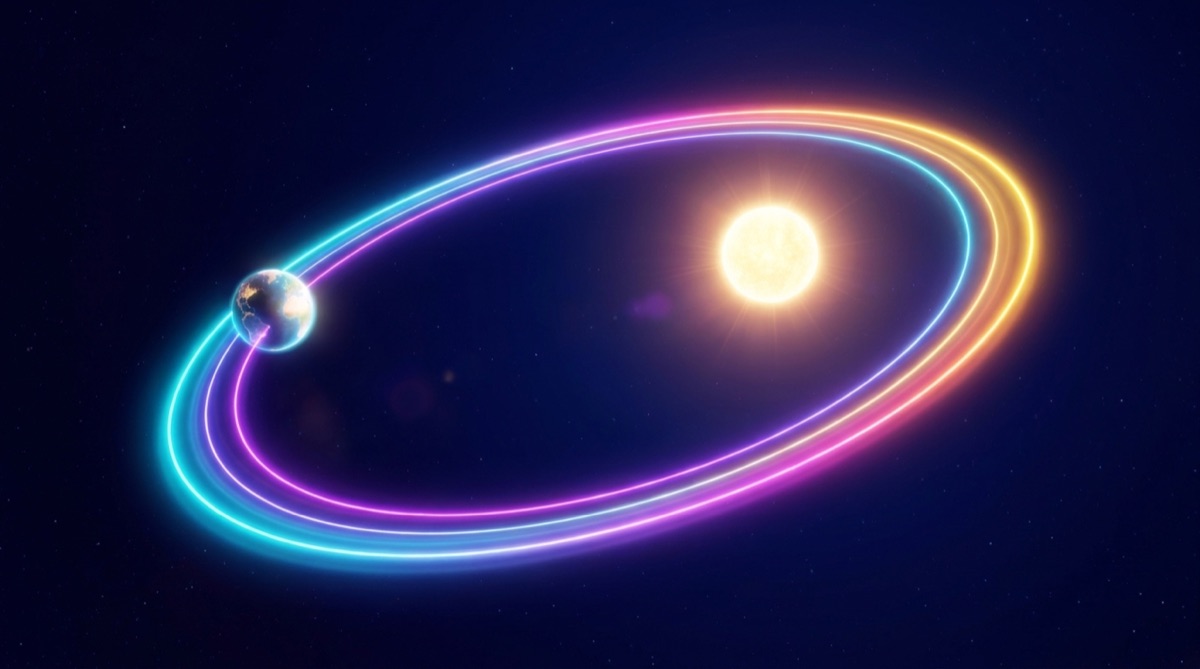
Orbit
The path one body follows around another because of gravity: the Moon around Earth, Earth around the Sun. Almost all are ellipses, slightly flattened ovals.
Orbits and gravitation · formula
-
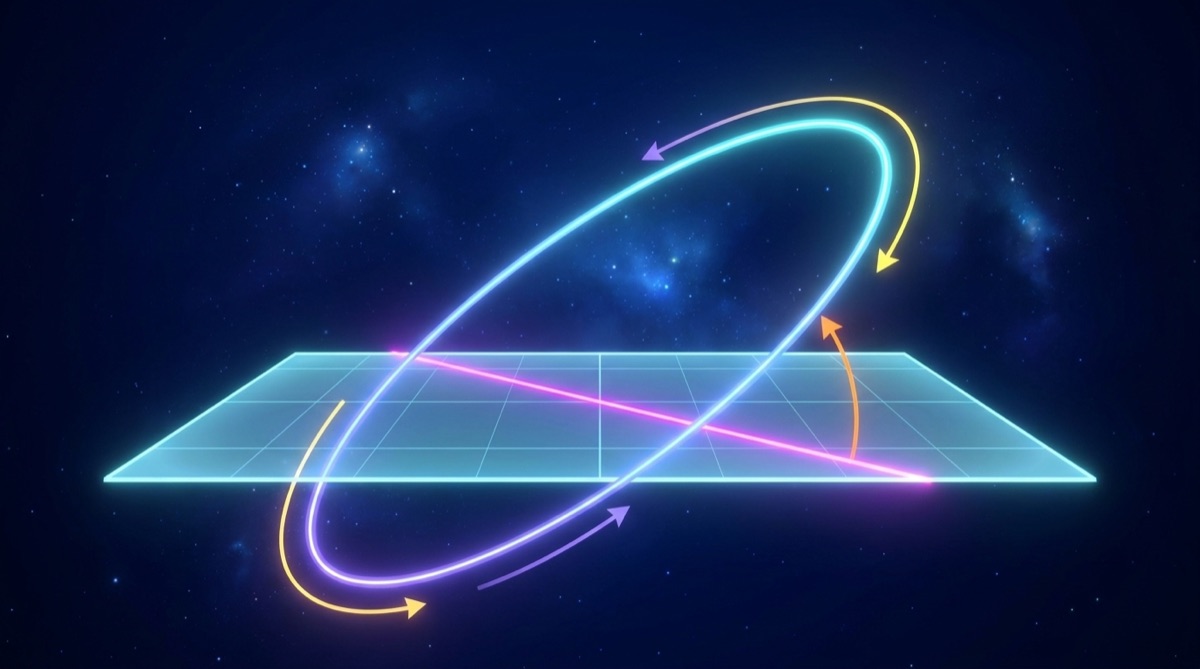
Orbital elements
Also: orbital element, Keplerian elements, osculating elements
The six numbers that fully describe an orbit: its size, its shape, how it is tilted and oriented, and where the body is at a given moment.
Orbits and gravitation
-
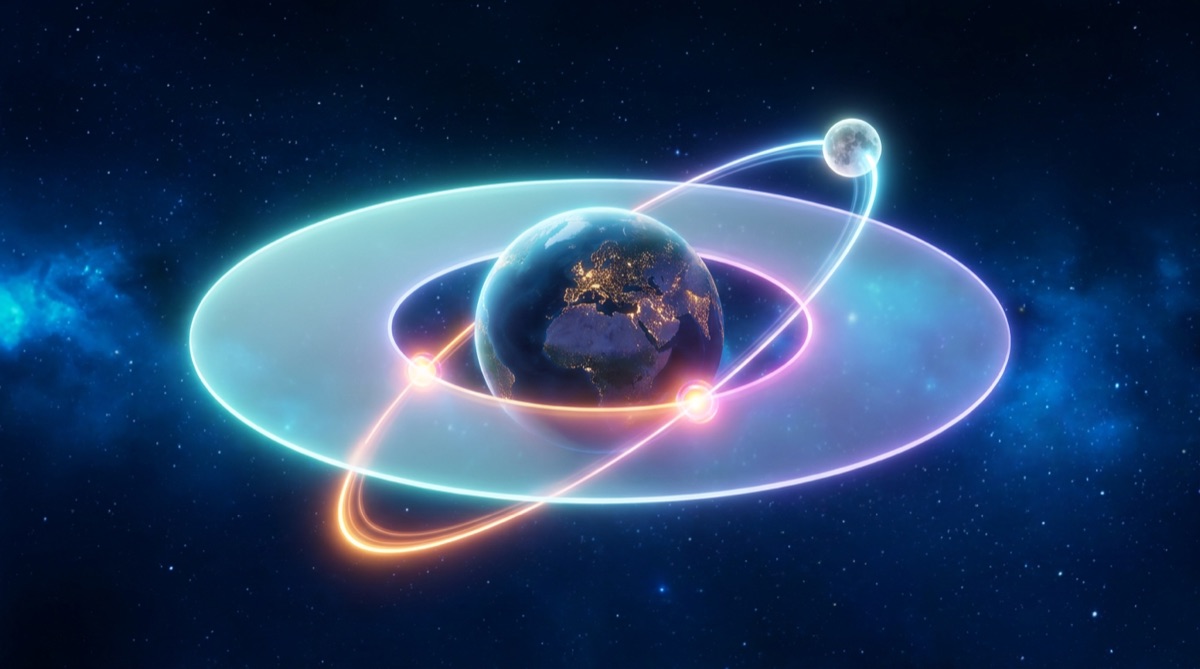
Orbital nodes
Also: node, orbital node, line of nodes
The two points where the Moon's orbit crosses the plane of Earth's orbit. There are eclipses only when the new or full moon happens near a node; that is why there are not eclipses every month.
Orbits and gravitation
-
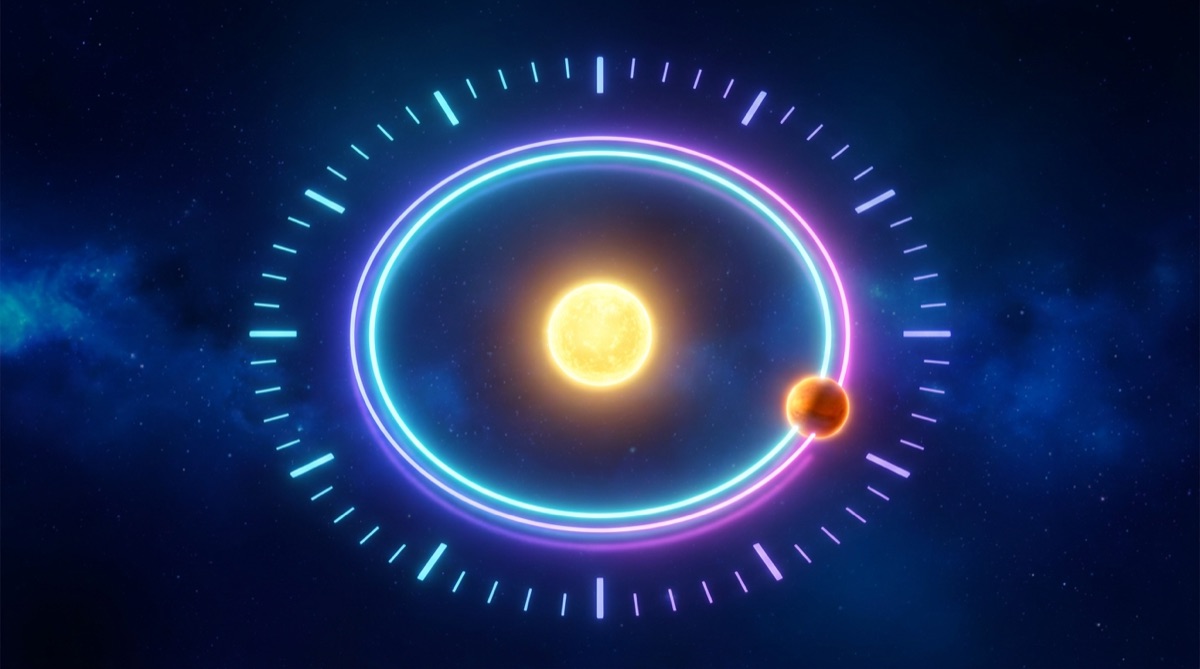
Orbital period
Also: period of revolution, revolution period, period of the orbit
The time it takes a body to complete one full orbit: one year for Earth, 27.3 days for the Moon, 88 days for Mercury.
Orbits and gravitation
-
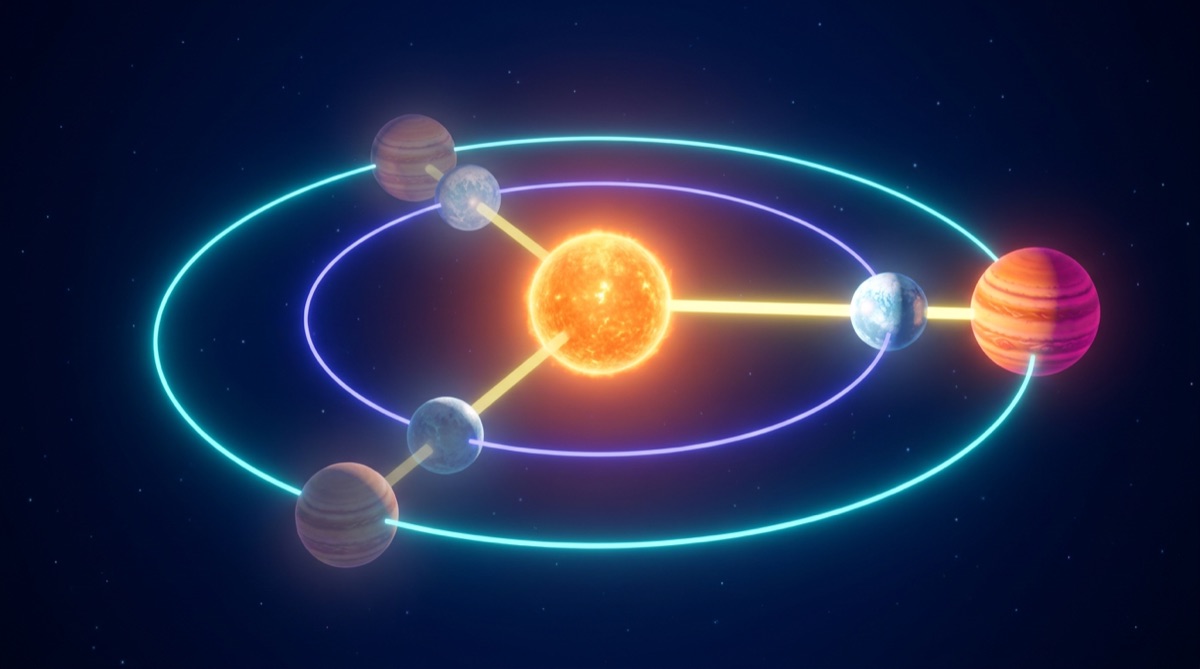
Orbital resonance
Also: resonance, mean-motion resonance, mean motion resonance
When the periods of two bodies are in a simple ratio, such as 2:1 or 3:2, so they "push" each other always at the same points. Pluto makes two orbits for every three of Neptune; resonances with Jupiter empty out zones of the asteroid belt.
Orbits and gravitation
-
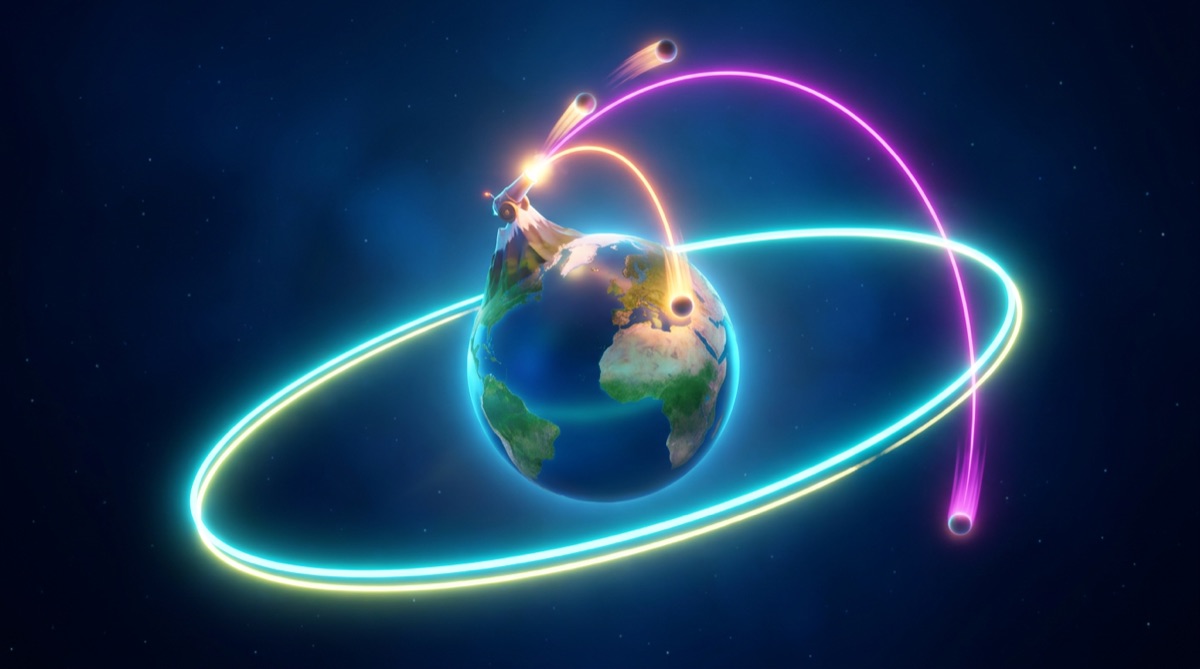
Orbital velocity
Also: orbital speed, circular velocity, circular speed
The speed at which a body travels along its orbit. The Space Station goes around Earth at 7.7 km/s; Earth goes around the Sun at almost 30 km/s.
Orbits and gravitation · reference value · formula
-
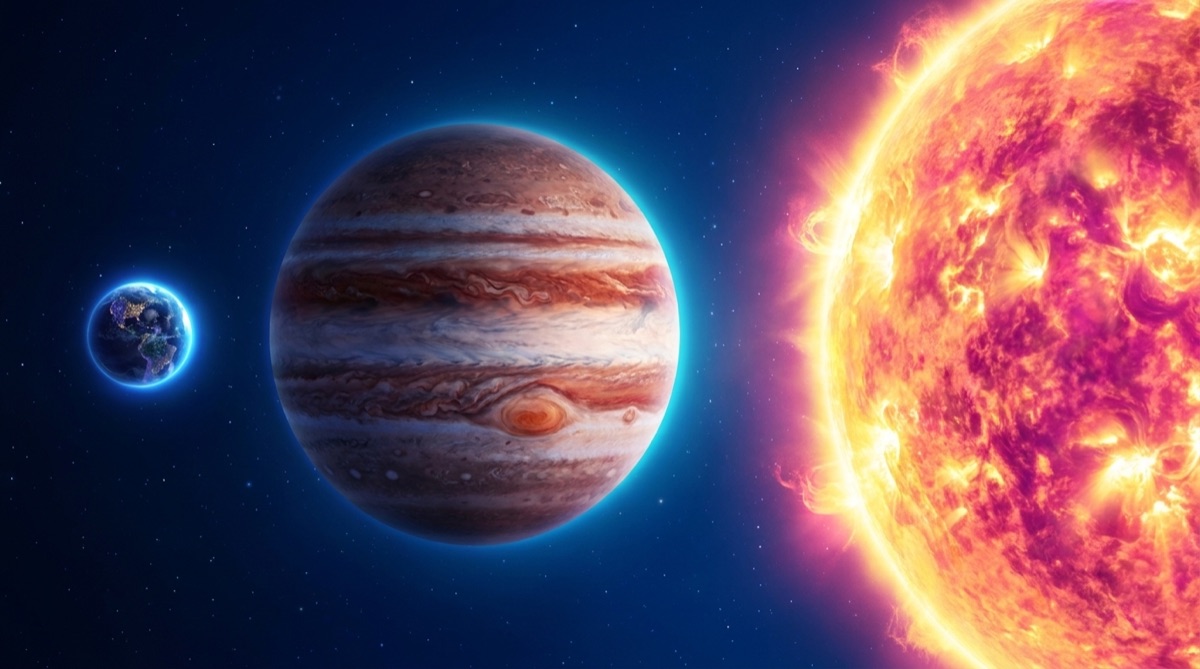
Order of magnitude
Also: orders of magnitude
The power of ten closest to a number: saying "the Sun is a million times bigger than Earth" is talking in orders of magnitude. It is used to compare very different things without being exact.
Measuring the universe
P
-
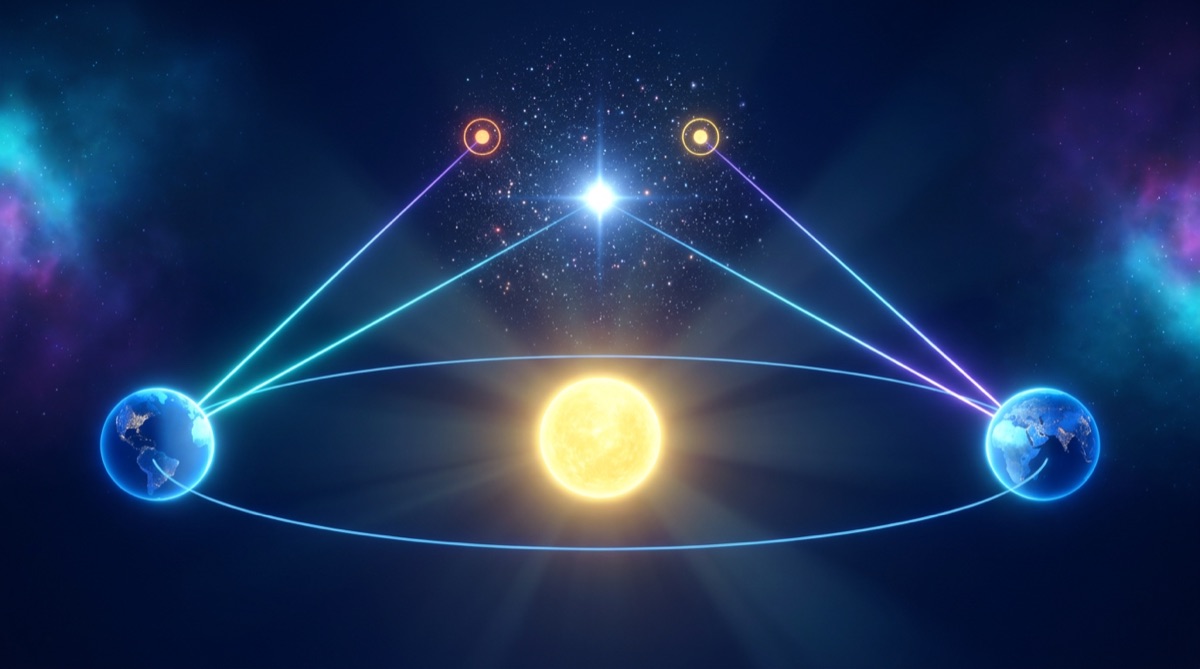
Parallax
Also: stellar parallax, annual parallax
The apparent shift in the position of an object when you look at it from two different places. Close one eye and then the other: your thumb "jumps" against the background. That jump is used to measure distances to the stars.
Measuring the universe
-
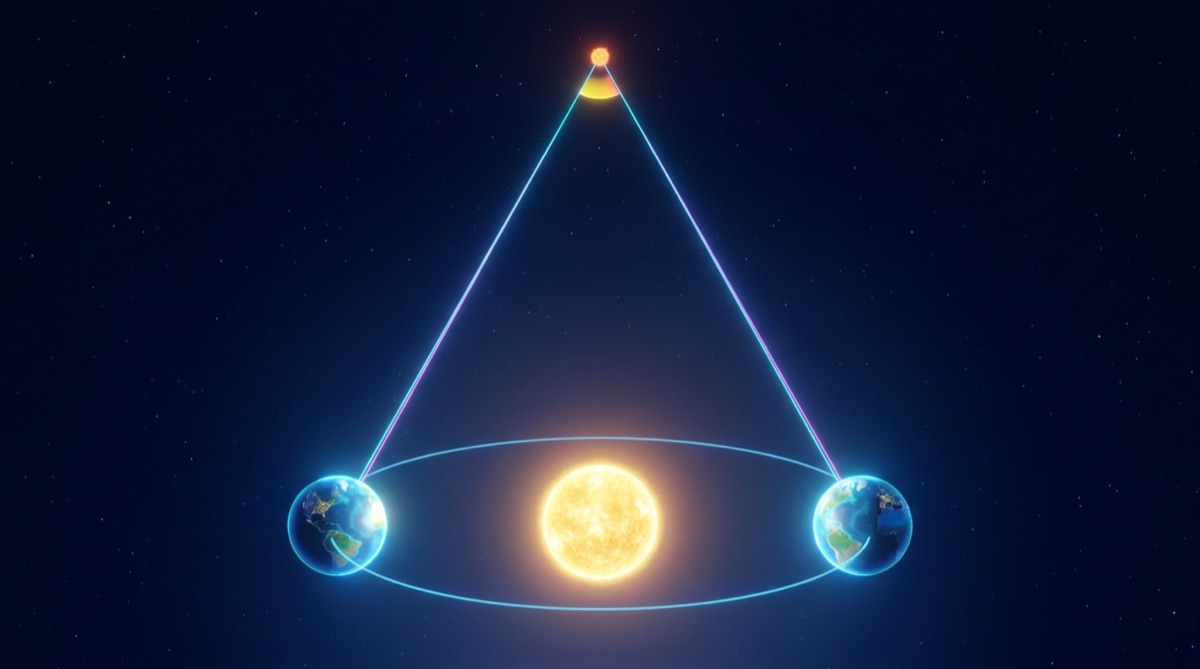
Parsec
Also: pc
The distance unit astronomers use for stars: one parsec is about 3.26 light-years. It comes from measuring the tiny angle by which a star "moves" as Earth goes around the Sun.
Measuring the universe · reference value · formula
-
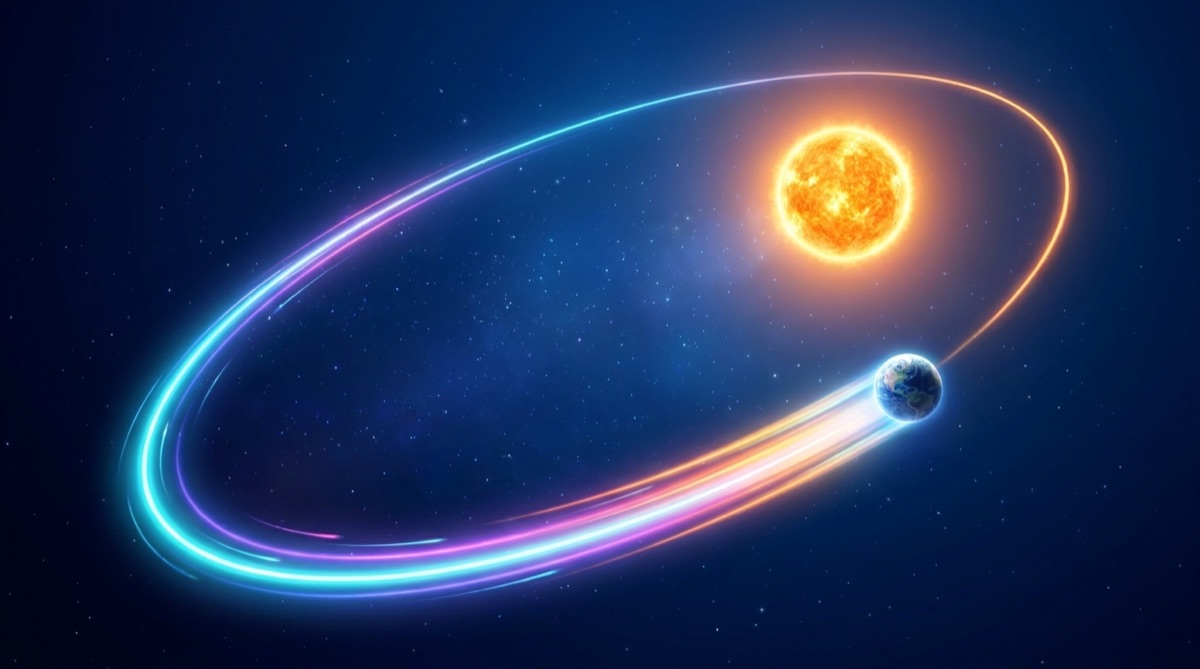
Perihelion
Also: periapsis, periastron, perigee
The point of the orbit closest to the Sun; there the planet moves fastest. Earth passes through it in early January. For the Moon around Earth it is called perigee.
Orbits and gravitation
-
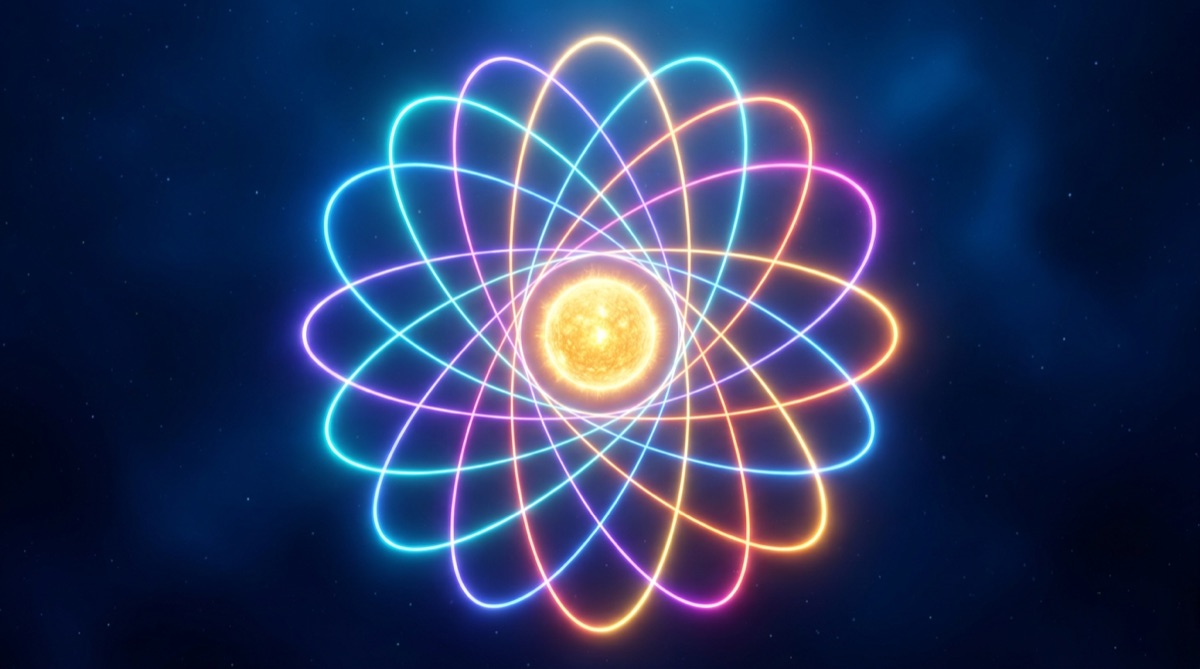
Perihelion precession
Also: precession of the perihelion, precession of Mercury's perihelion, perihelion advance
Mercury's orbit turns slowly, like a flower drawn with a spirograph. Newton explained almost all of the turning, but a little bit was missing (43 arcseconds per century) that only general relativity explained.
Relativity and compact objects · reference value · formula
-

Periodogram
Also: Lomb-Scargle, Lomb-Scargle periodogram, frequency analysis
A tool for finding hidden rhythms in data taken at irregular times: for each possible period it says how well a wave "fits". That is how the period of a planet is found in radial velocity data.
Exoplanets
-
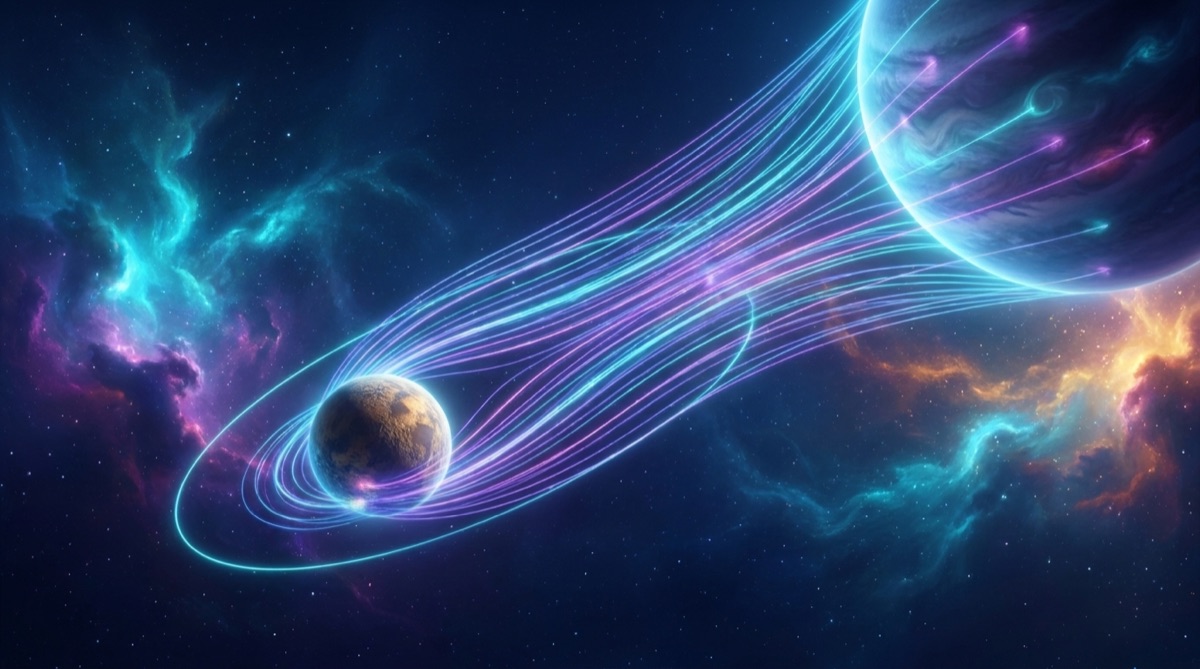
Perturbation
Also: perturbing force, perturbing acceleration, perturbation theory
Any small "nudge" that pulls an orbit away from a perfect ellipse: the attraction of other planets, Earth's flattening, air drag. That is how Neptune was discovered, through the perturbations of Uranus.
Orbits and gravitation
-
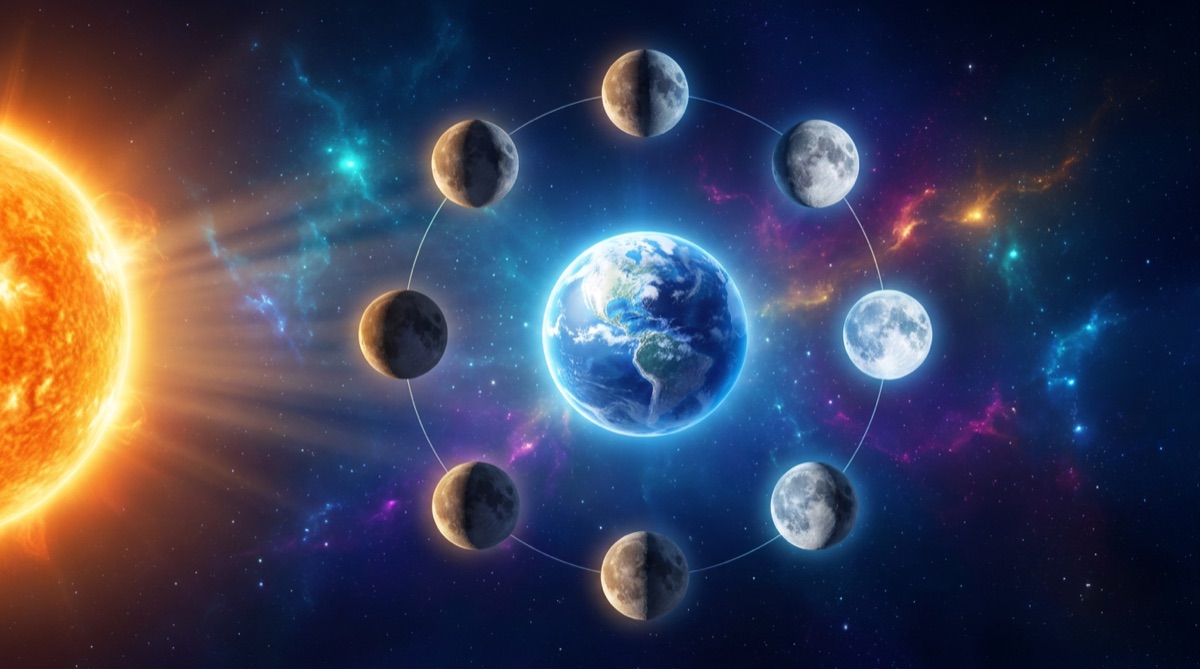
Phases of the Moon
Also: phase of the Moon, lunar phase, lunar phases
The different shapes in which we see the Moon (new, crescent, full, waning). The Moon does not change: we see more or less of the half lit by the Sun depending on where it is in its trip around Earth.
Earth, Moon and Sun
-

Planck's law
Also: Planck function, Planck spectrum, Planck law
The formula that says how much light of each color a hot object emits. It explains why cool stars are reddish and hot stars are bluish.
Light and spectra · reference value · formula
-
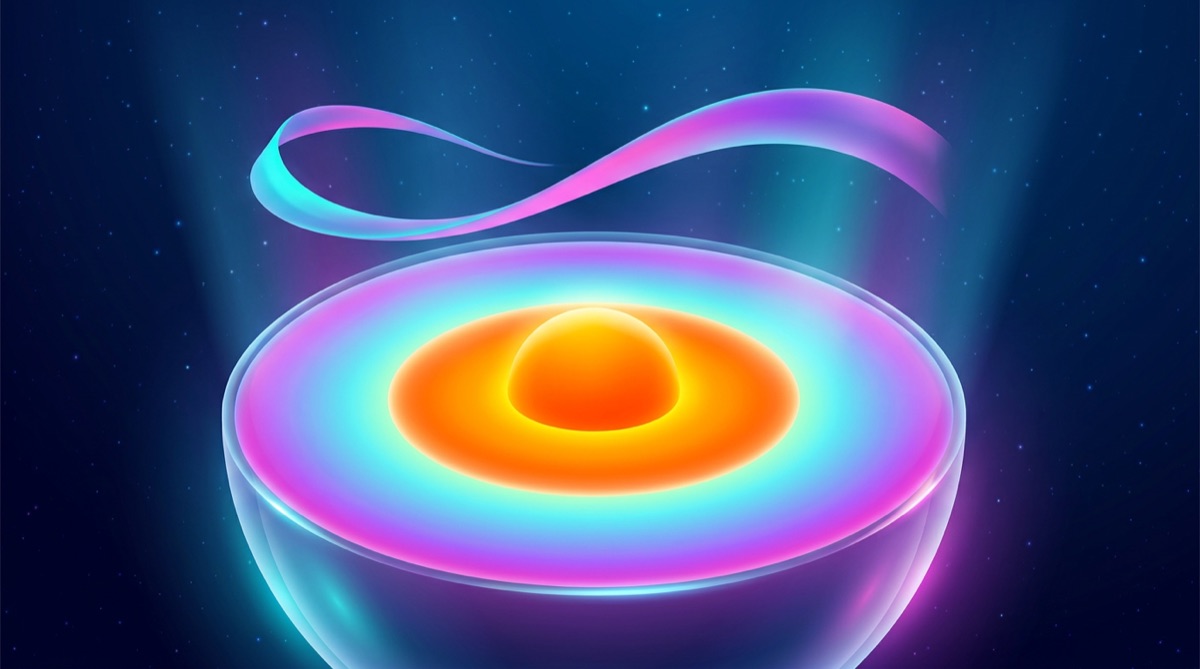
Polytrope
Also: polytropic, Lane-Emden equation, Lane-Emden
A simplified model of a star in which the pressure depends only on the density through a simple rule. It makes it possible to compute the structure of a star with a single equation.
Stars · formula
-
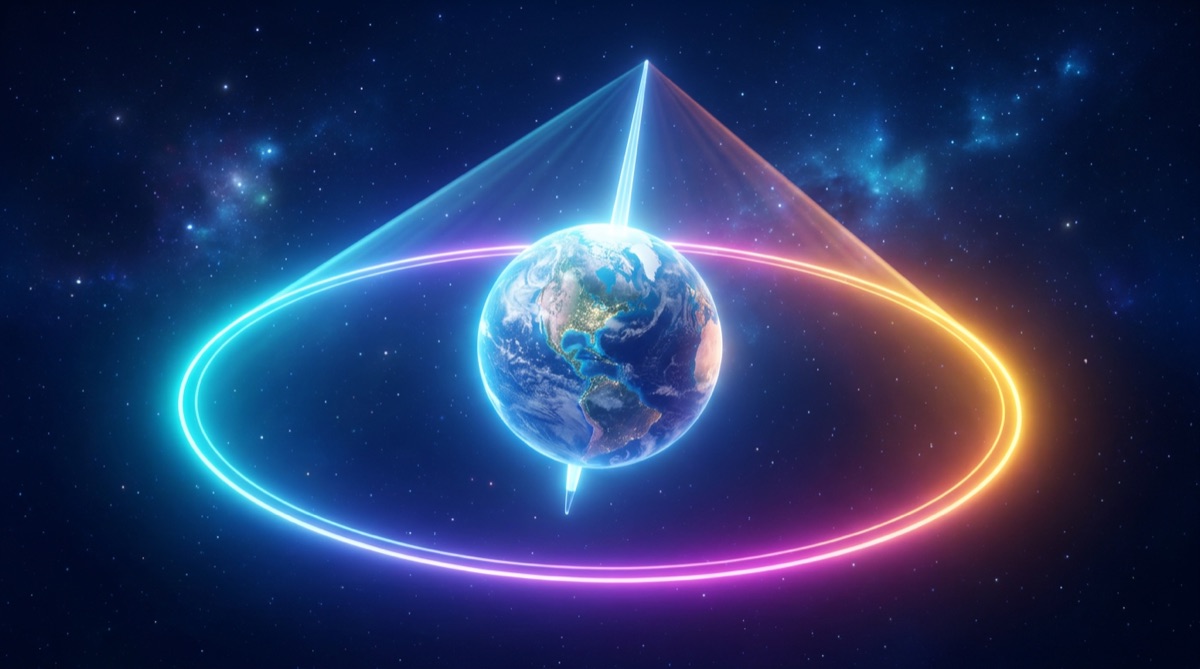
Precession
Also: precession of the equinoxes, axial precession, precession of the axis
Earth's axis wobbles very slowly, like a spinning top, and takes about 26 000 years to complete one turn. That is why the star marking north changes over the millennia.
The sky and coordinates · reference value
R
-
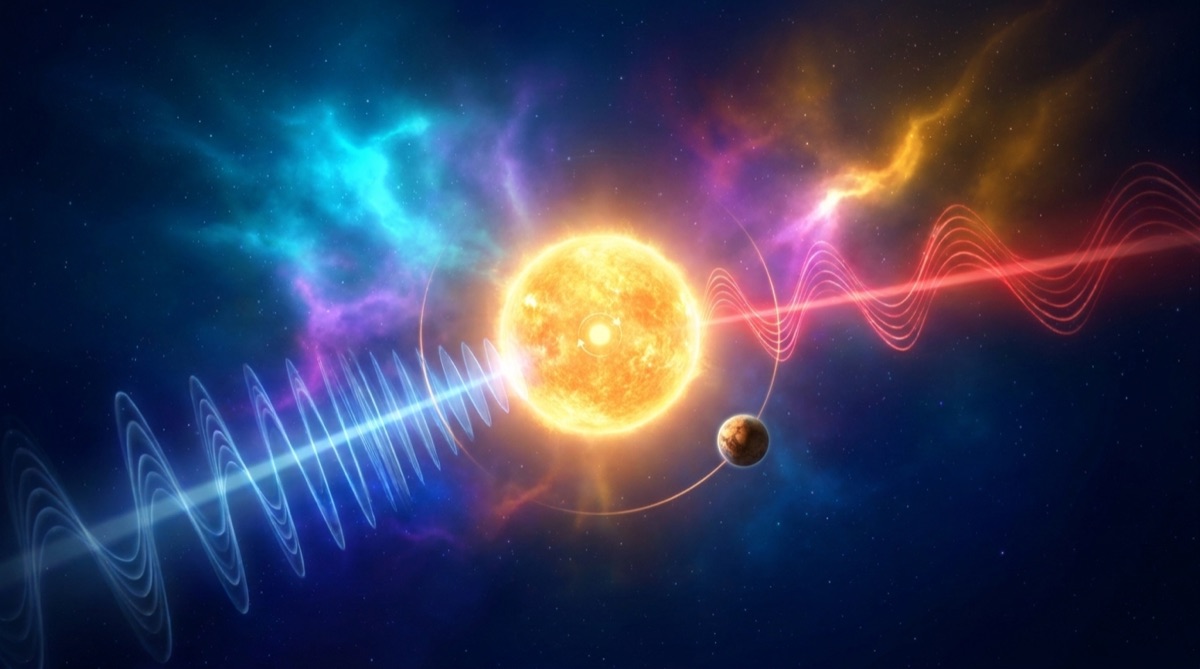
Radial velocity
Also: radial velocity method, radial-velocity method, Doppler method
The part of a star's velocity that brings it toward us or takes it away from us, measured by the Doppler effect. A planet makes its star "wobble", and that back-and-forth gives away the planet and its mass.
Exoplanets · formula
-
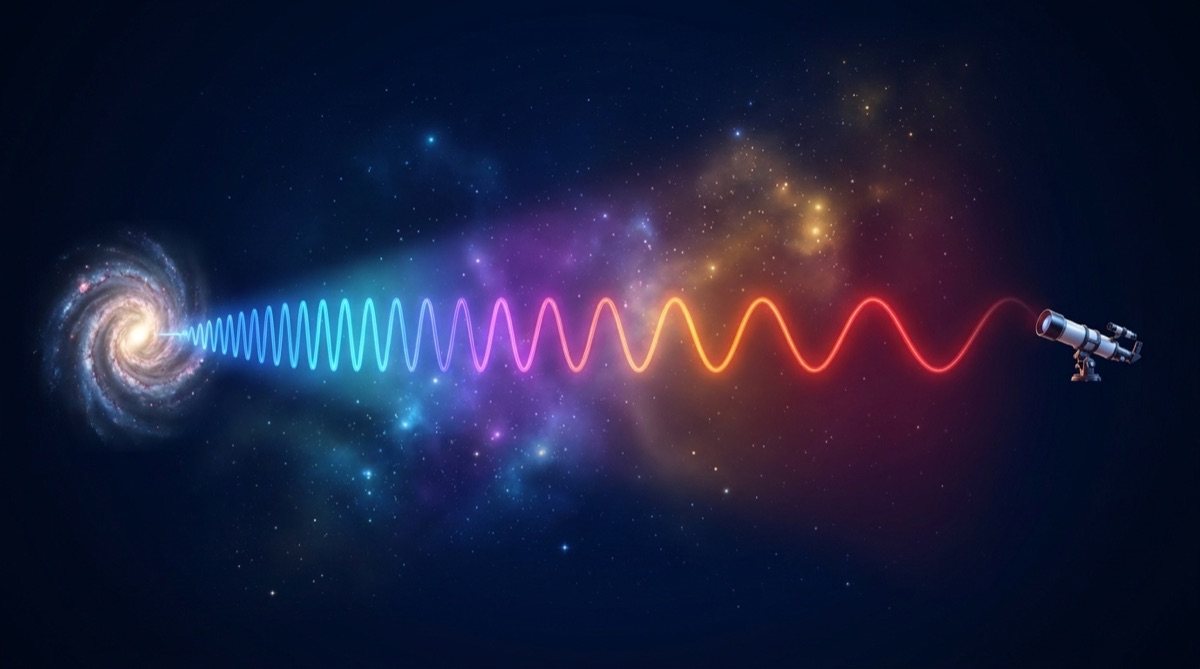
Redshift
Also: red shift, cosmological redshift, redshifted
The light from distant galaxies arrives "stretched" toward the red because the universe expands while it travels. The farther the galaxy, the larger the redshift.
Galaxies and cosmology · formula
-
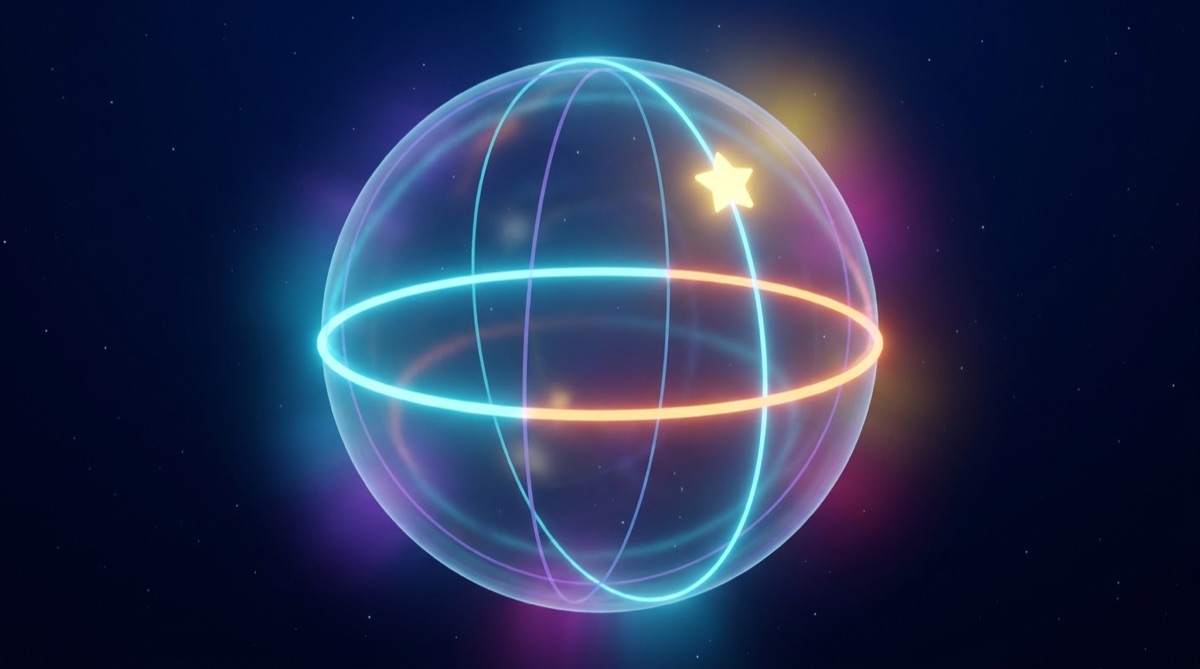
Right ascension
The "longitude" of a star in the sky. It is measured in hours (from 0 to 24) because the sky makes one full turn every day.
The sky and coordinates
-
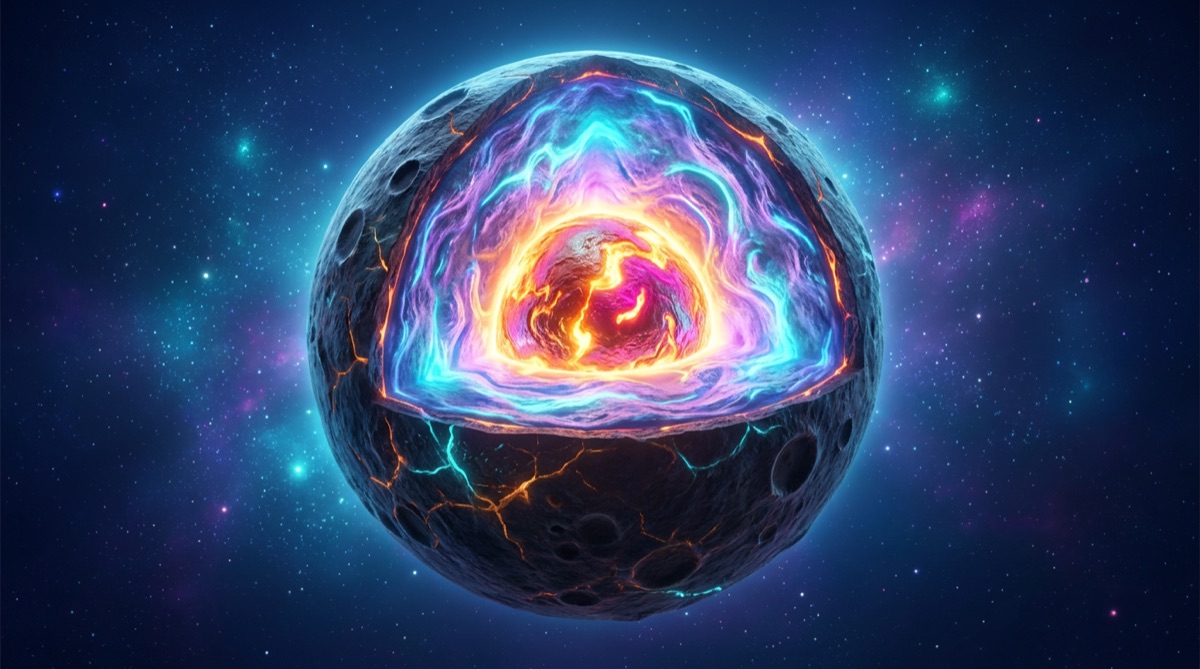
Rocky planet
Also: terrestrial planet, inner planet, inner planets
A small, solid planet made of rock and metal, with ground you could walk on: Mercury, Venus, Earth and Mars. They are the four closest to the Sun.
Solar System
-
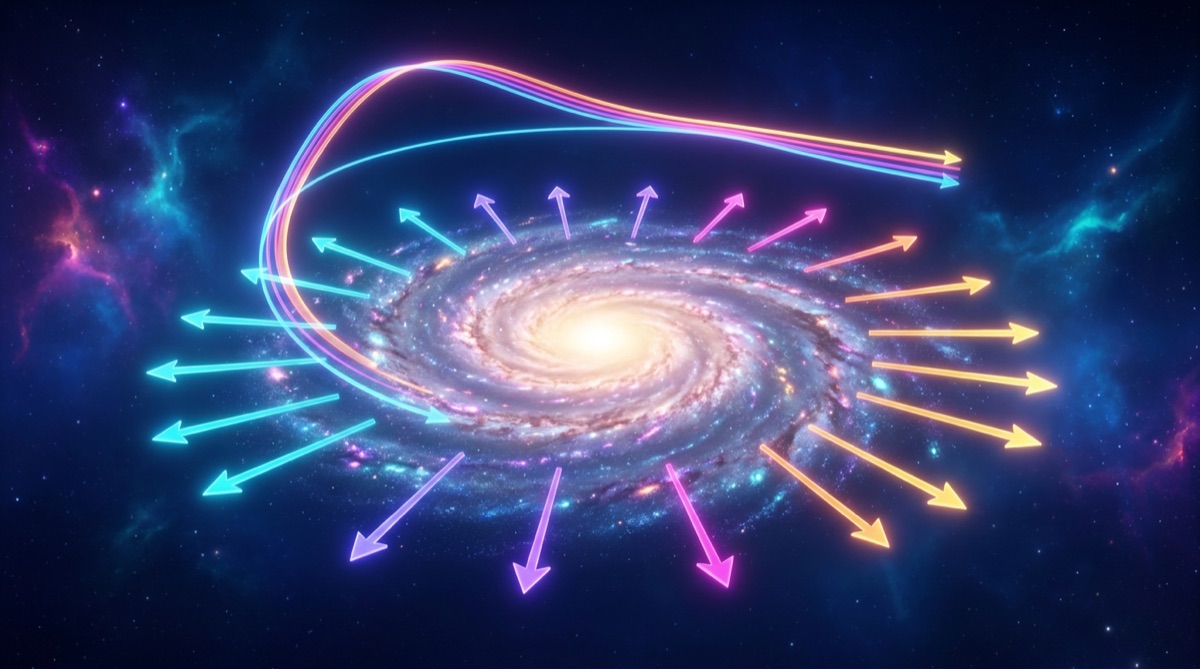
Rotation curve
Also: galactic rotation curve, galaxy rotation curve
A chart of how fast the stars of a galaxy move around its center as a function of their distance from it. It should fall off outward, as in the Solar System, but it stays flat: the main clue to dark matter.
Galaxies and cosmology · formula
-

Runge–Kutta method
Also: Runge-Kutta, RK4, RK45
An improvement on Euler's method that "samples" the slope at several intermediate points of each step and averages them. The fourth-order version (RK4) is thousands of times more accurate for the same step size.
Mathematics and numerical methods
S
-
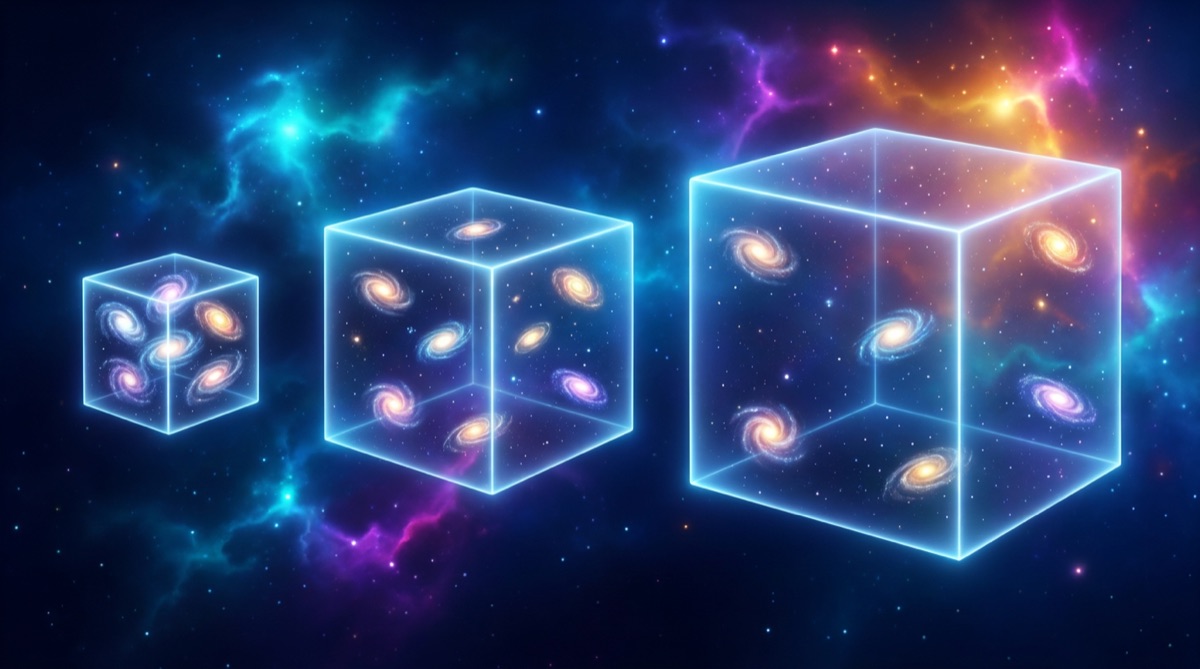
Scale factor
In a scale model, the number real sizes are divided by (1 : 1 billion for the Solar System on a sports field). In cosmology, the number that says how much the universe has stretched: it equals 1 today and was 0.5 when all distances were half as large.
Galaxies and cosmology
-
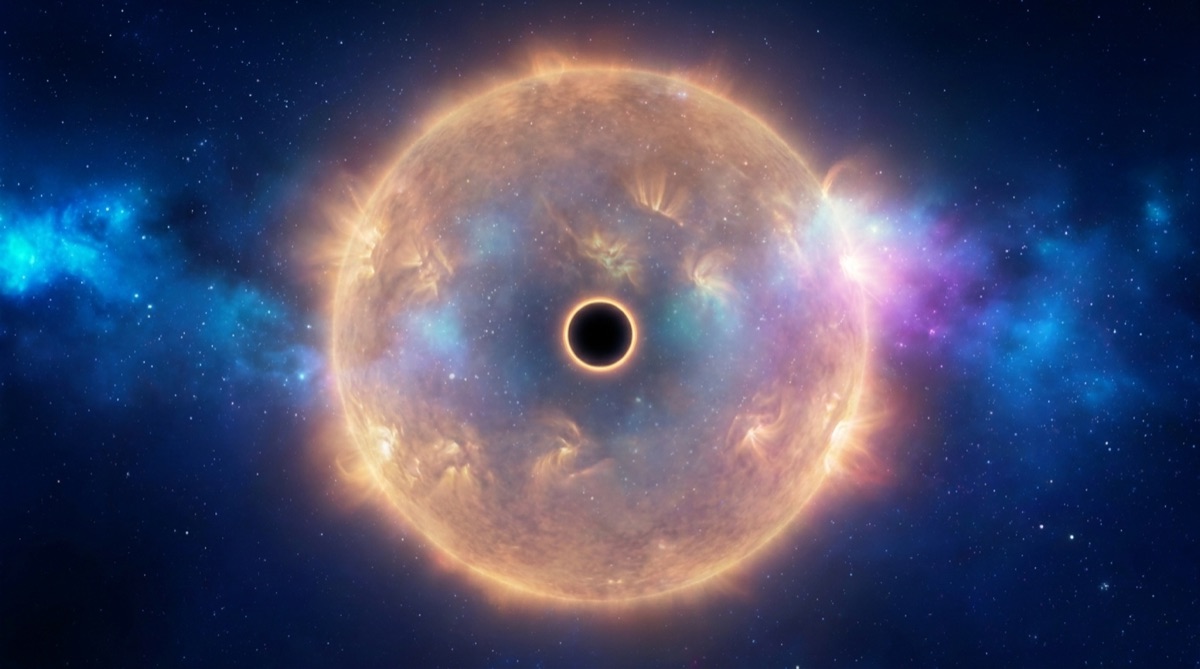
Schwarzschild radius
Also: gravitational radius, Schwarzschild
The size a body would have to be squeezed to in order to become a black hole: the Sun would fit in 3 km and Earth in 9 mm.
Relativity and compact objects · reference value · formula
-
Scientific notation
Also: powers of ten, powers of 10, power of ten
A short way of writing huge or tiny numbers using powers of ten. 150 000 000 km is written 1.5 × 10⁸ km.
Measuring the universe
-
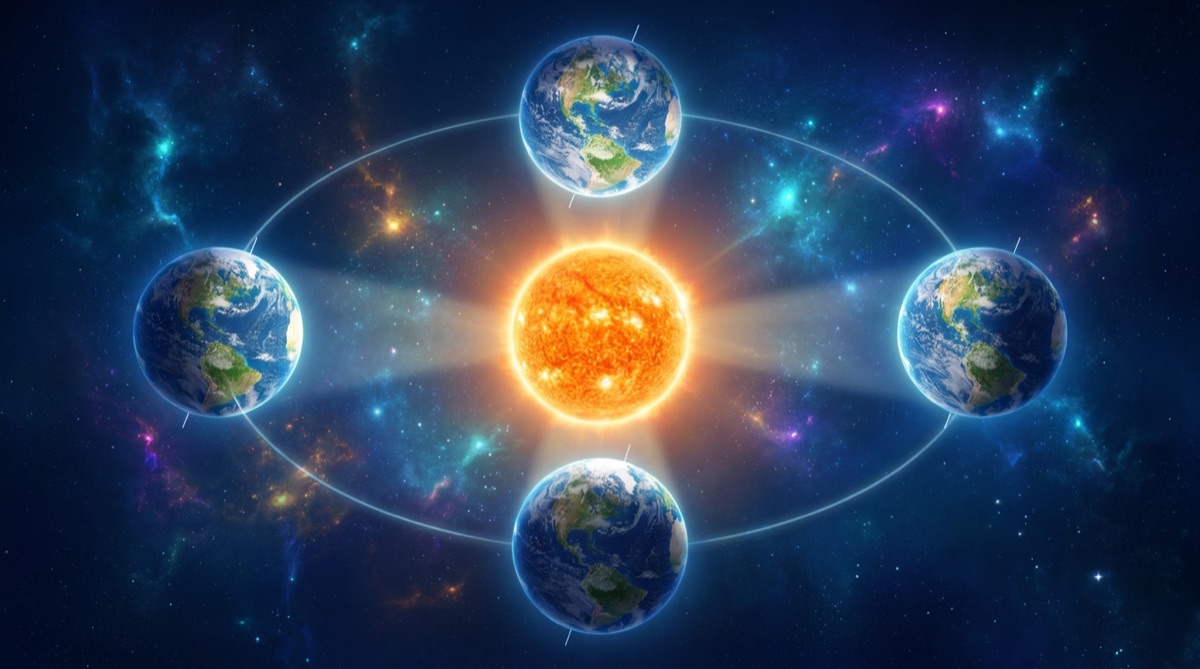
Seasons of the year
Also: seasons, season, the four seasons
Spring, summer, fall and winter. They do not happen because Earth gets closer to the Sun, but because its axis is tilted: for half the year one hemisphere receives sunlight more directly and for more hours.
Earth, Moon and Sun
-
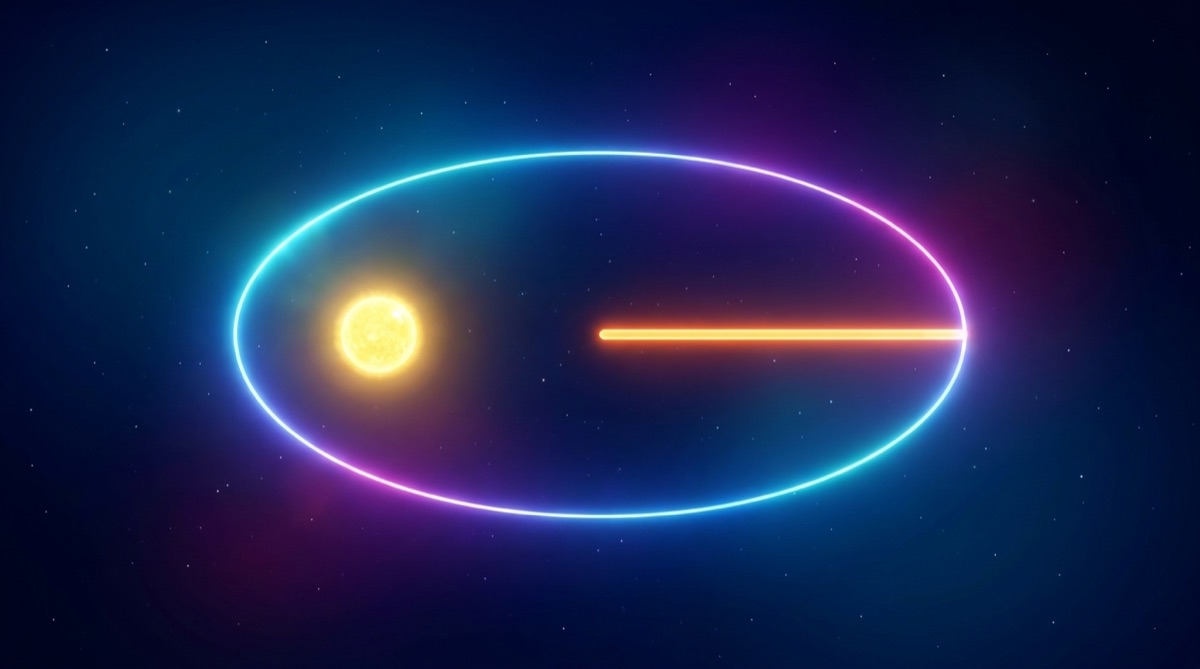
Semi-major axis
Also: semimajor axis, major axis, semi-major axes
Half the length of the ellipse: the planet's "average" distance from the Sun. It is the number that rules Kepler's third law: the larger it is, the slower the planet.
Orbits and gravitation
-
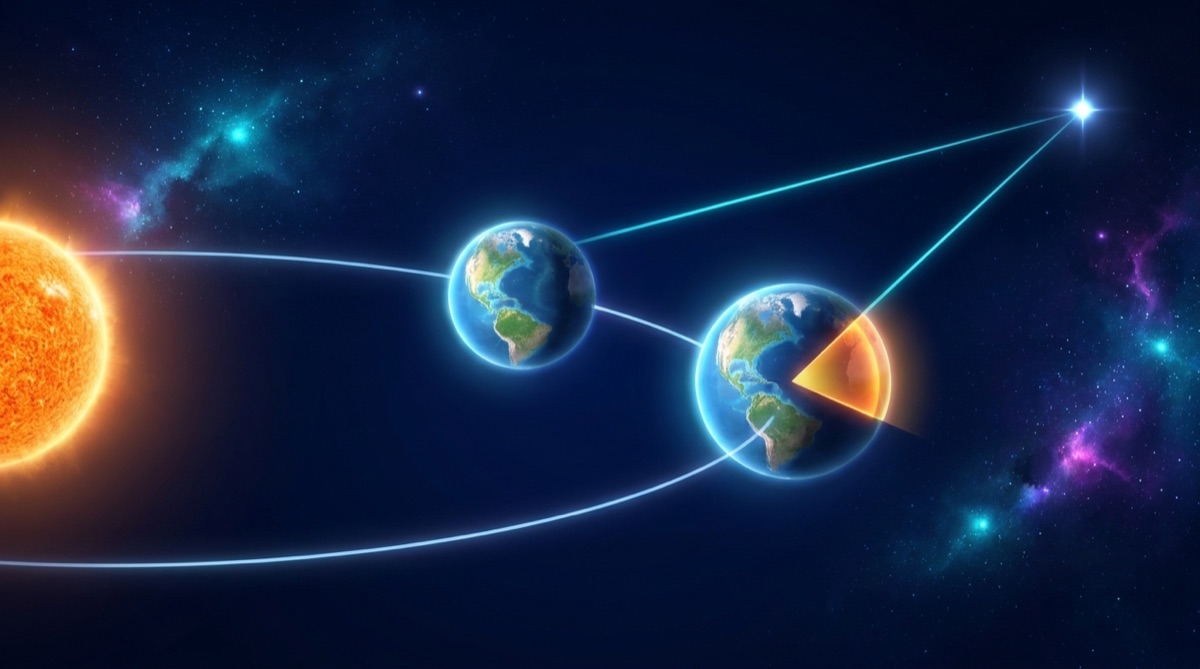
Sidereal day
Also: sidereal rotation, sidereal rotation period
The time it takes Earth to make one full turn with respect to the stars: 23 h 56 min 4 s. The 24 h day is a little longer because Earth also moves along its orbit around the Sun.
The sky and coordinates · reference value
-
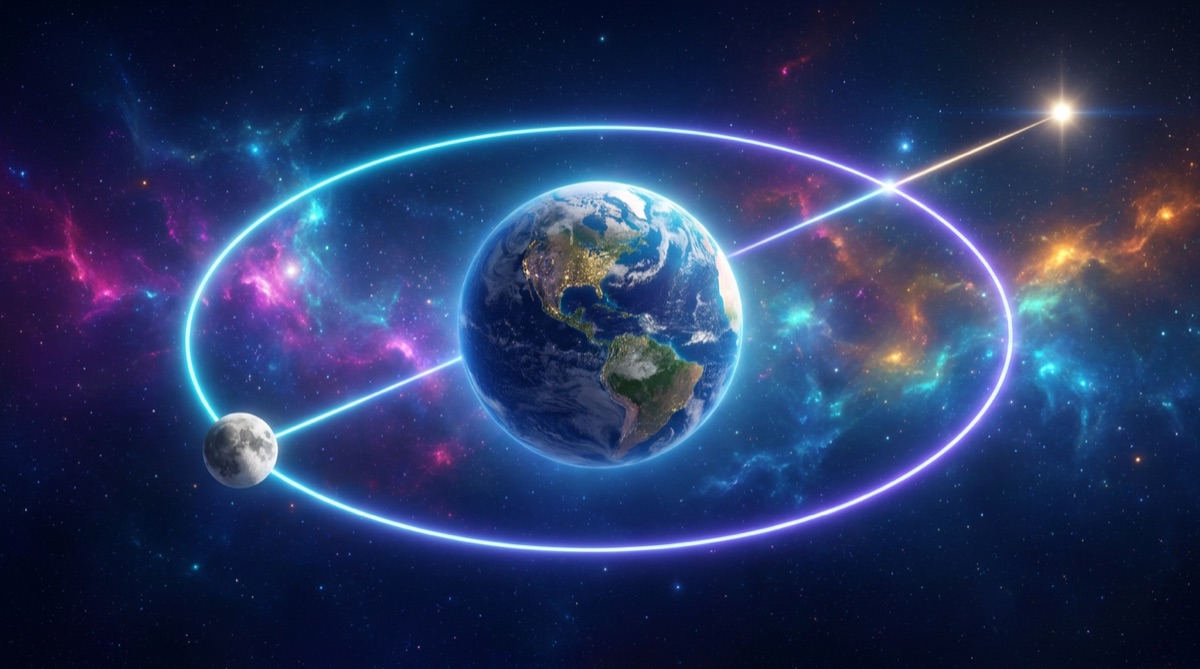
Sidereal month
Also: sidereal period
The time it takes the Moon to make one full trip around Earth with respect to the stars: 27.3 days. It is also the time it takes to spin once on its axis, which is why it always shows us the same face.
Earth, Moon and Sun · reference value
-

Sidereal time
Also: local sidereal time, sidereal hour, LST
A clock that keeps time by the stars instead of the Sun. It gains almost 4 minutes a day on our clocks; that is why each night the stars rise a little earlier.
The sky and coordinates
-
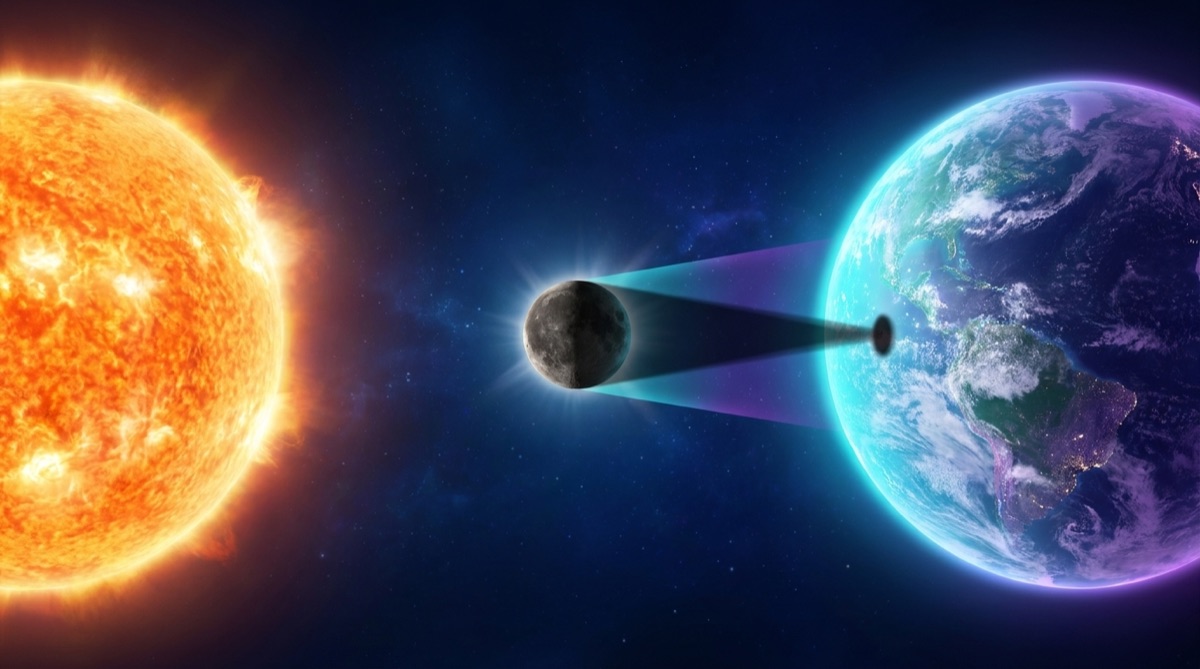
Solar eclipse
Also: eclipse of the Sun, total solar eclipse, annular eclipse
When the Moon moves in front of the Sun and covers it, in broad daylight. It can only be seen from a narrow strip of Earth, and you must never look at it without special protection.
Earth, Moon and Sun
-
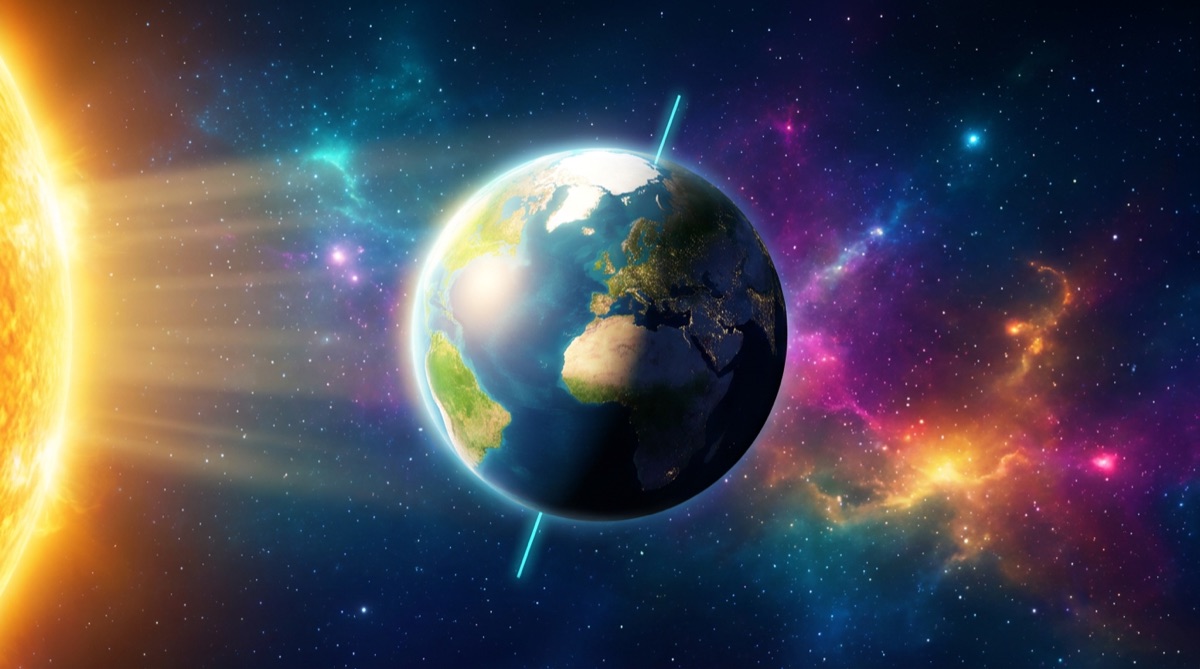
Solstice
The days when the Sun reaches farthest north (around June 21) or farthest south (around December 21) in the sky. They are the longest and the shortest day of the year in each hemisphere.
The sky and coordinates
-
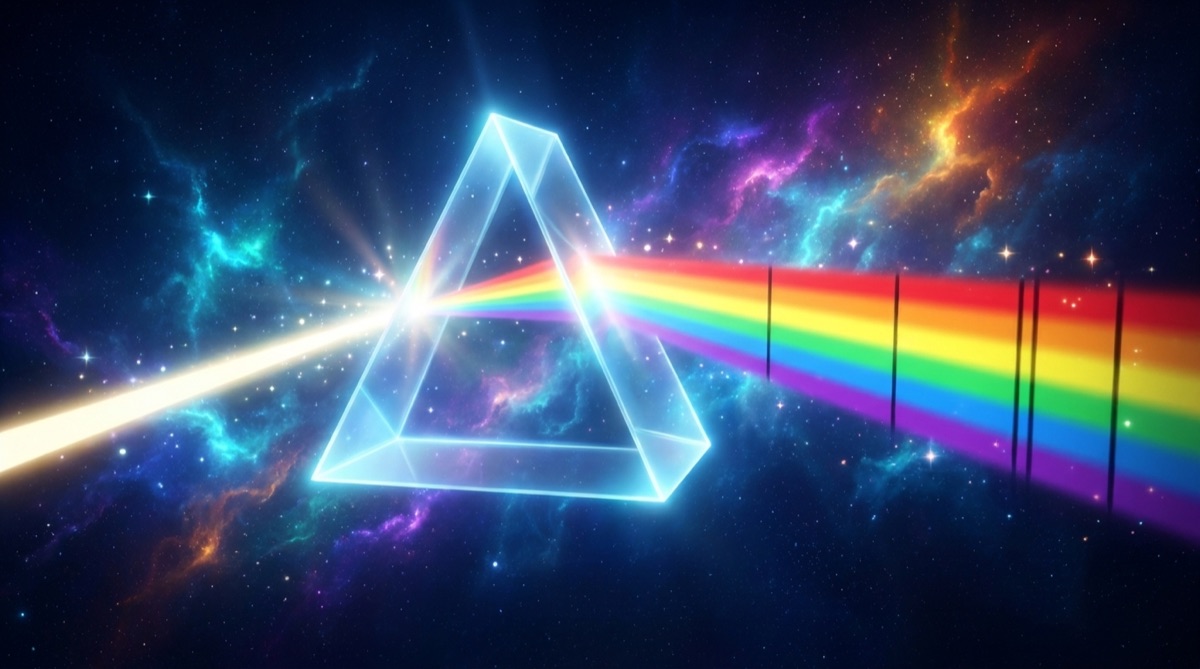
Spectrum
Also: spectra, electromagnetic spectrum, emission spectrum
The light of a star separated into all its colors, as a prism or a rainbow does. In it there are "fingerprints" that tell what the star is made of and how hot it is.
Light and spectra
-
Speed of light
Light travels at nearly 300 000 kilometers per second: it would go around Earth seven and a half times in one second. Nothing goes faster.
Measuring the universe · reference value
-
Stefan–Boltzmann law
Also: Stefan-Boltzmann
An object twice as hot emits sixteen times more energy per square meter. With this law, the size of a star can be calculated from its brightness and its color.
Light and spectra · reference value
-
Stellar nucleosynthesis
Also: nucleosynthesis
The manufacture of chemical elements inside stars: hydrogen makes helium; helium makes carbon and oxygen; and so on up to iron. The calcium in your bones was made in a star.
Stars
-
Supernova
Also: supernovae, Type Ia supernova, Type Ia supernovae
The explosion of a star, so bright that for weeks it can outshine its entire galaxy. It scatters into space the elements the star made.
Stars
-
Symplectic integrator
Also: symplectic, symplectic method, Wisdom-Holman
A numerical method designed so that, when simulating orbits over millions of years, energy neither leaks away nor builds up little by little. That is why it is used to study the stability of the Solar System.
Mathematics and numerical methods
-
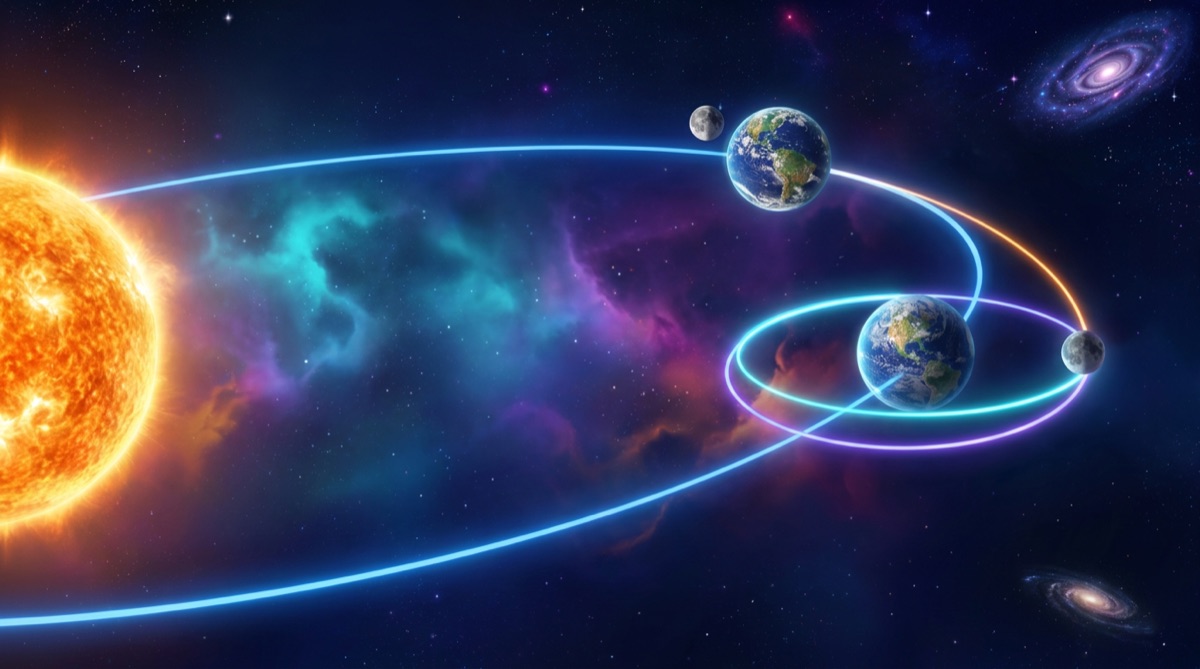
Synodic month
Also: synodic period, lunation
The time from one new moon to the next: 29 and a half days. It is longer than the Moon's actual trip around Earth because, in the meantime, Earth also moved along its orbit around the Sun.
Earth, Moon and Sun · reference value · formula
T
-
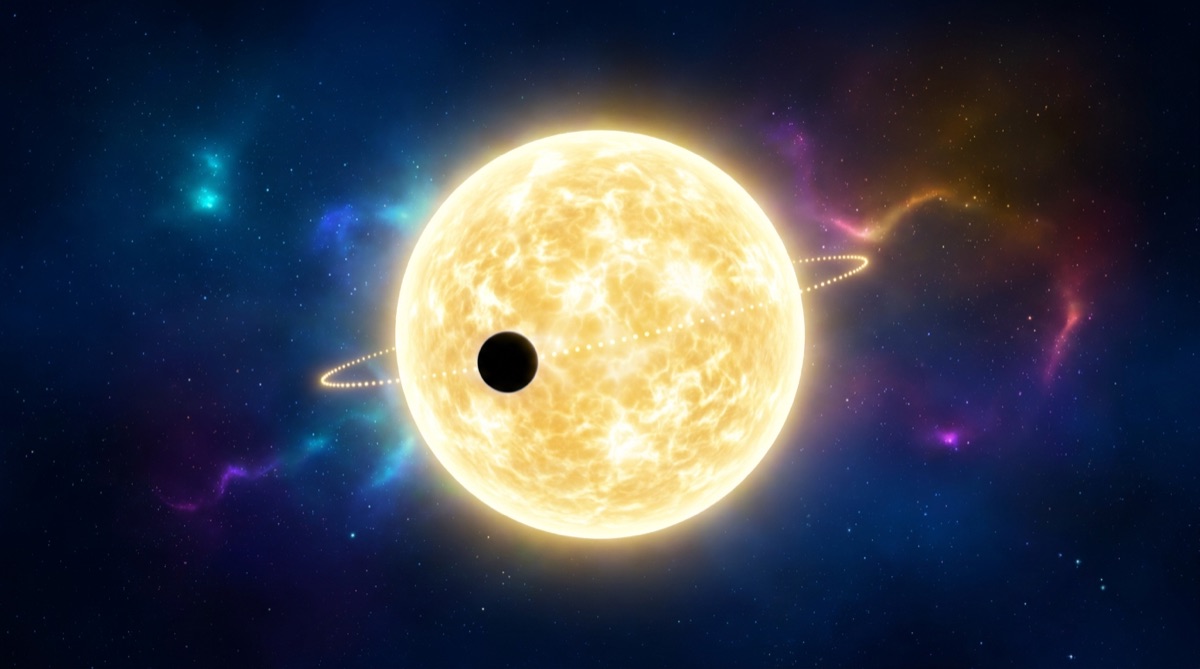
Transit
Also: planetary transit, transit method, transits
When a planet passes in front of its star and takes away a bit of its brightness, like a moth crossing in front of a lighthouse. Measuring that dip gives the size of the planet.
Exoplanets · formula
-
Two-body problem
Also: two bodies, two-body, Kepler problem
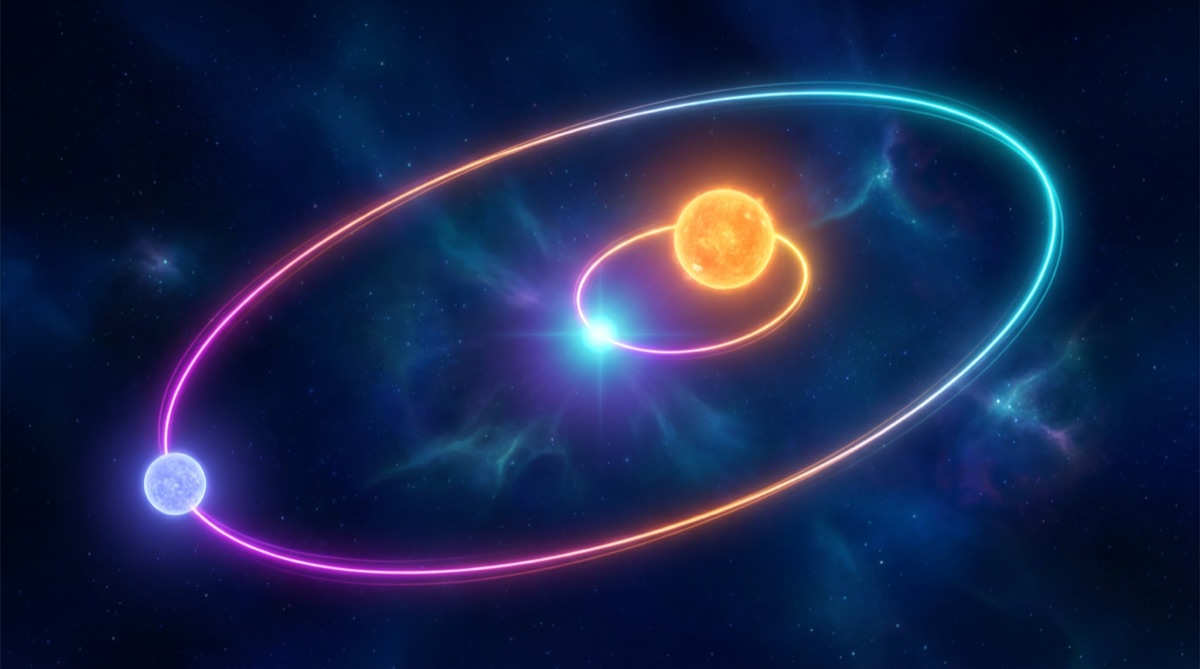
Working out how two bodies move when they attract only each other, like the Sun and a planet. It has an exact solution: Kepler's ellipses. With three bodies there is no longer a closed formula.
Orbits and gravitation · formula
V
-
Virial theorem
Also: virial, virial equilibrium
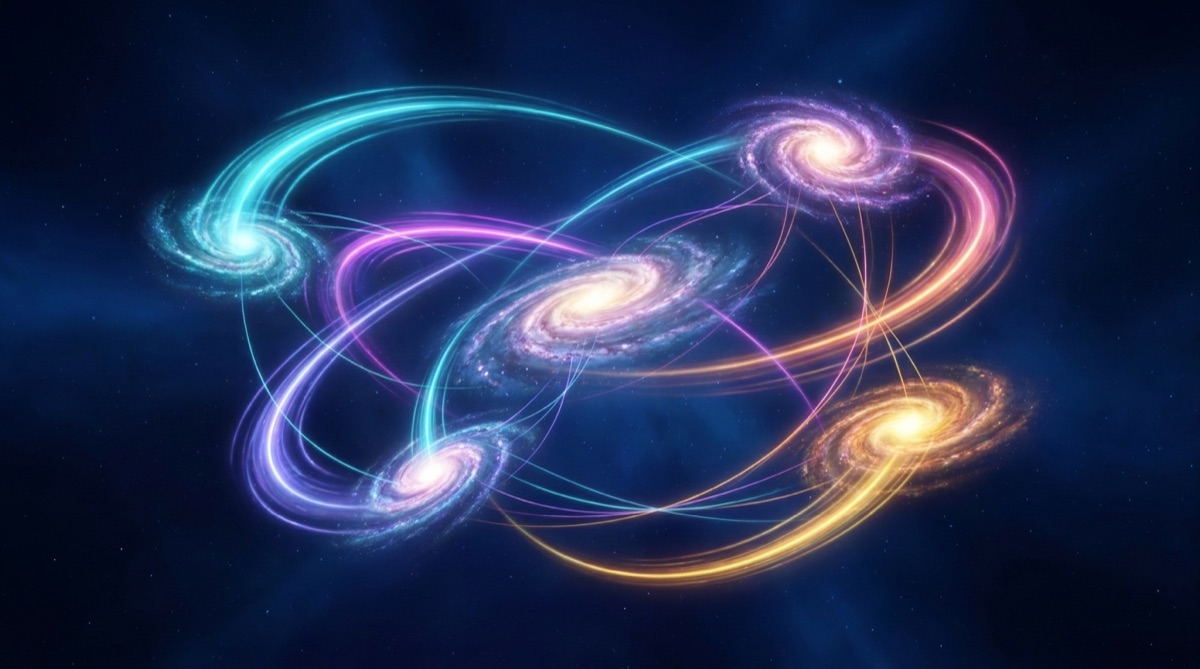
A rule that relates the energy of motion of a group of stars to the energy of their gravity. It makes it possible to "weigh" a cluster of galaxies by measuring only the speed of its members.
Galaxies and cosmology · formula
W
-
Wavelength
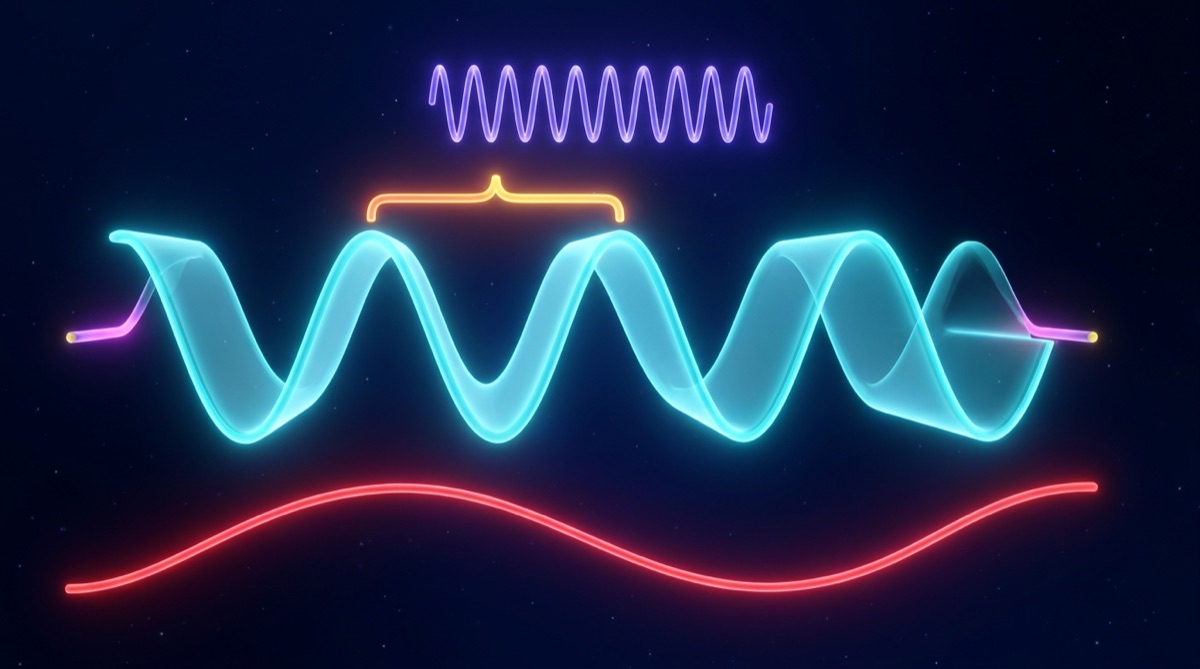
The distance between two consecutive crests of a wave. In light, the wavelength is the color: red is "long" (700 nm) and violet is "short" (400 nm).
Light and spectra
-
White dwarf
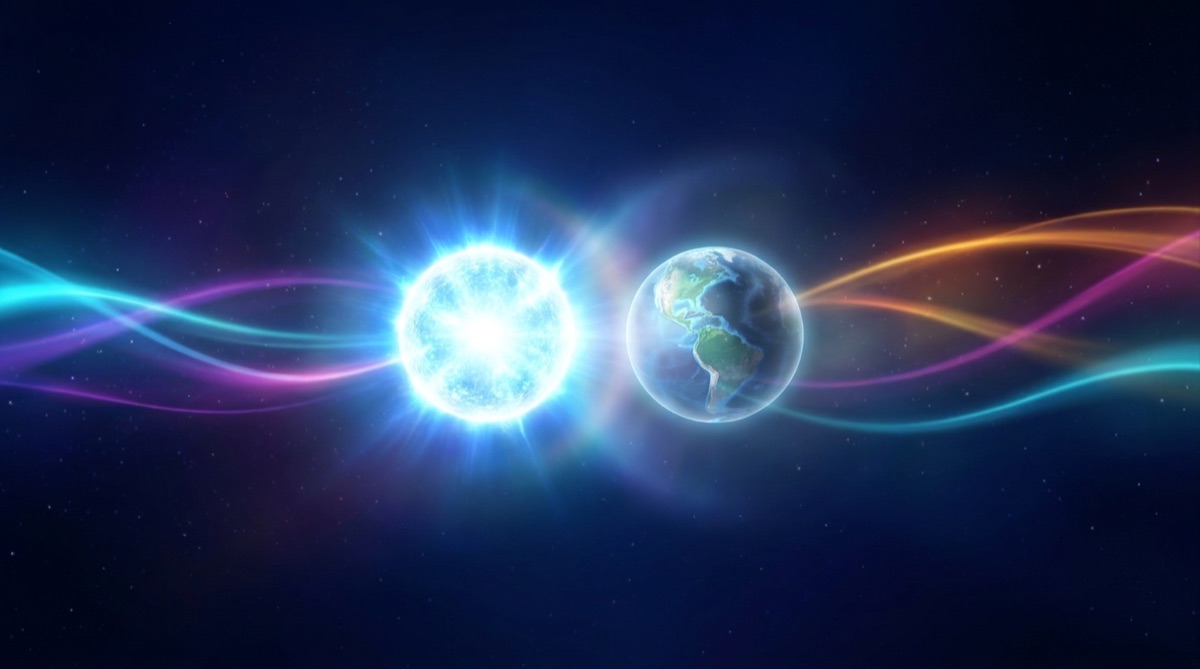
What is left of a star like the Sun when it runs out of fuel: a core the size of Earth with the mass of the Sun, very hot, that cools down over billions of years. A teaspoon of it would weigh tons.
Stars
-
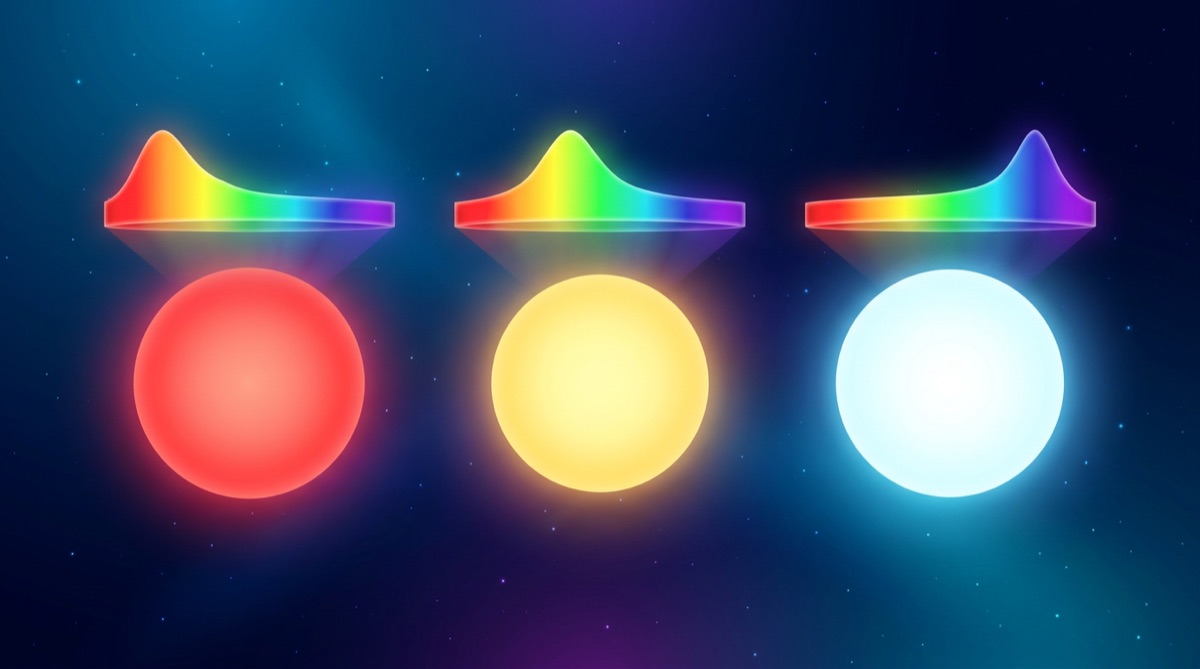
Wien's law
Also: Wien's displacement law, Wien displacement law
The hotter an object is, the "bluer" the color at which it glows most strongly. The Sun (5772 K) glows most strongly in the green-yellow.
Light and spectra · reference value · formula
Z
-

Zenith
Also: zenith distance, zenith angle
The point in the sky directly above your head. The opposite point, beneath your feet, is called the nadir.
The sky and coordinates
No terms match. Try another word or clear the filter.