Are all the planets like Earth?
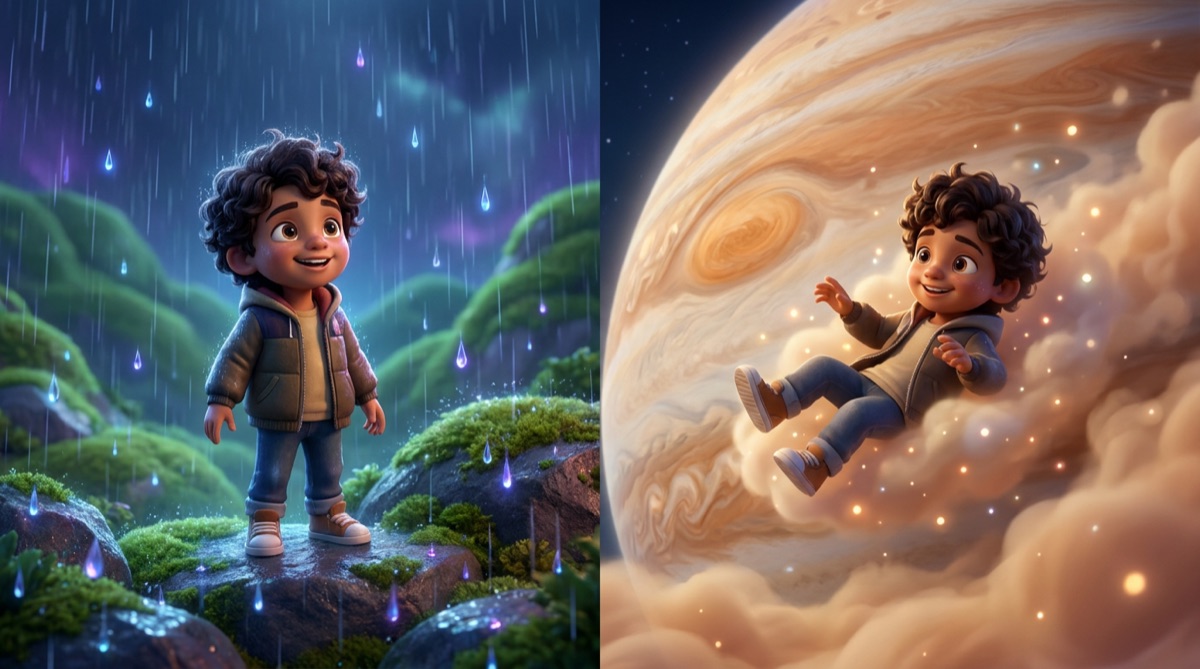
On Earth you can walk on the ground, breathe air and get wet in the rain.
Is it the same on the other planets? No! Some have no ground: if you tried to stand on them, you would sink into gas. Others are so cold that water is always frozen.
To understand the Solar System, we are going to do what scientists do: sort and order.
Eight planets around the Sun
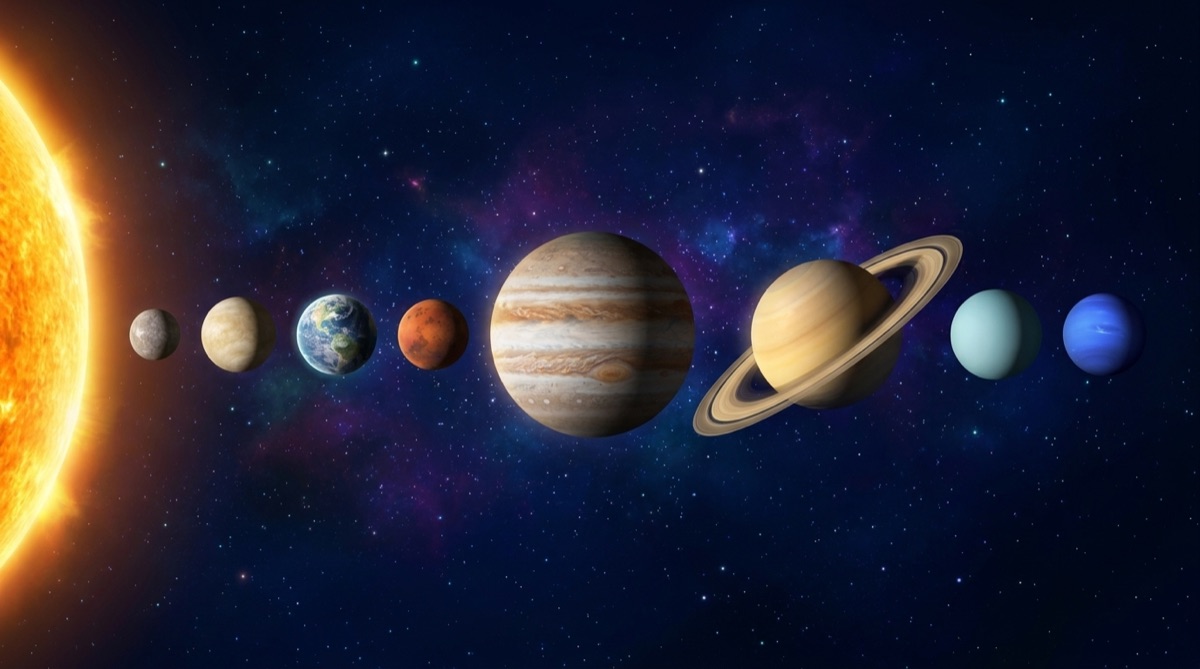
Eight planets travel around the Sun. From the closest to the farthest they are:
Mercury, Venus, Earth, Mars, Jupiter, Saturn, Uranus and Neptune.
A trick to remember them: “My Very Educated Mother Just Served Us Noodles”. Each word starts with the first letter of a planet.
Three families of planets
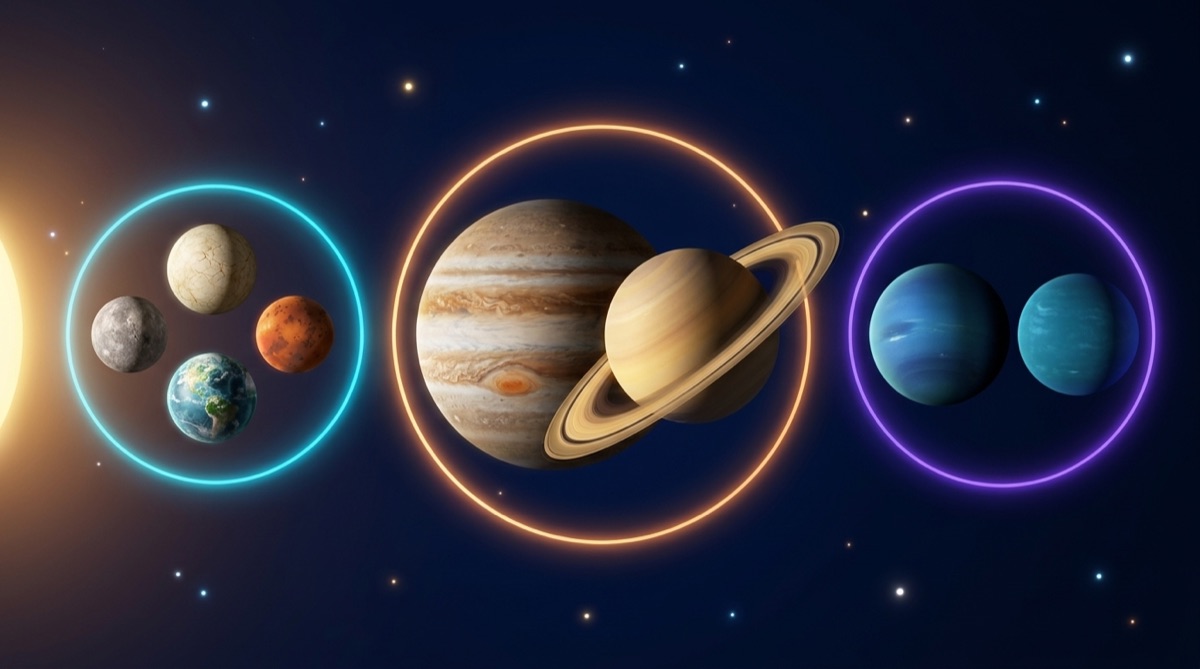
The planets are not all alike. Scientists group them into three families.
Rocky planets: Mercury, Venus, Earth and Mars. They are small. They have rocky ground you could stand on. They are close to the Sun.
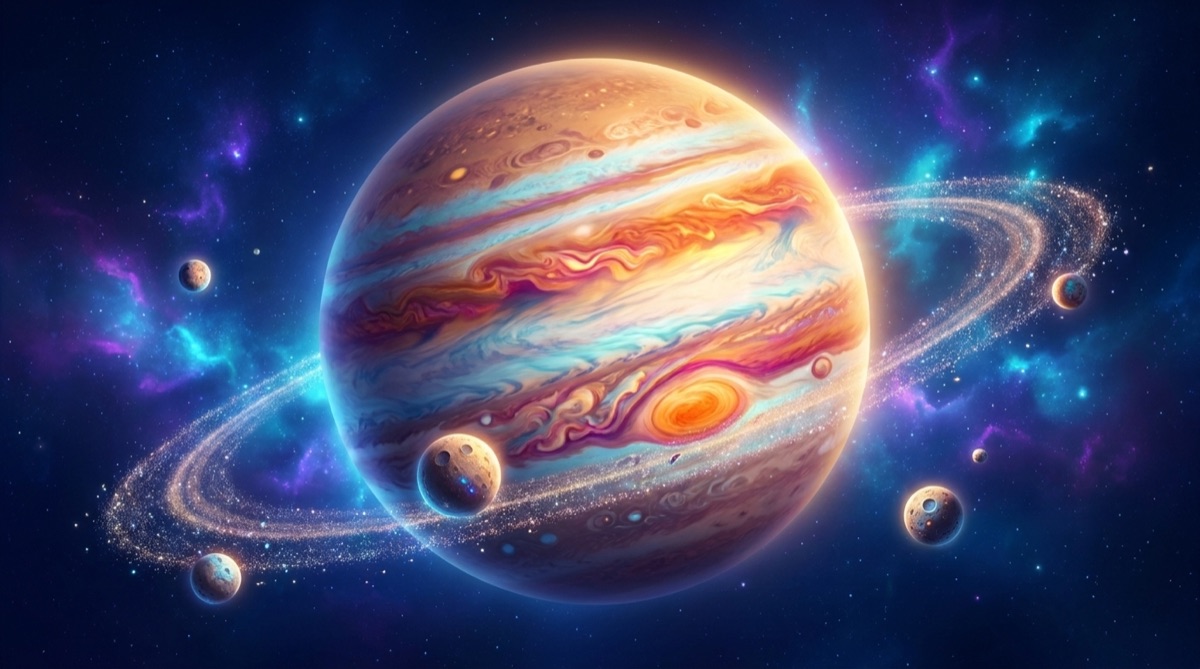
Gas giants: Jupiter and Saturn. They are enormous. They are made mostly of gas (hydrogen and helium). They have no ground.
Ice giants: Uranus and Neptune. They are big, but not as big as Jupiter and Saturn. They are very far away and very cold. Inside they have lots of water, ammonia and methane: scientists call these substances “ices”.
And Pluto? Since 2006 it has been called a dwarf planet. It is 2 376 km across: smaller than our Moon (3 475 km).
A two-way table
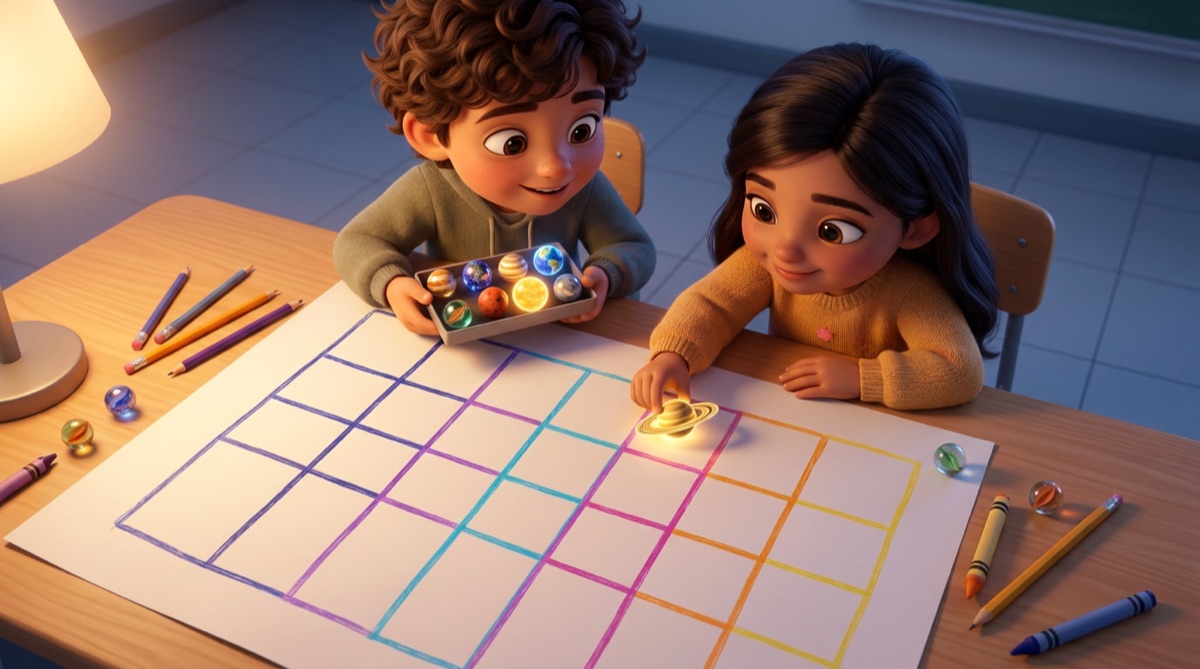
In a two-way table we read rows and columns at the same time. Find the row of a family and the column of a feature. Where they cross is the answer.
| Family | Does it have rocky ground? | Is it bigger than Earth? | Does it have rings? | Is it close to the Sun? |
|---|---|---|---|---|
| Rocky | yes | no | no | yes |
| Gas giants | no | yes | yes | no |
| Ice giants | no | yes | yes | no |
Did you know that all four giants have rings? Saturn’s are easy to see with a telescope. Those of Jupiter, Uranus and Neptune are very thin and dark.
Ordering by size
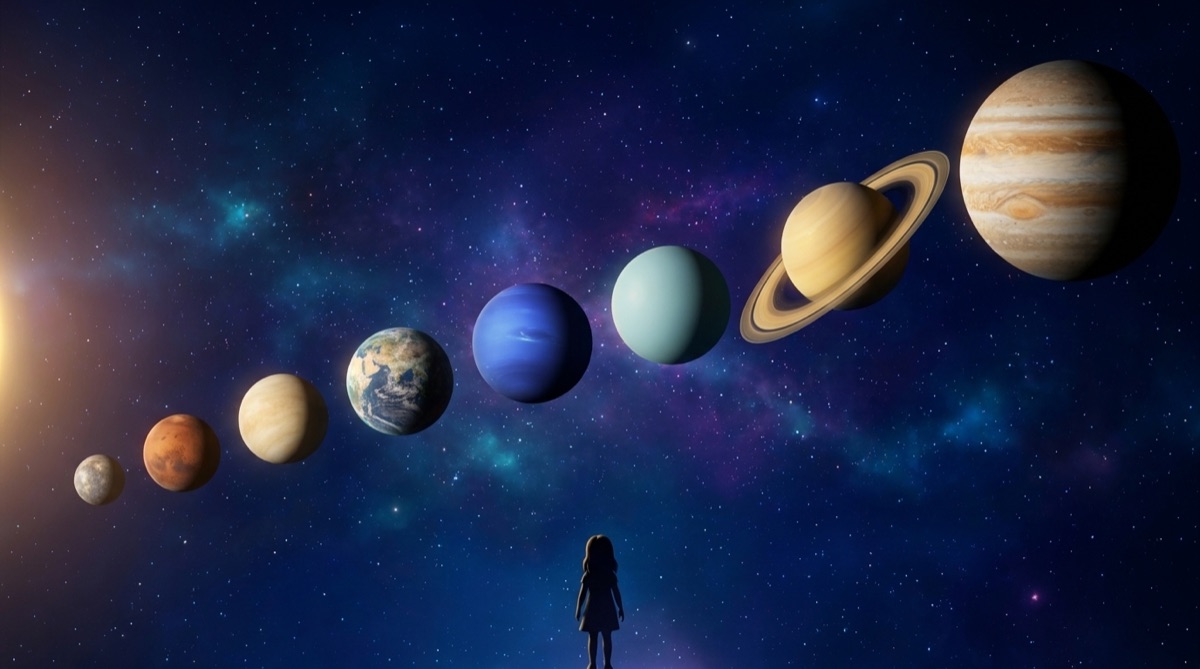
The diameter is how much a planet measures from one side to the other, passing through the center.
| Planet | Family | Diameter (km) | Diameter (thousands of km) |
|---|---|---|---|
| Mercury | rocky | 4 879 | almost 5 |
| Venus | rocky | 12 104 | 12 |
| Earth | rocky | 12 756 | almost 13 |
| Mars | rocky | 6 792 | almost 7 |
| Jupiter | gas giant | 142 984 | 143 |
| Saturn | gas giant | 120 536 | almost 121 |
| Uranus | ice giant | 51 118 | 51 |
| Neptune | ice giant | 49 528 | almost 50 |
To compare two big numbers:
- The one with more digits is bigger: 49 528 (5 digits) is smaller than 120 536 (6 digits).
- If they have the same number of digits, we compare from left to right: 12 104 and 12 756 start the same (1, 2), but in the hundreds 1 is smaller than 7. That is why Venus is a little bit smaller than Earth.
If the numbers look too long, use the thousands of km column: 143 is easier than 142 984.
From smallest to biggest they go like this: Mercury, Mars, Venus, Earth, Neptune, Uranus, Saturn, Jupiter.
Notice: the four rocky planets are the four smallest. And about 11 Earths fit across Jupiter!
Ordering by distance
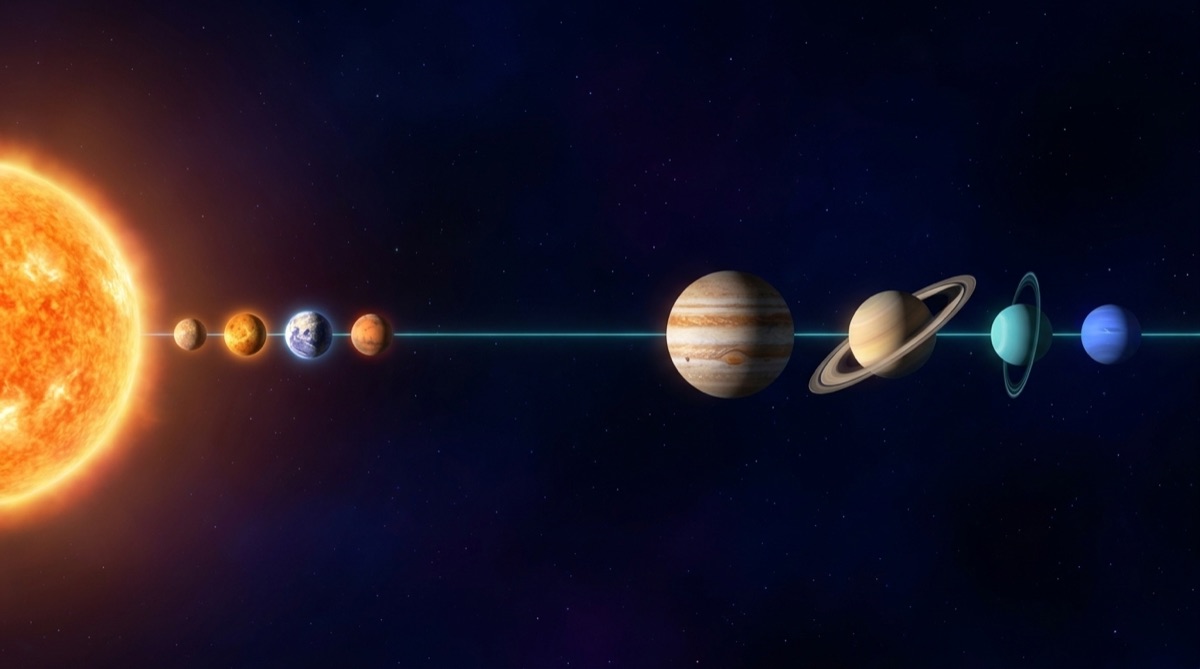
The distances to the Sun are so big that we write them in millions of kilometers.
| Planet | Distance to the Sun (millions of km) |
|---|---|
| Mercury | 58 |
| Venus | 108 |
| Earth | 150 |
| Mars | 228 |
| Jupiter | 778 |
| Saturn | 1 427 |
| Uranus | 2 871 |
| Neptune | 4 498 |
Notice: the four rocky planets fit within the first 228 million km. Between Mars and Jupiter there is a jump of 550 million km!
How many moons does each planet have?
| Planet | Known moons* |
|---|---|
| Mercury | 0 |
| Venus | 0 |
| Earth | 1 |
| Mars | 2 |
| Jupiter | 115 |
| Saturn | 293 |
| Uranus | 29 |
| Neptune | 16 |
* According to NASA, as of August and September 2026. New moons are discovered almost every year, so this number changes!
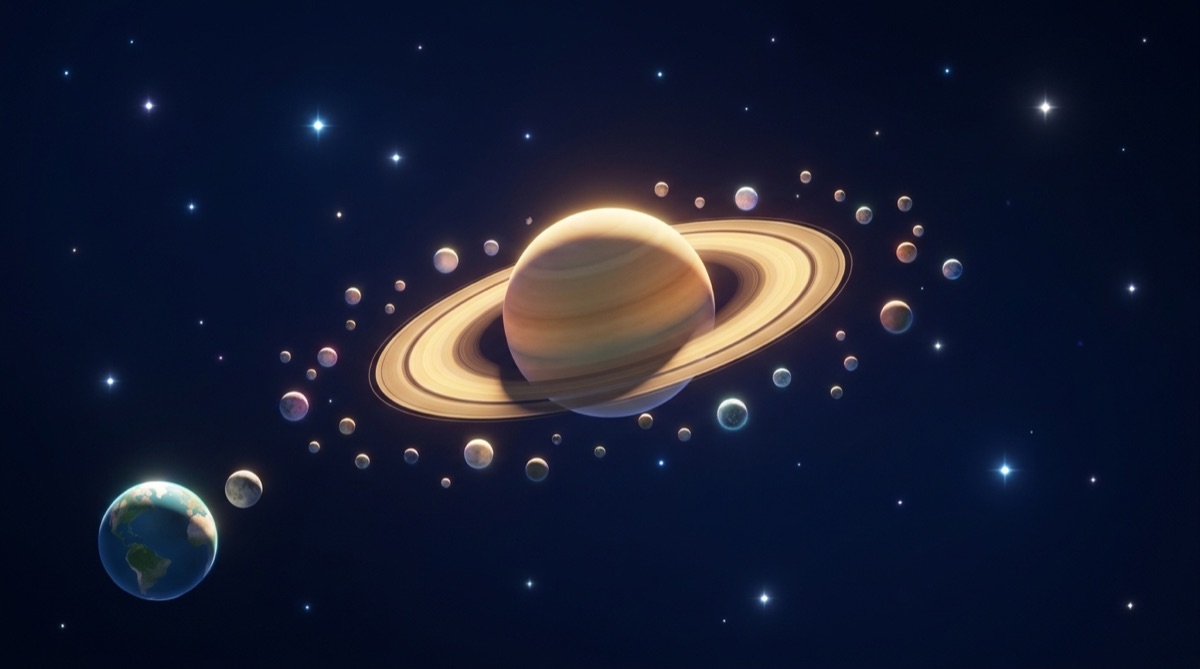
For example, Saturn had 146 known moons until March 2025. That month 128 new ones were announced and it reached 274. In 2026 it is already at 293. The rocky planets have few or no moons; the giants have dozens or hundreds.
Play with the simulator

- Open the Sizes tab. Write in your notebook the planets from smallest to biggest and compare with your list.
- Which family is on the left? Which one is on the right?
- Switch to Distances. Are the rocky planets together or apart? And the giants?
- Choose Add Pluto. Where does it end up?
Activity: the card game
Materials: 8 cardboard cards, markers, three boxes or three colored hoops, modeling clay.
- On each card write the name of a planet, its family, its diameter (in thousands of km), its distance to the Sun and its moons.
- Sort: put each card in the box of its family: rocky, gas or ice.
- Order by size: make a row from smallest to biggest. Hint: first compare how many digits each number has.
- Order by moons: make another row, now from fewest moons to most moons. Does the same order come out as by size?
- Two-way table: on a sheet of paper, draw a table with the 8 planets in the rows and three columns: “family”, “bigger than Earth?” and “more moons than Earth?”. Fill it in with the cards.
- Model: with modeling clay make Jupiter the size of a large grape. What size will Earth be? (Hint: about 11 Earths fit across Jupiter: a tiny grain!)
Final question: is there any planet that is bigger than Earth and has fewer moons than Earth? Check your table.
Exercises
- Which is the biggest rocky planet? And the smallest giant?
Show solution
The biggest rocky planet is Earth (12 756 km). The smallest giant is Neptune (49 528 km): it has 5 digits, while Jupiter and Saturn have 6, and compared with Uranus (51 118) it loses in the ten thousands (4 is less than 5).
- Which planet has the most moons? How many more than Jupiter?
Show solution
Saturn, with 293. 293 − 115 = 178 more moons than Jupiter.
- Write in words the diameter of Saturn, 120 536 km.
Show solution
One hundred twenty thousand five hundred thirty-six kilometers. (1 hundred thousand, 2 ten thousands, 0 thousands, 5 hundreds, 3 tens, 6 ones.)
- Use the two-way table of the families. Which family has rings and is close to the Sun?
Show solution
None. The rocky planets are close to the Sun but have no rings; the giants have rings but are far away. You have to look at both columns at once.
- A friend says: “Uranus is farther away than Neptune because 2 871 looks bigger than 4 498”. Is he right?
Show solution
No. Both numbers have four digits; we compare from left to right: 2 is less than 4. So 2 871 is less than 4 498 and Neptune is farther away.
✦ Mini-quiz
Remember
- There are eight planets: four rocky ones close to the Sun and four giants far from it.
- The gas giants and ice giants have no ground, have rings and many moons.
- To compare big numbers we look at how many digits they have and then digit by digit, from left to right.
- A two-way table lets us see many features at once.
- Scientific data gets updated: the number of moons changes almost every year.
🍎 Teacher guide
- Time
- 2 sessions of 55 min
- Colombian national standard (MEN)
- Natural Sciences, Grades 1 to 3: 'I describe characteristics of living beings and inert objects, establish similarities and differences between them and classify them'; 'I record my observations in an organized and rigorous way (without alterations), using drawings, words and numbers'. Looking ahead to Natural Sciences, Grades 4 to 5: 'I describe the main elements of the solar system and establish relationships of size, movement and position'. Mathematics, Grades 1 to 3: 'I classify and organize data according to qualities and attributes and present it in tables'; 'I compare and order objects with respect to measurable attributes'; 'I use representations –mainly concrete and pictorial– to explain place value in the decimal numeral system'.
- Evidence of learning
- Sorts the eight cards into the three families without error; orders the planets by size and by distance, justifying with the number of digits; completes a two-way table of 8 rows and 3 columns and answers questions that cross row and column.
Materials
- 8 cardboard cards per group and markers
- Three boxes, hoops or colored circles for sorting
- Modeling clay
- Photocopy of the blank two-way table
- Computer or tablet with the simulator (optional)
Suggested sequence
Session 1. Sorting (55 min). Opening (10 min): “Could you walk on every planet?” (hypothesis in the notebook). Development (35 min): the three families and the two-way table of features; card game, steps 1 and 2; cross-reading of the table with questions like the one in exercise 4. Closing (10 min): each group explains why a planet is in its box.
Session 2. Ordering (55 min). Opening (10 min): “Which is bigger, 49 528 or 120 536? How do you know?”. Development (30 min): the two comparison rules; cards, steps 3 to 6; simulator in Sizes and Distances to check. Closing (15 min): exercises 1 to 3 and mini-quiz. Homework: make the collectible card of a planet (grade project).
Note on the data. Diameters from NASA’s Planetary Fact Sheet; distances rounded from the JPL semi-major axes (the same ones the simulator uses). The number of moons is the one on the NASA Science “Moons” pages in October 2026 and will keep changing: it is worth checking it every school year and discussing the date with the students.
Common mistakes
- Thinking that the planets are “close” to one another, as in book drawings. The simulator in Distances mode shows the emptiness between them.
- Believing that the gas giants have a hidden ground under the clouds where you can walk. Insist: the gas just gets denser and denser, with no surface.
- Confusing “bigger” with “farther”. The cards are ordered twice, by two different attributes, and students check whether the order matches.
- Comparing numbers by “how they look” instead of counting digits (exercise 5). Have them count the digits with a finger and then compare from the left.
- Six-digit numbers go beyond the range of Grade 3 (up to 10 000). Work with “thousands of km” (Jupiter ≈ 143 thousand km) and leave the full number as a challenge; the lesson “Big numbers” goes deeper into place value.
- Treating the number of moons as a fixed fact. Use the fact that it changes to talk about how science gets updated.