Glossary / P / Relativity and compact objects
Perihelion precession
Also: precession of the perihelion · precession of Mercury's perihelion · perihelion advance · advance of the perihelion · anomalous precession · perihelion shift
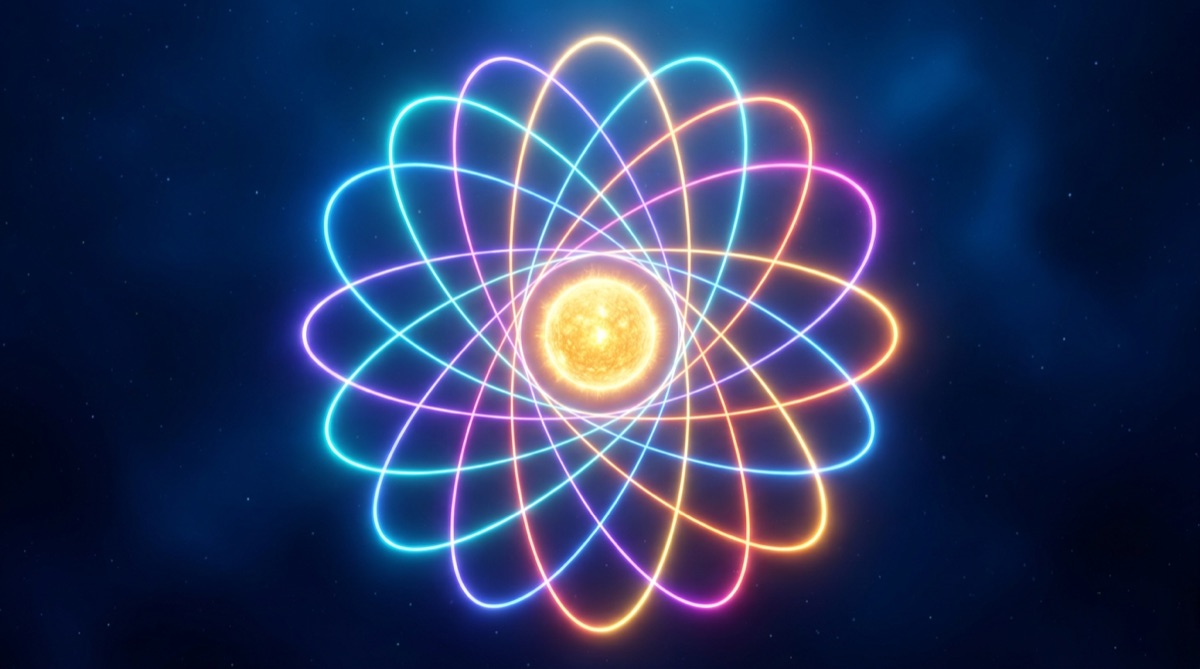
Mercury's orbit turns slowly, like a flower drawn with a spirograph. Newton explained almost all of the turning, but a little bit was missing (43 arcseconds per century) that only general relativity explained.
Going further
per orbit. For Mercury, /century, on top of the /century from planetary perturbations and the /century from the precession of the equinoxes.
Reference value: 42.98″/century (Mercury) Source: Will 2014, Living Rev. Relativ. 17, 4
Where it is explained: The precession of Mercury's perihelion Higher Education
Related terms
Used in these lessons
- The precession of Mercury's perihelion Higher Education 4 mentions
- Perturbation theory and the oblateness of the Earth Higher Education 3 mentions