Glossary / S / Earth, Moon and Sun
Synodic month
Also: synodic period · lunation
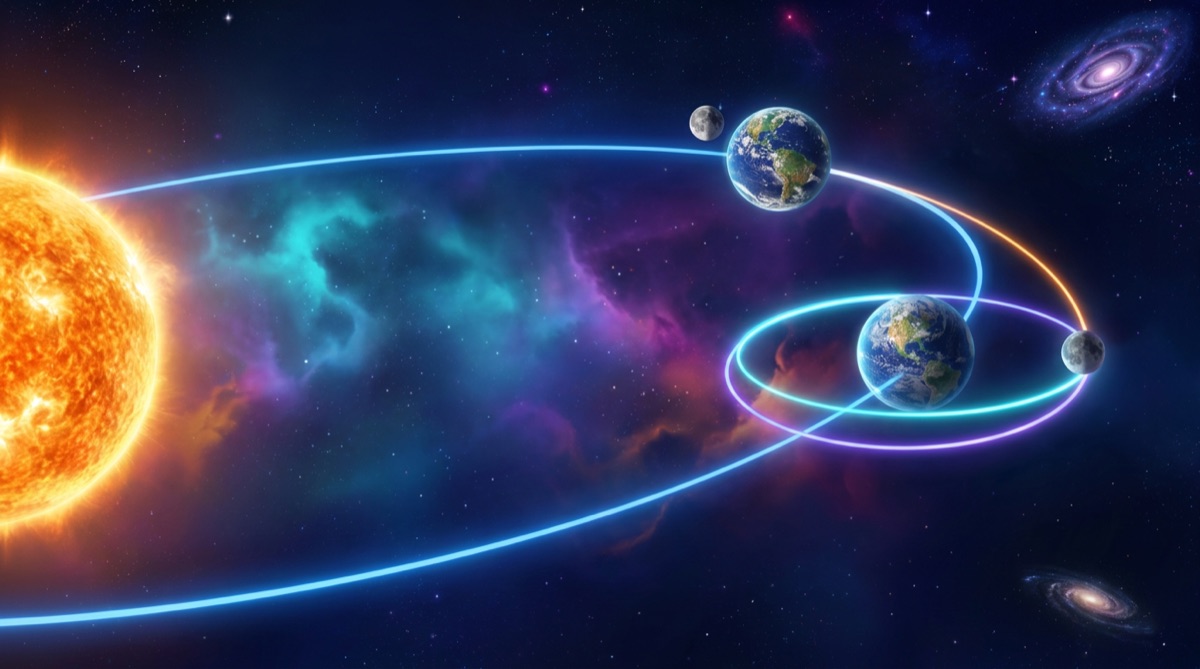
The time from one new moon to the next: 29 and a half days. It is longer than the Moon's actual trip around Earth because, in the meantime, Earth also moved along its orbit around the Sun.
Going further
: with d and d the result is d. The same formula gives the synodic period of the planets.
Reference value: 29.530 589 d (mean value) Source: Astronomical Almanac
Where it is explained: Phases of the Moon and eclipses Secondary Education
Related terms
Used in these lessons
- Phases of the Moon and eclipses Secondary Education 11 mentions
- Hohmann transfers and gravity assists Higher Education 4 mentions
- Universal gravitation and satellites Secondary Education 1 mention
- Lomb–Scargle periodograms Higher Education 1 mention
- Resonances and chaos Higher Education 1 mention