

Context
Before writing existed, thousands of years before Babylon or Egypt, there were people who watched the sky closely enough to leave a trace of it in stone. We do not know what they called themselves or what language they spoke. What we have are their monuments: circular ditches in the center of Europe, passage mounds in Ireland and Scotland, stone circles in the Sahara desert and in Malta, and a bronze disc with gold stars buried on a hill in Germany.
Why did they watch the sky? Neolithic communities lived from farming and herding, and the year was their great concern: when to sow, when the rains come, when the days begin to lengthen. The Sun answers those questions if it is watched patiently. Each morning it rises at a different point of the horizon: it moves northward for half a year, stops and turns back toward the south. The two extreme points are the solstices, and marking those points with stones or with a doorway is the simplest way to build a calendar without numbers. Almost all the well-confirmed prehistoric alignments are of that kind.
Major contributions
Marking the year with the horizon
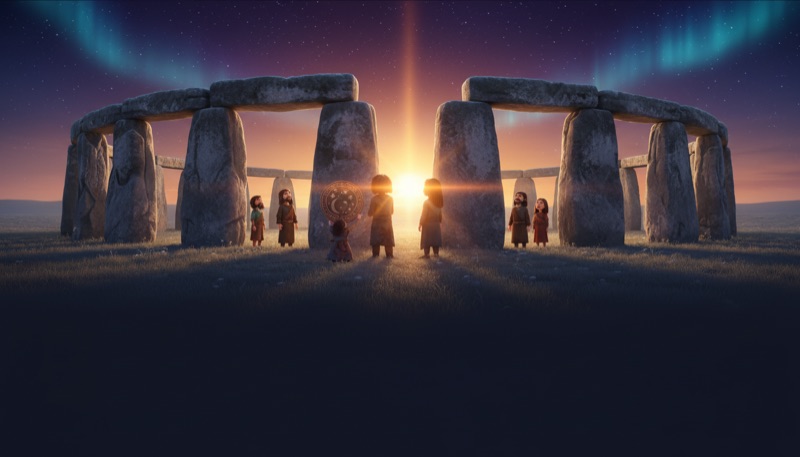
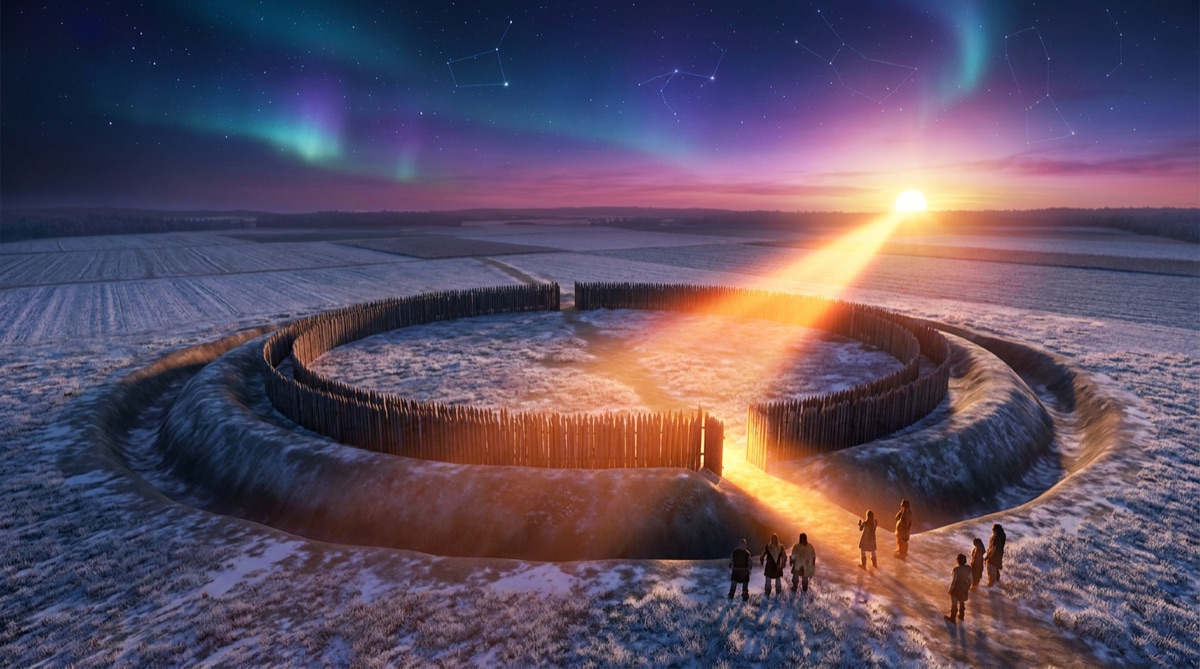
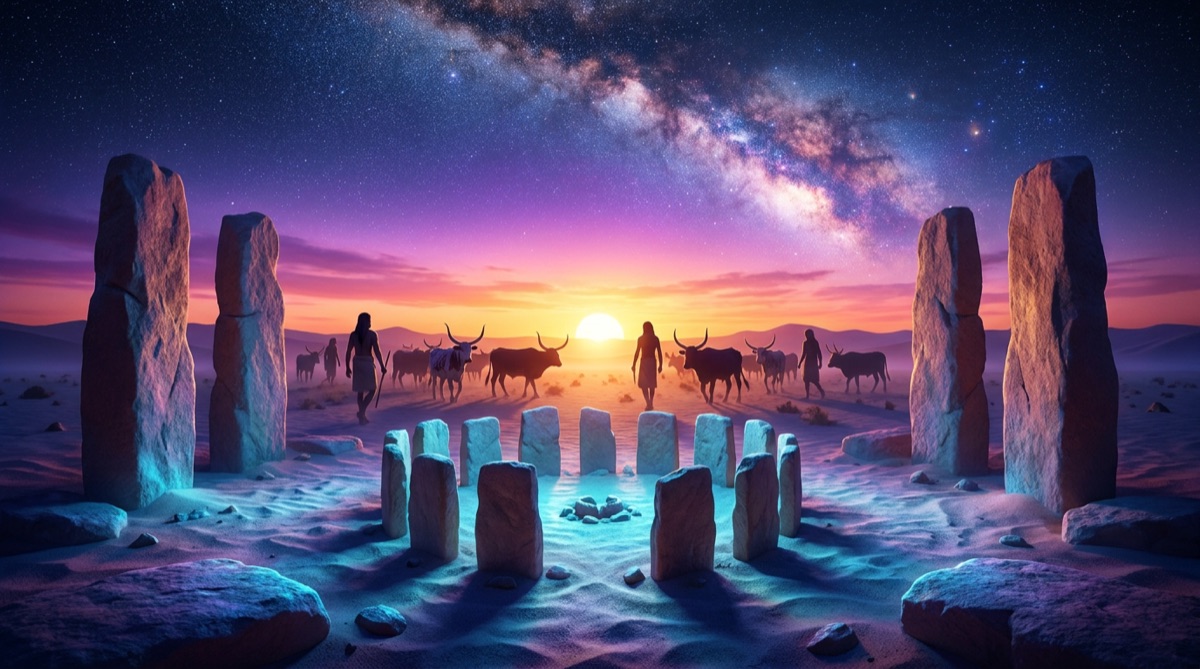
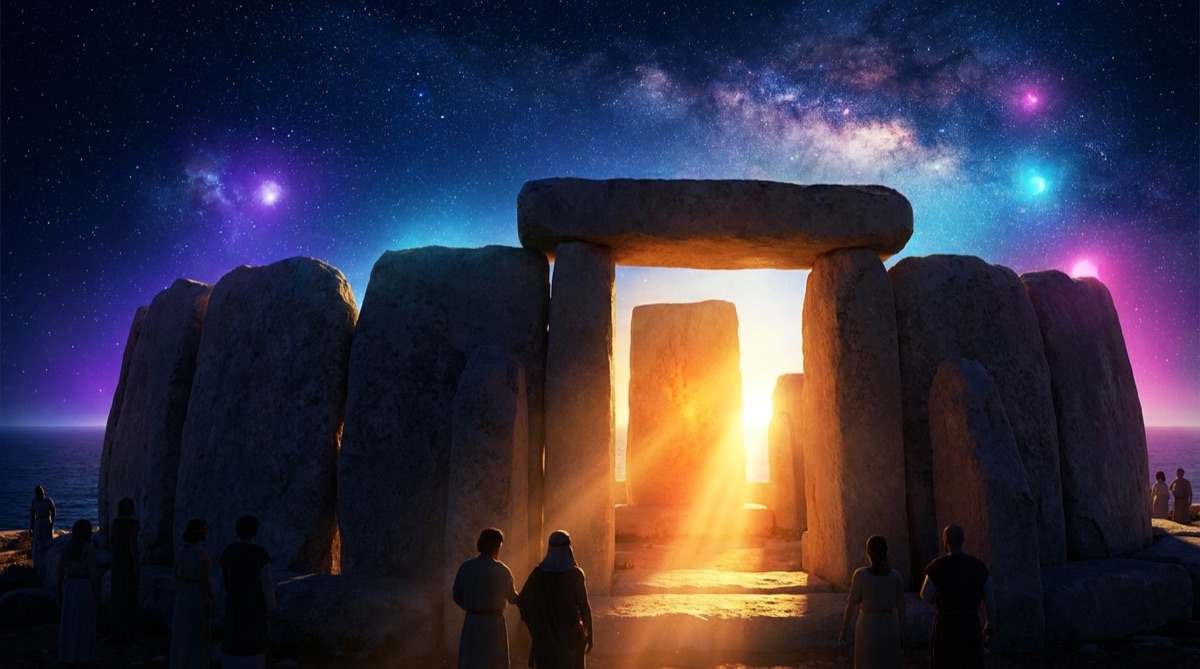
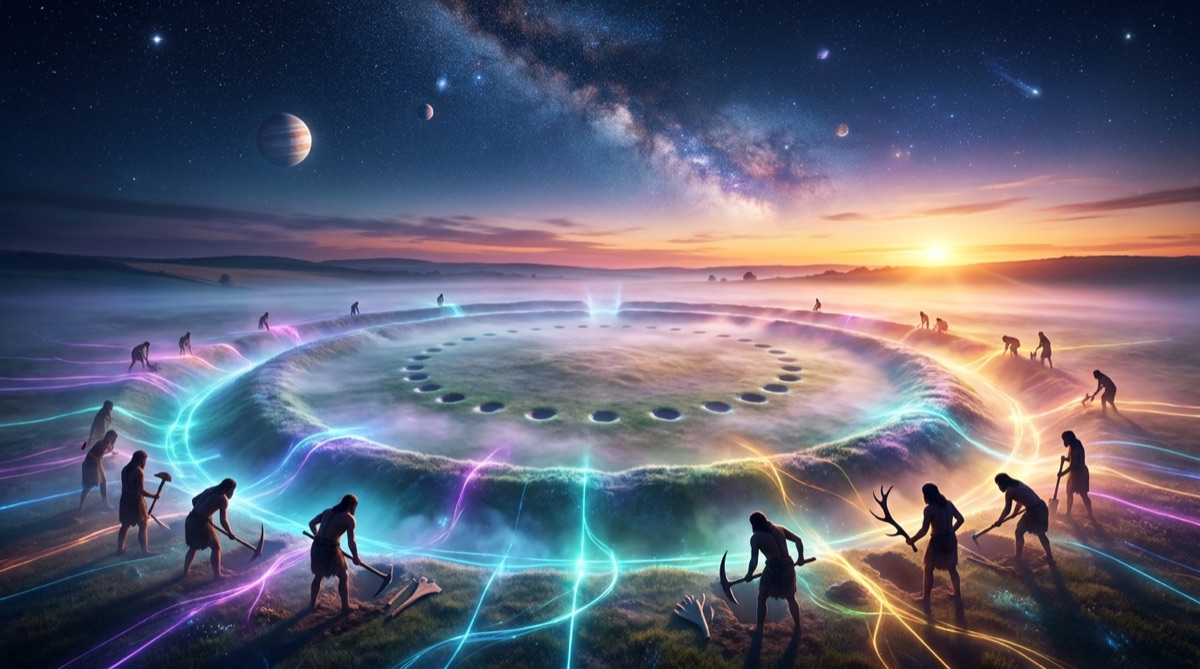
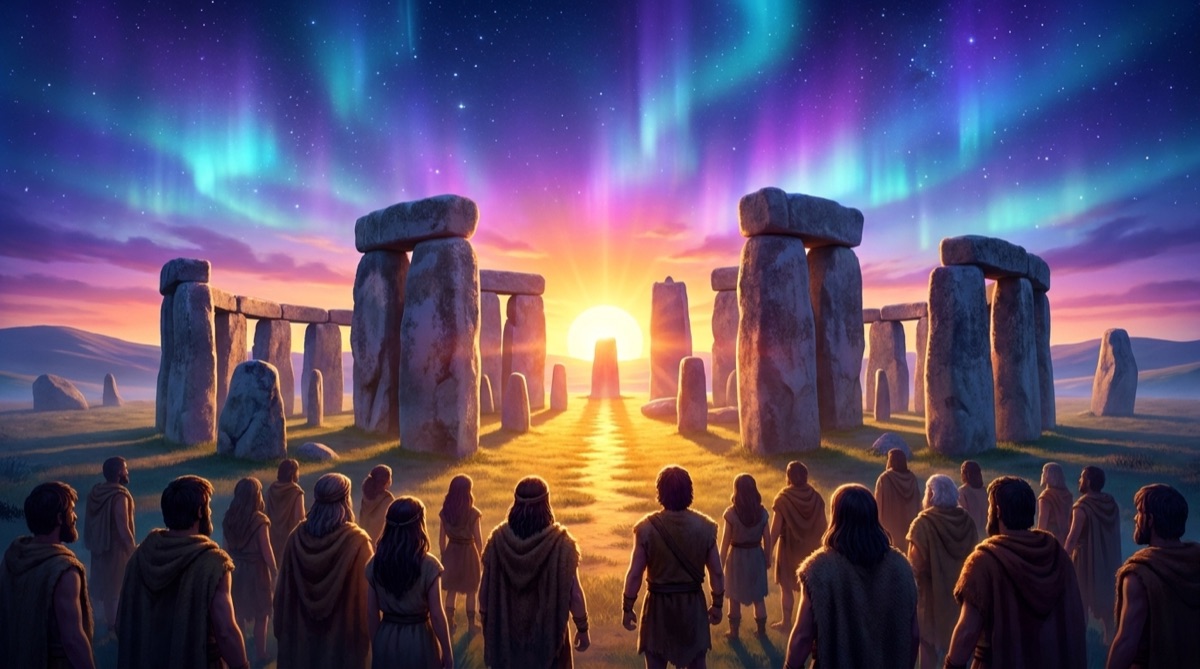
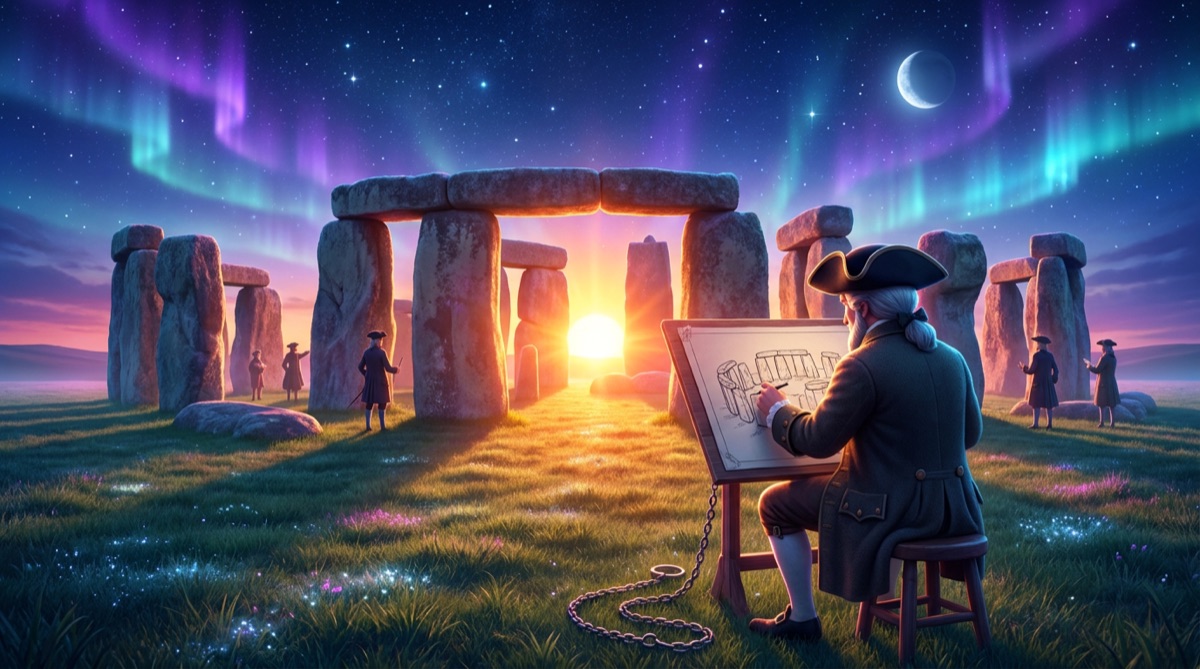
The Goseck enclosure (c. 4900 BCE) had two gates on the south side that point to sunrise and sunset at the winter solstice. At Nabta Playa, in the middle of the Sahara, Neolithic herders set up a small circle of slabs with one line toward the north and another toward the summer sunrise, which announced the monsoon rains. And at Stonehenge, the axis of the great stones raised around 2500 BCE joins the sunrise of the June solstice with the sunset of the December one. You can see how the sunrise point changes through the year in the lesson Seasons and latitude and in the day, night and seasons simulator.
Bringing light into the darkness
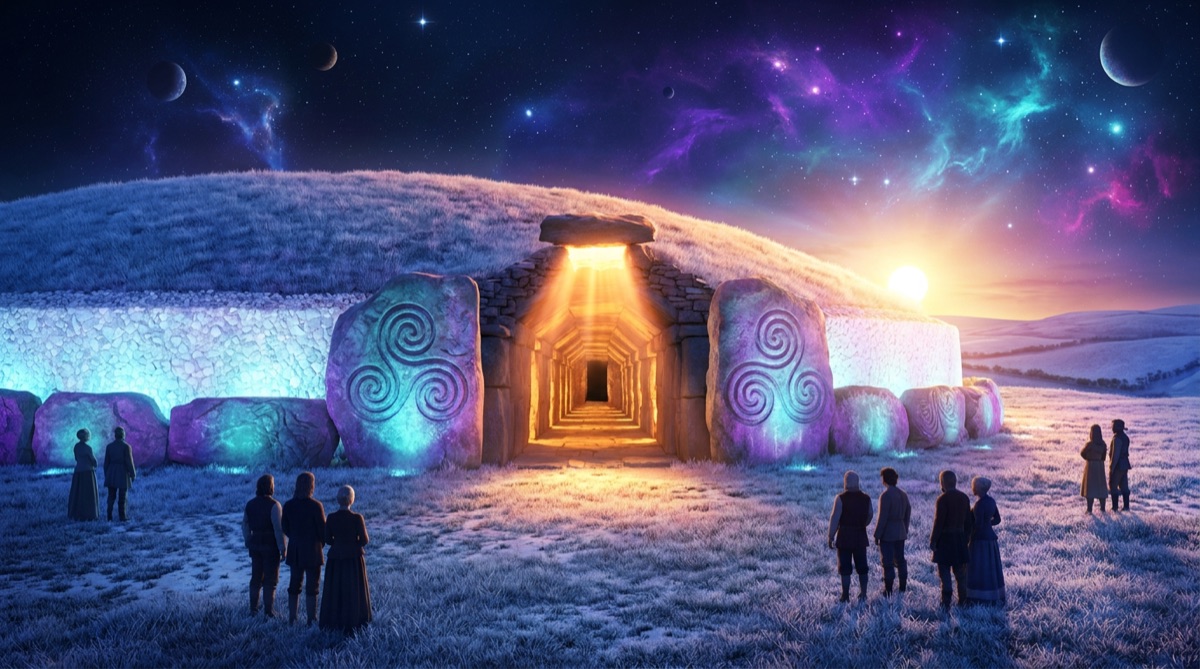
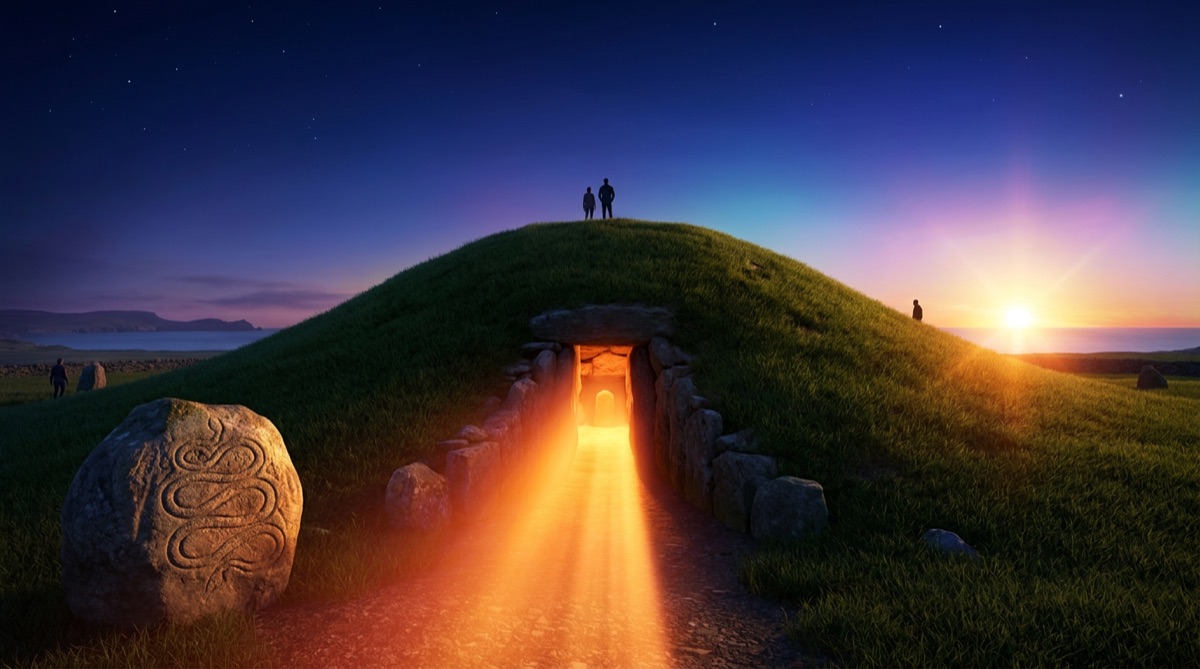
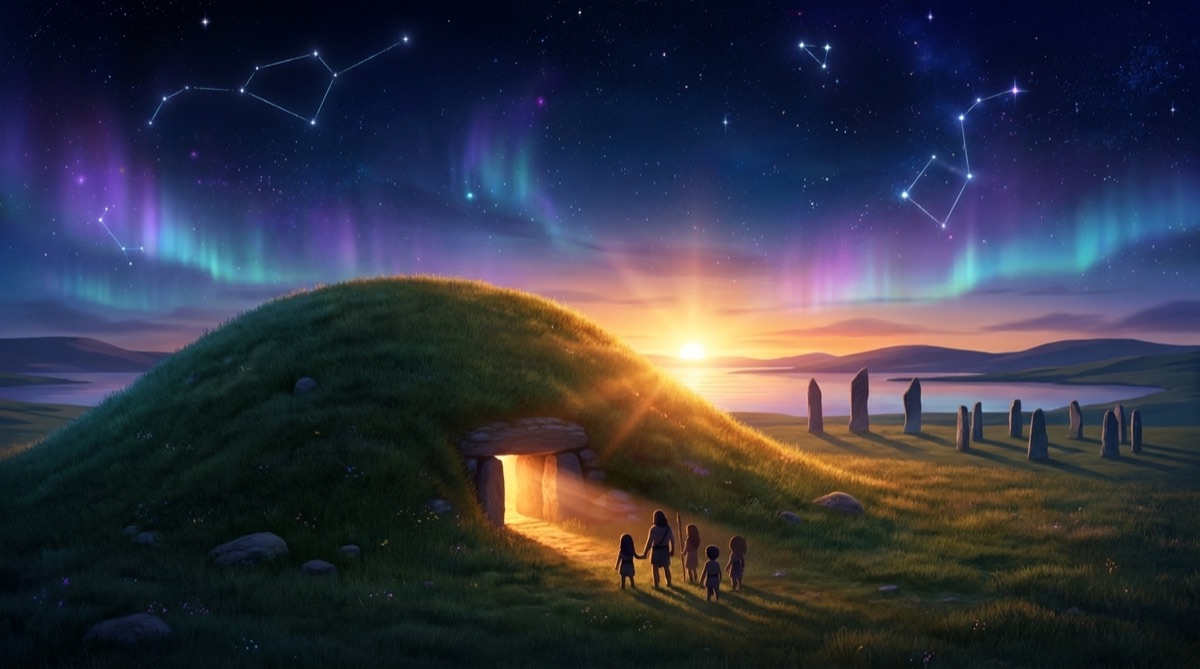
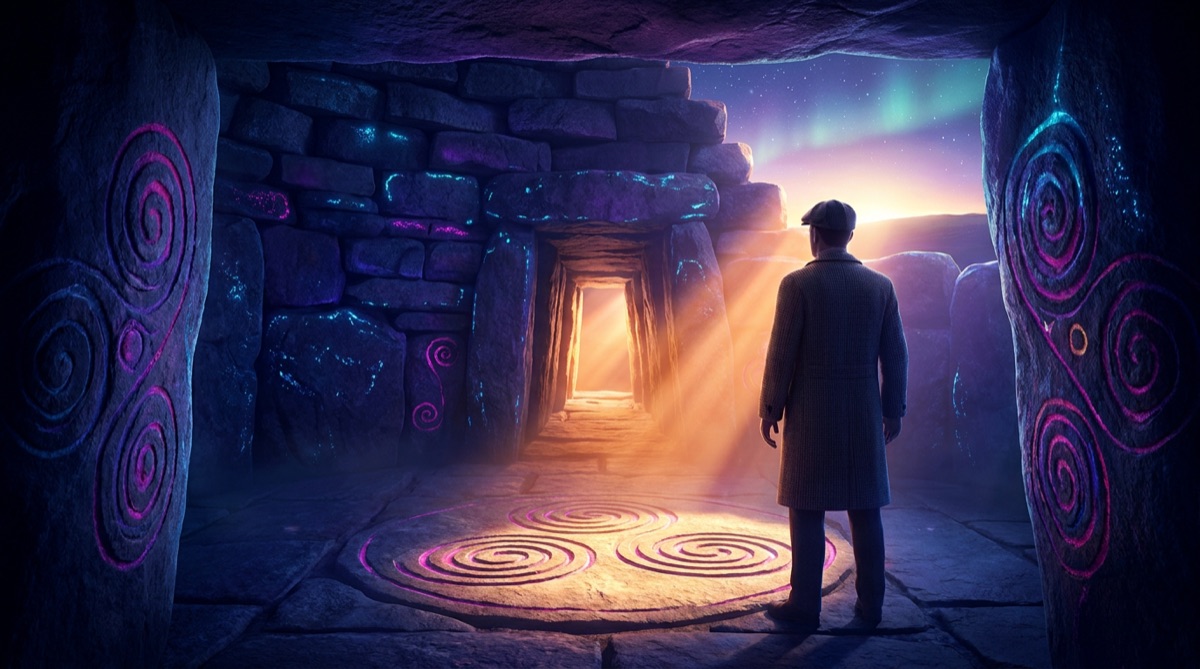
At Newgrange (c. 3200 BCE) the builders left an opening above the entrance, the “roof-box”, calculated so that the first Sun of the winter solstice travels down the 19-meter passage and lights the chamber at the far end for a few minutes. Maeshowe, in Orkney, does the same with the afternoon light. These are alignments that have been seen and photographed: the archaeologist Michael O’Kelly was the first person in centuries to witness it, on December 21, 1967.
Drawing the sky: the Nebra disc
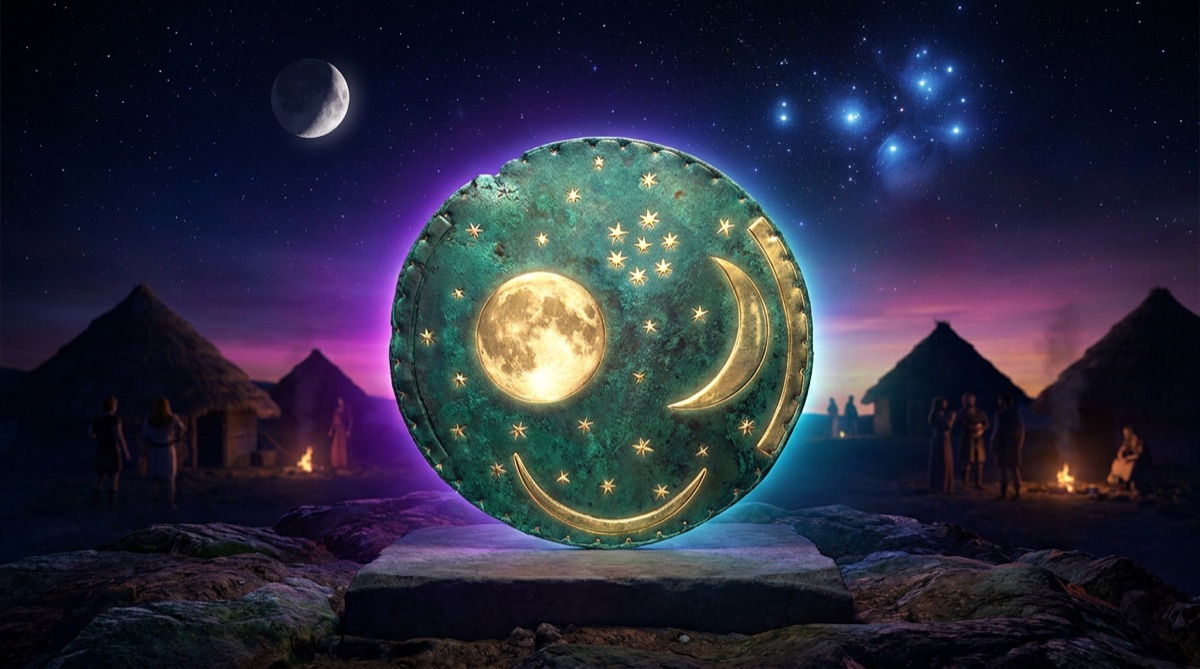
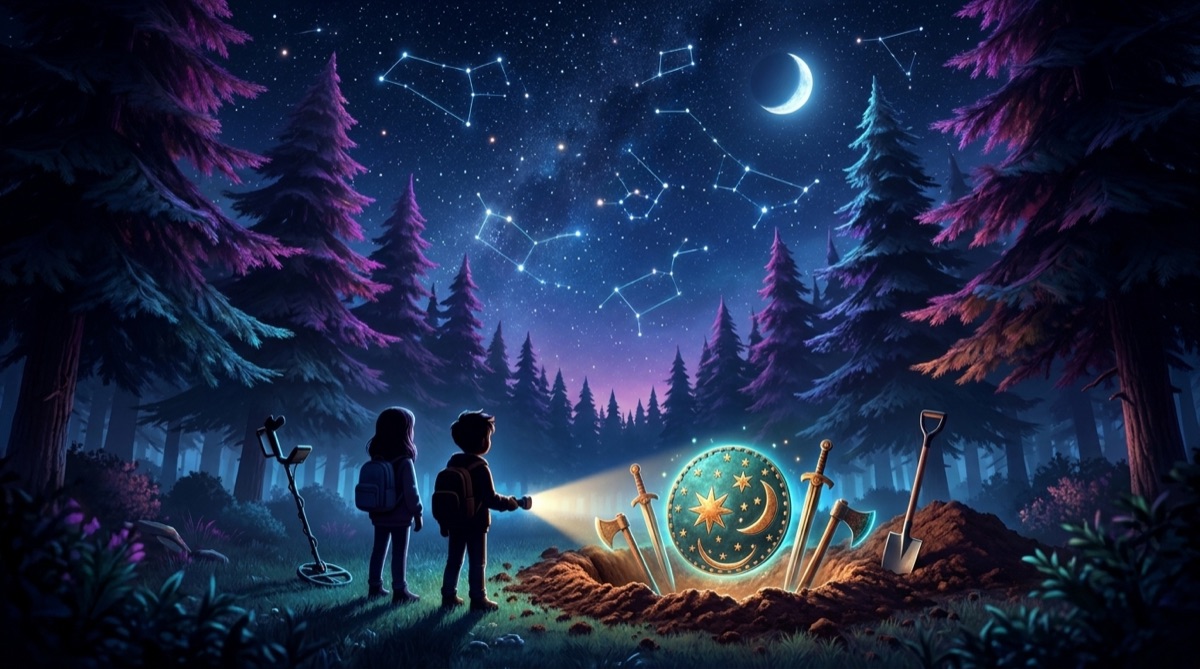
Around 1600 BCE someone buried on the Mittelberg hill a 32 cm bronze disc with the Sun (or the full Moon), a crescent Moon and 32 gold stars. Seven of them form a tight group that almost all specialists identify with the Pleiades, the cluster that in central Europe marked the beginning and the end of the farming season. Later, two gold arcs were added at the edges spanning an angle of 82°: exactly the range of sunrise points between the two solstices at the latitude of Nebra. It is the oldest known concrete depiction of the sky. The Pleiades are still easy to find today: look for them in the lesson Stars and constellations or in the interactive planisphere.
Birth of a science: archaeoastronomy
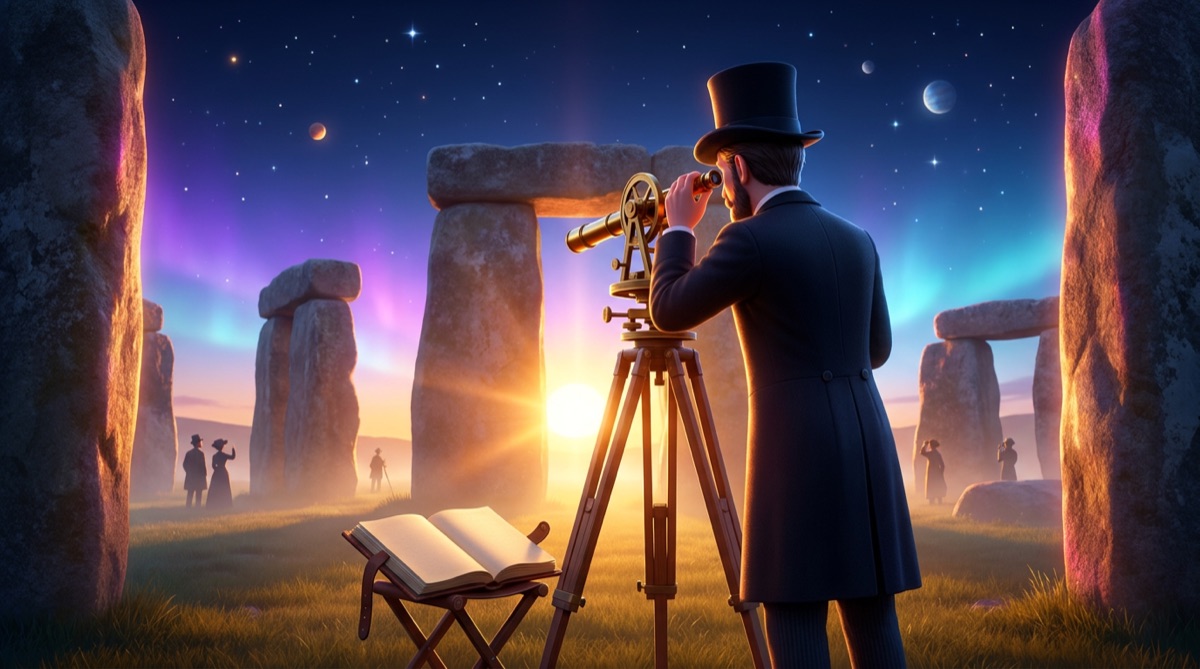
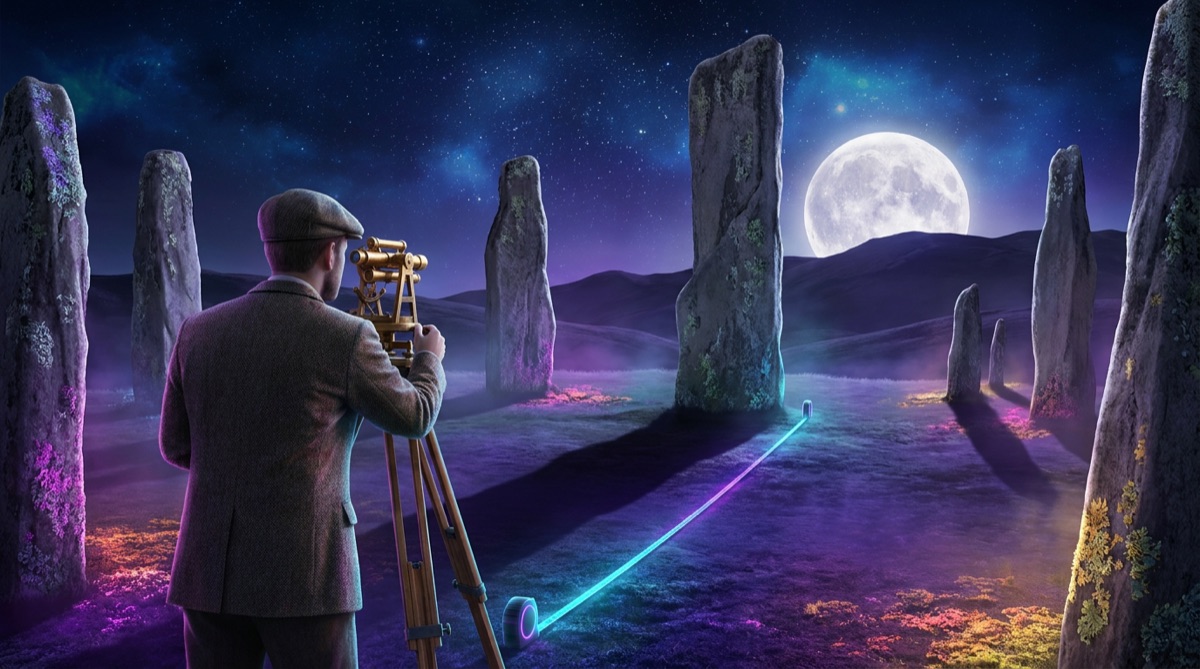
That these monuments point to the Sun was noticed by William Stukeley in 1740 for Stonehenge. But systematic study began in the 20th century: Norman Lockyer (1906), Gerald Hawkins with an IBM computer (1963) and Alexander Thom with hundreds of measured circles (1967). Many of their conclusions did not survive statistical testing; what remained was a method: measure with instruments, calculate which alignments would be expected by chance, and accept only those that pass that test.
How do we know?
Without texts, everything depends on archaeology and geometry. The date of a monument is obtained by radiocarbon from charcoal, bones or wood found in its ditches and pits, with margins of one or two centuries. The orientation is measured with a theodolite or GPS and compared with the position of the Sun at the time, taking into account that the tilt of the Earth’s axis has changed by half a degree since then.
Three levels of certainty must be distinguished:
- Established: the solstitial alignments of Newgrange, Maeshowe, Goseck and Stonehenge. They are observed directly and the probability that they are accidental is very low.
- Debated: the stellar alignments (Nabta Playa, Mnajdra), Thom’s “megalithic yard” or the 2022 proposal that Stonehenge encodes a year of 365.25 days. These are ideas published in serious journals, answered with equally serious arguments.
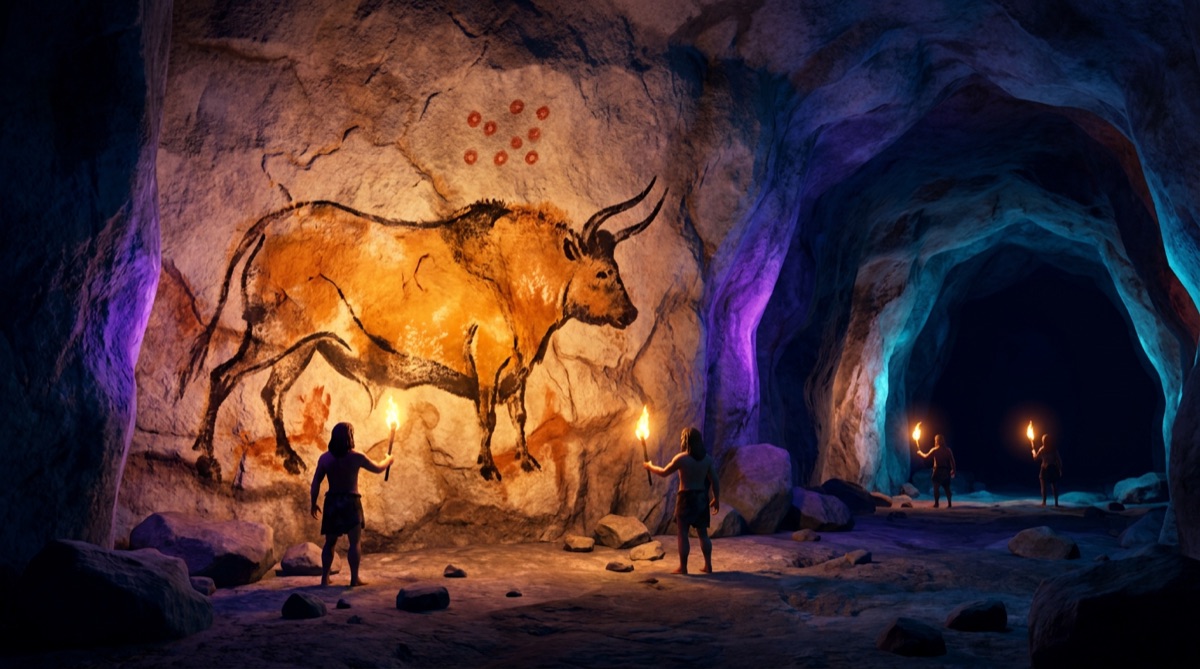
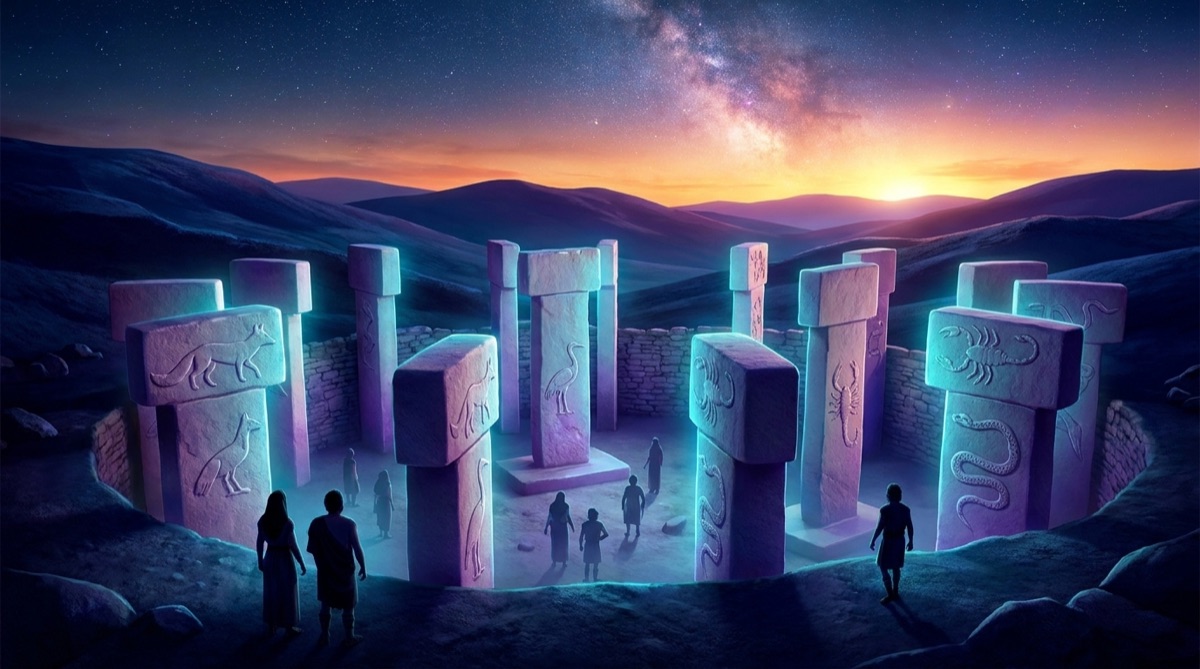
- Speculative: the “lunar calendar” of the Ishango bone, the “star map” of Lascaux or the cometary readings of Göbekli Tepe. There is no way to test them, and most specialists do not accept them.
Even an object as thoroughly studied as the Nebra disc had to defend its date: in 2020 two archaeologists proposed that it was a thousand years younger, and a team of thirteen specialists replied with the data from radiocarbon, metallurgy and the soil of the find site. That is how science works even when the object is 3600 years old.
Legacy
From these communities we inherit no words or formulas, but we do inherit three things. The first, the idea that the horizon is an instrument: anyone today can mark in their backyard the point where the Sun rises and repeat the Goseck experiment. The second, the monuments themselves, which still work: every winter solstice, a lottery decides who may stand inside Newgrange when the light comes in. The third, a lesson in method: archaeoastronomy learned by its mistakes to separate what a stone proves from what we would like it to prove.