










Context
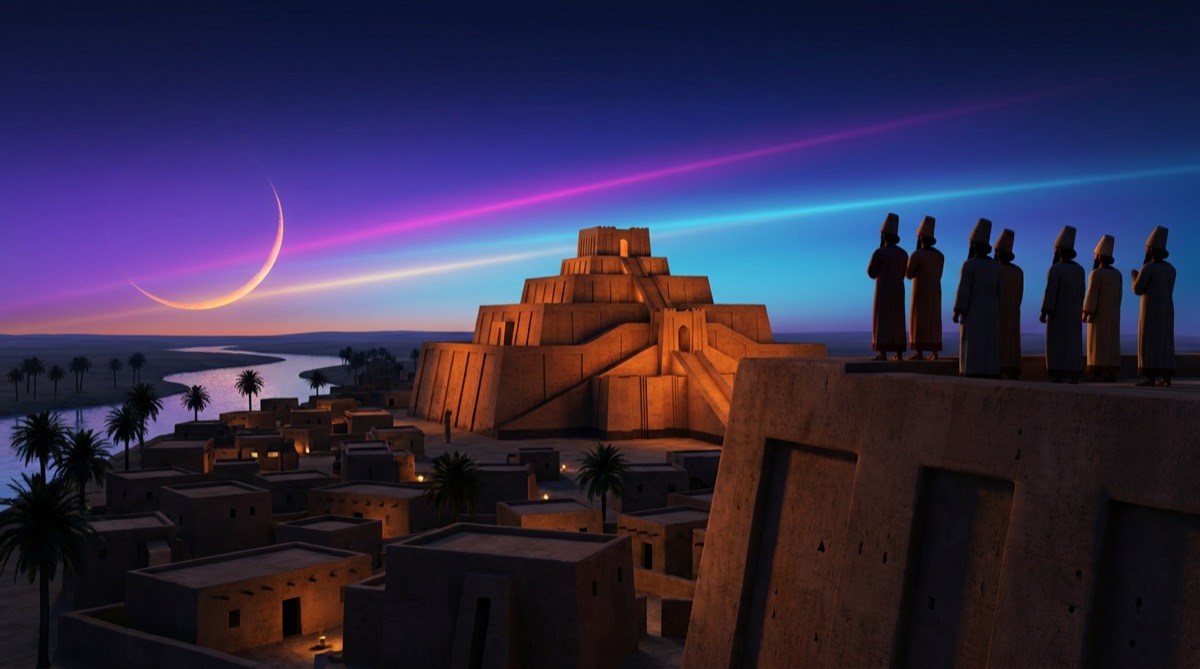
Between the Tigris and the Euphrates, in present-day Iraq, the cities of Sumer, Babylon and Assyria flourished for three thousand years. Writing was invented there, around 3200 BCE, and people kept writing on clay there until the 1st century of our era. Unlike papyrus, tablets of baked clay withstand fire and time: that is why tens of thousands of texts survive from Mesopotamia, and among them several thousand about the sky.
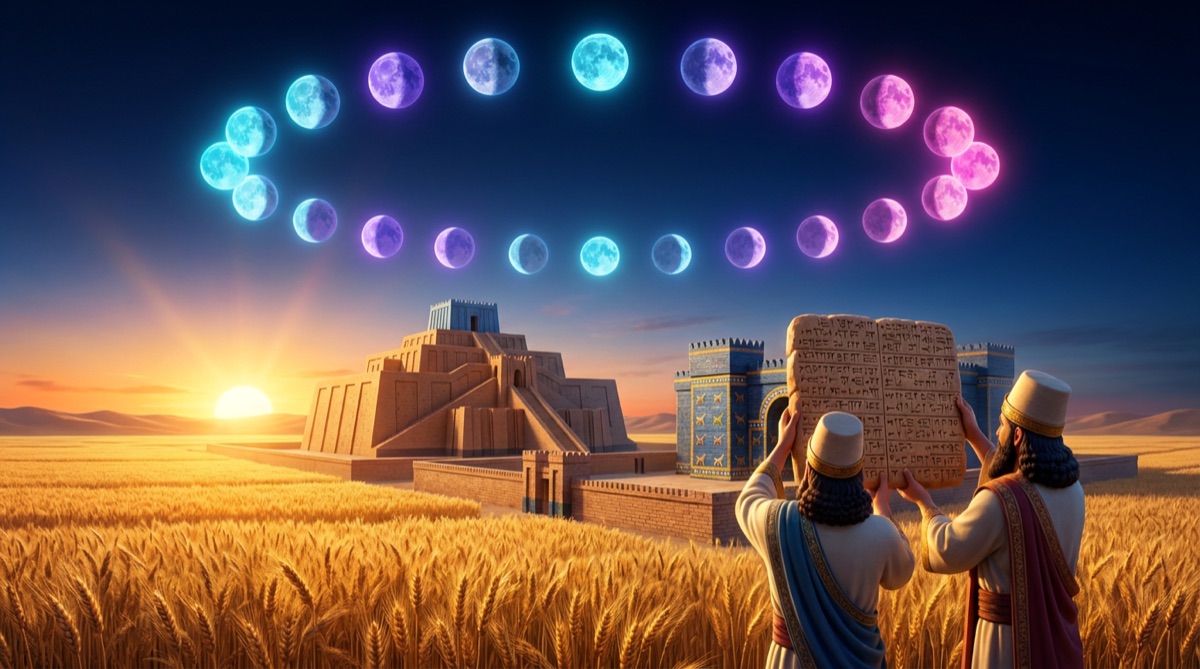
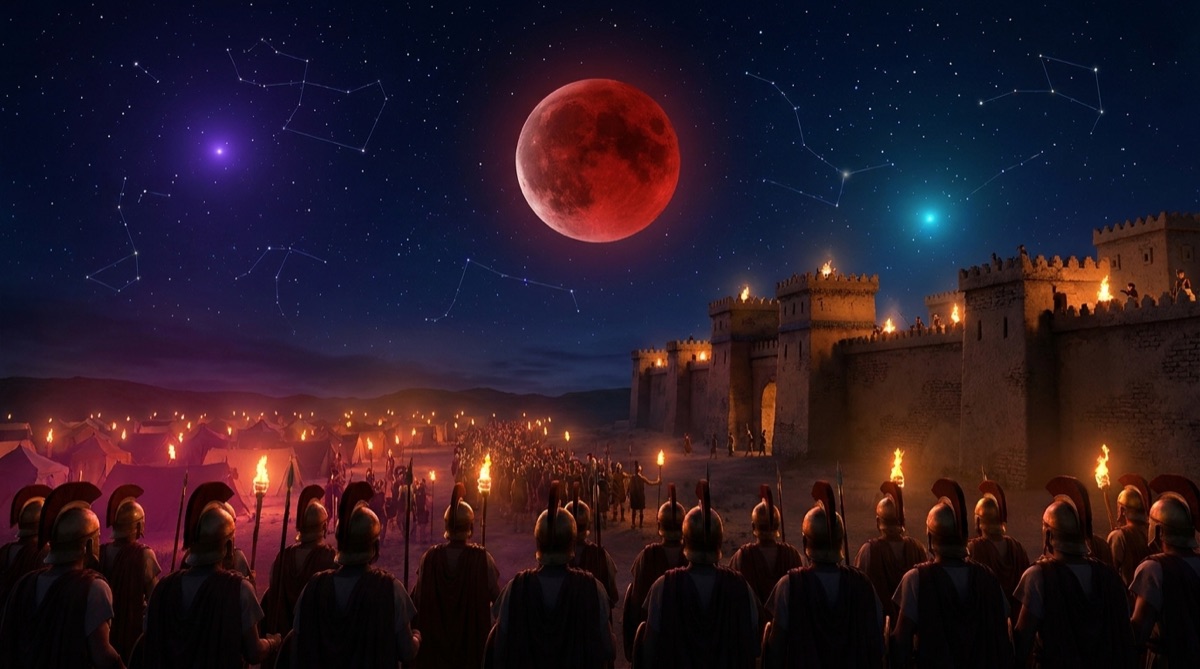
Why did they watch the sky? First, for the calendar: months began with the first crescent Moon, and the farming year required knowing when to add an extra month. Second, for religion and power: the Babylonians believed that the gods wrote messages in the sky, and a lunar eclipse could announce the death of the king. To read those messages you had to observe every night, and an observer who writes everything down for centuries ends up discovering regularities. That is the road that led from omens to mathematical astronomy.
Major contributions
Degrees, minutes and the zodiac
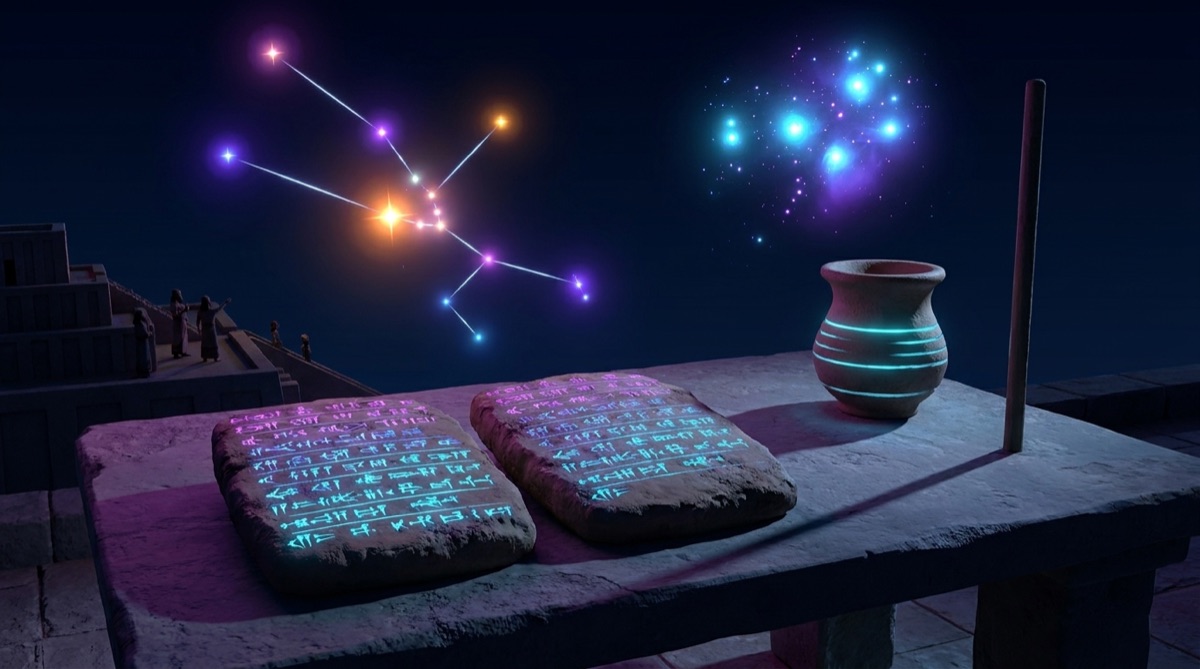
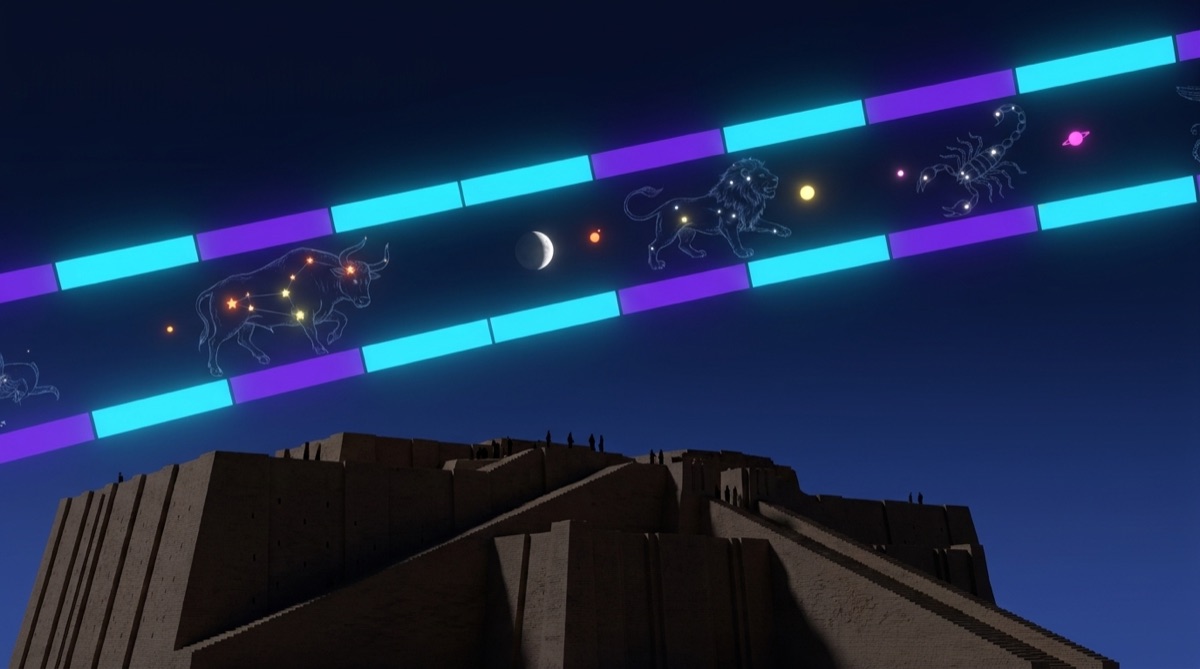
Babylonian scribes counted in base 60. The 60 units of the minute and of the hour, and the division of the circle into 360 degrees, come from their system. Around the 5th century BCE they also divided the band of sky along which the Sun, the Moon and the planets move into 12 signs of 30° each: the zodiac. It was a computing tool, not a drawing of constellations. When you measure a position in degrees and minutes in the lesson Celestial coordinates, you are using their invention.
A six-century record: the Diaries
From at least 652 BCE until the 1st century BCE, the astronomers of Babylon noted every night where the Moon stood relative to certain stars, which planets were visible, whether there were eclipses, what the weather was like and how much barley was selling for. These are the Astronomical Diaries, the longest series of observations in the history of science. A Diary from the year 568 BCE describes the sky in such detail that it serves to date the entire empire of Nebuchadnezzar.
Predicting eclipses: the Saros
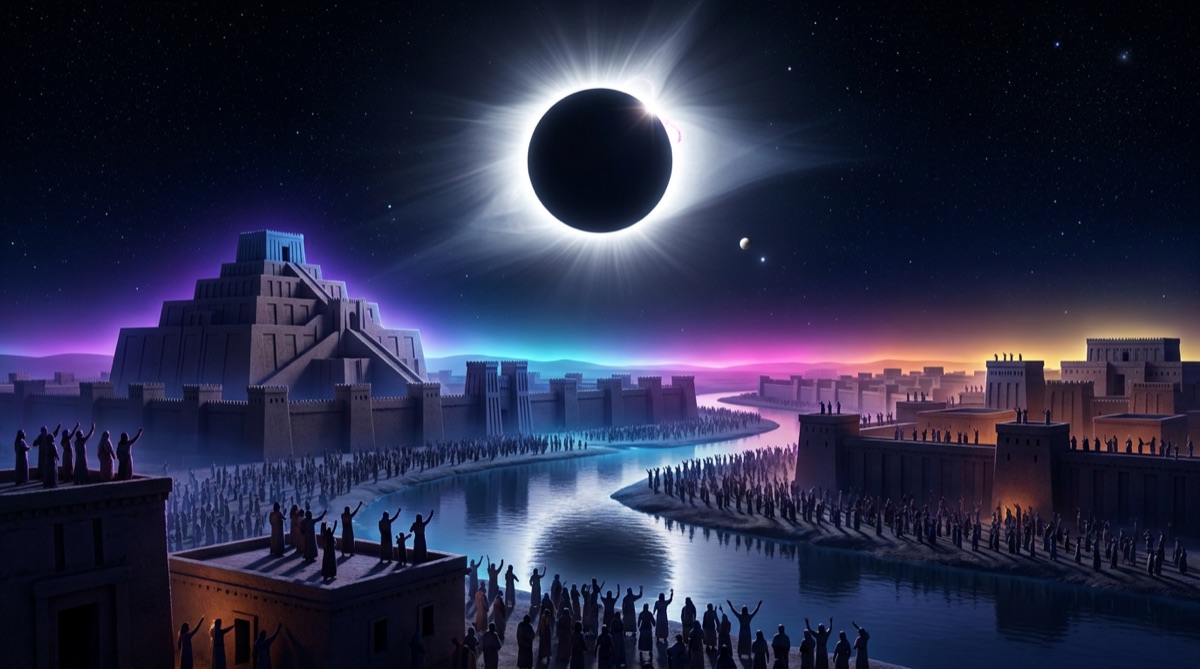
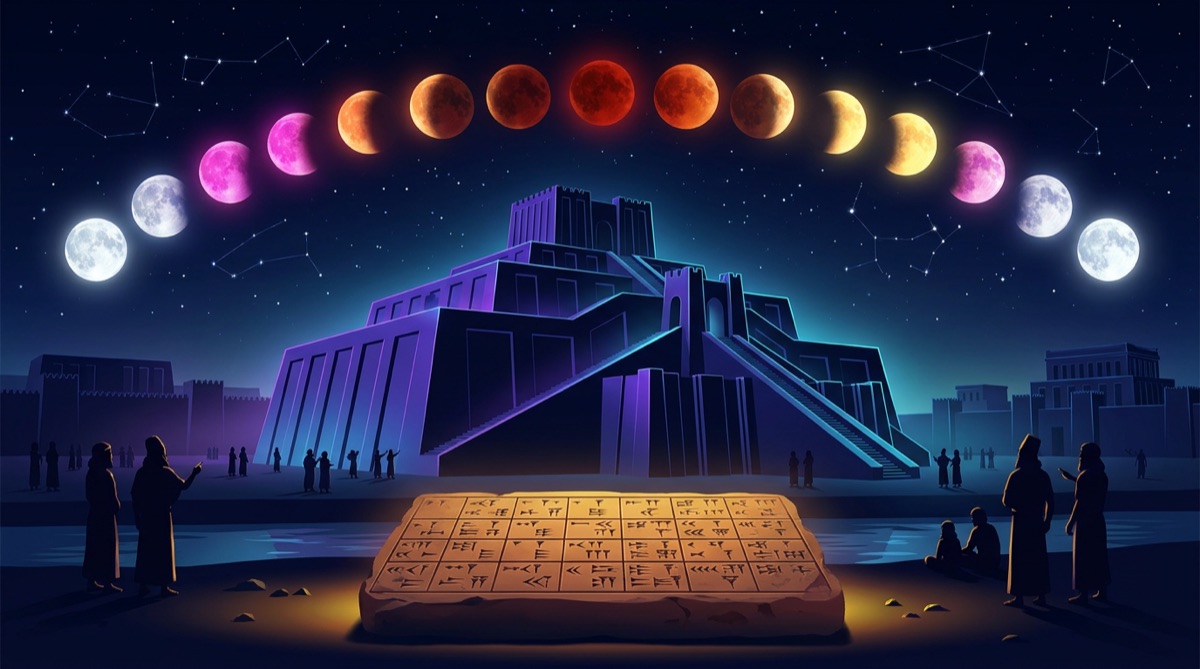
With centuries of data they discovered that eclipses repeat every 223 lunar months, about 18 years and 11 days. That period, which we now call the Saros cycle, let them warn in advance that an eclipse was possible in a given month. The lesson Phases and eclipses explains why the Saros works and how to keep using it today for the eclipses visible from Colombia.
Computing without geometry
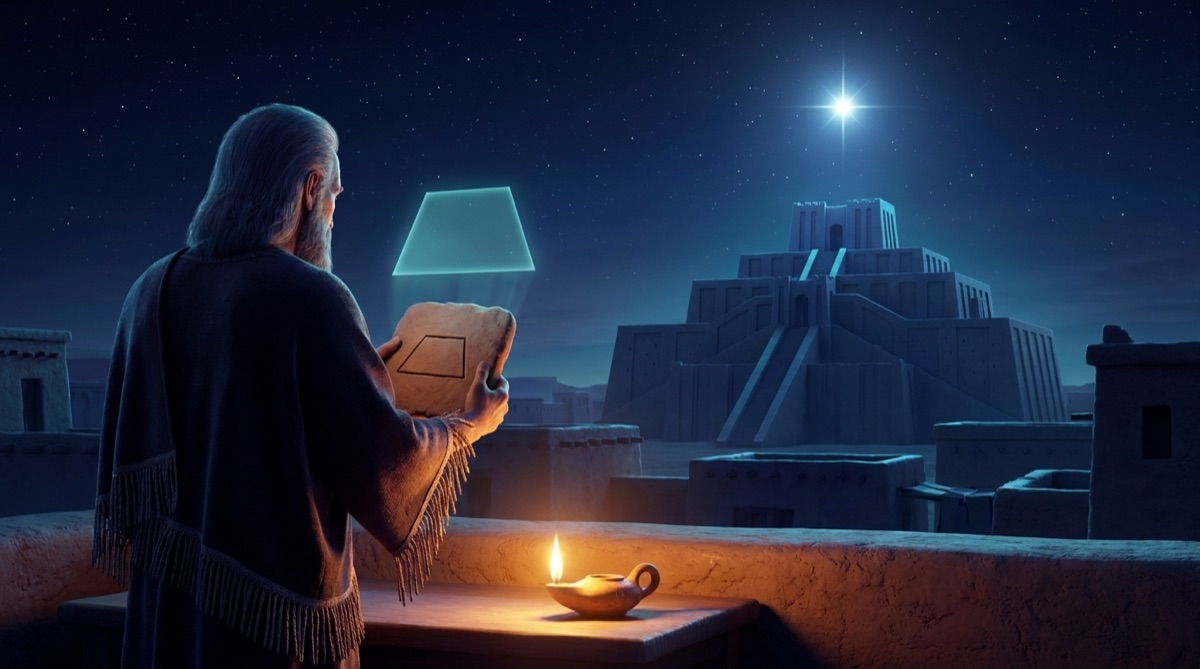
The most surprising part is what came next, between the 4th and 1st centuries BCE. Without any model of spheres or orbits, the Babylonians computed with tables of numbers when there would be a new Moon or when a planet would appear. They used functions that rise and fall in a zigzag to represent changing velocities. In 2016 Mathieu Ossendrijver showed that, for Jupiter, they went as far as computing the planet’s advance as the area under a graph of velocity against time, splitting the figure into trapezoids: the central idea of integral calculus, fourteen centuries before it was taken up again in Europe. If you have seen Derivatives and motion, you will recognize the reasoning.
How do we know?
It is all in the tablets. Most of the astronomical texts come from Babylon and Uruk and reached European museums, above all the British Museum, in the excavations of the 19th century; the Assyrian texts come from the library of King Ashurbanipal at Nineveh. Reading them required deciphering cuneiform (1857) and then the work of generations: Epping and Strassmaier recognized the names of the planets (1889), Kugler and Neugebauer reconstructed the computing rules, and Sachs and Hunger edited the Diaries from 1988 onward.
The limits are also clear. Many tablets are broken; the observers often wrote “cloudy, not seen”; the early dates, such as that of the Venus Tablet, depend on which chronology one accepts for the second millennium and are still under discussion. And there are names that the Greek tradition repeats, Kidinnu and Naburimannu, without the tablets themselves confirming that they invented the systems attributed to them. On the other hand, when a text describes an eclipse, modern astronomy can check it: the Bur-Sagale eclipse is identified beyond doubt with that of June 15, 763 BCE, and that is why the whole Assyrian chronology has a secure date.
Legacy
Every time we say “a quarter past three” or measure an angle in degrees, we speak Babylonian. The zodiac, the Saros, the custom of recording dated observations and the habit of looking for periods in the data passed to the Greeks. Hipparchus built his theory of the Moon with Babylonian eclipses, and Ptolemy opened the Almagest with observations from Babylon of the 8th century BCE. When the last tablet was written at Uruk, around the year 79, its methods already had a second life in Greek, and later in Arabic and in Latin.