His life

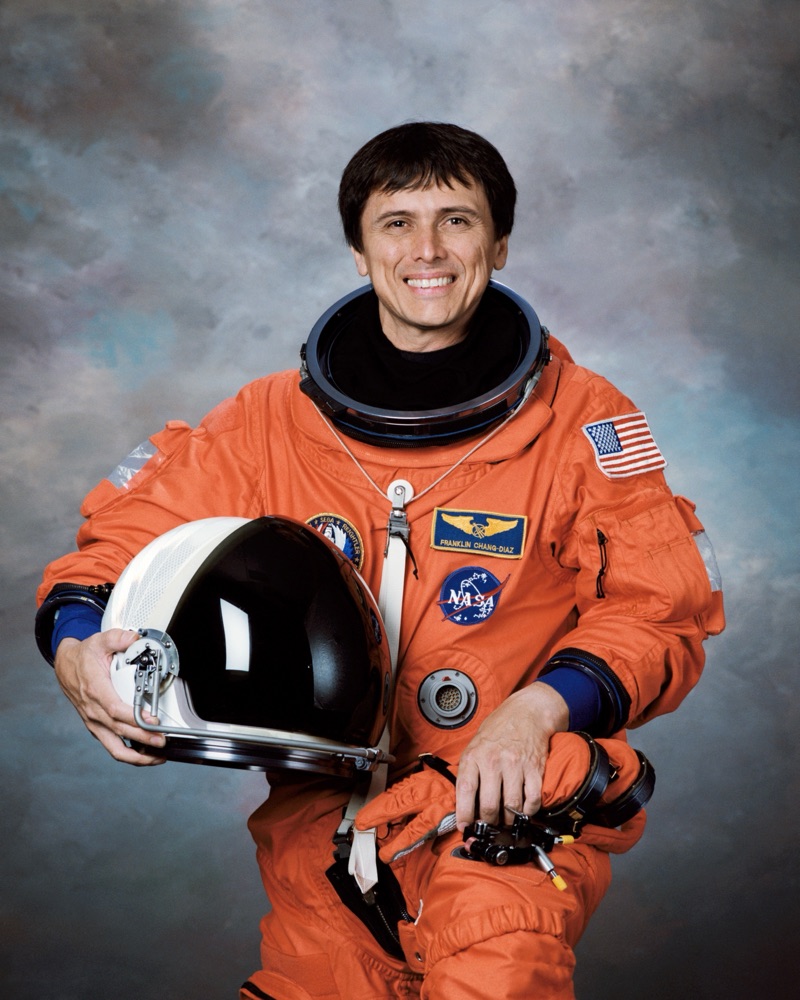
Franklin Chang-Díaz was born in San José, Costa Rica, on April 5, 1950. As a boy he looked at the sky and dreamed of space, but Costa Rica had no space program. At 18, after finishing school, he traveled to the United States with little money and without speaking English well. He lived in Hartford, Connecticut, with relatives, finished high school there and studied mechanical engineering at the University of Connecticut, where he graduated in 1973.
He earned his doctorate in applied plasma physics at the Massachusetts Institute of Technology (MIT) in 1977, with a thesis on nuclear fusion. In 1980 NASA selected him from among thousands of candidates and he became the agency’s first astronaut born in Latin America.
Seven flights into space
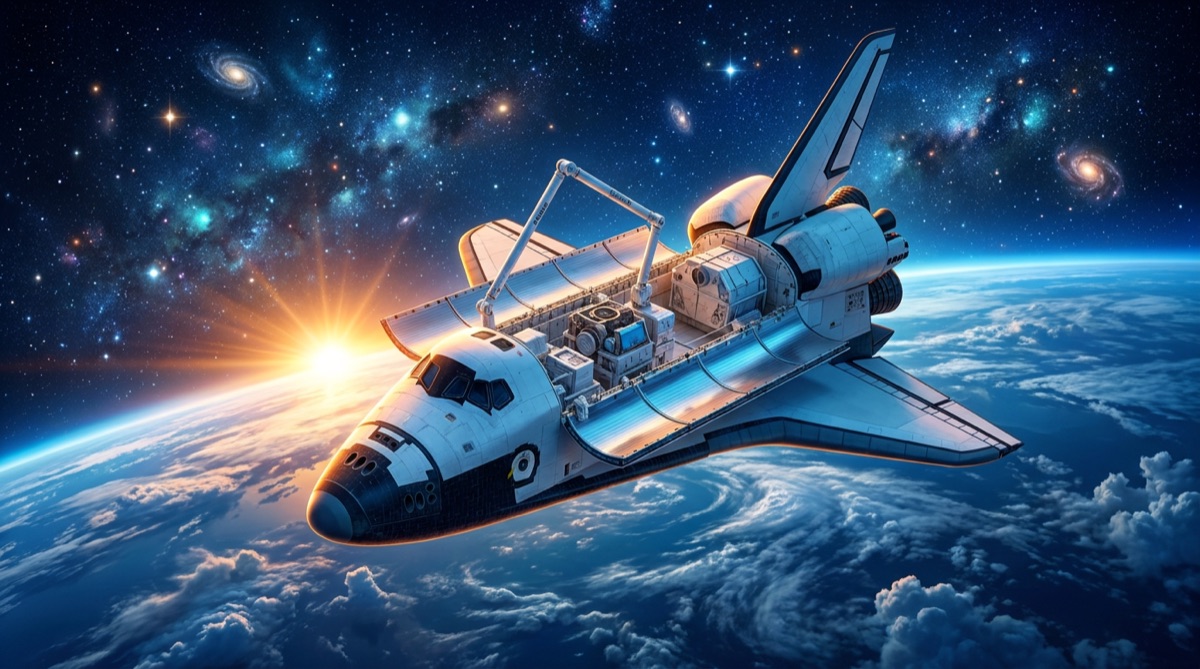
Chang-Díaz flew for the first time in January 1986, on the shuttle Columbia (STS-61-C), a few days before the Challenger accident. He then took part in very diverse missions: in 1989 he helped launch the Galileo probe toward Jupiter; in 1992 and 1996 he worked with satellites tethered to a very long cable in orbit; in 1994 he flew on the shuttle’s first joint mission with a Russian cosmonaut, Sergei Krikalev; and in 1998 he traveled on the shuttle’s last docking mission with the Russian station Mir. In 2002, on Endeavour (STS-111), he made three spacewalks to install components on the International Space Station. With seven flights and more than 1 600 hours in space, he equaled the record for shuttle missions, which he shares with Jerry Ross.
On board, Chang-Díaz talked about how the Earth looks from orbit, but he remained more interested in how to go farther. To move from one orbit to another, a spacecraft must fire its engines and spend propellant: the Hohmann transfer simulator shows the cheapest maneuver between two circular orbits.
VASIMR: a plasma rocket
A chemical rocket burns fuel and expels gases at a few kilometers per second. The rocket equation, due to Tsiolkovsky, says that the change in a spacecraft’s velocity depends on the logarithm of its initial mass over its final mass, and on the exhaust velocity of the gases: the faster the propellant is expelled, the less of it is needed. Electric engines expel particles much faster, but with little thrust.
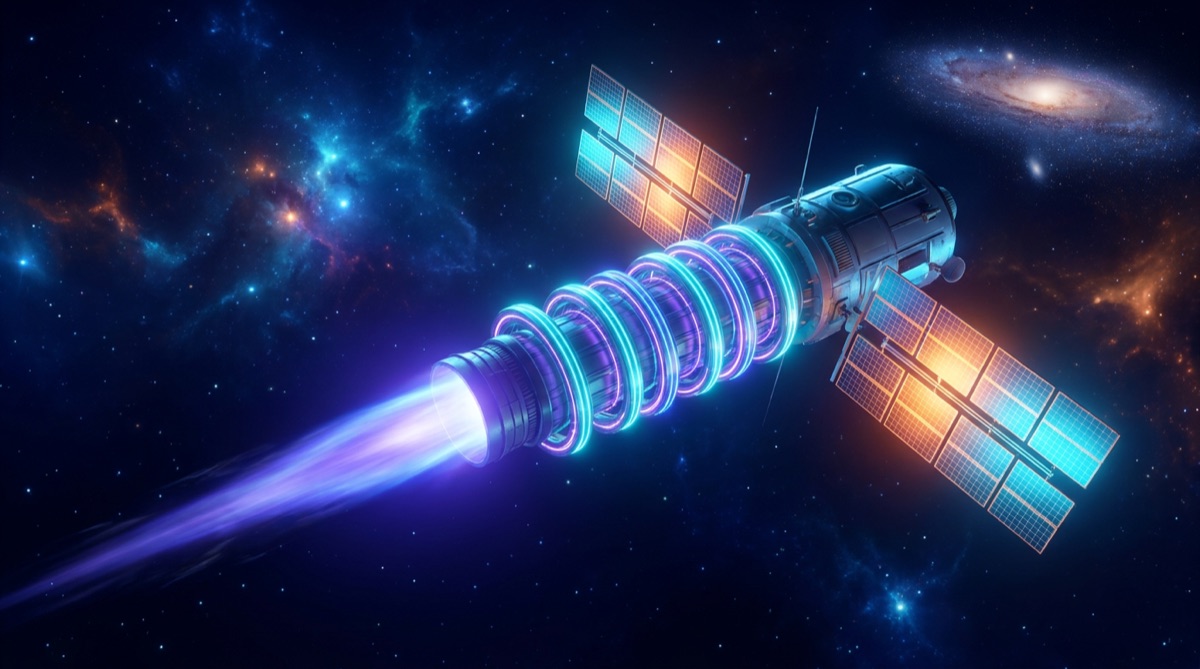
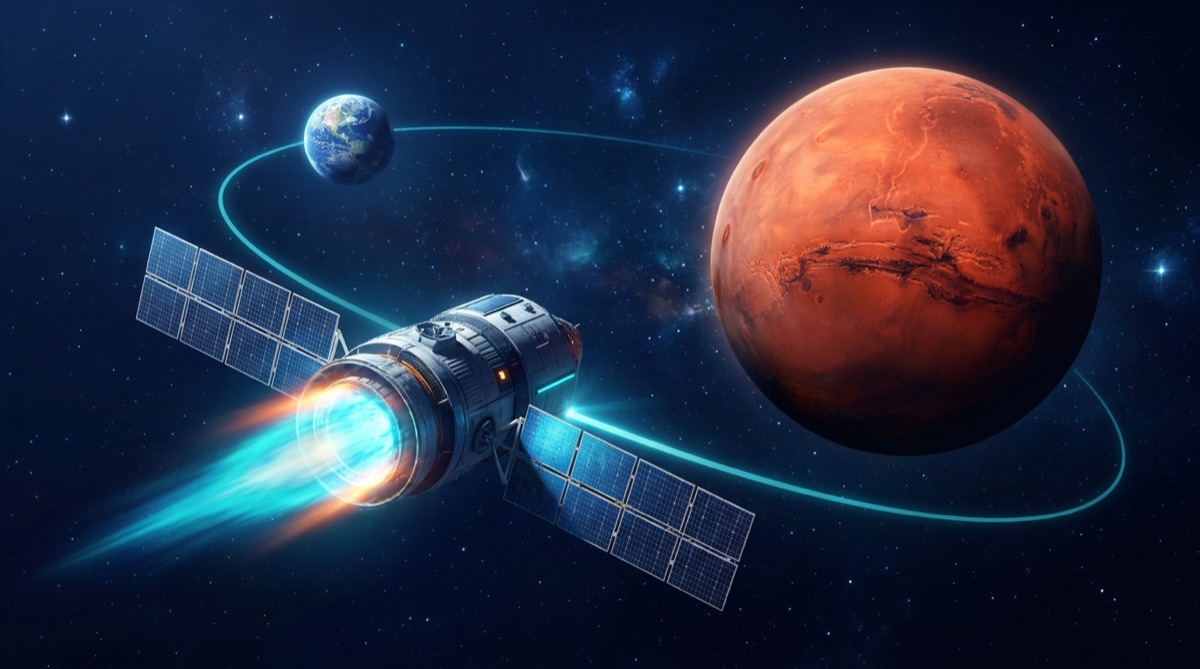
Since his doctoral years Chang-Díaz had studied plasma, a gas so hot that its atoms are ionized, and he proposed the VASIMR engine (Variable Specific Impulse Magnetoplasma Rocket). A gas such as argon is turned into plasma with radio waves and heated with others, and magnetic fields expel it at high speed, without the plasma ever touching the walls of the engine. In 2005 he left NASA and founded the Ad Astra Rocket Company, in Texas, with a laboratory in Costa Rica as well, to develop it. Prototypes of 100 and of 200 kilowatts have been tested in the laboratory. It has not yet flown on a real mission, and experts debate whether it will serve to carry crewed spacecraft to Mars in less time, but it is one of the most studied examples of advanced electric propulsion.
His legacy
Chang-Díaz became a symbol for Costa Rica and for all of Latin America: a person who set out from a small country with no space tradition and reached the very top of exploration. He continues to work on propulsion. To understand how orbits and propulsion combine, see the lesson Hohmann transfers and the chapter on the space age.