Astronomy and Space Exploration ES

History of Astronomy / 13 of 14

Worldwide 1957 – today under review

The Space Age

From the beep of Sputnik (1957) to the return of astronauts to lunar orbit with Artemis II (2026): how we left the Earth, visited every planet and placed telescopes above the atmosphere.

Timeline

25 events, 7 of them milestones (★) that also appear on the overall timeline.

  1. 1957
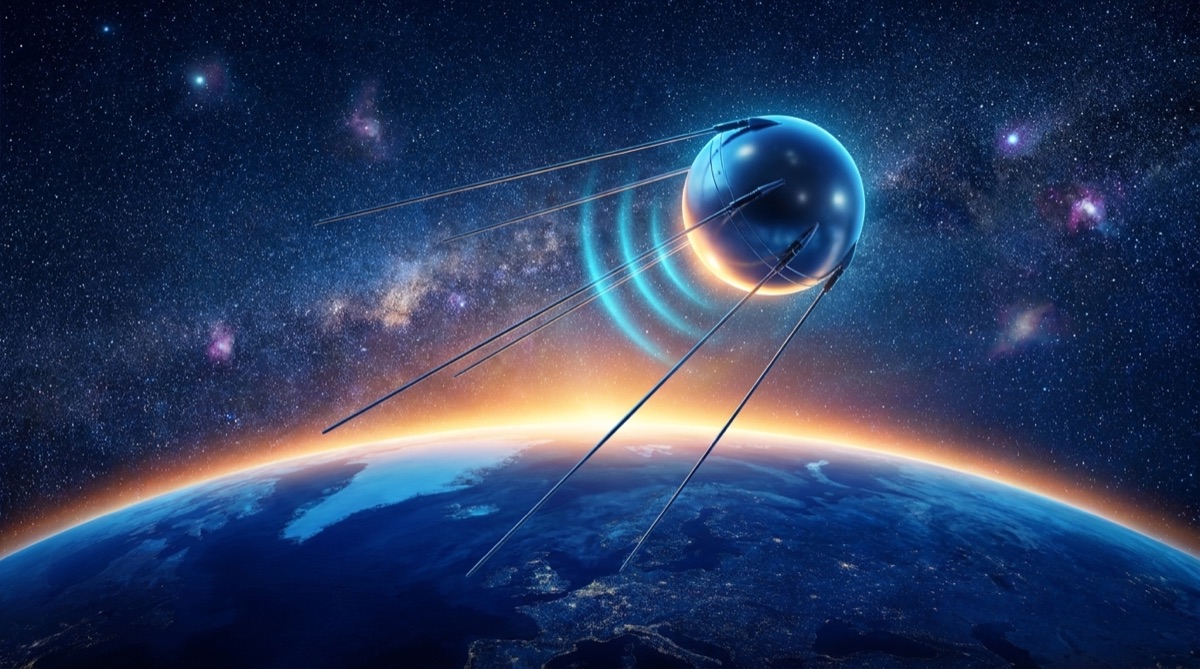
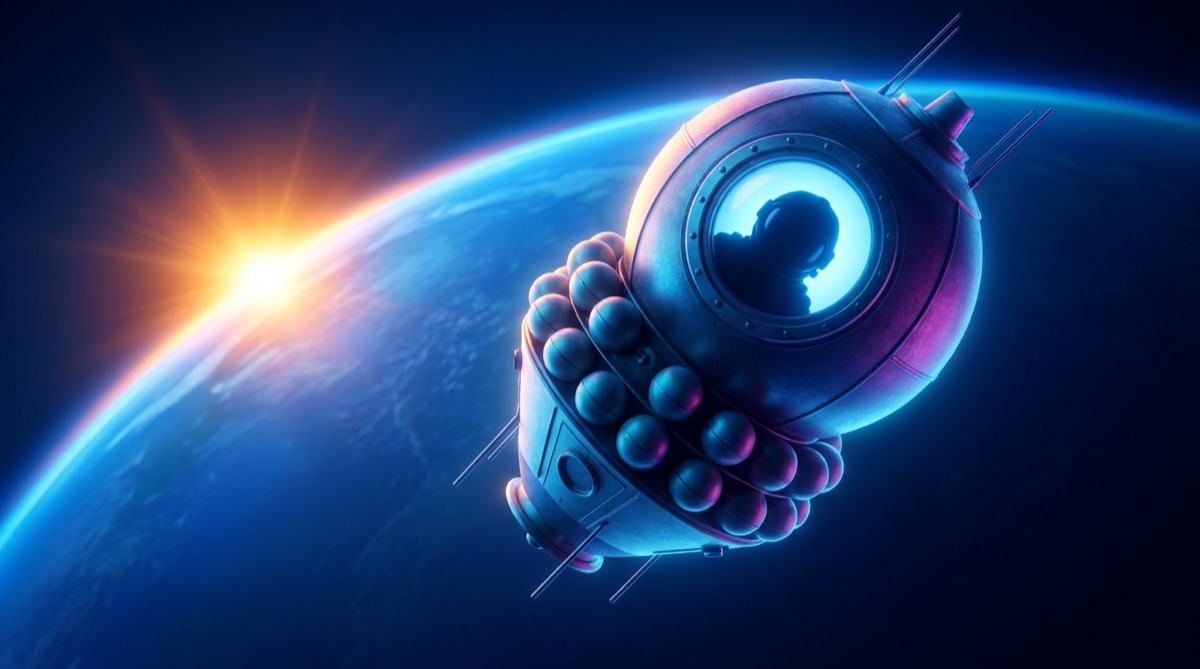
    Illustration: Sputnik 1: the first artificial satellite (Baikonur, Kazakhstan (USSR))

    Space exploration ★ milestone

    Sputnik 1: the first artificial satellite

    On October 4, 1957 the Soviet Union put into orbit an 84 kg sphere that emitted a radio beep audible from any receiver. It showed that an object can keep circling the Earth, as Newton had calculated, and set off the space race.

    👤 Sergei Korolev · 📍 Baikonur, Kazakhstan (USSR)

    📘 Why don't satellites fall? 🧪 Newton’s cannonball OrbitOrbital velocity

    Sources (2)
    • NASA History, “Sputnik and The Dawn of the Space Age” (history.nasa.gov/sputnik).
    • NSSDCA, Sputnik 1 (nssdc.gsfc.nasa.gov/nmc/spacecraft/display.action?id=1957-001B).
  2. 1958
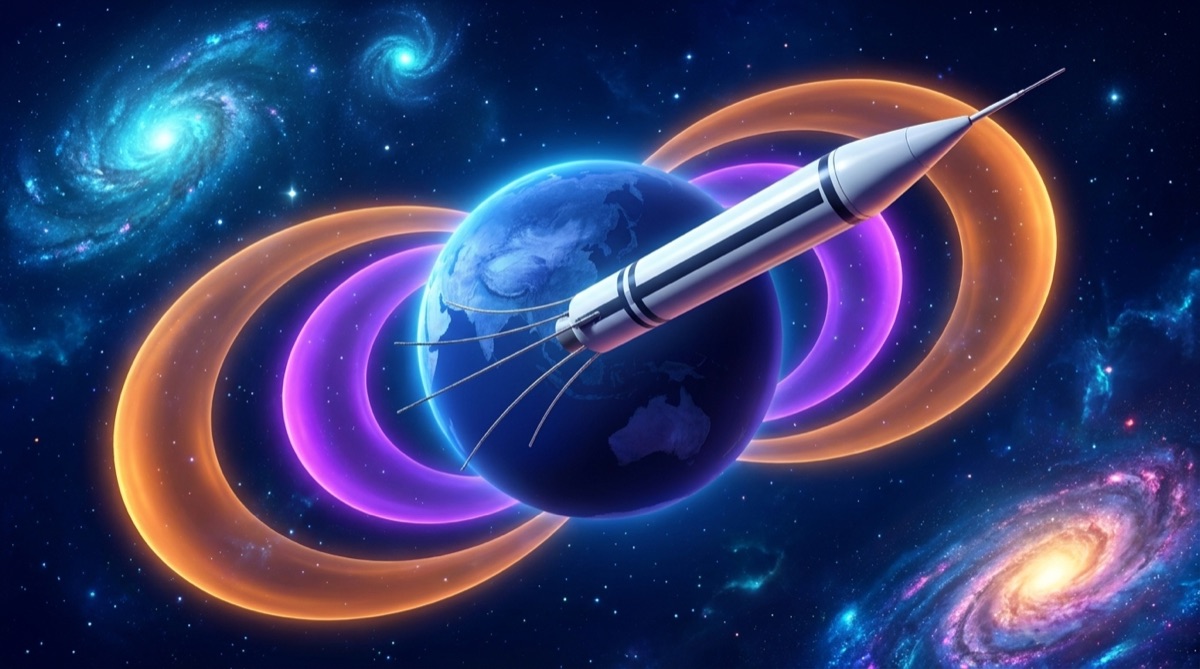
    Illustration: Explorer 1 and the Van Allen belts (Cape Canaveral, Florida)

    Discovery

    Explorer 1 and the Van Allen belts

    The first American satellite lifted off on January 31, 1958 (February 1 in Universal Time). Its Geiger counter, designed by James Van Allen, saturated at a certain altitude: the Earth is surrounded by belts of charged particles trapped by its magnetic field. It was the first scientific discovery made from space.

    👤 James Van Allen, Wernher von Braun, William Pickering · 📍 Cape Canaveral, Florida

    Orbit

    Sources (2)
    • NASA/JPL, “Explorer 1” (jpl.nasa.gov/missions/explorer-1).
    • Physics Today, “Launch of Explorer 1” (physicstoday.aip.org/news/launch-of-explorer-1).
  3. 1959
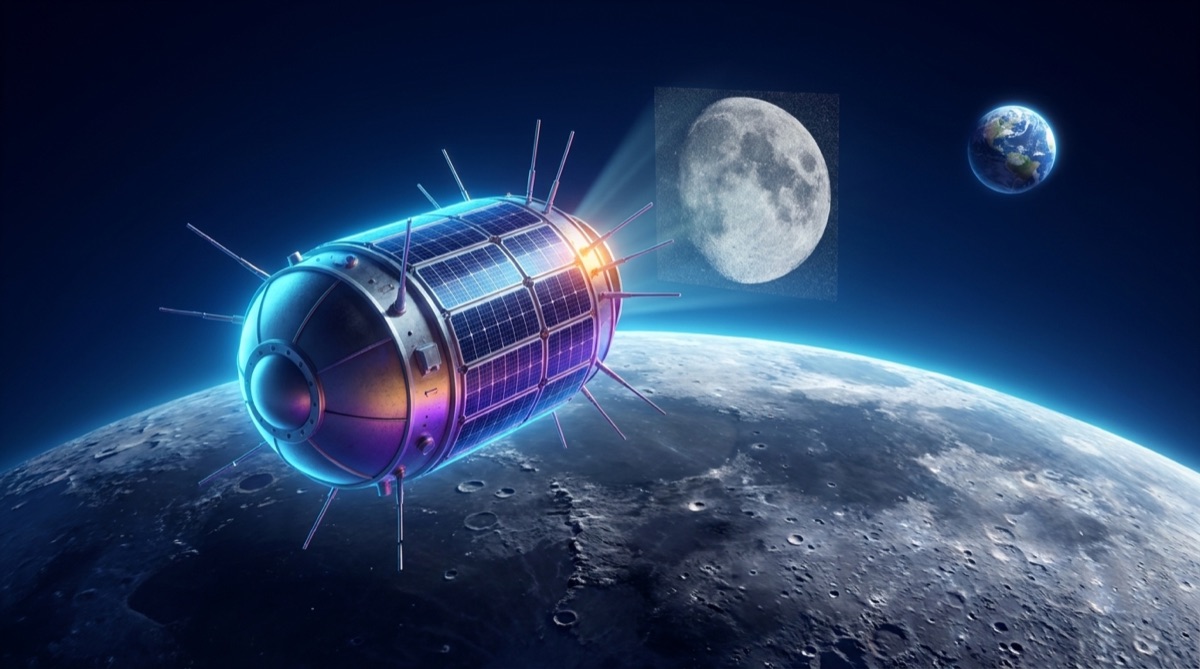
    Illustration: Luna 3 photographs the far side of the Moon (USSR; lunar orbit)

    Space exploration

    Luna 3 photographs the far side of the Moon

    The Soviet probe Luna 3 passed behind the Moon and, on October 7, 1959, took the first photos of the side we never see from Earth. It developed them on board and transmitted them by radio. It was a different landscape: almost no dark “seas”.

    📍 USSR; lunar orbit

    📘 The phases of the Moon 🧪 Phases of the Moon Phases of the MoonSidereal month

    Sources (1)
    • NSSDCA, Luna 3 (nssdc.gsfc.nasa.gov/nmc/spacecraft/display.action?id=1959-008A).
  4. 1961
    Illustration: Gagarin, the first human being in space (Baikonur; Earth orbit)

    Space exploration ★ milestone

    Gagarin, the first human being in space

    On April 12, 1961 Yuri Gagarin made one complete orbit of the Earth in the Vostok 1 capsule, in 108 minutes. “The Earth is blue”, he said. Since then April 12 has been the International Day of Human Space Flight.

    👤 Yuri Gagarin · 📍 Baikonur; Earth orbit

    OrbitOrbital period

    Sources (2)
    • United Nations, Resolution A/RES/65/271 (2011): International Day of Human Space Flight.
    • NASA, “April 1961: Yuri Gagarin Becomes the First Human in Space” (nasa.gov/history).
  5. 1963
    Illustration: Valentina Tereshkova, the first woman in space (Baikonur; Earth orbit)

    Space exploration

    Valentina Tereshkova, the first woman in space

    On June 16, 1963 Valentina Tereshkova lifted off in Vostok 6 and circled the Earth 48 times in almost three days, longer than all the American astronauts combined up to then. Twenty years would pass before another woman flew.

    👤 Valentina Tereshkova · 📍 Baikonur; Earth orbit

    Sources (2)
    • ESA, “Valentina Tereshkova: first woman in space” (esa.int).
    • NASA, “Valentina Tereshkova, First Woman in Space” (nasa.gov/history).
  6. 1969
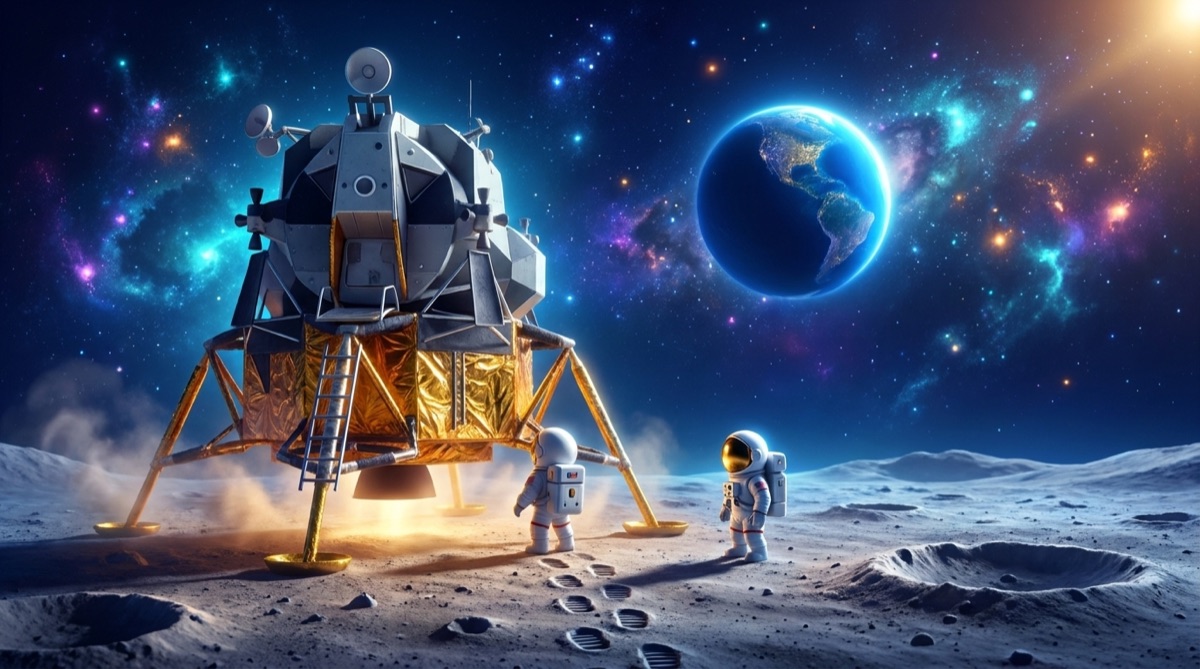
    Illustration: Apollo 11: footprints on the Moon (Sea of Tranquility, Moon)

    Space exploration ★ milestone

    Apollo 11: footprints on the Moon

    On July 20, 1969 Neil Armstrong and Buzz Aldrin set the Eagle module down in the Sea of Tranquility while Michael Collins orbited. They brought back 21.5 kg of rocks and left a laser reflector that is still used to measure the Earth–Moon distance to the millimeter. Six Apollo missions took twelve people to the Moon between 1969 and 1972.

    👤 Neil Armstrong, Buzz Aldrin, Michael Collins, Margaret Hamilton, Katherine Johnson · 📍 Sea of Tranquility, Moon

    📘 How much would you weigh on Mars? GravityMass and weightEscape velocity

    Sources (2)
    • NASA, “Apollo 11 Mission Overview” (nasa.gov/mission/apollo-11).
    • NASA Lunar Sample Compendium, Apollo 11 samples (curator.jsc.nasa.gov/lunar).
  7. 1970
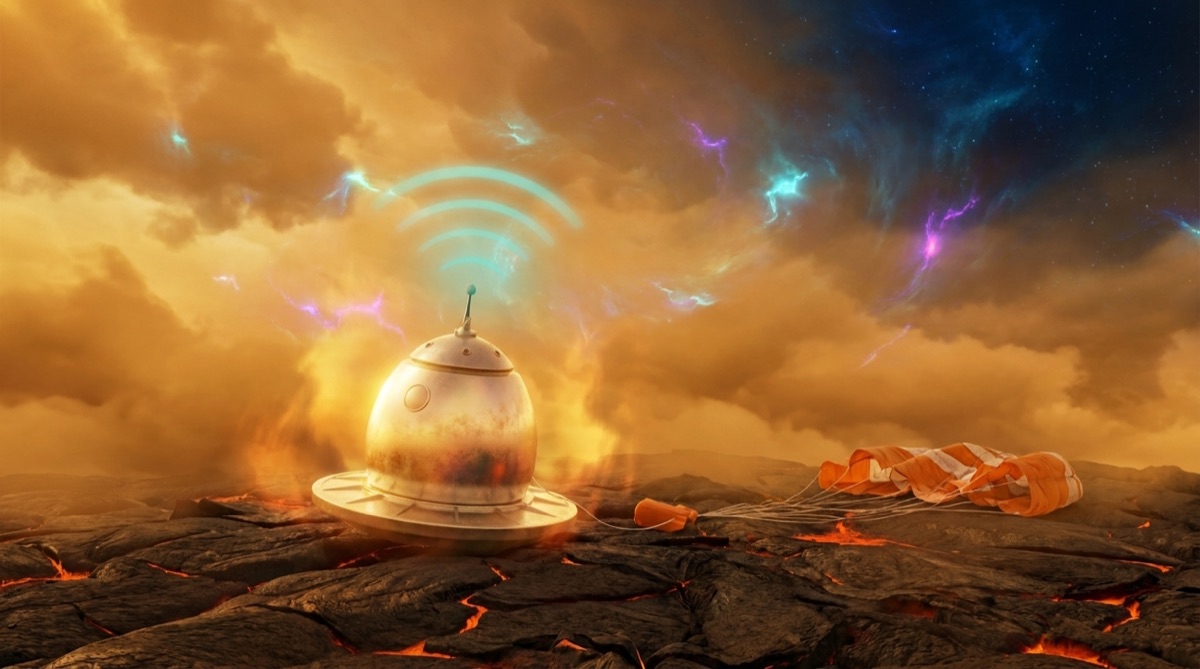
    Illustration: Venera 7: first signal from the surface of another planet (Venus)

    Space exploration

    Venera 7: first signal from the surface of another planet

    On December 15, 1970 the Soviet probe Venera 7 landed on Venus and transmitted for about 23 minutes before dying from the heat: some 475 °C and 90 atmospheres of pressure. It was the first transmission from the surface of another planet.

    📍 Venus

    📘 Rocky planets and giant planets Rocky planet

    Sources (2)
    • NSSDCA, Venera 7 (nssdc.gsfc.nasa.gov/nmc/spacecraft/display.action?id=1970-060A).
    • ESA, “50 years of planetary exploration”.
  8. 1972 – 1973
    Illustration: Pioneer 10 crosses the asteroid belt and reaches Jupiter (Jupiter)

    Space exploration

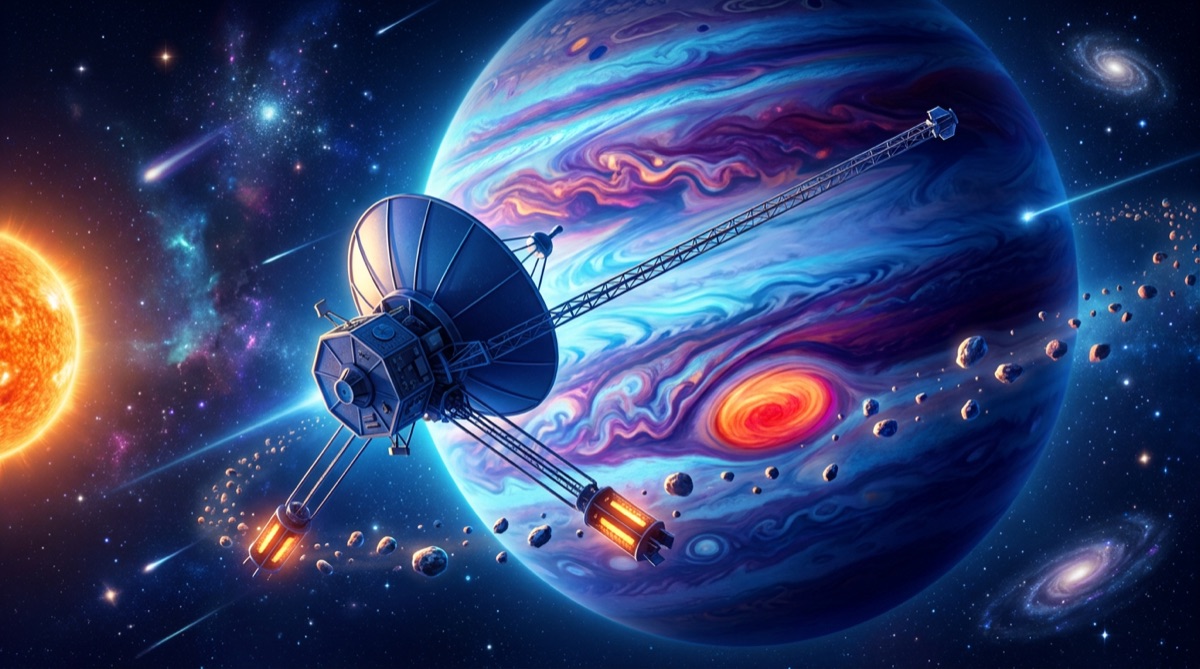
    Pioneer 10 crosses the asteroid belt and reaches Jupiter

    Launched on March 2, 1972, Pioneer 10 was the first probe to cross the asteroid belt and, on December 3, 1973, to fly past Jupiter. It measured its enormous magnetic field and radiation, and carries a plaque with a message for whoever finds it.

    👤 Carl Sagan, Frank Drake · 📍 Jupiter

    Gas giant

    Sources (2)
    • NASA Science, “Pioneer 10” (science.nasa.gov/mission/pioneer-10).
    • NSSDCA, Pioneer 10 (nssdc.gsfc.nasa.gov/nmc/spacecraft/display.action?id=1972-012A).
  9. 1976
    Illustration: Viking 1 and 2: the first laboratories on Mars (Chryse Planitia and Utopia Planitia, Mars)

    Space exploration

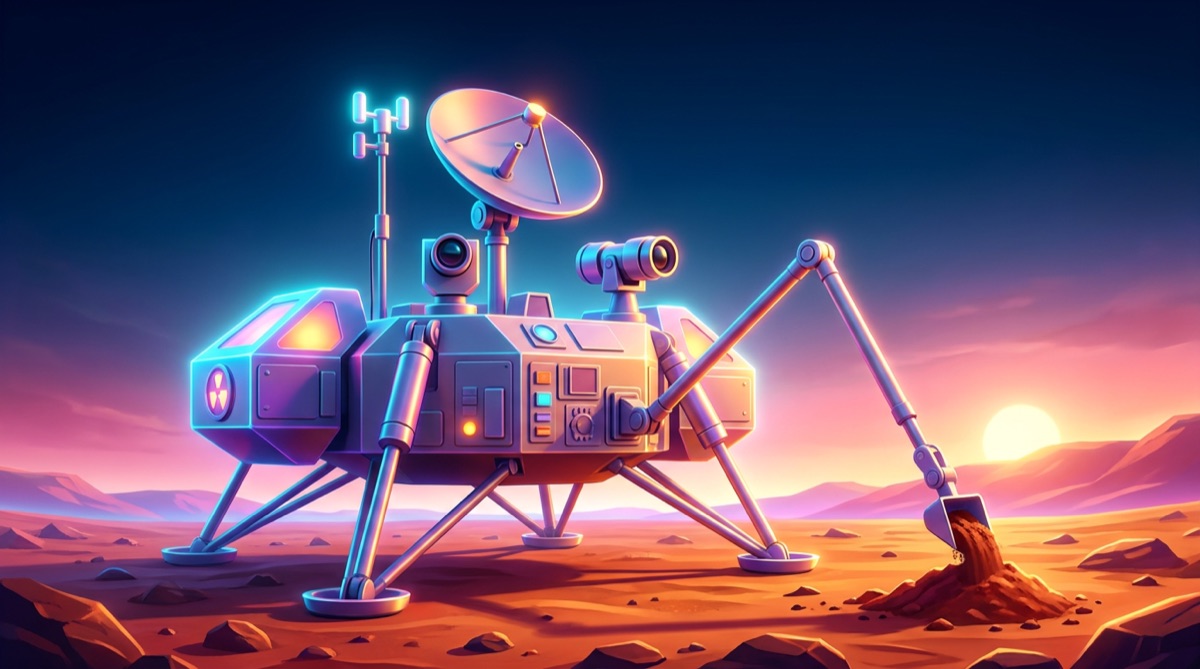
    Viking 1 and 2: the first laboratories on Mars

    Viking 1 landed on July 20, 1976 and Viking 2 on September 3. They sent the first photos from the Martian surface, measured the weather for years and searched for life in the soil with ambiguous results that are still debated.

    📍 Chryse Planitia and Utopia Planitia, Mars

    📘 Rocky planets and giant planets

    Sources (2)
    • NASA Science, “Viking 1” and “Viking 2” (science.nasa.gov/mission/viking-1).
    • NSSDCA, Viking 1 Lander (nssdc.gsfc.nasa.gov/nmc/spacecraft/display.action?id=1975-075C).
  10. 1977 – 2012
    Illustration: Voyager 1 and 2: the grand tour and the exit into interstellar space (Outer planets and interstellar space)

    Space exploration ★ milestone

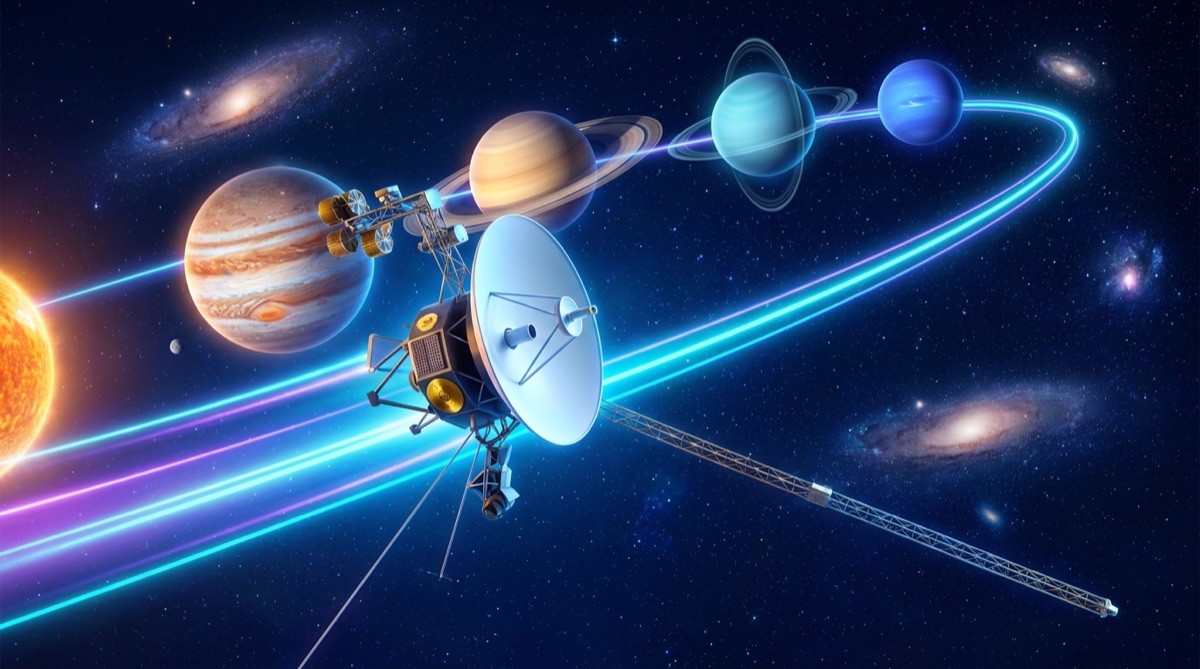
    Voyager 1 and 2: the grand tour and the exit into interstellar space

    Voyager 2 lifted off on August 20, 1977 and Voyager 1 on September 5. Taking advantage of a planetary alignment that occurs every 175 years, they visited Jupiter, Saturn, Uranus and Neptune. On August 25, 2012 Voyager 1 crossed the heliopause: the first spacecraft in interstellar space. Both are still transmitting.

    👤 Edward Stone, Carl Sagan, Gary Flandro · 📍 Outer planets and interstellar space

    📘 The speed of light and the light-year 🧪 The Solar System to scale Astronomical unitEscape velocity

    Sources (2)
    • NASA/JPL, “Voyager Mission Status” (voyager.jpl.nasa.gov/mission/status).
    • Stone, E. C. et al. (2013). Voyager 1 Observes Low-Energy Galactic Cosmic Rays in a Region Depleted of Heliospheric Ions. Science 341, 150–153. https://doi.org/10.1126/science.1236408
  11. 1986 – 2000
    Illustration: Space stations: from Mir to the International Space Station (Low Earth orbit, ~400 km)

    Space exploration

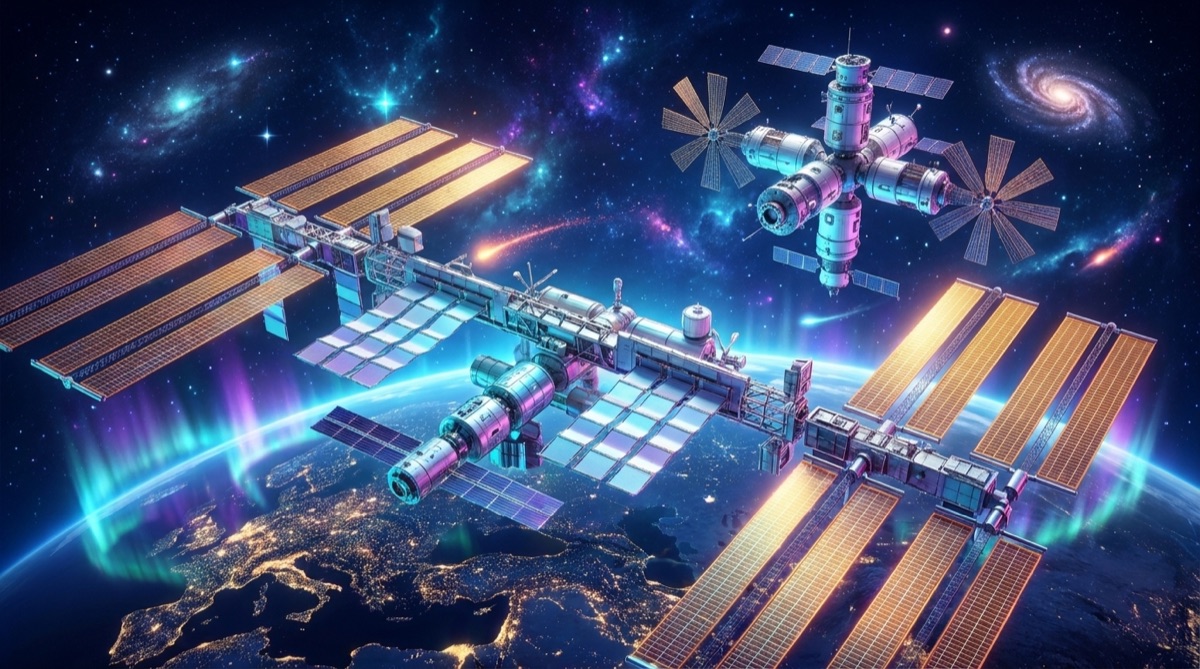
    Space stations: from Mir to the International Space Station

    The Soviet Mir (1986–2001) showed that it is possible to live in orbit for months. The first module of the International Space Station, Zarya, was launched on November 20, 1998, and Expedition 1 arrived on November 2, 2000. Since then there have always been human beings off the Earth.

    👤 William Shepherd, Sergei Krikalev, Yuri Gidzenko · 📍 Low Earth orbit, ~400 km

    📘 Universal gravitation and satellites OrbitOrbital velocityOrbital period

    Sources (2)
    • NASA, “International Space Station: 20 Years of Continuous Human Presence” (nasa.gov).
    • ISS National Lab, “Celebrating the 20th Anniversary of the First International Space Station Module” (issnationallab.org).
  12. 1990
    Illustration: The Hubble Space Telescope (Earth orbit, ~540 km)

    Instrument ★ milestone

    The Hubble Space Telescope

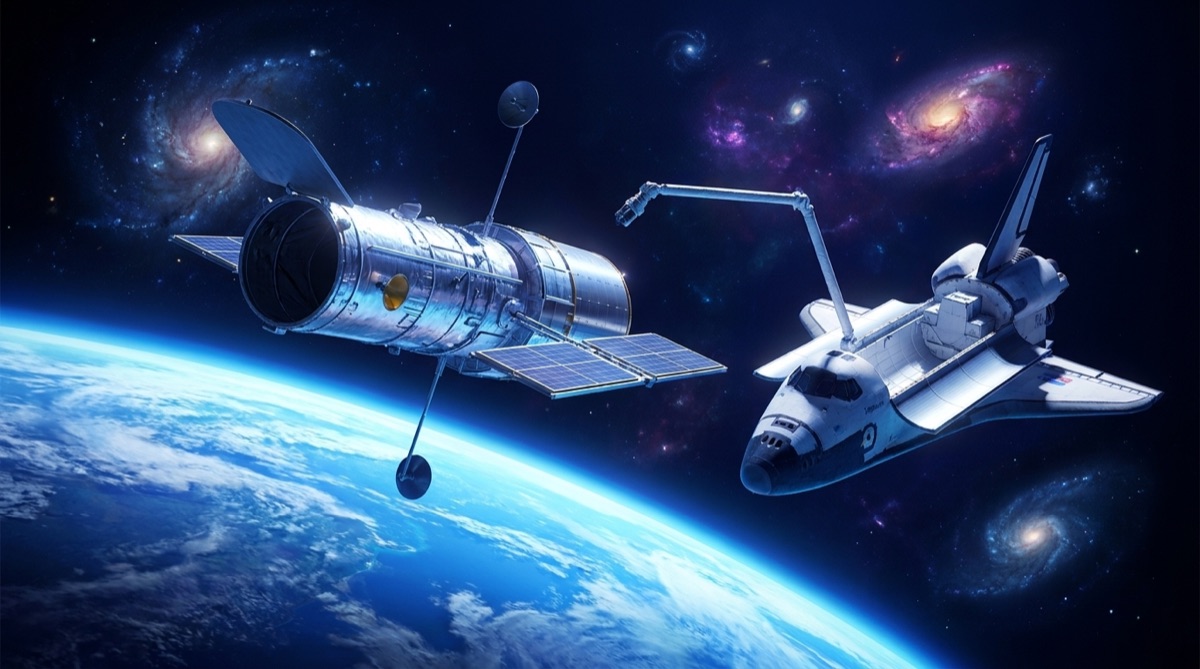
    Launched on April 24, 1990 aboard the shuttle Discovery (STS-31), its mirror went up with a flaw that was corrected in 1993. From above the atmosphere it has measured the Hubble constant, photographed galaxies 13 billion light-years away and shown the public the universe as never before.

    👤 Nancy Grace Roman, Lyman Spitzer · 📍 Earth orbit, ~540 km

    📘 The universe is expanding Hubble constantGalaxy

    Sources (2)
    • NASA, “Hubble Space Telescope: Mission Overview” (science.nasa.gov/mission/hubble).
    • Freedman, W. L. et al. (2001). Final Results from the Hubble Space Telescope Key Project to Measure the Hubble Constant. ApJ 553, 47–72. https://doi.org/10.1086/320638
  13. 1997
    Illustration: Mars Pathfinder and the first rover on Mars (Ares Vallis, Mars)

    Space exploration

    Mars Pathfinder and the first rover on Mars

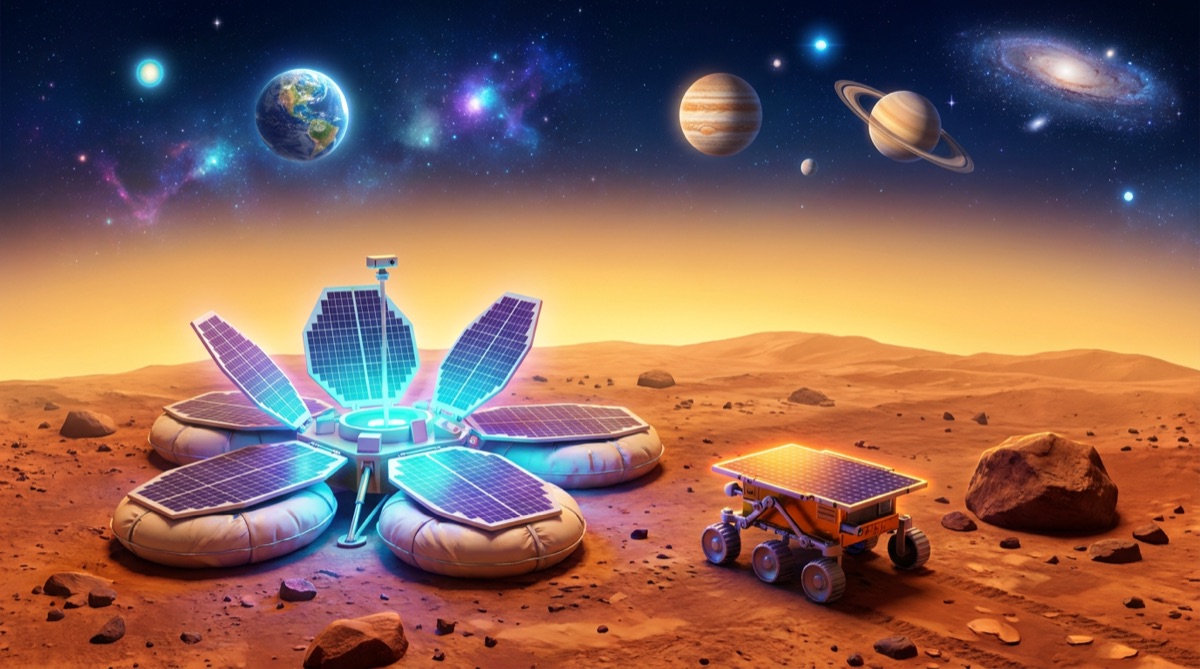
    On July 4, 1997 Pathfinder landed bouncing on airbags and released Sojourner, a 10 kg robot that covered about 100 meters analyzing rocks. It was the first mission to Mars since Viking and the rehearsal for all the rovers that came after.

    📍 Ares Vallis, Mars

    📘 Rocky planets and giant planets

    Sources (2)
    • NASA Science, “Mars Pathfinder” (science.nasa.gov/mission/mars-pathfinder).
    • NSSDCA, Mars Pathfinder Rover (nssdc.gsfc.nasa.gov/nmc/spacecraft/display.action?id=MESURPR).
  14. 2004 – 2017
    Illustration: Cassini–Huygens at Saturn (Saturn, Titan and Enceladus)

    Space exploration

    Cassini–Huygens at Saturn

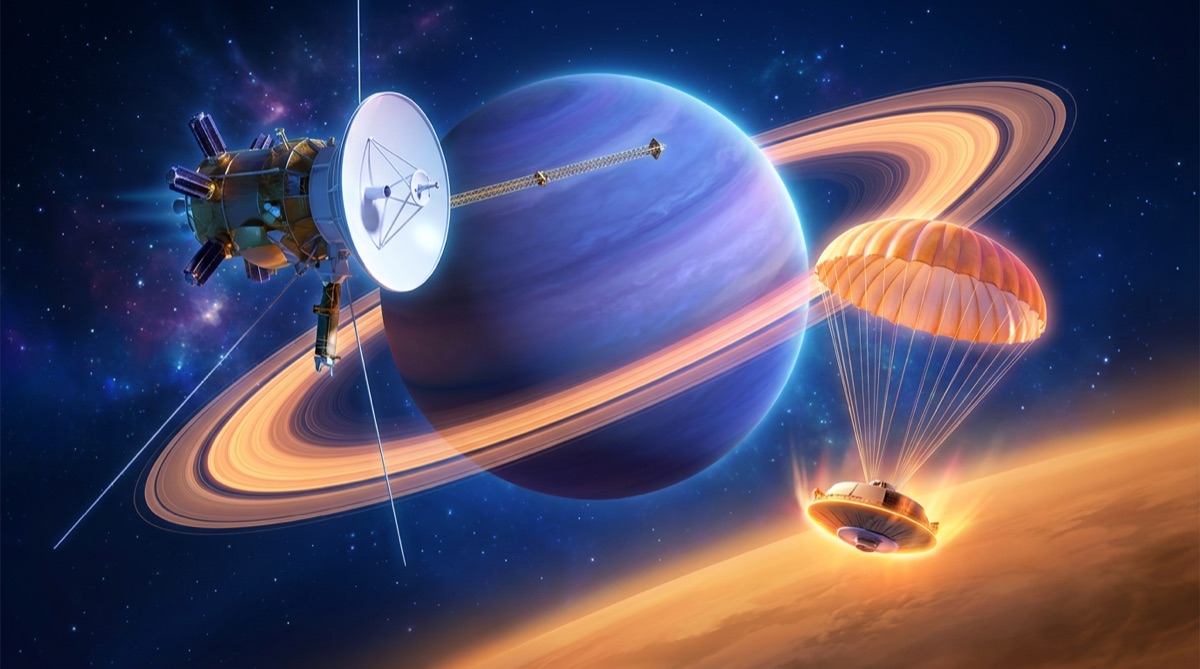
    Cassini entered orbit around Saturn on July 1, 2004 and the European probe Huygens descended onto Titan on January 14, 2005, the most distant landing in history. Cassini discovered water geysers on Enceladus and studied the rings for thirteen years, until it burned up in Saturn's atmosphere on September 15, 2017.

    👤 Carolyn Porco, Jean-Pierre Lebreton · 📍 Saturn, Titan and Enceladus

    📘 Resonances and chaos Orbital resonanceGas giant

    Sources (2)
    • NASA Science, “Cassini: Mission Overview” (science.nasa.gov/mission/cassini).
    • ESA, “Huygens: Titan landing” (esa.int/Science_Exploration/Space_Science/Cassini-Huygens).
  15. 2009
    Illustration: Kepler: thousands of planets by the transit method (Heliocentric orbit)

    Instrument

    Kepler: thousands of planets by the transit method

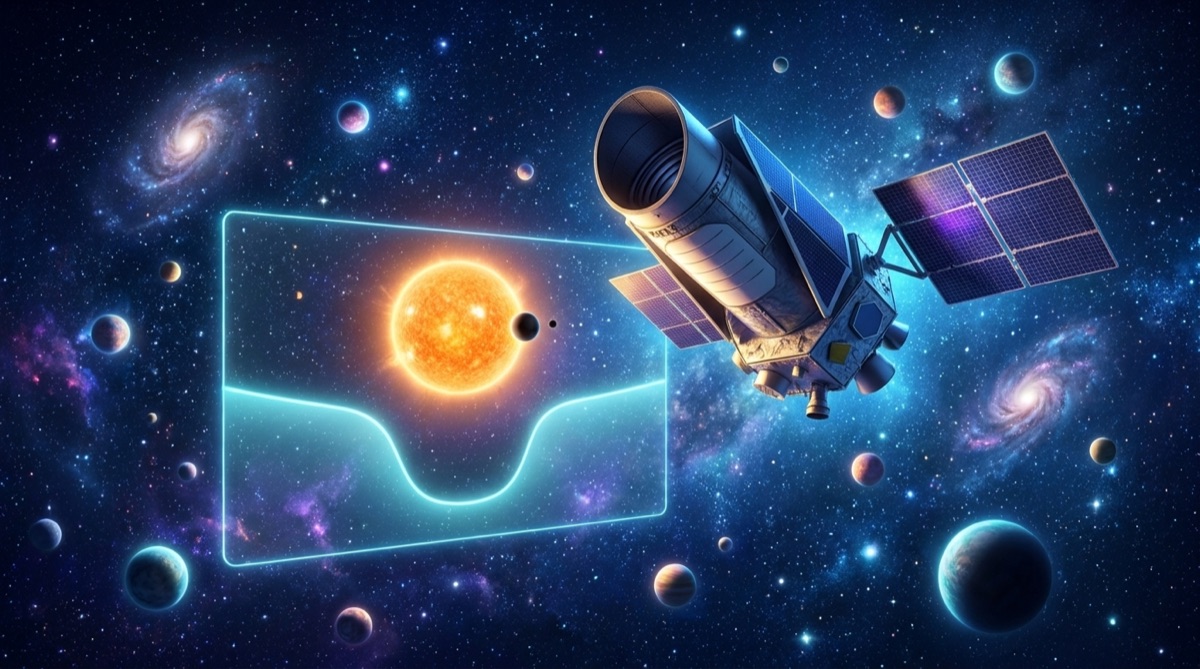
    Launched on March 7, 2009 (Universal Time), the Kepler telescope monitored the brightness of 150 000 stars looking for the small dips produced by a planet passing in front of them. It discovered more than 2600 confirmed exoplanets and showed that planets are more common than stars.

    👤 William Borucki · 📍 Heliocentric orbit

    📘 Hunting exoplanets with transits 🧪 Light curve of a transit TransitLight curveExoplanet

    Sources (2)
    • NASA, “Kepler's Launch” (nasa.gov/kepler/keplers-launch) and NASA Exoplanet Archive (exoplanetarchive.ipac.caltech.edu).
    • Borucki, W. J. et al. (2010). Kepler Planet-Detection Mission: Introduction and First Results. Science 327, 977–980. https://doi.org/10.1126/science.1185402
  16. 2012
    Illustration: Curiosity lands in Gale crater (Gale crater, Mars)

    Space exploration

    Curiosity lands in Gale crater

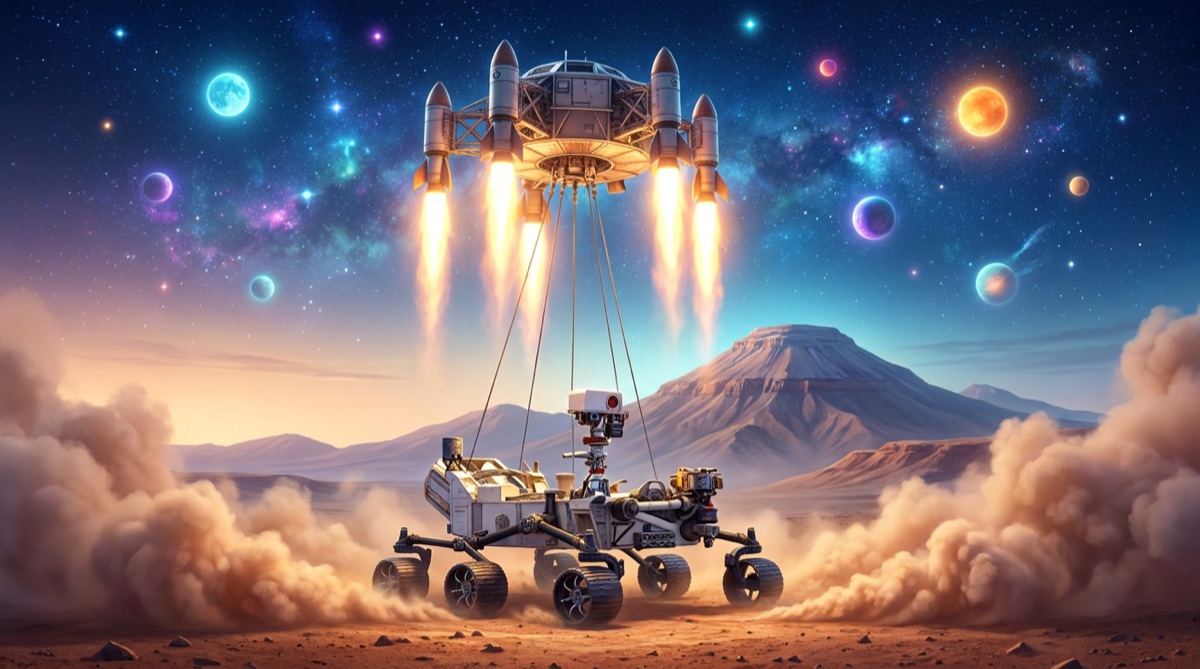
    On August 6, 2012 (UTC) a rocket-powered “sky crane” lowered the 900 kg rover Curiosity into Gale crater. It found that there was once a habitable freshwater lake there, billions of years ago. It is still operating.

    📍 Gale crater, Mars

    📘 Rocky planets and giant planets

    Sources (2)
    • NASA Science, “Curiosity Rover” (science.nasa.gov/mission/msl-curiosity).
    • Grotzinger, J. P. et al. (2014). A Habitable Fluvio-Lacustrine Environment at Yellowknife Bay, Gale Crater, Mars. Science 343, 1242777. https://doi.org/10.1126/science.1242777
  17. 2014
    Illustration: Rosetta and Philae: landing on a comet (Comet 67P/Churyumov–Gerasimenko)

    Space exploration

    Rosetta and Philae: landing on a comet

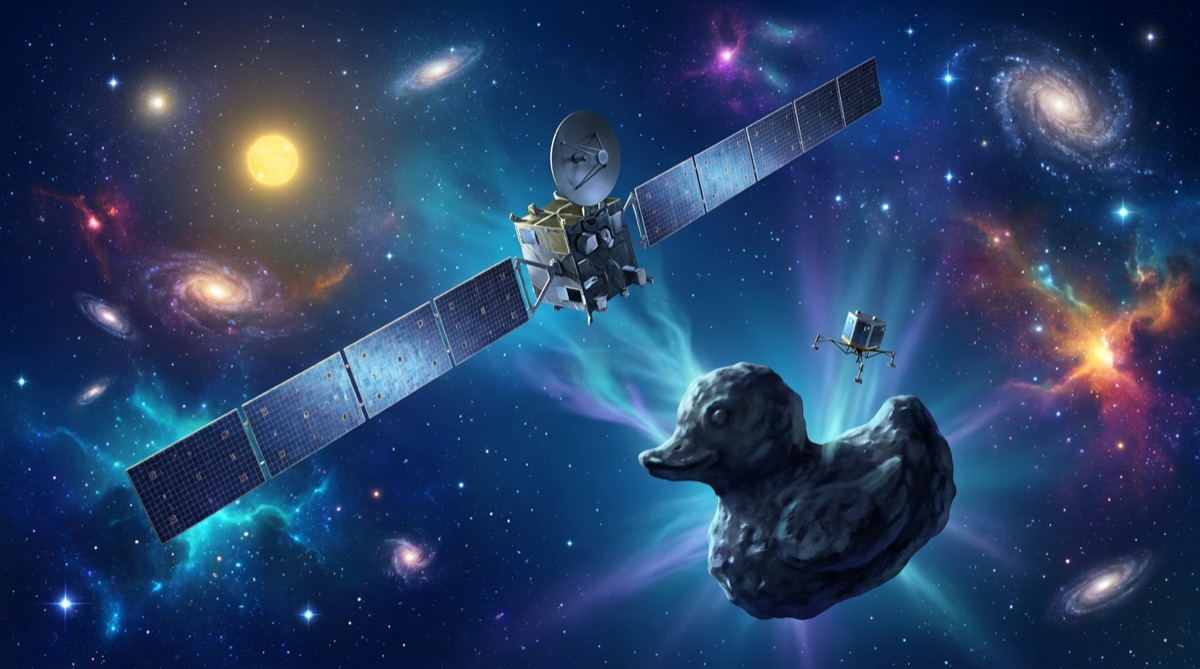
    The European probe Rosetta reached comet 67P/Churyumov–Gerasimenko on August 6, 2014 after a ten-year journey, and on November 12 it released Philae, the first craft to touch down on a comet. Rosetta accompanied the comet for two years as it approached the Sun.

    📍 Comet 67P/Churyumov–Gerasimenko

    🧪 Keplerian orbit EccentricityPerihelion

    Sources (1)
    • ESA, “Rosetta: Europe's comet chaser” (esa.int/Science_Exploration/Space_Science/Rosetta).
  18. 2015
    Illustration: New Horizons flies past Pluto (Pluto and the Kuiper belt)

    Space exploration

    New Horizons flies past Pluto

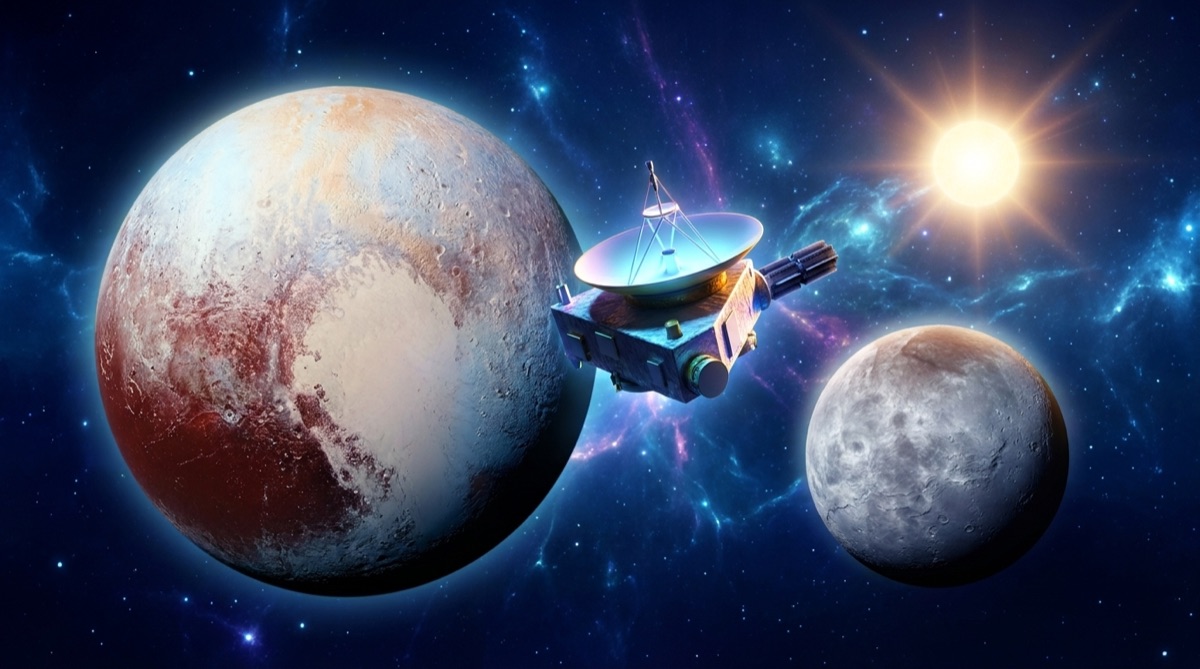
    On July 14, 2015, after a journey of nine and a half years, New Horizons passed 12 500 km from Pluto and revealed a world with nitrogen glaciers, mountains of water ice and a bluish atmosphere. In 2019 it flew past Arrokoth, the most distant object ever visited.

    👤 Alan Stern · 📍 Pluto and the Kuiper belt

    📘 The Solar System to scale 🧪 The Solar System to scale Astronomical unit

    Sources (2)
    • NASA Science, “New Horizons” (science.nasa.gov/mission/new-horizons).
    • Stern, S. A. et al. (2015). The Pluto system: Initial results from its exploration by New Horizons. Science 350, aad1815. https://doi.org/10.1126/science.aad1815
  19. 2019
    Illustration: Chang'e 4: first landing on the far side of the Moon (Von Kármán crater, far side of the Moon)

    Space exploration

    Chang'e 4: first landing on the far side of the Moon

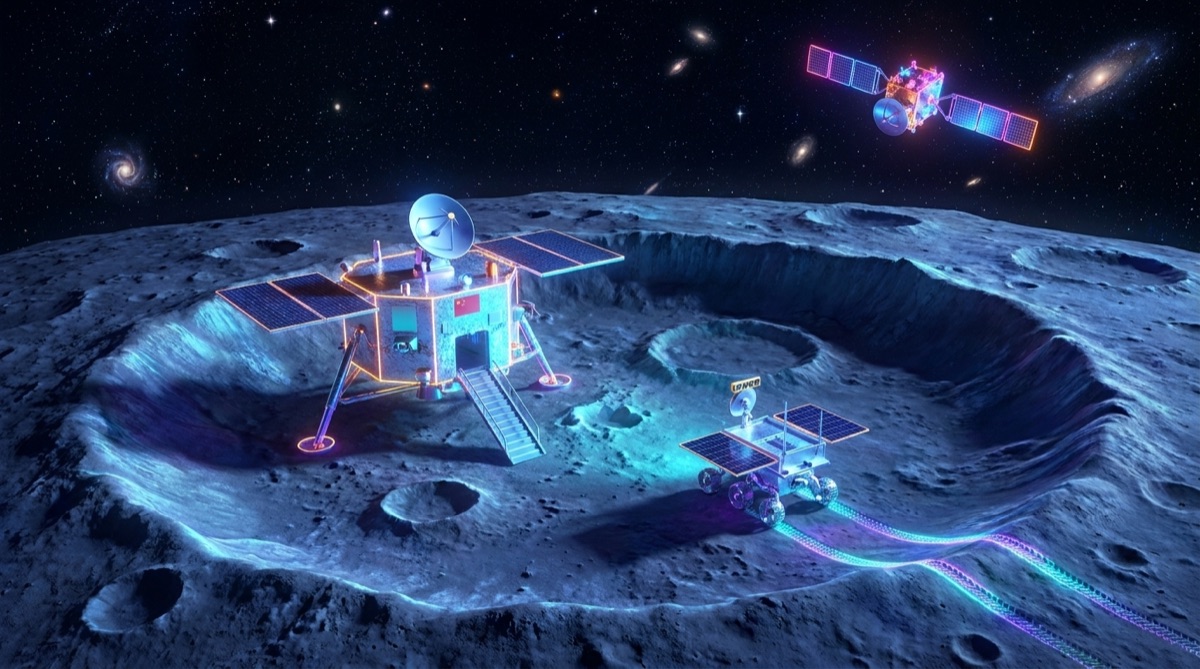
    On January 3, 2019 the Chinese mission Chang'e 4 touched down in the Von Kármán crater, on the far side, and released the rover Yutu-2. Since the Earth cannot be seen from there, it used the relay satellite Queqiao, placed near the L2 Lagrange point of the Earth–Moon system.

    📍 Von Kármán crater, far side of the Moon

    📘 The restricted three-body problem and the Lagrange points 🧪 Lagrange points (restricted three-body problem) Lagrange point

    Sources (2)
    • NASA/NSSDCA, Chang'e 4 (nssdc.gsfc.nasa.gov/nmc/spacecraft/display.action?id=2018-103A).
    • Li, C. et al. (2019). Chang'E-4 initial spectroscopic identification of lunar far-side mantle-derived materials. Nature 569, 378–382. https://doi.org/10.1038/s41586-019-1189-0
  20. 2021
    Illustration: Perseverance and Ingenuity: a helicopter flies on Mars (Jezero crater, Mars)

    Space exploration

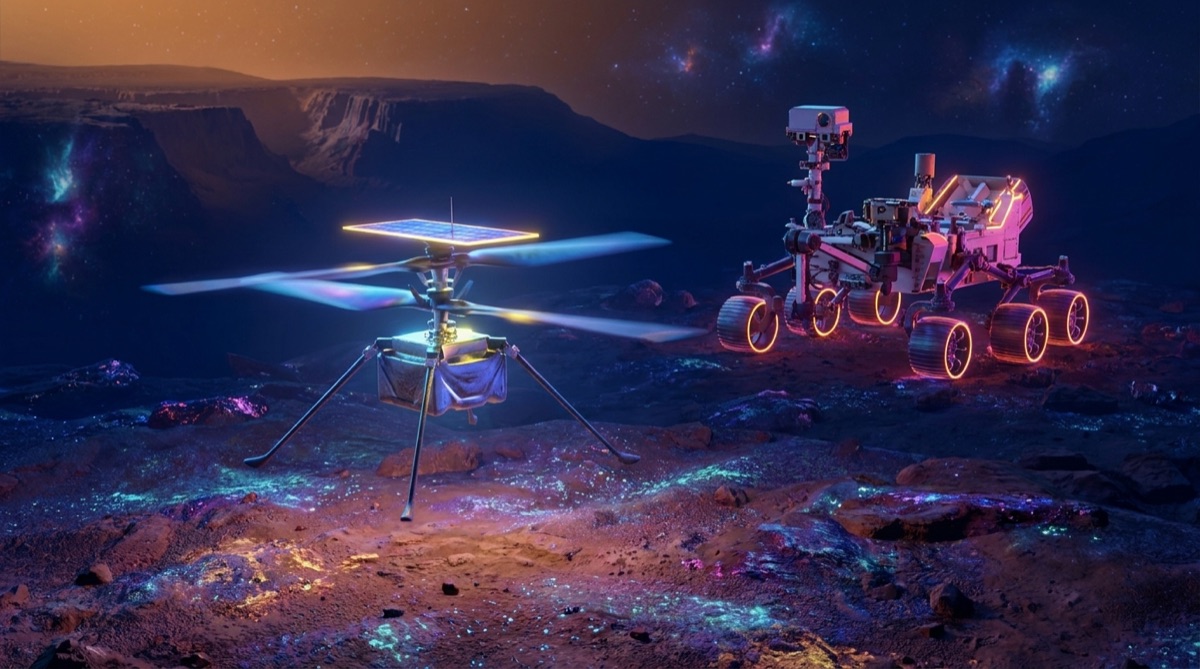
    Perseverance and Ingenuity: a helicopter flies on Mars

    Perseverance landed in Jezero crater on February 18, 2021 to collect samples that will one day return to Earth. On April 19, 2021 the helicopter Ingenuity made the first controlled flight on another planet, in an atmosphere a hundred times thinner than ours; it flew 72 times.

    👤 MiMi Aung · 📍 Jezero crater, Mars

    📘 Rocky planets and giant planets

    Sources (2)
    • NASA Science, “Perseverance Rover” (science.nasa.gov/mission/mars-2020-perseverance).
    • NASA/JPL, “Ingenuity Mars Helicopter” (science.nasa.gov/mission/mars-2020-perseverance/ingenuity-mars-helicopter).
  21. 2021
    Illustration: The James Webb Space Telescope (Sun–Earth L2 Lagrange point)

    Instrument ★ milestone

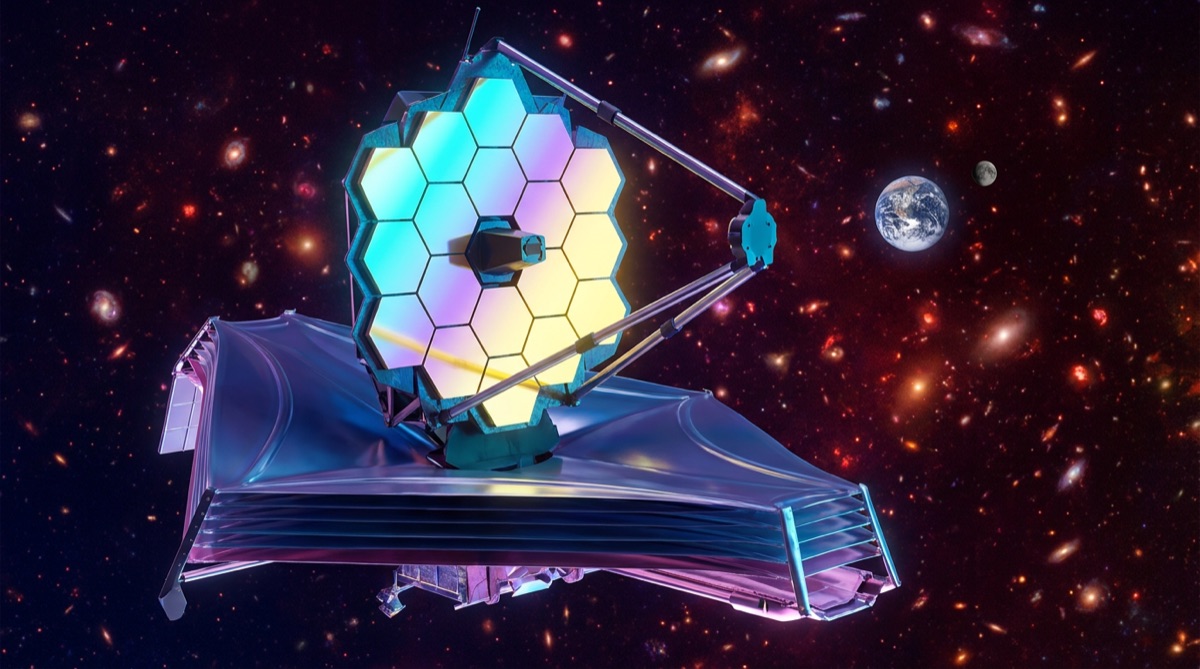
    The James Webb Space Telescope

    It lifted off on December 25, 2021 from French Guiana and unfolded in flight on its way to the L2 Lagrange point, 1.5 million km away. With a 6.5 m mirror and infrared vision, it observes the first galaxies of the universe and the atmospheres of exoplanets.

    👤 NASA, ESA and CSA · 📍 Sun–Earth L2 Lagrange point

    📘 The restricted three-body problem and the Lagrange points 🧪 Lagrange points (restricted three-body problem) Lagrange pointWavelength

    Sources (2)
    • NASA, “Webb: Launch” (science.nasa.gov/mission/webb).
    • ESA, “Webb launch kit” (esa.int/Science_Exploration/Space_Science/Webb).
  22. 2022
    Illustration: DART: the first test of deflecting an asteroid (Binary asteroid Didymos–Dimorphos)

    Space exploration

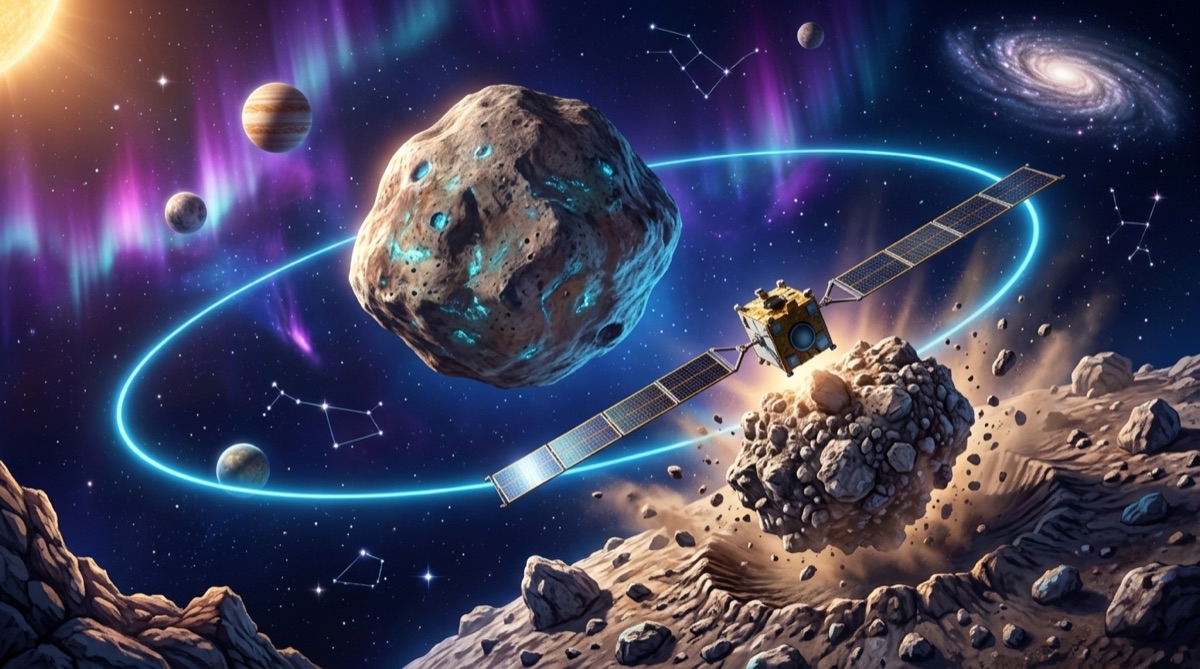
    DART: the first test of deflecting an asteroid

    On September 26, 2022 the DART probe crashed at 22 000 km/h into Dimorphos, the small moon of the asteroid Didymos. The impact shortened its orbital period by about 32 minutes, far more than expected. It was the first demonstration of planetary defense.

    📍 Binary asteroid Didymos–Dimorphos

    📘 Kepler's three laws 🧪 Keplerian orbit Orbital period

    Sources (2)
    • NASA, “DART Mission” (science.nasa.gov/mission/dart).
    • Thomas, C. A. et al. (2023). Orbital period change of Dimorphos due to the DART kinetic impact. Nature 616, 448–451. https://doi.org/10.1038/s41586-023-05805-2
  23. 2022
    Illustration: Artemis I: the Orion spacecraft circles the Moon without a crew (Kennedy Space Center; lunar orbit)

    Space exploration

    Artemis I: the Orion spacecraft circles the Moon without a crew

    The SLS rocket lifted off on November 16, 2022 and the Orion capsule flew for 25 days, reached 432 000 km from Earth (farther than any spacecraft designed for people) and splashed down on December 11. It was the dress rehearsal for the return to the Moon.

    📍 Kennedy Space Center; lunar orbit

    📘 Hohmann transfers and gravity assists 🧪 Mission to Mars: Hohmann transfer Hohmann transfer

    Sources (1)
    • NASA, “Artemis I” (nasa.gov/mission/artemis-i).
  24. 2023
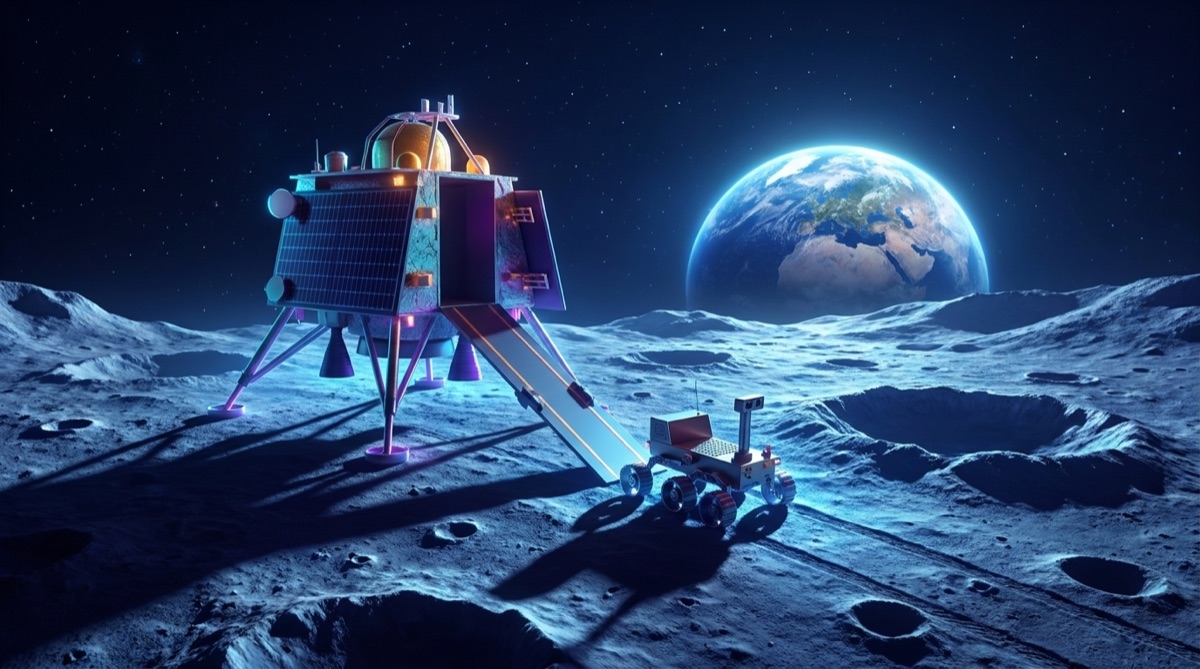
    Illustration: Chandrayaan-3: India lands near the lunar south pole (South polar region of the Moon)

    Space exploration

    Chandrayaan-3: India lands near the lunar south pole

    On August 23, 2023 the Vikram lander touched down at about 69° south latitude, closer to the pole than any previous mission, and India became the fourth country to land on the Moon. The rover Pragyan explored the area for one lunar day.

    📍 South polar region of the Moon

    📘 The phases of the Moon

    Sources (2)
    • ISRO, “Chandrayaan-3” (isro.gov.in/Chandrayaan3_Details.html).
    • NASA/NSSDCA, Chandrayaan 3 (nssdc.gsfc.nasa.gov/nmc/spacecraft/display.action?id=2023-098A).
  25. 2026
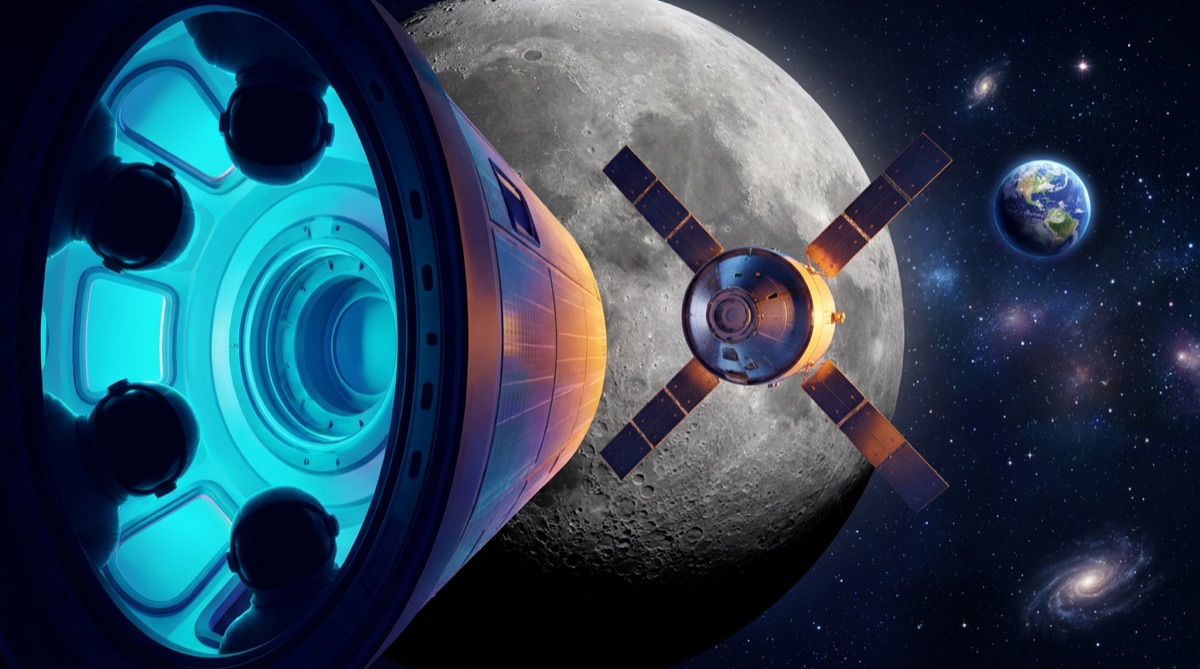
    Illustration: Artemis II: humanity returns to lunar orbit (Kennedy Space Center; lunar flyby)

    Space exploration ★ milestone

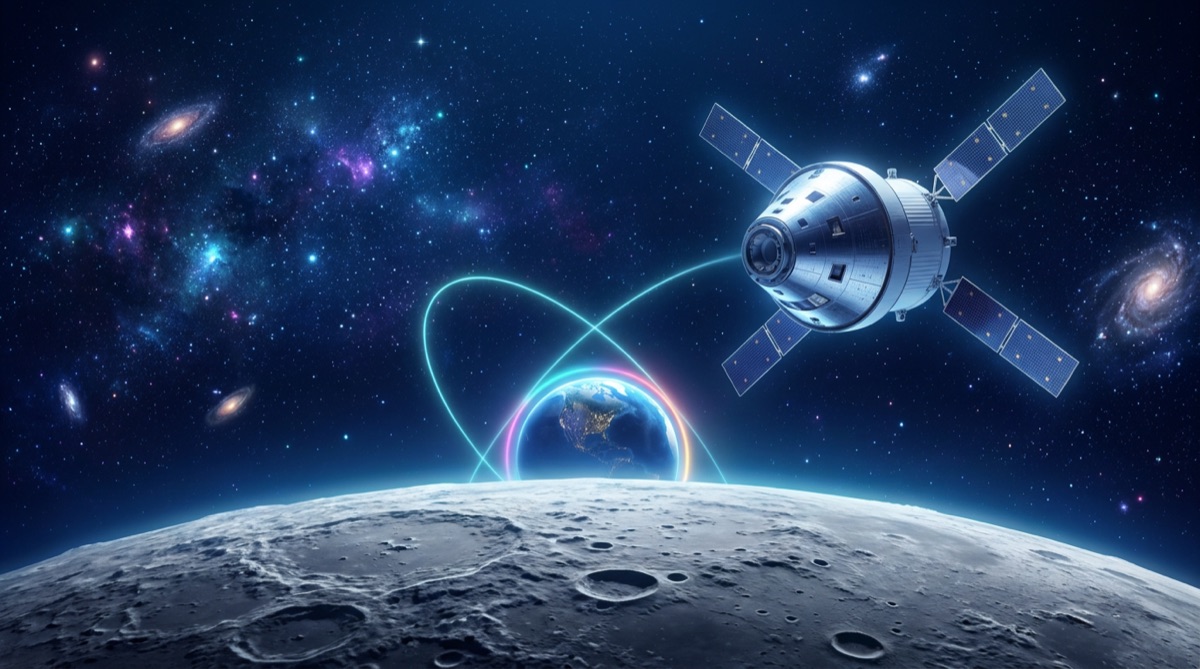
    Artemis II: humanity returns to lunar orbit

    On April 1, 2026 Reid Wiseman, Victor Glover, Christina Koch and Jeremy Hansen lifted off, the first human beings to travel to the Moon since 1972. Orion rounded the Moon and splashed down in the Pacific on April 10, 2026. Koch was the first woman and Hansen the first non-American to go to the Moon.

    👤 Reid Wiseman, Victor Glover, Christina Koch, Jeremy Hansen · 📍 Kennedy Space Center; lunar flyby

    📘 Hohmann transfers and gravity assists 🧪 Mission to Mars: Hohmann transfer Hohmann transferEscape velocity

    Sources (2)
    • NASA (10-04-2026). NASA's Artemis II crew splashes down in the Pacific Ocean (nasa.gov).
    • NASA, “Artemis II” (nasa.gov/mission/artemis-ii).

Context

Throughout all of its earlier history, astronomy was a science of looking up from below. On October 4, 1957 that changed: an 84 kg aluminum sphere, Sputnik 1, began circling the Earth every 96 minutes, emitting a beep that any ham radio operator could pick up. In less than four years there was a person in orbit; in less than twelve, two people were walking on the Moon.

The Space Age was born of the Cold War: the same rockets that launched satellites could carry bombs, and the United States and the Soviet Union competed to show who could go farthest. But the scientific result overflowed that rivalry. For the first time we could go and look at the planets up close, place telescopes above the atmosphere that blurs and absorbs light, and measure the Earth from outside. Today agencies from Europe, Japan, India, China, Canada and many more countries take part, Colombia included, and the Space Age is, above all, an age of exploration.

Major contributions

Staying in orbit

Newton had already imagined it in 1687: a cannon on a very high mountain firing harder and harder, until the ball falls as fast as the Earth curves away and never reaches the ground. Sputnik was that cannonball. In the simulator Newton’s cannonball you can repeat the thought experiment, and the article Why don’t satellites fall? explains why a satellite is “falling” all the time without ever touching the ground. The lesson Gravitation and satellites works through the numbers with the Colombian satellites FACSAT-1 and FACSAT-2.

The first surprise came right away: the Geiger counter on Explorer 1 (1958) saturated at a certain altitude. James Van Allen understood that the Earth is surrounded by belts of particles trapped by its magnetic field. It was the first scientific discovery made from space.

Going to see the planets

Luna 3 photographed the far side of the Moon in 1959; Venera 7 transmitted in 1970 from the inferno of Venus; the Vikings landed on Mars in 1976; and the two Voyagers, launched in 1977, took advantage of a planetary alignment that occurs every 175 years to visit Jupiter, Saturn, Uranus and Neptune. To go from one planet to another with little fuel, the Hohmann transfer is used: half an ellipse that touches the departure orbit and the arrival orbit. The idea fits in a simple formula: the speed of a body in a circular orbit is v=GM/rv = \sqrt{GM/r}, that is, the farther from the Sun (larger rr), the more slowly it moves. You can design a trip to Mars in the simulator Hohmann transfer and in the higher-education project Design a mission to Mars.

The Voyagers are still transmitting from interstellar space; the lesson The speed of light and the light-year calculates how long their signal takes to arrive today: almost a day.

Telescopes outside the atmosphere

The atmosphere makes the stars twinkle and blocks ultraviolet, X-rays and much of the infrared. The Hubble Space Telescope (1990) measured the Hubble constant to within 10 % and photographed galaxies from when the universe was 500 million years old. Kepler (2009) discovered thousands of exoplanets by monitoring the brightness of 150 000 stars, the method taught in Hunting exoplanets with transits. And the James Webb (2021), stationed at the L2 Lagrange point, observes the first galaxies and the atmospheres of distant planets in the infrared.

Living and working in space

Gagarin (1961) and Tereshkova (1963) showed that a person can survive in orbit; Mir, that one can live there for months; and since November 2, 2000 the International Space Station has not been empty for a single day. In 2026, with Artemis II, four astronauts circled the Moon again for the first time since 1972.

How do we know?

The Space Age is the best documented in the whole history of astronomy: every mission has archived telemetry, technical reports, photographs with date and time, and peer-reviewed scientific papers. The catalogs of NASA (NSSDCA), ESA and the other agencies record launches to the second. That is why the dates in this timeline are exact and carry no “circa”.

Even so, they should be read with care. Many dates change with the time zone: Explorer 1 lifted off on January 31, 1958 in Florida, but on February 1 in Universal Time; Curiosity landed on August 5, 2012 in California and on the 6th in UTC. Some milestones have different observation and announcement dates: Voyager 1 crossed the heliopause on August 25, 2012, but NASA did not confirm it until September 2013, when the plasma data proved it. And some results remain open: the Viking biology experiments gave signals that are still debated, and the “first” in many lists (first satellite, first photo, first landing) depends on how it is defined. The claims that the Apollo missions were staged do not stand up to the evidence: the laser reflectors left on the Moon still return pulses to observatories around the world, and the Lunar Reconnaissance Orbiter photographed the astronauts’ tracks in 2011.

Legacy

We inherited, first, an Earth seen from outside: the photo of the Earth rising over the Moon (Apollo 8, 1968) and Voyager 1’s “pale blue dot” (1990) changed the idea we have of our planet. We inherited everyday technology: GPS, weather forecasting, communications and the satellite images that monitor deforestation in the Colombian Amazon come from the same orbital physics.

We inherited a solar system known firsthand: we have landed on the Moon, Venus, Mars, Titan, a comet and several asteroids, and we have flown past all eight planets and Pluto. And we inherited an open question that the missions of the coming decades will try to answer: whether there was or is life on Mars, on Europa or on Enceladus. The students doing the Mars mission project on this portal today may be the ones who answer it.

✦ Check your understanding

  1. 1. What did Sputnik 1 demonstrate on October 4, 1957?
  2. 2. What was the first scientific discovery made from space?
  3. 3. Why is the James Webb telescope at the L2 Lagrange point and not in low orbit like Hubble?
  4. 4. Which mission carried people around the Moon in April 2026?
Answer all the questions to check.

References

  • NASA History Office, “NASA History” (nasa.gov/history) and NASA Science “Solar System Exploration: Missions” (science.nasa.gov/solar-system/missions).
  • NASA Space Science Data Coordinated Archive (NSSDCA), mission catalog (nssdc.gsfc.nasa.gov/nmc).
  • Siddiqi, A. A. (2018). Beyond Earth: A Chronicle of Deep Space Exploration, 1958–2016. NASA SP-2018-4041.
  • Hoskin, M. (ed.) (1999). The Cambridge Concise History of Astronomy, ch. 8. Cambridge University Press.
  • ESA, “50 years of planetary exploration” (esa.int/About_Us/ESA_history/50_years_of_planetary_exploration).