

Context
Mesoamerica is the region that stretches from central Mexico to Honduras and El Salvador. Between 600 BCE and 1521 many different peoples lived there (Olmecs, Zapotecs, Maya, Teotihuacanos, Mixtecs, Mexica) who shared the same idea of time: two calendars turning together, one of 260 days (the Maya tzolk’in or Nahua tonalpohualli) and another of 365 days (the haab’ or xiuhpohualli). A complete date repeats only every 52 years.
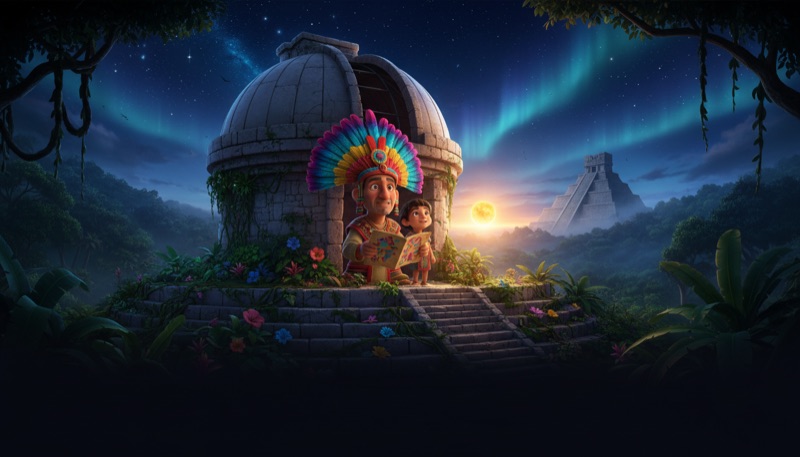
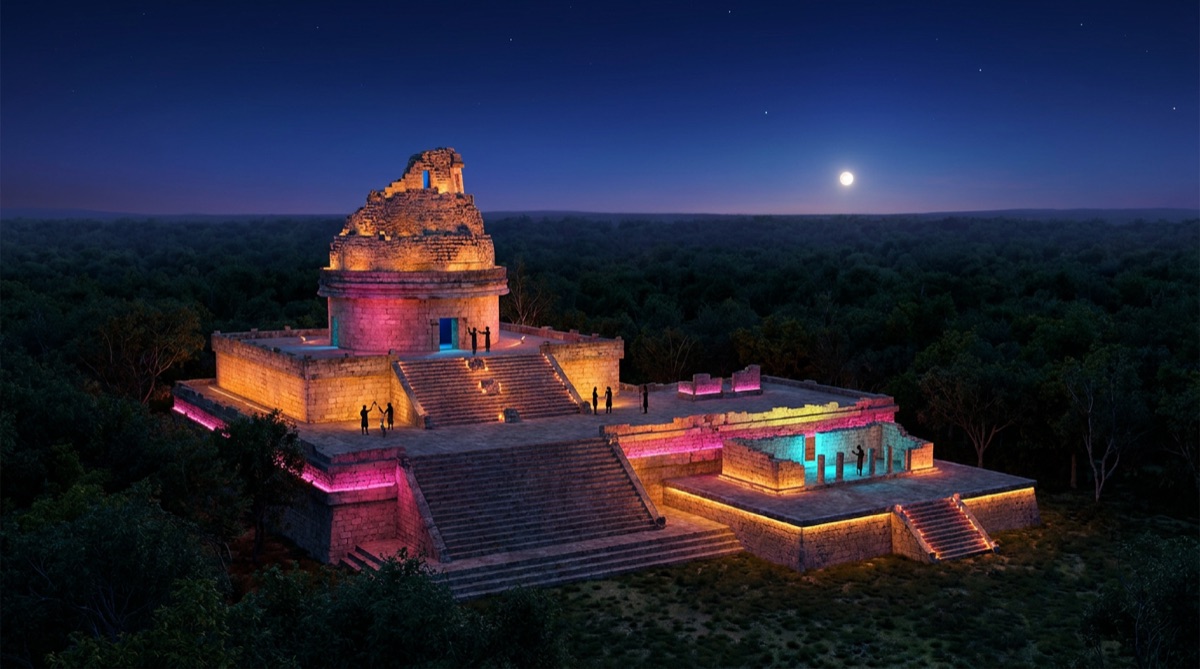
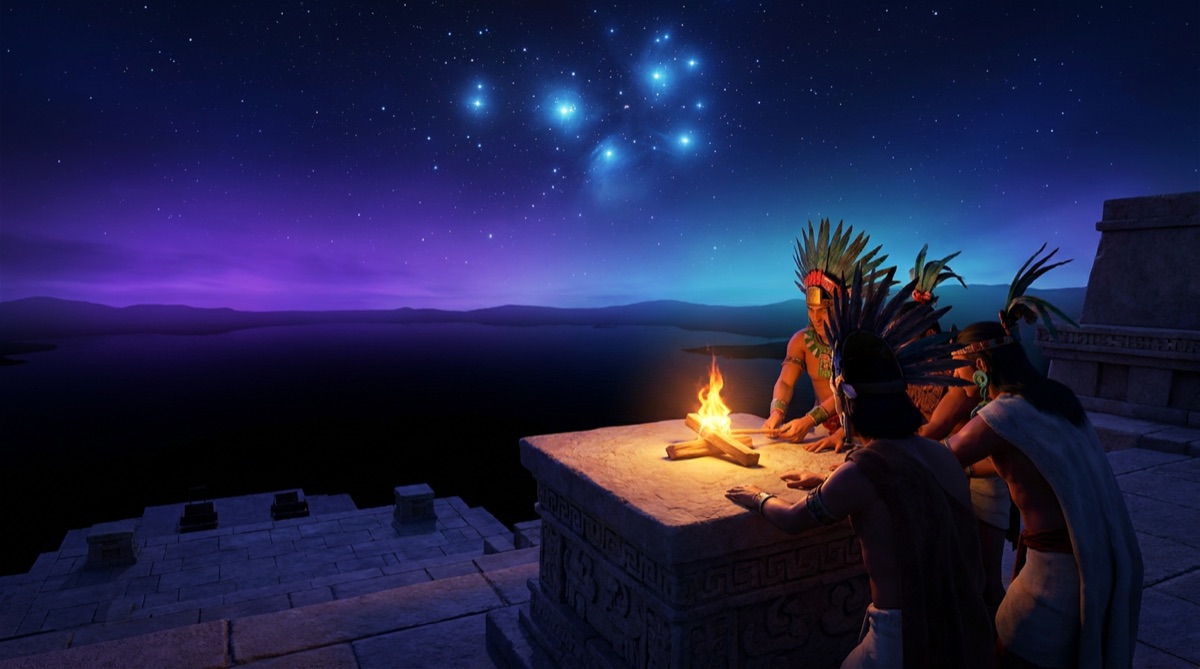
Almost the whole region lies in the tropics. That has a consequence that does not exist in Europe: the Sun passes exactly through the zenith twice a year, and a vertical stick casts no shadow at noon. As in Colombia, those two zenith passages mark the beginning and the end of the rainy season. It is no coincidence that the Mesoamericans built chambers to watch them. They watched the sky to know when to sow, to fix the festivals of the gods and to give legitimacy to their kings, who dated every event of their reign to the precision of a single day.
Major contributions
The Long Count: counting the days one by one
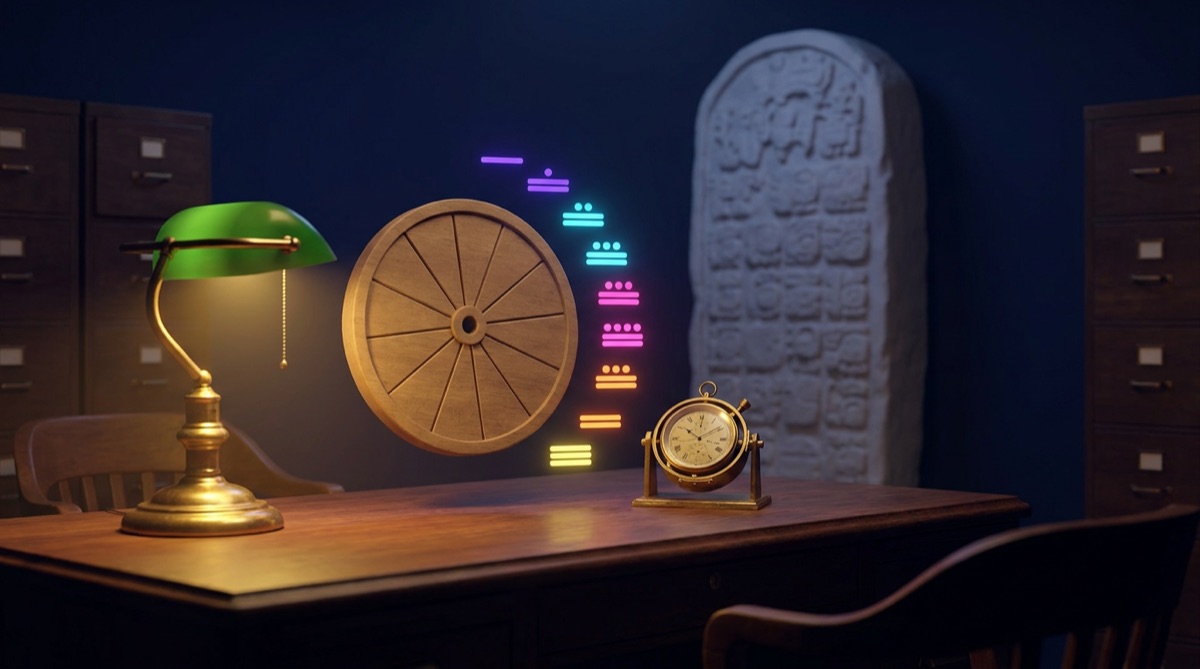
The Maya (and before them, the Epi-Olmec peoples of Chiapas and Veracruz) invented a way of naming any day without ambiguity: counting the days elapsed since a creation date. They used an almost vigesimal positional system with a sign for zero. A date like 9.15.10.0.0 means 9 × 144 000 + 15 × 7 200 + 10 × 360 days from the origin. With the GMT correlation, that origin is August 11, 3114 BCE (the 13th according to another variant). The oldest dates we have are from 36 BCE (Chiapa de Corzo) and 32 BCE (Tres Zapotes).
It is the same idea that astronomy uses today with the Julian day: a continuous day counter that avoids the mess of months and leap years. If you are interested in how we measure time, the lesson Solar time and sidereal time explains it.
Venus, eclipses and the Dresden Codex
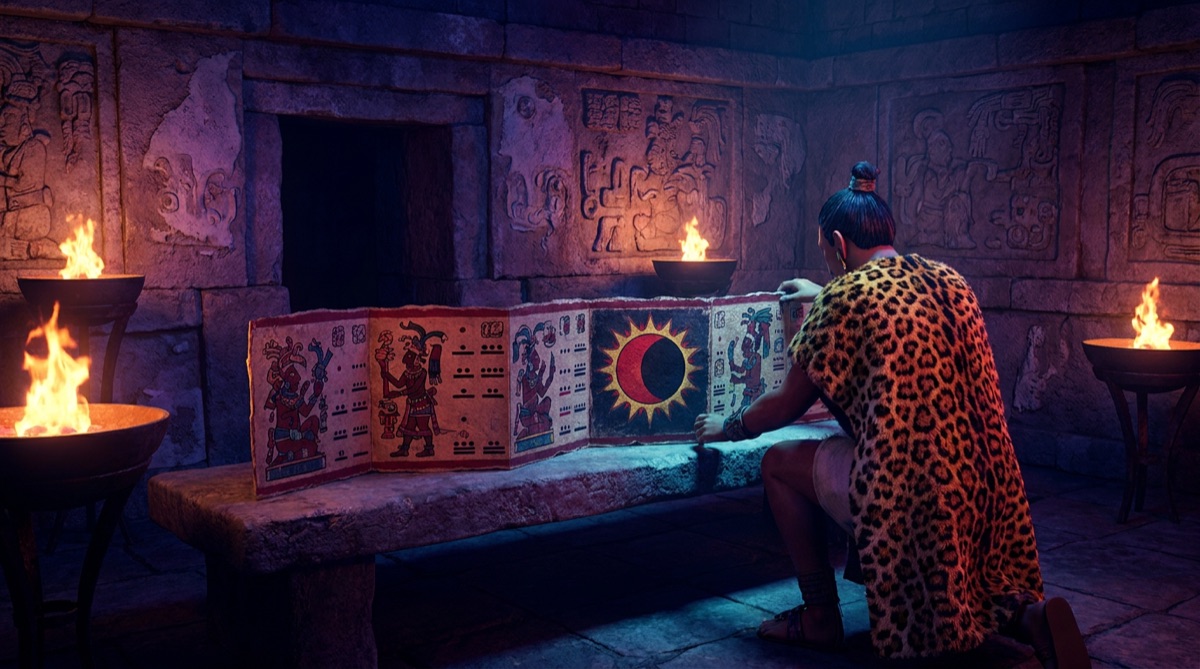
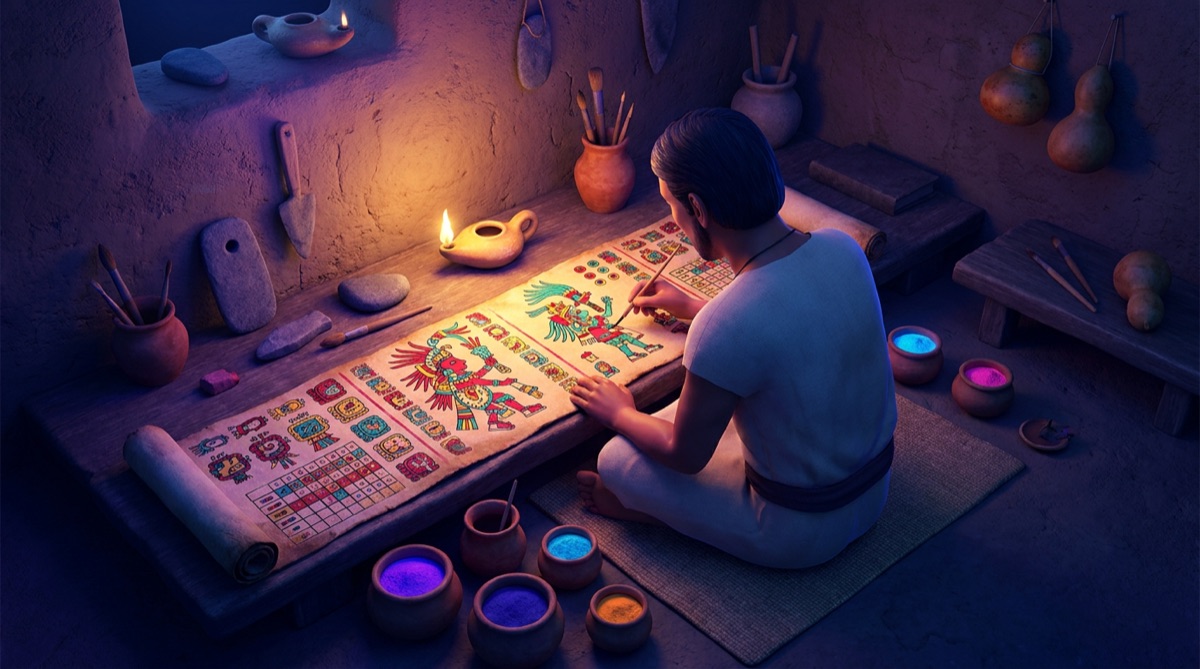
The Dresden Codex contains a Venus table in which 5 cycles of the planet (584 days each) fit 8 years of 365 days: 5 × 584 = 8 × 365 = 2 920. The modern value of the synodic period of Venus is 583.92 days, so the table slowly drifted; the scribes knew this and included corrections. Another table gathers 405 lunations (11 960 days) and marks the days on which an eclipse could occur. It does not predict every eclipse (that requires knowing the nodes of the lunar orbit), but it warns of the dates at risk. You can see how the Sun, Earth and Moon line up in the lesson Phases of the Moon and eclipses.
Cities oriented toward the Sun
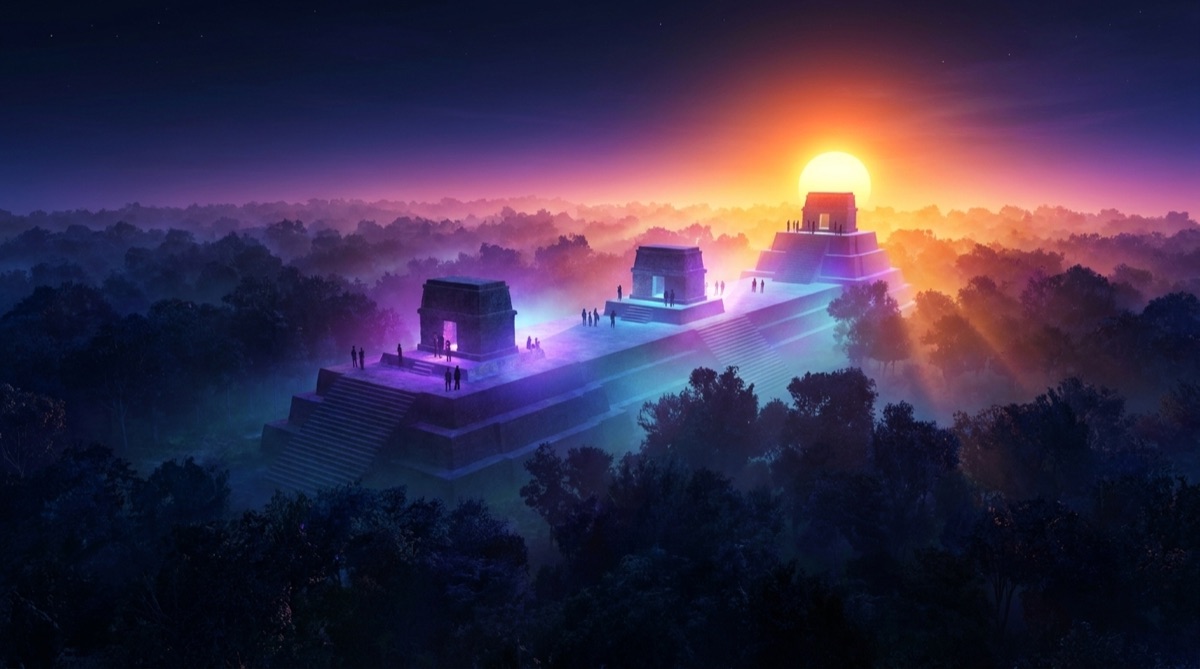
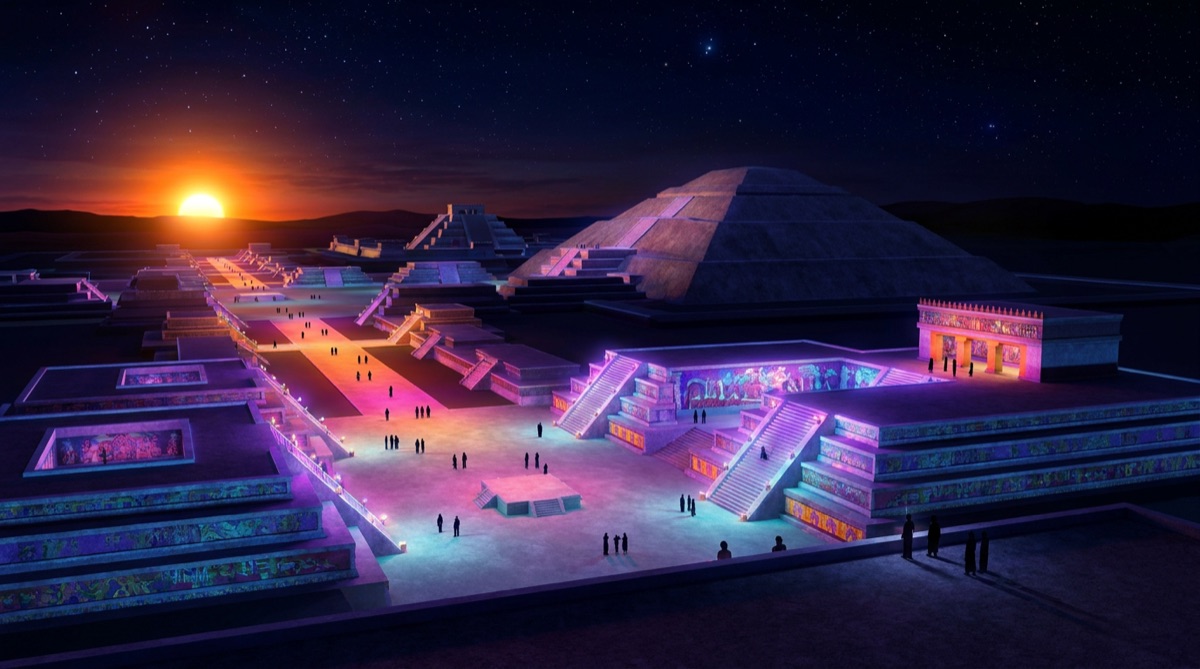
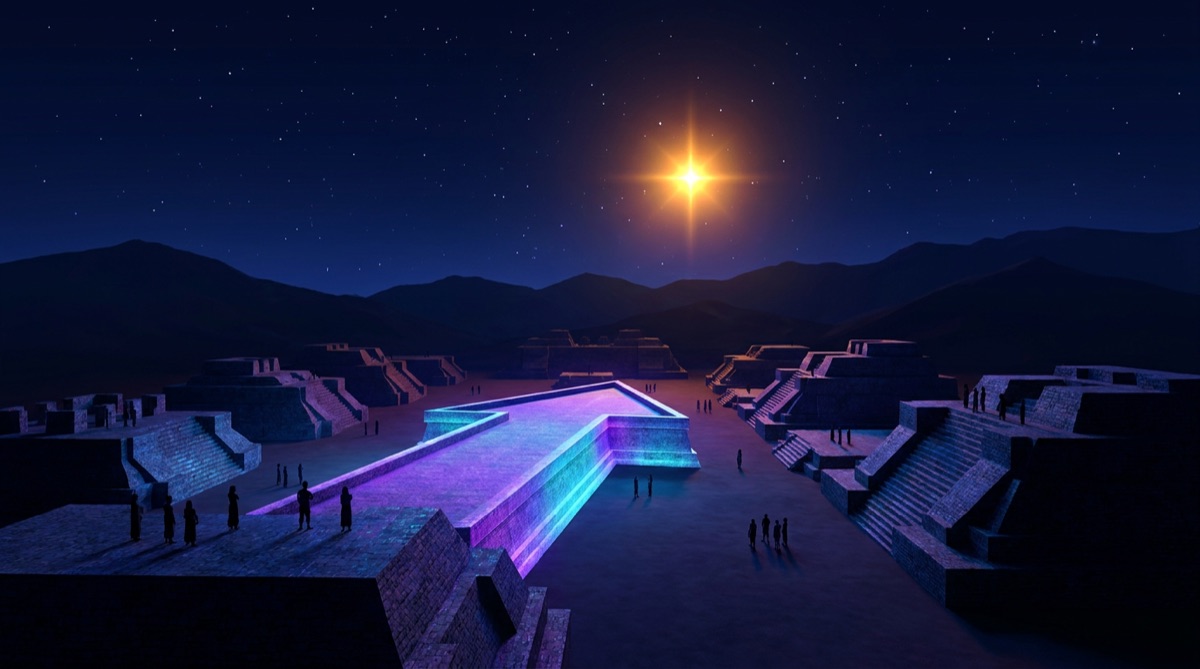
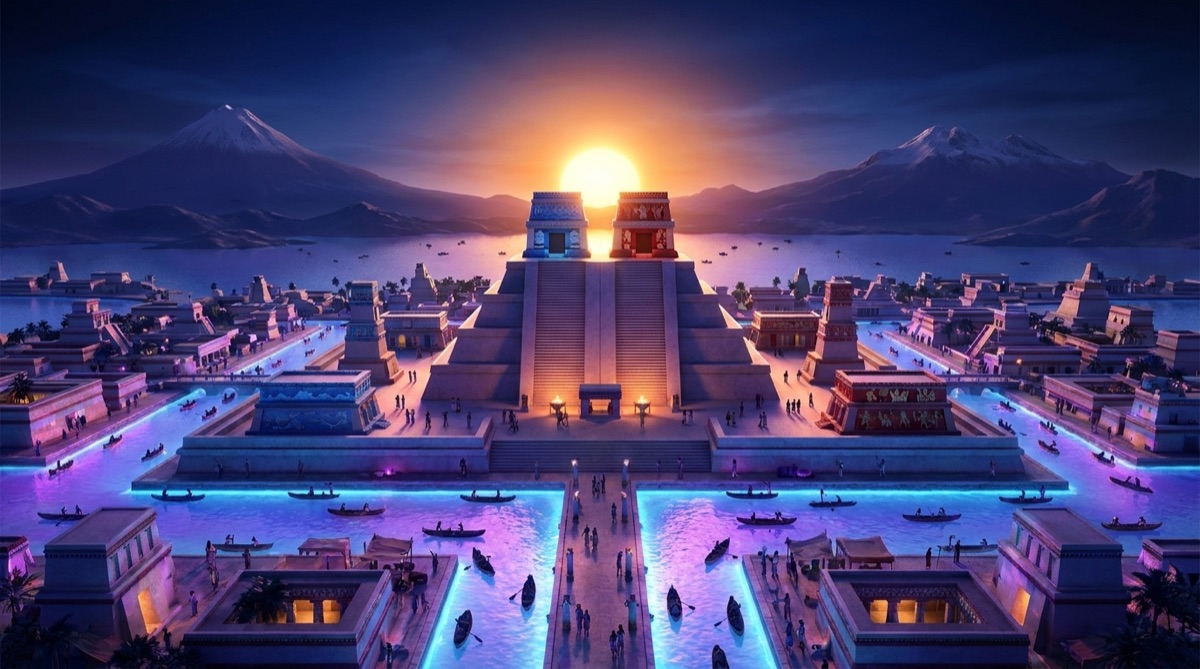
Teotihuacan is rotated 15.5° from north. Monte Albán has a building that points in a direction different from all the others. In Uaxactún, three temples mark the solstices and the equinoxes seen from a pyramid. The most widely accepted hypothesis is that these orientations record sunrises and sunsets on dates separated by multiples of 13 and 20 days, that is, a calendar written on the horizon. Seasons and latitude explains why the Sun rises at a different point each day.
The zenith passage
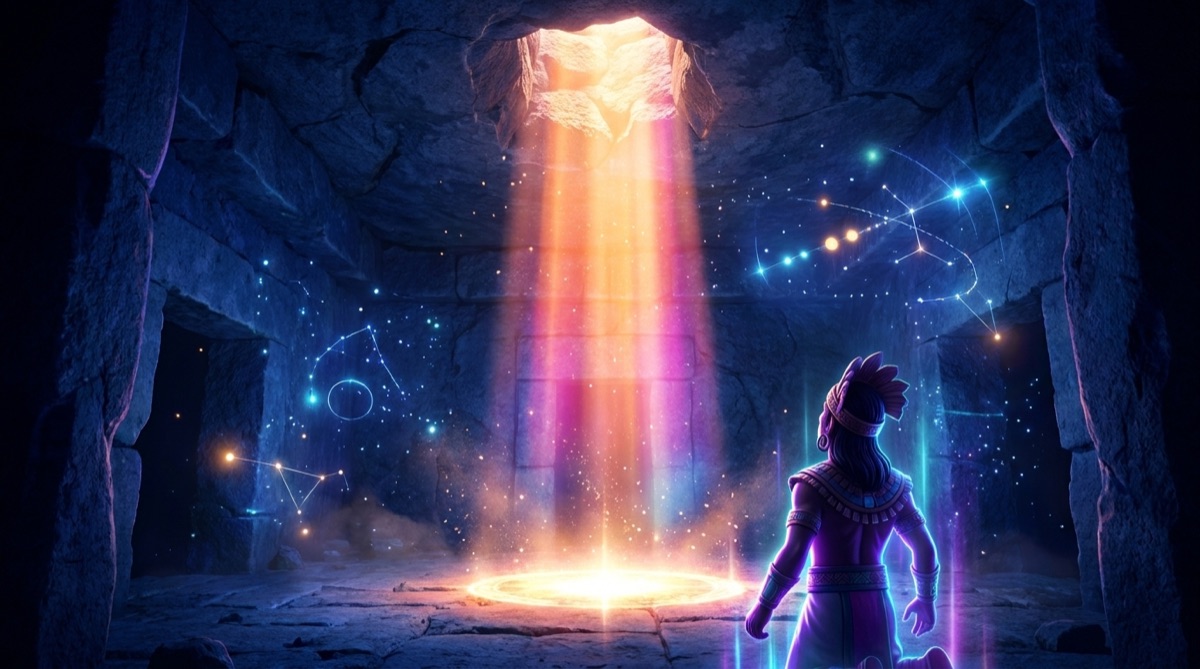
The underground chamber of Xochicalco is a shaft almost 9 meters long: only when the Sun is directly overhead does a beam of light reach the floor. At its latitude that happens around May 14–15 and July 28–29. In Colombia the phenomenon is the same, with other dates; the lesson Length of the day and altitude of the Sun teaches you to calculate them for your city.
How do we know?
We have three kinds of sources, of very different reliability.
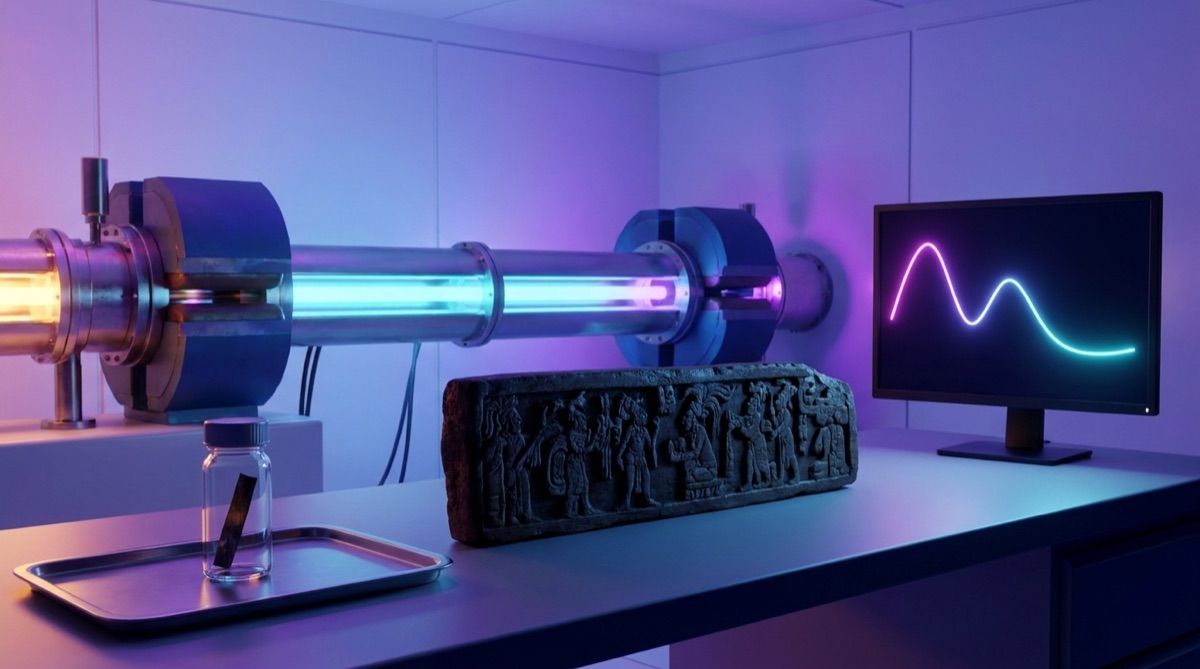
The inscriptions in stone are the most solid source: thousands of Long Count dates carved by the Maya themselves, with the age of the Moon on each one. Since 2013 we also know that the GMT correlation is correct, because the carbon-14 of a lintel from Tikal gives the same age as its Maya date.
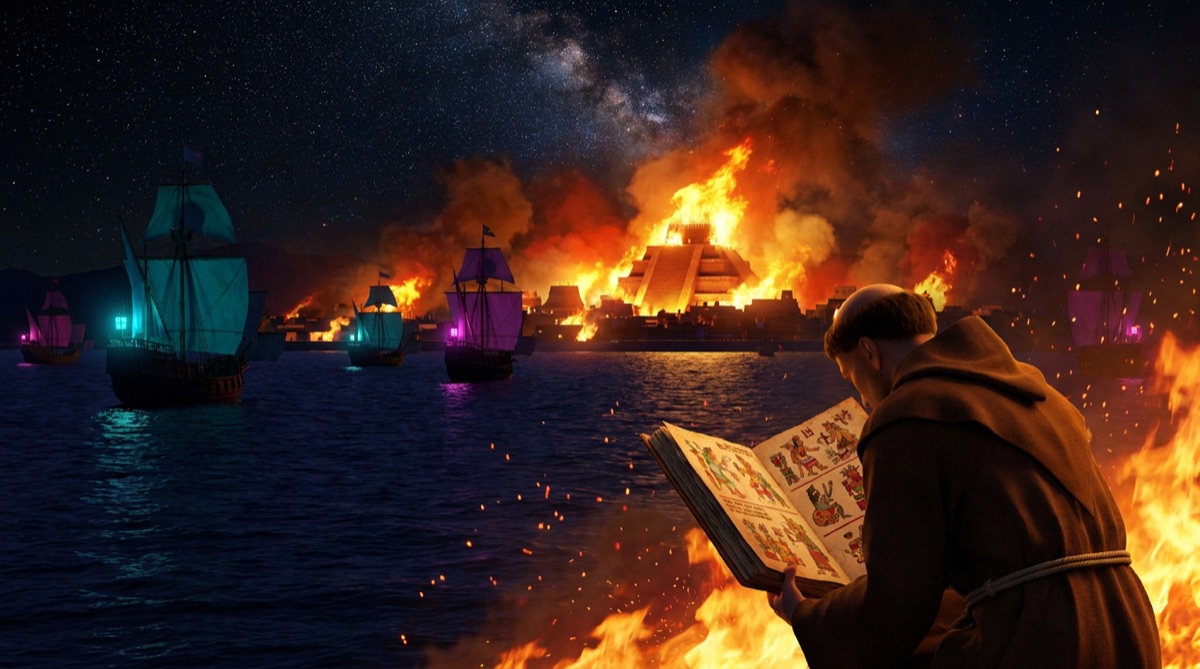
The codices are only four (Dresden, Madrid, Paris and the Maya Codex of Mexico), because the rest were destroyed in the 16th century. The Venus and eclipse tables have been read without ambiguity since Förstemann (1880), although exactly which dates they covered is still debated.
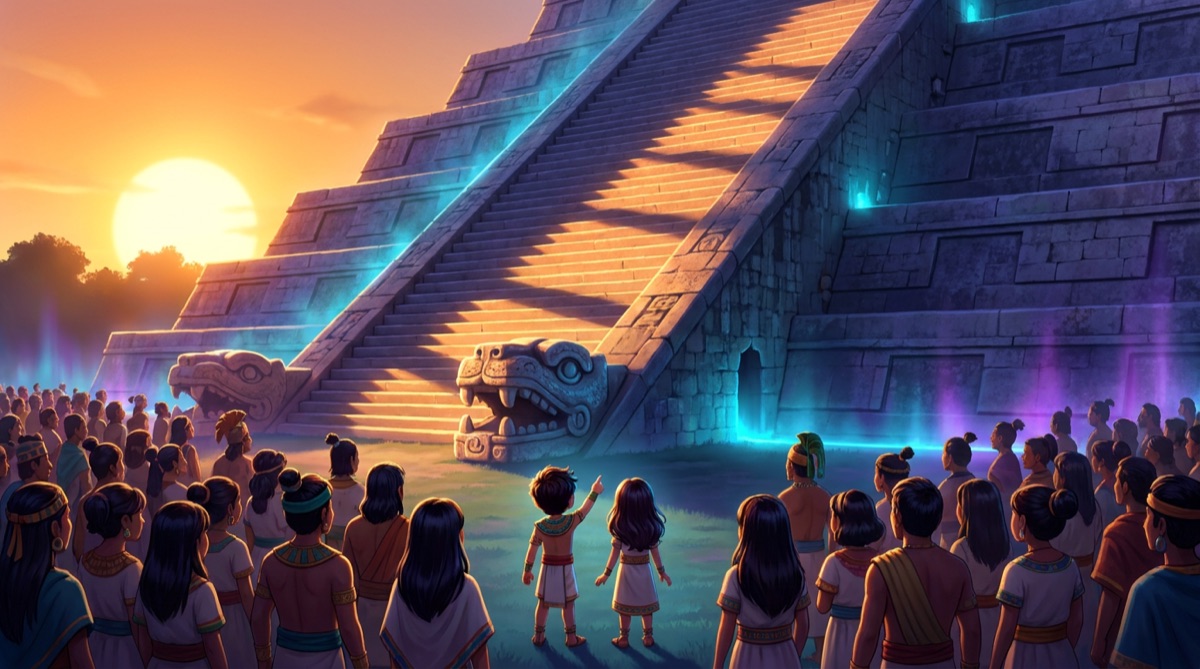
The alignments of buildings are the slipperiest ground. A building always points somewhere, and on the horizon there are many possible star risings. That is why serious archaeoastronomy demands that the orientation be repeated at many sites, that it match calendar dates and that there be no simpler explanation (the slope of the terrain, a road). By that criterion, the solar orientations of Teotihuacan or of the E groups are well supported; the star Capella at Monte Albán did not survive a second measurement; and the “serpent” of Chichén Itzá, though it is a real spectacle, lasts for weeks and appears in no Maya source: its intention is still under debate.
Legacy
From Mesoamerica we inherited the positional zero, invented independently of India’s; the names of the twenty days and the dates of thousands of kings; and the proof that, with patience and records kept over centuries, the lunar month can be measured with an error of less than a minute and Venus can be tracked for a century. Today, Maya communities in Guatemala still keep the tzolk’in count, and December 21, 2012 (the end of baktun 13) reminded the world that this calendar never stopped turning: it was not the end of the world, but the change of a digit.