







Context
The Greeks were not the first to look carefully at the sky: the Babylonians had been recording eclipses and planetary positions for centuries when Thales was born in Miletus. What changed with the Greeks was the question. Instead of asking only when something would happen again, they asked why it happened and how the world had to be for it to happen that way. That question was answered with arguments and geometric figures, and an answer could be debated, corrected and abandoned.
The setting was the eastern Mediterranean: the Ionian cities of Asia Minor in the 6th century BCE, Athens in the 5th and 4th centuries, and then Alexandria, founded in 331 BCE, with its Museum and Library funded by the Ptolemaic kings. There, for seven centuries, Greek geometry, Babylonian records and the Egyptian calendar lived side by side. That crossroads, more than any isolated genius, explains the leap of Hellenistic astronomy.
Why they watched the sky: to fix the calendar of festivals and harvests (hence Meton’s cycle), to navigate, for the astrology that flourished after Alexander, and, more and more, for the sheer pleasure of understanding.
Major contributions
A round Earth, with evidence
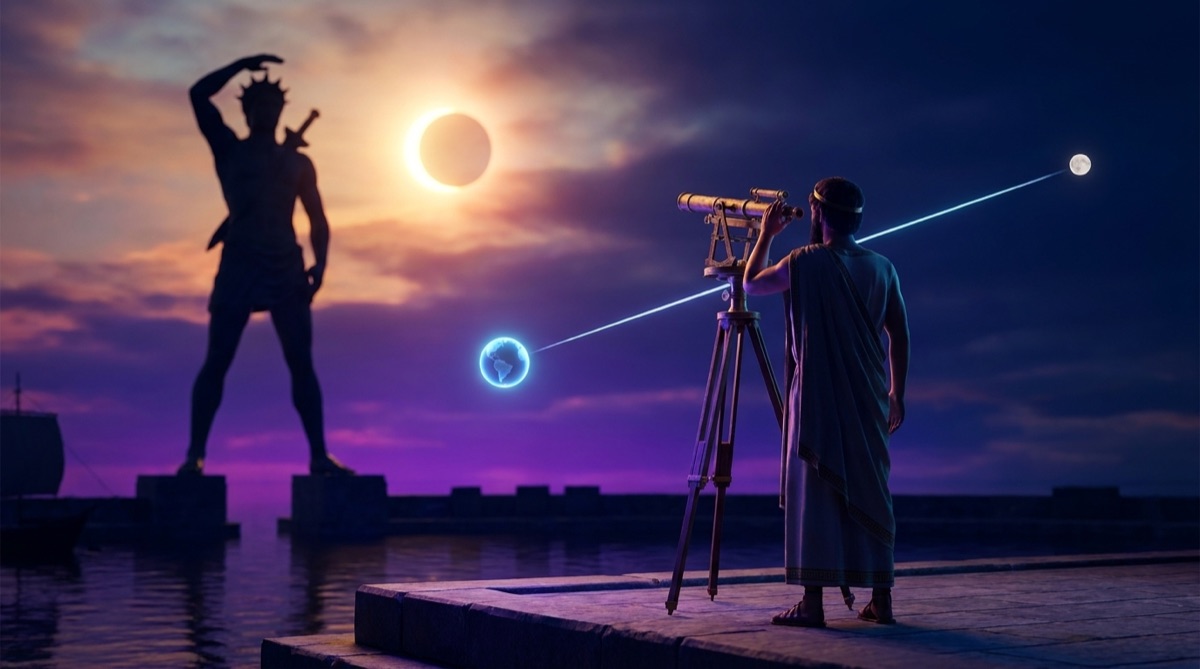
Aristotle gathered in On the Heavens (c. 350 BCE) the arguments we still use: the Earth’s shadow on the Moon during eclipses is always an arc of a circle, and when traveling south new stars appear above the horizon. From then on no serious ancient or medieval scholar defended a flat Earth; the idea that “in the Middle Ages people believed the Earth was flat” is a 19th-century myth. On this portal you can see the first argument in the elementary lesson Eclipses.
Measuring the unreachable with geometry
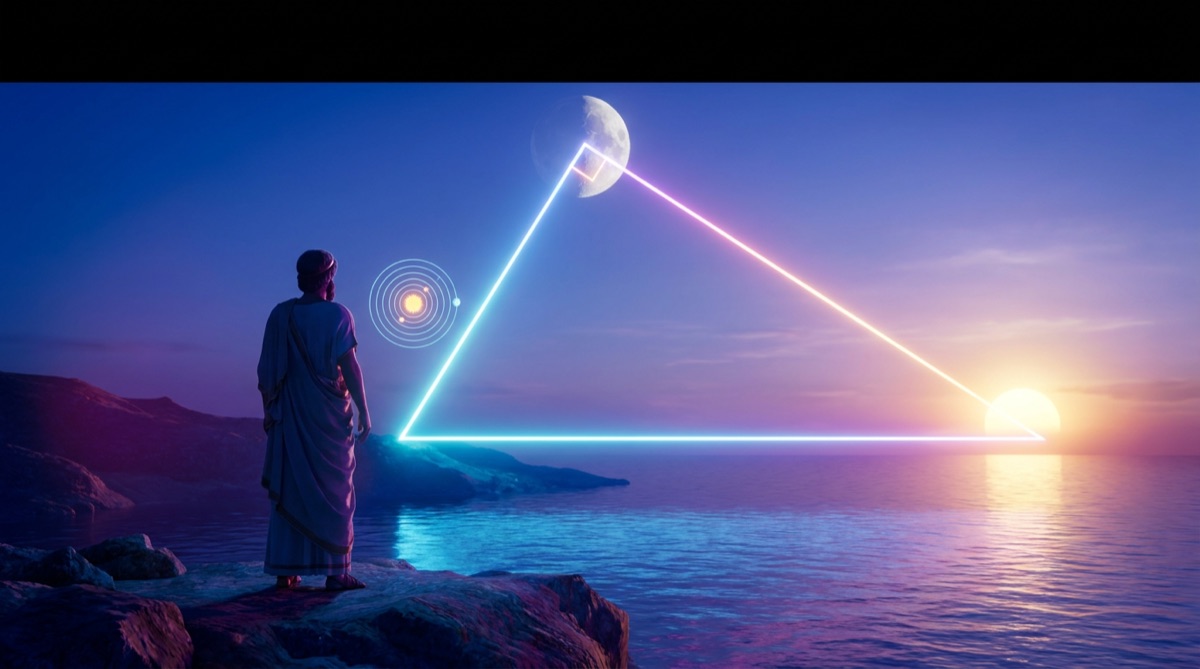
Aristarchus calculated the ratio between the distances to the Sun and to the Moon by measuring an angle at first quarter; he fell short by a factor of 20 because that angle is almost impossible to measure by eye, but the method was correct. Eratosthenes measured the circumference of the Earth with a shadow and a distance; Hipparchus, the distance to the Moon with an eclipse seen from two cities. The three measurements are repeated step by step in Aristarchus: Earth–Moon–Sun distances, Eratosthenes measures the Earth and Parallax and trigonometry, and in the simulator Eratosthenes measures the Earth.
Models that predict
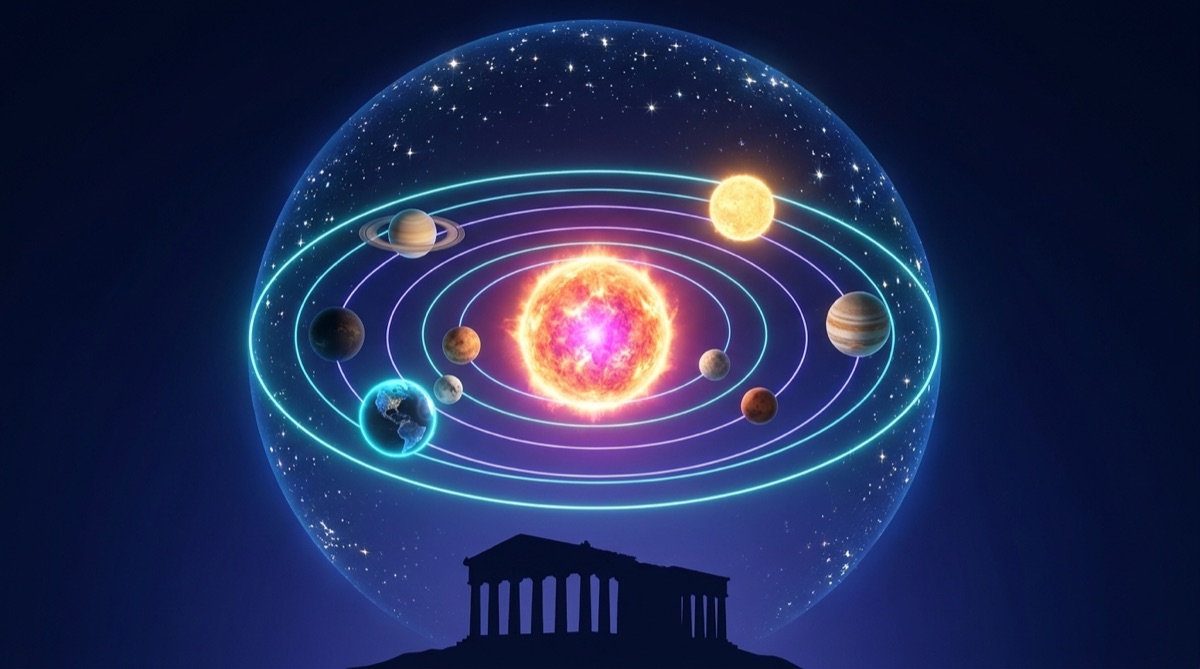
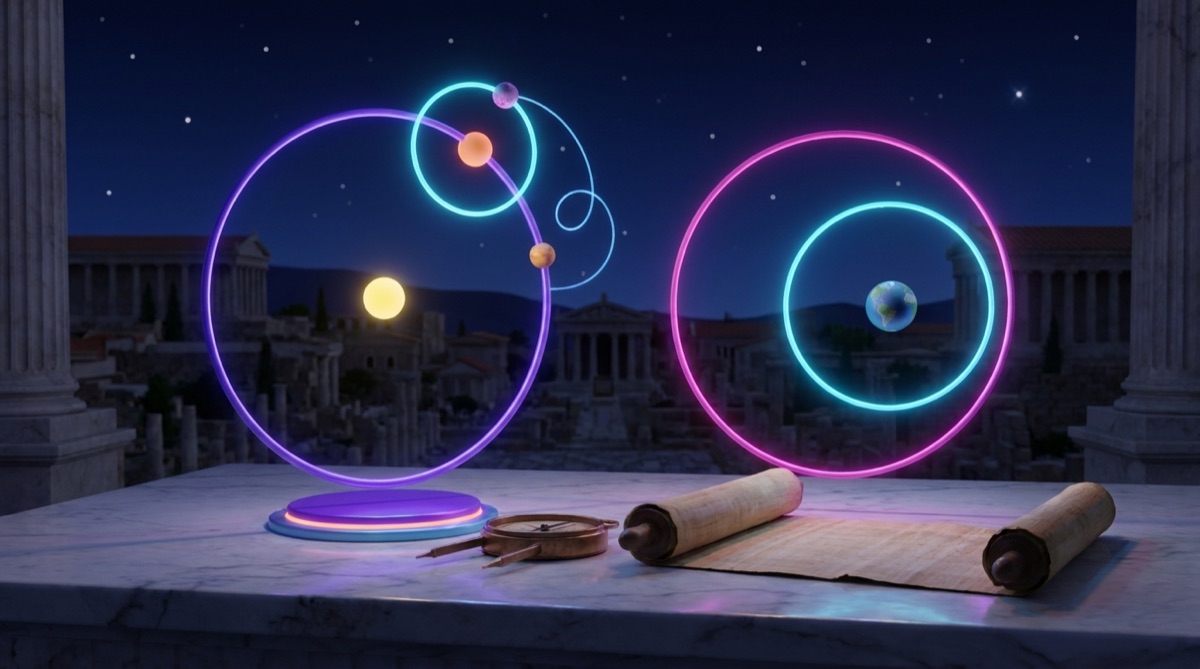
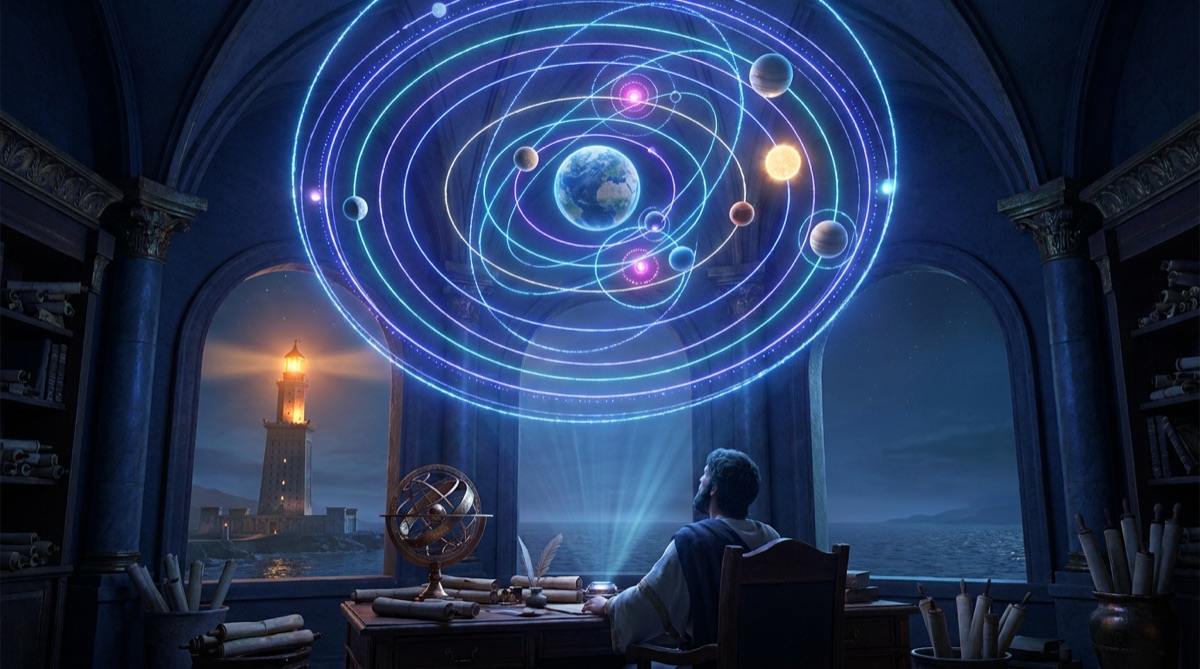
From Eudoxus to Ptolemy, the Greeks looked for combinations of circles that would reproduce the planets’ loops. The Almagest (c. 150) brought that program to its peak: with its tables one could calculate where Mars would be on any given date, with errors of a few degrees. It was a geocentric model and today we know it was wrong in its essentials, but it was the first mathematical model of the Solar System that worked, and Copernicus, Tycho and Kepler learned from it.
The sky changes slowly
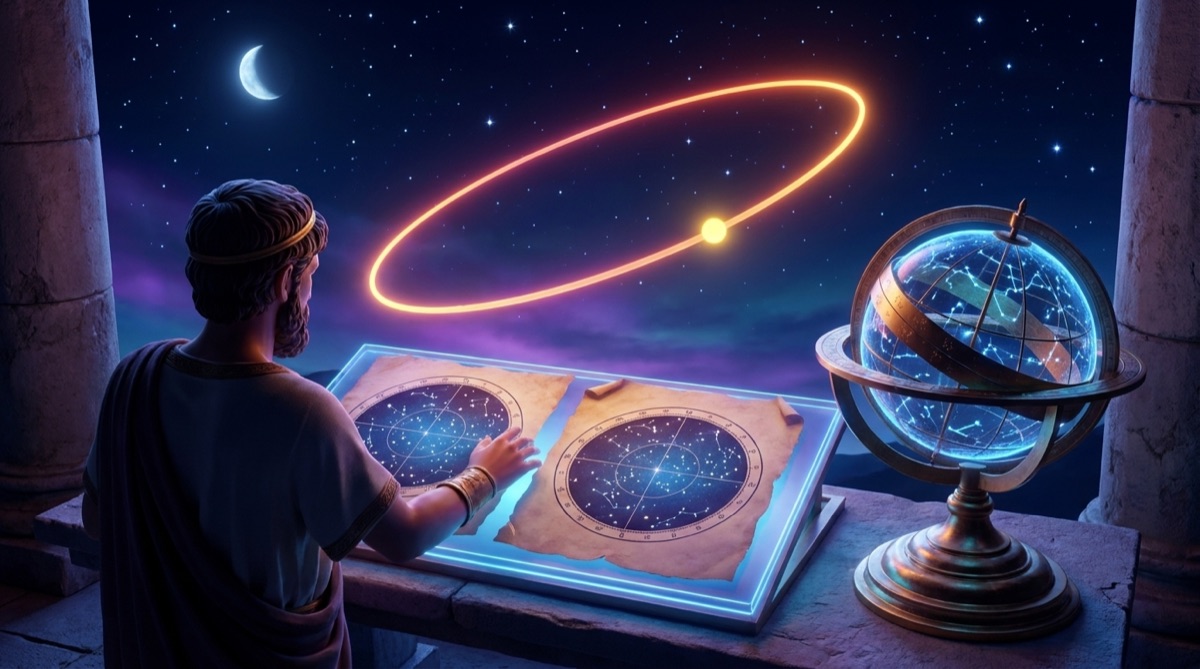
Hipparchus compared his measurements with those of Timocharis, made 150 years earlier, and discovered that all the stars had shifted by about 2°: the precession of the equinoxes. It is a perfect example of why old data are worth their weight in gold. We tell the story in Hipparchus and the slowly moving sky.
Machines for calculating
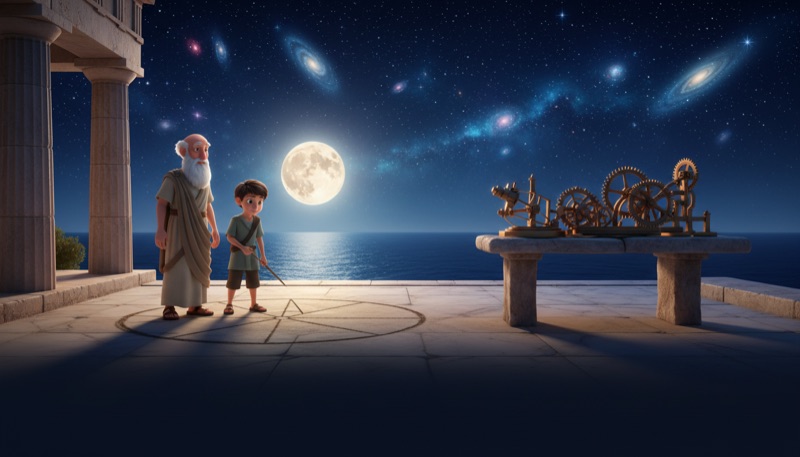
The Antikythera mechanism shows that the Greeks did not just write theories: they built gears that set them in motion, including a correction for the Moon’s variable speed that Hipparchus had described.
How do we know?
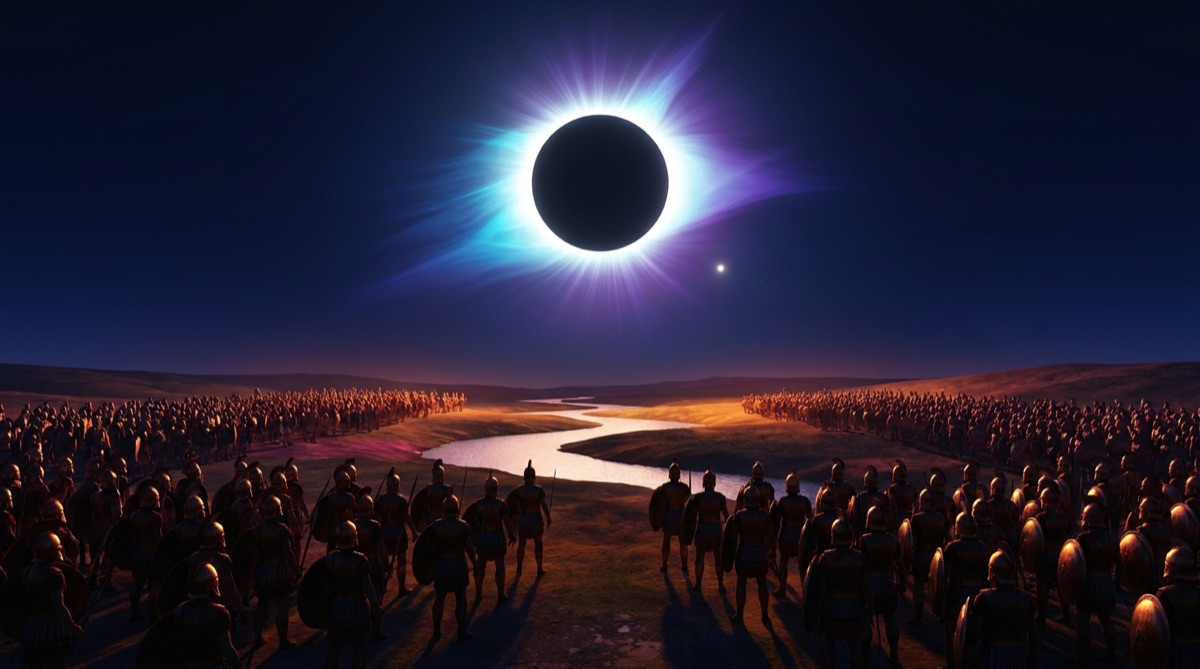
Almost everything we know about Greek astronomy before Ptolemy comes to us secondhand. Of Thales, Anaximander, Pythagoras, Eudoxus or Heraclides not a single original line survives; they are quoted by Aristotle, Simplicius (6th century CE) or Diogenes Laertius, sometimes eight centuries later. That is why many attributions are uncertain: that Thales predicted the eclipse of 585 BCE, that Pythagoras “discovered” the sphericity of the Earth or that Heraclides set Mercury and Venus revolving around the Sun are claims that today’s historians call into question.
Complete works do survive, on the other hand, from Autolycus, Euclid, Aristarchus, Geminus and Ptolemy, transmitted through Byzantine copies and Arabic translations. The Almagest is also a source on others: it cites dated observations by Meton (432 BCE), Timocharis (c. 290 BCE) and Hipparchus, and those dates are what allow the chronology to be reconstructed.
The material remains are scarce but decisive: the Antikythera mechanism, studied with X-ray tomography since 2005, forced a revision of the idea that Greek technology was primitive. Its exact date is still under discussion (the second half of the 2nd century BCE according to the inscriptions; some place the start of its eclipse calendar around 205 BCE), and that too is science: saying what is known and what is not.
Legacy
We inherited the words: planet (“wanderer”), comet (“long-haired”), galaxy (“milk”), eclipse, horizon, zenith (this last one via Arabic). We inherited the calendar: Sosigenes’ Julian year, corrected in 1582, is the one we use, and Meton’s cycle still fixes the date of Easter. We inherited the methods: trigonometry was born as a tool of astronomy with Hipparchus’ tables of chords, and the idea that a model must produce numbers comparable with observation is the basis of all later science. And we inherited the data: the 48 constellations of the Almagest are still in the official sky of the International Astronomical Union, and Hipparchus’ stellar magnitudes (from 1st to 6th) are the origin of the scale astronomers still use.