



Context
The Andes are a mountain range of more than 7 000 km running from Venezuela to Chile. In their valleys and high plateaus, between 3 000 and 4 000 m above sea level, lived peoples who depended on potatoes, maize and llamas, and who shared a common problem: knowing when to plant. In the tropics the temperature changes little; what changes is the rain. And the rain comes with the southern summer, when the Sun is farthest south. That is why Andean astronomy is, above all, an astronomy of the horizon: where the Sun rises, which hill hides it, when the Pleiades reappear before dawn.
There was never a single “Andean astronomy”. Chankillo (4th century BCE), Nazca, Tiwanaku, the Incas and, at the far north, the Muisca of the Cundinamarca–Boyacá high plateau are cultures separated by centuries and by thousands of kilometers. What they share is the setting (mountains that serve as a calendar), the southern sky with the Milky Way high overhead and, in the Inca case, a religion of the Sun that made observation a matter of state.
Major contributions
The horizon as a calendar: Chankillo and the pillars of Cusco
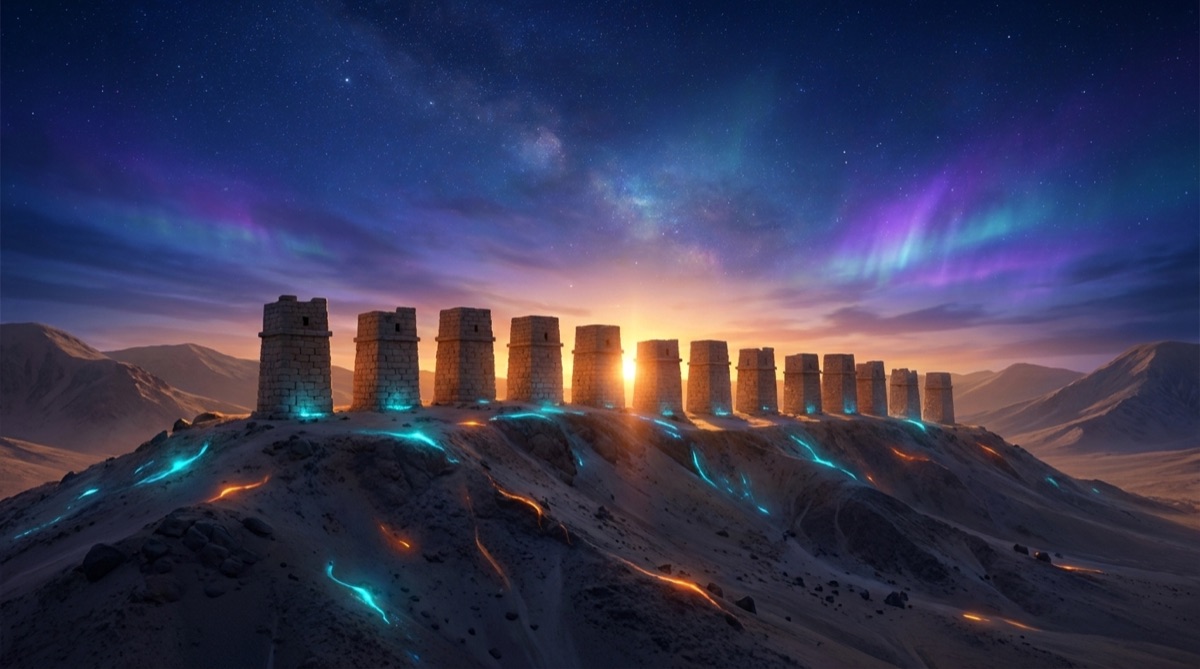
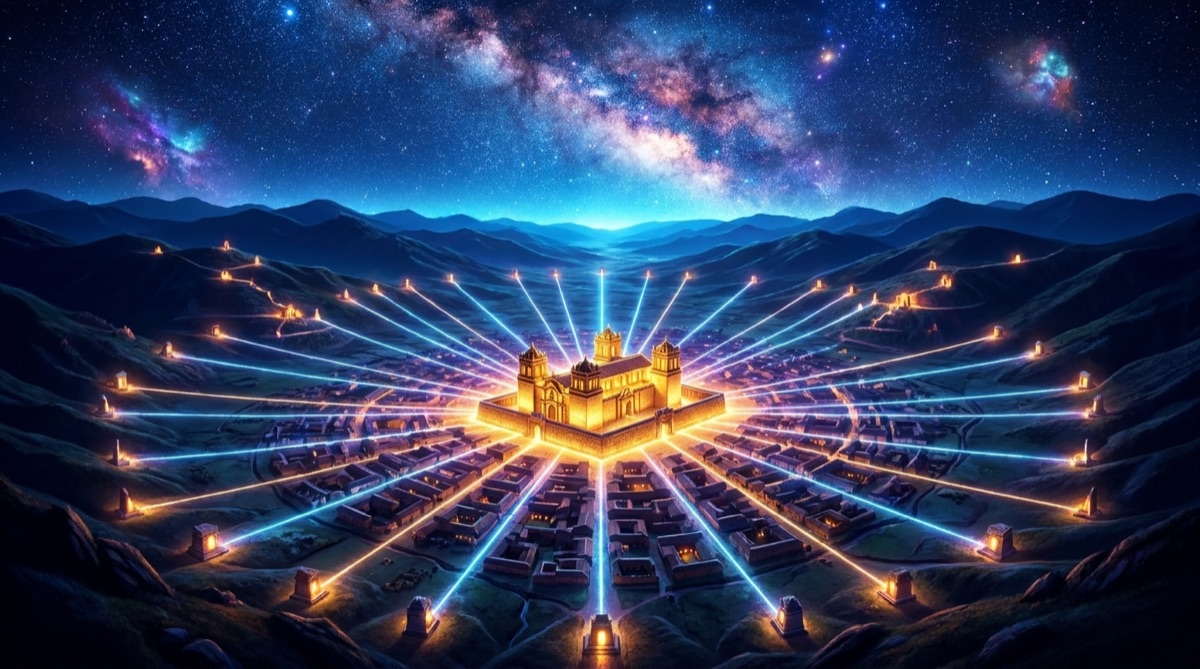
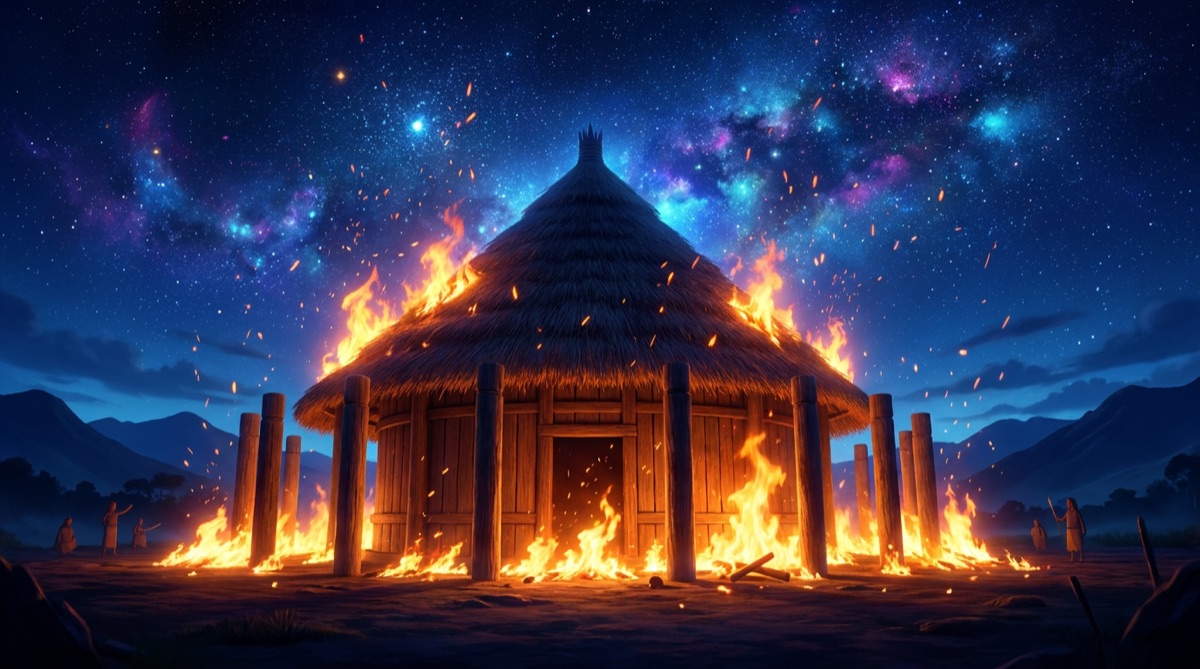
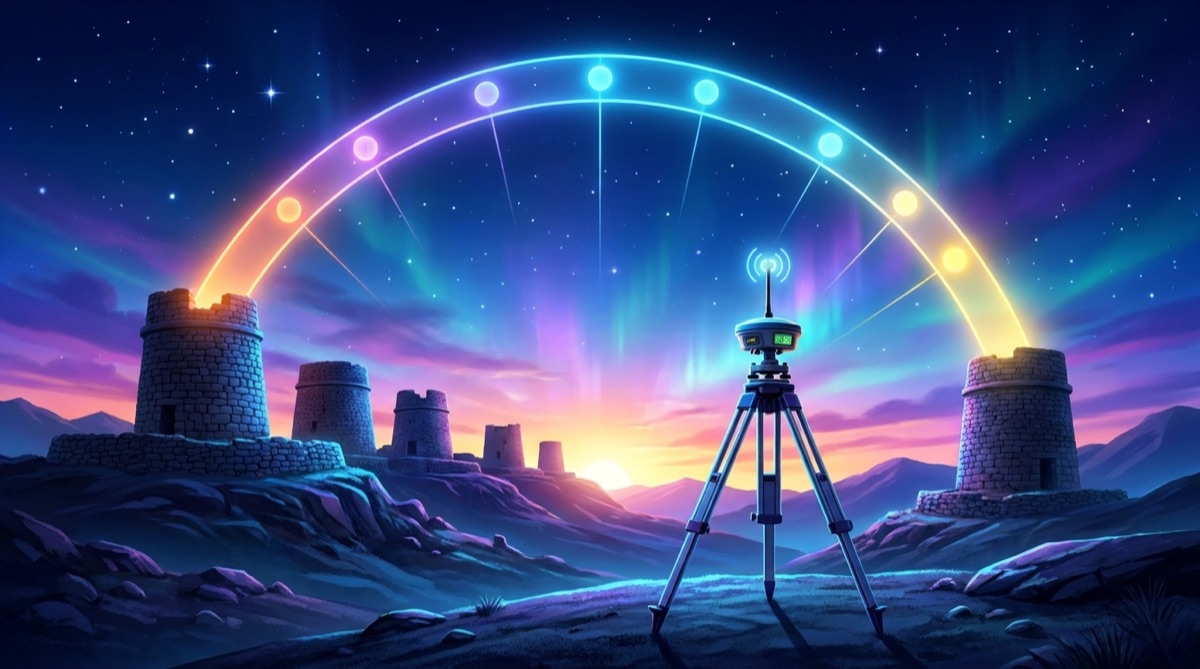
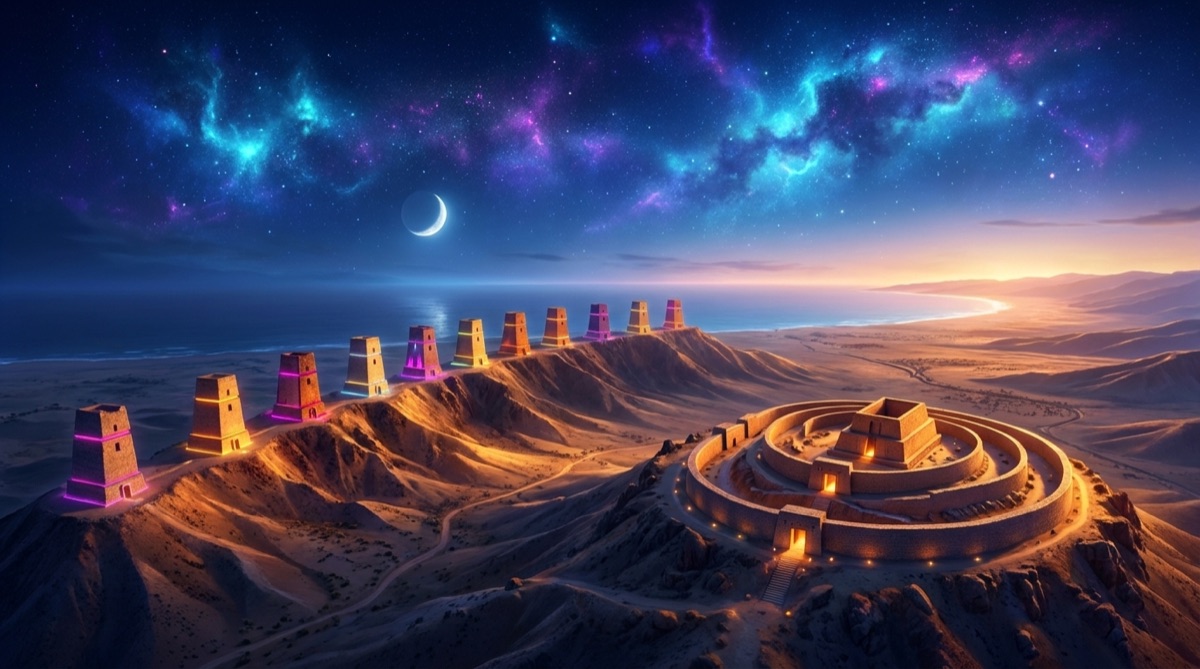
The thirteen towers of Chankillo are the clearest example. Seen from a fixed observation point, they form an artificial “ridge” that covers the arc of sunrises: in June the Sun rises beside the tower at one end, in December beside the opposite one, and every day in between is marked by a gap. With a resolution of two or three days, it was a solar calendar with no need for counting. Seventeen hundred years later, the Incas did the same with pillars on the hills of Cusco. In Seasons and latitude you can see why the sunrise point moves over the year; the Day, night and seasons simulator shows it for any latitude.
A sky with dark constellations
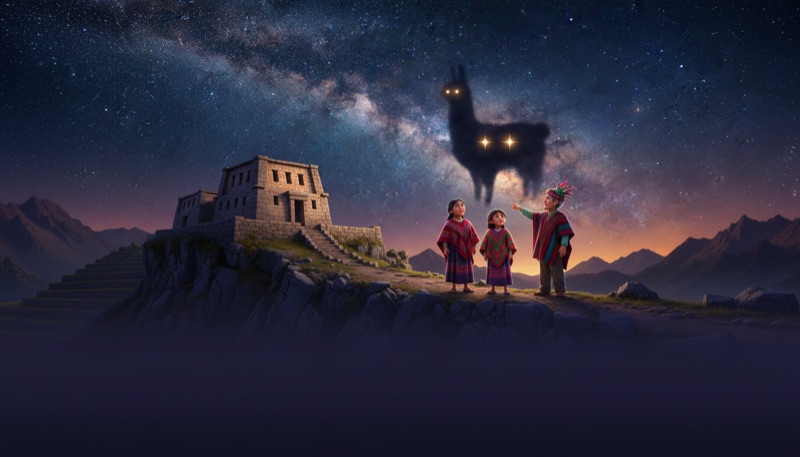
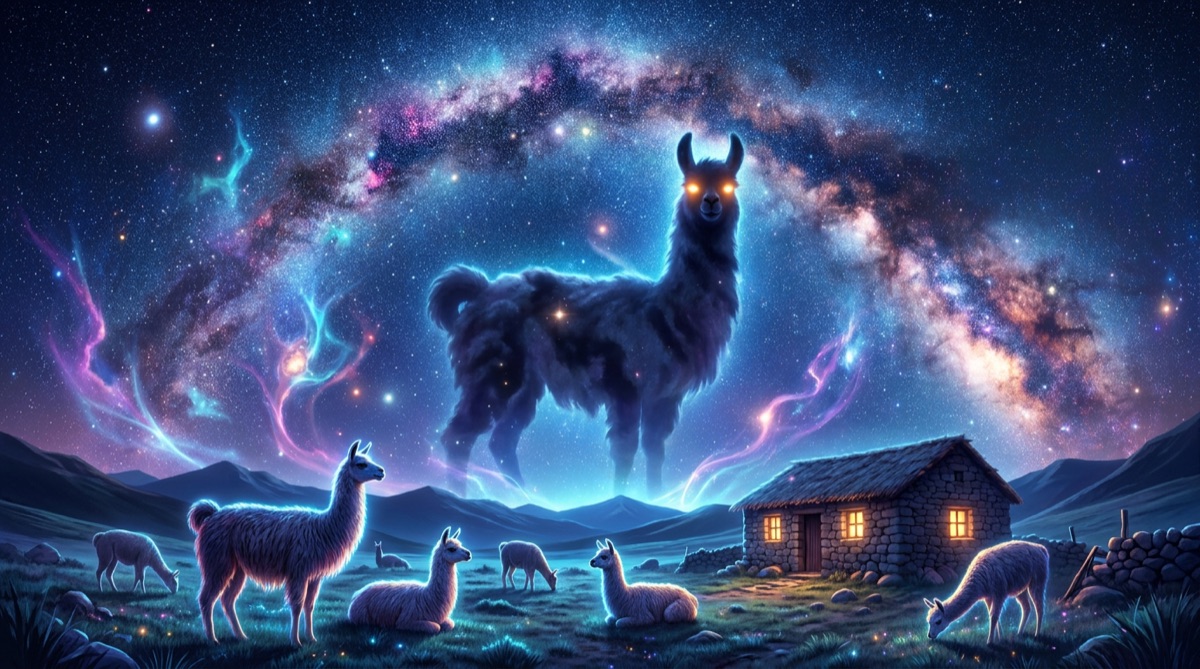
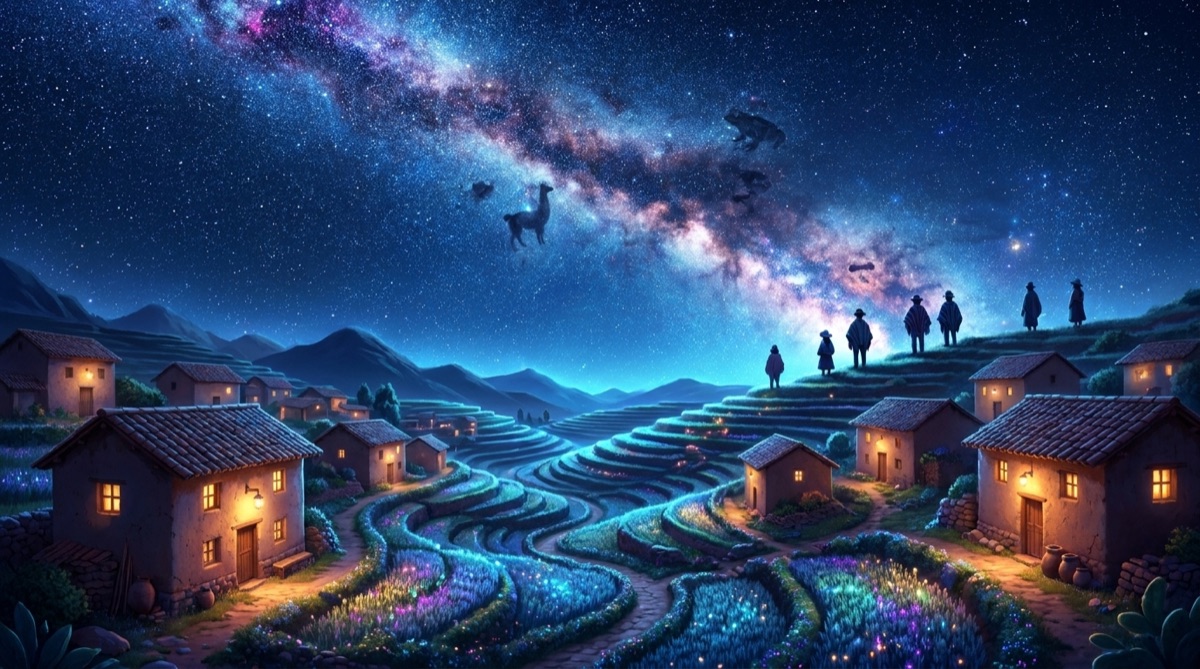
From the Andes, the Milky Way crosses the sky almost through the zenith, and its dark patches (dust clouds that block the background stars) can be seen with complete clarity. The Quechua peoples drew in them a llama (Yacana) with its young, a fox, a toad, a serpent and a tinamou. The Huarochirí Manuscript, around 1600, already describes the llama coming down to drink from the sea at midnight; Gary Urton found them alive in Misminay in the 1970s. It is a way of looking at the sky unlike the Greek one, which joins stars with lines: here the figures are the shadows. Compare it with Stars and constellations.
The Pleiades and the rain
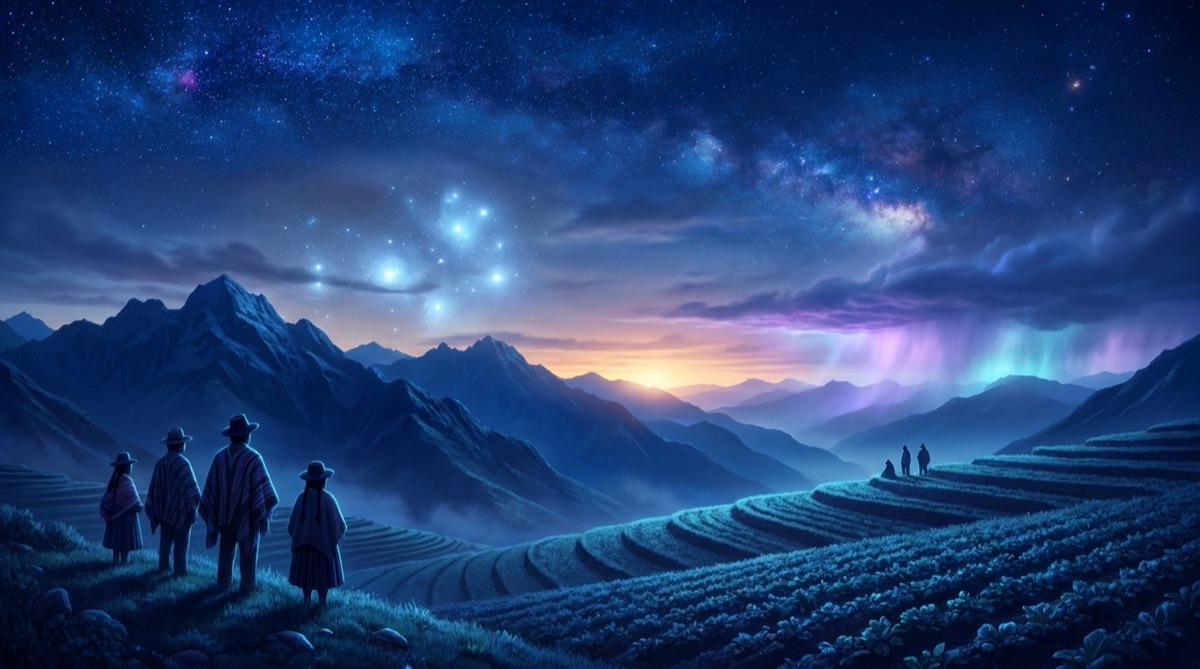
In June, before dawn, the farmers of the Altiplano look at the Pleiades (Qullqa, “the storehouse”). If they look bright and sharp, the rainy season will be good; if they look faint, they plant the potatoes later. In 2000, Orlove, Chiang and Cane showed with satellite data that the practice works: in El Niño years there are high, almost invisible cirrus clouds that dim the stars, and El Niño brings drought to the Altiplano months later. The grandparents’ rule is a four-month climate forecast. The study was done in Peru and Bolivia; in Colombia the Pleiades can be seen just as well, but the effect of El Niño on the rain is different, so the rule cannot simply be carried over.
The Muisca calendar
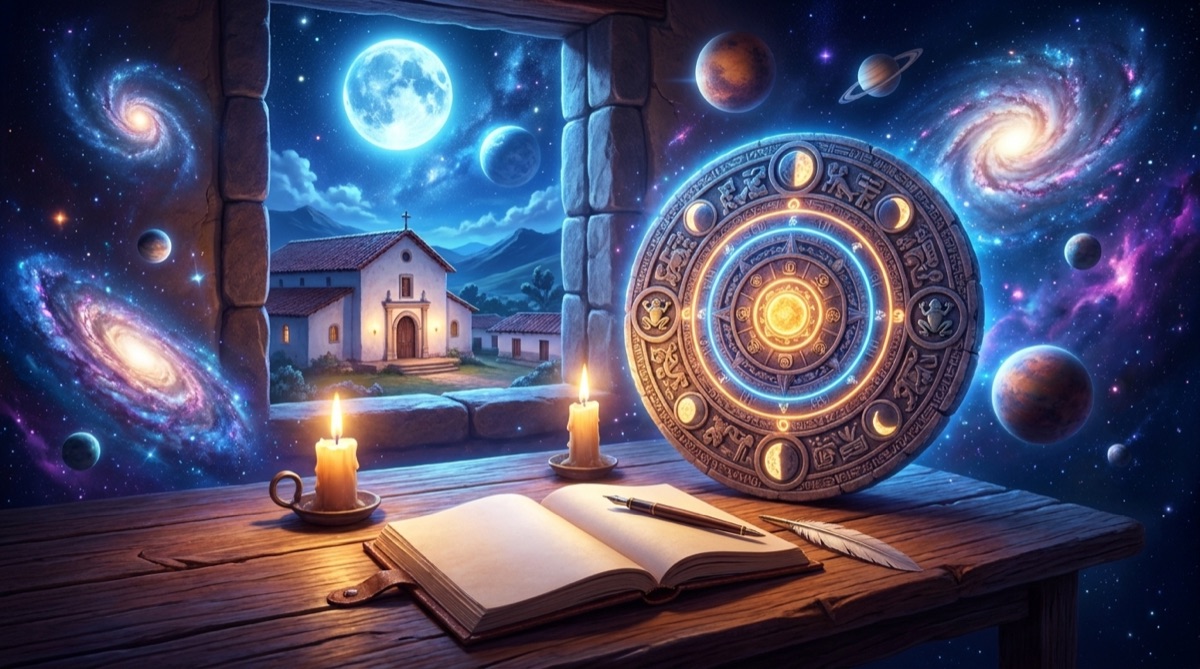
The Muisca counted by moons. Friar Pedro Simón wrote around 1625 that they had a year of twelve moons; Duquesne, in 1795, described a much more elaborate system with a cycle of 37 moons and a “century” of 20 years. How much of that is Muisca and how much is Duquesne? Vicente Restrepo’s critique (1892) rejected it wholesale; Izquierdo Peña (2008, 2011) concludes that there is genuine information mixed with reconstruction. The lesson The lunar calendar tells it to the youngest readers with that same caution.
How do we know?
The Andes had no writing, so the sources are of two kinds: colonial chronicles (Garcilaso, Betanzos, Cobo, Simón, the Huarochirí Manuscript) and archaeological remains (towers, windows, columns). The chronicles were written after the conquest, often by clergymen who wanted to suppress what they described, and sometimes decades after the events. The remains, for their part, do not explain by themselves what they were for.
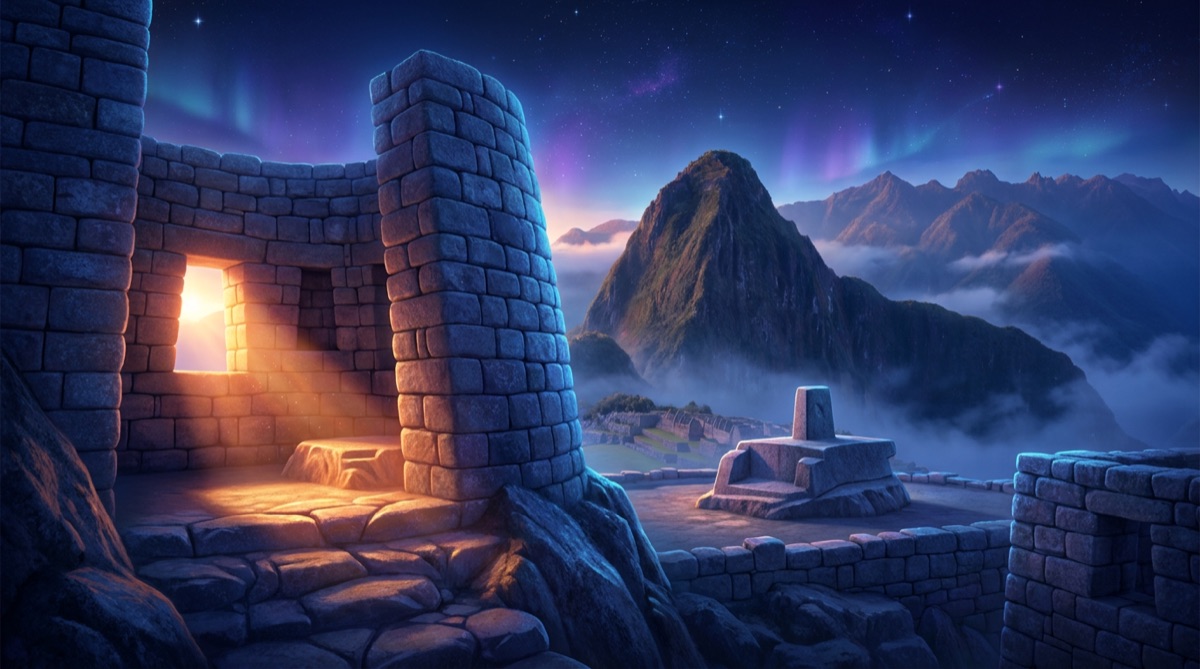
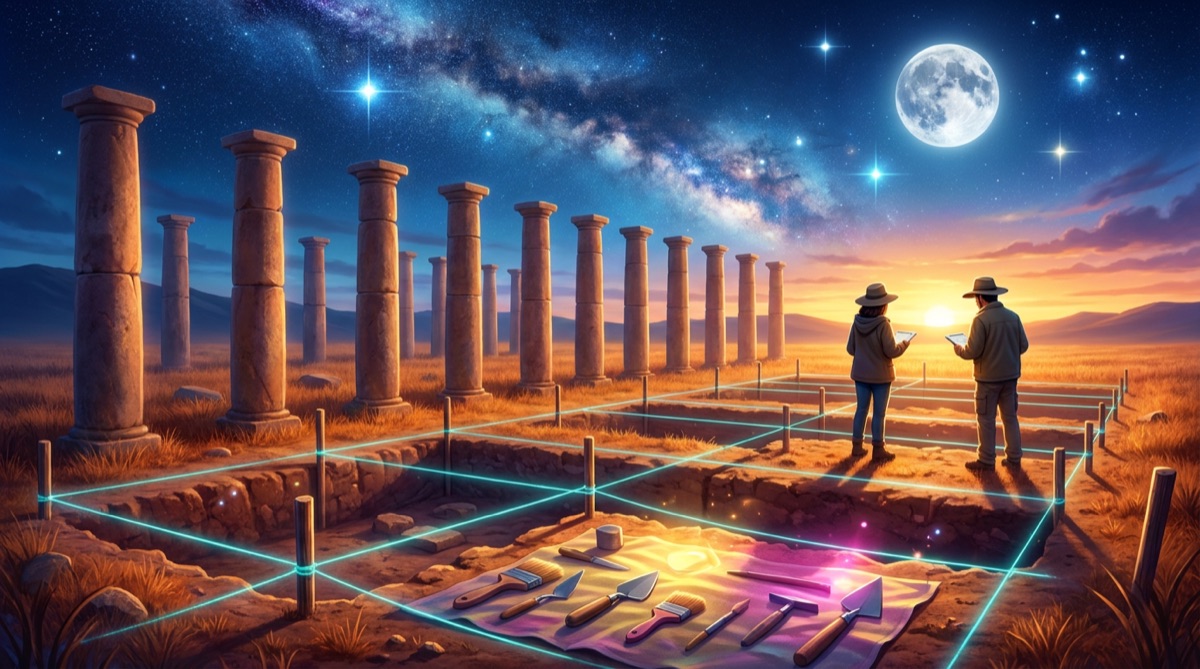
Andean archaeoastronomy has learned to be demanding. Chankillo is convincing because the thirteen towers cover the whole solar arc, with two observation points built for the purpose and a very low probability of chance. The Torreón of Machu Picchu is convincing because the window and the inner rock agree on a specific date. The Nazca lines, by contrast, point in so many directions that any star “fits”; Hawkins and Aveni checked this with statistics, and today explanations related to water and ritual pathways are preferred. The dating of Tiwanaku to 15 000 BCE from alignments (Posnansky) is an example of how not to do it: he assumed that the temple was perfect and that the obliquity of the ecliptic could be read from reconstructed walls. And at El Infiernito, in Colombia, we have columns and radiocarbon dates, but the relationship between the two and the proposed alignments are still under study: calling it an “observatory” is, for now, a hypothesis.
Legacy
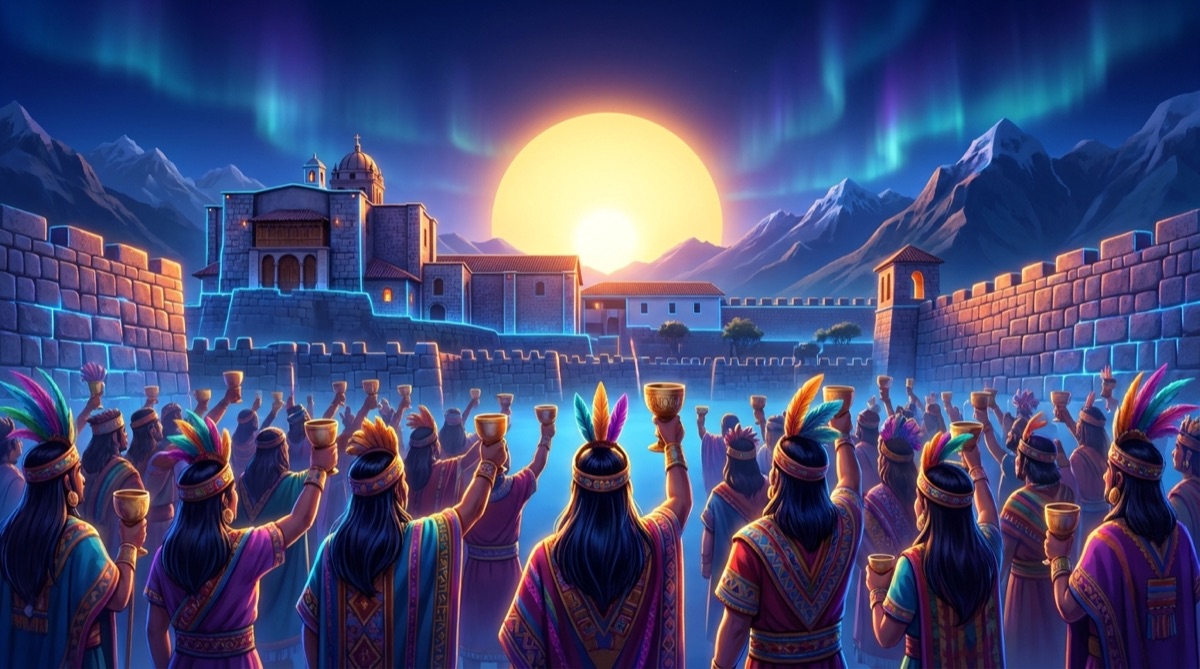
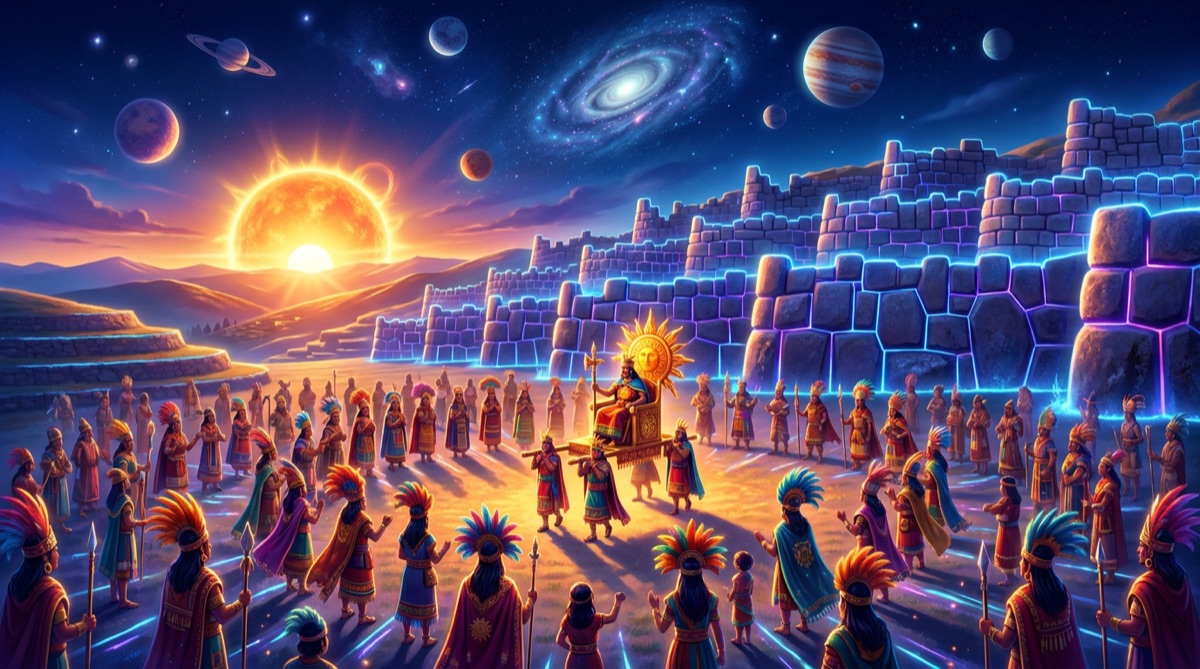
We inherit the Inti Raymi, celebrated again every June 24 since 1944; the Quechua and Muisca names of stars and constellations; a way of forecasting the climate that science confirmed half a century late; and a place, Chankillo, which in 2021 became the first World Heritage site inscribed for its astronomical function. For those living in Colombia, the closest legacy is in Boyacá: the columns of Villa de Leyva and the Temple of the Sun at Sogamoso remind us that the high plateau also looked at the sky, even if we still have much to learn about how it did so.