



Astronomy and Space Exploration ES

History of Astronomy / 3 of 14

Nile Valley c. 3000 BCE – 30 BCE under review

Ancient Egypt

The Nile, Sirius and a 365-day calendar that was never corrected: the Egyptians aligned pyramids with a precision of arcminutes, invented the hours and the water clock, and bequeathed, through Rome, the calendar we still use.

Timeline

22 events, 8 of them milestones (★) that also appear on the overall timeline.

  1. 3rd millennium BCE
    Illustration: The 365-day civil calendar (Egypt)

    Calendar ★ milestone

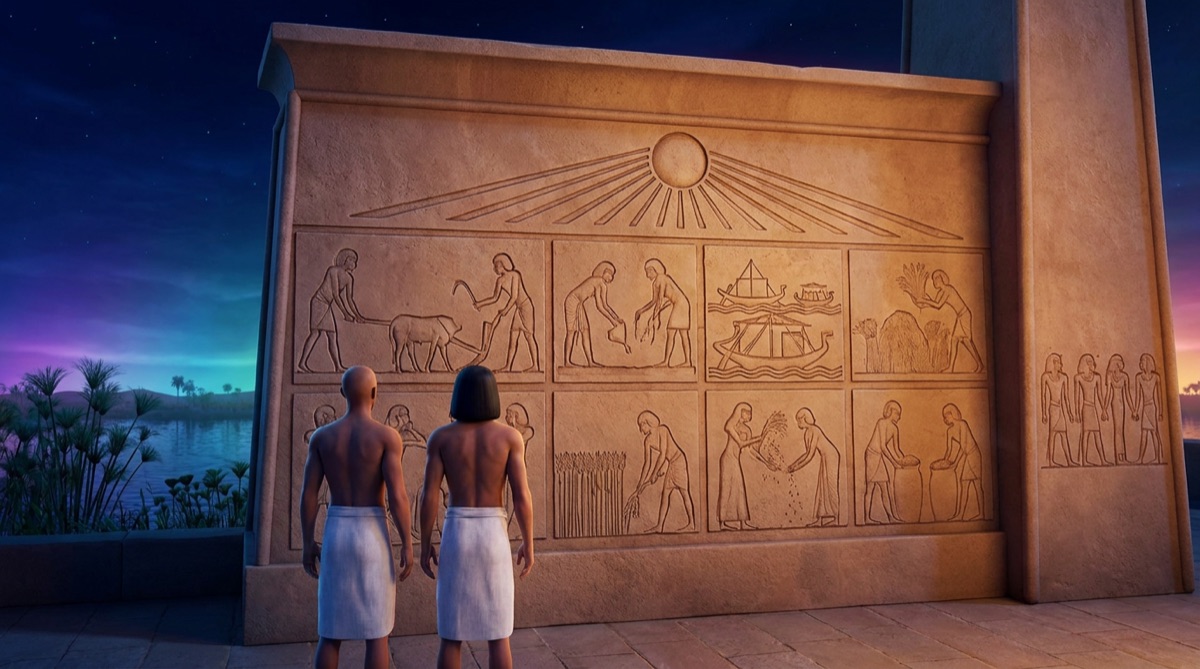
    The 365-day civil calendar

    Twelve months of 30 days plus five “added” days at the end: exactly 365, with no leap year. Since the solar year lasts almost a quarter of a day longer, the calendar gained a day every four years and came full circle in about 1460 years. Its simplicity made it a favorite of astronomers throughout antiquity; its exact origin predates the Old Kingdom and is still debated.

    📍 Egypt

    📘 The lunar calendar 🧪 Day, night and the seasons Seasons of the year

    Sources (3)
    • Parker, R. A. (1950). The Calendars of Ancient Egypt. University of Chicago Press.
    • Depuydt, L. (1997). Civil Calendar and Lunar Calendar in Ancient Egypt. Peeters.
    • Clagett, M. (1995). Ancient Egyptian Science, vol. II. American Philosophical Society, ch. 1.
  2. 3rd millennium BCE
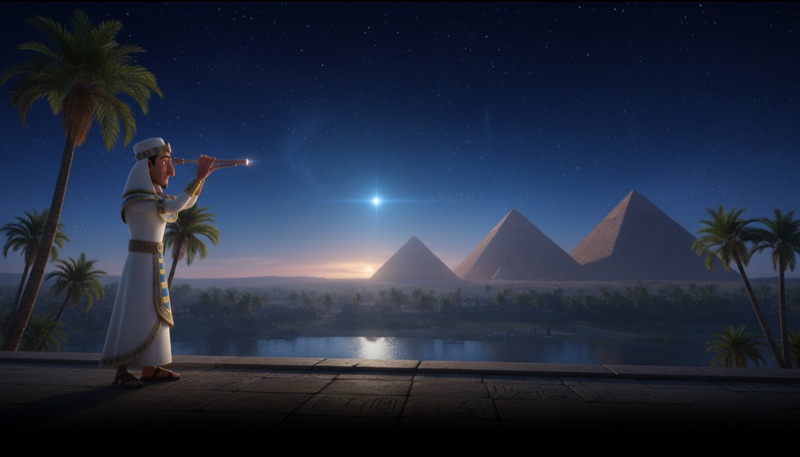
    Illustration: Sirius announces the flooding of the Nile (Nile Valley)

    Observation

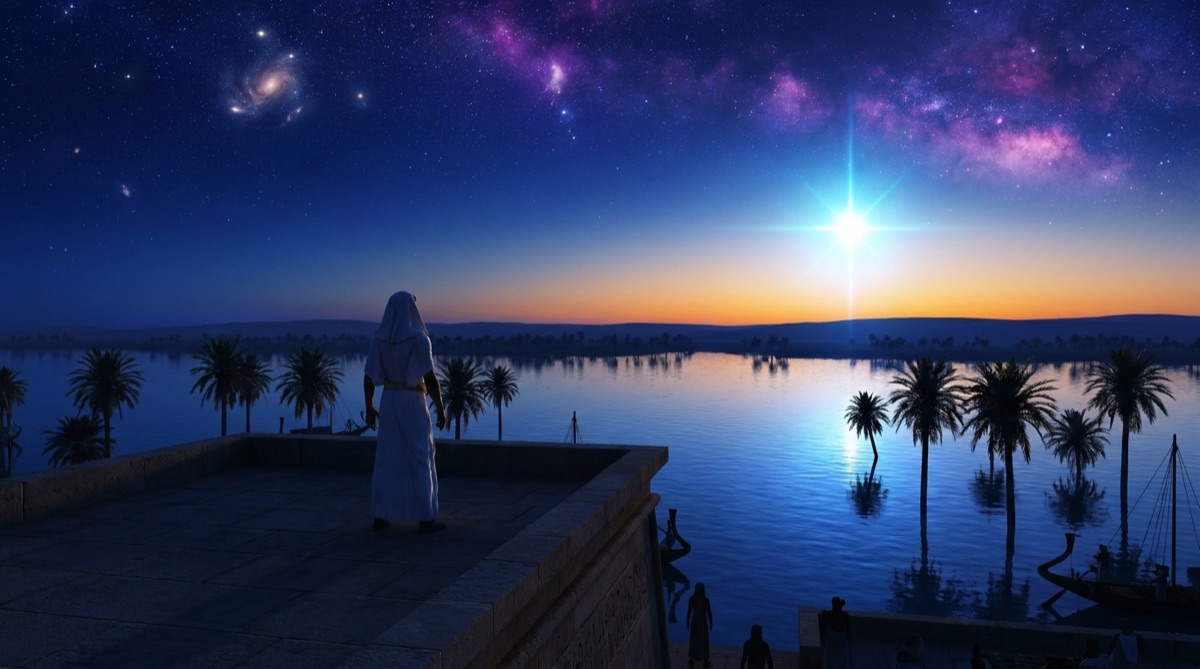
    Sirius announces the flooding of the Nile

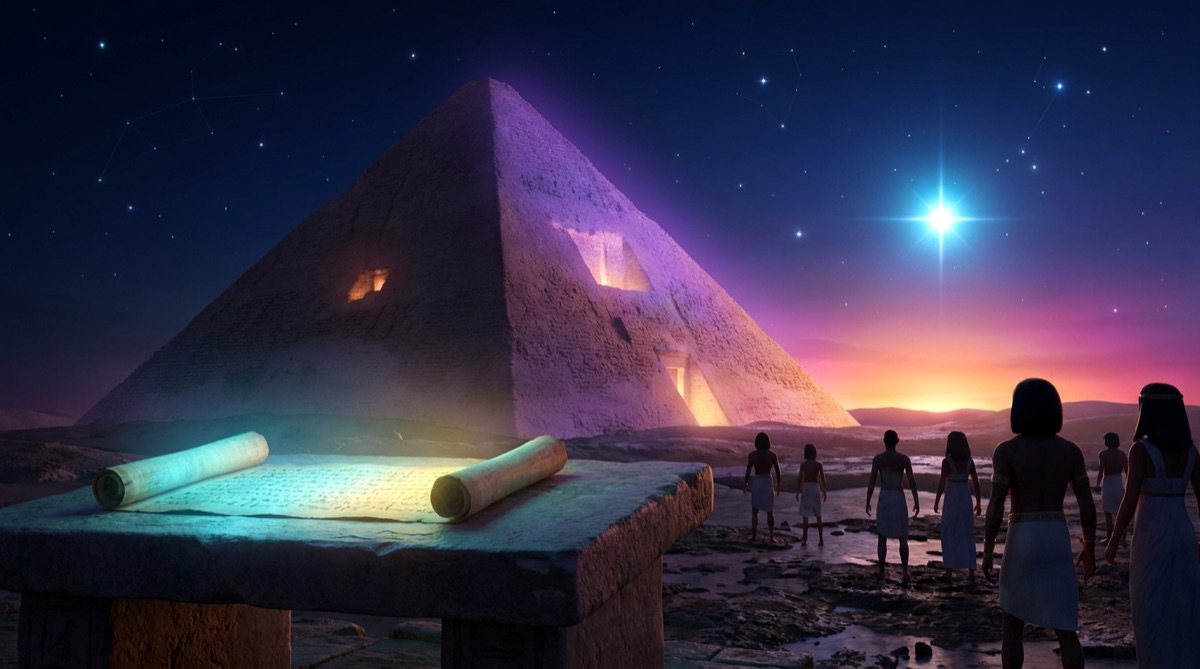
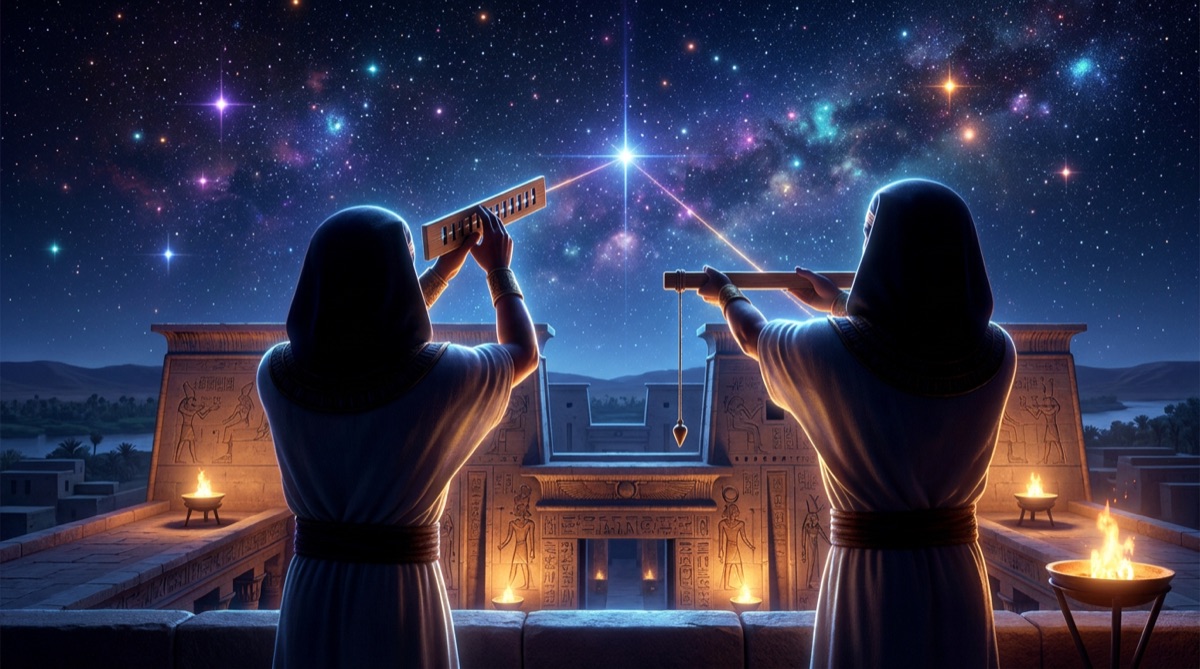
    Every year, after some 70 days of invisibility, Sirius (Sopdet to the Egyptians) reappeared at dawn in July, just as the Nile flood was beginning. That “heliacal rising” marked the ideal New Year and, compared with the civil calendar, allows us today to date reigns.

    📍 Nile Valley

    📘 Watching the sky like scientists 🧪 Interactive planisphere Seasons of the yearHorizon

    Sources (2)
    • Parker, R. A. (1950). The Calendars of Ancient Egypt. University of Chicago Press.
    • Krauss, R. (1985). Sothis- und Monddaten: Studien zur astronomischen und technischen Chronologie Altägyptens. Gerstenberg.
  3. c. 2600–2500 BCE
    Illustration: The pyramids of Giza face north (Giza, Egypt)

    Observation ★ milestone

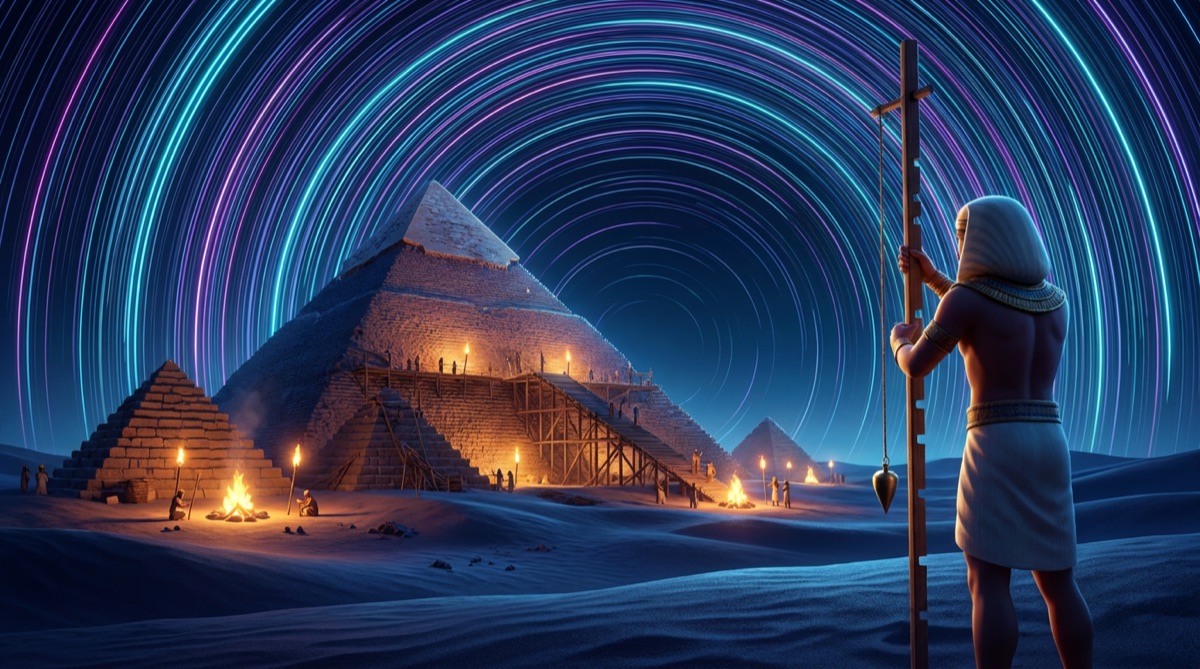
    The pyramids of Giza face north

    The sides of the Great Pyramid of Khufu deviate from true north by less than 4 arcminutes, a fifteenth of the diameter of the full Moon. There was no pole star at that time, so the method is debated: a pair of circumpolar stars aligned with a plumb line, or the shadow of a gnomon at the equinox.

    👤 Khufu, Khafre · 📍 Giza, Egypt

    📘 Polaris and the Southern Cross 🧪 Interactive planisphere Celestial polePrecessionCardinal points

    Sources (4)
    • Petrie, W. M. F. (1883). The Pyramids and Temples of Gizeh. Field & Tuer (first precise measurements of the orientation).
    • Spence, K. (2000). Ancient Egyptian chronology and the astronomical orientation of pyramids. Nature 408, 320–324. https://doi.org/10.1038/35042510 (two-star hypothesis).
    • Dash, G. (2017). Occam's Egyptian razor: the equinox and the alignment of the pyramids. Journal of Ancient Egyptian Architecture 2, 1–8 (equinox gnomon hypothesis).
    • Belmonte, J. A. (2001). On the orientation of Old Kingdom Egyptian pyramids. Journal for the History of Astronomy 32, S1–S20.
  4. c. 2350 BCE
    Illustration: The Pyramid Texts and the “imperishable stars” (Saqqara, Egypt)

    Theory and models

    The Pyramid Texts and the “imperishable stars”

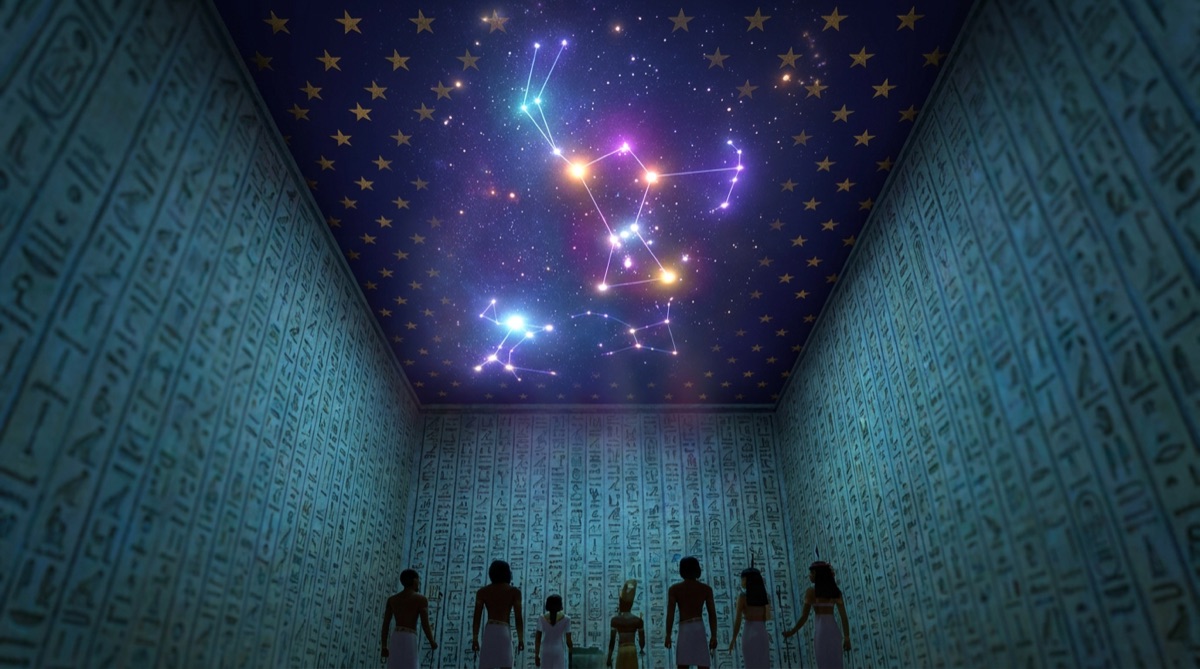
    The spells carved in the pyramid of Unas describe the dead king ascending to the sky to join the stars that never set, the circumpolar ones, and Orion and Sirius. They are the oldest written testimony of how the Egyptians imagined the sky.

    👤 Unas · 📍 Saqqara, Egypt

    Celestial poleConstellation

    Sources (2)
    • Allen, J. P. (2005). The Ancient Egyptian Pyramid Texts. Society of Biblical Literature.
    • Krauss, R. (1997). Astronomische Konzepte und Jenseitsvorstellungen in den Pyramidentexten. Harrassowitz.
  5. c. 2100 BCE
    Illustration: Decanal star clocks: the 12 hours of the night (Asyut, Egypt)

    Instrument ★ milestone

    Decanal star clocks: the 12 hours of the night

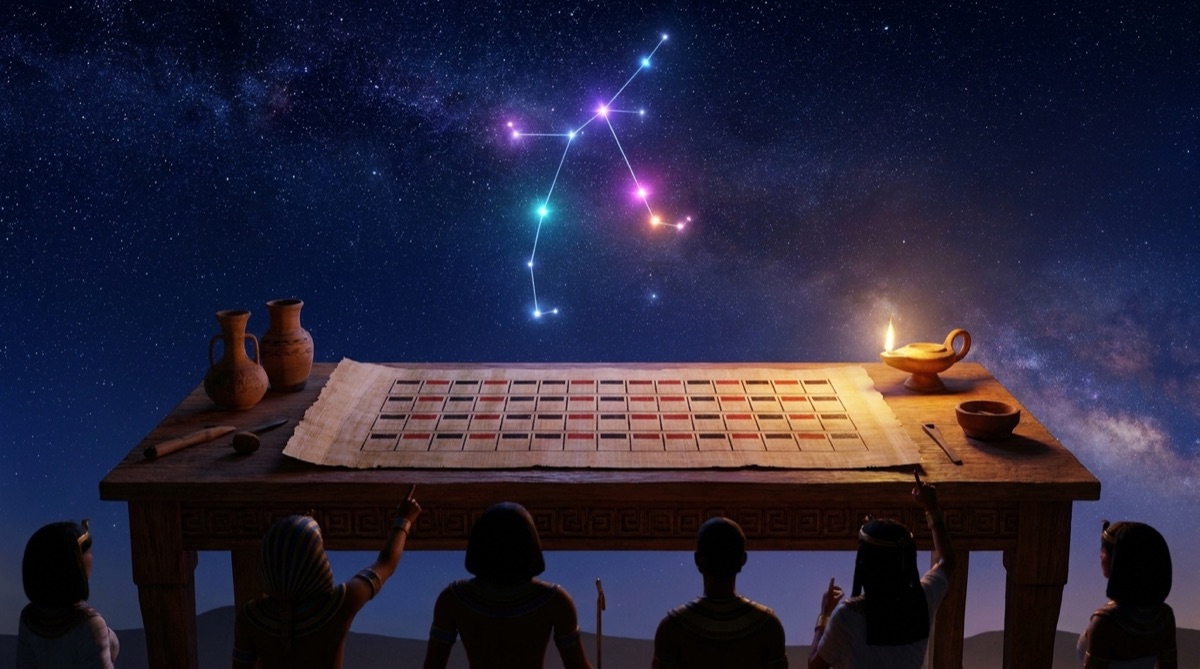
    On the inside of coffins from Asyut, diagonal tables were painted with 36 groups of stars, the decans, which rise one after another every 10 days. Twelve of them rise over the course of one night: hence the 12 night hours, which together with the 12 hours of the day give our 24 hours.

    📍 Asyut, Egypt

    📘 Solar time and sidereal time 🧪 Interactive planisphere Sidereal daySidereal timeConstellation

    Sources (3)
    • Neugebauer, O. & Parker, R. A. (1960). Egyptian Astronomical Texts I: The Early Decans. Brown University Press.
    • Leitz, C. (1995). Altägyptische Sternuhren. Peeters.
    • Symons, S., Ancient Egyptian Astronomy Database (McMaster), section Diagonal Star Tables.
  6. c. 1870 BCE
    Illustration: The Illahun papyrus dates Senusret III (Illahun (El-Lahun), Faiyum, Egypt)

    Calendar

    The Illahun papyrus dates Senusret III

    A letter from the archive of the temple of Illahun announces the heliacal rising of Sirius on a civil-calendar date in year 7 of Senusret III. Since the calendar drifted one day every four years, the note allows the year to be calculated: around 1872 BCE if observed near Memphis, a few decades later if at Elephantine. The debate over the place remains open.

    👤 Senusret III · 📍 Illahun (El-Lahun), Faiyum, Egypt

    Seasons of the year

    Sources (3)
    • Parker, R. A. (1950). The Calendars of Ancient Egypt. University of Chicago Press.
    • Krauss, R. (1985). Sothis- und Monddaten. Gerstenberg (proposal of Elephantine as the place of observation).
    • Gautschy, R. (2011). Monddaten aus dem Archiv von Illahun: Chronologie des Mittleren Reiches. Zeitschrift für Ägyptische Sprache und Altertumskunde 138, 1–19.
  7. c. 1550–1500 BCE
    Illustration: The calendar of the Ebers Papyrus (Thebes, Egypt (papyrus in the Leipzig University Library))

    Calendar

    The calendar of the Ebers Papyrus

    On the back of a medical treatise, a note records the rising of Sirius in year 9 of Amenhotep I. It is the second great astronomical anchor of Egyptian chronology; depending on the assumed place of observation, it falls between 1550 and 1500 BCE.

    👤 Amenhotep I · 📍 Thebes, Egypt (papyrus in the Leipzig University Library)

    Sources (2)
    • Clagett, M. (1995). Ancient Egyptian Science, vol. II. American Philosophical Society.
    • Depuydt, L. (1997). Civil Calendar and Lunar Calendar in Ancient Egypt. Peeters.
  8. c. 1500 BCE
    Illustration: Shadow clocks: the hours of the day (Egypt)

    Instrument

    Shadow clocks: the hours of the day

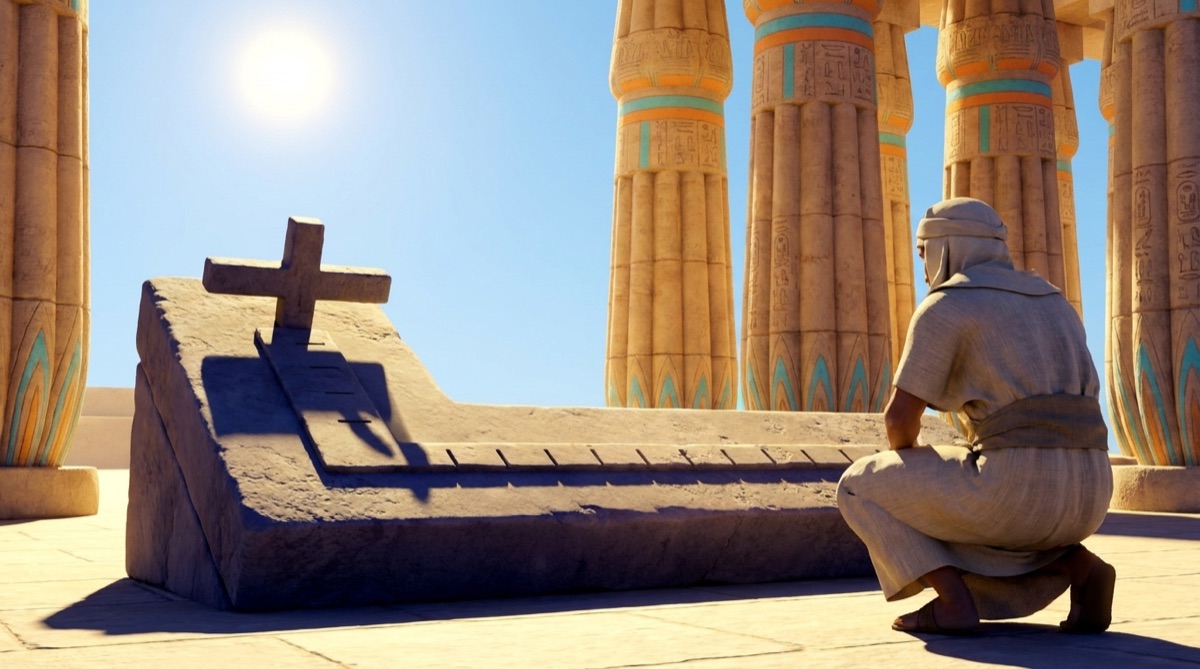
    An L-shaped instrument with a crossbar cast its shadow onto a graduated ruler that divided the day into hours. The oldest examples and descriptions are from the New Kingdom, including a fragment from the reign of Thutmose III. The hours were “seasonal”: longer in summer than in winter.

    👤 Thutmose III · 📍 Egypt

    📘 Shadows and the sundial 🧪 Day, night and the seasons GnomonAltitude above the horizon

    Sources (2)
    • Clagett, M. (1995). Ancient Egyptian Science, vol. II. American Philosophical Society, chapter on clocks.
    • Neugebauer, O. & Parker, R. A. (1960). Egyptian Astronomical Texts I (description of the shadow clock in the cenotaph of Seti I).
  9. c. 1470 BCE
    Illustration: The astronomical ceiling of Senenmut (Deir el-Bahari, Thebes (tomb TT 353))

    Observation ★ milestone

    The astronomical ceiling of Senenmut

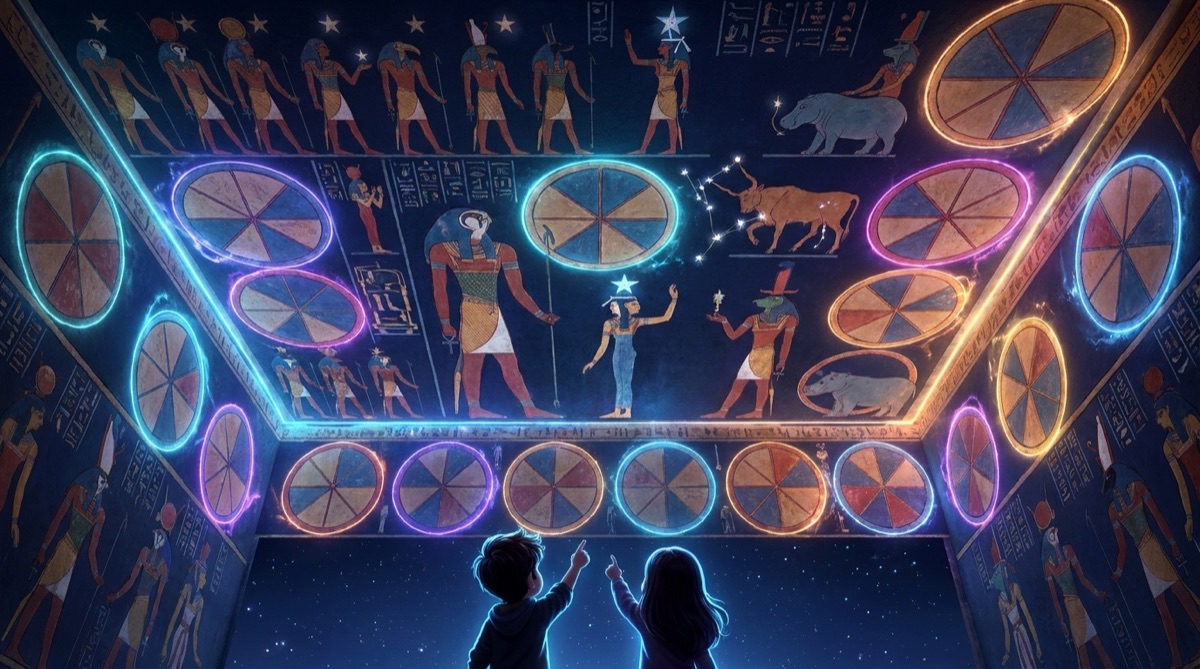
    In the burial chamber of Senenmut, architect of Queen Hatshepsut, the oldest surviving celestial map in Egypt was painted: the list of decans with Orion and Sirius, the northern constellations with the Bull's Foreleg (our Ursa Major), the visible planets and twelve circles with the months of the lunar calendar.

    👤 Senenmut, Hatshepsut · 📍 Deir el-Bahari, Thebes (tomb TT 353)

    📘 Stars and constellations 🧪 Interactive planisphere Constellation

    Sources (3)
    • Metropolitan Museum of Art, New York: facsimile of the astronomical ceiling of Senenmut (Charles K. Wilkinson, no. 48.105.52).
    • Dorman, P. F. (1991). The Tombs of Senenmut. Metropolitan Museum of Art.
    • Neugebauer, O. & Parker, R. A. (1969). Egyptian Astronomical Texts III: Decans, Planets, Constellations and Zodiacs. Brown University Press.
  10. c. 1390–1350 BCE
    Illustration: The Karnak clepsydra (Karnak, Egypt (Egyptian Museum, Cairo))

    Instrument ★ milestone

    The Karnak clepsydra

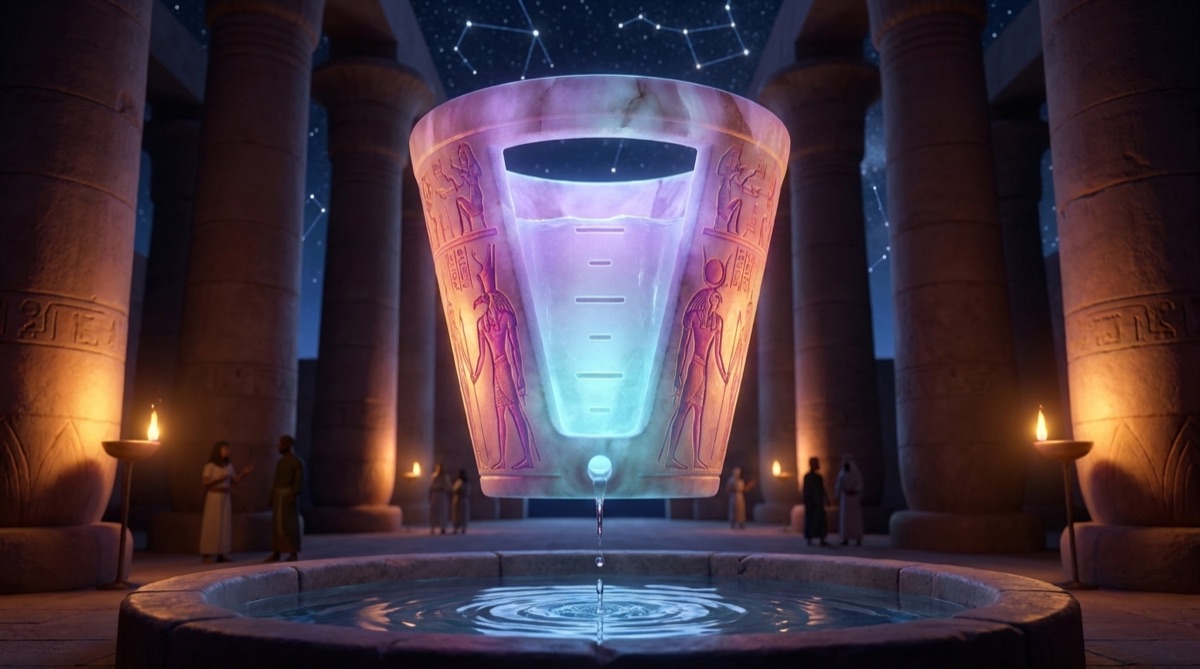
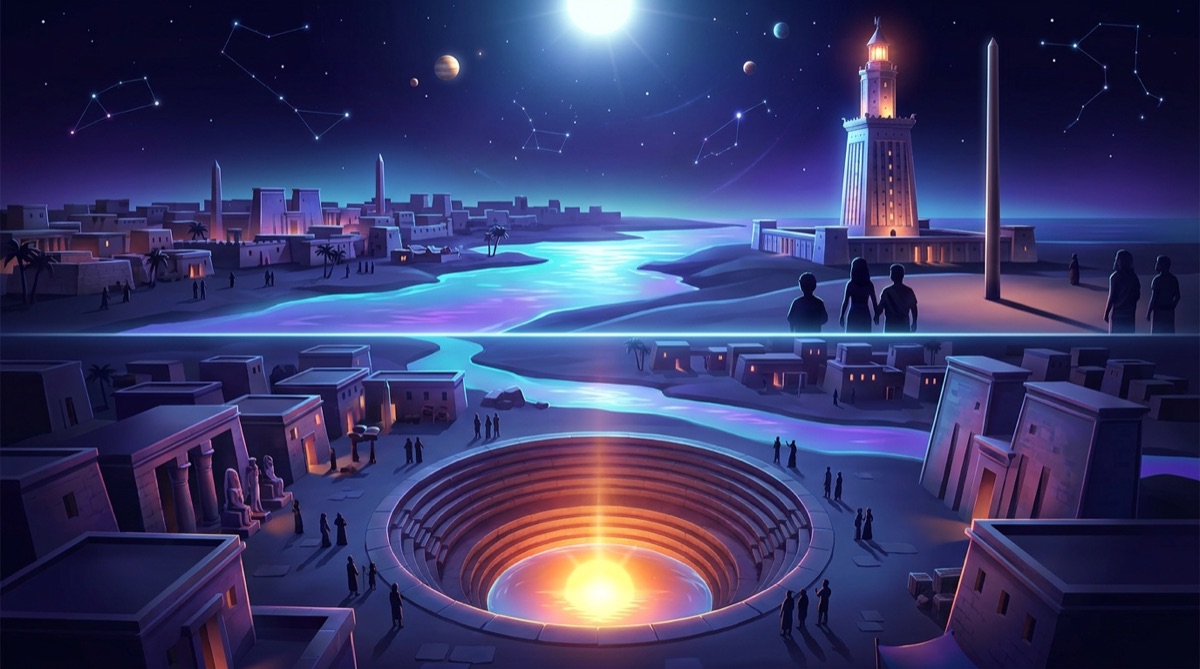
    An alabaster vessel with a hole in the base: as it emptied, the water level marked the hours of the night on different scales for each month. Found broken in the temple of Karnak in 1904 and dated to the reign of Amenhotep III, it is the oldest surviving water clock.

    👤 Amenhotep III · 📍 Karnak, Egypt (Egyptian Museum, Cairo)

    Seasons of the year

    Sources (3)
    • Egyptian Museum, Cairo: Karnak clepsydra.
    • Cotterell, B., Dickson, F. P. & Kamminga, J. (1986). Ancient Egyptian water-clocks: a reappraisal. Journal of Archaeological Science 13(1), 31–50.
    • Clagett, M. (1995). Ancient Egyptian Science, vol. II. American Philosophical Society.
  11. c. 1290 BCE
    Illustration: The Book of Nut in the cenotaph of Seti I (Abydos, Egypt)

    Theory and models

    The Book of Nut in the cenotaph of Seti I

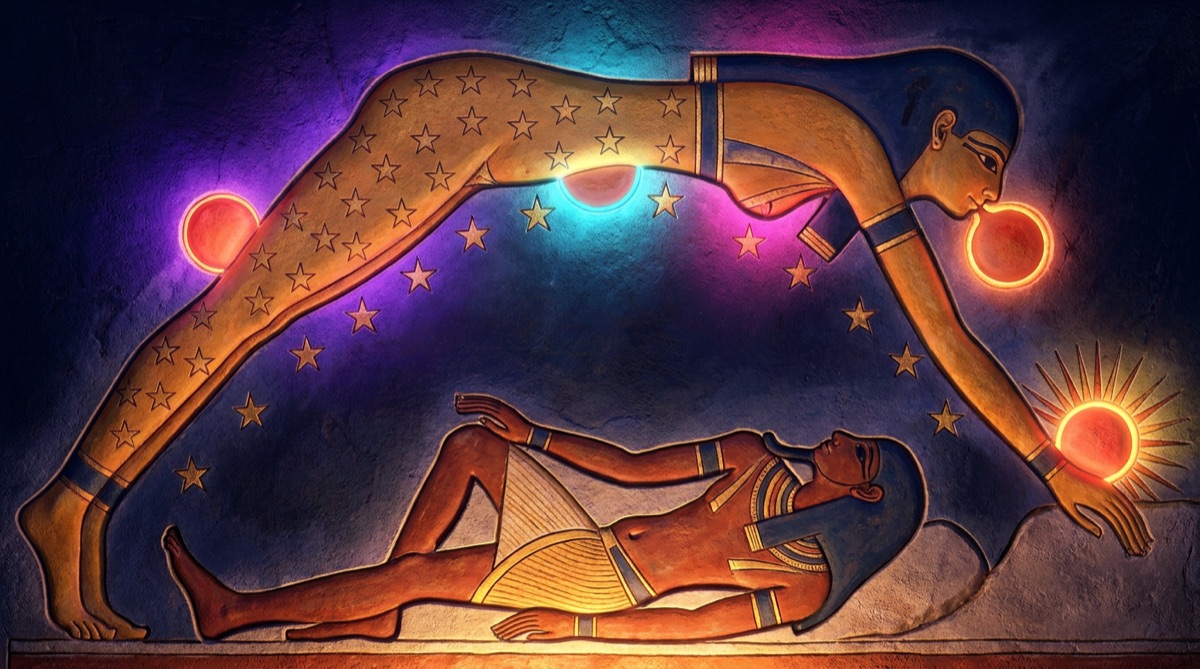
    At Abydos an image was carved of the sky goddess, Nut, swallowing the Sun every evening and giving birth to it every morning, accompanied by a text that explains the 70 days of invisibility of each decan and how to use the shadow clock. It is Egyptian cosmology in its most complete form.

    👤 Seti I · 📍 Abydos, Egypt

    Horizon

    Sources (2)
    • Neugebauer, O. & Parker, R. A. (1960). Egyptian Astronomical Texts I. Brown University Press.
    • von Lieven, A. (2007). Grundriss des Laufes der Sterne: Das sogenannte Nutbuch. Museum Tusculanum Press (The Carlsberg Papyri 8).
  12. c. 1200 BCE
    Illustration: The Cairo Calendar and the Algol hypothesis (Egypt (papyrus Cairo 86637))

    Observation

    The Cairo Calendar and the Algol hypothesis

    A Ramesside papyrus assigns to each day of the year a forecast of good or bad luck. In 2015 a Finnish team found in those forecasts a period of 2.85 days, that of the variable star Algol, and proposed that the Egyptians noticed its changes in brightness. It is a published and debated hypothesis, not a fact accepted by Egyptologists.

    👤 Lauri Jetsu, Sebastian Porceddu · 📍 Egypt (papyrus Cairo 86637)

    Light curve

    Sources (2)
    • Jetsu, L. & Porceddu, S. (2015). Shifting milestones of natural sciences: the ancient Egyptian discovery of Algol's period confirmed. PLoS ONE 10(12), e0144140. https://doi.org/10.1371/journal.pone.0144140
    • Leitz, C. (1994). Tagewählerei: Das Buch h3t nhh ph.wy dt und verwandte Texte. Harrassowitz (edition of the calendar).
  13. c. 1150 BCE
    Illustration: Ramesside star clocks (Valley of the Kings, Egypt)

    Instrument

    Ramesside star clocks

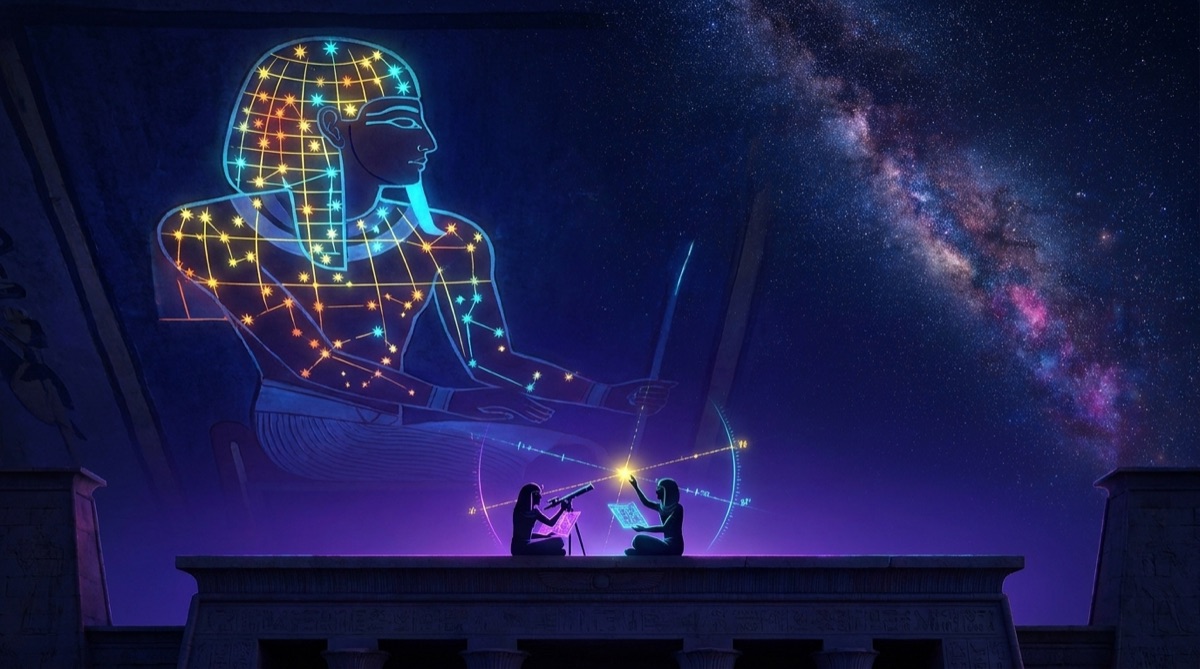
    In the tombs of Ramesses VI, VII and IX, tables were painted with a seated figure: each hour of the night was announced when a star passed over his head, his eye or his shoulder, observed by one priest facing another. A method of transits, not of risings, closer to our sidereal time.

    👤 Ramesses VI · 📍 Valley of the Kings, Egypt

    📘 Solar time and sidereal time Sidereal timeZenith

    Sources (2)
    • Neugebauer, O. & Parker, R. A. (1964). Egyptian Astronomical Texts II: The Ramesside Star Clocks. Brown University Press.
    • Leitz, C. (1995). Altägyptische Sternuhren. Peeters.
  14. c. 600 BCE
    Illustration: Merkhet and bay: instruments of a priest of the hours (Egypt (Egyptian Museum of Berlin and Science Museum, London))

    Instrument

    Merkhet and bay: instruments of a priest of the hours

    The merkhet (a bar with a plumb line) and the bay (a palm rib with a slit) served to observe the passage of a star across the north–south line and thus tell the time; also to orient buildings. The surviving examples, in Berlin and London, belonged to priests “in charge of the hours”.

    📍 Egypt (Egyptian Museum of Berlin and Science Museum, London)

    Celestial poleZenith

    Sources (2)
    • Science Museum Group, London: Egyptian merkhet (object co500, c. 600 BCE, inscribed with the name of the priest Bes).
    • Clagett, M. (1995). Ancient Egyptian Science, vol. II. American Philosophical Society.
  15. c. 240 BCE
    Illustration: Eratosthenes measures the Earth from Alexandria (Alexandria and Syene, Egypt)

    Mathematics

    Eratosthenes measures the Earth from Alexandria

    The librarian of Alexandria compared the noon shadow at the solstice in Alexandria with the absence of a shadow at Syene (Aswan) and calculated the circumference of the Earth as 250 000 stadia, a value surprisingly close to the real one. Egypt, with its north–south geography, made the experiment possible.

    👤 Eratosthenes · 📍 Alexandria and Syene, Egypt

    📘 Eratosthenes measures the Earth 🧪 Eratosthenes measures the Earth GnomonLatitudeSolstice

    Sources (2)
    • Cleomedes, Caelestia I.7 (Trans. A. C. Bowen & R. B. Todd, Cleomedes' Lectures on Astronomy, University of California Press, 2004).
    • Evans, J. (1998). The History and Practice of Ancient Astronomy. Oxford University Press, 63–66.
  16. 238 BCE
    Illustration: The Decree of Canopus proposes the leap year (Canopus, Egypt)

    Calendar ★ milestone

    The Decree of Canopus proposes the leap year

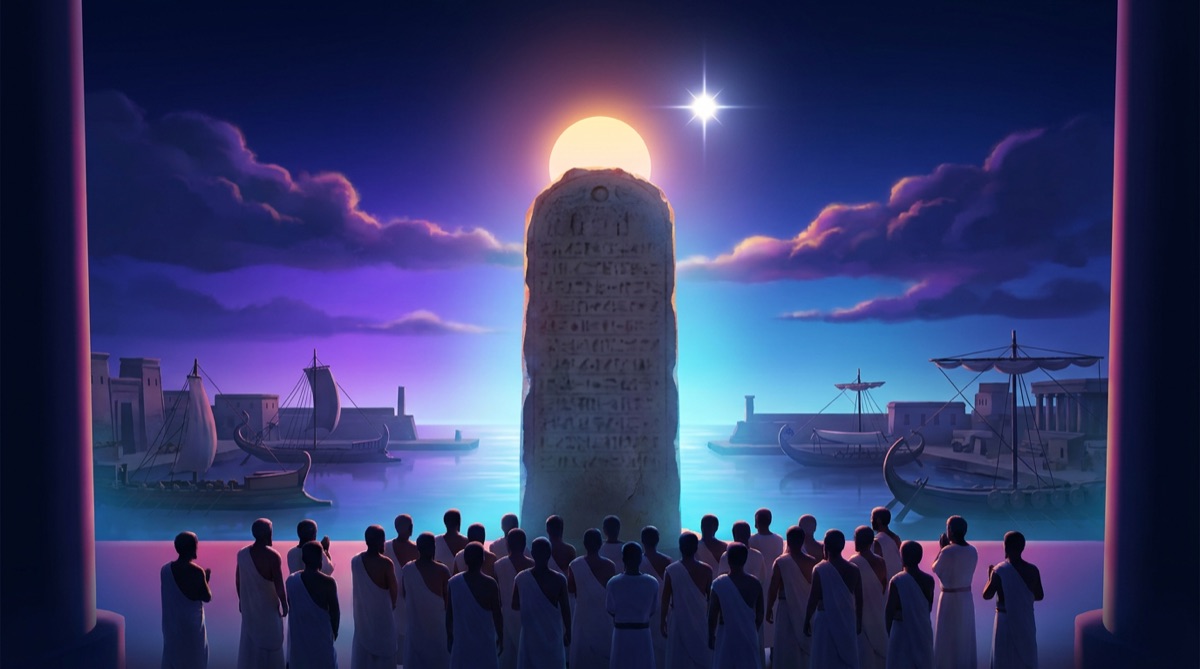
    On March 7, 238 BCE, under Ptolemy III, an assembly of priests decreed the addition of a sixth “added” day every four years so that the festivals would stop drifting through the seasons. The reform was not implemented, but it is the first documented proposal of a leap year.

    👤 Ptolemy III Euergetes · 📍 Canopus, Egypt

    Seasons of the year

    Sources (3)
    • Canopus Stone (found at Tanis in 1866; Egyptian Museum, Cairo), trilingual text in hieroglyphic, Demotic and Greek.
    • Depuydt, L. (1997). Civil Calendar and Lunar Calendar in Ancient Egypt. Peeters.
    • Clagett, M. (1995). Ancient Egyptian Science, vol. II. American Philosophical Society.
  17. c. 50 BCE
    Illustration: The Dendera zodiac (Dendera, Egypt (original in the Louvre Museum, Paris))

    Observation ★ milestone

    The Dendera zodiac

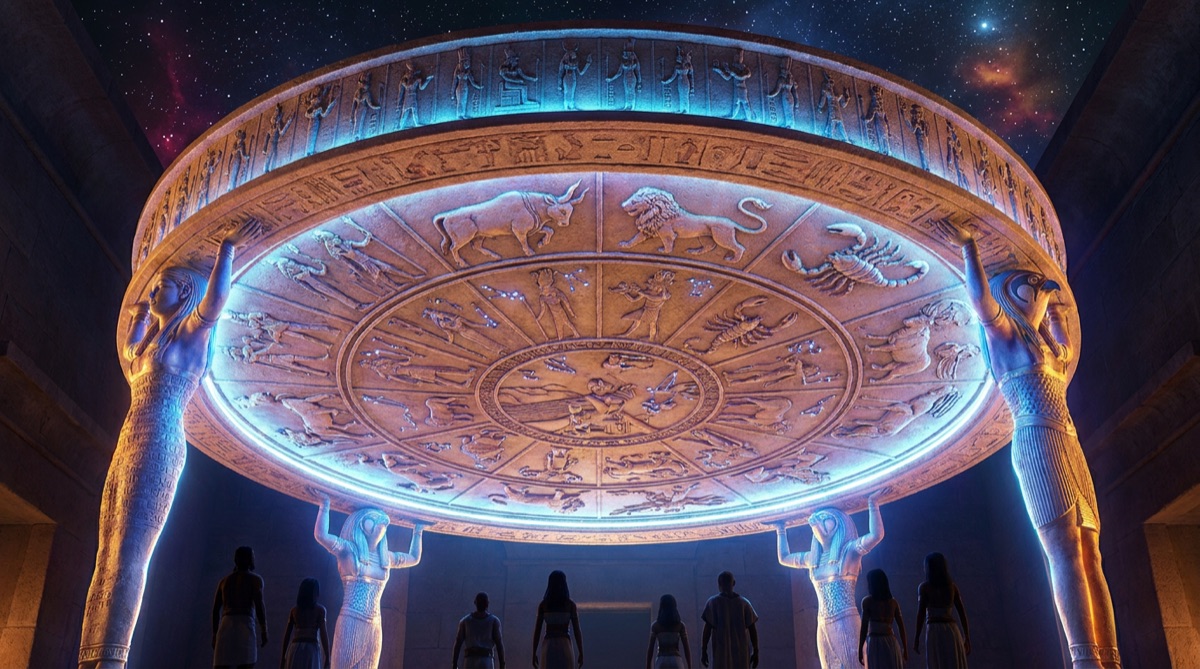
    On the ceiling of a chapel in the temple of Hathor, a circular map of the sky was sculpted with the Egyptian constellations, the 36 decans and the 12 signs of the zodiac imported from Babylon and Greece. The positions of the planets and two eclipses depicted allow it to be dated to around 50 BCE.

    📍 Dendera, Egypt (original in the Louvre Museum, Paris)

    🧪 Interactive planisphere EclipticConstellation

    Sources (3)
    • Louvre Museum, Paris: Zodiaque de Dendéra (D 38).
    • Aubourg, É. (1995). La date de conception du zodiaque du temple d'Hathor à Dendera. Bulletin de l'Institut Français d'Archéologie Orientale 95, 1–10.
    • Cauville, S. (1997). Le zodiaque d'Osiris. Peeters.
  18. 46 BCE
    Illustration: Julius Caesar and the Julian calendar (Rome)

    Calendar ★ milestone

    Julius Caesar and the Julian calendar

    Advised by the astronomer Sosigenes, Caesar adopted the Egyptian 365-day model and added to it the leap day every four years that Canopus had proposed. The year 46 BCE lasted 445 days to correct the drift, and the new calendar began on January 1, 45 BCE. With the Gregorian correction of 1582, it is the calendar we use today.

    👤 Julius Caesar, Sosigenes · 📍 Rome

    📘 The lunar calendar Seasons of the year

    Sources (3)
    • Pliny the Elder, Natural History, XVIII.211 (Sosigenes as Caesar's adviser).
    • Macrobius, Saturnalia, I.14 (description of the reform).
    • Hannah, R. (2005). Greek and Roman Calendars: Constructions of Time in the Classical World. Duckworth.
  19. c. 25 BCE
    Illustration: The Alexandrian calendar (Alexandria, Egypt)

    Calendar

    The Alexandrian calendar

    Under Augustus, the Egyptian civil calendar finally received its leap day every four years and was fixed relative to the Julian one. That “Alexandrian” calendar survives as the Coptic and Ethiopian calendar, with its 12 months of 30 days and its short month of 5 or 6 days.

    👤 Augustus · 📍 Alexandria, Egypt

    Seasons of the year

    Sources (2)
    • Hannah, R. (2005). Greek and Roman Calendars. Duckworth.
    • Depuydt, L. (1997). Civil Calendar and Lunar Calendar in Ancient Egypt. Peeters.
  20. 2nd century CE
    Illustration: The 25-year lunar cycle of Papyrus Carlsberg 9 (Egypt (papyrus in the Carlsberg collection, Copenhagen))

    Calendar

    The 25-year lunar cycle of Papyrus Carlsberg 9

    A Demotic papyrus explains how to calculate the beginning of the lunar months with a cycle of 25 civil years, which equal almost exactly 309 lunar months. The scheme, with a cycle beginning in 144 CE, shows that the old lunar calendar of the temples was still alive in Roman times.

    📍 Egypt (papyrus in the Carlsberg collection, Copenhagen)

    📘 The lunar calendar Synodic month

    Sources (2)
    • Neugebauer, O. & Volten, A. (1938). Untersuchungen zur antiken Astronomie IV: Ein demotischer astronomischer Papyrus (Pap. Carlsberg 9). Quellen und Studien zur Geschichte der Mathematik B 4, 383–406.
    • Parker, R. A. (1950). The Calendars of Ancient Egypt. University of Chicago Press.
  21. 1822
    Illustration: Champollion deciphers the hieroglyphs (Paris)

    Discovery

    Champollion deciphers the hieroglyphs

    A year after the Dendera zodiac was torn out and taken to Paris (1821), Jean-François Champollion announced the decipherment of hieroglyphic writing. From then on Egyptian astronomical texts could be read, and the zodiac itself, which some believed to be 15 000 years old, turned out to be from the Greco-Roman period.

    👤 Jean-François Champollion · 📍 Paris

    Sources (2)
    • Champollion, J.-F. (1822). Lettre à M. Dacier relative à l'alphabet des hiéroglyphes phonétiques. Firmin Didot, Paris.
    • Buchwald, J. Z. & Josefowicz, D. G. (2010). The Zodiac of Paris. Princeton University Press (history of the removal and the controversy over its date).
  22. 1960 – 1969
    Illustration: Neugebauer and Parker edit the astronomical texts (Brown University, United States)

    Discovery

    Neugebauer and Parker edit the astronomical texts

    In three volumes, Otto Neugebauer and Richard Parker gathered, translated and analyzed all the known star clocks, astronomical ceilings and lists of decans. Their conclusion, still valid, is that Egyptian astronomy was above all practical, calendrical and religious, with little mathematics.

    👤 Otto Neugebauer, Richard A. Parker · 📍 Brown University, United States

    Sources (1)
    • Neugebauer, O. & Parker, R. A. (1960, 1964, 1969). Egyptian Astronomical Texts I–III. Brown University Press / Lund Humphries.

Context

Egypt is a river with a country around it. Every summer the Nile overflowed and covered the fields with fertile silt; on that flood depended the harvest and, with it, the state. Knowing when it would arrive was the first reason to watch the sky, and the sky gave a signal: shortly before the flood, Sirius, the brightest star, reappeared at dawn in the east after some 70 days of invisibility. The Egyptians called it Sopdet and made it a goddess.

The second reason was religion. The dead king ascended to the sky to join the “imperishable stars”, those that never set below the horizon, and the temples needed to know the hour of the night for their rituals. The third was architecture: pyramids and temples were oriented by the sky. What there was not, unlike in Babylon, was an astronomy of calculation: the Egyptians were above all great organizers of time.

Major contributions

A year of 365 days

Around the third millennium BCE the Egyptians adopted a civil calendar of 12 months of 30 days plus 5 “added” days: exactly 365 days, with no leap days. Since the solar year lasts about six hours longer, the calendar gained a day every four years and the festivals drifted through the seasons. For them it was an inconvenience; for later astronomers, a blessing: a year that is always the same makes the arithmetic easy, and Ptolemy and Copernicus were still using Egyptian years. In 238 BCE the Decree of Canopus proposed adding a day every four years; it was not implemented, but Julius Caesar took up the idea in 46 BCE for the Julian calendar, the grandfather of ours. The lesson The lunar calendar explains why squaring the Moon, the Sun and the days is so difficult.

The 24 hours

The Egyptians divided the night into 12 hours using 36 groups of stars, the decans, which rise one after another every 10 days: on a summer night about twelve can be seen rising. Those tables painted on coffins from around 2100 BCE are the oldest star clocks. The day also had 12 hours, measured with shadow clocks, and from the sum come the 24 hours that everyone uses today. They were “seasonal” hours, longer in summer than in winter; equal hours would come with the Greek astronomers. For cloudy nights they invented the water clock: the one from Karnak, from around 1370 BCE, is the oldest surviving one. If you want to see how the stars mark the time, look at Solar time and sidereal time.

Pyramids pointing north

The sides of the Great Pyramid deviate from true north by less than 4 arcminutes. It is astonishing because around 2550 BCE there was no pole star: precession, which the article on Hipparchus explains, then had the pole near the faint Thuban. How they did it is still debated: Kate Spence proposed in 2000 that they aligned two circumpolar stars with a plumb line; Glen Dash showed in 2017 that the shadow of a gnomon at the equinox gives the same precision. Both methods work; we do not know which one they used.

Maps of the sky

The ceiling of the tomb of Senenmut (c. 1470 BCE) is the oldest Egyptian celestial map: decans, Orion, Sirius, the Bull’s Foreleg (our Ursa Major) and the planets. Fourteen hundred years later, the Dendera zodiac mixed those Egyptian constellations with the twelve Babylonian and Greek signs: Egypt had become, with Alexandria, the place where astronomical traditions met. There Eratosthenes measured the size of the Earth around 240 BCE (told in Eratosthenes measured the Earth, and you can repeat it in the simulator) and there Ptolemy would write the Almagest.

How do we know?

The sources are of three kinds. Texts and images: decan tables on coffins, ceilings of tombs and temples, the Book of Nut in the cenotaph of Seti I, calendar notes on papyri such as the Illahun or the Ebers. Objects: the Karnak clepsydra, shadow clocks, the merkhet and the bay of the priests of the hours. Buildings: the orientation of pyramids and temples, measured by Petrie in 1883 and by modern teams with GPS.

Almost all of this could be read only after 1822, when Champollion deciphered the hieroglyphs, and it was put in order in the three volumes of Neugebauer and Parker (1960–1969), which remain the reference. Their limits are clear: the decans cannot be identified with certainty with specific stars, the tables look like ideal schemes rather than records of observation, and the Sirius dates depend on where the observation was made, so Egyptian chronology has margins of decades. There are also hypotheses without consensus, such as the claim that the Cairo Calendar records the period of the star Algol (2015), or that the shafts of the Great Pyramid point to specific stars. And there are myths worth debunking: the Dendera zodiac is not 15 000 years old, as was said in the Paris of 1821, but about 2070, and the pyramids were built by Egyptian workers whose settlements and tombs have been excavated at Giza.

Legacy

The 365-day calendar with a leap day every four years, the 24 hours of the day, the water clock, the heliacal rising as marker of the year and the decans (which passed into Hellenistic astrology) are an Egyptian inheritance. So is a chronology: thanks to the Sirius dates and the Egyptian calendars we can put the history of the ancient Mediterranean in order. And a city: Alexandria, where Egypt, Babylon and Greece mixed to produce the astronomy that Europe and the Islamic world would inherit.

✦ Check your understanding

  1. 1. How many days did the Egyptian civil calendar have, and what problem did it have?
  2. 2. Where do the 12 hours of the night come from?
  3. 3. Why is the orientation of the Great Pyramid hard to explain?
  4. 4. What is the relationship between the Decree of Canopus and the Julian calendar?
Answer all the questions to check.

References

  • Clagett, M. (1995). Ancient Egyptian Science, vol. II: Calendars, Clocks, and Astronomy. American Philosophical Society.
  • Neugebauer, O. & Parker, R. A. (1960–1969). Egyptian Astronomical Texts, 3 vols. Brown University Press / Lund Humphries.
  • Parker, R. A. (1950). The Calendars of Ancient Egypt. Studies in Ancient Oriental Civilization 26, University of Chicago Press.
  • Depuydt, L. (1997). Civil Calendar and Lunar Calendar in Ancient Egypt. Peeters.
  • Belmonte, J. A. & Shaltout, M. (eds.) (2009). In Search of Cosmic Order: Selected Essays on Egyptian Archaeoastronomy. Supreme Council of Antiquities Press, Cairo.
  • Evans, J. (1998). The History and Practice of Ancient Astronomy. Oxford University Press, ch. 4 (calendars).
  • Hoskin, M. (ed.) (1999). The Cambridge Concise History of Astronomy. Cambridge University Press, ch. 2.
  • Symons, S. et al., Ancient Egyptian Astronomy Database, McMaster University. https://aea.physics.mcmaster.ca