His life
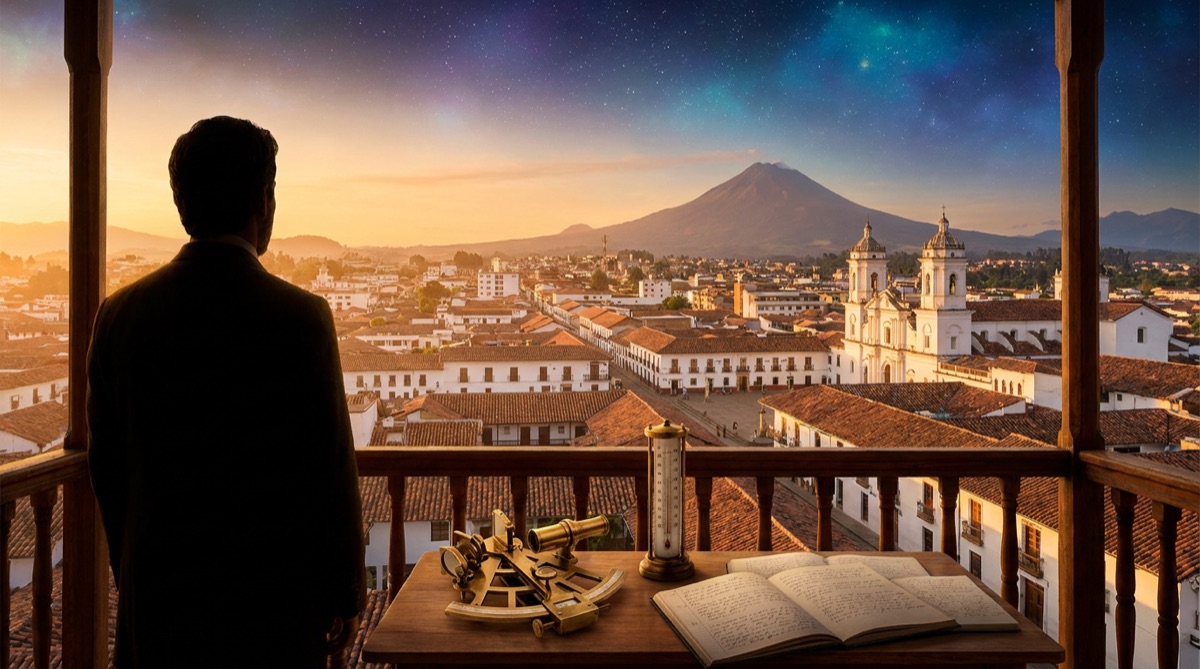
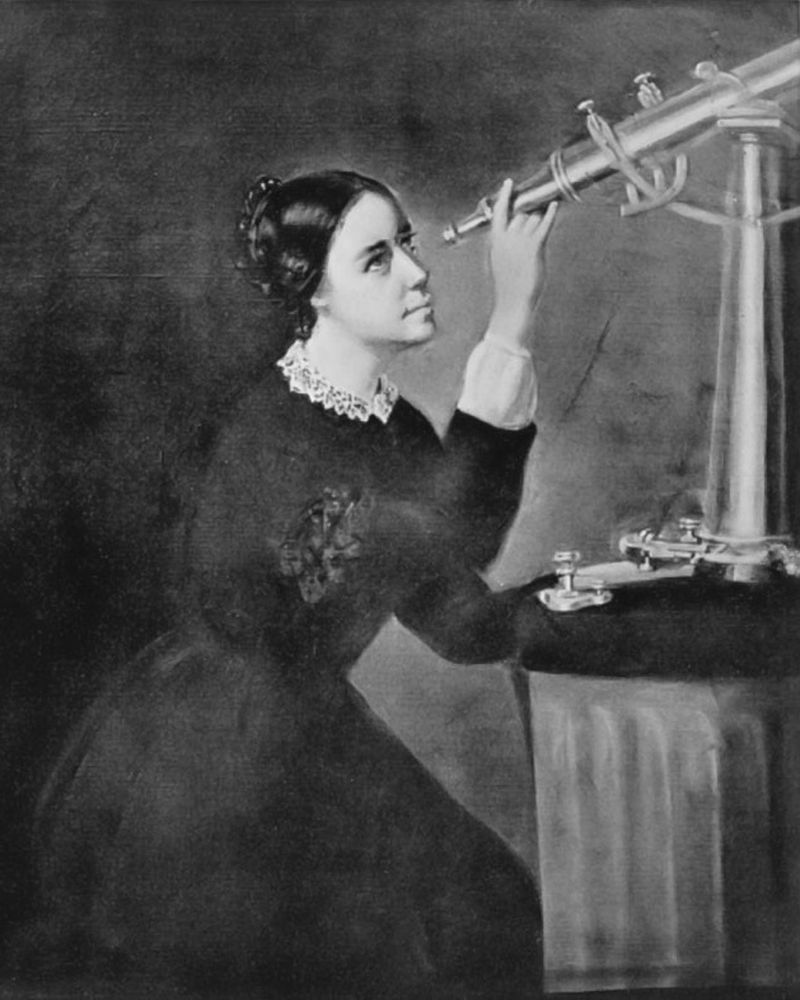
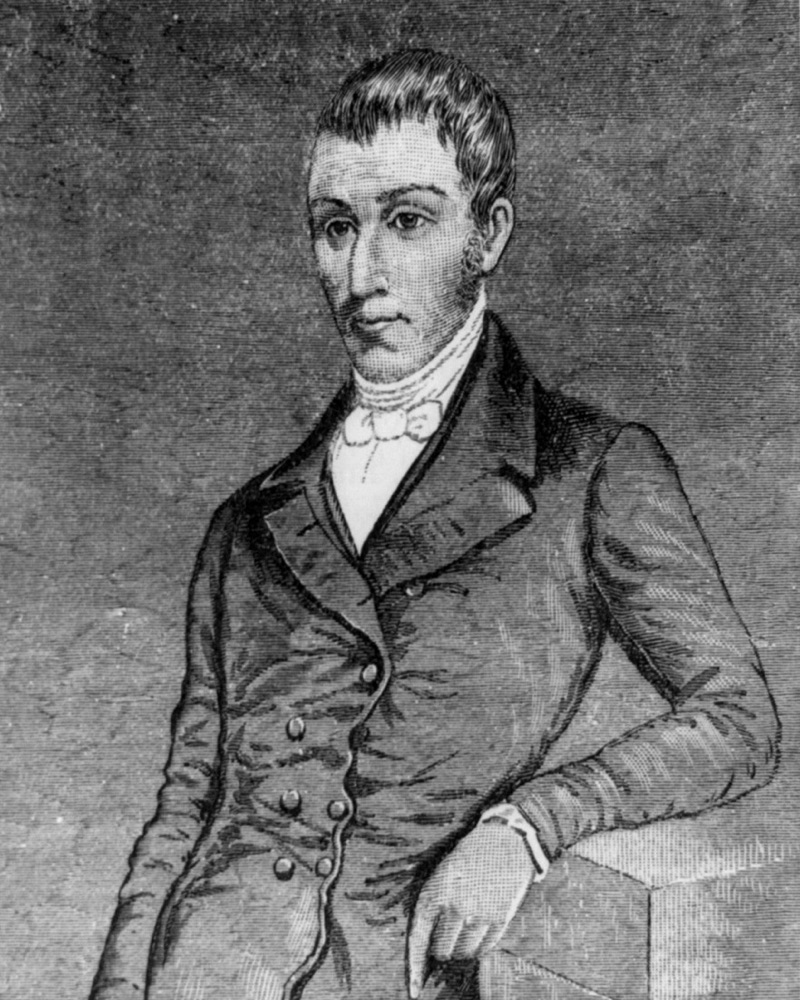
Francisco José de Caldas was born in Popayán, in 1768, into a well-off Creole family. He studied at the seminary in his home town and then law at the Colegio Mayor del Rosario, in Santafé, but his calling lay elsewhere. Back in Popayán he worked in trade and, in his spare time, taught himself mathematics, astronomy and natural science from the few books he could get hold of. He had neither teachers nor instruments: he gathered them with his savings, one by one, or built them himself.
By around 1801 he was already known among the scholars of the region. In 1802 he met the German naturalist Alexander von Humboldt during the latter’s journey through the territory of present-day Ecuador, and Humboldt is said to have been impressed by what he had achieved with such scant means. He then worked in Quito and, in 1805, José Celestino Mutis called him to Santafé to direct the new observatory.
The hypsometer
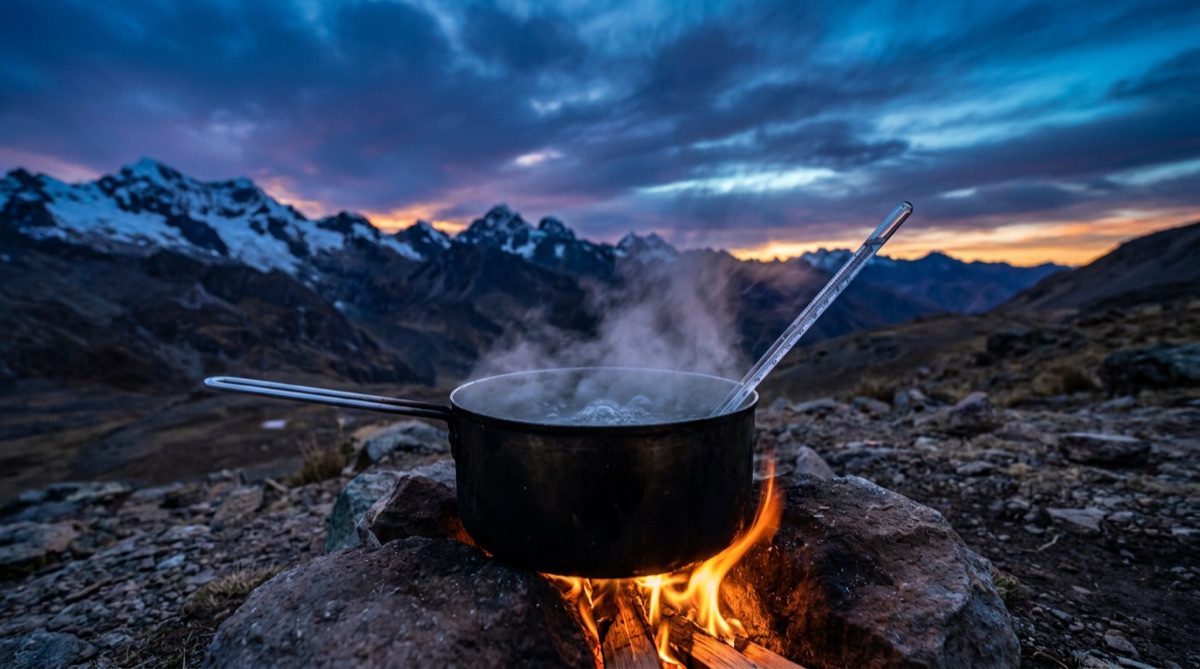
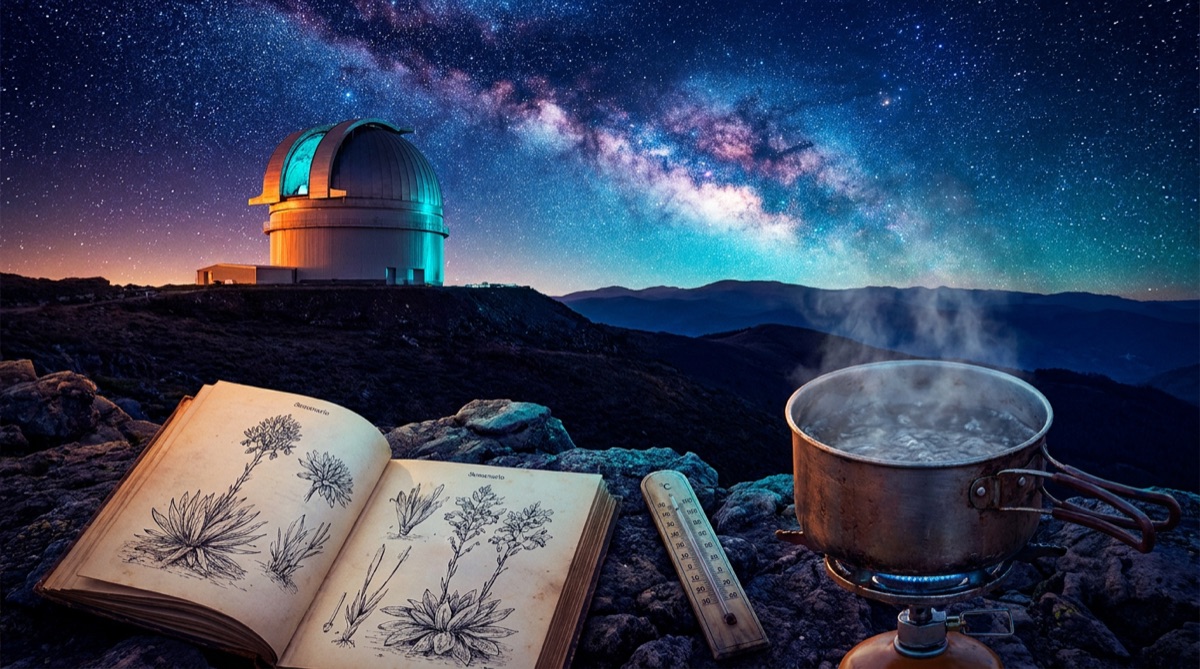
While living in Popayán, Caldas discovered, on his own, that water boils at a lower temperature the higher up one is, because air pressure decreases with altitude. In Bogotá, at about 2 600 m, water boils at about 92 °C rather than 100 °C. If that temperature is measured with a good thermometer, the altitude can be computed without carrying a heavy mercury barometer, which broke easily on mountain trails. Caldas called his instrument a hypsometer (from the Greek hypsos, “height”) and used it to measure the heights of the Andes. The method was later used by Humboldt. It was an idea anyone could check with a pot and a thermometer.
Caldas applied those measurements to another question that fascinated him: how life changes with altitude. He recorded the altitude at which each plant grows, from the heat of the valleys to the cold of the páramos, an early form of what is now called plant geography.
The Observatory of Santafé
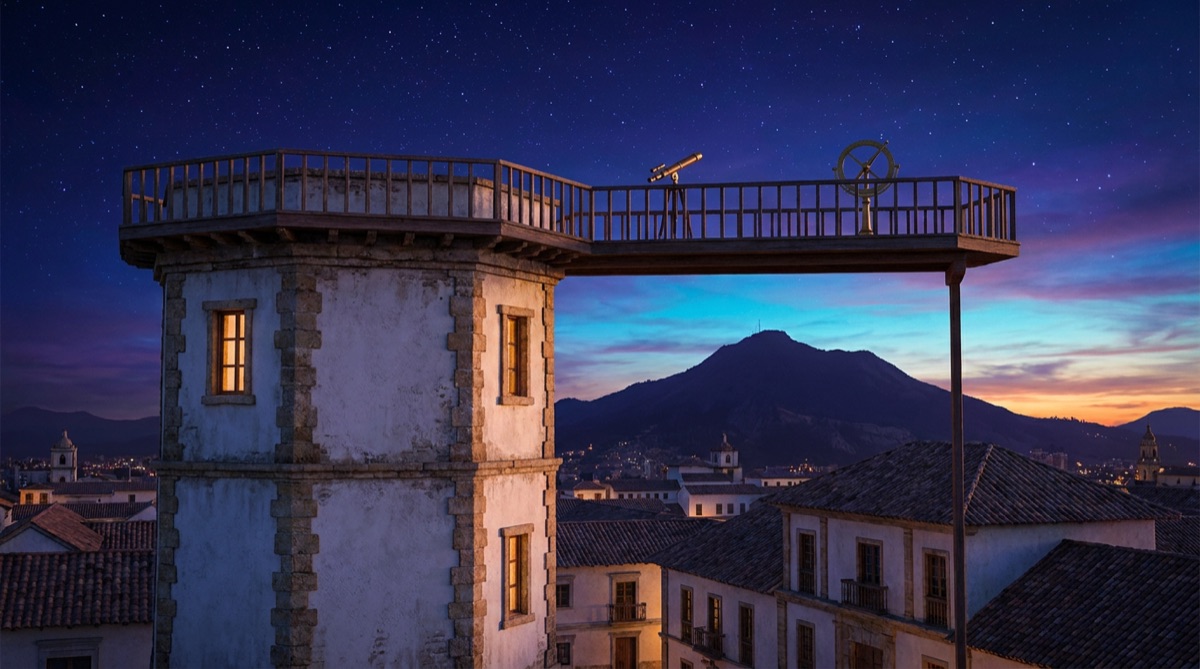
The Astronomical Observatory of Santafé, an octagonal stone tower designed by the friar Domingo de Petrés, was completed on August 20, 1803, on the initiative of Mutis. Caldas took charge in 1805 and, after Mutis’s death in 1808, remained as director. From there he observed eclipses, measured the latitude and longitude of Santafé, data indispensable for making maps, and kept daily meteorological records. In this way he made the observatory a laboratory of the earth and the sky.
On January 3, 1808, he published the first issue of the Semanario del Nuevo Reino de Granada [Weekly of the New Kingdom of Granada], the country’s first scientific journal, in which his “Estado de la geografía del Virreinato” [State of the Geography of the Viceroyalty] and works on the astronomy, climate and geography of the Andes appeared. His idea was that knowledge of the territory should serve to improve the lives of its inhabitants.
His legacy
When the independence movement began in 1810, Caldas joined it and, as a military engineer, drew maps, founded a military academy and organized the manufacture of weapons for the cause. When Spanish troops reconquered New Granada in 1816, he was captured and shot in Santafé at the end of October that year (the most common source says the 29th), on the orders of General Pablo Morillo. The phrase “Spain does not need scholars” is attributed to Morillo, but there is no solid documentary source to support it.
With his death, the scientific project of the Expedition was cut short and the observatory fell into near disuse for decades, until in 1867 it passed to the Universidad Nacional. Today it is the university’s oldest unit, and the Observatorio Astronómico Nacional keeps the tradition alive. For Colombia, Caldas is a symbol of scientific curiosity and of what can be achieved with perseverance. With the Local sky simulator you can see how the Sun rises and how the altitude of the stars changes at the latitude of Bogotá, which he measured with such care.