Her life
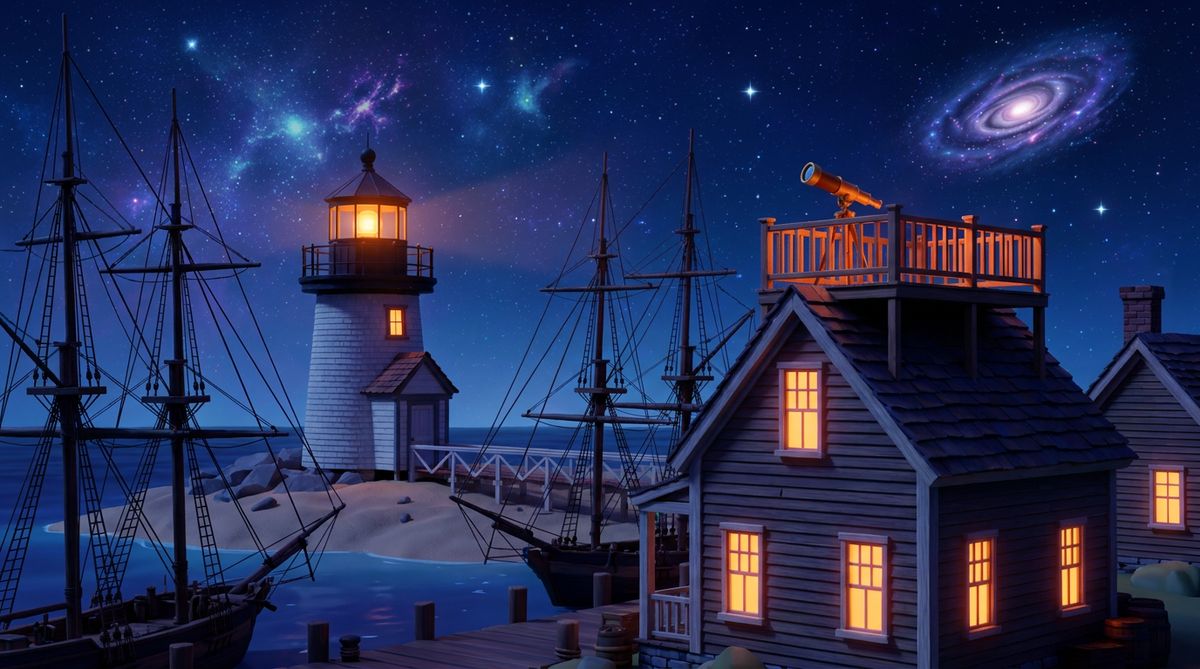
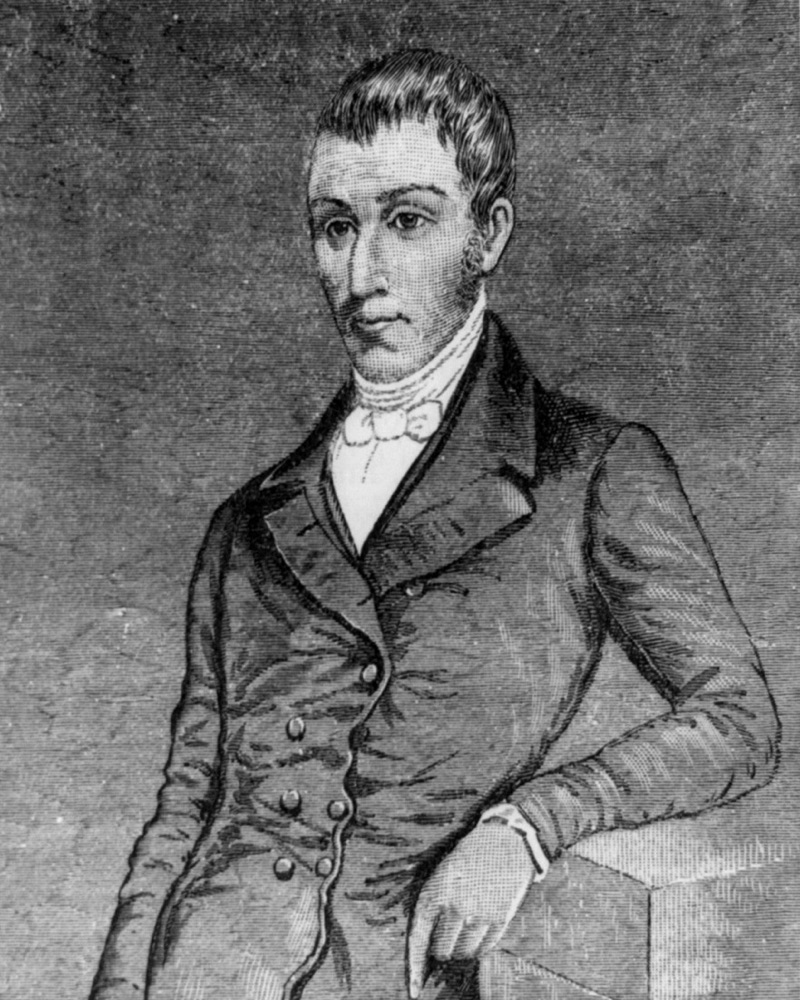
Maria Mitchell was born on August 1, 1818, on the island of Nantucket, a whaling port in Massachusetts. Her parents were Quakers, a community that held that girls and boys should receive the same education. Her father, William Mitchell, was a teacher and amateur astronomer, and he checked the chronometers of the whaling ships: a ship that sets out to sail for months needs to know exactly what time it is in Greenwich in order to calculate its longitude. From childhood Maria helped observe the sky and do calculations. At twelve she was already recording an annular solar eclipse alongside him.
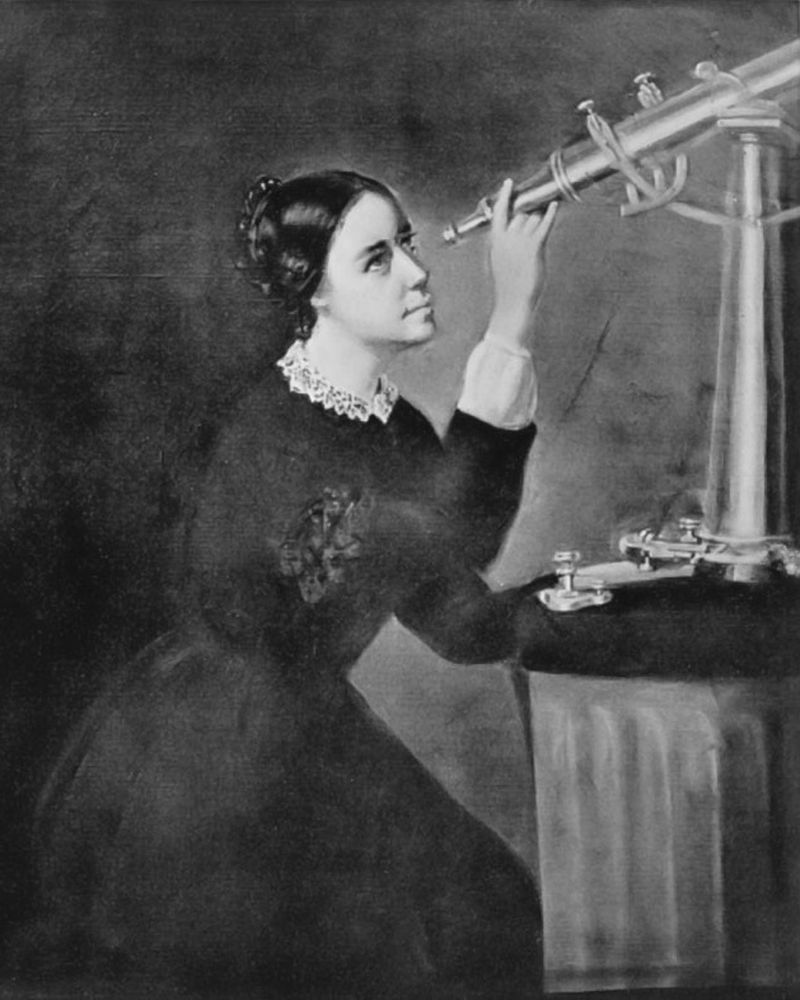
At sixteen she opened a small school of her own and later worked for almost twenty years as librarian of the Nantucket Atheneum. In her free time, on the roof of the family home, she kept observing the stars and planets. She had no university education: she learned mathematics and astronomy by reading and practicing, as her father had done.
A comet from the roof of the bank
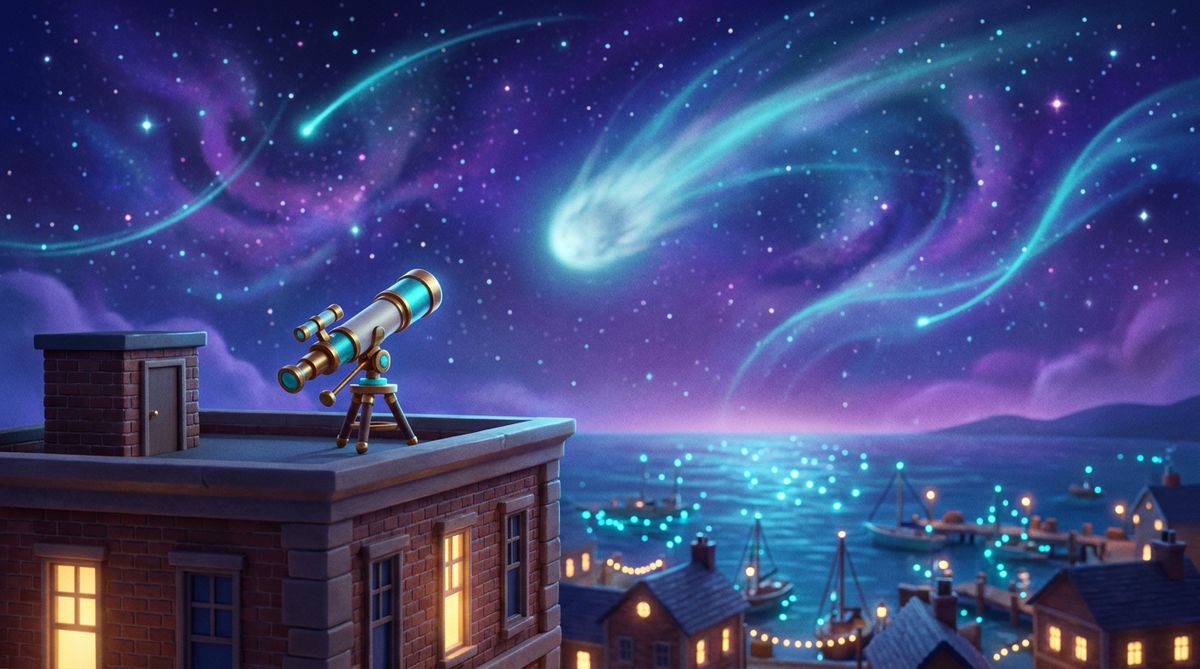
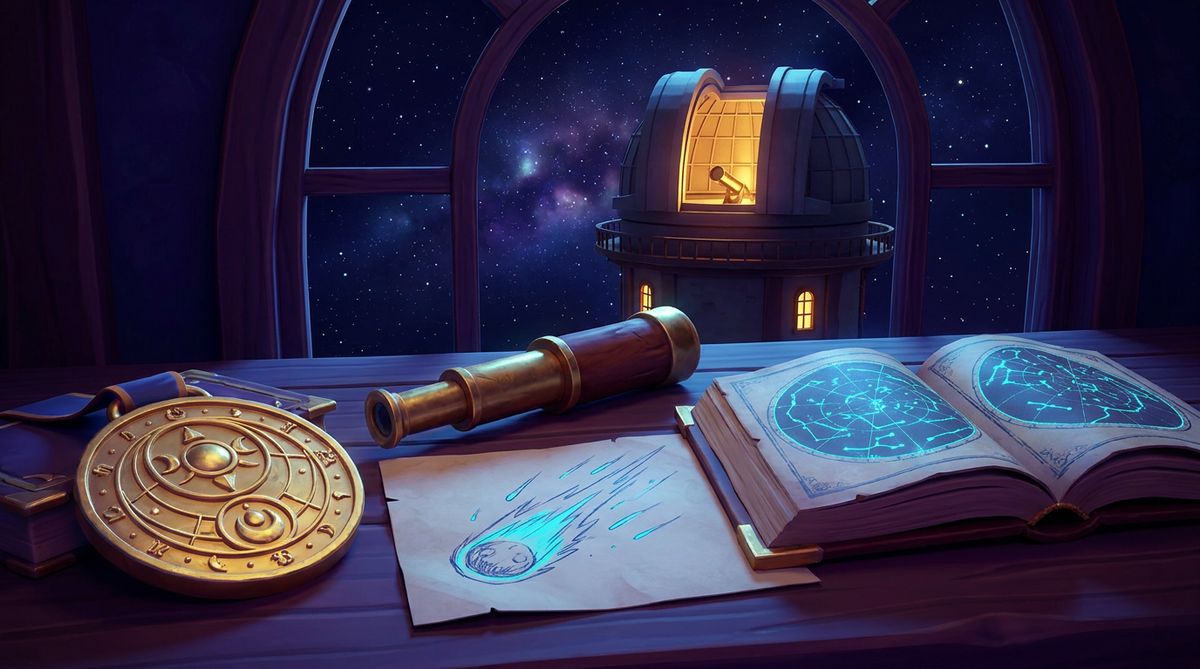
On the night of October 1, 1847, Mitchell was sweeping the sky with a small telescope, about five centimeters in aperture, from the roof of the bank where her family lived. She saw a fuzzy object that was not on her charts and, night after night, confirmed that it was moving among the stars: it was a new comet. An Italian astronomer, Francesco de Vico, saw it two days later, but the priority was hers. King Frederick VI of Denmark had offered a gold medal to whoever discovered a comet with a telescope, and Mitchell received it in 1848. Today the comet is known as C/1847 T1.
The discovery opened doors for her. In 1848 she was the first woman elected to the American Academy of Arts and Sciences, and shortly afterward she joined the American Association for the Advancement of Science. From 1849 she worked as a “computer” for the United States Nautical Almanac Office, where she calculated the future position of Venus: a problem of celestial mechanics that requires solving orbits like those studied in the lesson on Kepler’s laws and that can be explored in the Keplerian orbit simulator. Her observational work also included sunspots, Jupiter, Saturn and the nebulae.
The Vassar professor
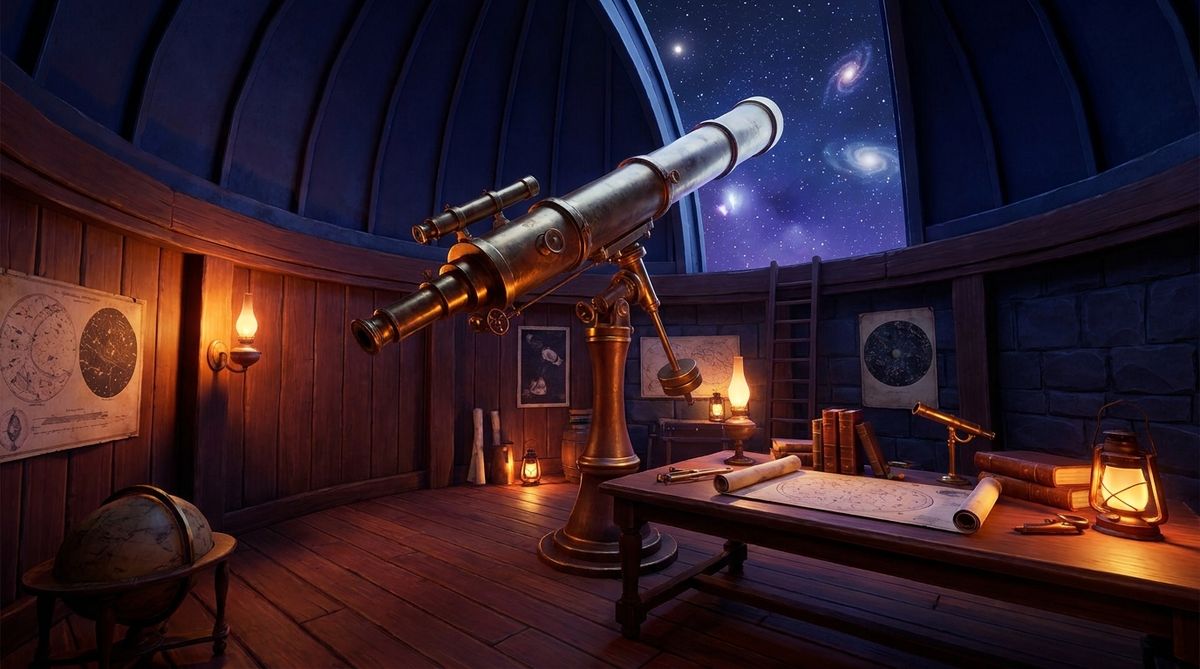
In 1865 Vassar College opened, a college for women only in Poughkeepsie (New York), with an observatory and a refracting telescope of about 31 centimeters. Mitchell was its first professor of astronomy and the director of the observatory, and she held the post until 1888. She taught with few lectures and much observation: she asked her students to measure, to record and to believe nothing without checking it. Among those who were her students were women astronomers who later worked in observatories and universities.
Mitchell argued tenaciously that women should have access to science, and in 1873 she helped found the Association for the Advancement of Women, which she presided over in 1875 and 1876.
In 1869 she traveled with a group of scientists to Iowa to observe a total solar eclipse. When she retired in 1888, she returned to Lynn, Massachusetts, where she died on June 28, 1889.
Her legacy
Mitchell did not discover any law of nature, but she proved something just as important: that a woman could discover, calculate and teach astronomy at the same level as her male colleagues. Her greatest work was training generations of women scientists at a time when almost no institution opened its doors to them. Her career paved the way for the Harvard “computers”, such as Henrietta Leavitt and Annie Jump Cannon.
In Nantucket, the Maria Mitchell Association today preserves her birthplace and an observatory, and keeps her memory alive with astronomy outreach activities.