His life
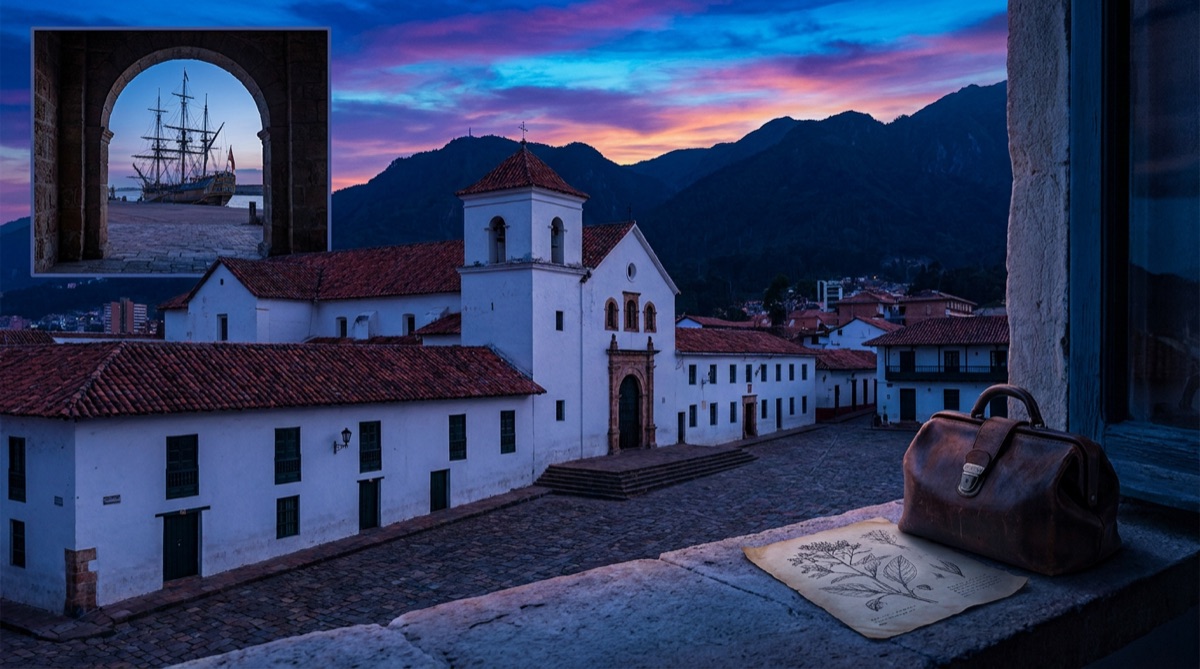
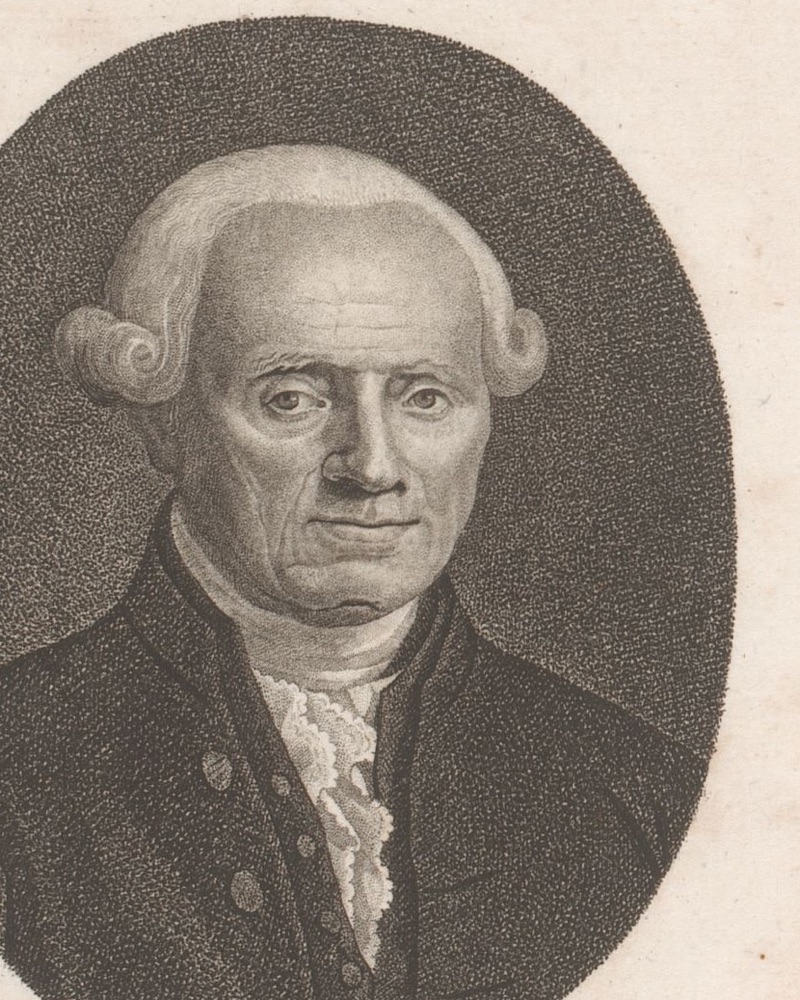
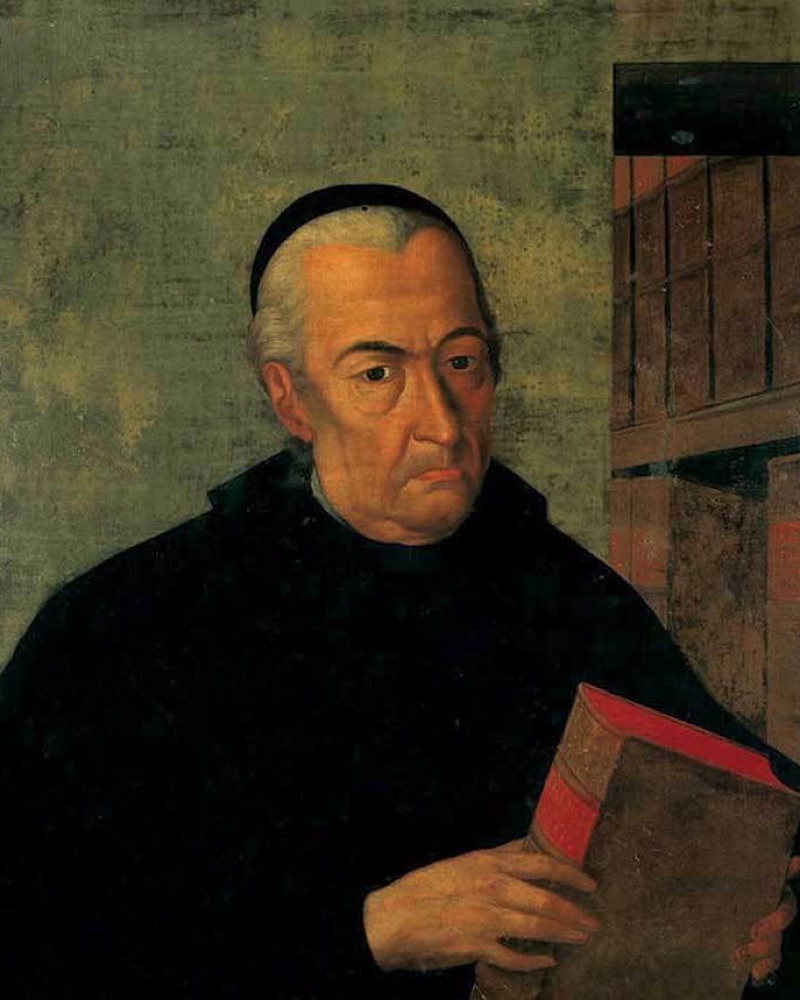
José Celestino Mutis was born in Cádiz, the main port of trade with the Americas, on April 6, 1732. He studied medicine in Seville and Madrid, where he also took an interest in botany and astronomy, and practiced as a physician. In 1760 he accepted the post of physician to the new viceroy of New Granada, Pedro Messía de la Cerda, and in early 1761 he landed at Cartagena de Indias. From there he went up the Magdalena River to Santafé de Bogotá, the capital of the viceroyalty, where he would live until his death.
He never returned to Spain. He was a physician, a mine owner, a teacher and, from 1772, a priest. He corresponded with the Swede Carl Linnaeus, the great classifier of plants, and with many European scholars. He died in Santafé on September 11, 1808, at the age of seventy-six, as the crisis that would lead to independence was already looming.
Copernicus in the classrooms of Santafé
A few months after his arrival, in 1762, Mutis opened the chair of mathematics at the Colegio Mayor de Nuestra Señora del Rosario. In New Granada a philosophy based on Aristotle was taught, for which the Earth stood still at the center. Mutis explained the model of Copernicus and the physics of Newton as a European professor of his day would have. The date of the public lecture in which he defended the Copernican system most forcefully is disputed: some authors place it in 1762 and others in late 1773. What is not disputed is that he was one of the first to teach that astronomy in the viceroyalty, and that it earned him attacks from conservative circles, which saw heliocentrism as a danger to the faith.
With those classes he opened the way for modern science in Colombia: his students and disciples were the first New Granadans to observe the sky with instruments, compute positions and measure altitudes.
The Royal Botanical Expedition and the observatory
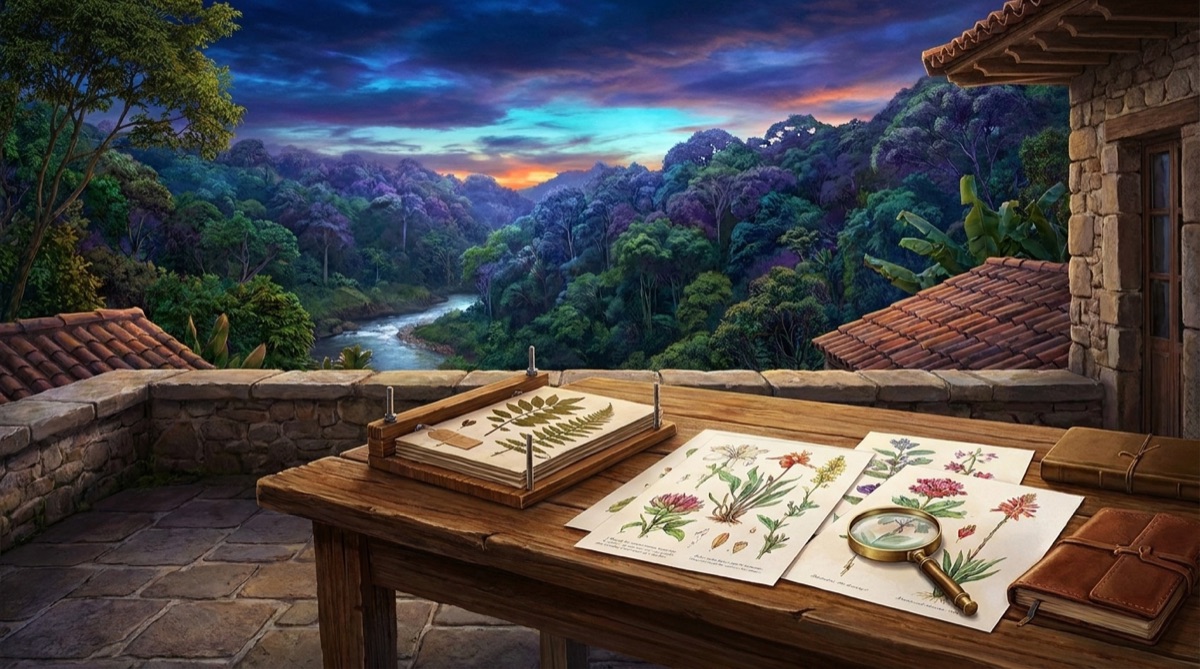
In 1783, King Charles III approved by royal decree the Royal Botanical Expedition of the New Kingdom of Granada, and Mutis was its director. The expedition worked first in Mariquita (1783–1791) and then in Santafé. It assembled herbaria and studies of plants, and a workshop of painters and draftsmen produced thousands of full-color plates of plants, today a treasure of the Real Jardín Botánico in Madrid. Mutis studied cinchona (the bark from which the first remedy against malaria was obtained), and that knowledge had great economic value.
But the expedition was not only botanical. To locate the plants, the towns and the roads, the latitude and longitude of the territory had to be known, and that required observing the sky. Mutis devoted years to the idea of building an observatory. In 1801 the German naturalist Alexander von Humboldt and the French botanist Aimé Bonpland visited him in Santafé. The octagonal tower of the Astronomical Observatory, designed by the Capuchin friar Domingo de Petrés, was built between May 1802 and August 1803, next to the Expedition’s house. It is the oldest surviving building in the Americas constructed expressly as an observatory. To direct it, Mutis called from Quito a self-taught young man, Francisco José de Caldas, who arrived in 1805.
His legacy

Mutis was not a great astronomical discoverer, but he did something just as important: he sowed a scientific community. Around him worked Jorge Tadeo Lozano, Francisco Antonio Zea and others who, a few years later, would be leading figures of thought and of independence, and Caldas joined that circle. The tower of the Observatory, in Bogotá, still stands and is the starting point of the history of astronomy in Colombia; since 1867 it has belonged to the Universidad Nacional, as the Observatorio Astronómico Nacional. With the Local sky simulator you can see the sky of Bogotá, at 4.6° north latitude, much like the one the observers of 1803 saw.