His life
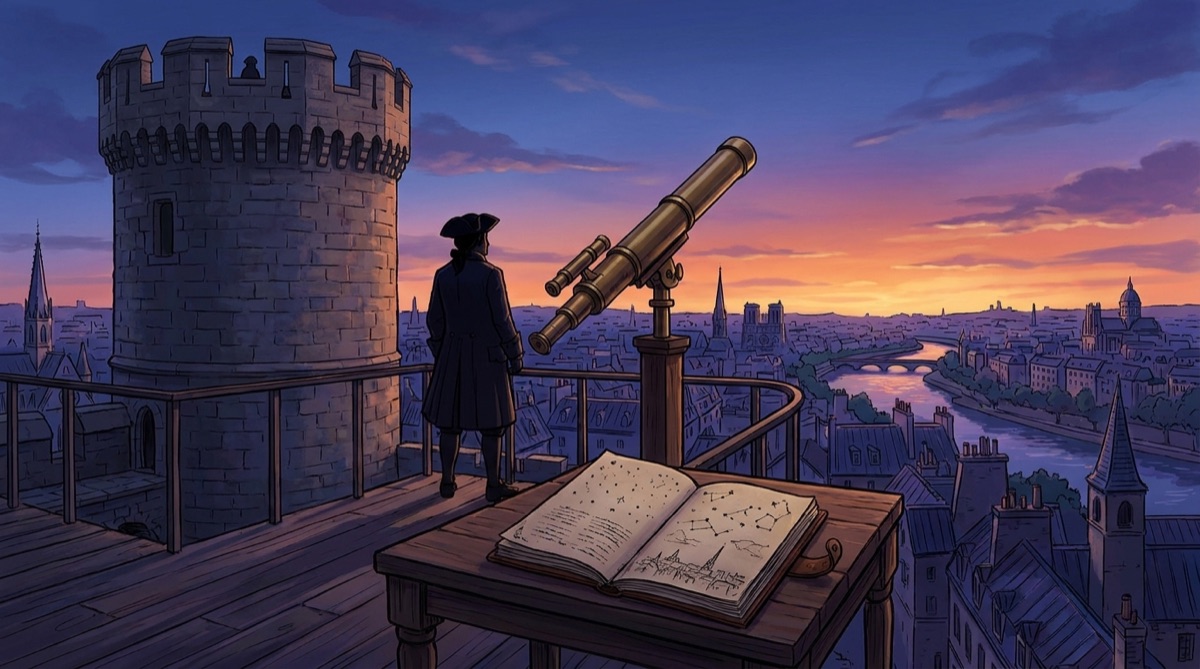
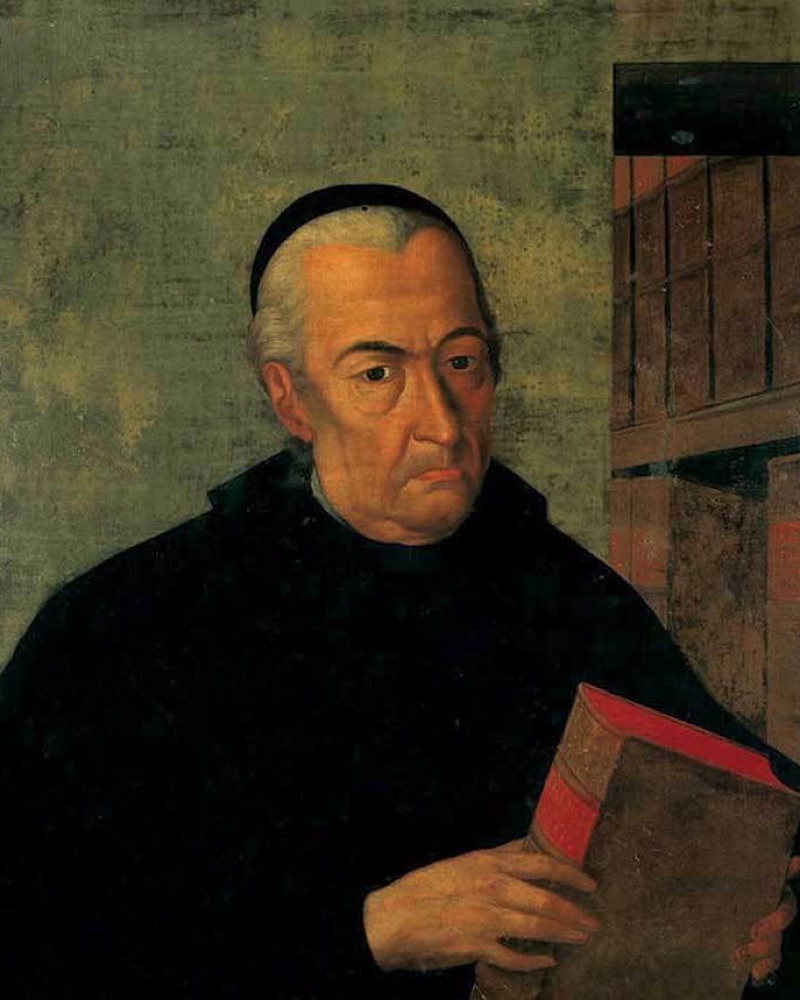
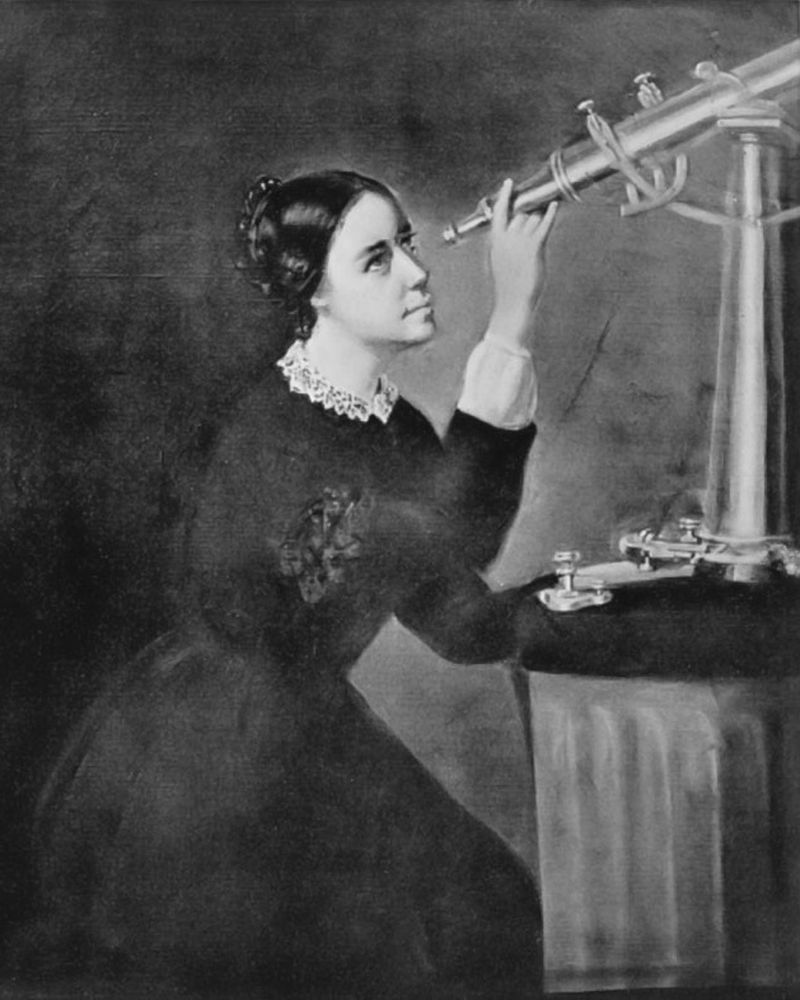
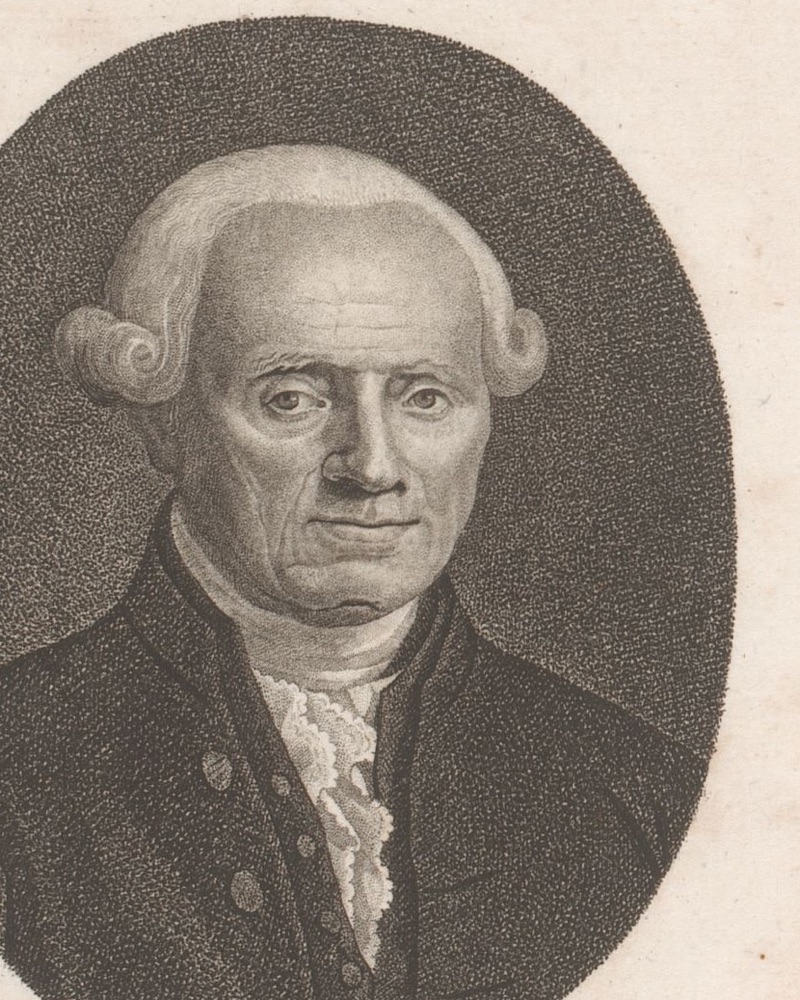
Charles Messier was born on June 26, 1730, in Badonviller, a village in Lorraine, into a large family; his father died when he was eleven. At twenty-one he arrived in Paris with no degree, good handwriting and plenty of tenacity, and entered as assistant to the astronomer of the Navy Joseph-Nicolas Delisle, at the observatory of the Hôtel de Cluny. Delisle taught him to observe and instructed him to record everything regularly. Messier did so for more than fifty years.
In time he became astronomer of the Navy (with a small observatory at the top of the tower of the Hôtel de Cluny) and, from 1770, a member of the Paris Academy of Sciences. He died in Paris on April 12, 1817, at the age of eighty-six. He was neither a theorist nor a discoverer of planets: he was a methodical observer, and that is why his work became a classic.
Comet hunter
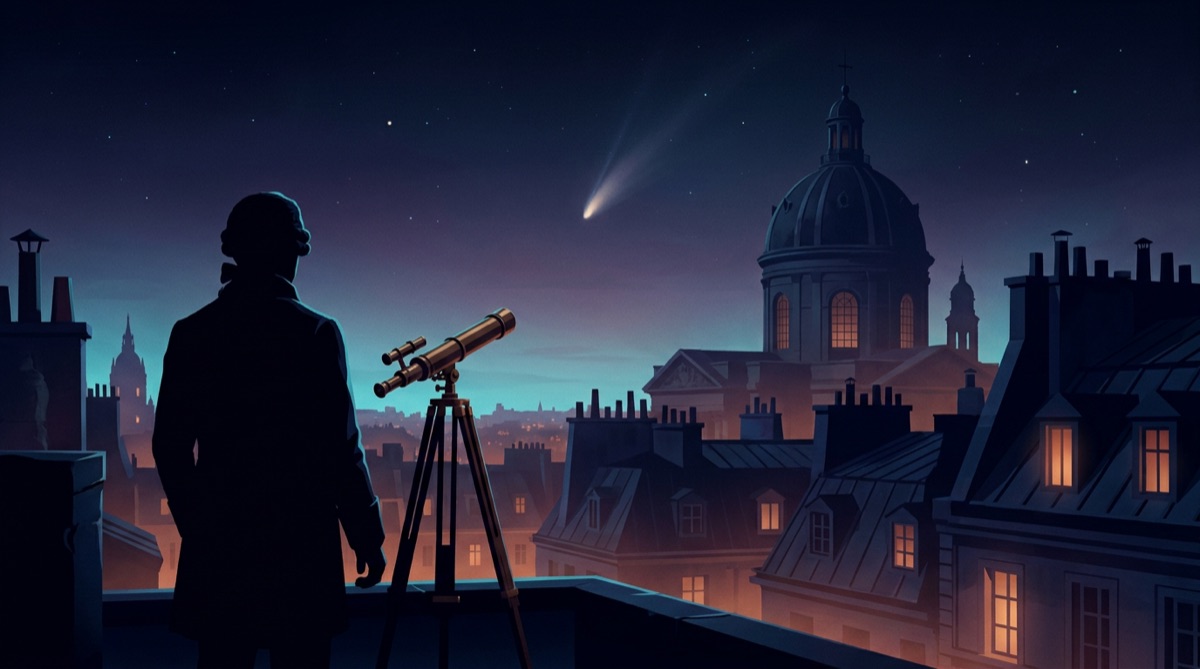
In his day, discovering a comet brought fame. Comets were sought with small telescopes, night after night, looking for a blurry patch moving among the stars. Messier devoted himself to that task. On January 21, 1759, he observed, in Paris, the return of the comet that Edmond Halley had predicted, although the credit for the first sighting went to the German amateur Palitzsch, who saw it a month earlier. Between 1760 and 1798 he discovered thirteen comets on his own. It is said that King Louis XV called him “the ferret of comets”, for his nose for finding them.
The Messier catalog
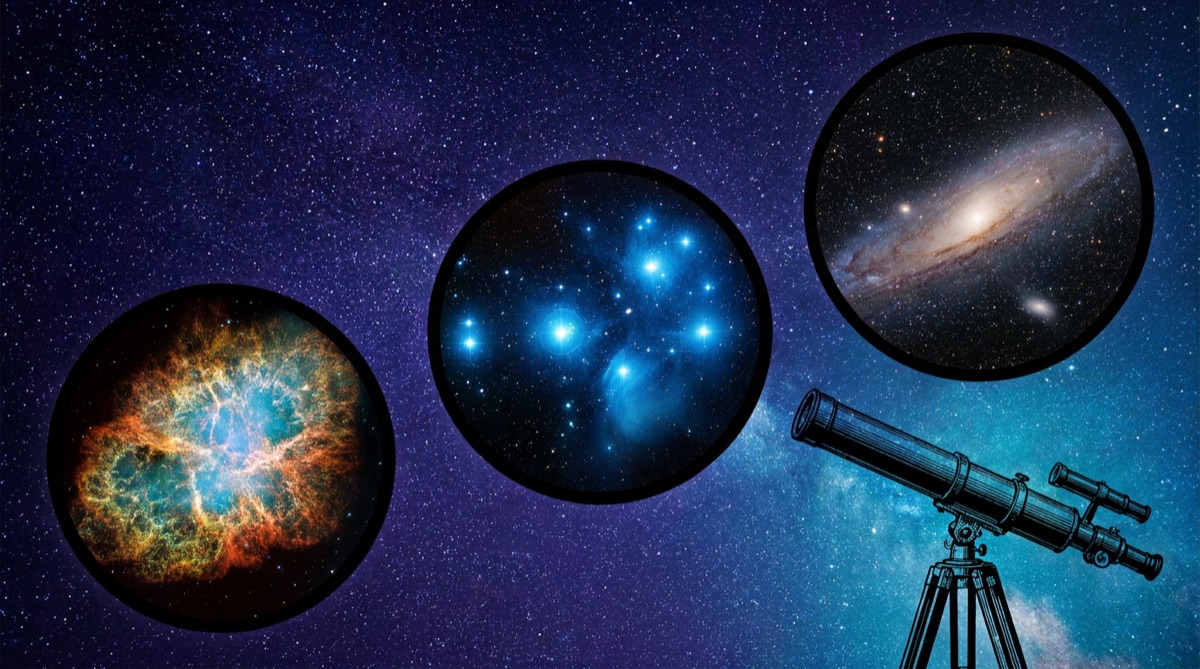
On the night of September 12, 1758, while following the comet that turned out to be Halley’s, Messier found in the constellation of Taurus a pale patch that did not move. It was not a comet. So as not to be fooled again, he decided to make a list of such objects, to avoid confusing them another time. That was the first, today called M1. It is the Crab Nebula, the remains of a supernova that Chinese astronomers recorded in the year 1054. Over time he gathered nebulae, star clusters and other fuzzy patches that, in a small telescope, could pass for comets. He published 45 in 1774 and 103 in the 1781 edition, with the help of his colleague Pierre Méchain, who discovered several of them.
Messier did not know what those objects were, and what he gathered is a sample of the best of the sky. M31, in Andromeda, is a galaxy like our own, some 2.5 million light-years away. M42 is the great Orion Nebula, a cloud where stars are born. M45 is the Pleiades. Today the list reaches M110, because other astronomers added objects that Messier or others had observed and that had been left out of the original edition. Among amateurs the “Messier marathon” is a tradition: trying to see, in a single spring night, as many objects on the list as possible.
His legacy
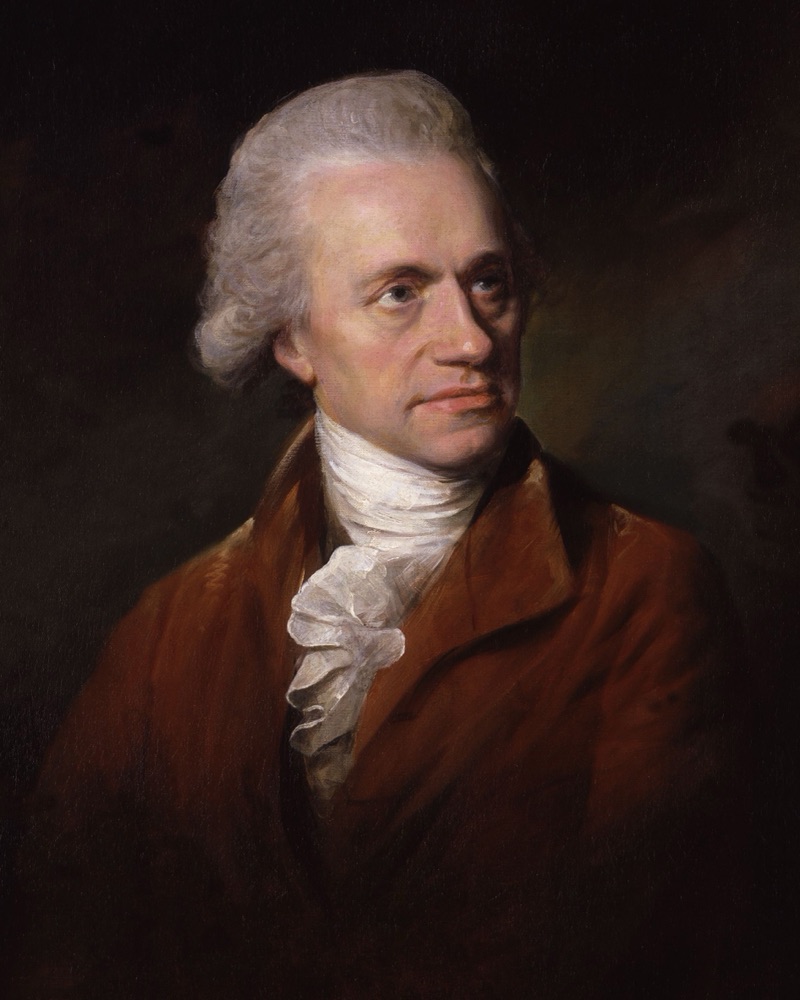
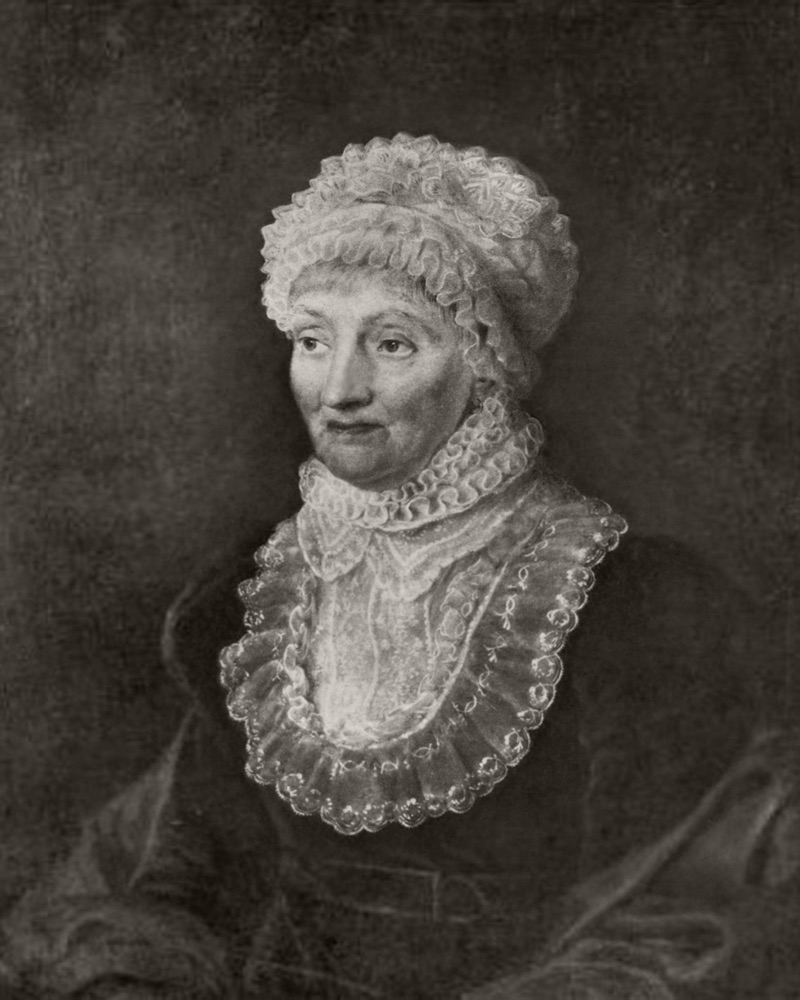
Messier believed his list was only a tool against comets; without meaning to, he built the first great catalog of deep-sky objects. He put in order, with precise positions, objects that until then had been rumors in astronomers’ books, and left them to those who came after. William Herschel and his sister used much larger telescopes to extend that search and gather thousands of nebulae.
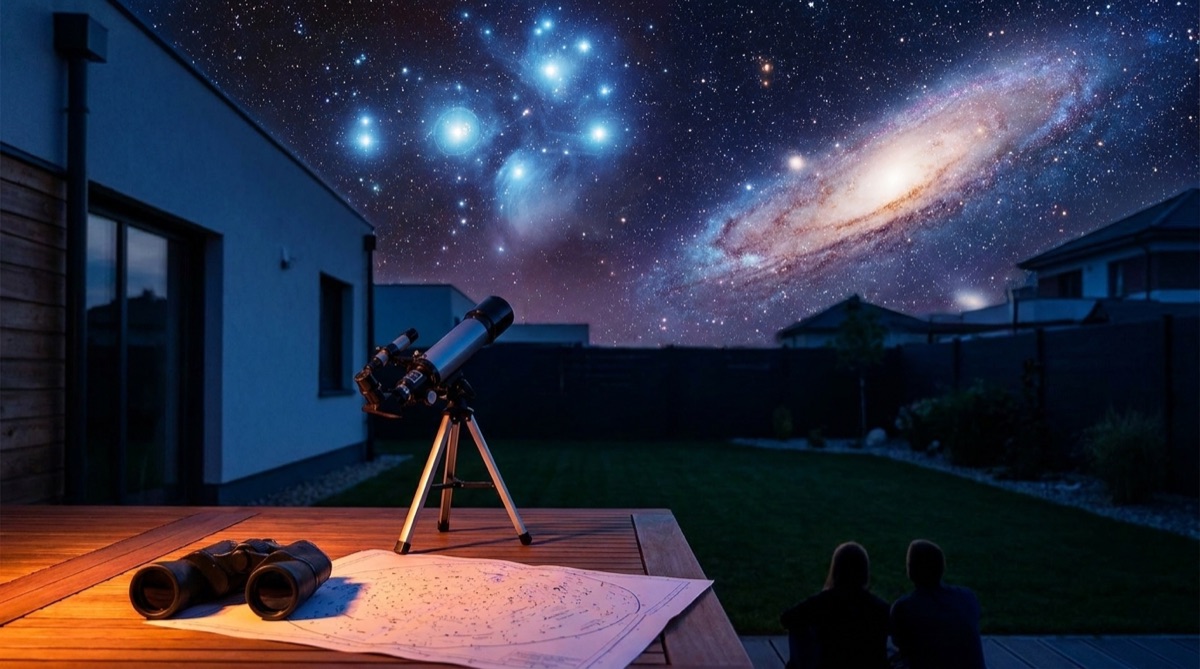
Every amateur who points a pair of binoculars at the Pleiades, or who looks for the Andromeda Galaxy with a small telescope, repeats the gesture of a man who surveyed the sky from a rooftop in Paris. You can find many of his objects with the Planetarium and practice for your first night of observing.