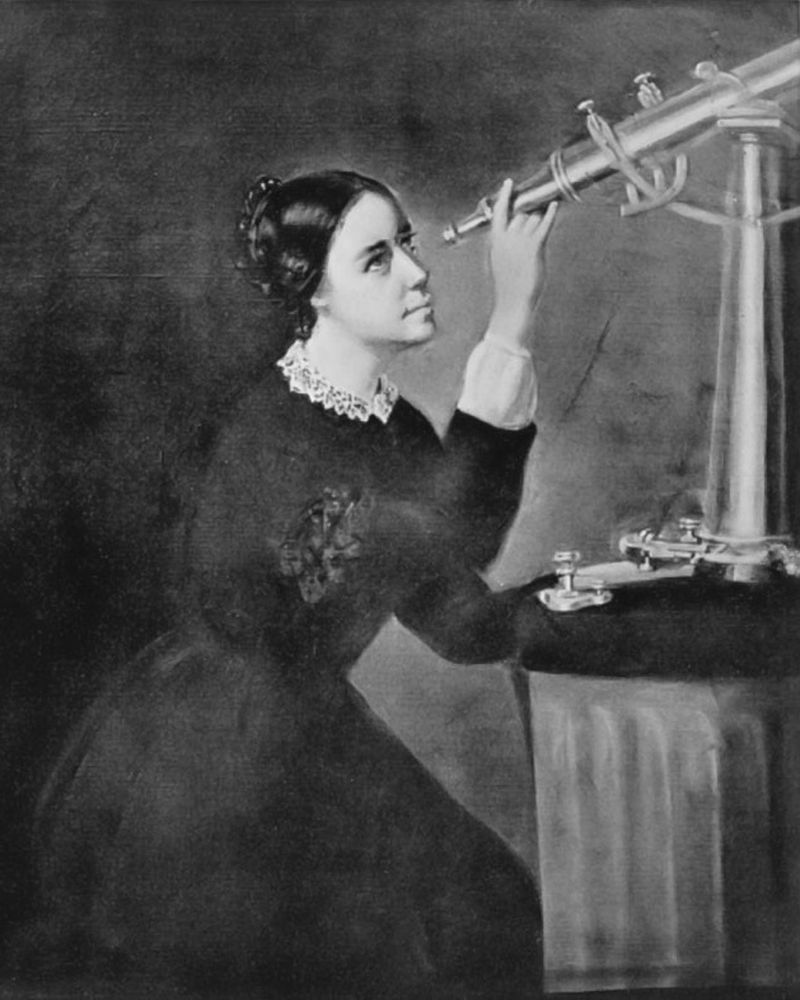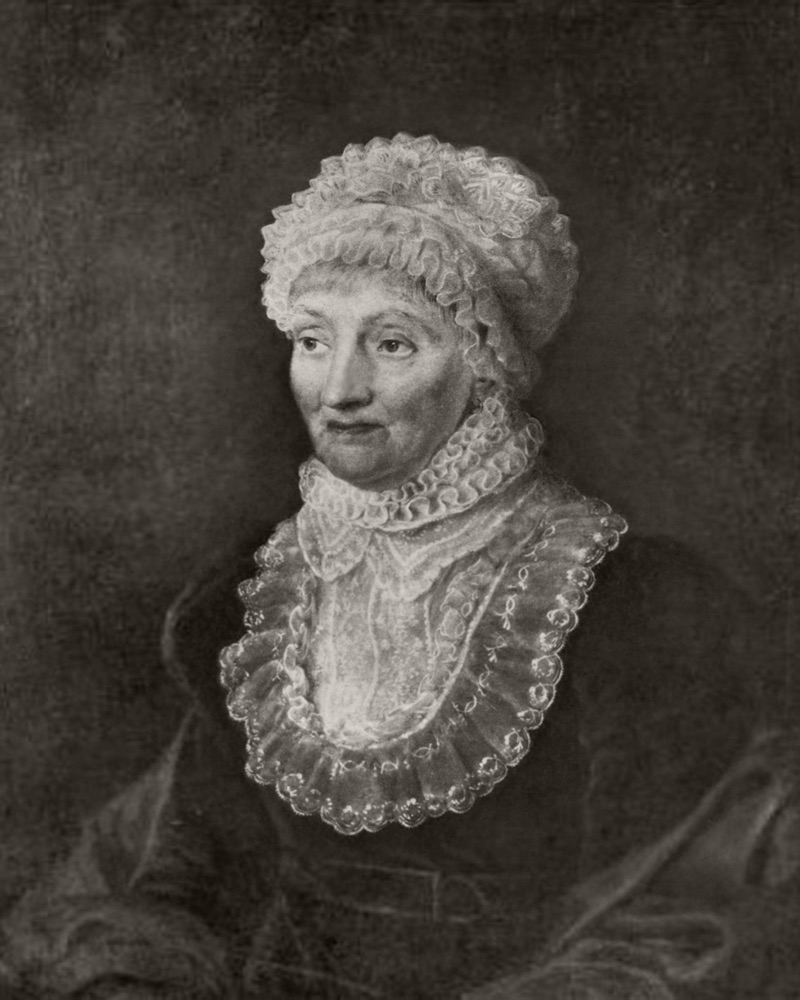
Her life
Caroline Lucretia Herschel was born in Hanover on March 16, 1750, the eighth of ten children of the oboist Isaac Herschel. At the age of ten, typhus left her with stunted growth (she grew to little more than 1.30 m) and, as she herself recounted, her mother decided that she should stay at home as a servant. Her father, on the other hand, had taught her to read and to understand music. When he died, in 1767, Caroline was left without a way out, until in 1772 her brother William, already established in Bath, invited her to England. She arrived with the idea of becoming a singer, and she succeeded: under William’s direction she was a solo soprano in oratorios such as Handel’s.
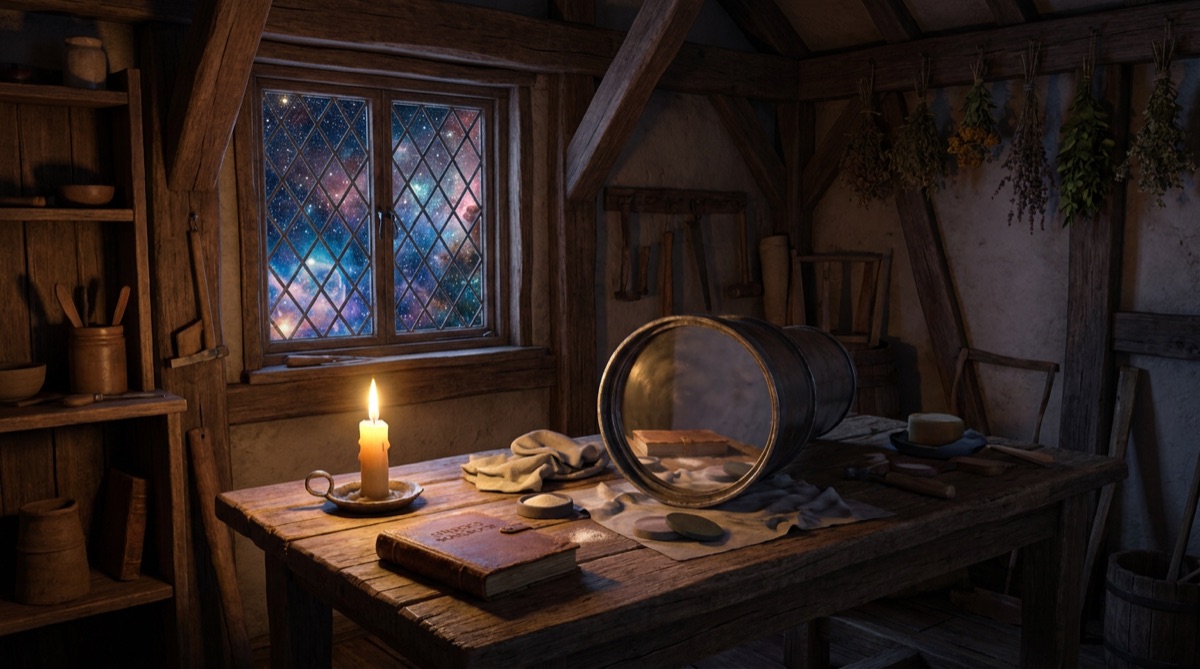
But her life changed when William gave himself over to astronomy. Caroline went from singing to assisting him: she handed him tools, polished mirrors for hours, calculated, copied his notes and, when he made observations, wrote down each measurement as he dictated. When William discovered Uranus in 1781 and moved to Datchet and then to Slough, she followed him and gave up singing.
Eight comets
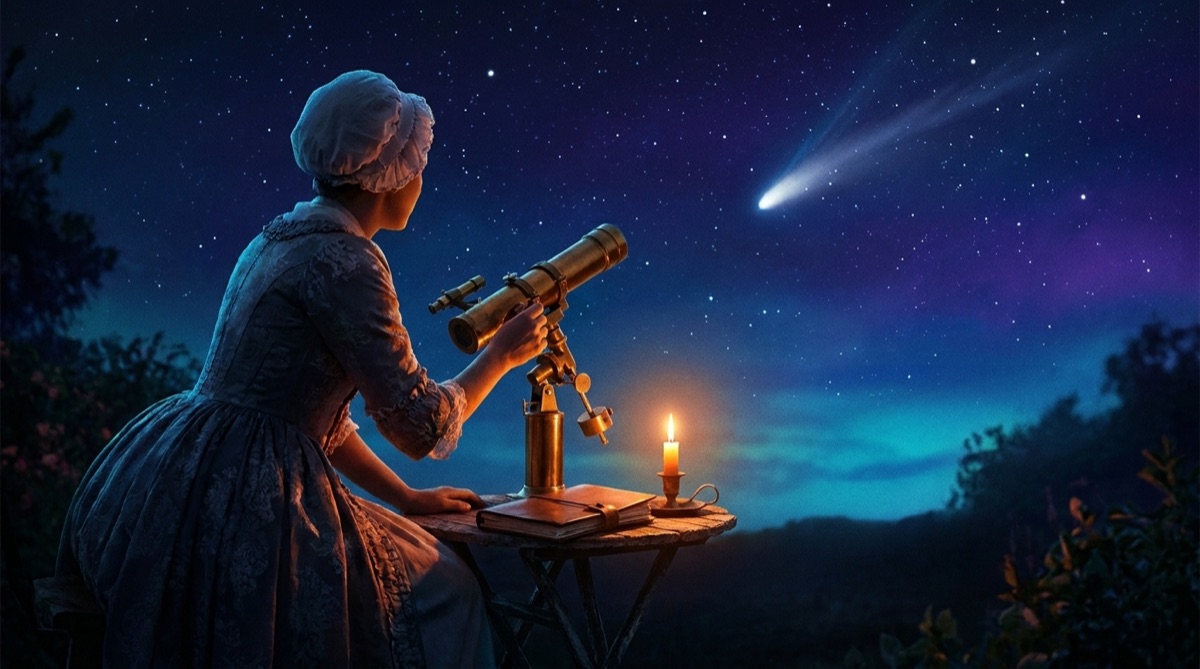
Around 1782 William gave her a small telescope and suggested that she explore the sky on her own. Caroline learned to sweep the sky methodically, and with her small telescope, a Newtonian reflector, she discovered several nebulae and clusters. In 1783 she found the one known today as M110, a companion of the Andromeda Galaxy. But what brought her fame were the comets: on August 1, 1786, she saw a new one and alerted the astronomers. In all she discovered eight comets, the last in 1797. By 1787 King George III had granted her an annual salary of 50 pounds as her brother’s assistant, which made her the first woman paid to do astronomy in England.
While William observed, she wrote down what he dictated. From those notes catalogs later emerged, and that discipline served her for something more: putting things in order. In 1798 the Royal Society published her Index to Flamsteed’s Observations, a corrected version of John Flamsteed’s catalog with the stars that had been omitted and some five hundred and sixty more: a labor of patience that astronomers used for a long time.
Ordering the sky
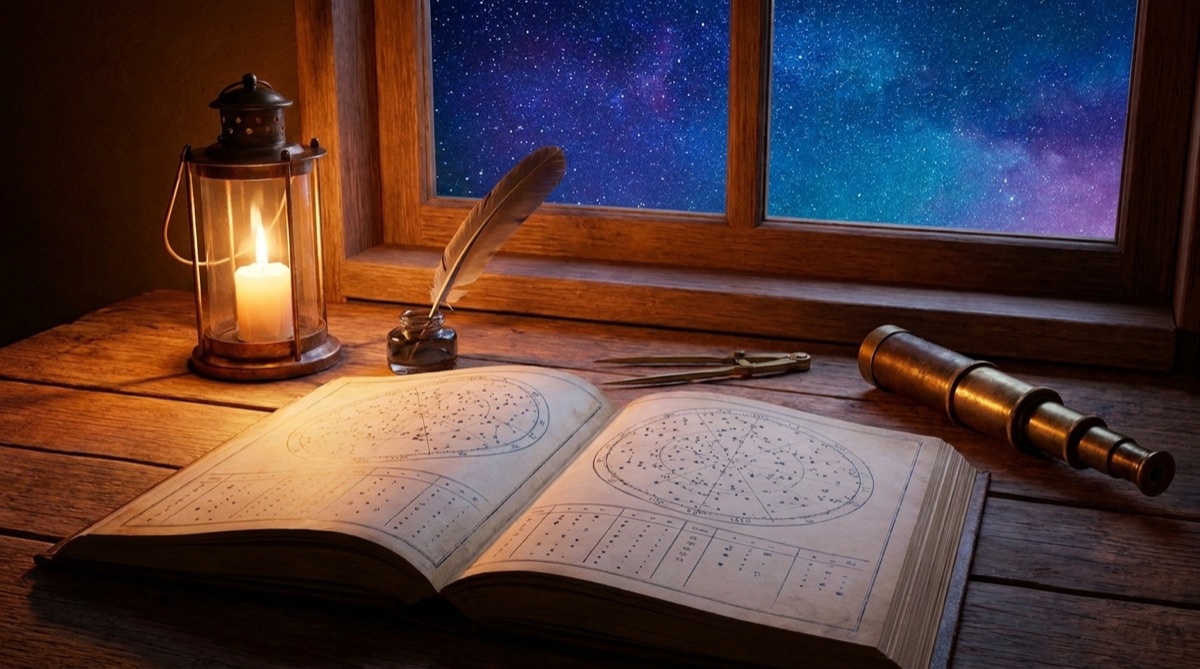
When William died in 1822, Caroline, at seventy-two, returned to Hanover. She did not stop working: she reorganized her brother’s observations of nebulae and clusters into a catalog ordered by zones of the sky, so that her nephew John Herschel, William’s son, could repeat and extend them. That catalog, with some 2 500 objects, was the basis of John’s later work, and for it she received in 1828 the Gold Medal of the Royal Astronomical Society of London. In 1835 the Society named her, together with Mary Somerville, an honorary member: they were the first two women to receive that honor.
Her legacy
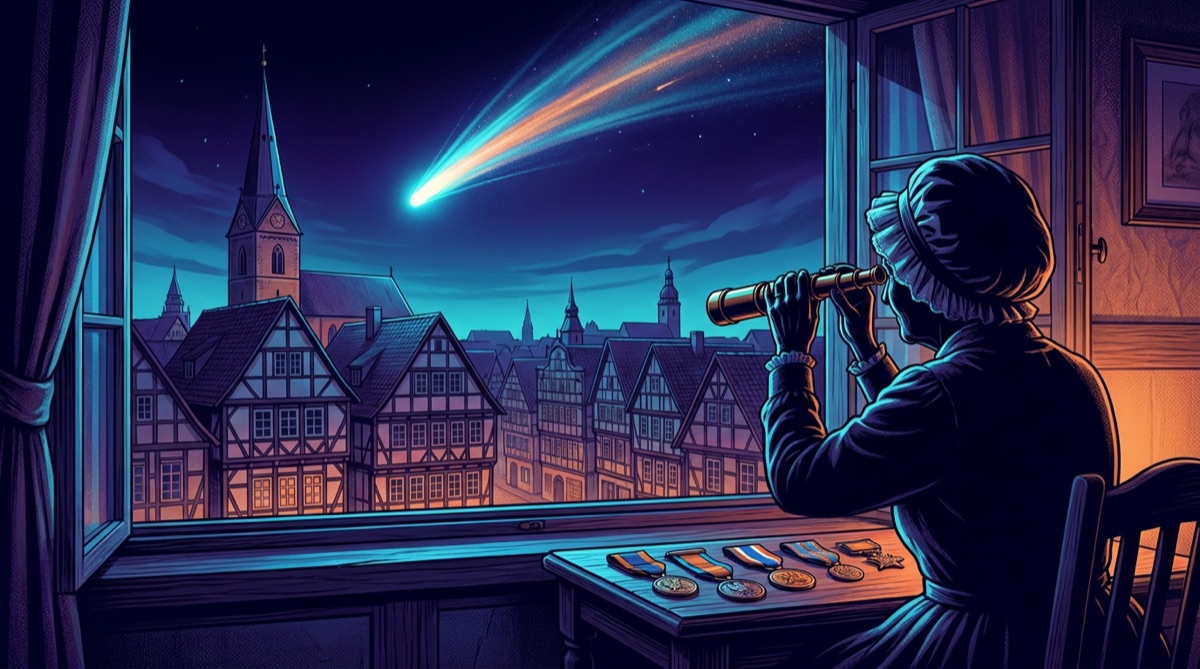
Caroline Herschel lived to almost ninety-eight and died in Hanover on January 9, 1848. In 1846, for her ninety-sixth birthday, the King of Prussia awarded her the Gold Medal for Science. She kept up her interest in the sky to the end.
She is usually remembered as “Herschel’s sister”, but her work has value of its own: she was an observer, a computer, a cataloger and a discoverer, at a time when almost no scientific door was open to women. A crater on the Moon and the asteroid 281 Lucretia (after her middle name) were named for her. To learn to recognize a galaxy like the one she found beside Andromeda, you can use the Planetarium.