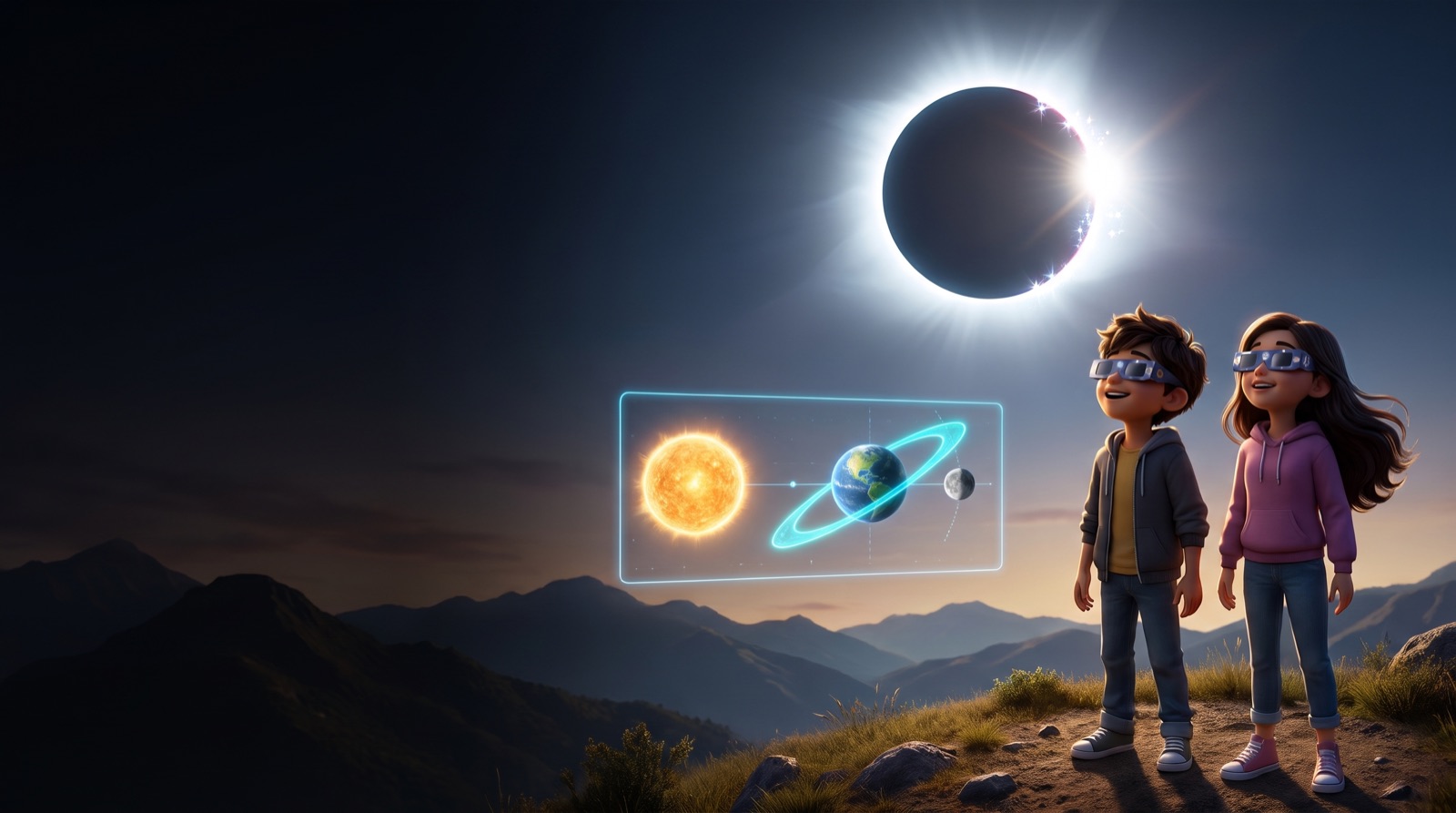
 13 years old · Grades 8 and 9 · Secondary Education
Grade 8
“Why isn't there an eclipse every month?”
Units of the year
- Unit 1
The speed of light
- Linear function d = c·t
- The light-year
- Rømer and Jupiter's moons
- 📘 The speed of light and the light-year · 110 min
- Unit 2
Phases and eclipses
- Sun–Earth–Moon geometry
- Synodic and sidereal months
- 📘 Phases of the Moon and eclipses · 120 min
- Unit 3
The celestial sphere
- Coordinates on the sphere
- Tilt of the Moon's orbit
- 📘 Celestial coordinates · 120 min
- 📘 Solar time and sidereal time · 110 min
Math you will use
Linear function and slopeFirst-degree equationsGeometry of the circleCoordinate systems
Complementary lessons
All the lessons for this grade are inside its units.
Simulators
-
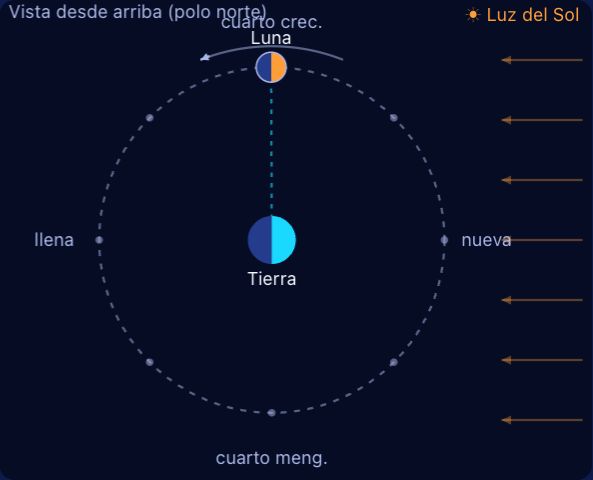
Phases of the Moon
Sun–Earth–Moon geometry seen from above and from Earth (northern or southern hemisphere); the real phase for any date, and the latitude of the Moon to understand eclipses.
-
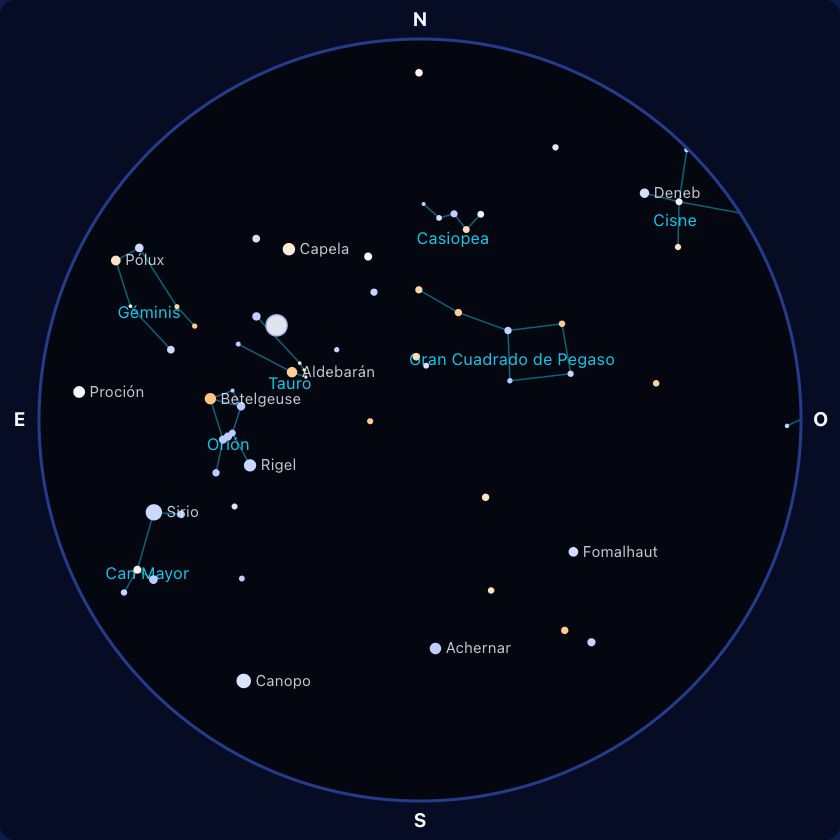
Interactive planisphere
The sky visible from any place and time: 140 bright stars with their color, constellations, Sun and Moon, in stereographic projection (zenith at the center, east on the left).
Grade project
Predict the date and time of the next eclipse visible from Colombia and verify it.
Full project sheet: 5 weeks, materials, phases and rubric →
🏆 Badge: Eclipse Hunter
Use the Moon's latitude to explain why there was no eclipse in a given month.