Context
Until 1800 astronomy consisted almost entirely of measuring positions: where each celestial body is and how it moves. An eclipse could be predicted with enormous precision, but nobody knew what a star is made of or why it shines. The philosopher Auguste Comte wrote in 1835 that the chemical composition of the stars would remain forever beyond human reach; he was wrong by barely twenty-five years.
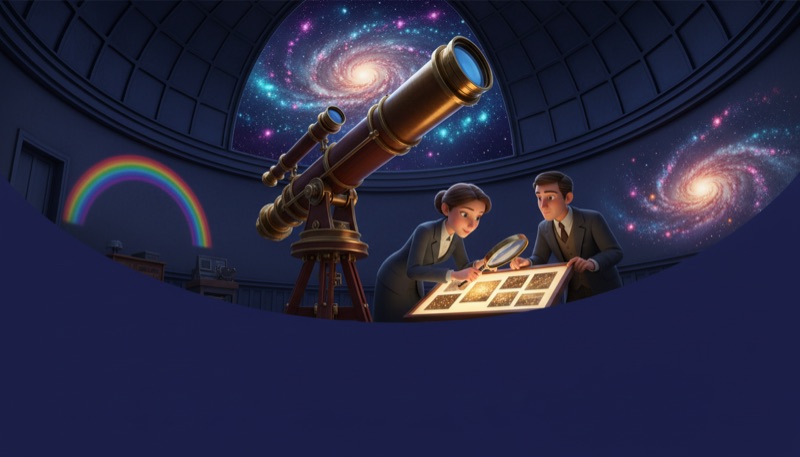
What changed was the way of looking. Instead of measuring where the light is, astronomers began to ask what light is: how it splits into colors, what lines cross it, how much heat it carries. That turn, born in optical workshops and chemistry laboratories in Europe, transformed astronomy into astrophysics: physics applied to the sky. In the 20th century astrophysics grew to encompass the entire universe, and in the 21st it stopped depending on light alone: now we also “hear” spacetime.
Major contributions
Light as messenger
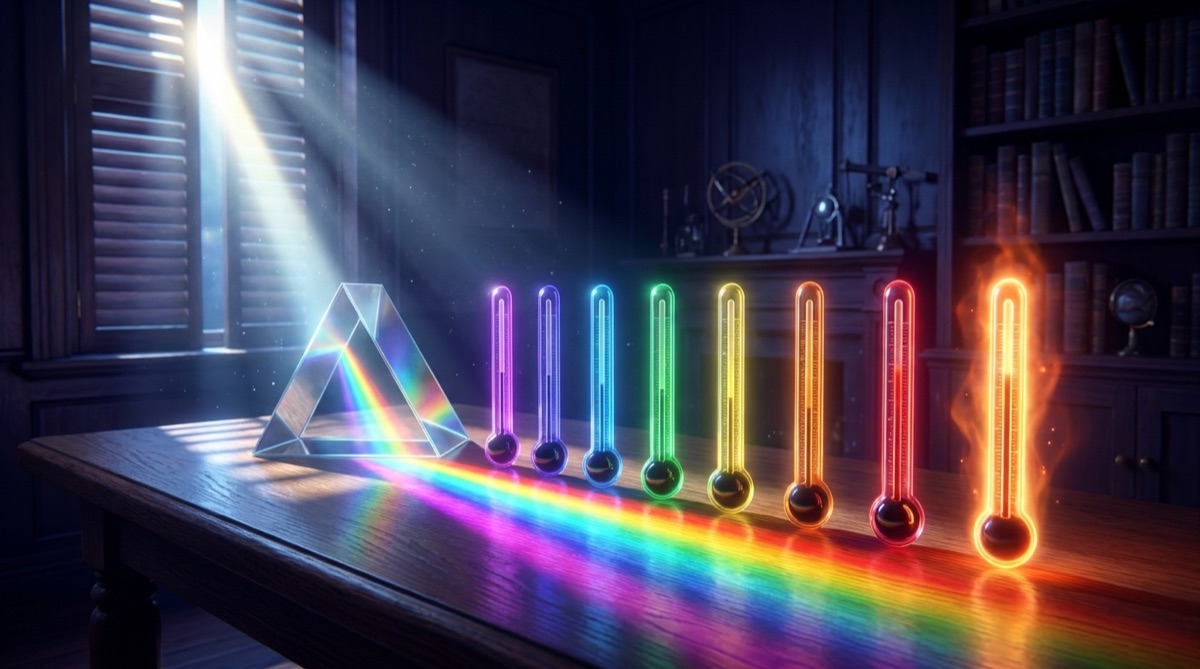
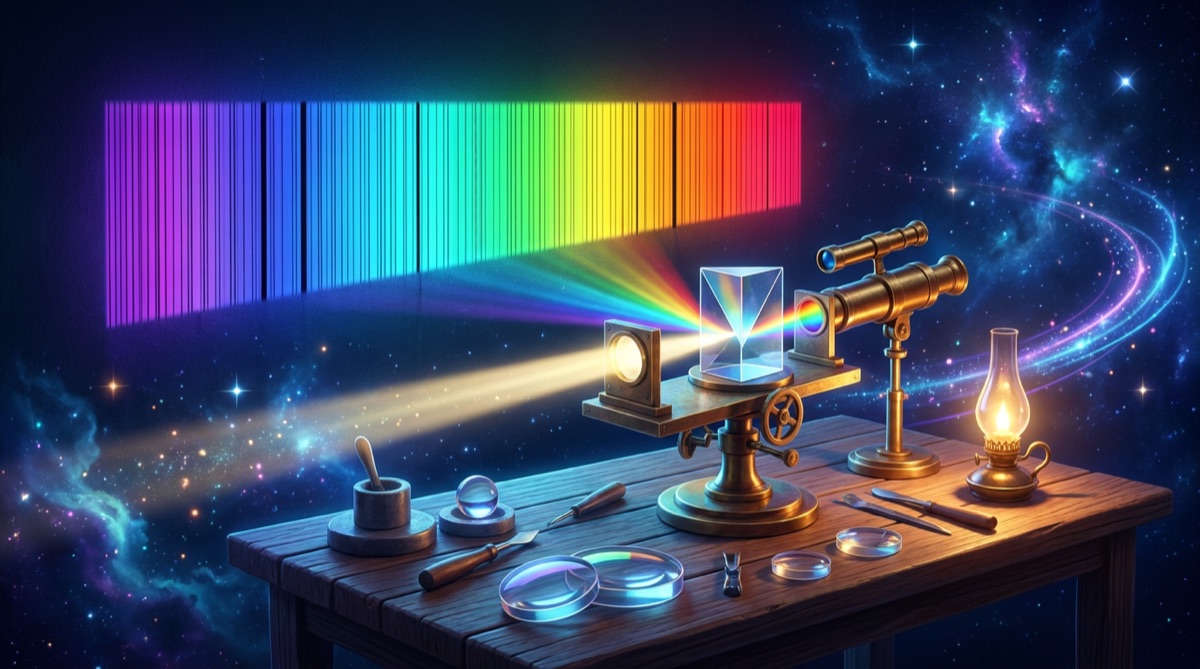
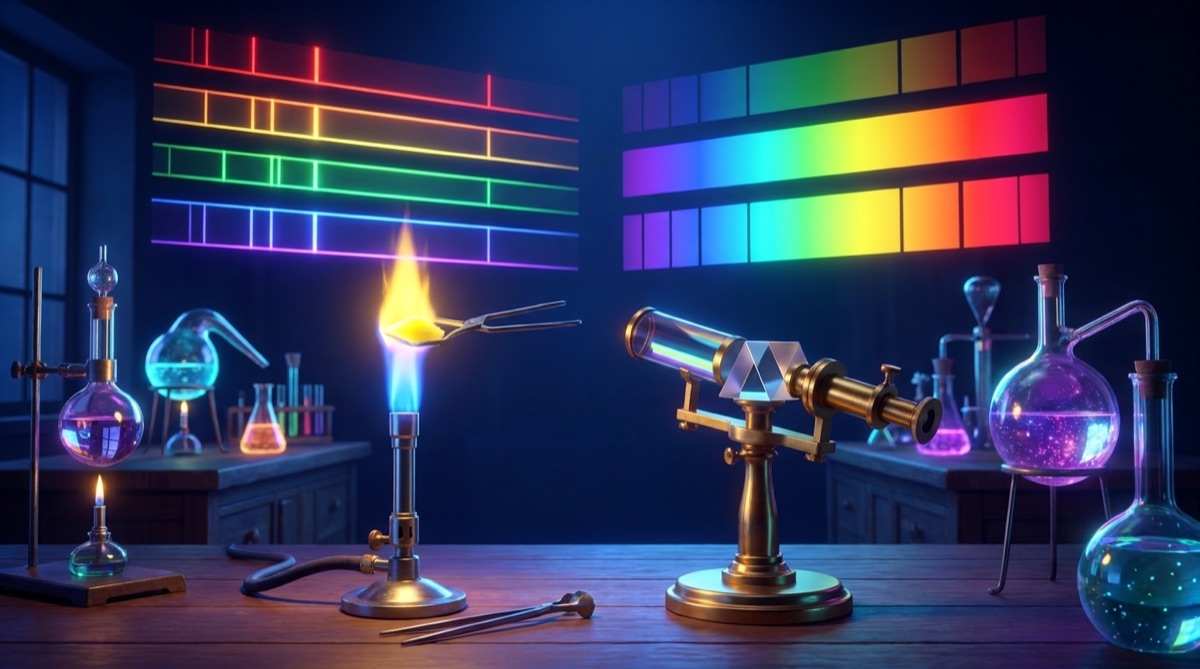
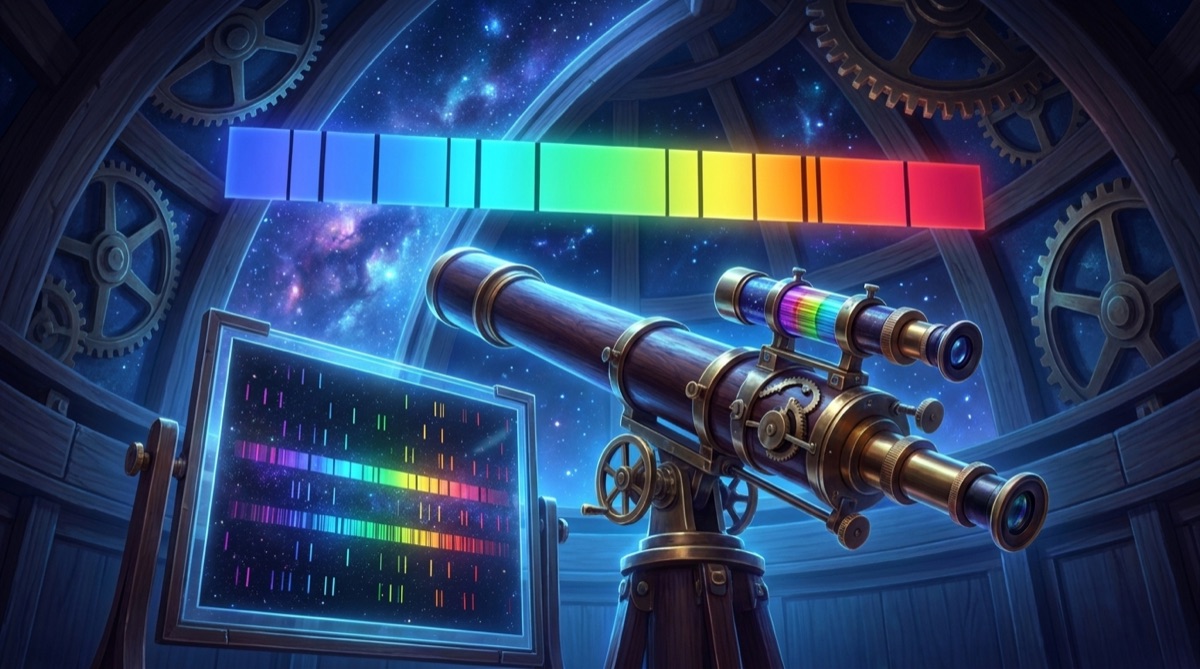
It all begins with a thermometer. In 1800 William Herschel split sunlight with a prism and measured the temperature of each color; the thermometer placed beyond the red, where nothing was visible, registered the highest temperature. Fourteen years later Joseph von Fraunhofer mapped hundreds of dark lines in the Sun’s spectrum. And in 1859 Gustav Kirchhoff and Robert Bunsen discovered the key: each chemical element absorbs and emits light in lines of its own, and Fraunhofer’s lines are the fingerprint of the sodium, iron or hydrogen in the Sun. The lesson Spectra and the Doppler effect explains those three laws and how the same lines, shifted toward the red or the blue, reveal velocities.
Putting the stars in order
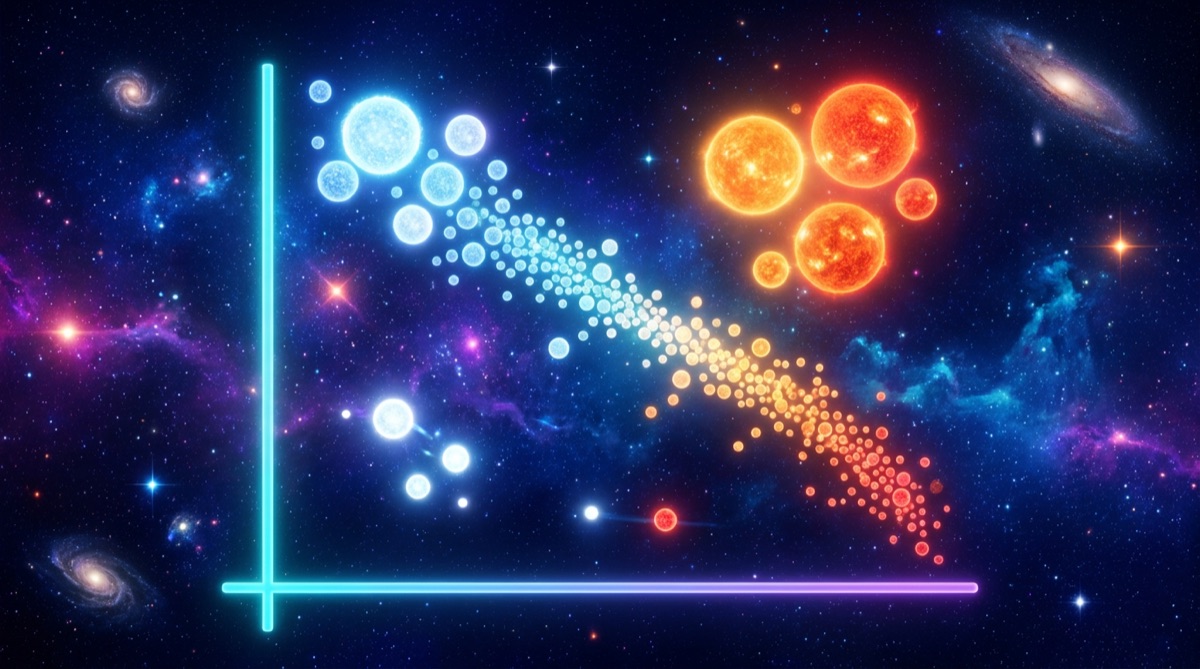
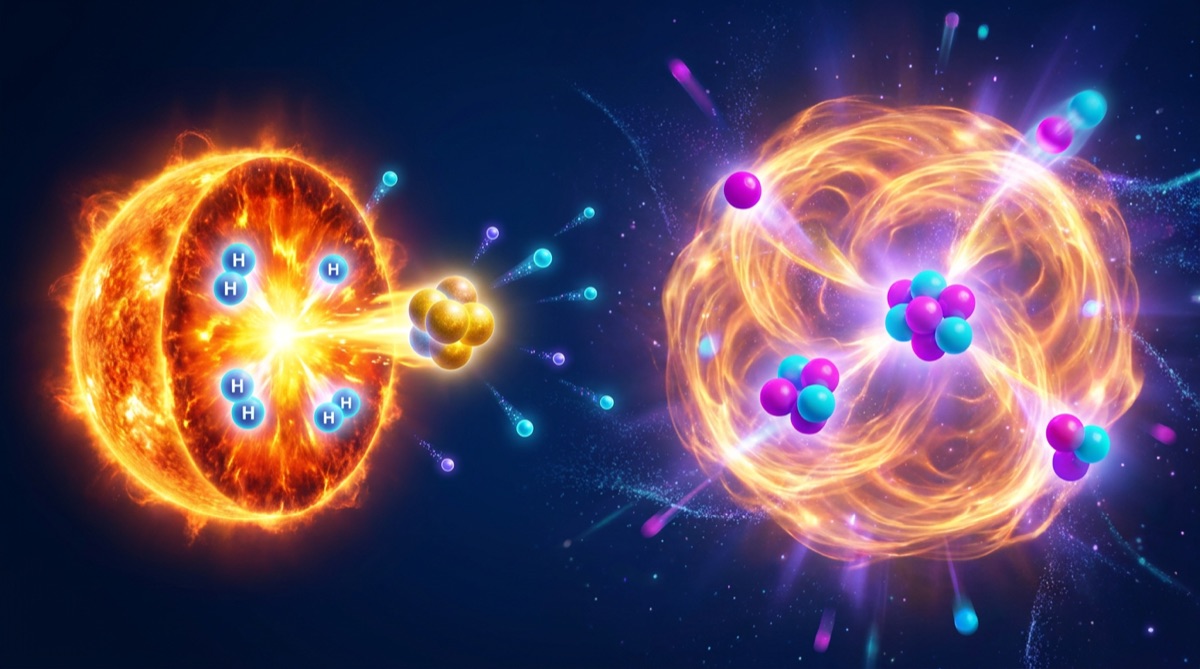
With photography, spectra multiplied by the thousands. At the Harvard College Observatory a team of women computers (Williamina Fleming, Antonia Maury, Annie Jump Cannon) classified them; Cannon fixed the sequence O, B, A, F, G, K, M that is still taught. When Ejnar Hertzsprung and Henry Norris Russell plotted the brightness of stars against their spectral type, an unexpected order appeared: the main sequence. That diagram, which you can explore in The H–R diagram, turned out to be the map of the lives of stars. And in 1925 Cecilia Payne, applying atomic physics to those spectra, showed that stars are almost all hydrogen. Hans Bethe closed the circle in 1939: they shine because they fuse that hydrogen into helium.
Measuring the universe
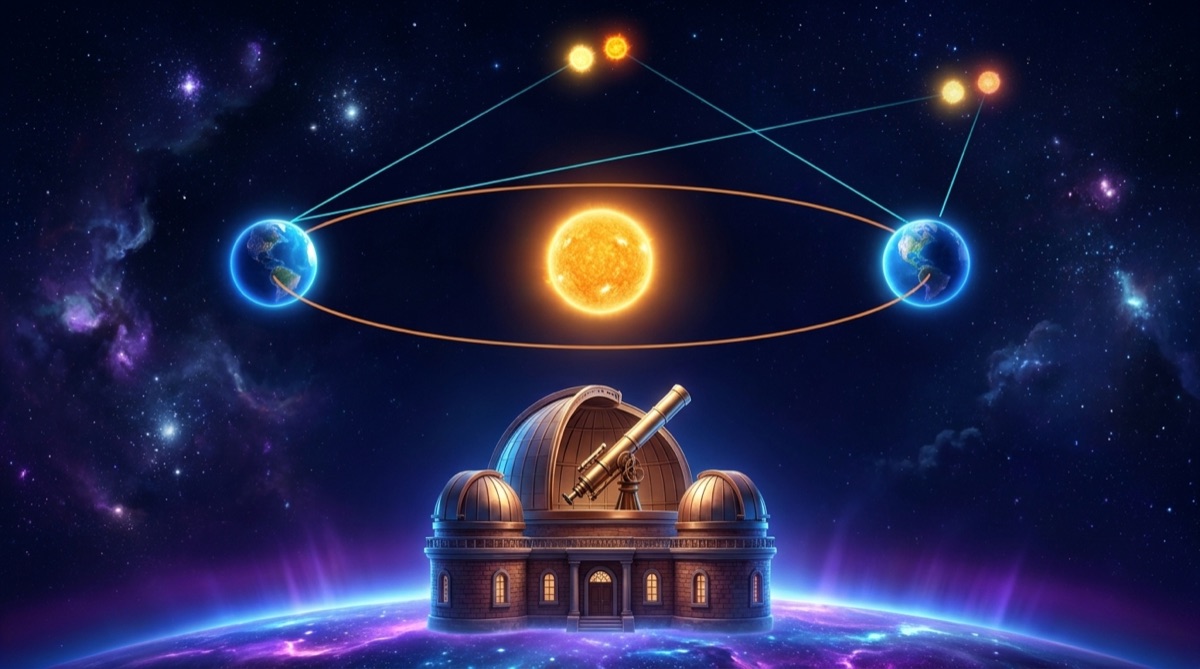
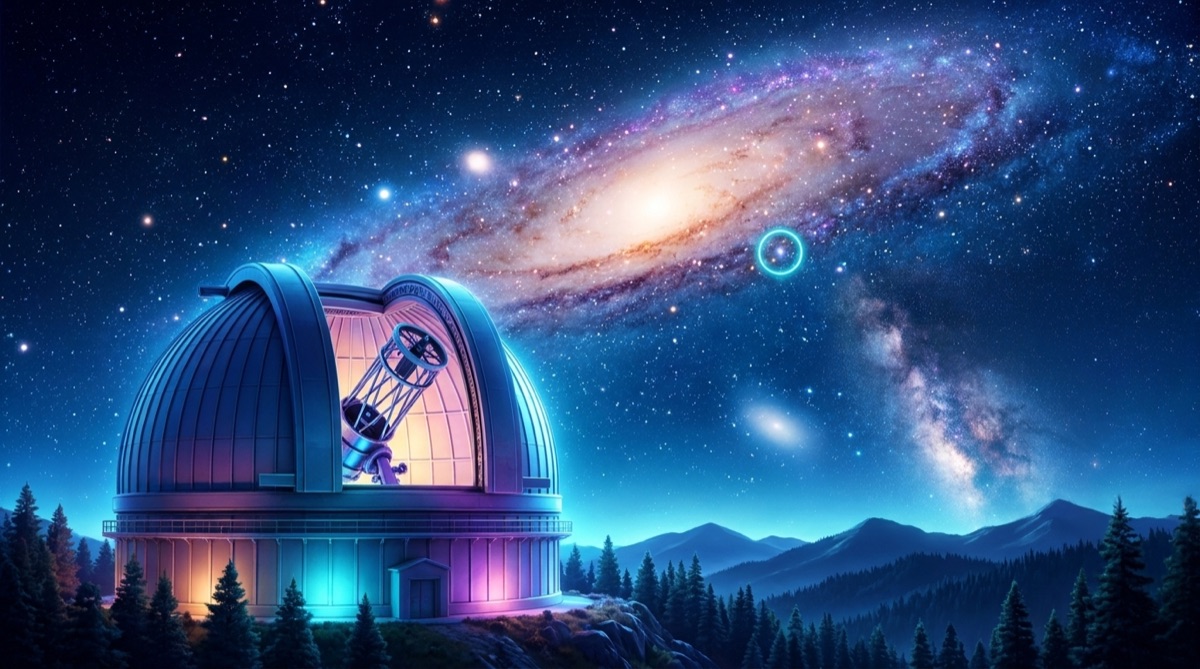
Friedrich Bessel measured in 1838 the first distance to a star, 61 Cygni, by parallax: a triangle with the Earth’s orbit as its base, as calculated in Parallax and trigonometry. But parallax reaches only the nearby stars. The leap to other galaxies was made by Henrietta Leavitt in 1912 with the period–luminosity relation of the Cepheids (her story is on the portal). With it, Edwin Hubble showed in 1925 that Andromeda is another galaxy and, in 1929, that galaxies recede faster the farther away they are. Georges Lemaître had deduced the same thing two years earlier from Einstein’s equations: the universe is expanding. The lesson The universe is expanding repeats Hubble’s fit with his own 1929 data.
That law fits in one line: . In words: the velocity at which a galaxy recedes is proportional to its distance ; the constant , the Hubble constant, is today about 70 km/s for every megaparsec, and its inverse gives the age of the universe, about 13.8 billion years.
What cannot be seen
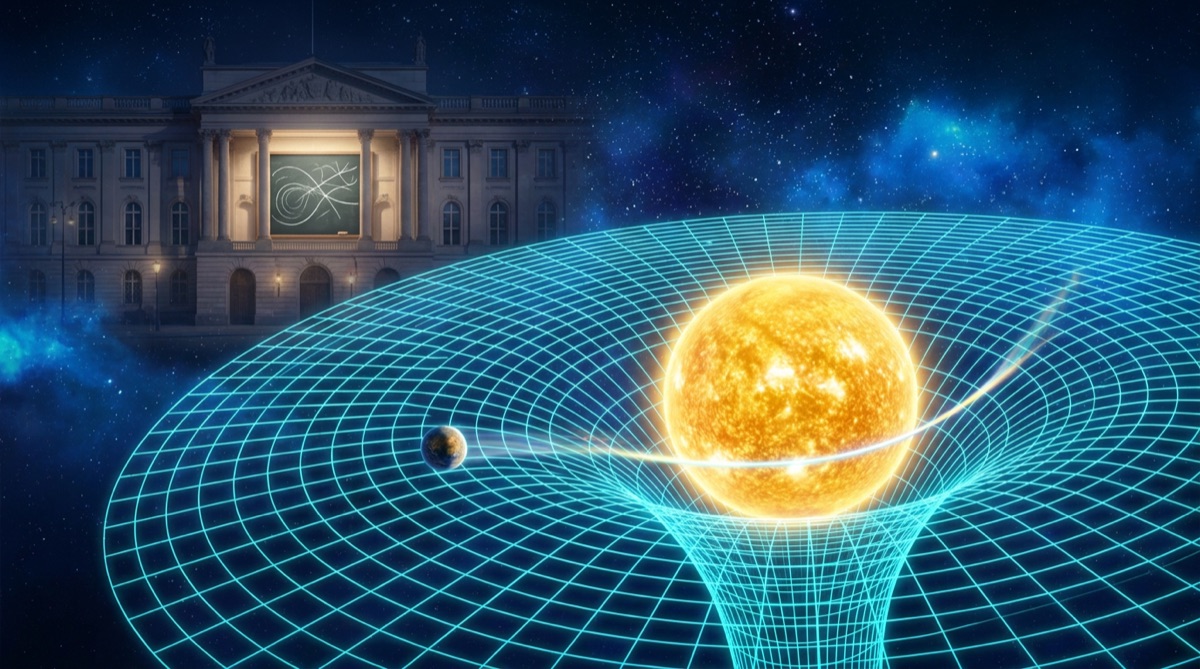
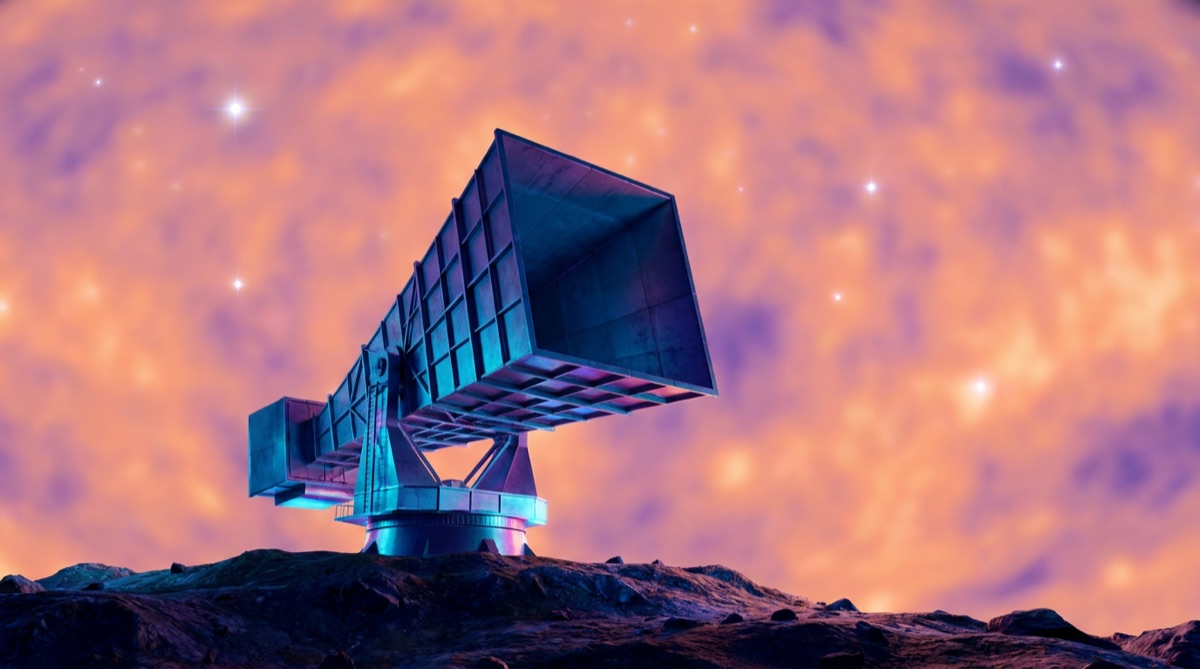
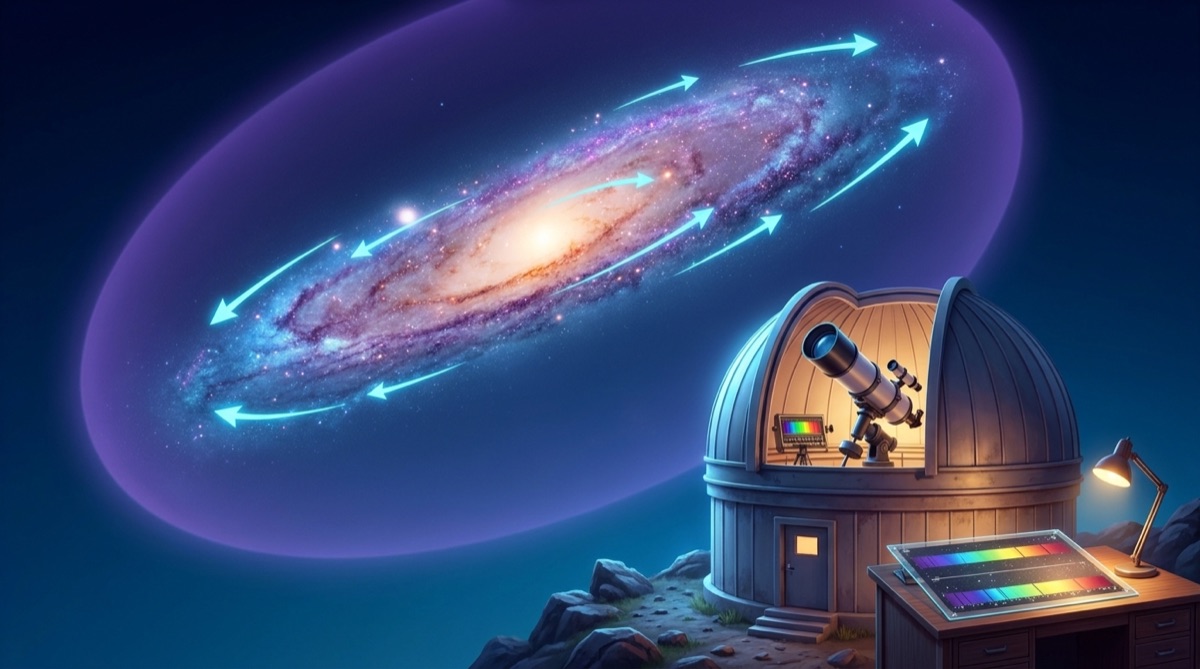
Twentieth-century astrophysics also discovered that most of the universe emits no light. Fritz Zwicky (1933) and then Vera Rubin and Kent Ford (1970–1980) saw that clusters and galaxies spin too fast for their visible matter: dark matter is needed (Vera Rubin and the galaxies that spin too fast). In 1965 Penzias and Wilson detected the cosmic microwave background, the echo of the hot universe, and in 1998 two supernova teams found that the expansion is accelerating. And in 2015, a hundred years after Einstein presented general relativity, LIGO recorded the gravitational waves of two black holes merging: the lesson Gravitational waves analyzes that very signal, GW150914.
How do we know?
Unlike the ancient civilizations, here the sources are the original papers, which survive and can be read: Herschel’s work in the Philosophical Transactions of 1800, the 1912 Harvard circular signed by Pickering but “prepared by Miss Leavitt”, Hubble’s 1929 paper in PNAS, the 1965 letter by Penzias and Wilson. Each event on the timeline cites its own, with a DOI where one exists.
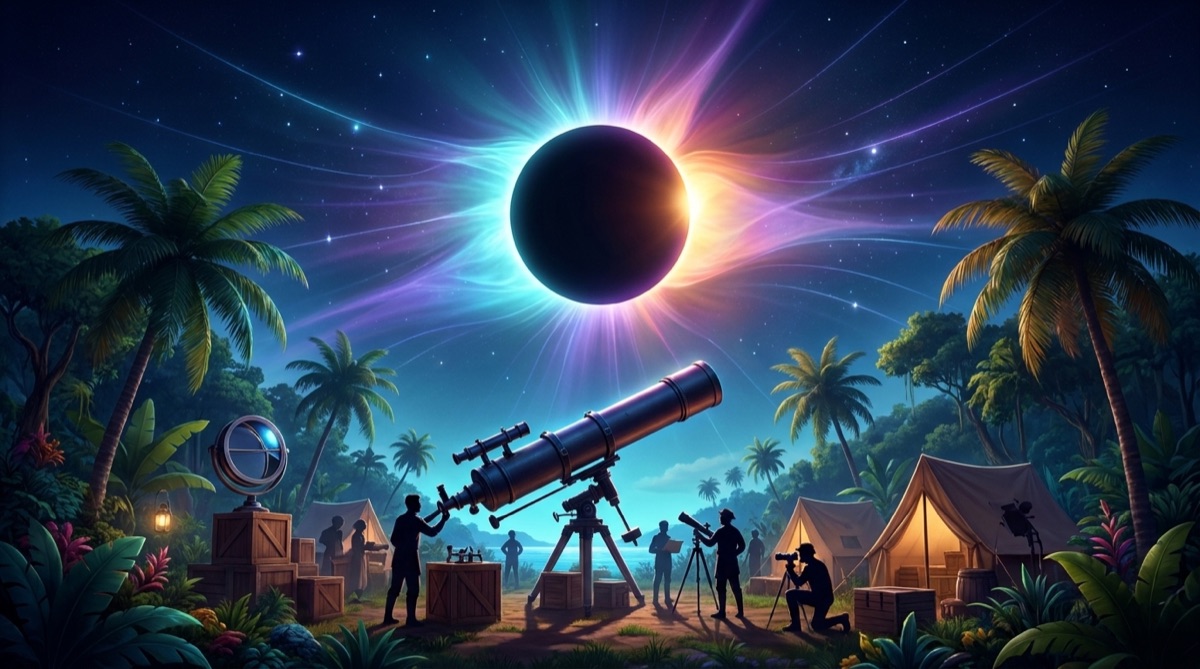
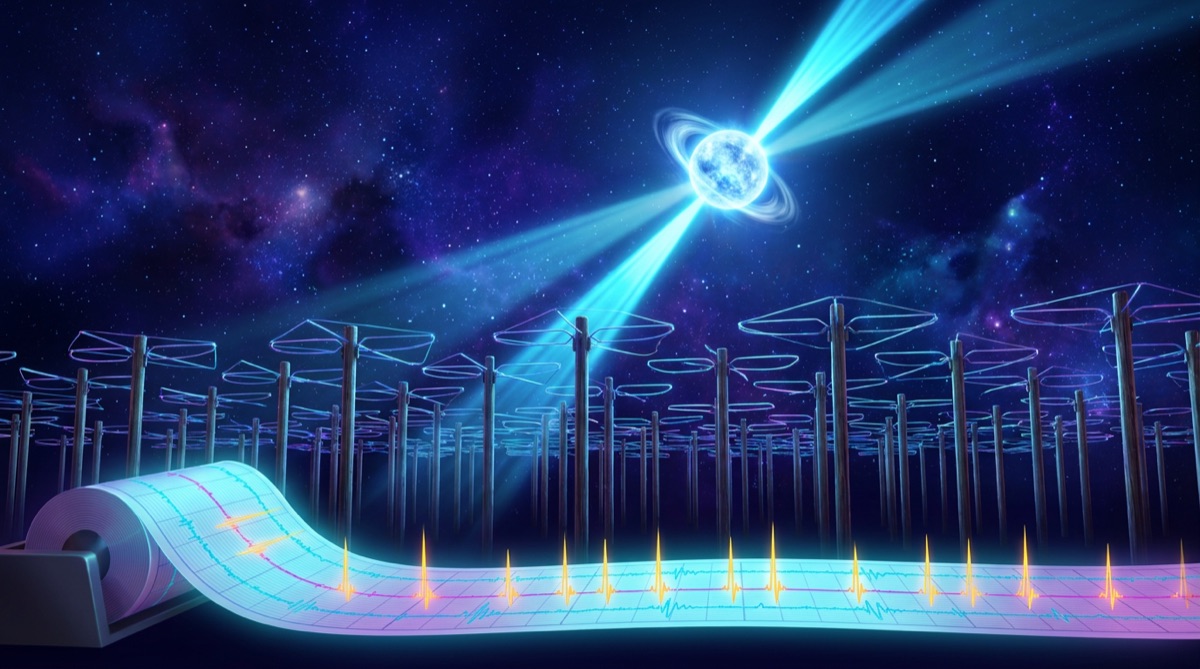
That does not mean the history is simple. There are priority disputes (Adams and Le Verrier over Neptune; Lemaître, who published the expansion in 1927 in a little-read Belgian journal, and Hubble, who measured it in 1929), late recognition (the Nobel Prize for pulsars, in 1974, went to Hewish and not to Bell Burnell; Zwicky’s dark matter was ignored for forty years) and results that were refined over time: the Hubble constant of 1929 was seven times larger than the current one because the distances were badly calibrated. For decades it was debated whether Eddington had “cherry-picked” the data from the 1919 eclipse; modern reanalyses of the Sobral plates confirm the result. When a date depends on whether we count the observation or the announcement (GW150914: September 14, 2015, and February 11, 2016), the timeline gives both.
Legacy
We inherit a method: splitting light and comparing it with the laboratory. Every time a lesson on this portal speaks of a star’s temperature from its color (The blackbody), of a galaxy’s velocity from its redshift, or of a planet from the wobble of its star (Hunting exoplanets), it is using what Kirchhoff and Bunsen understood in 1859.
We also inherit a vocabulary: Fraunhofer’s letters, Cannon’s spectral types, the parsec, the Hubble constant, the radio astronomers’ unit jansky. And an image of the universe that no earlier civilization had: 13.8 billion years old, hundreds of billions of galaxies, made 95 % of something that does not shine. The Vera C. Rubin Observatory, which began photographing the southern sky in 2025, bears the name of the astronomer who did the most for that last discovery. This story is still open.