Context
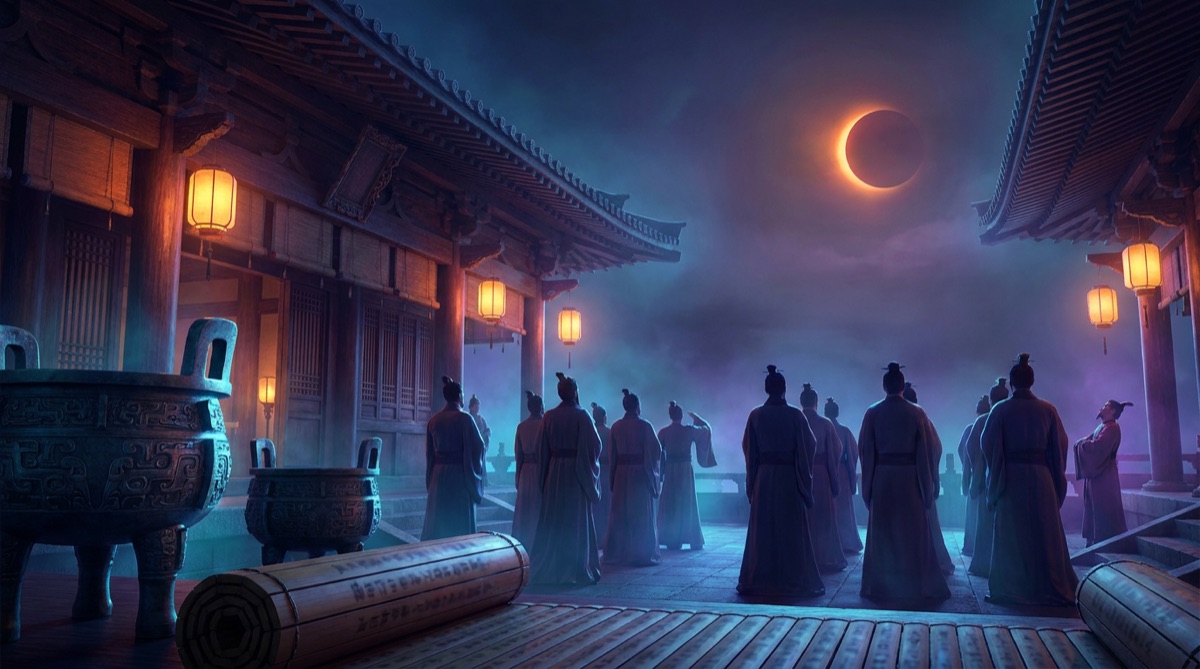
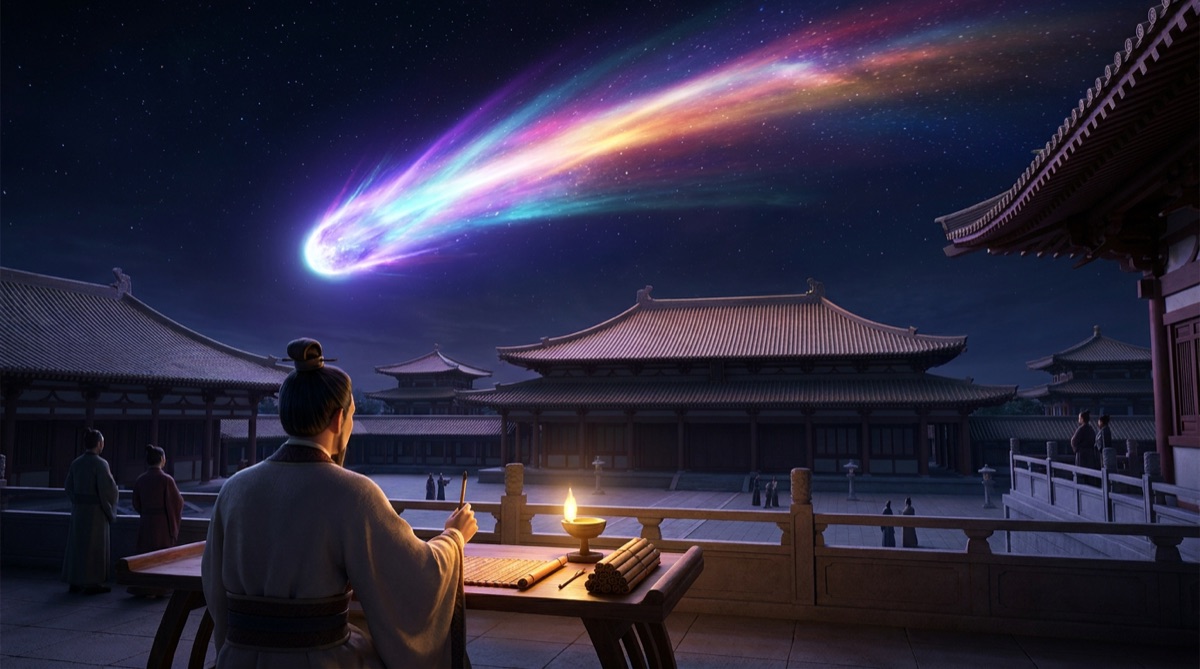
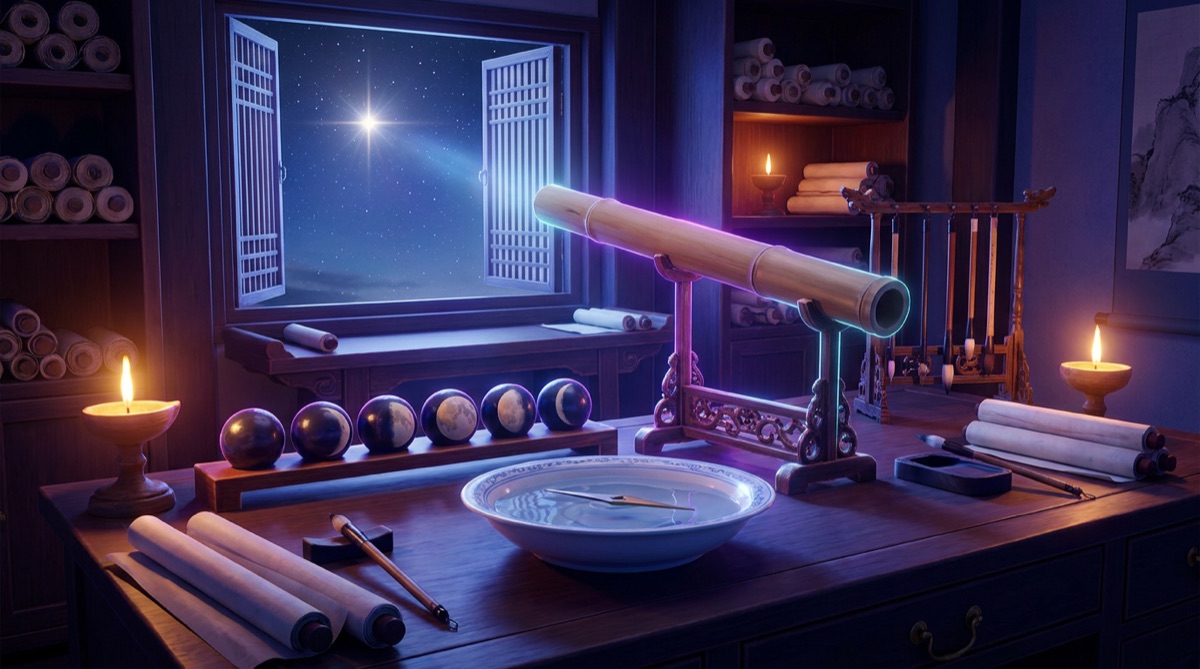
In China, watching the sky was for three millennia a matter of state. The emperor was the “Son of Heaven”, and his legitimacy depended on the official calendar getting the seasons, the new moons and the eclipses right. That is why every dynasty maintained an Astronomical Bureau with officials who watched the sky every night, noted everything that seemed out of the ordinary (comets, “guest stars”, spots on the Sun, conjunctions) and interpreted it as a political omen. An unforeseen eclipse could cost the chief astronomer his post.
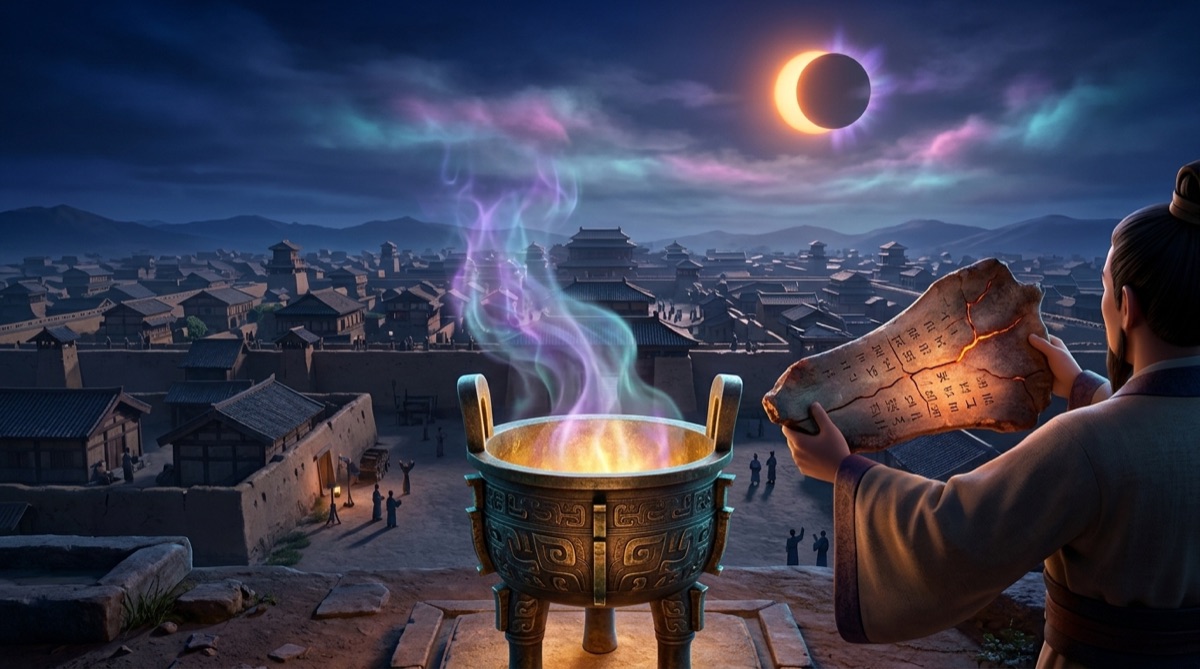
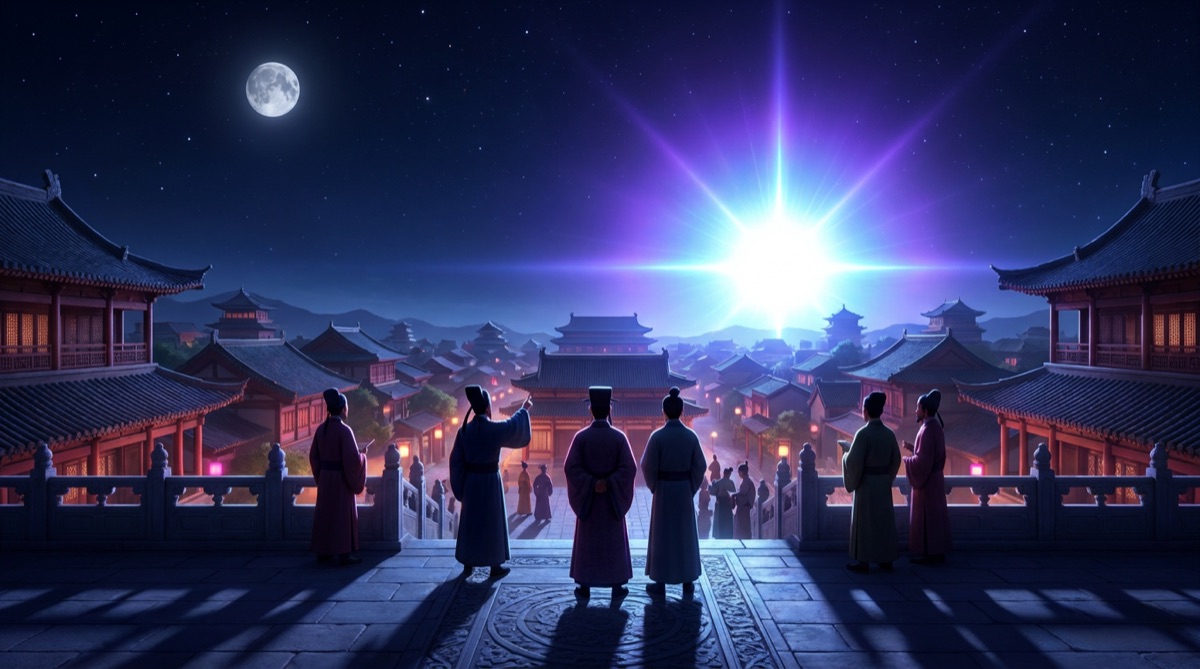
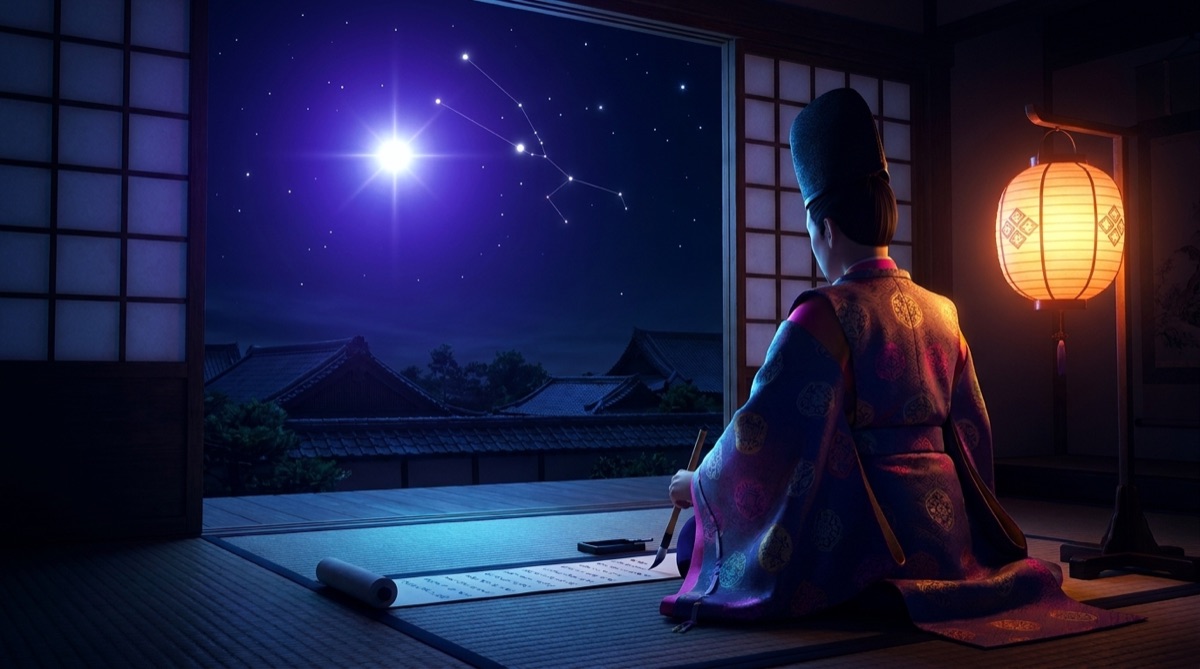
That mixture of bureaucracy and astrology produced something unique: a continuous archive of dated observations from the oracle bones of the Shang dynasty (around 1200 BCE) to the 20th century. Korea and Japan adopted the same system of bureaus, calendars and chronicles, and that is why a phenomenon such as the supernova of 1054 appears recorded in Kaifeng and also in Kyoto.
Major contributions
The archive of the sky
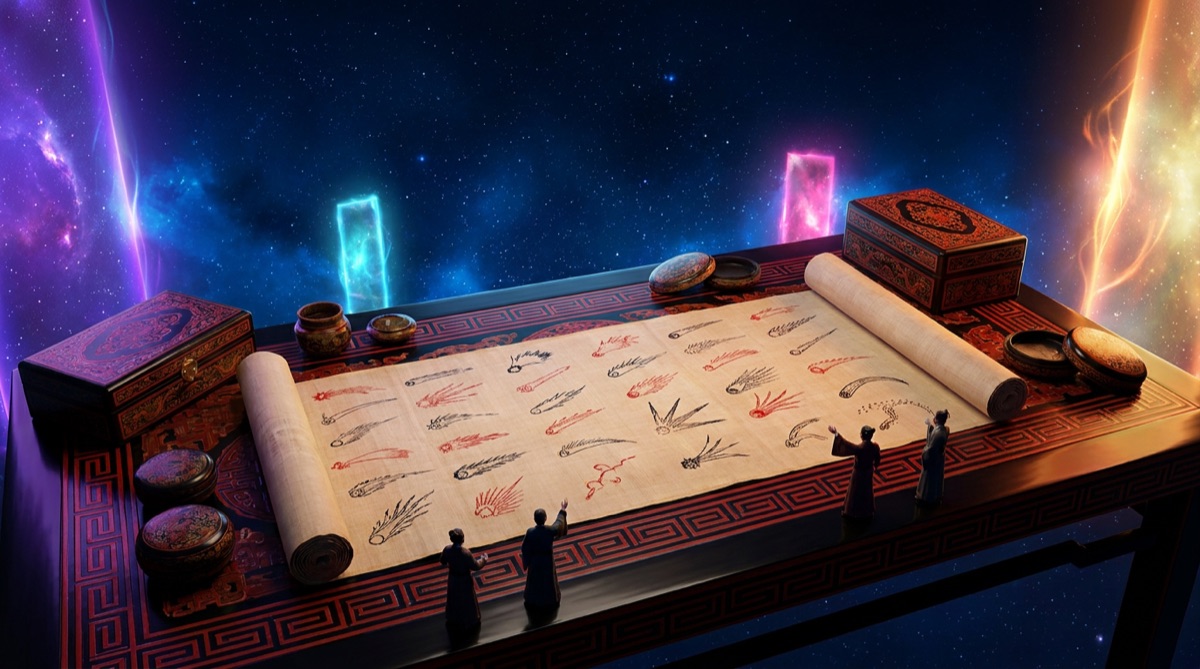
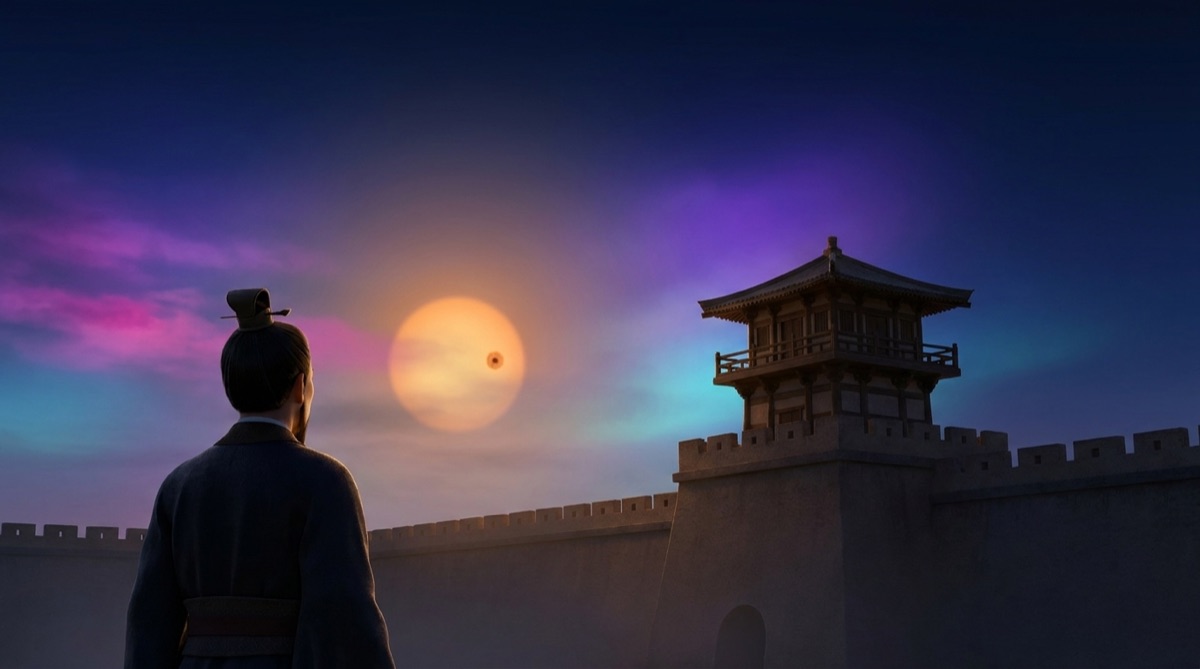
Chinese chroniclers recorded 37 solar eclipses between 722 and 481 BCE, Halley’s Comet at every passage since 240 BCE, more than a hundred sunspots since 28 BCE and a dozen “guest stars”. Today that archive is still in use: with the ancient eclipses we measure how much the Earth’s rotation has slowed, and with the star of 1054 the age of the Crab pulsar was calculated. If you want to understand why an eclipse is seen only from a strip of the Earth, the lesson Phases and eclipses explains it, and The lives of stars tells what a supernova is.
A coordinate system of their own
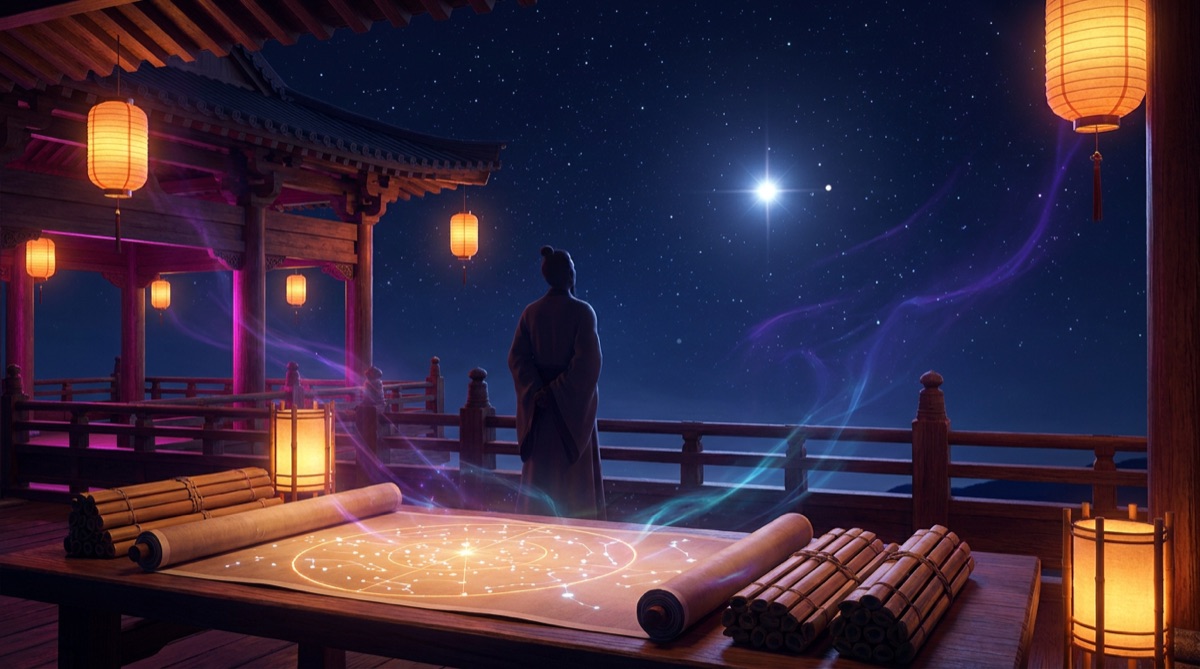
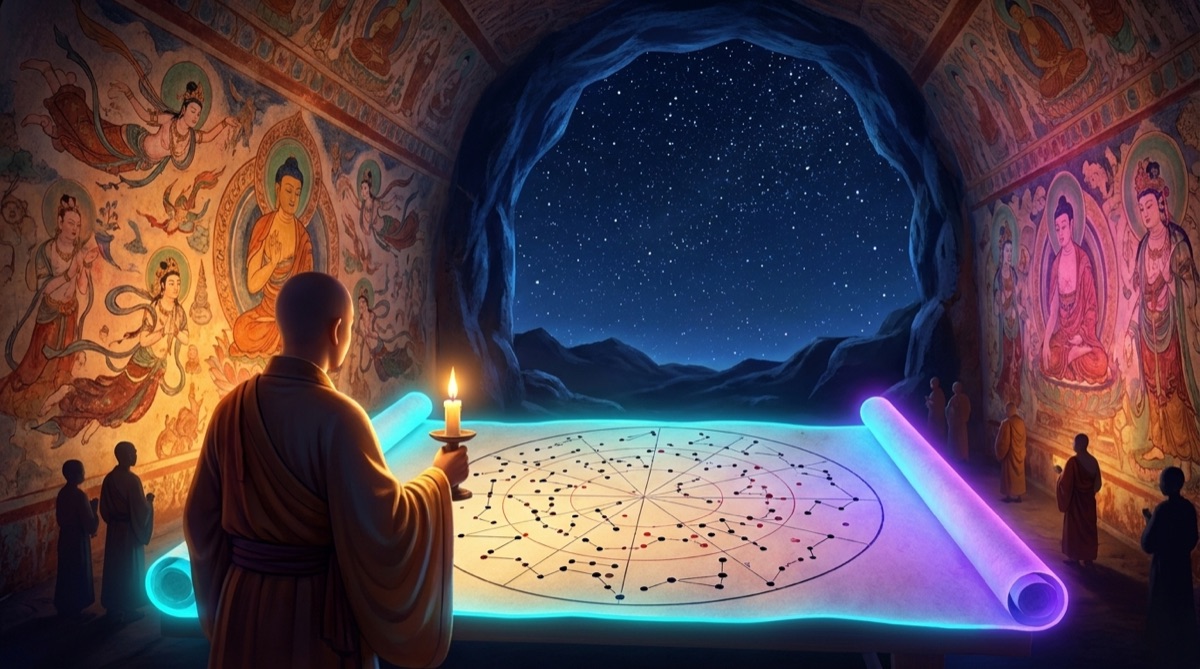
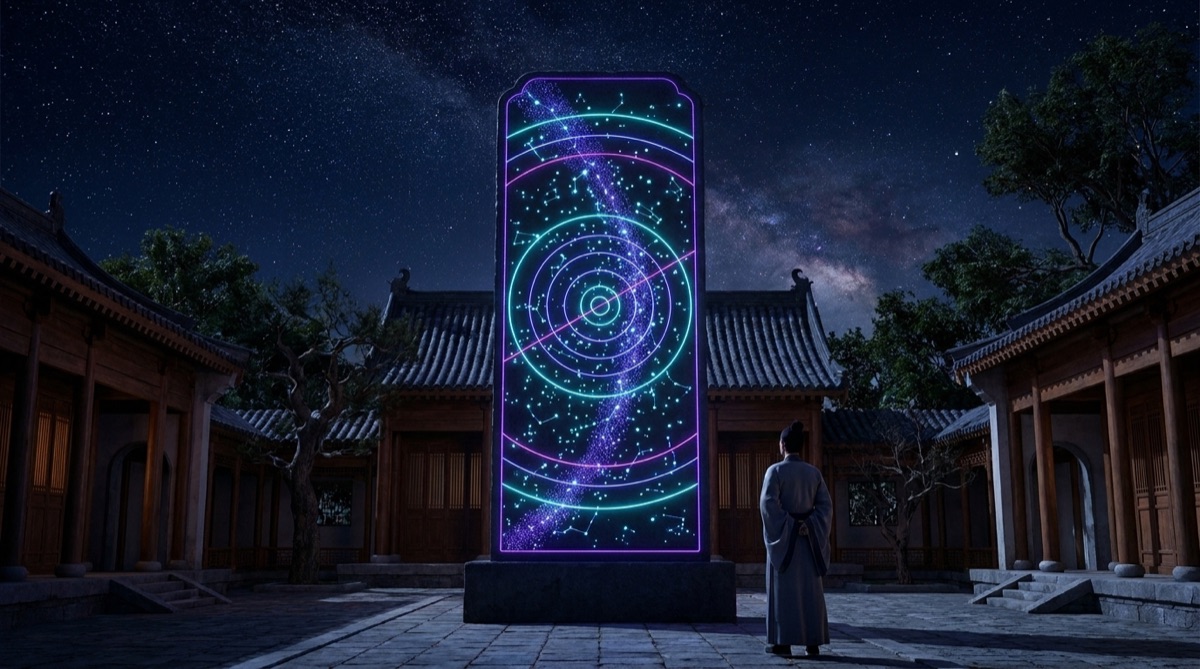
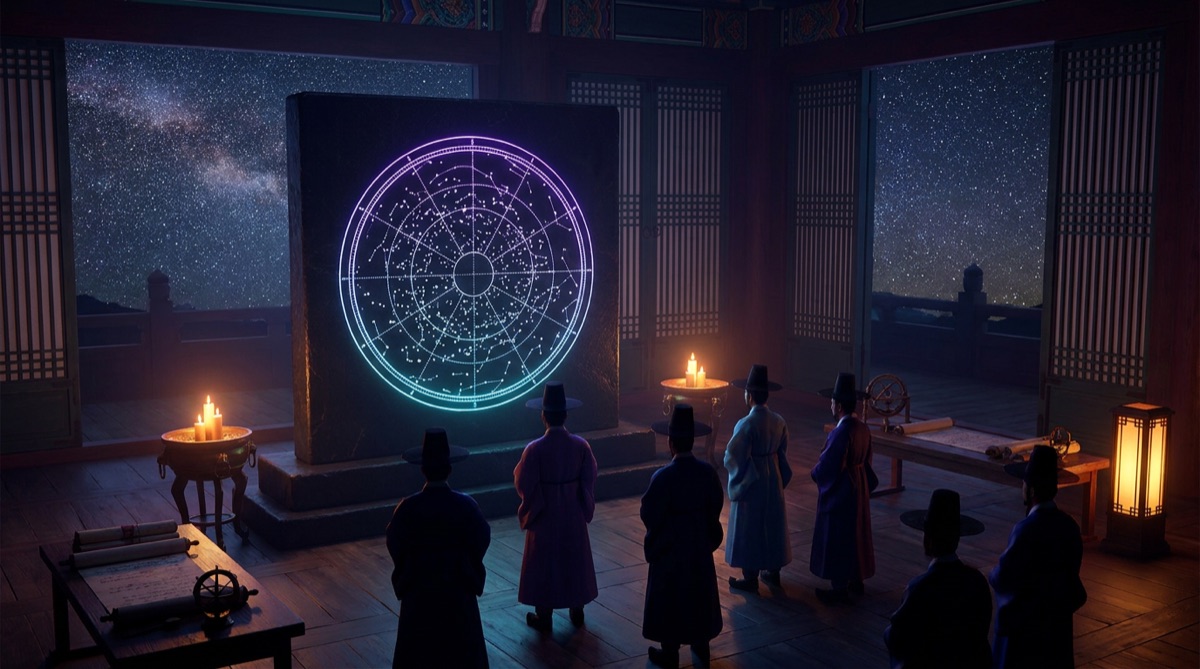
While Greece organized the sky around the ecliptic (the path of the Sun), China did so around the celestial equator and the pole, dividing the sky into 28 “lunar mansions” (xiu) measured from reference stars. It is, in essence, the system of right ascension and declination that we use today; you will see it in Celestial coordinates. The Dunhuang map (7th century) and the Suzhou planisphere (1247) are the most complete atlases surviving from the Middle Ages in any culture.
Instruments and clocks
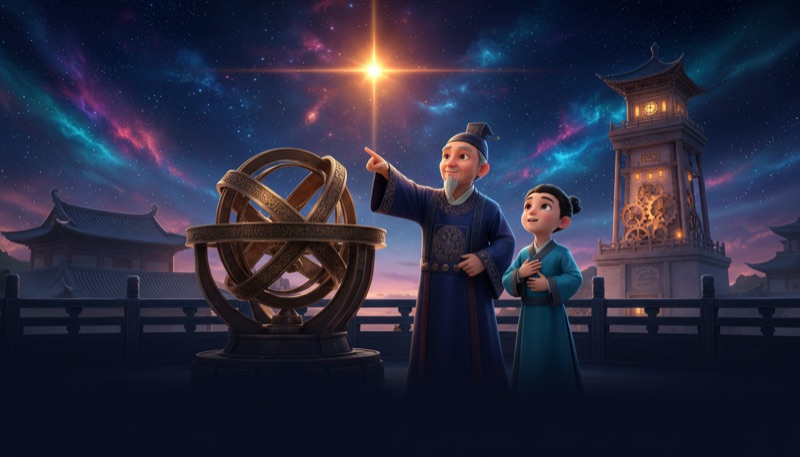
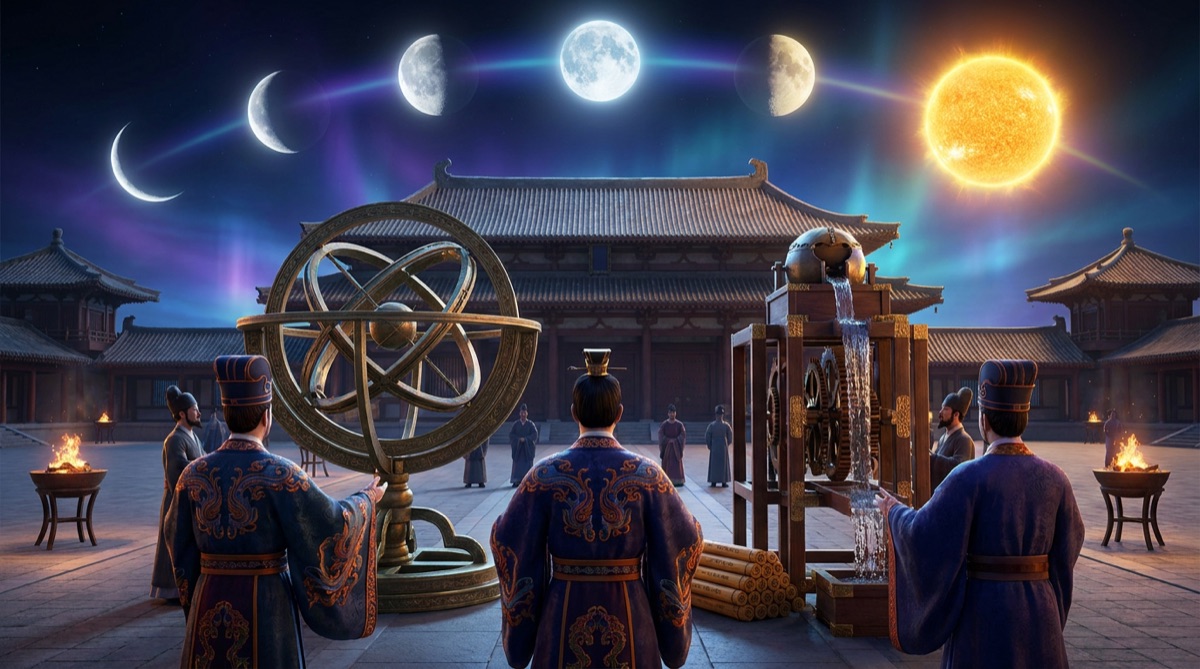
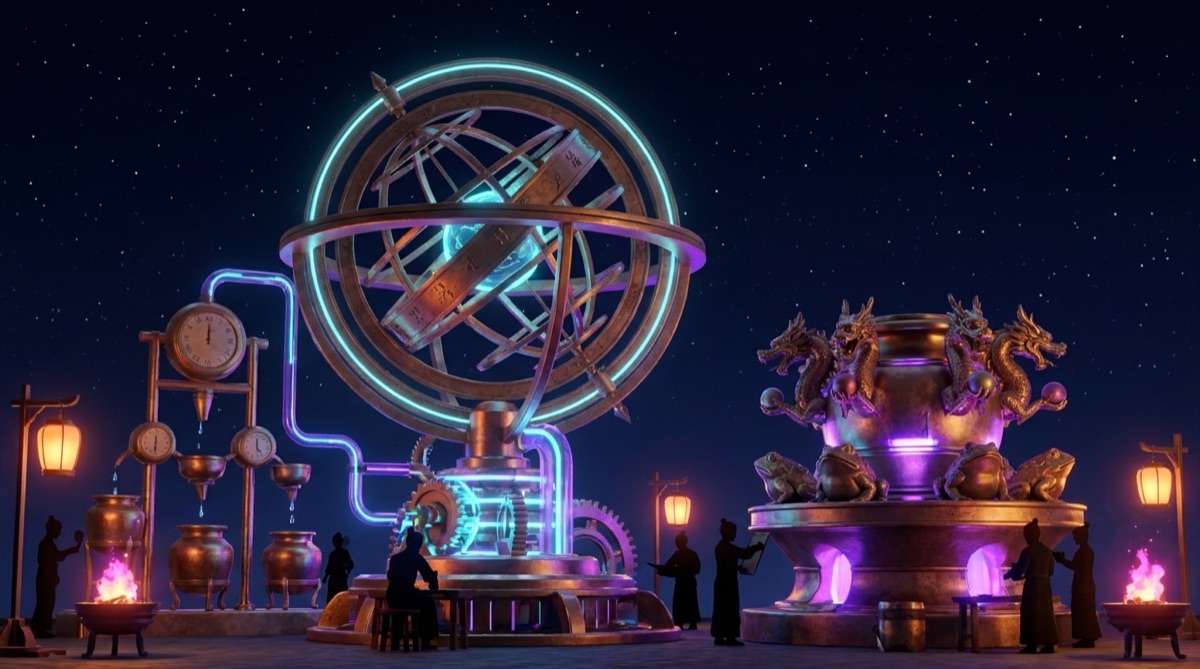
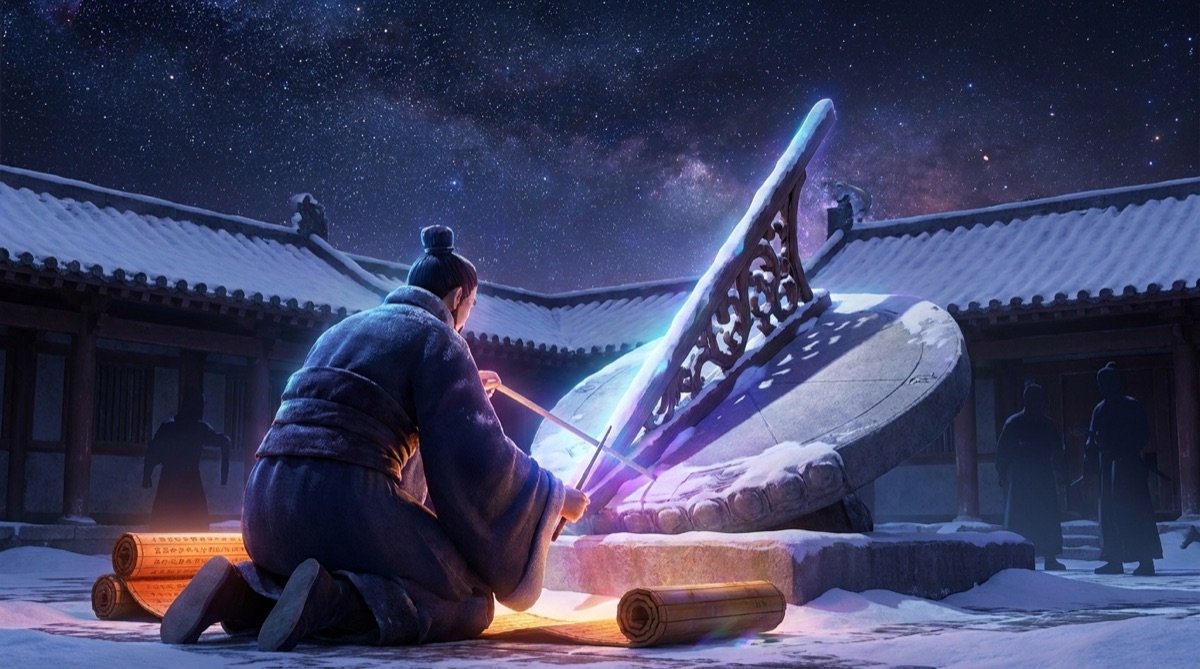
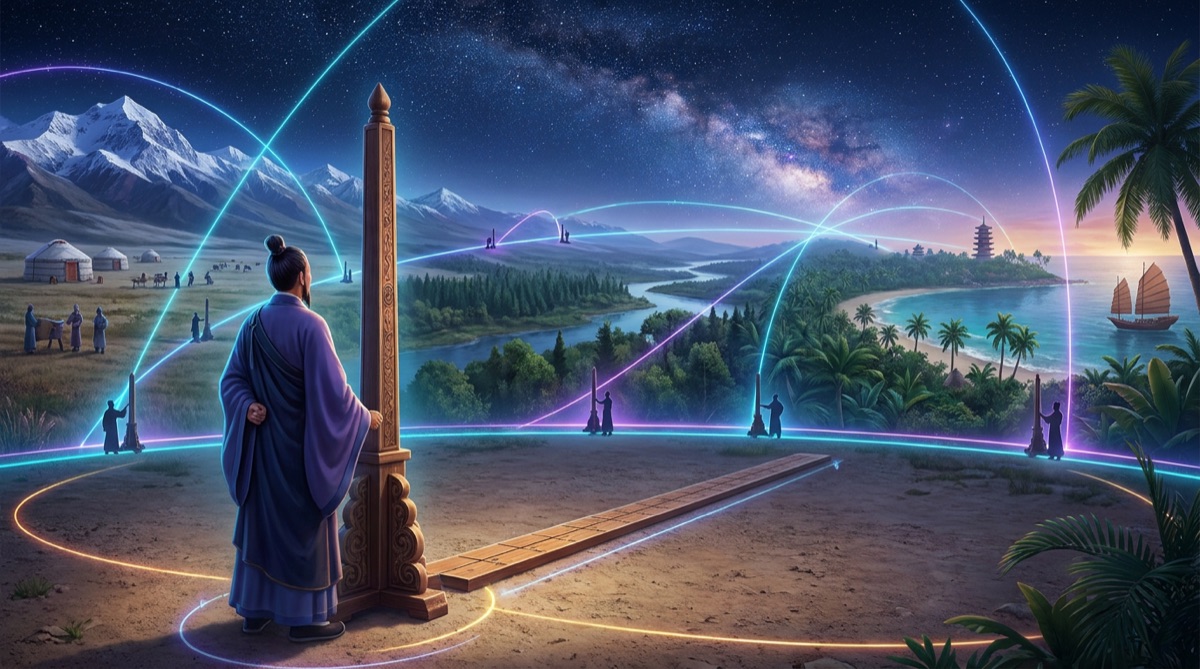
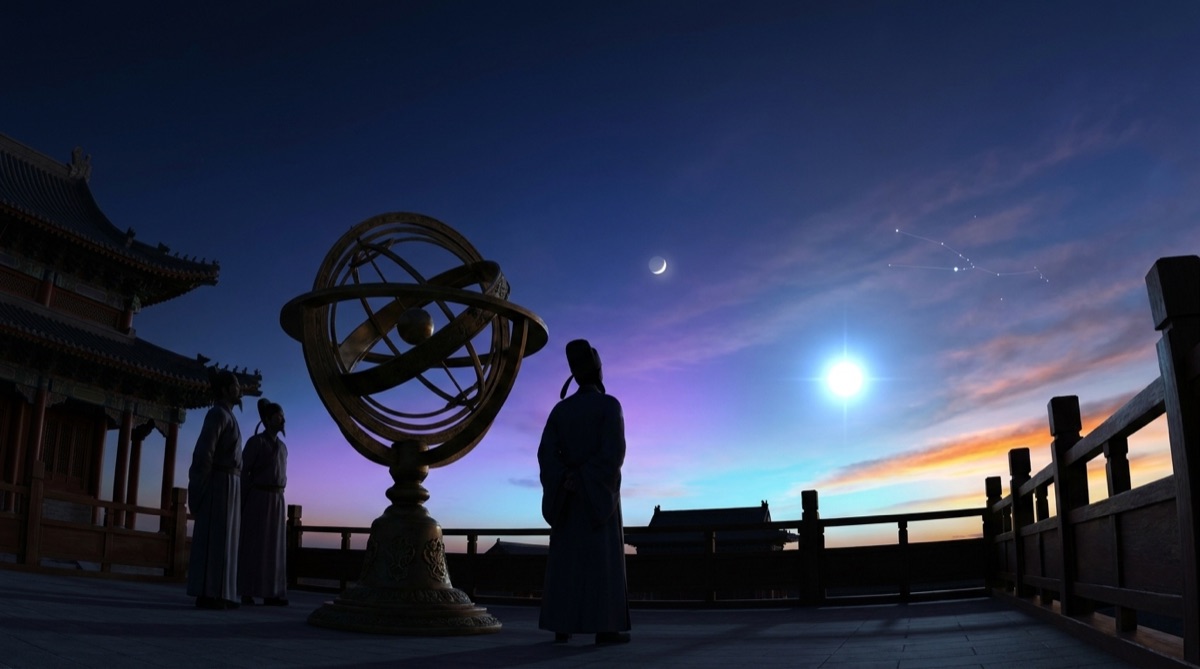
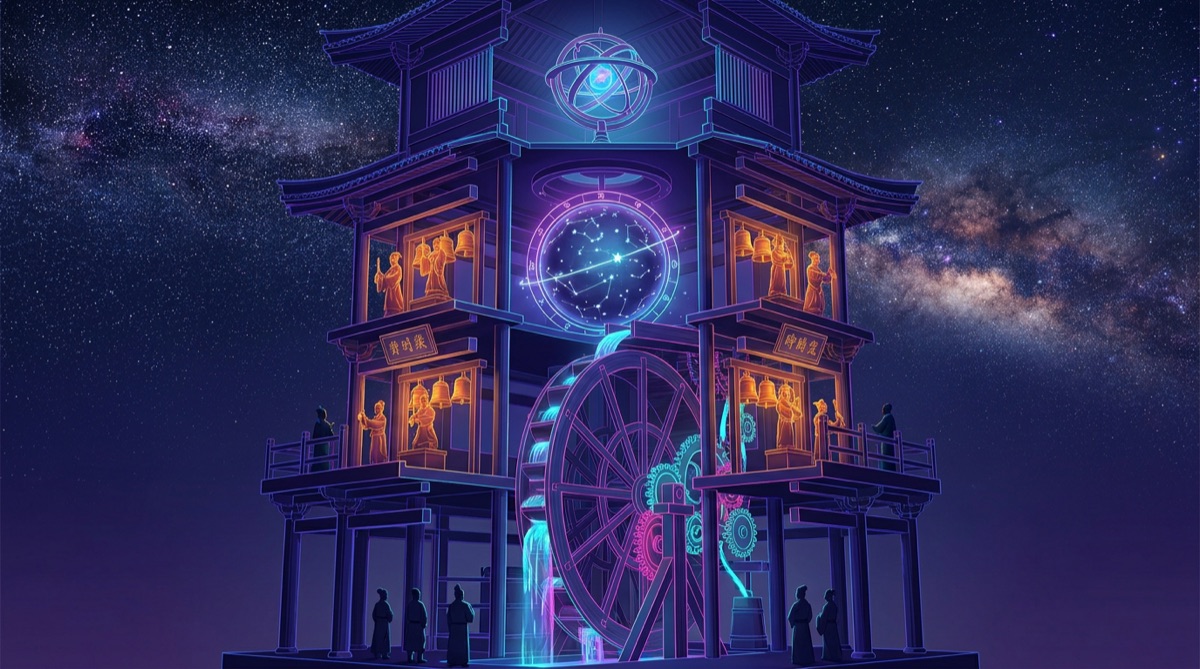
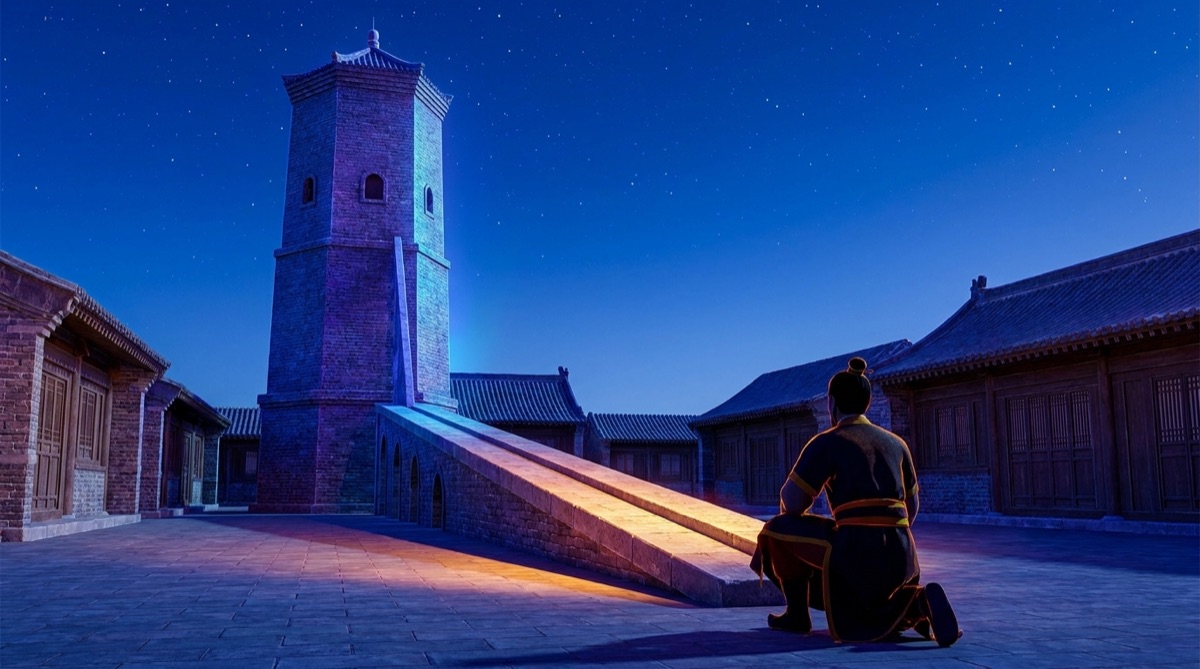
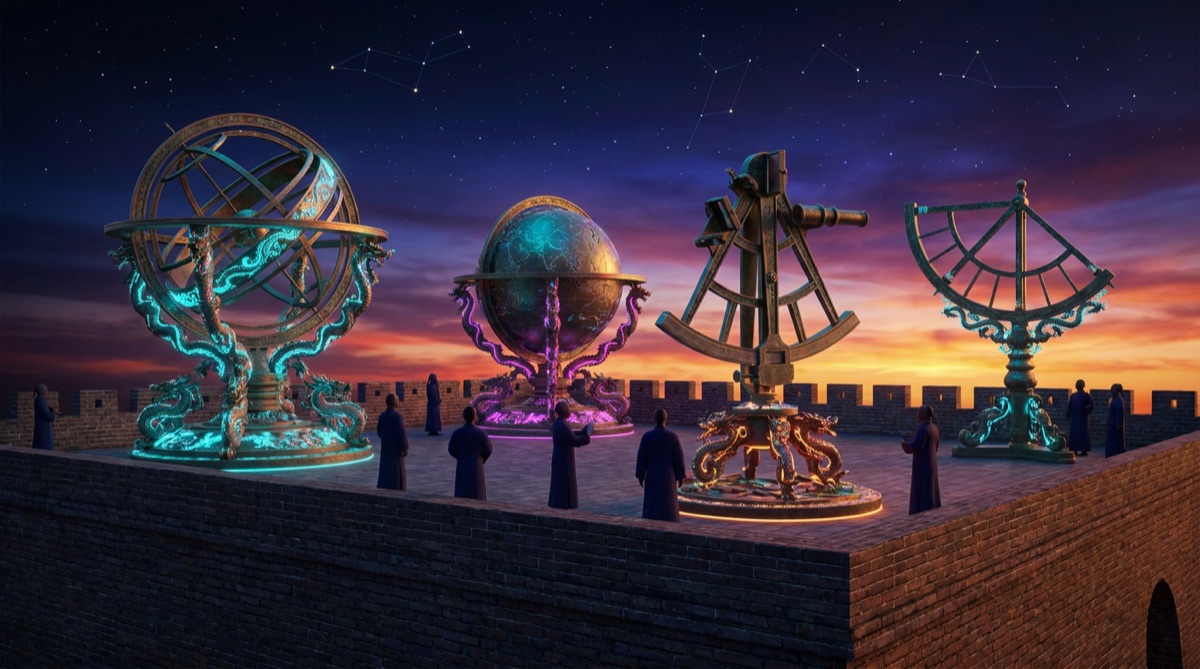
Zhang Heng made an armillary sphere turn with water in the 2nd century; Yi Xing and Liang Lingzan added an escapement in 725; Su Song brought it all together in 1088 in a clock tower with an armillary sphere, a celestial globe and figurines that told the hour. Guo Shoujing built in 1276 a 12-meter gnomon tower at Dengfeng to measure the solstice shadow precisely. The principle is the same as that of the stick in Shadows and the sundial: the taller the gnomon, the longer the shadow and the finer the measurement.
Precision calendars
The Shoushi calendar of 1281 fixed the year at 365.2425 days, exactly the value of the Gregorian calendar of 1582. It achieved this with a better instrument (the Dengfeng tower), a network of 27 observing stations and very advanced interpolation mathematics. In simple terms: by measuring every year the length of the noon shadow around the solstice, and averaging over many years, the length of the solar year is obtained with an error of less than a minute.
Precession, discovered twice
Yu Xi noticed around 336 that the solstice Sun had shifted relative to the stars by about one degree every fifty years. It is the same phenomenon Hipparchus had found in Rhodes four centuries earlier, and the story of both is in Hipparchus and the slowly moving sky.
How do we know?
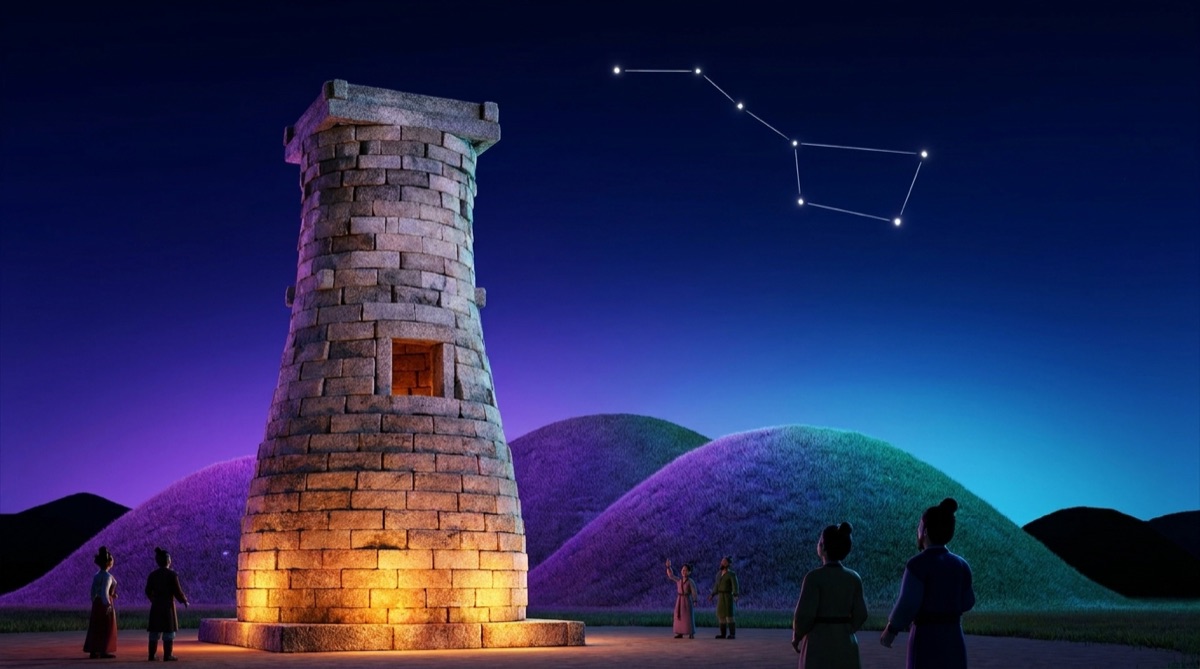
The sources are exceptionally abundant: oracle bones excavated at Anyang, official chronicles of each dynasty with their “astronomical treatise”, manuscripts such as the Dunhuang scroll or the Mawangdui silk book, stone steles such as the one at Suzhou, and buildings such as Cheomseongdae, Dengfeng and the Beijing Ancient Observatory.
Their limits are also clear. Many chronicles were compiled decades or centuries after the events, copying official records that we no longer have; sometimes there are errors of date or position. The interpretation of the oracle bones is delicate: identifying an eclipse requires reconstructing the Shang calendar, and different specialists propose different dates. The same happens with Cheomseongdae: that the tower had an astronomical use is the most widely accepted hypothesis, but there are no texts of the period to confirm it. And the supposed observation of a moon of Jupiter by Gan De is a modern reading of an ambiguous fragment, not an established fact.
Legacy
From China we inherit the longest archive of observations in the world, indispensable for studying the rotation of the Earth, periodic comets, solar activity and supernova remnants. We also inherit the idea of organizing the sky in equatorial coordinates, the mechanical clock with an escapement, and the proof that the calendar can be refined with large instruments and many years of data. Korea and Japan preserve maps and chronicles that allow the Chinese records to be checked independently. And the encounter with the Jesuits in the 17th century shows that astronomical traditions, when compared, correct one another: the European one contributed the geometry of Tycho and the telescope; the Chinese one, fifteen hundred years of observations that Europe did not have.