His life
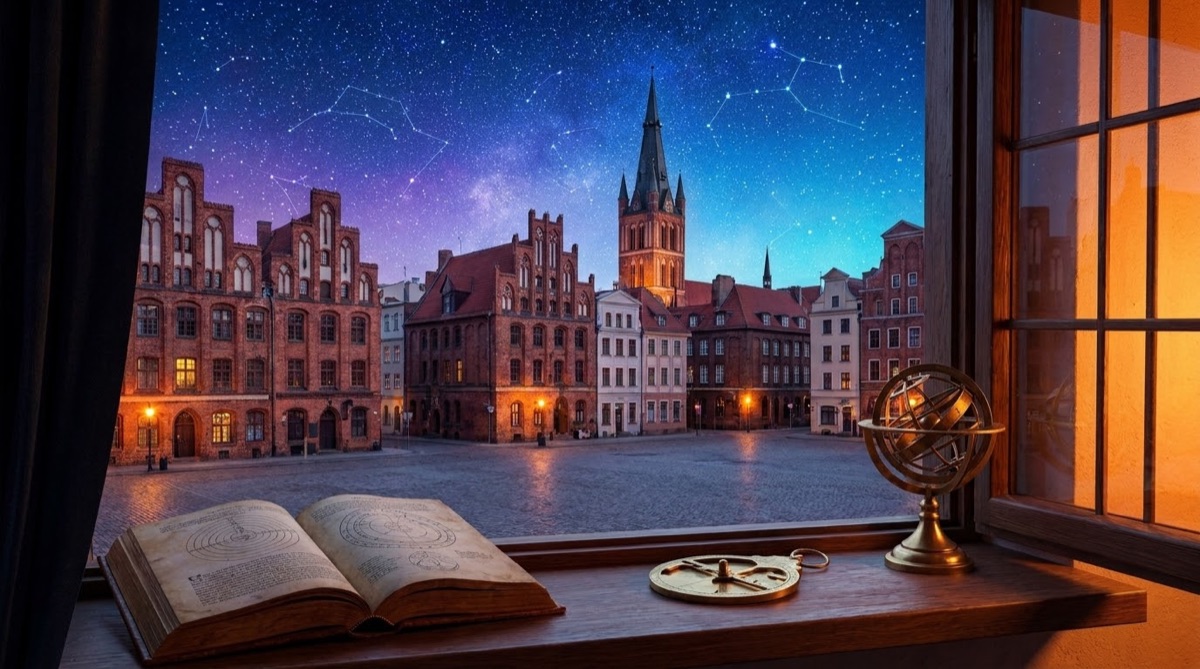
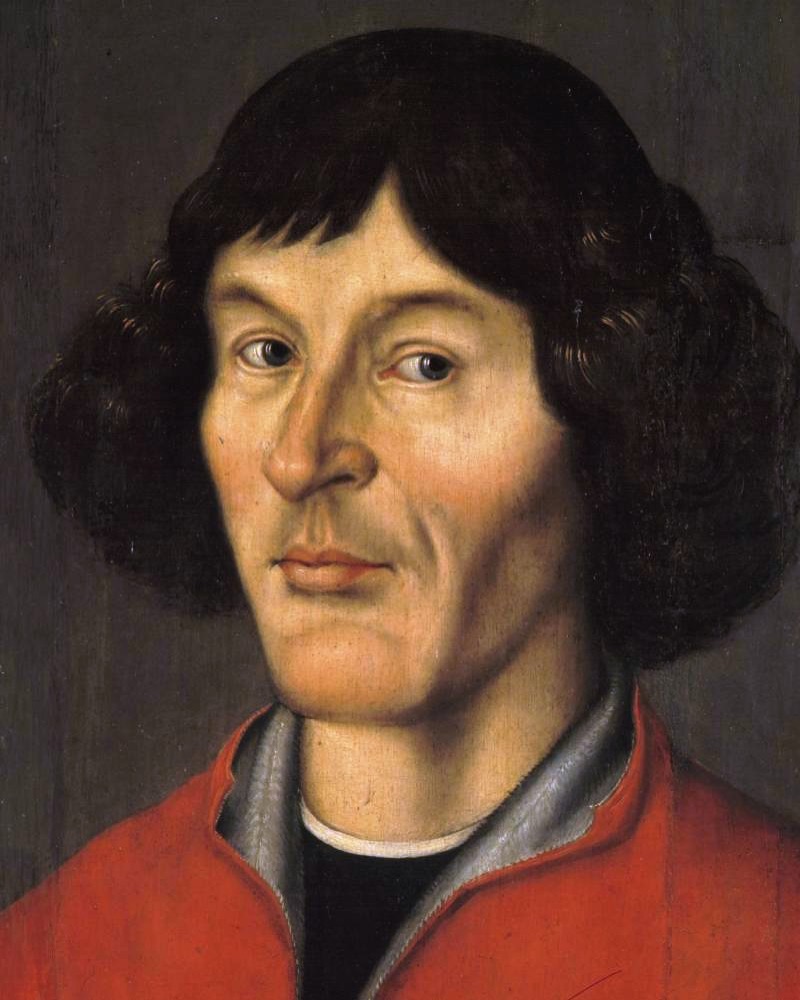
Nicolaus Copernicus was born on February 19, 1473, in Toruń, a trading city on the banks of the Vistula that then belonged to Royal Prussia, under the Polish crown. His father, a copper merchant, died when he was about ten, and his education was taken over by his maternal uncle, Lucas Watzenrode, who would become bishop of Warmia. That protection decided his life: Copernicus was for almost forty years a canon of Frombork cathedral, an administrative post that gave him a stable income and time to study.
He studied at the University of Kraków (1491–1495), where astronomy was taught from Ptolemy’s Almagest, and then in Italy: canon law in Bologna, medicine in Padua and, in 1503, a doctorate in canon law in Ferrara. In Bologna he lived in the house of the astronomer Domenico Maria Novara, and with him he observed, on March 9, 1497, the Moon occulting the star Aldebaran: his first recorded observation.
Back in Warmia he worked as a physician, administrator of the chapter’s lands, diplomat and even as defender of Olsztyn castle during a war with the Teutonic Knights. He also wrote a treatise on money. Astronomy was his night work: from a tower in Frombork, without a telescope (its invention was a century away), with wooden instruments like those of Ptolemy.
The Sun at the center
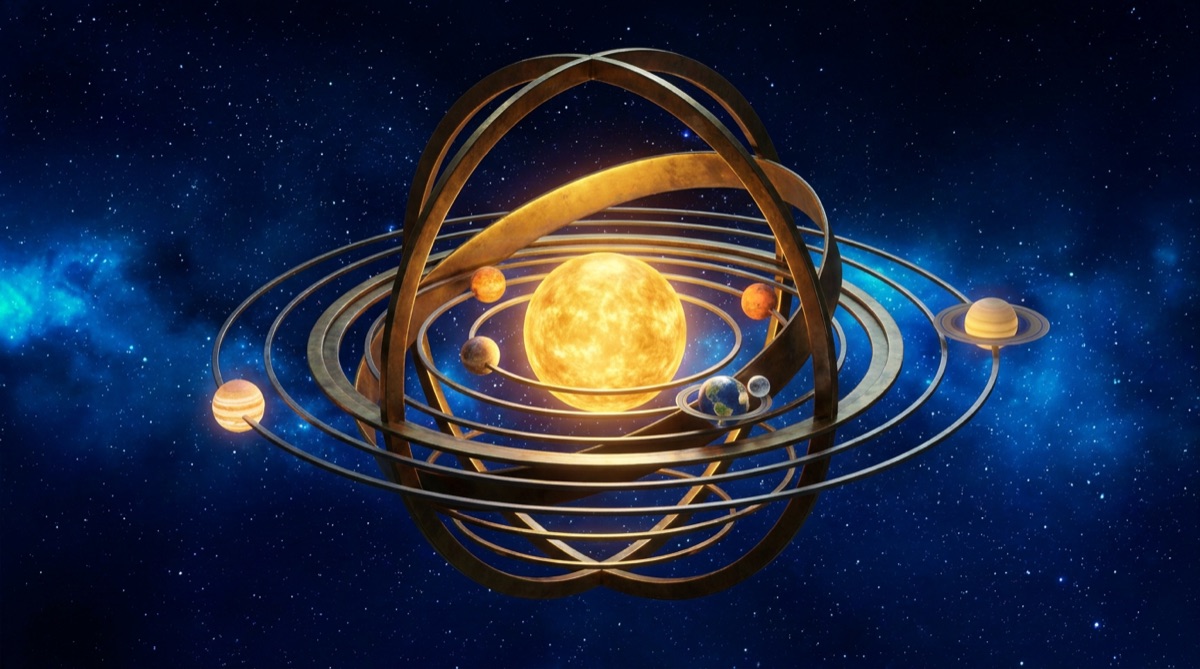
Around 1510–1514 Copernicus circulated among friends a short manuscript, the Commentariolus, with the idea that would occupy him for the rest of his life: the Earth is not at rest at the center of the universe. It spins on itself once a day and goes once around the Sun each year, like the other planets.
He had no better observations than Ptolemy; he had a better idea. In the old model the planets traced small backward loops, the retrograde motions, which were explained by adding circles upon circles. If the Earth also moves, those loops appear by themselves: when the Earth overtakes Mars, Mars seems to move backward against the background of stars, just as a slower car seems to go backward when we pass it.
And there was an even greater prize. With the Earth in orbit, geometry fixes the order of the planets and the size of each orbit measured in units of the Earth–Sun distance. Copernicus computed that Mercury is at about 0.38 of those units, Venus at 0.72, Mars at 1.52, Jupiter at 5.2 and Saturn at 9.2: figures very close to today’s. For the first time the Solar System had proportions, not just an order. You can compare them in the simulator The Solar System to scale.
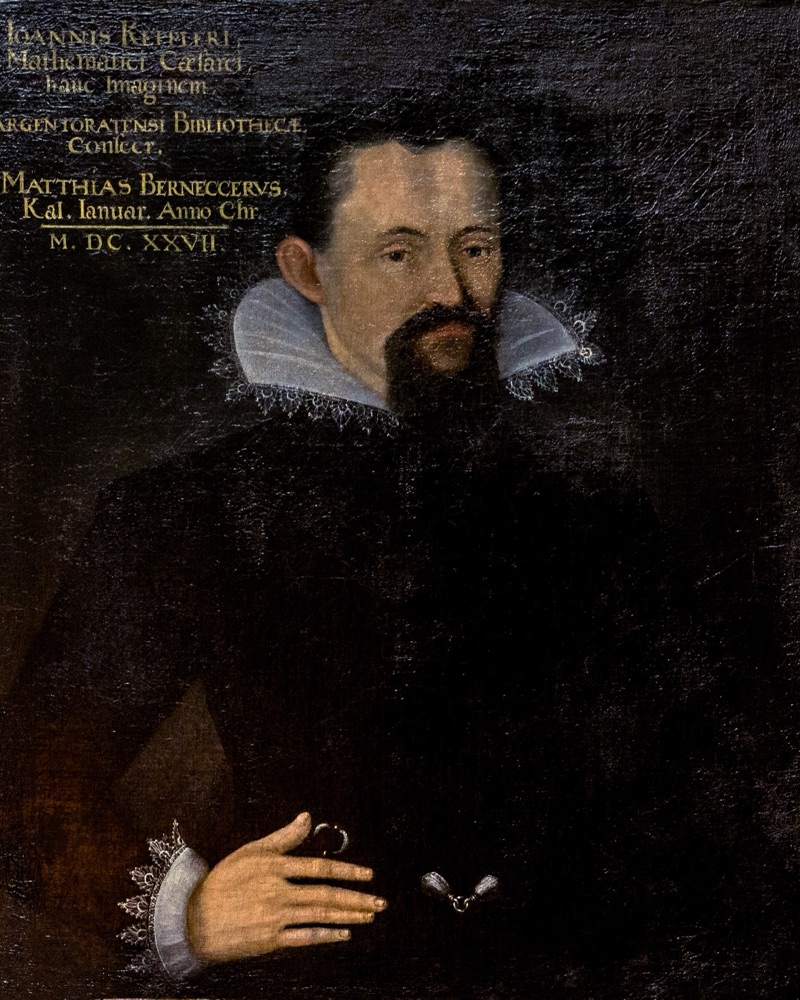
The model had limits. Copernicus kept believing that the heavenly bodies move in circles and at uniform speed, so he needed small epicycles to fit the data, and his system did not predict positions better than Ptolemy’s. It took Kepler’s ellipses for heliocentrism to become the most accurate model as well.
For decades he resisted publishing. He was persuaded by a young Lutheran mathematician, Georg Joachim Rheticus, who traveled to Frombork in 1539, studied the manuscript and published a summary, the Narratio prima (1540). The complete book, De revolutionibus orbium coelestium, was printed in Nuremberg in 1543. According to tradition, a copy reached Copernicus on his deathbed; he died on May 24 of that year. The printer added, unsigned, a preface by the theologian Andreas Osiander that presented the model as a mere computational hypothesis, something Copernicus had not written.
His legacy
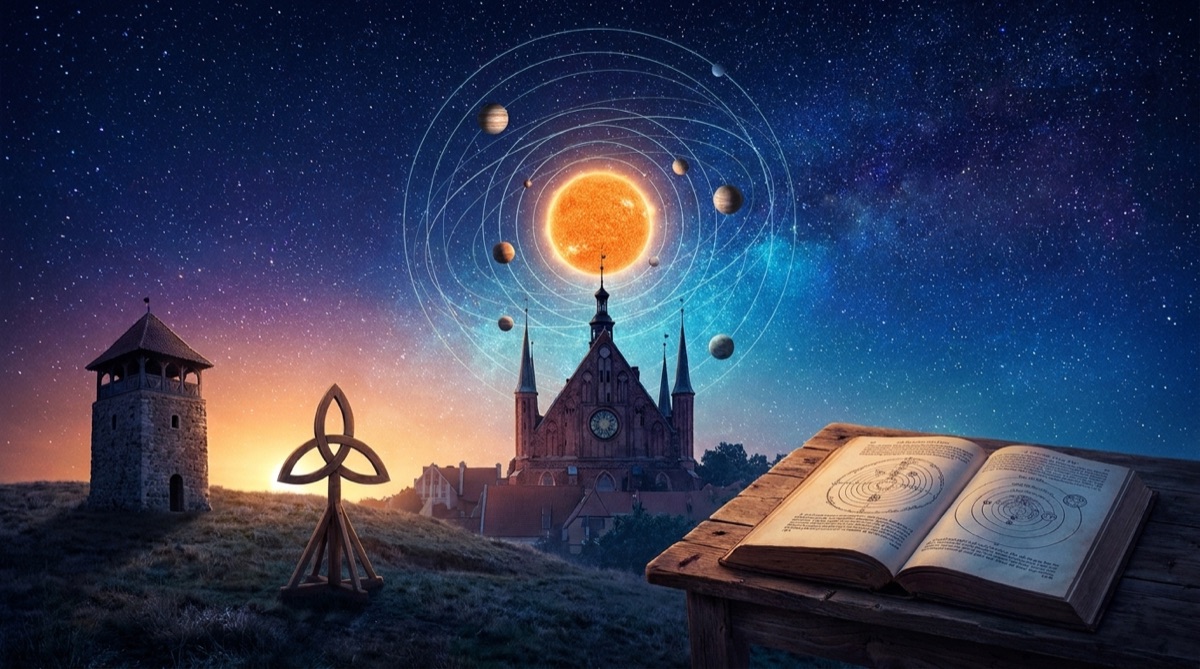
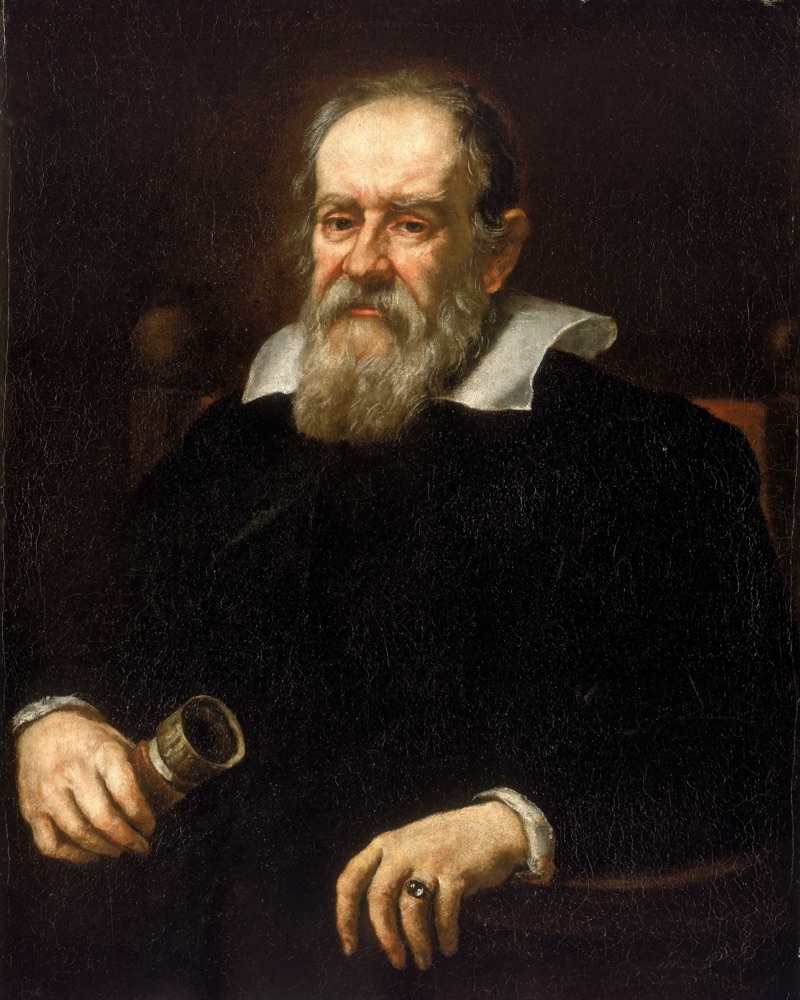
De revolutionibus was neither a bestseller nor an immediate scandal: astronomers used it for its tables and its methods, and few at first accepted that the Earth moved. Owen Gingerich, who tracked down over thirty years the copies of the first two editions, found that many were thoroughly annotated by expert readers, from Erasmus Reinhold to Kepler. The Catholic Church placed it on the Index in 1616, “until corrected”, in the context of the Galileo affair.
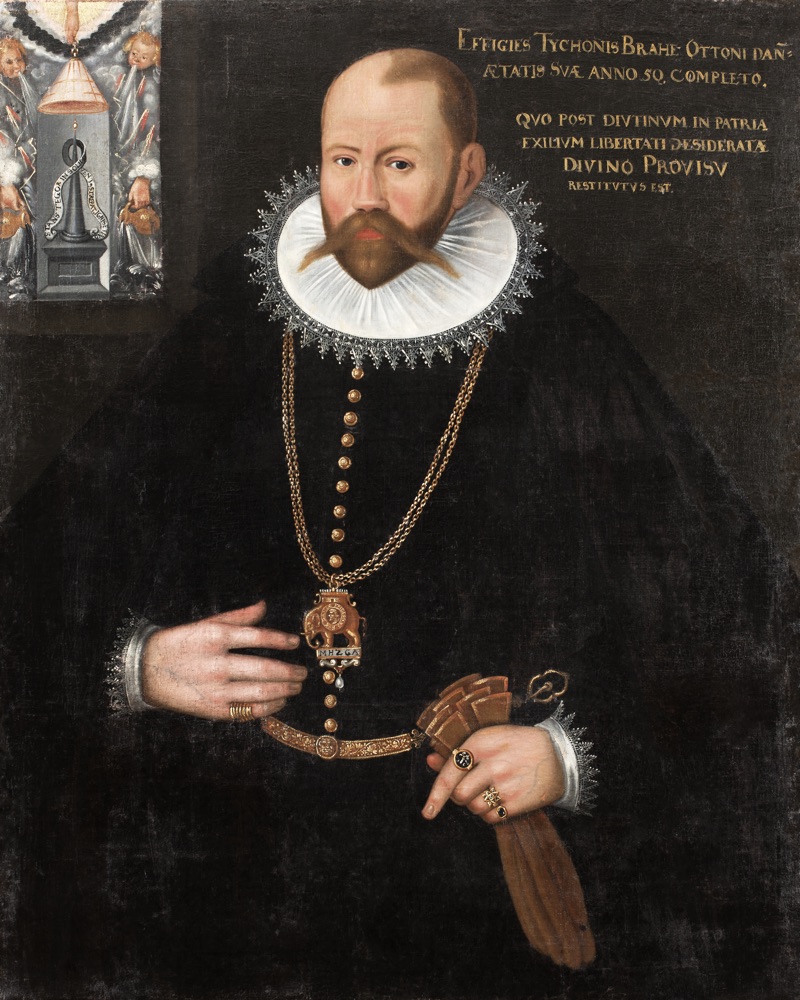
His inheritance was a question more than an answer: if the Earth moves, why don’t we notice it, why don’t the stars shift their positions and what keeps the planets in their orbits? Answering them occupied Tycho Brahe, Kepler, Galileo and Newton, and the stellar parallax that Copernicus could not measure took almost three centuries to be detected (Bessel, 1838). Today we call any change of perspective that removes us from the center a “Copernican revolution”, and in the lesson Kepler’s laws the Sun is still right where he put it: in the middle of everything.