His life
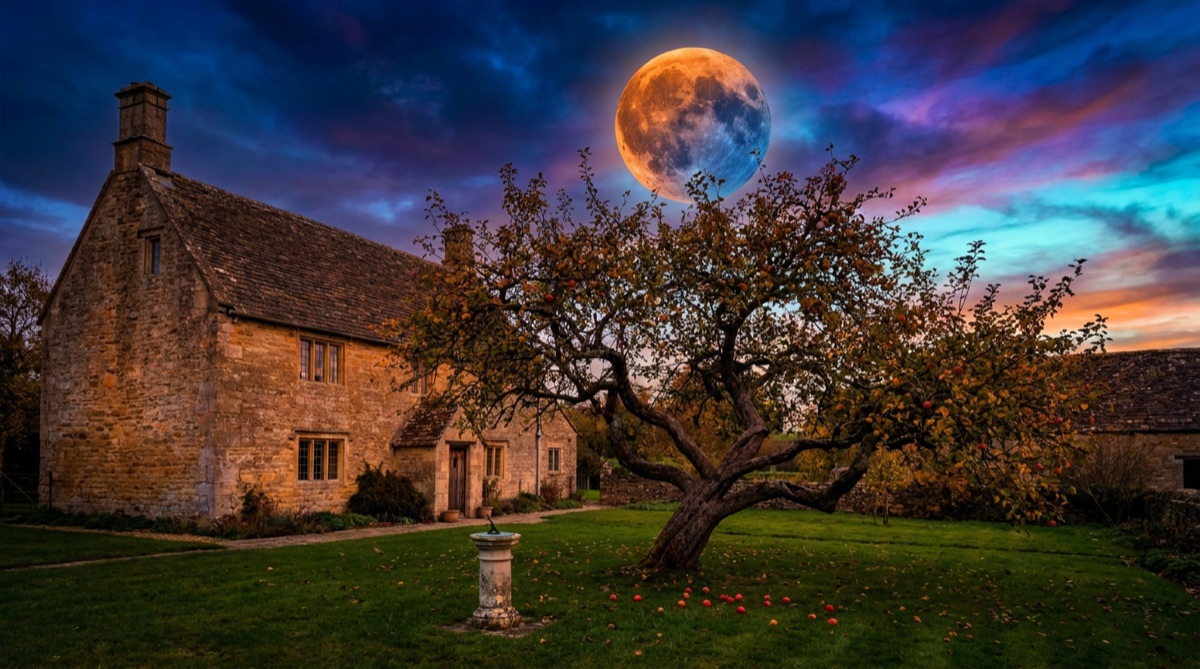
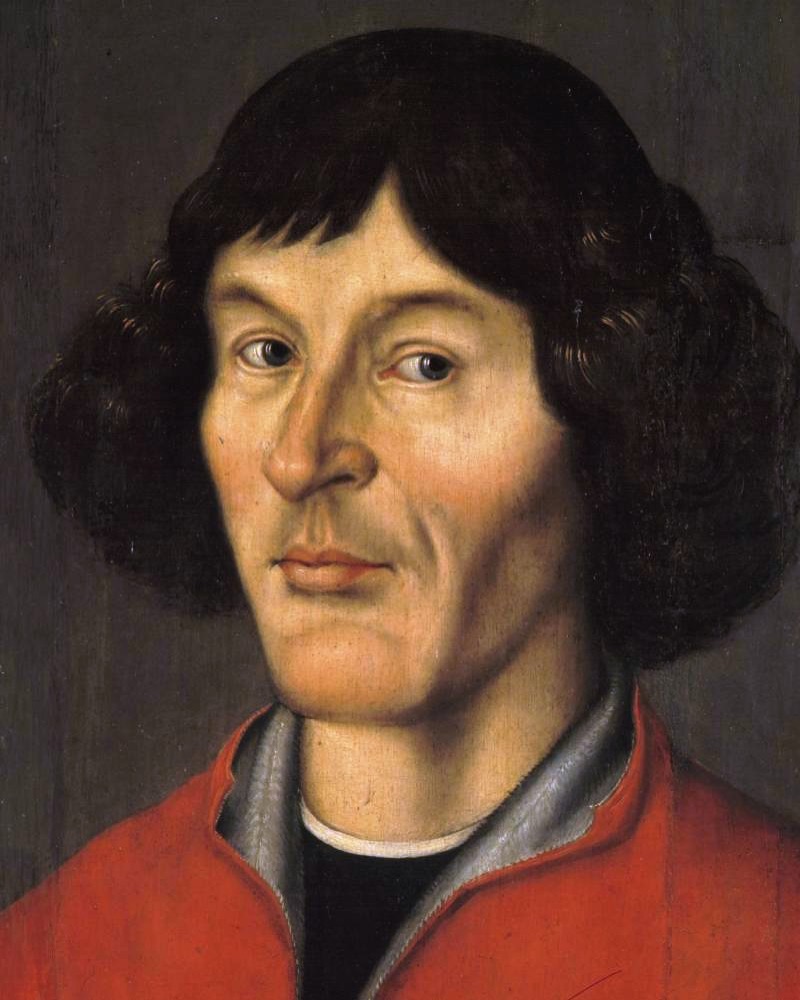
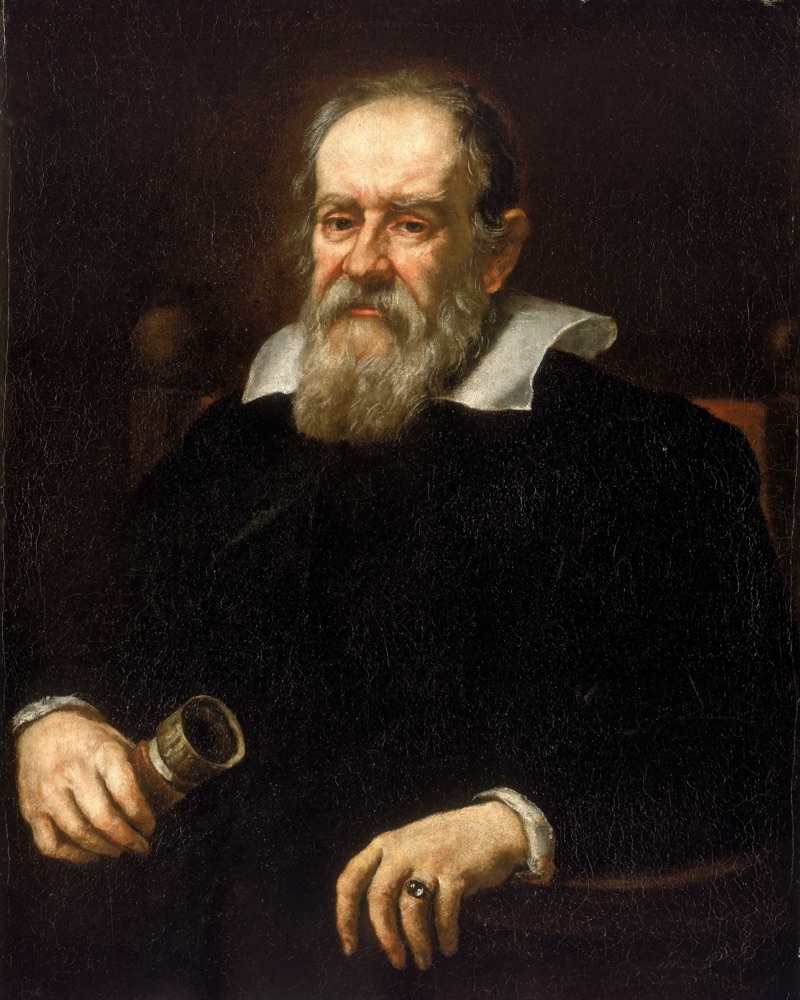
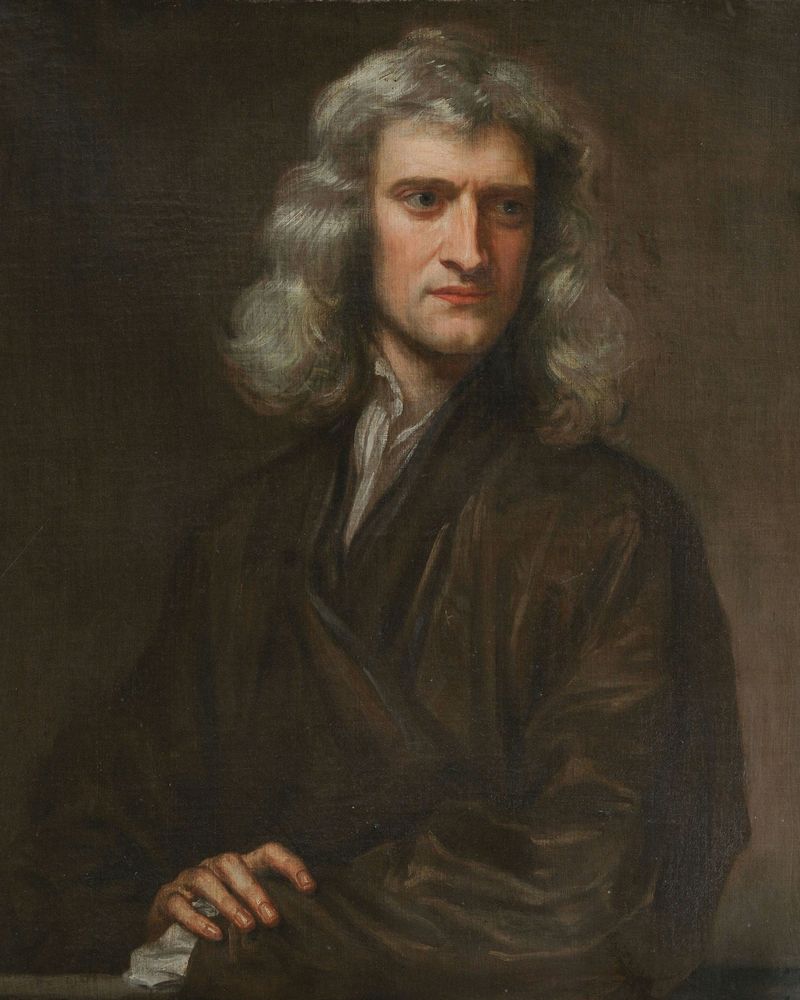
Isaac Newton was born on Christmas Day 1642 by the Julian calendar then used in England (January 4, 1643, in the Gregorian calendar), at the family farm of Woolsthorpe, in Lincolnshire. He was born premature and fatherless; his mother remarried and left him with his grandmother. He was a solitary boy, good with his hands, who built sundials and toy mills. In 1661 he entered Trinity College, Cambridge, where he studied Descartes, Kepler and Galileo on his own.
In 1665 the plague forced the university to close and Newton spent almost two years at Woolsthorpe. Years later he said that in that time he had found the method of fluxions (the calculus), the foundations of his theory of colors and the first ideas on gravitation. The story of the apple was told by Newton himself, in old age, to his friend William Stukeley in 1726: he saw an apple fall and wondered how far that force reached. There is no evidence that it hit him on the head. In 1669 he succeeded Isaac Barrow as Lucasian Professor of Mathematics. Later he worked at the Royal Mint (from 1696; Master from 1699), presided over the Royal Society from 1703 and was knighted in 1705. He died in London on March 20, 1727 (March 31 in the Gregorian calendar) and was buried in Westminster Abbey.
Universal gravitation
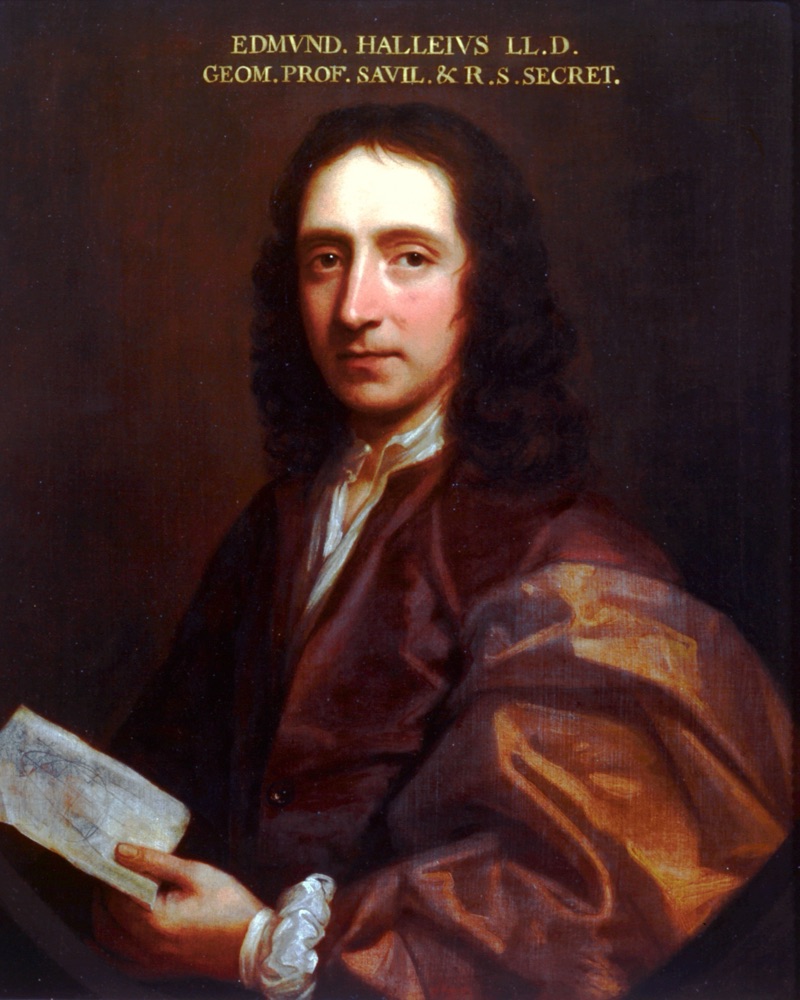
In August 1684 the astronomer Edmond Halley visited Newton in Cambridge with a question: what path would a planet follow if attracted by the Sun with a force inversely proportional to the square of the distance? Newton answered at once: an ellipse. He had calculated it years before, but had mislaid the papers. Halley urged him to write it all down and financed the publication of the book, the Philosophiae naturalis principia mathematica, published in 1687.
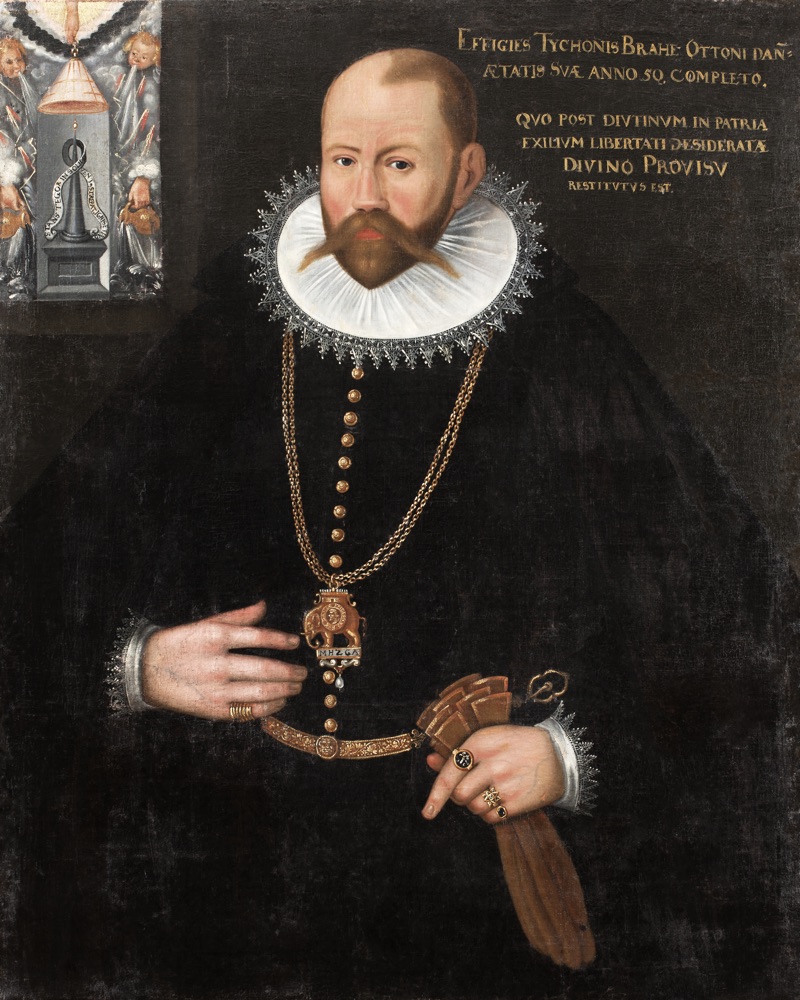
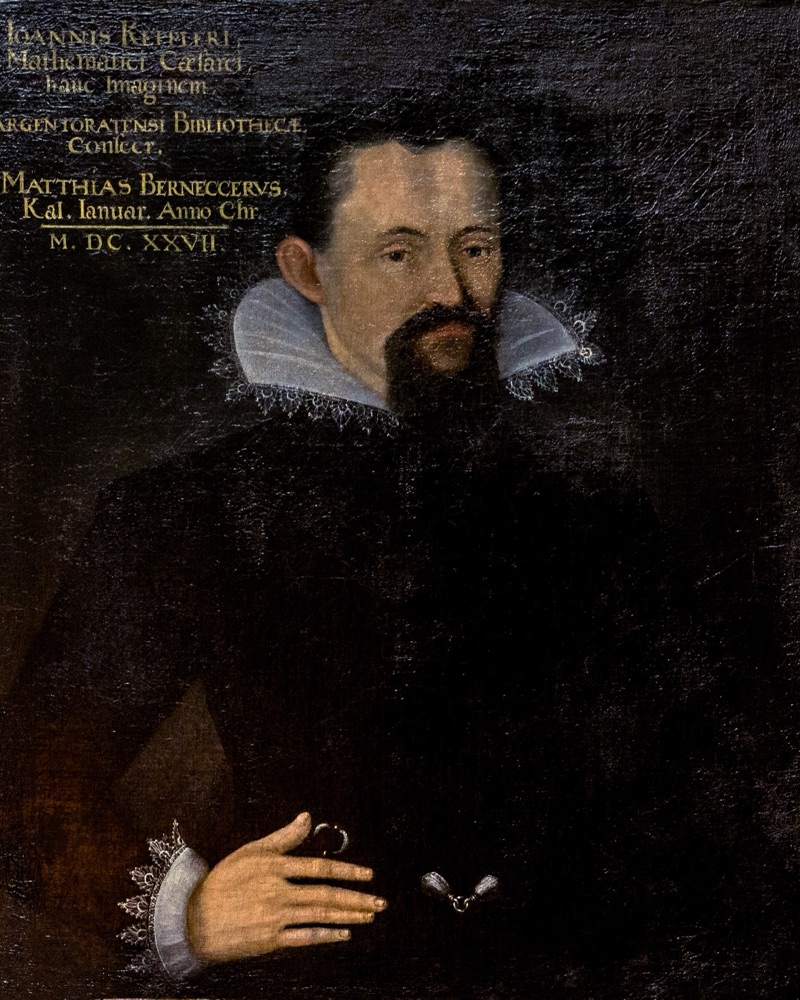
The central idea is that the same force that makes an apple fall keeps the Moon in its orbit. Any two bodies attract each other with a force proportional to the product of their masses and inversely proportional to the square of the distance between them. With that and his three laws of motion, Newton proved mathematically that the planets must travel in ellipses with the Sun at one focus, just what Kepler had found from Tycho’s data. He also explained the tides by the pull of the Moon and the Sun, the flattening of the Earth, the slow wobble of the Earth’s axis (the precession of the equinoxes) and the orbits of comets.
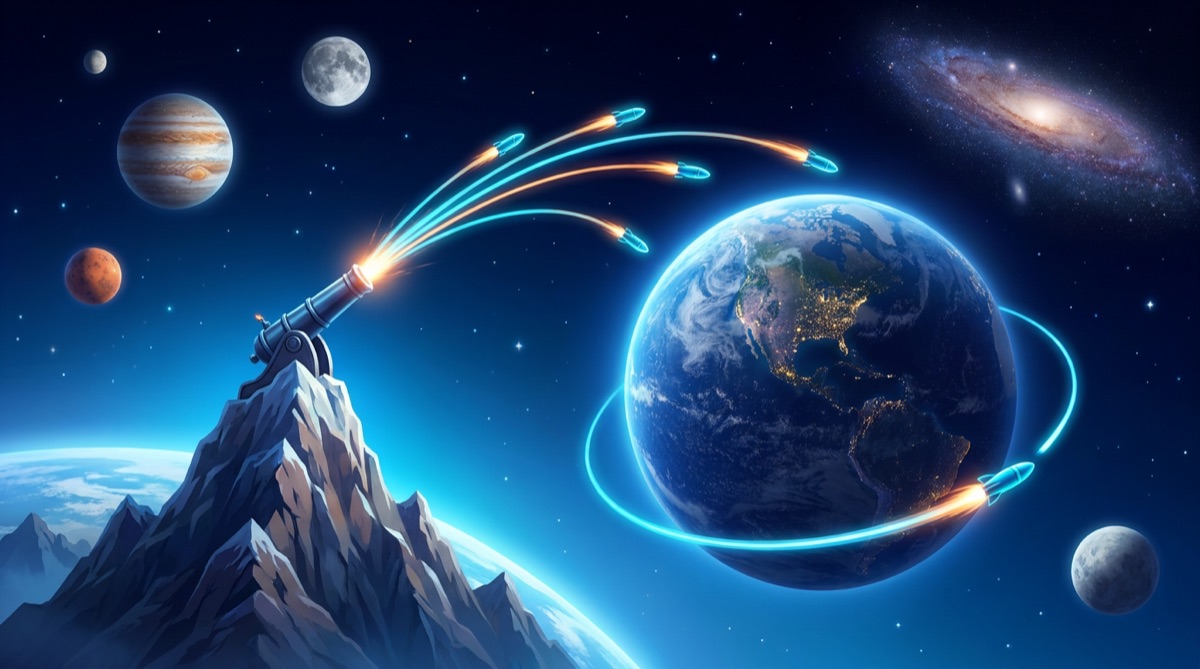
To show that an orbit is an endless fall, Newton imagined a cannon on the top of a very high mountain: the faster the ball leaves, the farther it falls, until, with enough speed, the Earth curves away beneath it and the ball never reaches the ground. You can try it yourself in Newton’s cannonball.
Light and the reflecting telescope
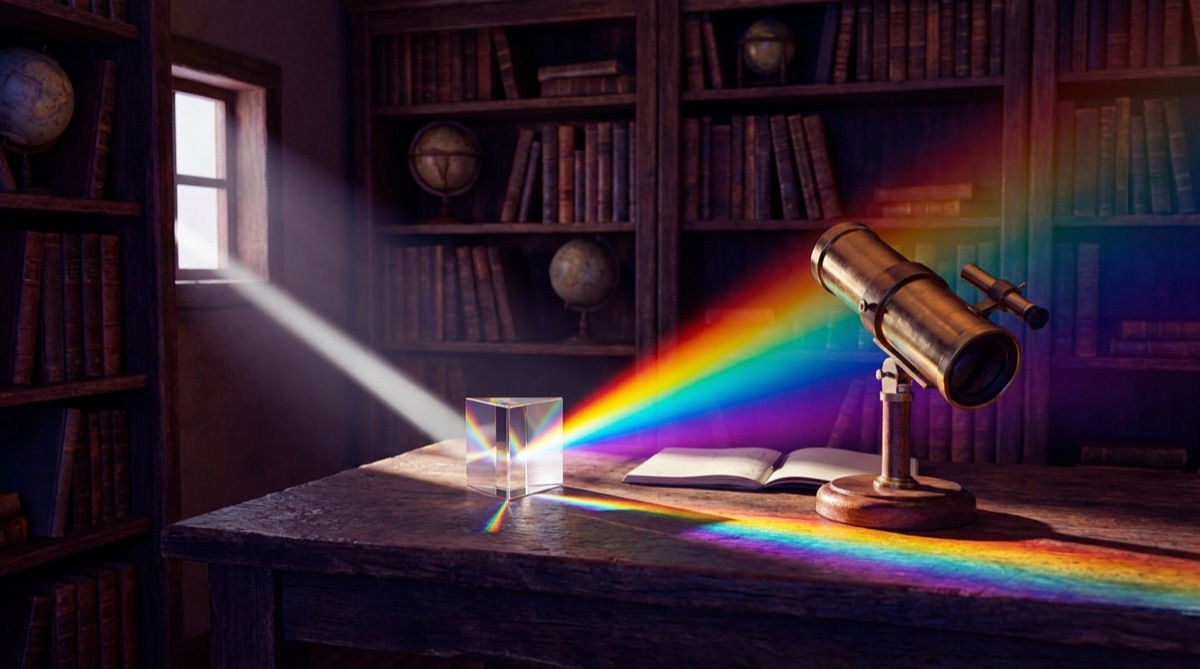
Newton was also a great experimenter. In 1666 he passed a ray of sunlight through a prism and confirmed that white light is a mixture of colors, and that a second prism does not change a color already separated. This meant that the colors were not produced by the glass. From this he deduced that lens telescopes would always have colored fringes, and in 1668 he built a telescope with a mirror instead of an objective lens, which does not have that defect. He presented it to the Royal Society in 1671, and almost all large telescopes today follow that idea. He gathered his experiments in the Opticks (1704).
His character was difficult. He kept up a long, bitter dispute with Gottfried Leibniz over who had invented the calculus; today it is accepted that they developed it independently, and it is Leibniz’s notation that we use.
His legacy
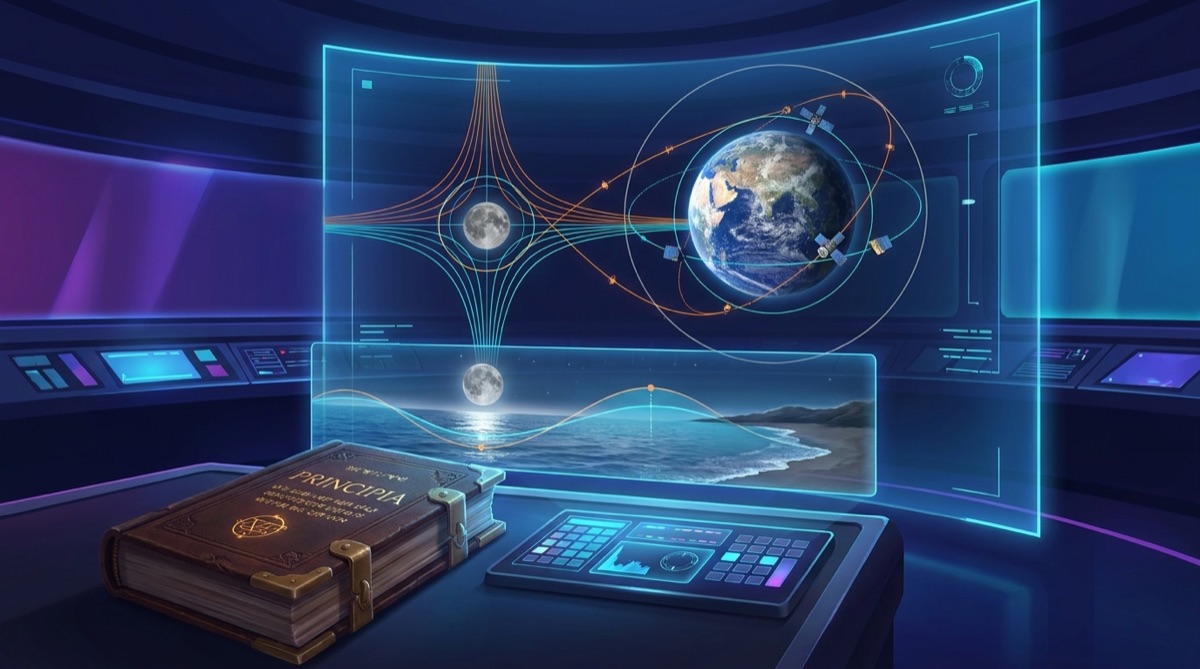
With Newton, astronomy went from describing the motions of the planets to explaining them. His mechanics dominated physics for more than two centuries: with it the return of a comet was calculated in 1758, Neptune was discovered through its effects on Uranus in 1846, and probes were sent to other planets. Its limits appeared later: the anomalous precession of the perihelion of Mercury, which only Einstein’s general relativity could explain. But even today, to compute the trajectory of a spacecraft or an asteroid, his equations are used.