Her life

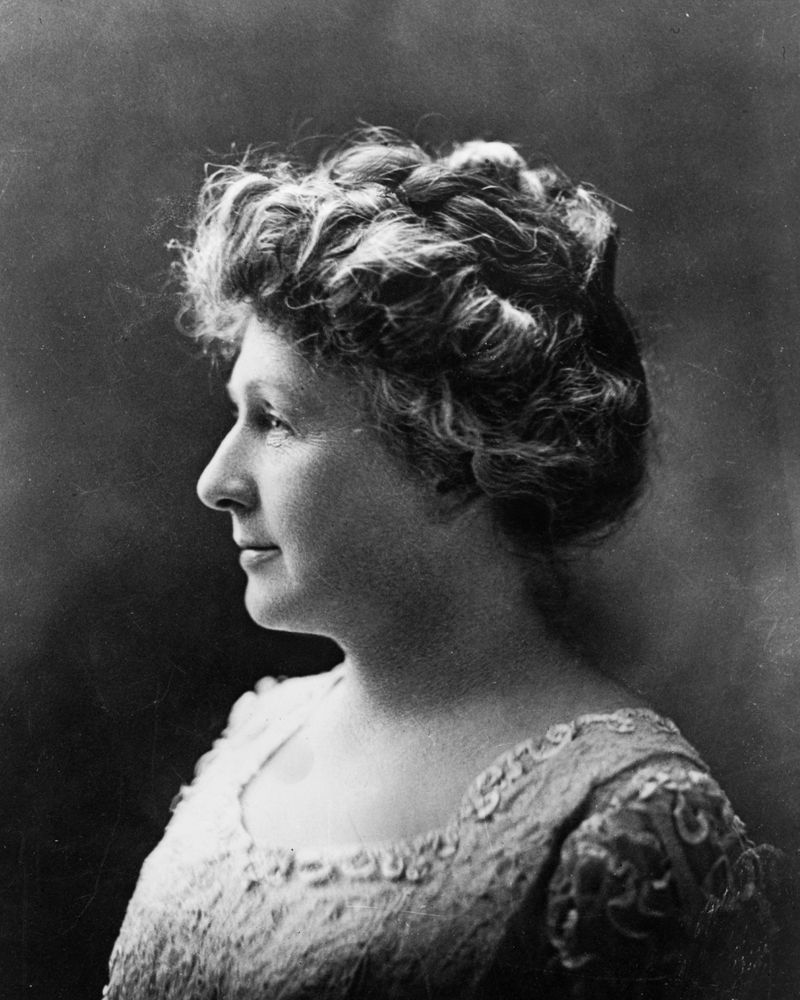
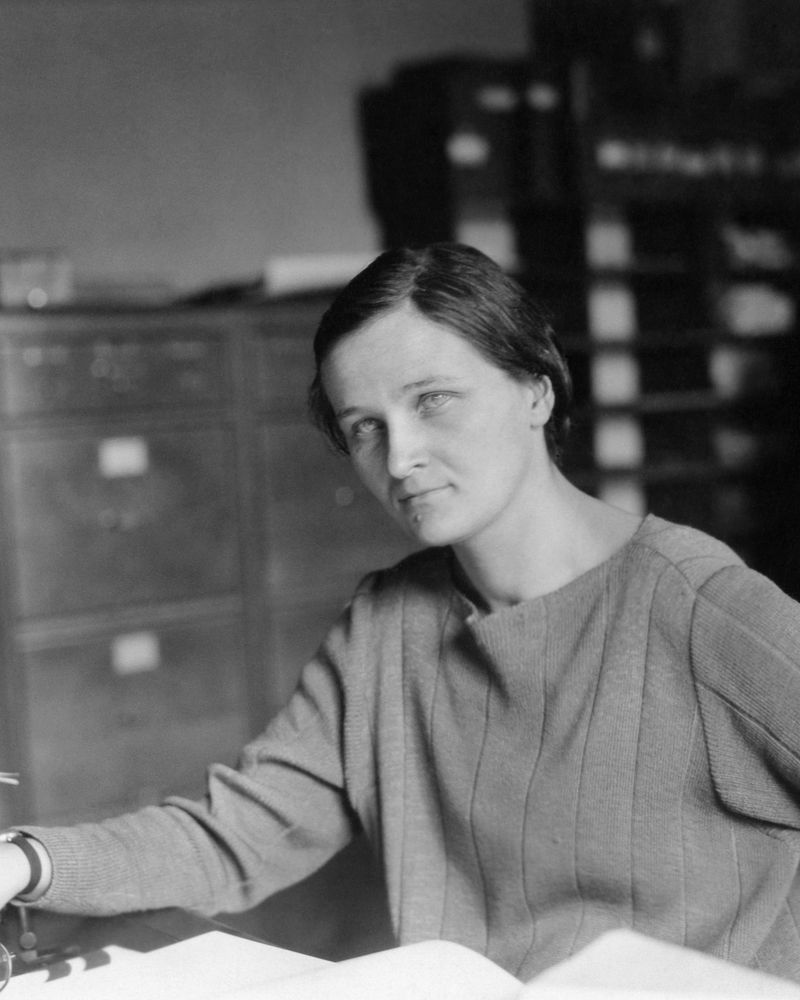
Cecilia Payne was born on May 10, 1900, in Wendover, England. She studied at Cambridge (Newnham College), where in 1919 she attended a lecture by Arthur Eddington on the eclipse that had confirmed general relativity; she herself would later say that the talk changed her life. Since at Cambridge she could not obtain a degree (women were granted only certificates, not degrees), she looked for opportunities in the United States. In 1923 she arrived at the Harvard College Observatory, directed by Harlow Shapley, and in 1925 she presented her thesis at Radcliffe College.
In 1934 she married the Russian astronomer Sergei Gaposchkin and from then on signed her work as Payne-Gaposchkin. For years she was given only technical posts and not a professorship: she had no faculty position at Harvard until 1956, when she became the first woman promoted to full professor in the Faculty of Arts and Sciences and, shortly afterward, chair of the Department of Astronomy. She died in Cambridge, Massachusetts, on December 7, 1979.
What stars are made of
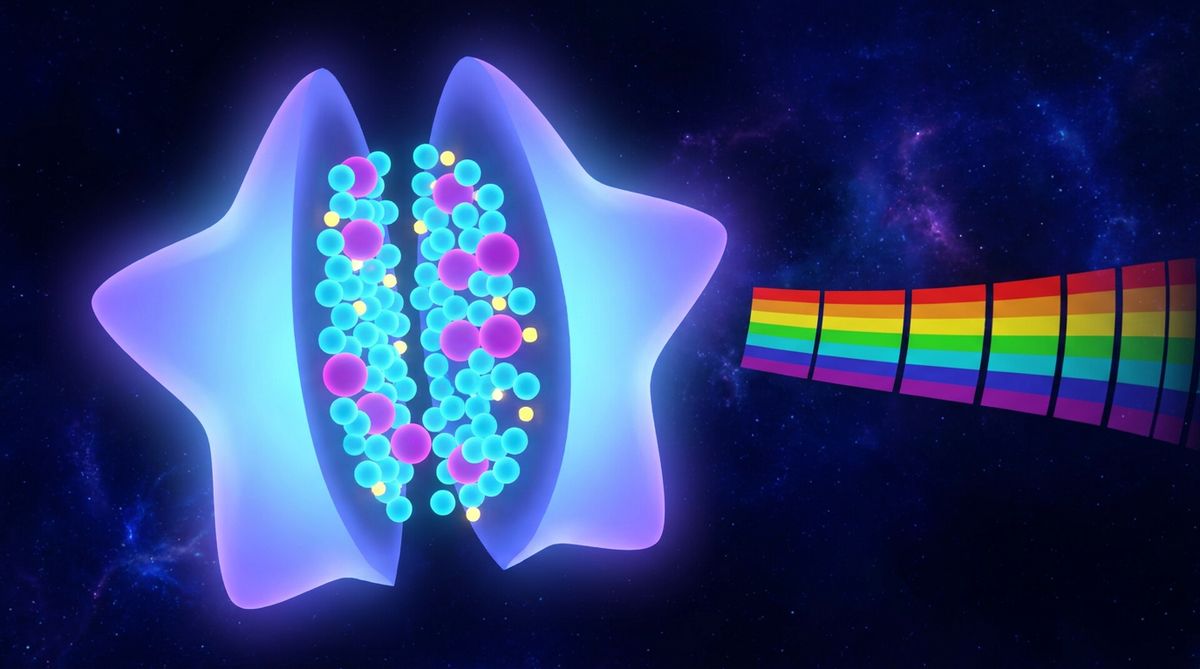
The astronomers of the 19th and early 20th centuries knew how to classify stars by their spectra, as explained in the fiche on Annie Jump Cannon: classes O, B, A, F, G, K, M. But nobody knew what those classes meant. Many believed that stars had the same composition as Earth, with plenty of iron and calcium.
Payne used an equation that the Indian physicist Meghnad Saha had derived in 1920 to calculate what fraction of the atoms of each element loses electrons (becomes ionized) at a given temperature. Applied to the Harvard spectra, it showed that the lines of one class or another depend above all on temperature: an ionized atom no longer absorbs the same wavelengths. The spectral classes were, then, a scale of temperatures, not of composition. With that tool she calculated the abundances, and reached an astonishing conclusion: stars are made almost entirely of hydrogen and helium, and the other elements are a tiny fraction. The Sun follows that rule.
Her thesis was so emphatic that she herself found it hard to believe. Henry Norris Russell, the most respected astronomer of the time, advised her not to credit a result so contrary to accepted ideas, and in the published version of the thesis she wrote that the enormous abundance of hydrogen and helium “is almost certainly not real”. Four years later, in 1929, Russell reached the same conclusion on his own and published it, acknowledging Payne’s work. Otto Struve later described the thesis as the most brilliant ever written in astronomy. Today we know that, by mass, the universe is about three quarters hydrogen and one quarter helium, something that links to the lesson on stellar nucleosynthesis.
Variable stars and a marriage of astronomers
After the thesis, Payne-Gaposchkin devoted herself, with her husband, to variable stars: those whose brightness changes with time. They did a monumental job: more than a million brightness estimates on the Harvard plates, to study the variables of the Magellanic Clouds and the Milky Way, a monitoring effort that made it possible, among other things, to better understand how very luminous stars evolve. To analyze the change in a star’s brightness over time, the periodogram is used today.
She also wrote textbooks and popular books, such as The Stars of High Luminosity (1930) and her autobiography, published after her death.
Her legacy
Cecilia Payne’s thesis laid the foundations of modern astrophysics: stars get their energy from the fusion of hydrogen into helium, something that only makes sense if that is what they are made of. Her career is an example of talent recognized late: she spent decades in modest posts with a lower salary than her colleagues, and the community of astronomers was slow to acknowledge her contribution. In 1976 she received the Henry Norris Russell Lectureship, the highest distinction of the American Astronomical Society. A crater on the Moon and an asteroid now bear her name.