His life
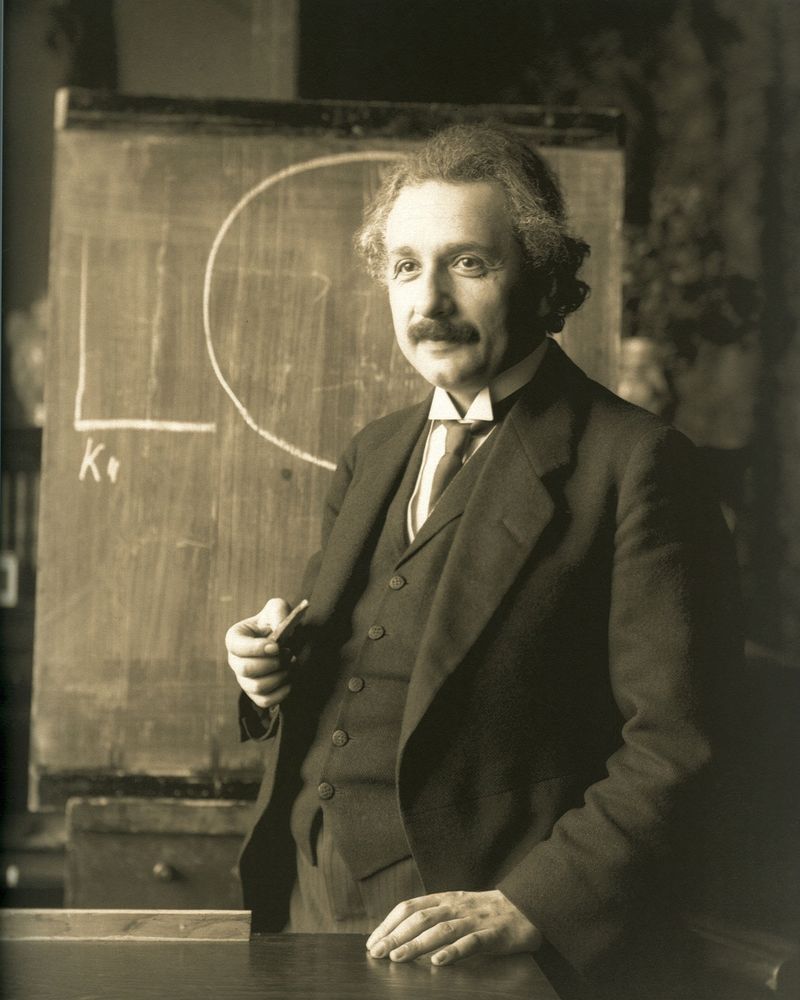
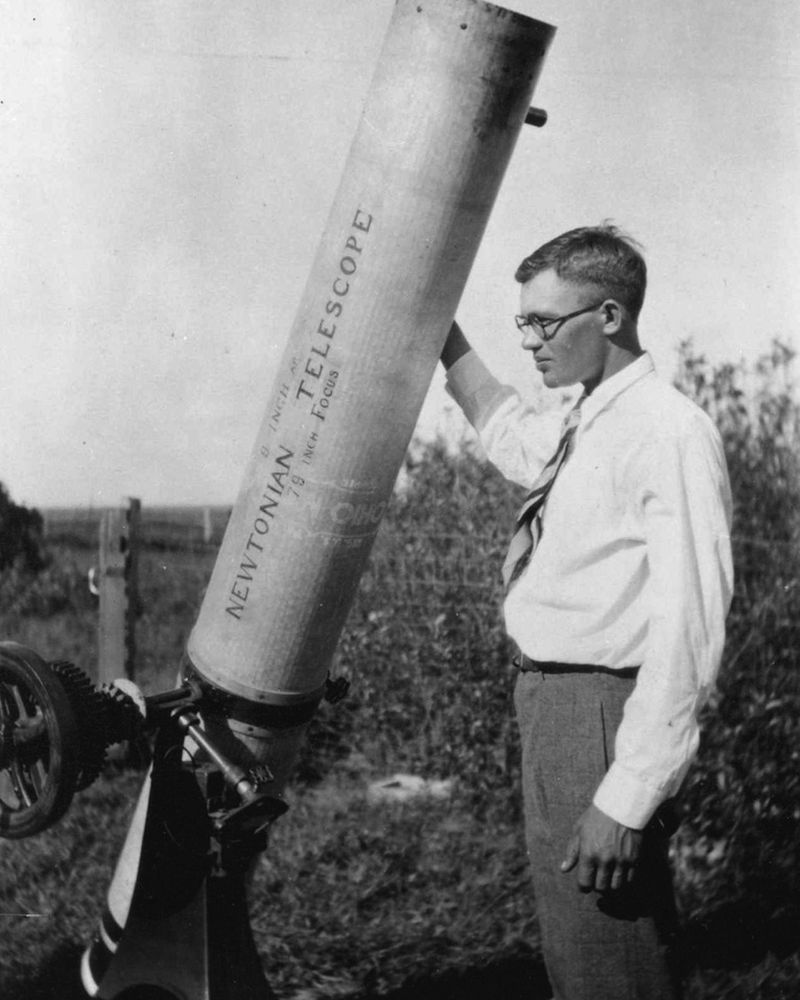
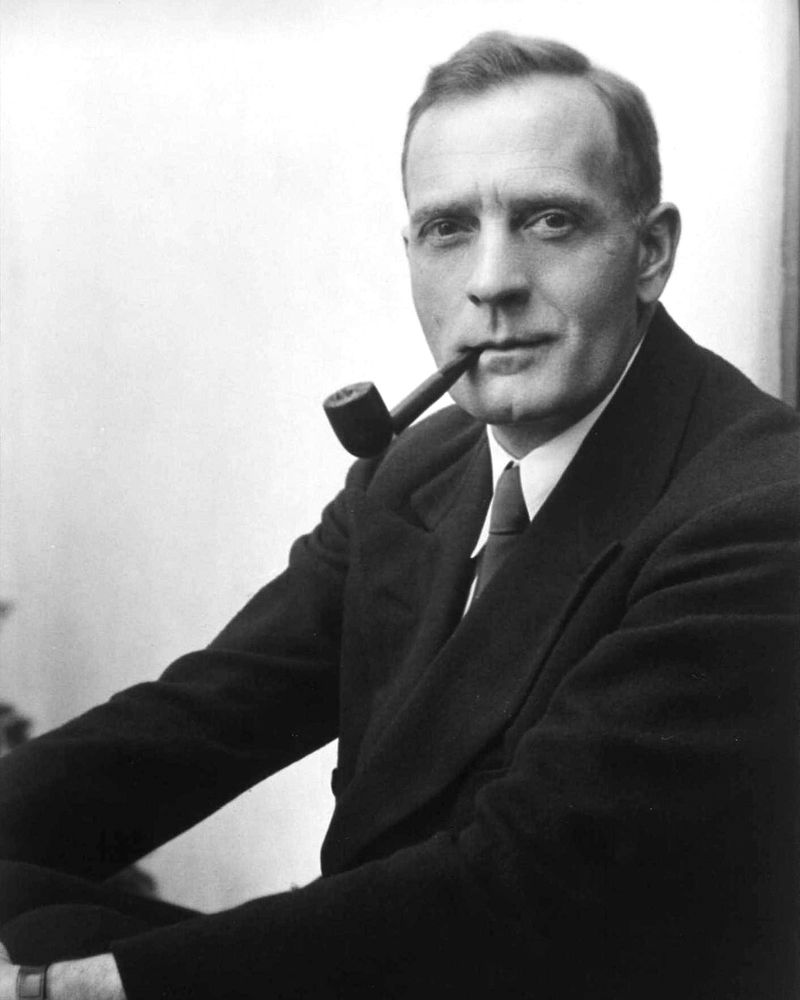
Edwin Hubble was born on November 20, 1889, in Marshfield, Missouri. A young athlete, he studied mathematics and astronomy at the University of Chicago and, on a Rhodes scholarship, studied law at Oxford. He practiced law briefly but returned to astronomy: he earned his doctorate in Chicago in 1917, served in the army during the First World War and in 1919 joined the Mount Wilson Observatory in California, where he had the use of the 2.5-meter Hooker telescope, the largest in the world at the time.
He spent the rest of his career at Mount Wilson, with a pause during the Second World War, when he directed ballistics work at the Aberdeen Proving Ground (Maryland). In 1936 he published the book The Realm of the Nebulae, where he summarized his work on galaxies. He died of a cerebral hemorrhage on September 28, 1953, in San Marino, California.
Andromeda is another galaxy
In 1920 astronomers were debating whether the “spiral nebulae”, luminous patches shaped like whirlpools, were clouds within our galaxy or enormous, distant “island universes”. The answer depended on measuring distances. In October 1923 Hubble photographed the Andromeda spiral with the Hooker telescope and found a star that changed in brightness: a Cepheid.
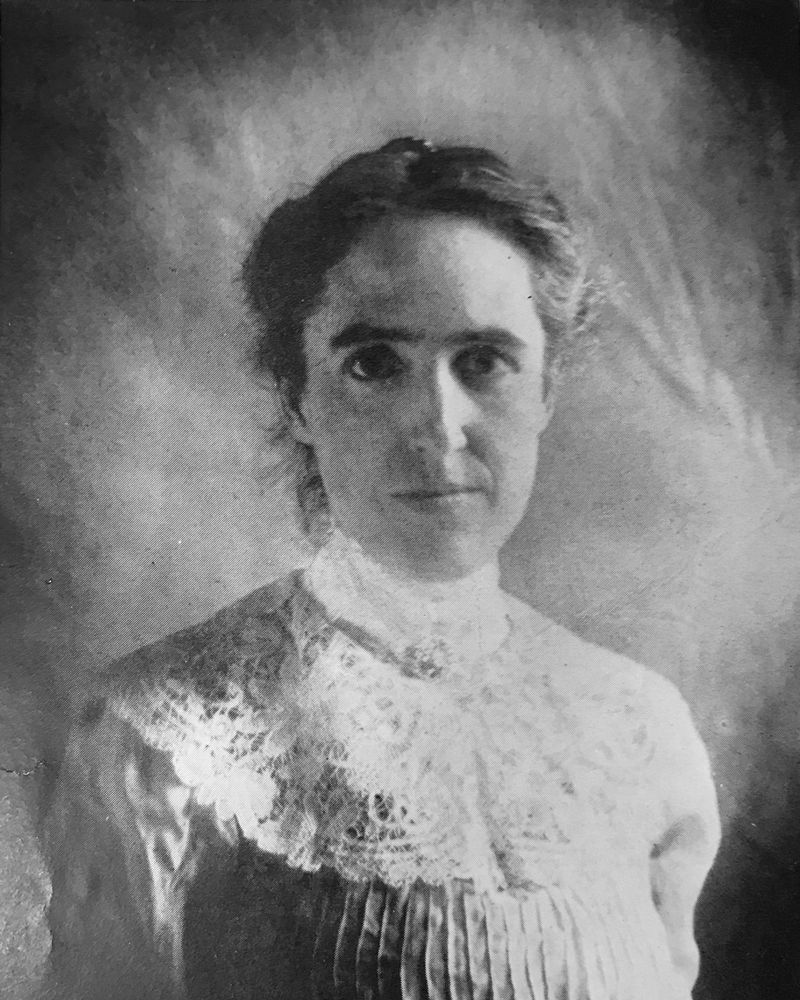
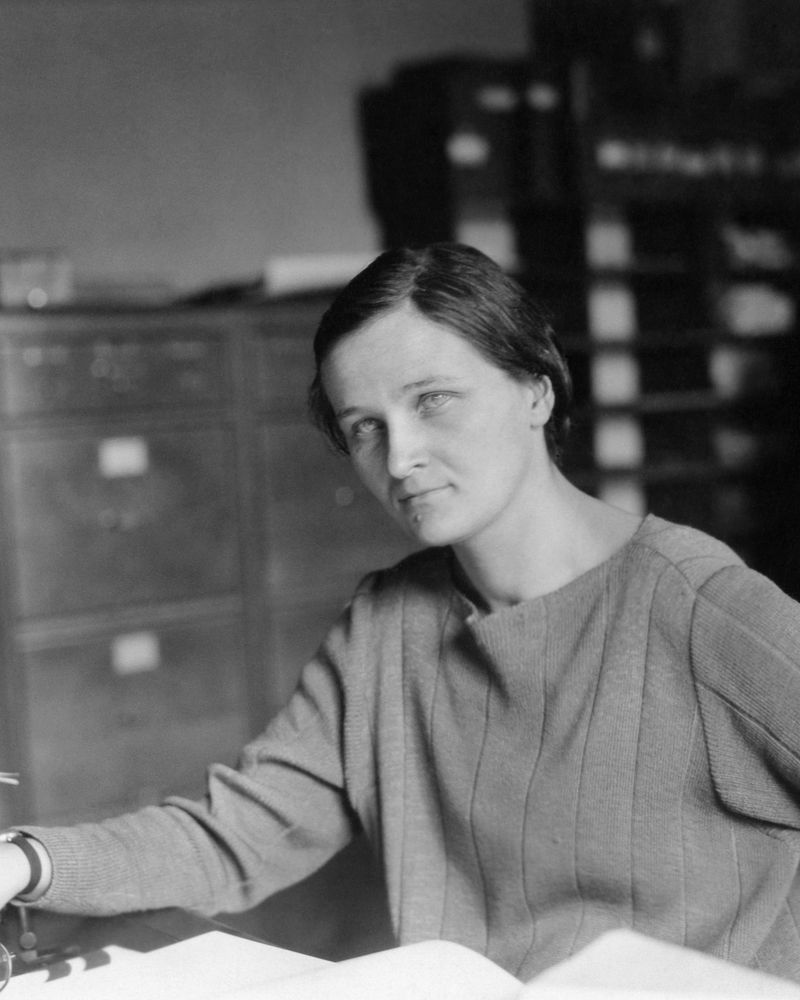
Using the relation between the period and the luminosity of these stars, discovered by Henrietta Leavitt, he could compute how far away it was. It turned out to be very far: some 900 000 light-years, well beyond the size then accepted for the Milky Way. Andromeda was an independent galaxy. Hubble published the result in 1925 (today the distance is known to be about 2.5 million light-years, because the calibration of the Cepheids was corrected later). The known universe became, at a stroke, far larger. Cosmological distances are built step by step with this kind of star.
Hubble also classified galaxies by their shape, and his tuning-fork scheme, from ellipticals to spirals, is still in use.
The galaxies are receding
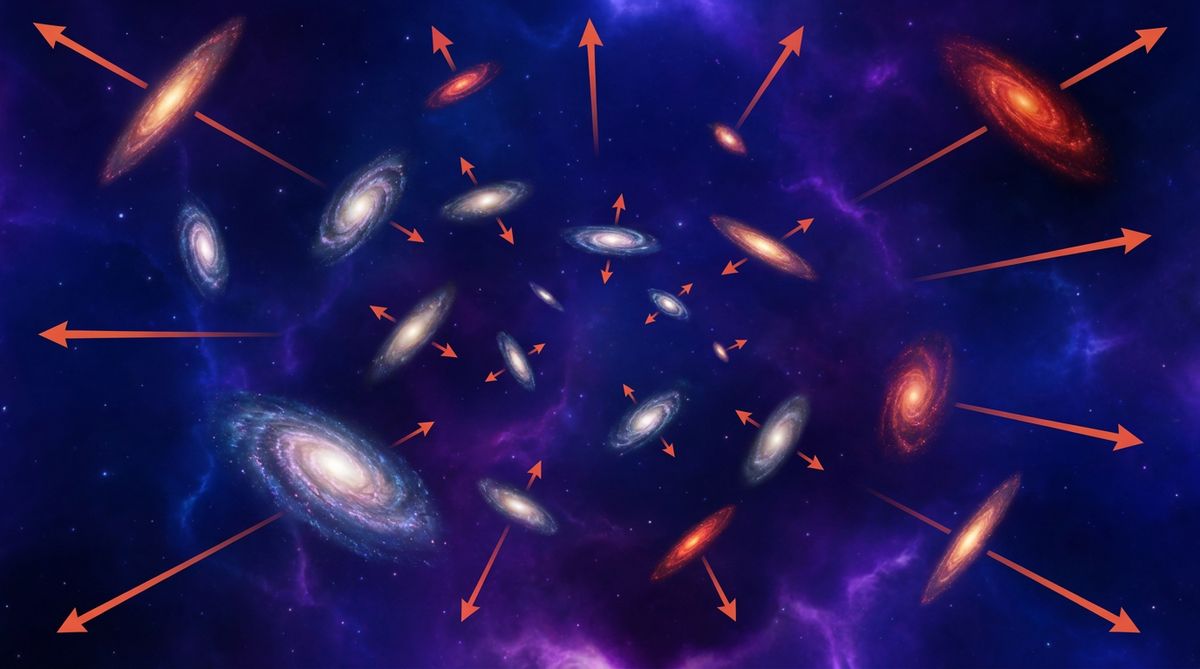
The second great result came in 1929. Vesto Slipher had measured the redshift of dozens of galaxies, that is, how much the wavelength of their light was stretched, and almost all of them were receding. Hubble, with the help of his collaborator Milton Humason, also measured the distances and compared them with the velocities: the farther away a galaxy is, the faster it recedes. The relation is linear, , where is the recession velocity, the distance and the Hubble constant. His first value, about 500 kilometers per second per megaparsec, was far too high because of calibration errors; current measurements give between 67 and 73 in those units, a discrepancy that is still under investigation.
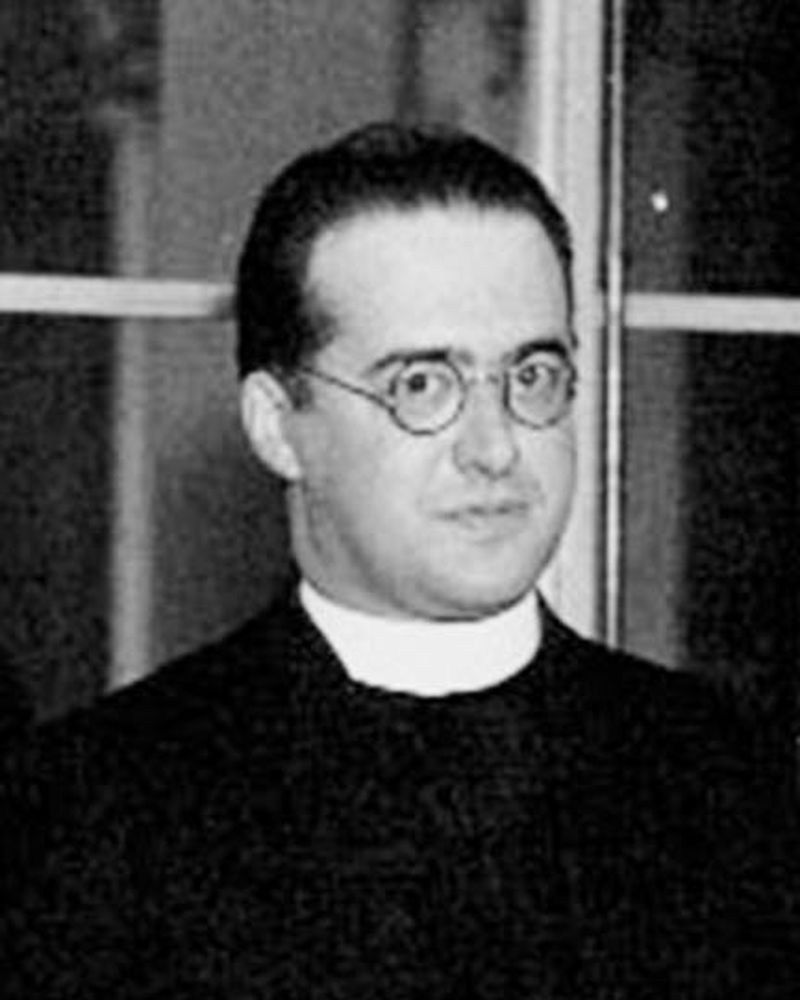
Hubble was always cautious in interpreting the result: he was not convinced that it meant space itself was expanding. That interpretation was Georges Lemaître’s, who in 1927 had derived the same relation from general relativity. In 2018 the International Astronomical Union recommended calling the relation the “Hubble–Lemaître law”. You can explore how the universe changes over time in the Friedmann universe simulator and review the law in the lesson The universe is expanding.
His legacy
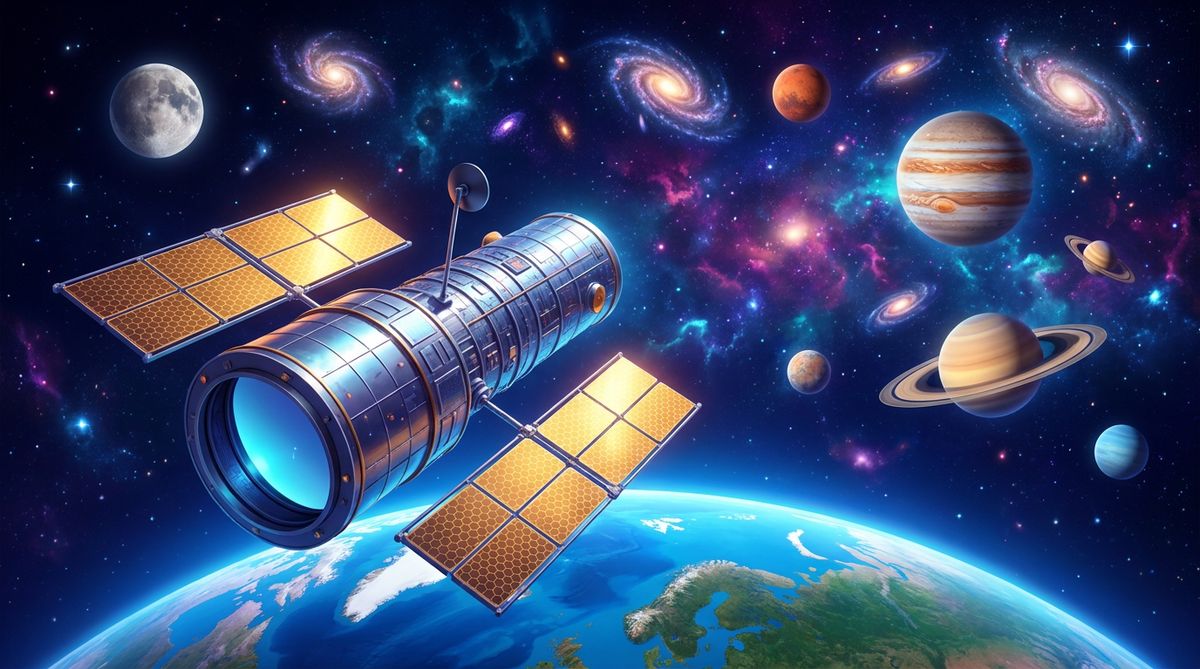
Thanks to Hubble, astronomy went from studying one galaxy, our own, to studying the universe. In 1990 the Hubble Space Telescope, which bears his name, was launched, and its images of distant galaxies are among the most famous in history. Hubble never received the Nobel Prize in Physics, which in his day did not usually reward astronomical discoveries.