Her life
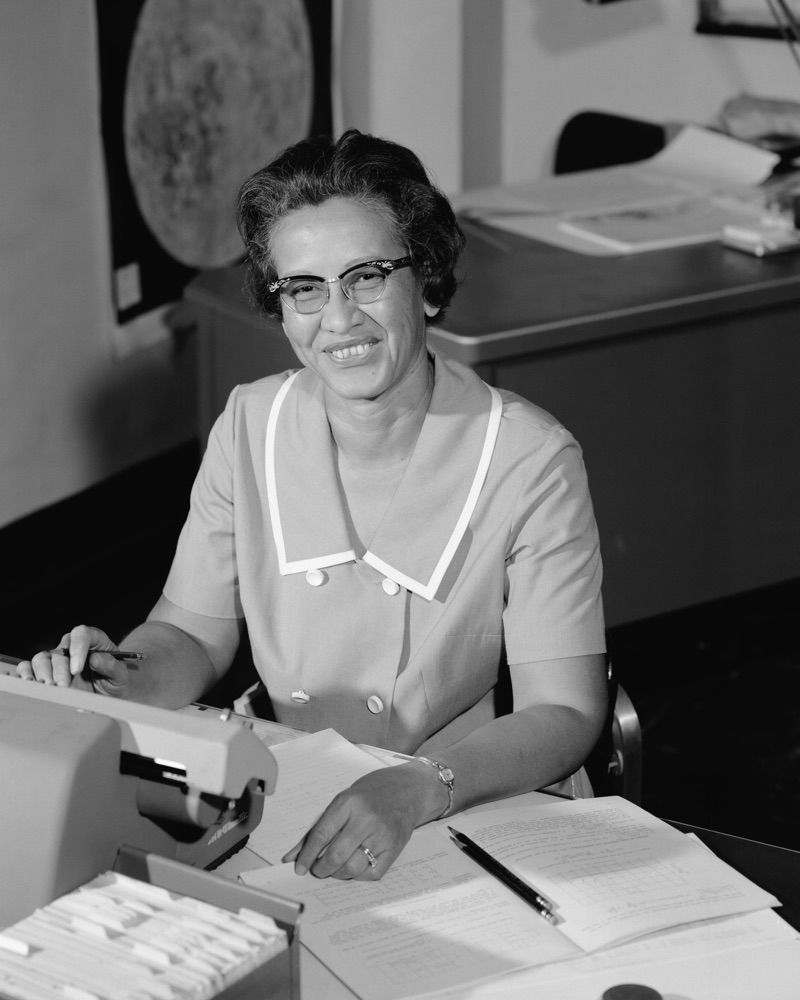
Katherine Coleman was born on August 26, 1918, in White Sulphur Springs, a small town in West Virginia. As a child she counted everything she saw: the steps, the dishes, the paces to church. She was so good at mathematics that she skipped several grades, but in her county the public schools for Black children ended at the eighth grade, so her family moved so that she could keep studying. She entered college at fifteen and graduated in 1937 with the highest honors in mathematics and French from West Virginia State College.
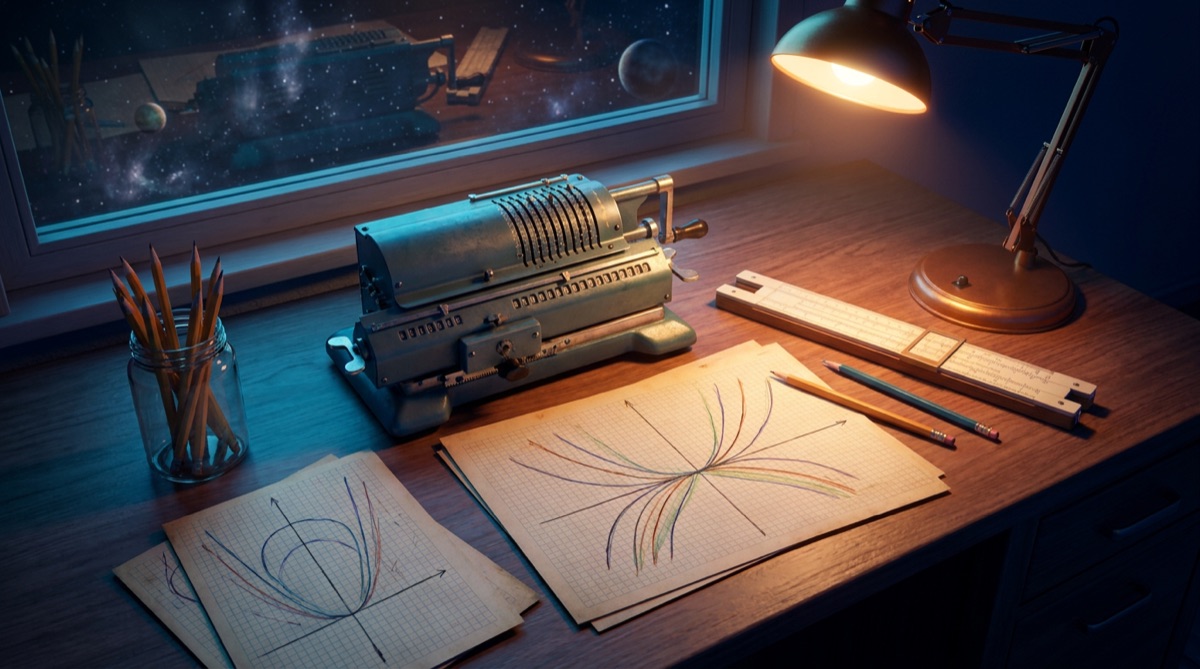
She worked as a teacher and in 1939 was one of the first Black students admitted to the graduate program at West Virginia University, when the state began to open its programs to everyone. She later left her studies to raise her family. In 1953 she learned that the Langley aeronautical laboratory in Virginia, then called NACA (the agency that would become NASA in 1958), was hiring women mathematicians for computing work. There she started in a group of “computers”: people who did the engineers’ calculations by hand, with pencil, paper and a mechanical calculator. At that time she worked in an office separate from her white colleagues, a segregation that disappeared in the following years.
From airplanes to rockets
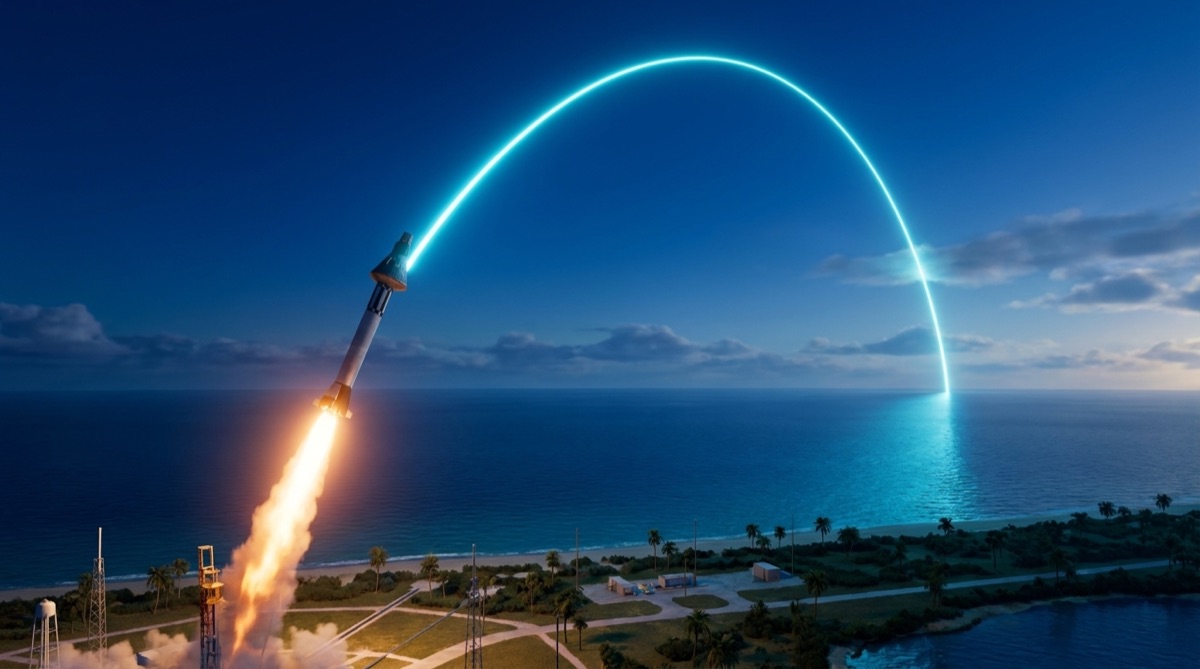
She was soon transferred to the group that studied aircraft flight. Her skill in analytic geometry made her indispensable. When Sputnik opened the space race in 1957, the laboratory began working on crewed spaceflight and Johnson moved on to computing trajectories. A trajectory is the path of the spacecraft: to describe it one has to solve the equations of motion under the Earth’s gravity, and the Keplerian orbit simulator lets you see how an orbit changes with the initial velocity.
In May 1961 the astronaut Alan Shepard flew for about fifteen minutes in the Freedom 7 capsule, the first American crewed flight into space, a suborbital flight. The trajectory of that flight was her work. In 1960 she had co-authored, with Ted Skopinski, a NASA technical report on determining the azimuth angle at which the engine should be cut off so that a satellite would pass over a chosen point on the Earth: she was one of the first women in her division to appear as the author of a report of that kind.
John Glenn and the verification
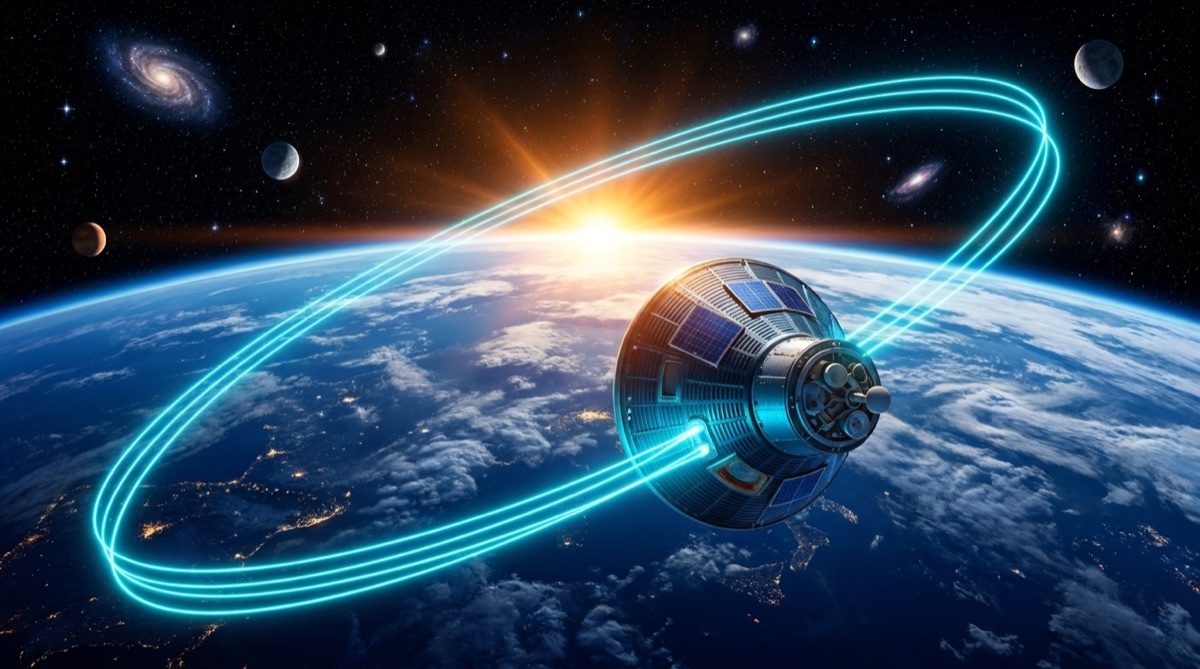
In 1962, when electronic computers began to calculate the orbits, John Glenn was to make the first orbital flight by an American aboard Friendship 7. According to NASA’s biography, Glenn asked that she check the electronic computer’s numbers before accepting the flight. Johnson repeated the calculation by hand; the results agreed, and Glenn flew on February 20, 1962, circling the Earth three times.
She later worked on the trajectories of the Apollo program: she helped calculate the outbound and return trajectories between the Earth and the Moon for Apollo 11, and collaborated on the navigation procedures that allowed Apollo 13 to return after the explosion of an oxygen tank in 1970. Later she worked on the Space Shuttle and on the first plans for a mission to Mars. She retired in 1986 after thirty-three years at Langley.
Her legacy
For decades her work was almost unknown. In 2015, President Barack Obama presented her with the Presidential Medal of Freedom. The book Hidden Figures (2016), by Margot Lee Shetterly, and the film of the same name told the story of her and her colleagues Dorothy Vaughan and Mary Jackson. In 2019 NASA opened at Langley the computational research facility that bears her name. Katherine Johnson died on February 24, 2020, at the age of 101.
Her story shows something that is still true in space exploration: behind every flight there are people who check the numbers again and again, because in a trajectory a small error becomes enormous. You can practice that care with the Hohmann transfer simulator and with the chapter on the space age.