His life
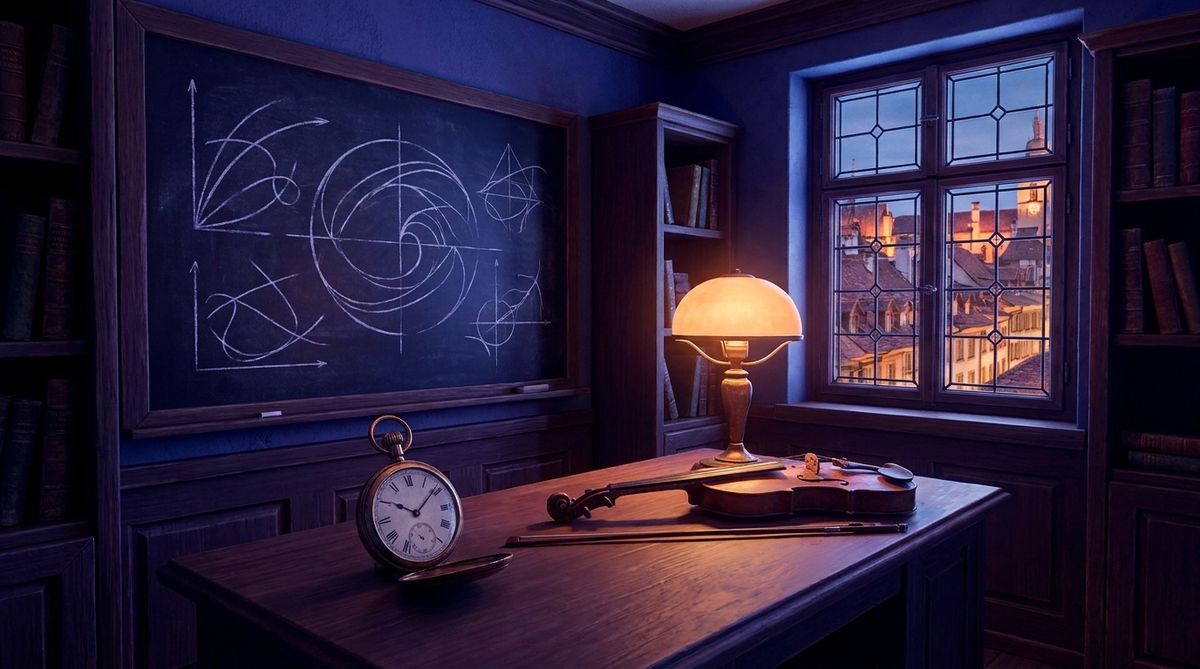
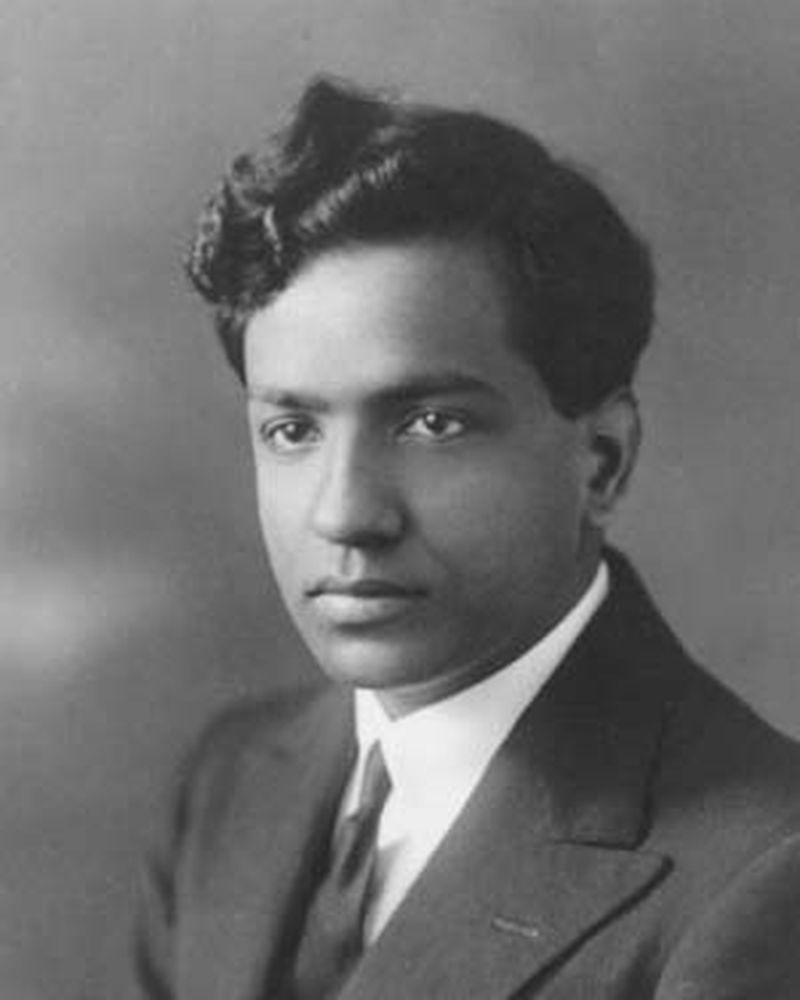
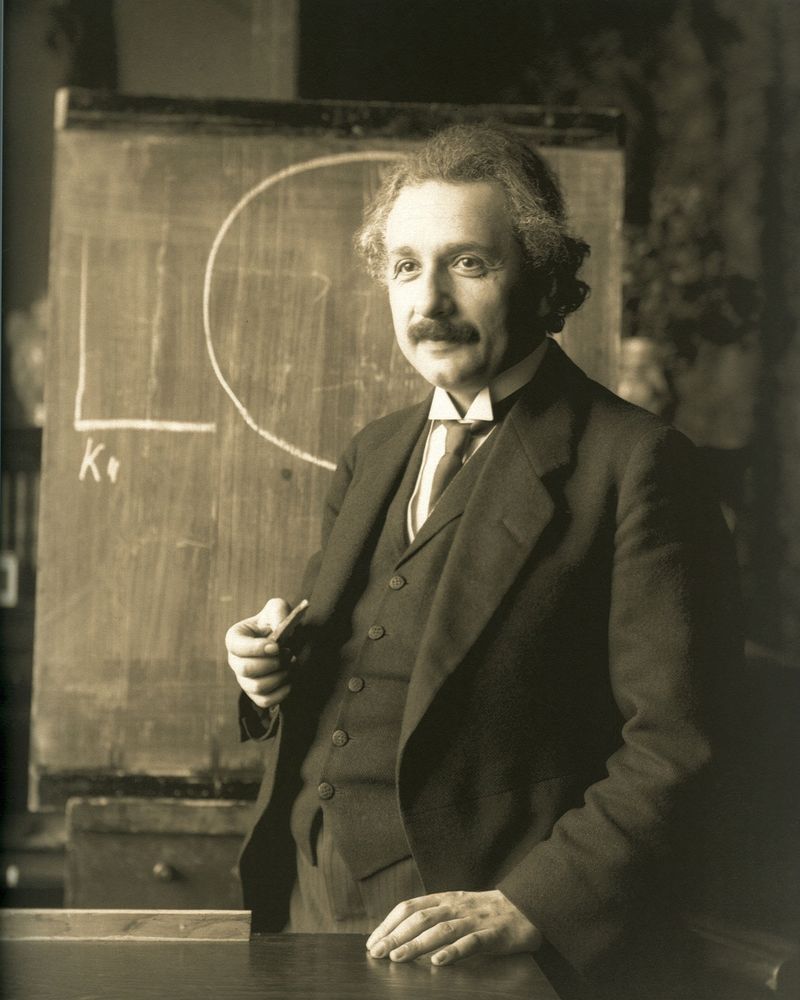
Albert Einstein was born in Ulm on March 14, 1879, and grew up in Munich. He studied physics and mathematics at the Zurich Polytechnic, and when he could not obtain a university post he worked from 1902 as an examiner at the patent office in Bern. In 1905, his “miracle year”, he published four papers that changed physics: on the photoelectric effect, Brownian motion, special relativity and the equivalence of mass and energy.
He was a professor in Zurich, Prague and Berlin. In 1915 he completed general relativity. Because of his Jewish origin he left Germany in 1933, when the Nazis came to power, and settled at the Institute for Advanced Study in Princeton, where he lived until his death on April 18, 1955.
The Nobel Prize in Physics for 1921, awarded in 1922, did not reward relativity but “his services to theoretical physics, and especially for his discovery of the law of the photoelectric effect”.
Curved spacetime
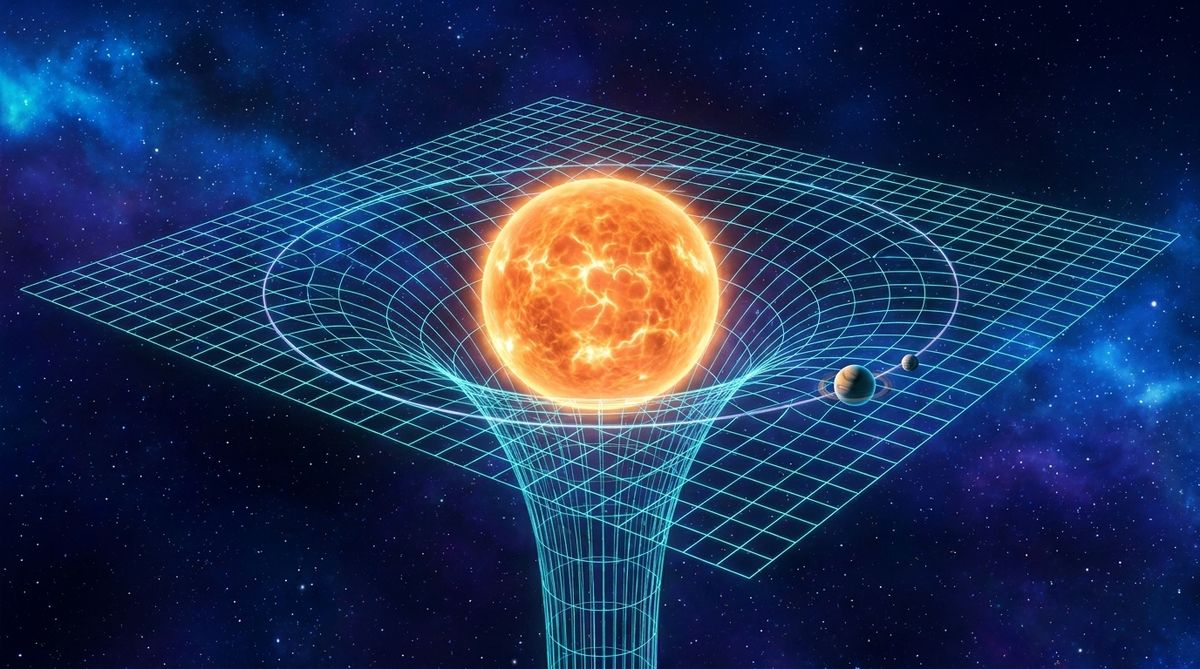
For Newton, gravity was a force that attracted bodies at a distance. Einstein started from a simple observation: inside a freely falling elevator gravity is not felt, and an object released inside an accelerating spacecraft behaves as if there were gravity. If the two situations are indistinguishable, gravity must be a property of geometry. In general relativity, mass and energy curve spacetime, and freely falling bodies follow the straightest possible paths in that curved space, called geodesics. The summary attributed to John Wheeler is famous: matter tells space how to curve, and space tells matter how to move.
His field equation, of November 1915, relates in a single equality the curvature of spacetime to the content of matter and energy. The solutions of that equation are the tool of cosmology and of black holes: you can explore them in the Schwarzschild Geodesics simulator and in the lesson Schwarzschild geodesics. The theory also explained an outstanding problem: Mercury’s perihelion advances each century about 43 arcseconds more than Newtonian mechanics predicts, a figure that general relativity reproduces (see the lesson on the precession of Mercury’s perihelion).
Light bends: the 1919 eclipse
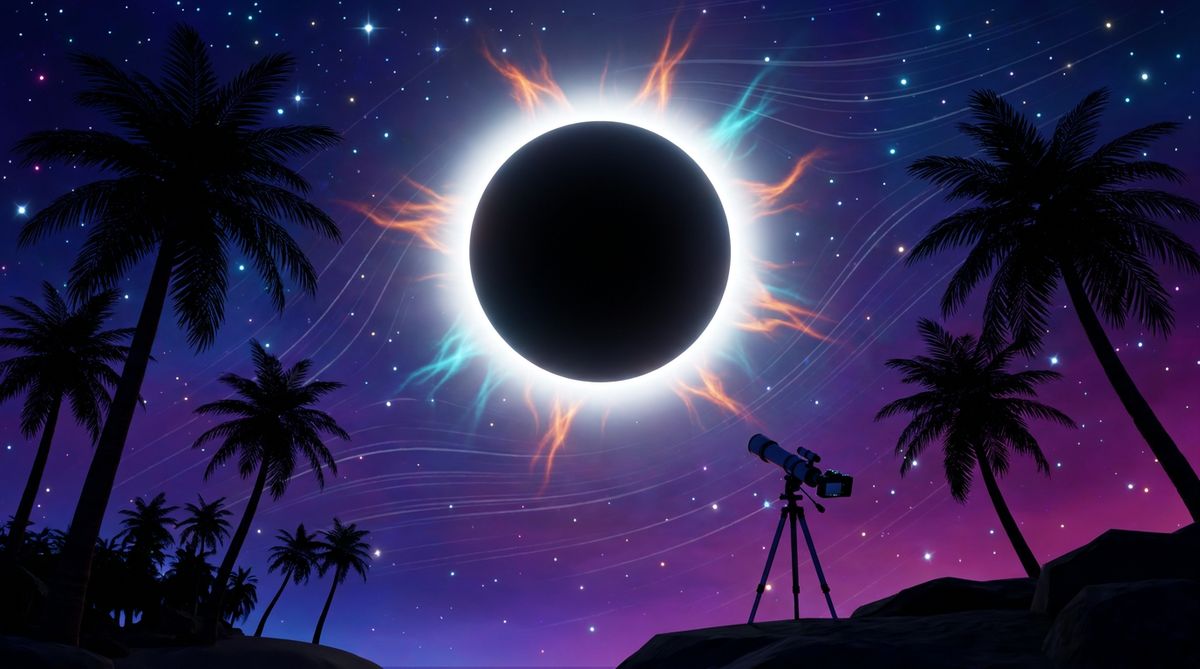
General relativity made a prediction that could be tested: the light of a star grazing the Sun is deflected by 1.75 arcseconds, twice what a naive Newtonian calculation would give. It could only be verified during a total solar eclipse, when the stars near the disk are visible by day. Arthur Eddington and Frank Dyson organized two expeditions for the eclipse of May 29, 1919, to the island of Príncipe (off West Africa) and to Sobral (Brazil). The published results were 1.61 ± 0.30 arcseconds at Príncipe and 1.98 ± 0.12 at Sobral, consistent with Einstein and not with half that value.
When the result was made public, in November 1919, Einstein became famous throughout the world. Modern analyses of those plates confirm that the conclusion was reasonable, and later measurements, with radio waves, have pinned down the deflection to much better than one percent. The deflection of light is today the basis of gravitational lenses (lesson on light deflection and lenses).
His legacy
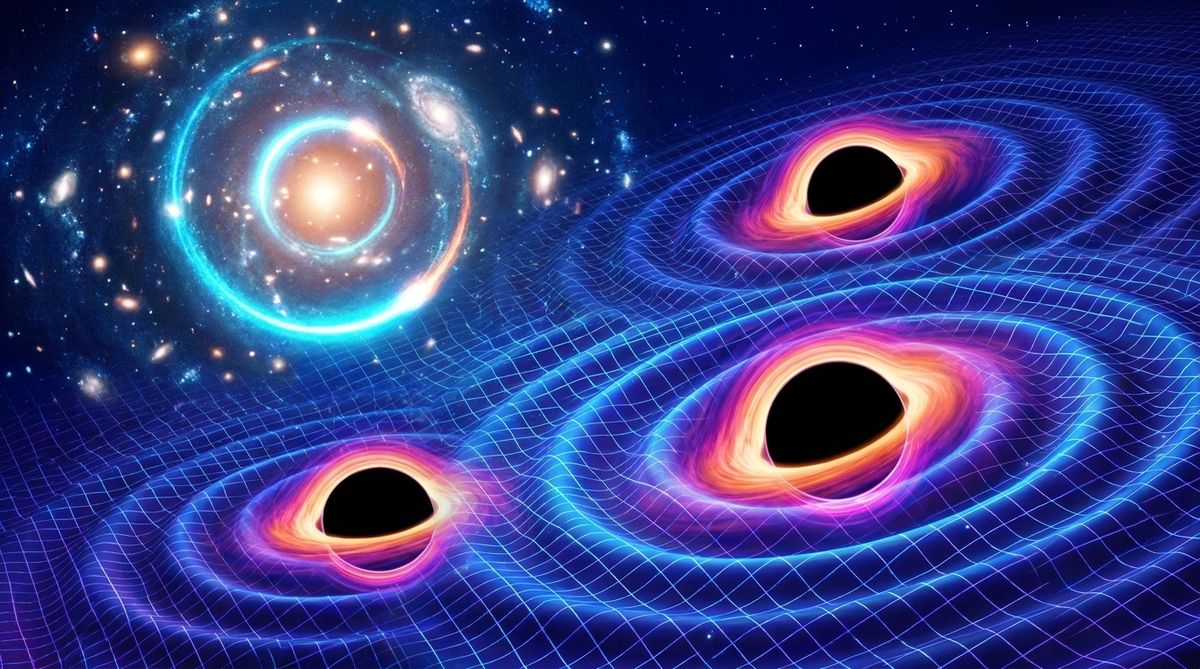
In 1917 Einstein applied his theory to the universe as a whole and obtained a static cosmos, for which he added a term, the cosmological constant. The work of Alexander Friedmann and of Georges Lemaître showed that the equations allowed an expanding universe, and the observations of Edwin Hubble confirmed it; Einstein accepted the expansion around 1931. Today the cosmological constant has become useful again to describe dark energy, as can be seen in the Friedmann Universe simulator.
In 1916 he also predicted gravitational waves, which the LIGO detector observed for the first time in September 2015, a hundred years later. Those waves are the subject of the lesson on gravitational waves.
Many famous sayings that circulate under his name are apocryphal (for example, the “definition of insanity” or the warning about bees). No quotation is included here because the primary source of the best-known ones has not been verified.