His life
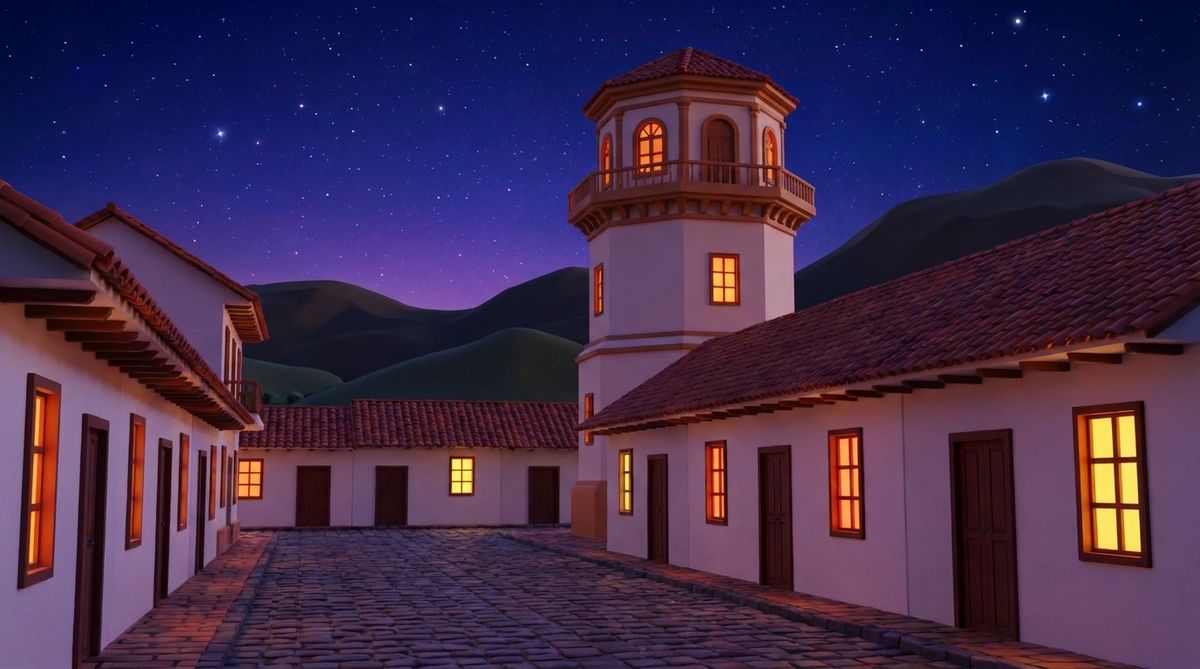
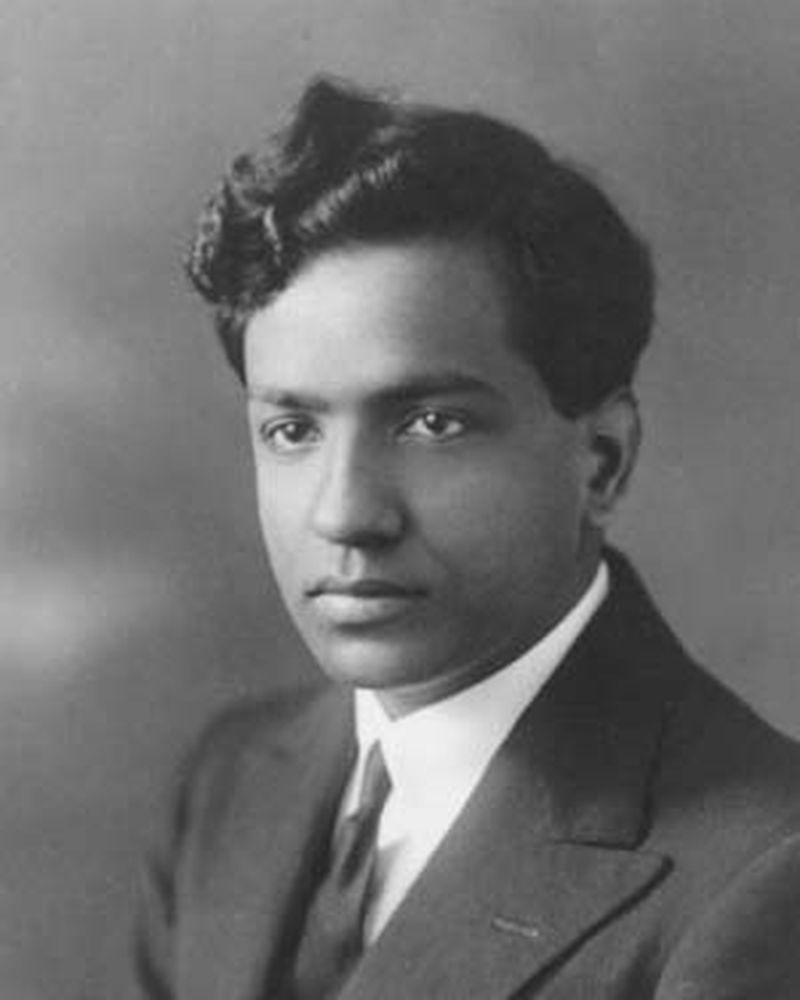
Julio Garavito Armero was born in Bogotá on January 5, 1865, and died in the same city on March 11, 1920, “at exactly the age of 55 years and 55 days”, according to the count left by Víctor E. Caro. He studied at the Faculty of Mathematics and Engineering of the National University, where his teachers were Rafael Nieto París, Indalecio Liévano and Andrés Arroyo. In 1891 he received his degree as a professor of mathematics and, that same year, his degree as a civil engineer.
Those who knew him described him as thin, with an ingenuous air and a lively gaze, and as a professor who proved theorems on the blackboard with an almost theatrical ease. He was also a devoted teacher: in 1902, when the Three Years’ civil war closed the Faculty, some of his students proposed reopening the courses and asked him to run them in the Observatory itself. Among his students were Belisario Ruiz Wilches, Jorge Álvarez Lleras and Laureano Gómez.
The Observatory and the Office of Longitudes
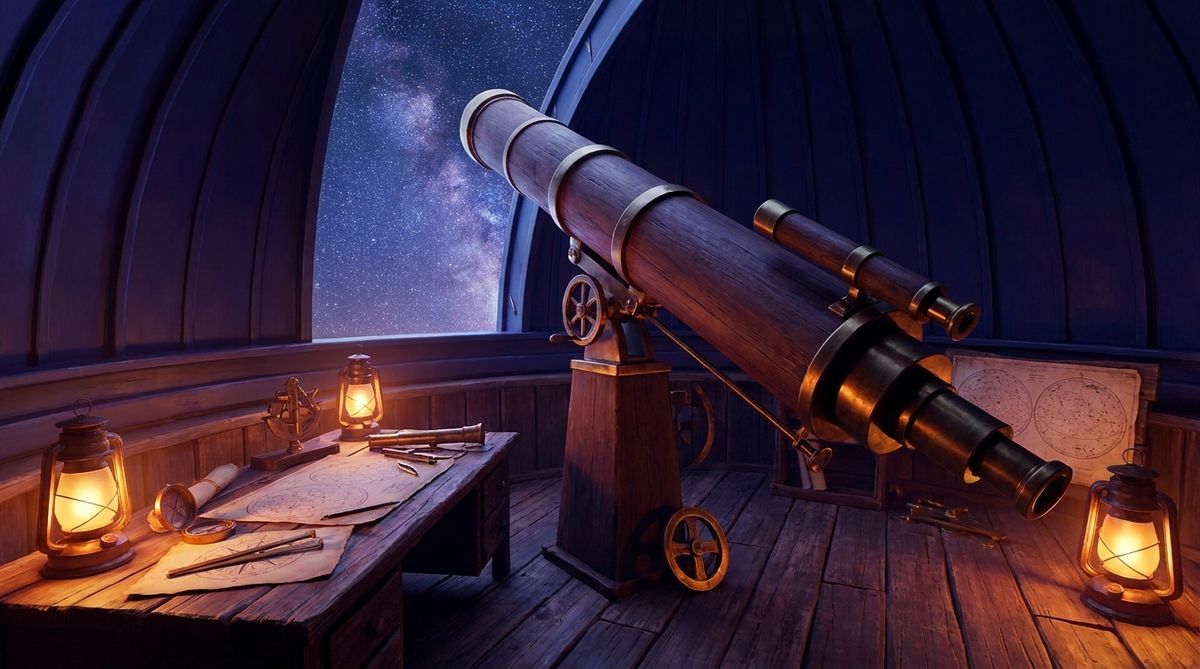
The Astronomical Observatory, the work of José Celestino Mutis, was completed on August 20, 1803, in the center of Bogotá, and Francisco José de Caldas also passed through it. Garavito directed it for 27 years, half of his life. It had few instruments and, according to his biographers, he made up for the scarcity with mathematical ingenuity: he devised methods of observation and of data reduction to get the most out of the modest theodolites available.
He was “the soul” of the Office of Longitudes, which fixed geographic positions with the help of astronomical observations. The latitude of a place is measured with the stars, and the longitude is obtained by comparing the local time with a reference time; from those measurements came the maps of the country. Garavito also studied the deflection of the vertical at Facatativá, that is, the small difference between the direction of the plumb line, which marks the local gravity, and the normal to the reference ellipsoid, a phenomenon that reveals the irregularities in the distribution of mass beneath our feet.
The eclipse of 1916 and the Moon

His two great observational works, according to the astronomer Jorge Arias de Greiff, were the orbit of the bright comet of 1901 and the total solar eclipse of February 3, 1916. For the comet he had to compute a trajectory from scarce observations made at low altitude above the horizon, the classic problem of celestial mechanics that is modeled today with the Keplerian orbit simulator.
In 1916 the path of totality of the eclipse passed through Medellín and Puerto Berrío. The Ministry of Public Instruction sent a commission from the Observatory to Puerto Berrío, with Garavito as its head, and his report, published in Anales de Ingeniería in November 1916, also served to fix the meridian of Bogotá more precisely. The phenomenon can be studied in the lesson on phases and eclipses.
His most ambitious work was the study of the motion of the Moon, one of the hardest problems in celestial mechanics because of the combined influence of the Sun and the Earth. At his death he left a set of lunar tables in a very advanced state, with the elements ready for numerical calculation, which were never published.
His legacy

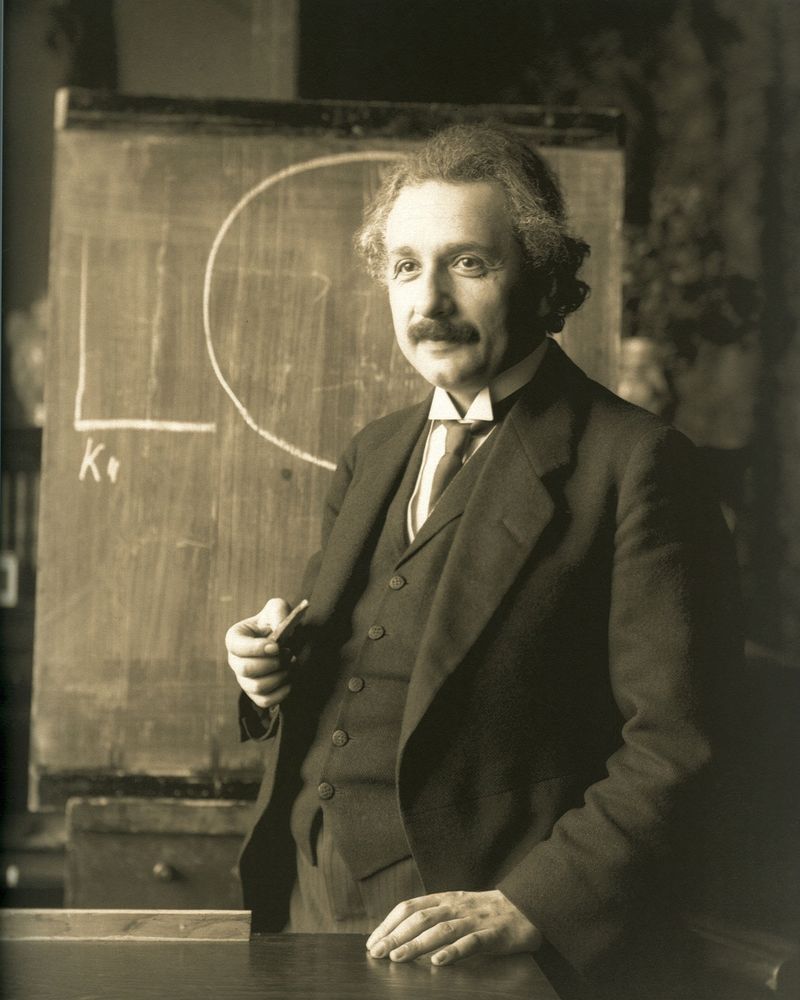
Garavito also wrote critical texts on non-Euclidean geometries and on the theories of Lorentz and Einstein. Later physics, supported by measurements such as those of the eclipse of 1919 (see Albert Einstein), has not upheld those criticisms; his lasting value lies in positional astronomy, geodesy and teaching.
His death caused national mourning: the Government signed Decree 593 of 1920, “which exalts the services and the memory of an illustrious Colombian”. In 1970 the International Astronomical Union gave the name Garavito to a crater on the far side of the Moon. His face appears on the 20 000-peso banknote and his bust presides over the gardens of the Observatory. He trained a whole generation of Colombian engineers and astronomers, among them Belisario Ruiz Wilches.