His life
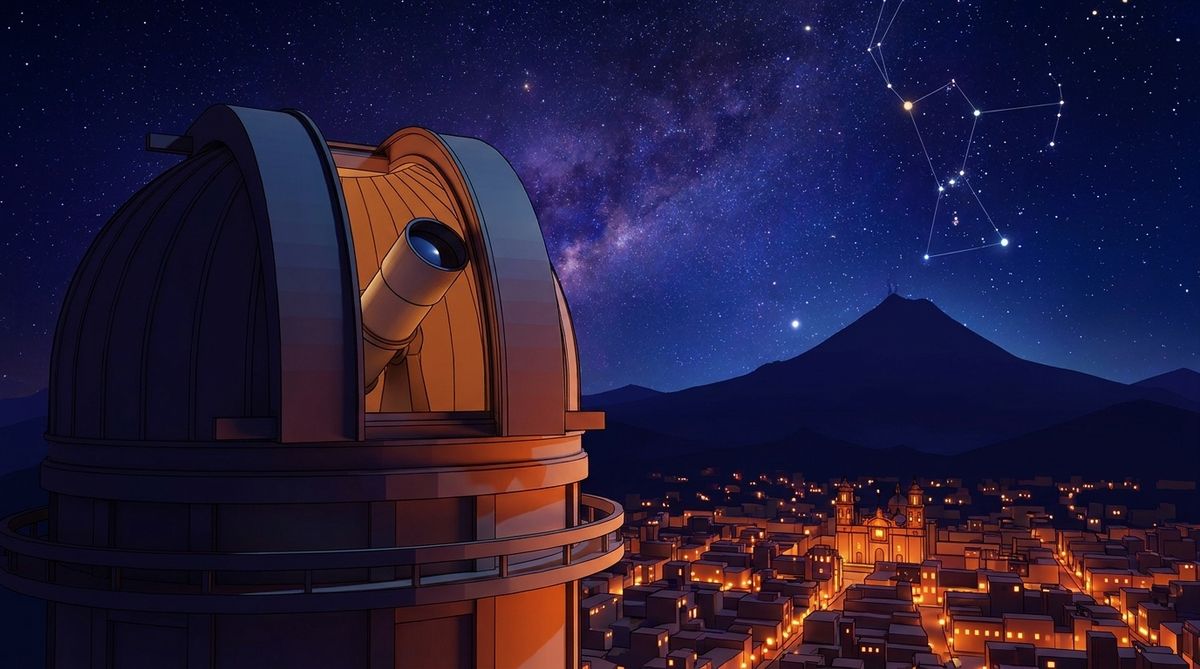
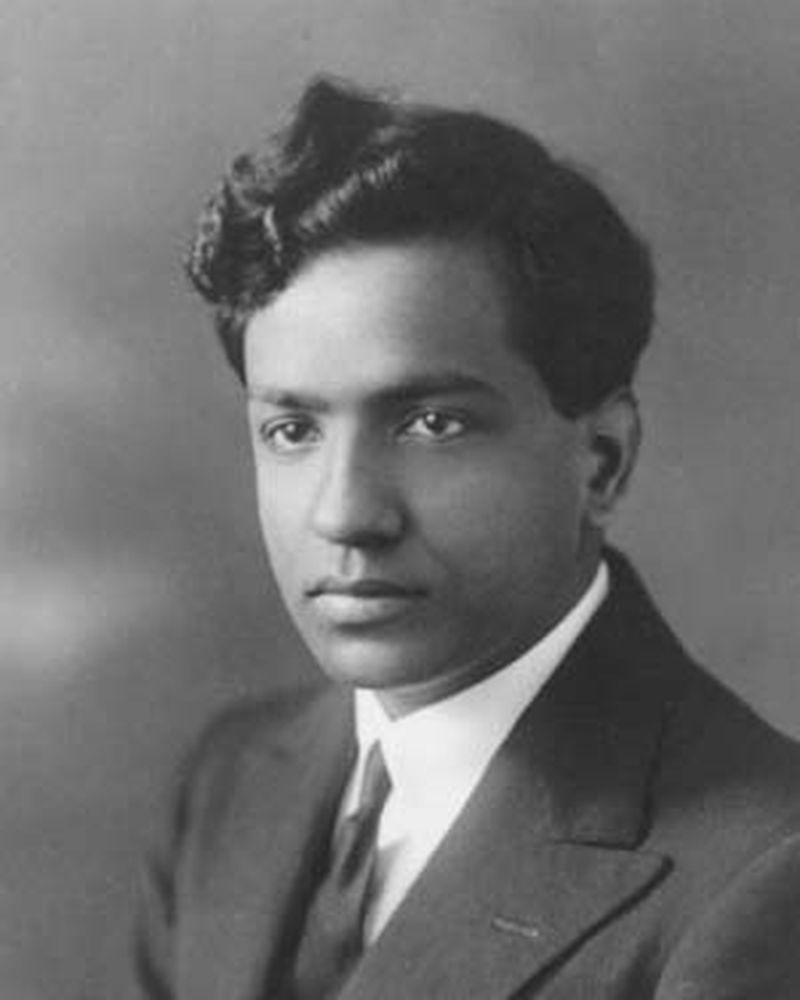
Guillermo Haro Barraza was born in Mexico City on March 21, 1913. He studied at the National Autonomous University of Mexico (UNAM), where he trained in the humanities, and came to astronomy through Luis Enrique Erro, the founder of the Tonantzintla National Astrophysical Observatory, in the state of Puebla. In 1942 a wide-field Schmidt telescope was installed there, and Haro joined the team in those years. He spent working periods at observatories in the United States, among them Harvard’s.
He directed the Tonantzintla Observatory and was a member of El Colegio Nacional. In 1971 the National Institute of Astrophysics, Optics and Electronics (INAOE) was founded, and he was its first director. He died in Mexico City on April 26, 1988.
Note to the reader: this fiche is marked as a draft because several dates in his career (for example, the exact years of his stays abroad and of his honors) still need to be checked against a primary source. The dates of birth and death and the discoveries described are those given in the institutional profiles.
The Herbig–Haro objects
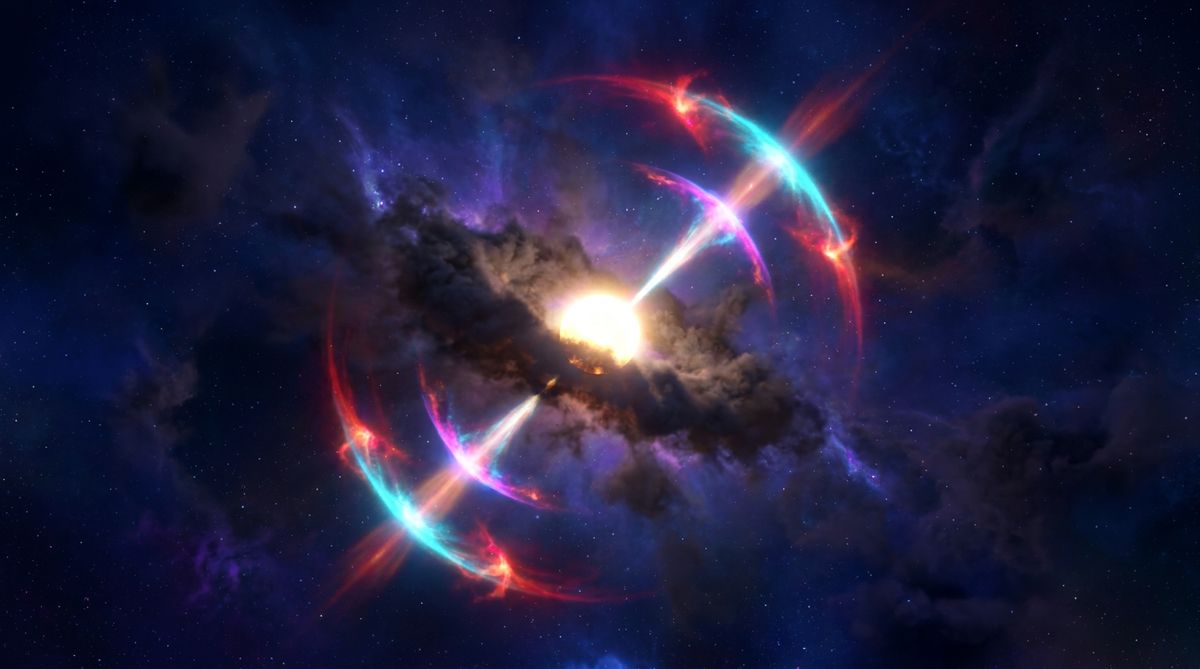
In the Orion Nebula and in regions where stars are born there are small, fuzzy, irregularly shaped patches of light. In 1950–1951 the American George Herbig discovered them near the nebula NGC 1999 and, independently, Haro found them in 1952 and grasped their importance: they were associated with very young stars, of the T Tauri type. That is why they are called Herbig–Haro objects (HH).
Today we know they are small nebulae that glow when a jet of gas, expelled at hundreds of kilometers per second by a newborn star, collides with the surrounding gas and heats it with a shock wave. They are, in a sense, the “signature” of a star in the making. The discovery helped establish that stars are not born in silence: they expel material in bipolar jets, something now observed with telescopes such as Hubble and James Webb.
Blue stars and flare stars

With the Schmidt telescope, which photographs wide fields of the sky, Haro and his collaborators looked for objects that stood out by their color. They discovered faint blue stars in regions far from the plane of the Milky Way and, later, blue galaxies very bright in the ultraviolet: they are known as Haro galaxies, and Haro 11 is an example studied in detail today, a small galaxy where stars form at a very high rate.
He also studied flare stars: cool, faint stars whose brightness suddenly increases for minutes or hours and then returns to its normal value. Haro and his team identified many of them in the Orion Nebula and in the Pleiades, and showed that they were common in young clusters. The eruptions resemble those of our Sun, but far more intense. To classify the color of these stars and their temperature, the same principles of the blackbody are used.
His legacy

Haro was, above all, a builder of institutions. He gave Mexico a professional astronomy with observatories of its own, opened the door to a generation of Mexican astronomers and turned Tonantzintla into an international center of reference. INAOE, which he helped create, now operates the Large Millimeter Telescope in Puebla and the Guillermo Haro Astrophysical Observatory, in Cananea, Sonora, which bears his name.
Whenever an image from the James Webb telescope shows the jet of a Herbig–Haro object, the surname of the astronomer who, from a hill in Puebla, recognized them as the births of stars appears once again.