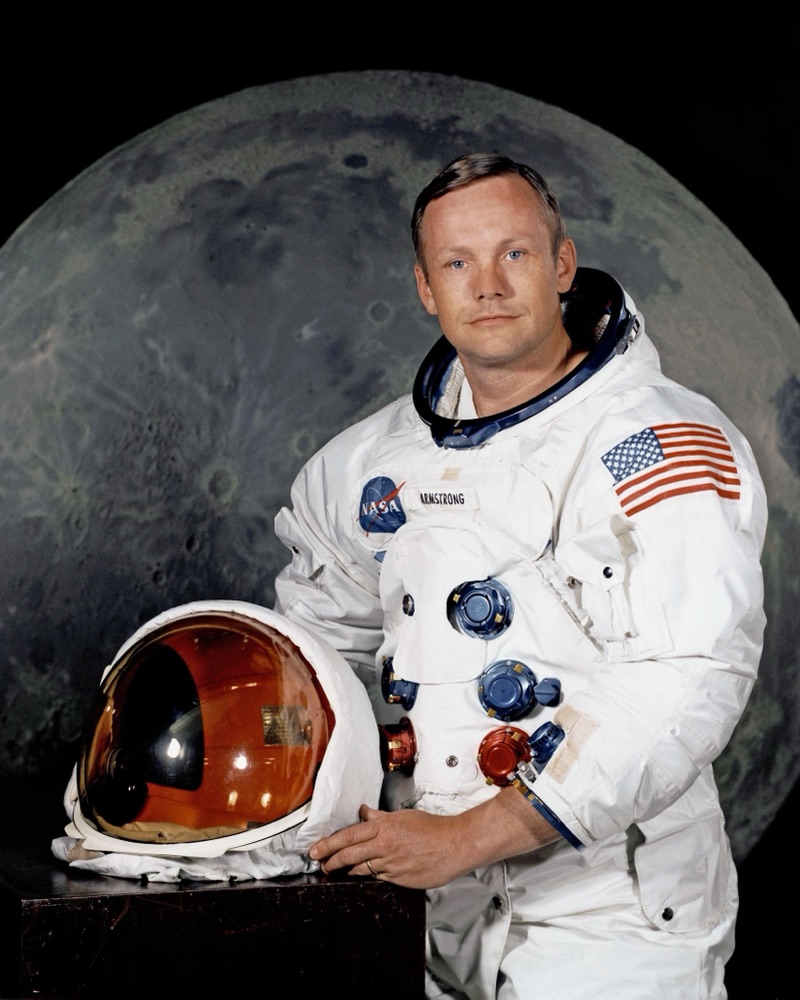
His life

Neil Armstrong was born on August 5, 1930, on a farm near Wapakoneta, Ohio. From childhood he had a passion for airplanes: he flew for the first time at six as a passenger, and at sixteen he already had a pilot’s license, even before his driver’s license. He studied aeronautical engineering on a Navy scholarship, was a naval aviator during the Korean War and completed his engineering degree at Purdue University.
He then worked as a test pilot for the agency that preceded NASA, and flew experimental aircraft such as the X-15, a rocket plane capable of climbing to the boundary between the atmosphere and space. In 1962 he joined NASA’s second group of astronauts. His character was discreet, precise and highly technical: the people who worked with him remember him more for his calm than for his charisma.
Gemini 8 and the first docking
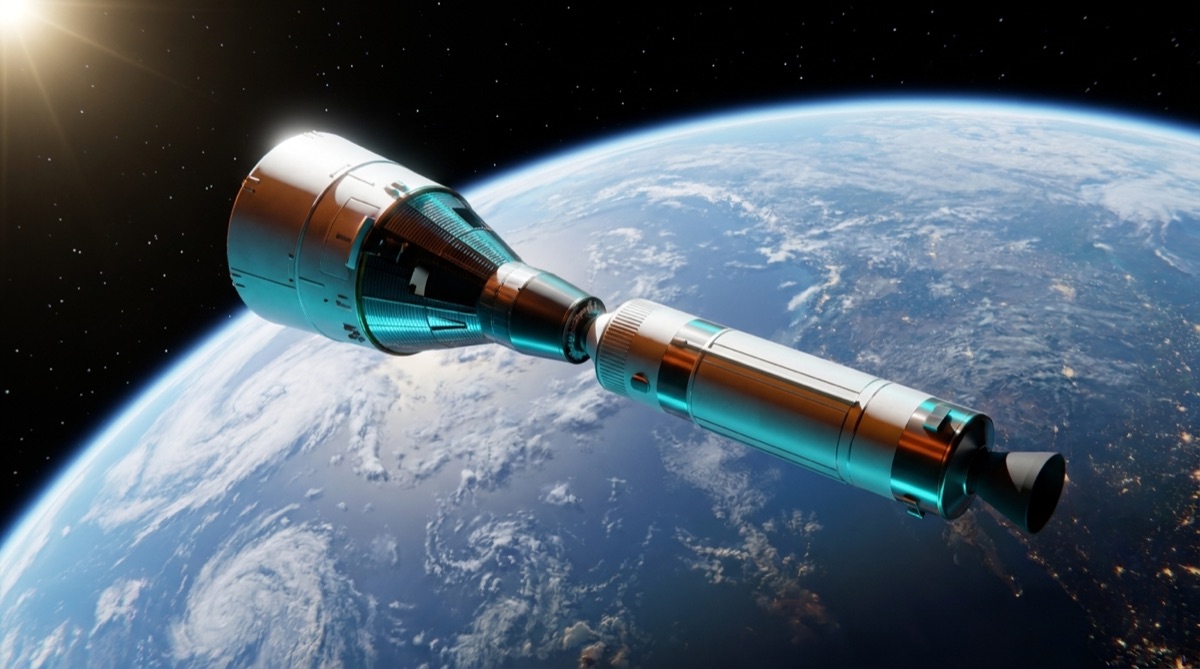
In March 1966 he commanded Gemini 8, together with David Scott. The mission achieved something new: docking two spacecraft in space, the capsule with an uncrewed rocket stage called Agena. Shortly afterward, a malfunction made the pair begin to spin faster and faster. Armstrong undocked from the Agena, but the capsule kept tumbling, until he activated the reentry control system to stop the spin. The mission was cut short and the spacecraft splashed down undamaged. To dock two spacecraft one has to change orbit with very precise maneuvers, like those computed in the Hohmann transfer simulator.
Apollo 11: the lunar module “Eagle”
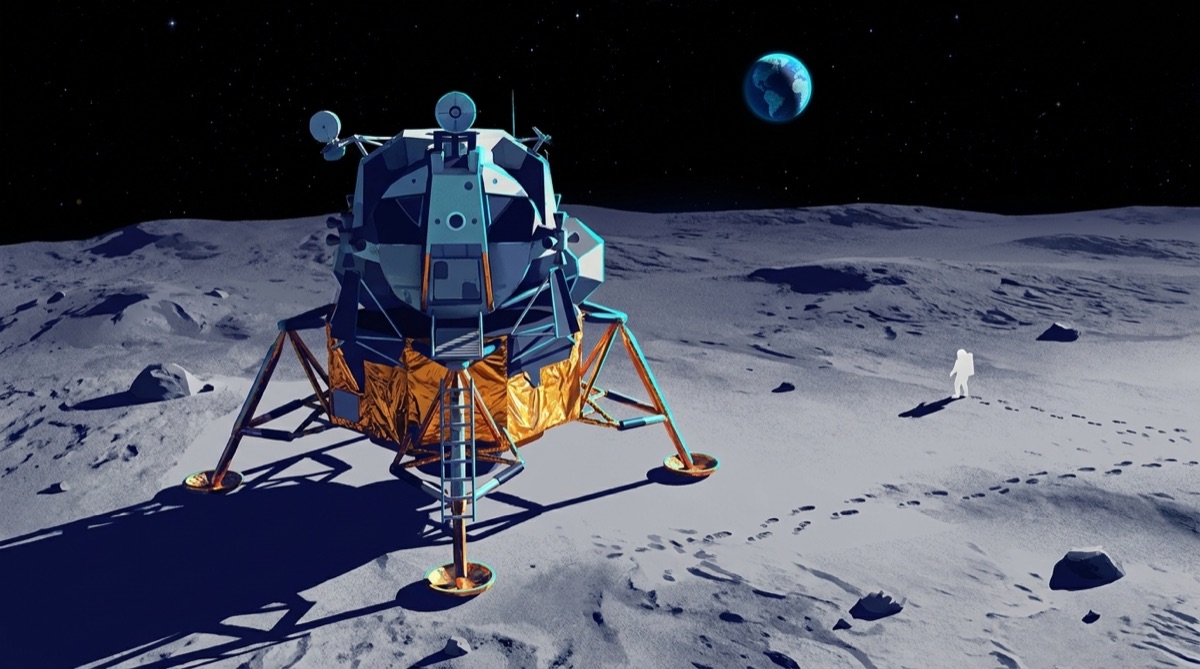
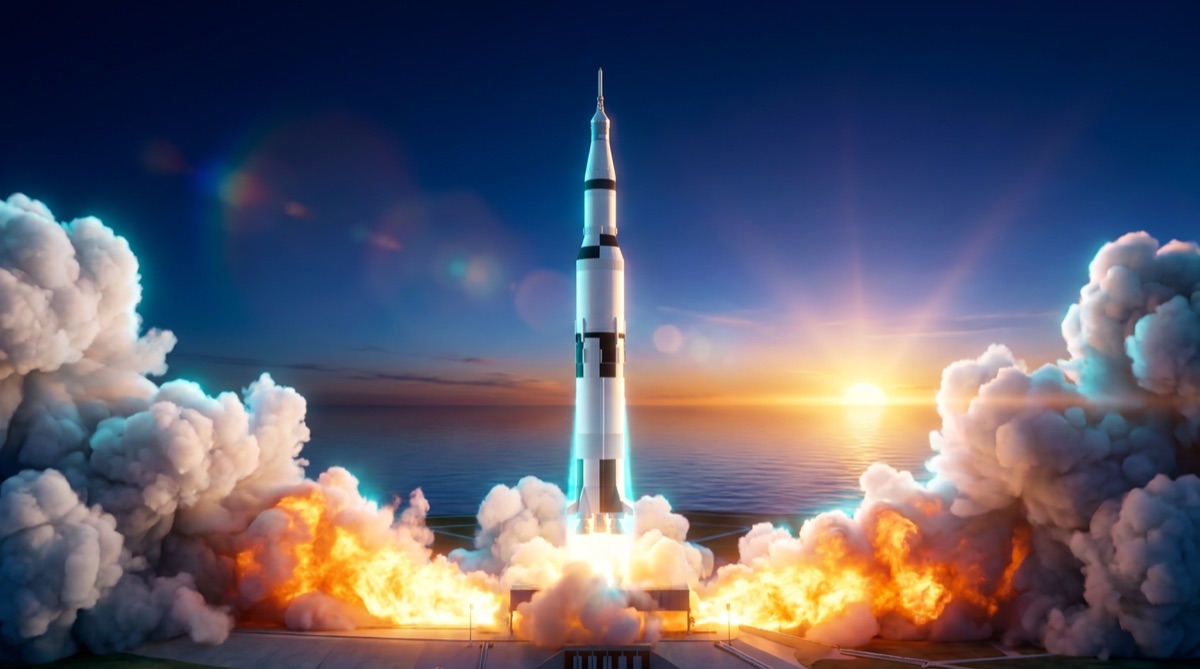
Apollo 11 lifted off on July 16, 1969, with Armstrong as commander, Michael Collins in the command module and Buzz Aldrin as lunar module pilot. After entering orbit around the Moon, Armstrong and Aldrin descended in the module “Eagle” while Collins waited for them in orbit. During the descent, the onboard computer gave overload alarms; the controllers in Houston decided they could continue. When the computer was taking the module toward an area full of boulders, Armstrong took manual control, flew on for a few more seconds and set the module down on July 20, 1969, in the Sea of Tranquility, with very little fuel remaining.
Shortly afterward, on July 21 (Universal Time), Armstrong climbed down the ladder and spoke the sentence that became historic. He maintained that he had said “a man”, although in the recording the article is hard to hear. Armstrong and Aldrin spent about two and a half hours outside the module: they collected some 21 kilograms of rocks, set up scientific instruments, among them a laser reflector still used to measure the distance to the Moon with great precision, and left a plaque with the message “We came in peace for all mankind”. On returning to Earth on July 24, Apollo 11 had shown that the round trip to another world was possible.
His legacy
Armstrong received the Presidential Medal of Freedom in 1969 and, years later, the Congressional Space Medal of Honor. He did not seek fame: he left NASA in 1971, taught aerospace engineering at the University of Cincinnati and was vice chairman of the commission that investigated the Challenger shuttle accident in 1986. He died on August 25, 2012, at the age of 82.
To go to the Moon one must reach a speed close to 11 kilometers per second near the Earth, close to the escape velocity, and spend fuel very carefully. You can explore that idea in the lesson Gravitation and satellites or in the chapter on the space age.