Her life

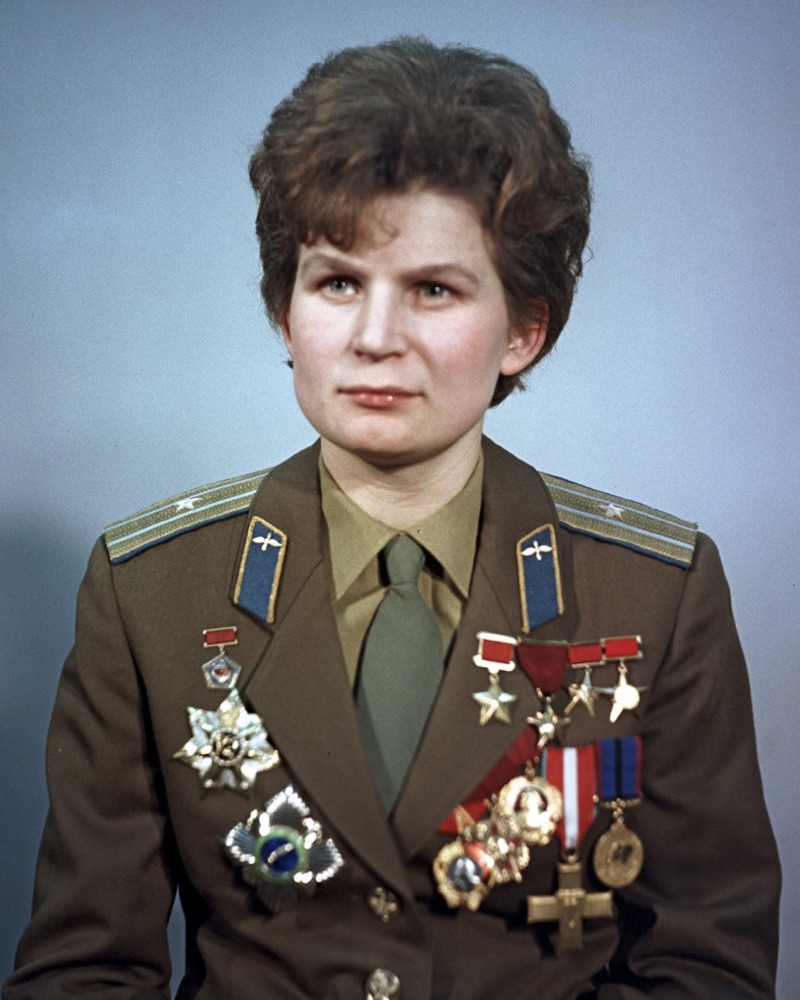
Valentina Tereshkova was born on March 6, 1937, in Maslennikovo, a village on the banks of the Volga, in the Yaroslavl region. Her father, a tractor driver, died in the war when she was small, and her mother supported the family by working in a textile mill. Valentina left school early to work and continued studying by correspondence; in time she trained as a textile technician.
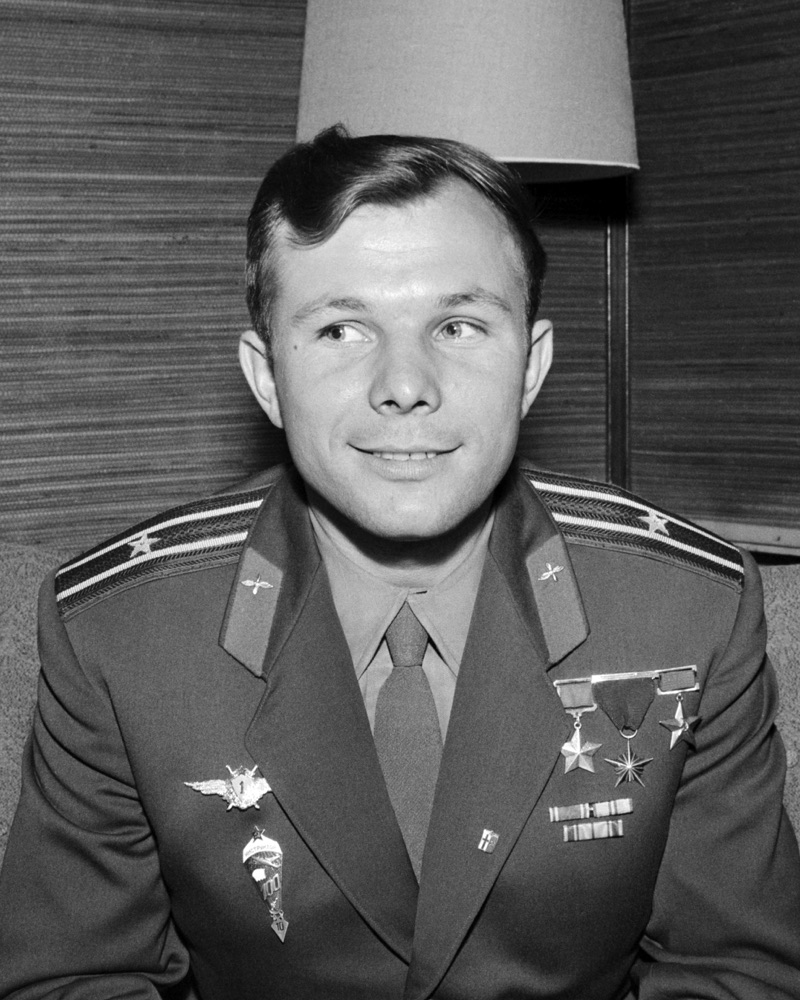
Her other passion was parachuting. From 1959 she jumped at a sports club in Yaroslavl, and it was that hobby that took her into space. In 1961, when Yuri Gagarin opened the way, the Soviet authorities thought of sending a woman too. From hundreds of candidates they chose five, and Tereshkova was the one selected: she knew how to jump and keep calm, something useful because, just as in the case of Gagarin, the pilots of the Vostok program had to leave the capsule by parachute before touching the ground. She then trained as a cosmonaut and was taken into the air force. The training included tests in a centrifuge, isolation in a soundproof chamber, parabolic flights that produce brief moments of weightlessness and dozens of parachute jumps. It was the hardest part: going from a factory life to that of a military pilot and cosmonaut in little more than a year.
Vostok 6
On June 16, 1963, she lifted off from Baikonur under the call sign “Chaika” (“seagull”). Two days earlier Vostok 5 had departed, with Valery Bykovsky, and for some hours the two spacecraft flew in similar orbits, a few kilometers apart, without docking. Tereshkova’s mission lasted nearly three days: she completed 48 orbits around the Earth and landed on June 19, after some 70 hours and 50 minutes of flight. As in the case of Gagarin, she ejected from the capsule at about seven kilometers of altitude and descended under her own parachute.
During the flight she made observations of the Earth’s horizon, took photographs and kept a logbook. The doctors studied how her body reacted, comparing her with her fellow cosmonaut, to find out whether weightlessness affected men and women differently. The orbital velocity of the spacecraft was about 7.8 kilometers per second and each orbit took about 88 minutes, the same relation between altitude and period described by Kepler’s third law, which you can explore in the Keplerian orbit simulator.
Her legacy
Tereshkova’s flight showed that women could withstand the physical and psychological strain of space, something that at the time was questioned. Even so, the Soviet program did not send women again for almost two decades.
Tereshkova was 26 when she flew and never flew again. Her flight was the only solo space mission by a woman: 19 years had to pass before another woman, Svetlana Savitskaya, traveled into space in 1982.
She kept studying: she graduated as an engineer from the Zhukovsky Air Force Engineering Academy in 1969 and earned a doctorate in engineering in 1977. She also held political and representative posts in the Soviet Union and in the Russia that followed. Her political views have been a matter of debate, and this fiche confines itself to her career as an explorer and scientist. She is remembered as the person who proved that space was also a place for women.
A crater on the far side of the Moon bears her name, and her flight continues to inspire those who work for a greater presence of women in science and engineering. To understand how spacecraft stay in orbit you can read the lesson Gravitation and satellites and learn about the context of the space race in the chapter on the space age.