His life
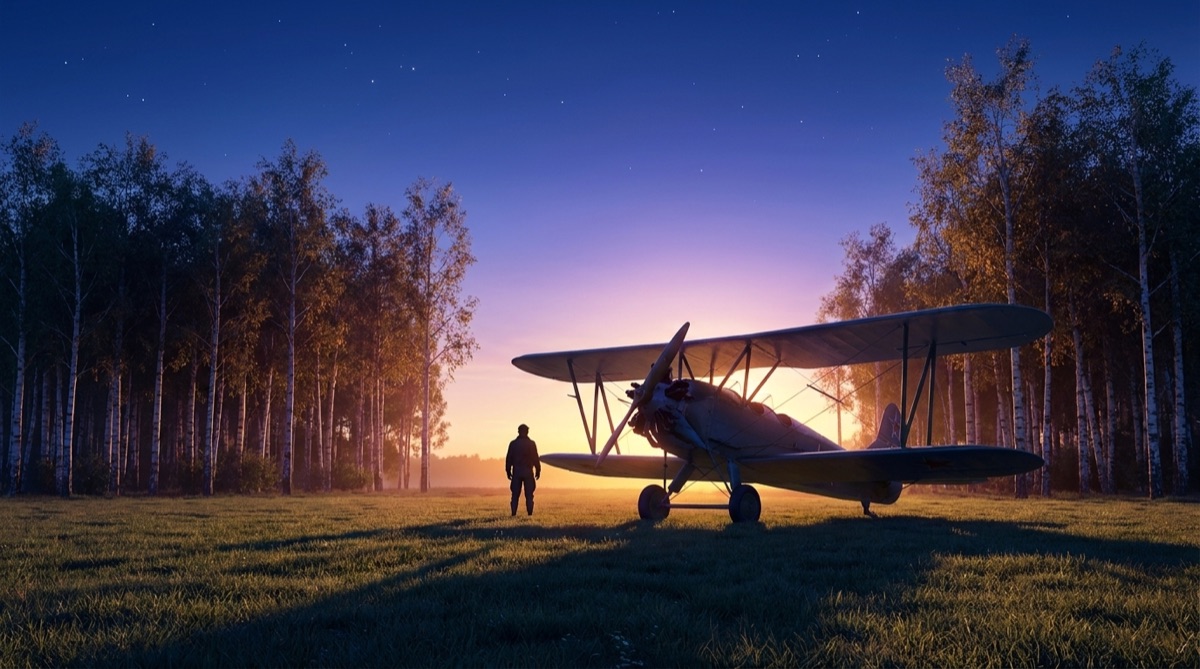
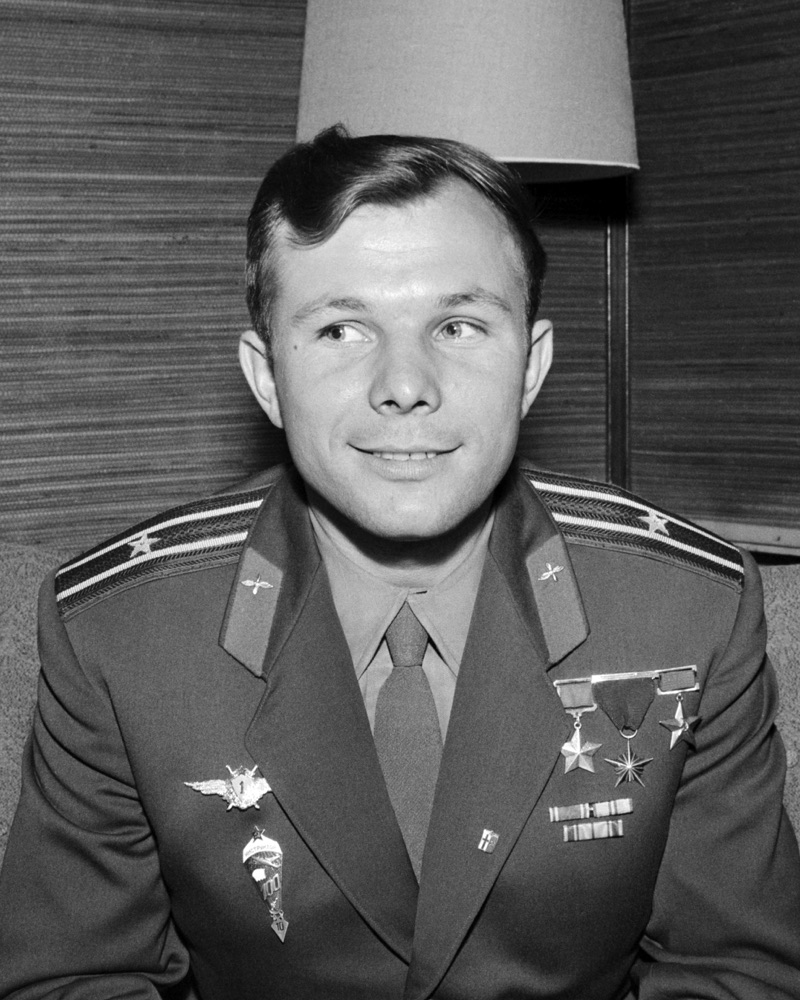
Yuri Gagarin was born on March 9, 1934, in the village of Klushino, in the Smolensk region, into a peasant family. He was a child when the Second World War reached his village and his family had to live in very harsh conditions. When the war ended he trained as a foundry worker at a technical school and then studied at an industrial college in Saratov, where he joined a flying club and learned to fly light aircraft.
In 1955 he entered the air force and in 1957 graduated as a fighter pilot from the aviation school in Orenburg. Three years later, in 1960, he was chosen with nineteen other pilots for the first group of Soviet cosmonauts. One had to be young, resilient and short, because the capsule was tiny. After months of training in centrifuges, isolation chambers and parachute jumps, the doctors and engineers chose him, with Gherman Titov as backup. It has been said that his calm character and good humor weighed in his favor.
Vostok 1: once around the world
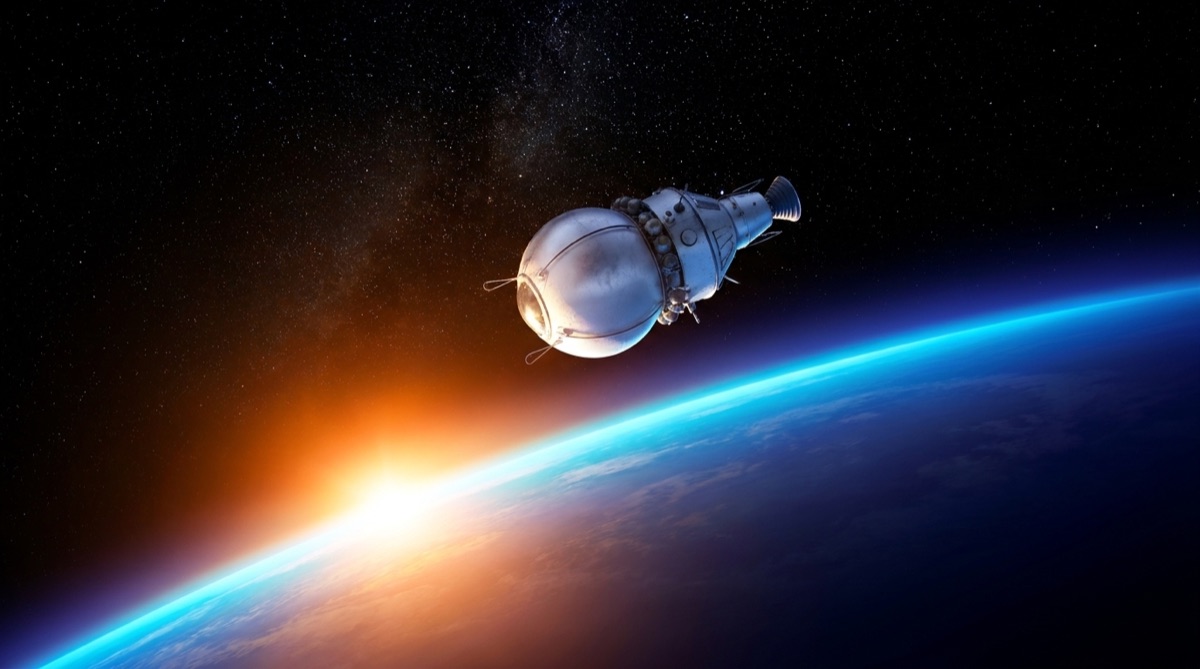
On April 12, 1961, from the Baikonur cosmodrome (now in Kazakhstan), an R-7 rocket launched the Vostok 1 spacecraft. The spherical capsule, about two and a half meters in diameter, operated in automatic mode for almost the whole mission: the engineers feared that a person might lose the ability to think in weightlessness, and manual control was locked with a code the cosmonaut could only open in an emergency. Before lifting off, Gagarin said goodbye with the Russian word “Poyekhali!”, “Let’s go!”, which has been associated with that day ever since.
The spacecraft traced a single elliptical orbit around the Earth, at an altitude that varied between about 170 and about 330 kilometers. At that altitude, the speed needed not to fall is about 7.8 kilometers per second, almost 28 000 kilometers per hour: the same idea explained by the simulator Newton’s cannonball, in which a projectile launched with enough horizontal speed always “misses” the ground and stays in orbit. The flight lasted 108 minutes from liftoff to landing, and Gagarin was able to observe the curvature of the Earth, the blue of the atmosphere and the darkness of space. He reported to the ground that he felt well and could eat and drink.
The capsule was not designed for a soft landing with a person inside. So, at about seven kilometers of altitude, Gagarin ejected and descended under his own parachute, while the sphere fell separately under its own. He landed near Smelovka, in the Saratov region. For years the Soviet Union concealed that he had ejected, because the rules of the international aviation federation required the pilot to land inside his craft for a record to be certified.
His legacy
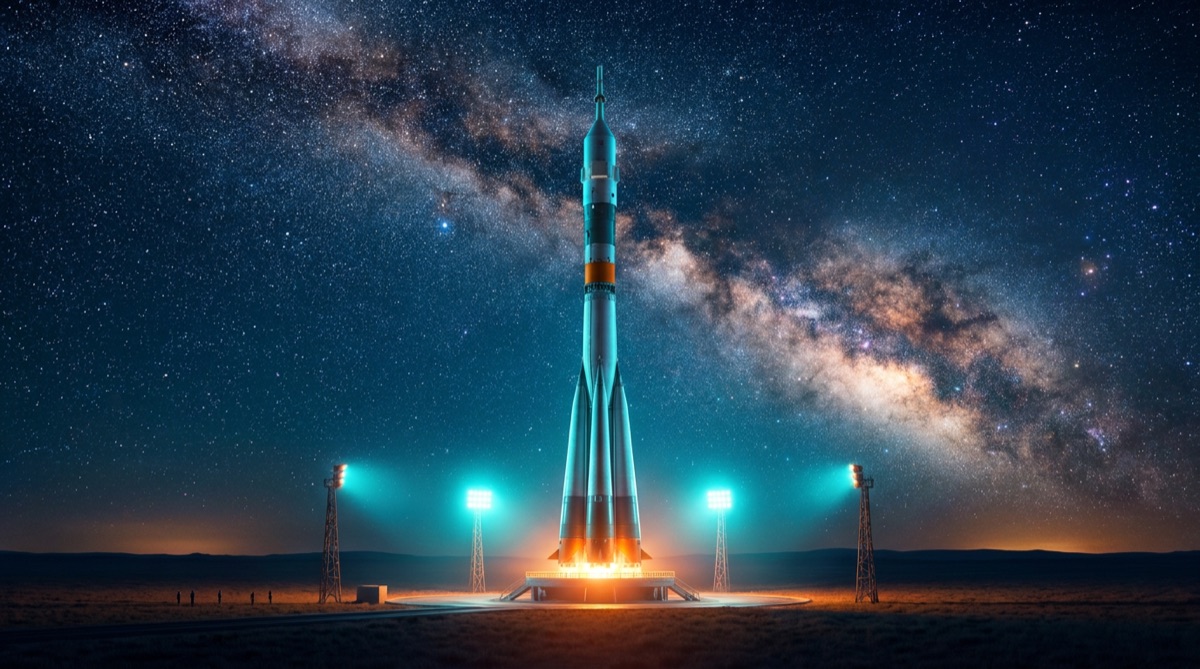
Gagarin traveled the world as a symbol of progress and of the human desire to explore, and received the title of Hero of the Soviet Union. He never flew into space again: the authorities feared losing so valuable a hero. He devoted the following years to training other cosmonauts, studied engineering at the Zhukovsky Air Force Academy and went back to training as a pilot. He died on March 27, 1968, at the age of 34, in the crash of a MiG-15 training aircraft near Kirzhach, together with his instructor Vladimir Seryogin. The exact causes were debated for decades.
His flight changed the way we see our planet and the space race accelerated: barely twenty days later, the American Alan Shepard made a suborbital flight, and in 1962 John Glenn completed the first orbit by an American. Since 2011, by decision of the United Nations, April 12 is celebrated as the International Day of Human Space Flight. To understand how the trajectories that made it possible are calculated, you can go through the lesson Gravitation and satellites or consult the chapter on the space age.