His life

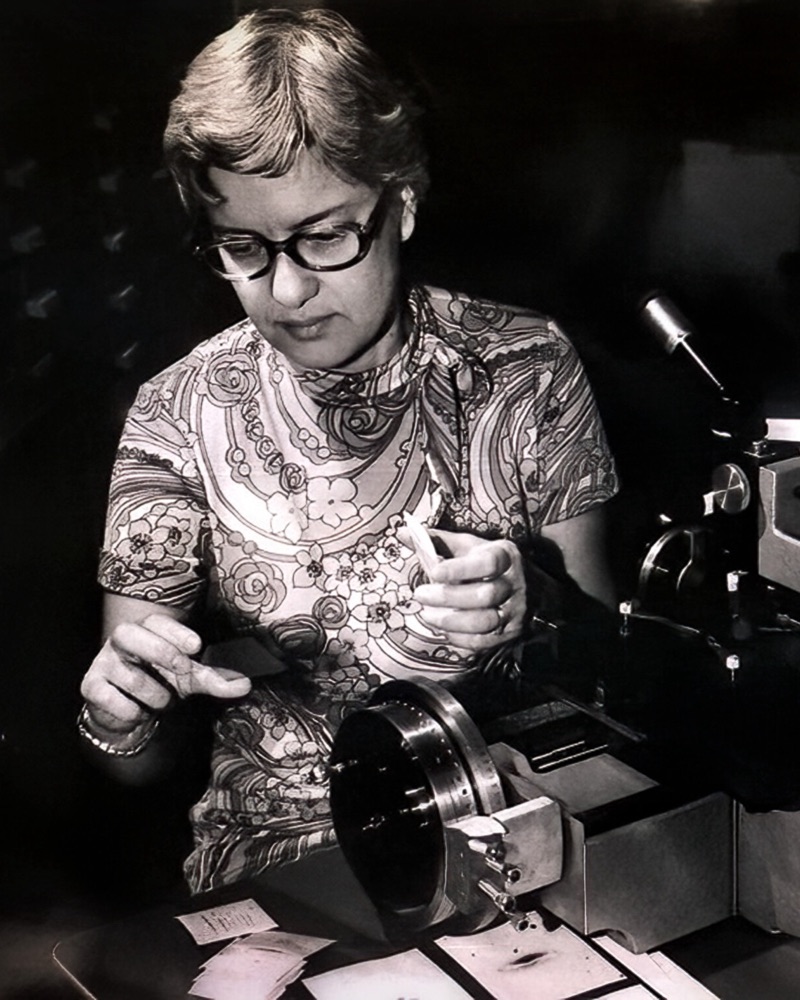
Carl Sagan was born on November 9, 1934, in Brooklyn, New York. As a child he wondered what the stars were; when he learned that they were very distant suns, he was fascinated for good. He studied physics at the University of Chicago and earned his doctorate there in 1960 in astronomy and astrophysics under Gerard Kuiper. He spent time at Harvard, and in 1968 he moved to Cornell University, where he directed the Laboratory for Planetary Studies and taught until the end of his life.
He was a very active scientist: he published hundreds of papers and worked with NASA from the 1960s onward. But he was, above all, a storyteller of the universe. He believed that whoever knows science has a duty to share it, and that scientific thinking, curious and skeptical, is a valuable tool for all of society.
Venus, Mars and the other worlds
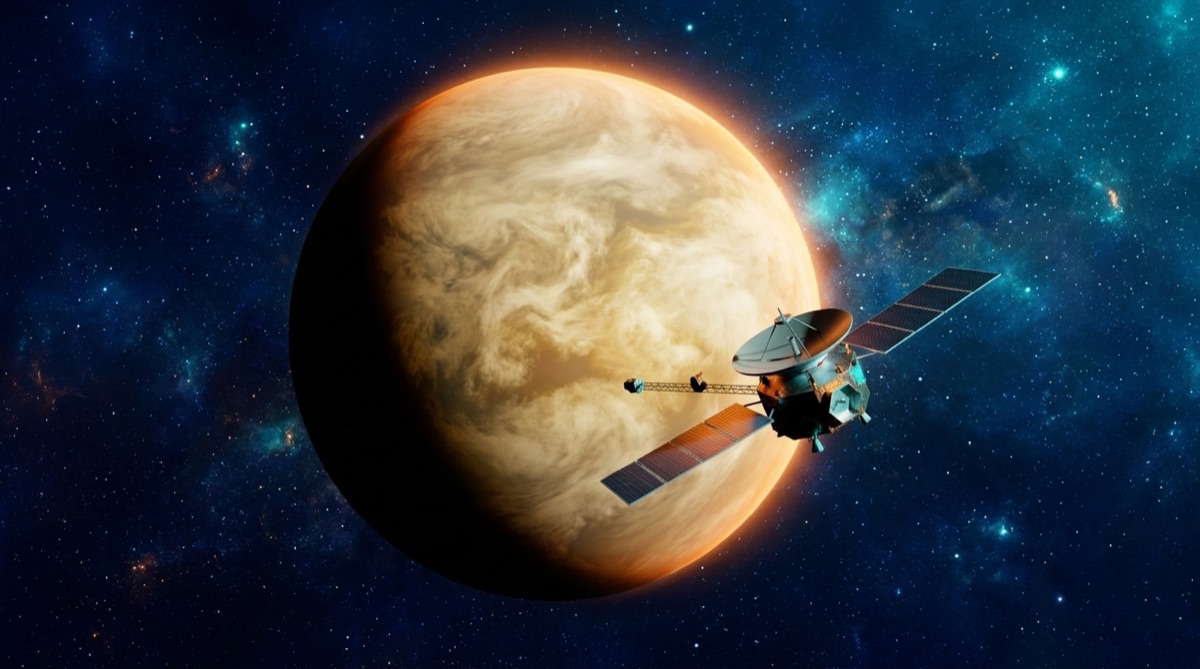
In 1961 Sagan proposed that Venus is very hot (radio measurements pointed to hundreds of degrees) because its atmosphere, of carbon dioxide, traps infrared radiation: a greenhouse effect taken to the extreme. The Mariner 2 probe (1962) and the probes that followed confirmed that the surface of Venus is very hot: today we know it is around 460 °C. If you want to see how a planet’s equilibrium temperature depends on the radiation it receives and emits, the Blackbody simulator and the lesson The blackbody provide the basics.
Sagan also explained that the changes in dark markings on the surface of Mars were due to dust storms, and not to vegetation as some thought. He studied the orange haze of Titan, Saturn’s large moon, rich in organic compounds. With other researchers he showed in 1983 that a nuclear war could darken the atmosphere for months and cool the planet, what was called “nuclear winter”. For these and other ideas, NASA invited him to join the science teams of the Mariner, Viking, Voyager and Galileo missions.
Messages for the stars
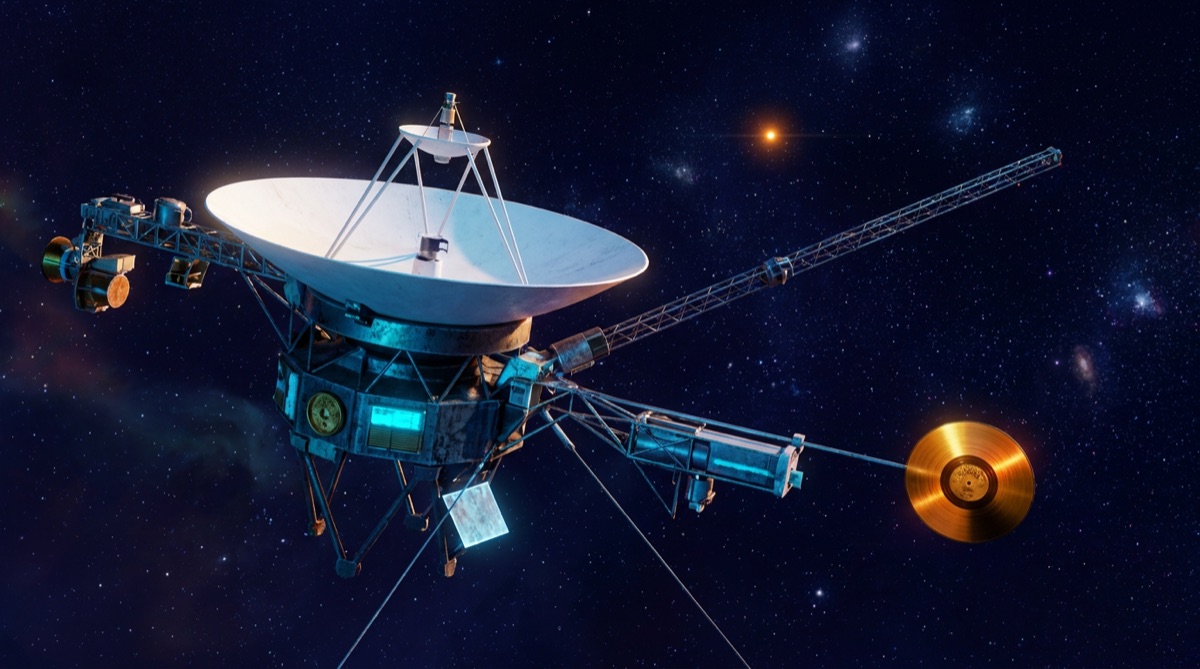
In 1972, with the astronomer Frank Drake and the artist Linda Salzman Sagan, Sagan designed the metal plaque that travels on the Pioneer 10 and 11 probes. It shows a man and a woman, the position of the Sun relative to fourteen pulsars and a diagram of the Solar System, so that whoever finds it knows where we come from. In 1977 he chaired the committee that prepared the Golden Record of the two Voyager probes: a record with 115 images, greetings in 55 languages, music from many cultures and sounds of Earth.
In 1990, when Voyager 1 had already visited Jupiter and Saturn and was leaving the Solar System, Sagan asked that the camera be turned back to photograph the planets. In the image, taken from about six billion kilometers, Earth is a dot of less than a pixel on a beam of scattered light. Sagan called it the “Pale Blue Dot”. That photograph is, perhaps, the best argument for taking care of our planet. You can see the scale of the Solar System in the Solar System Scale simulator.
His legacy

Cosmos, the thirteen-episode series he presented in 1980 together with Ann Druyan and Steven Soter, was seen by hundreds of millions of people in dozens of countries; the book of the same name became a worldwide success. Earlier, The Dragons of Eden (1977) earned him the Pulitzer Prize for nonfiction in 1978. His novel Contact (1985) was made into a film in 1997. The phrase “billions and billions” is commonly attributed to him, but he himself recounted that he never said it that way in the series: the parodies made it popular.
He died on December 20, 1996, at the age of 62, of pneumonia that followed years of bone marrow disease. Today, the search for atmospheres on planets outside the Solar System, which you can learn about in Hunting exoplanets, continues what he began: asking what other worlds there are and whether any of them has life.